
Hillary Clinton calling new book ‘What Happened’
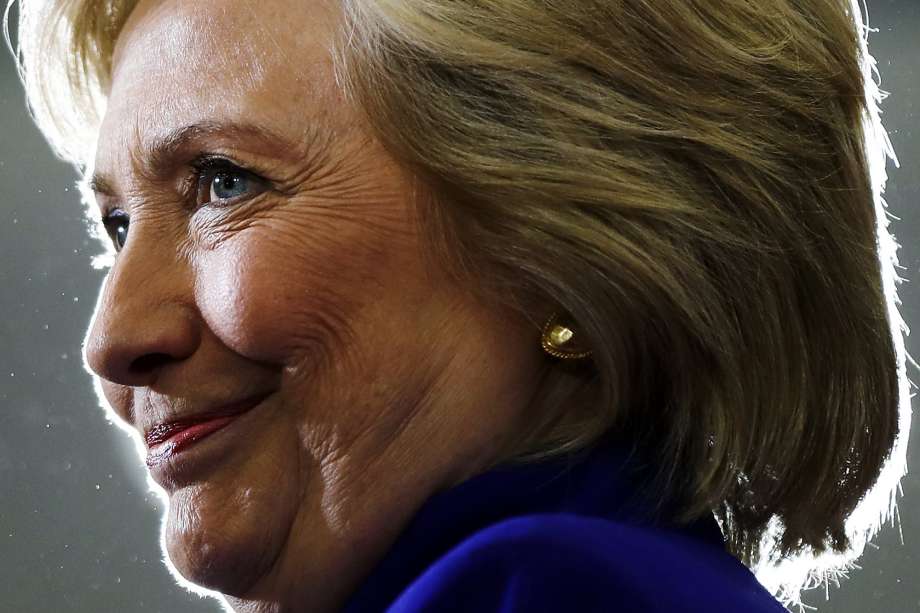
Hillary Clinton is calling her new book “What Happened” and promising unprecedented candor as she remembers her stunning defeat last year to Donald Trump. “In the past, for reasons I try to explain, I’ve often felt I had to be careful in public, like I was up on a wire without a net,” Clinton writes in the introduction, according to publisher Simon & Schuster. “Now I’m letting my guard down.” Simon & Schuster told The Associated Press on Thursday that Clinton’s book will be a highly personal work that also is a “cautionary tale” about Russian interference in last year’s election and its threat to democracy. In public remarks since last fall, the Democrat has cited Russia as a factor in her defeat to her Republican opponent, along with a letter sent by then-FBI Director James Comey less than two weeks before the election. Comey’s letter, sent to Congress on Oct. 28, said the FBI “learned of the existence of emails that appear to be pertinent to the investigation” into the private email server that Clinton used as secretary of state. Days later, Comey wrote that the FBI did not find anything new. “Now free from the constraints of running, Hillary takes you inside the intense personal experience of becoming the first woman nominated for president by a major party in an election marked by rage, sexism, exhilarating highs and infuriating lows, stranger-than-fiction twists, Russian interference, and an opponent who broke all the rules,” according to Simon & Schuster. “In these pages, she describes what it was like to run against Donald Trump, the mistakes she made, how she has coped with a shocking and devastating loss, and how she found the strength to pick herself back up afterwards.” “What Happened” is scheduled to come out Sept. 12 and has evolved since first announced, in February. It was originally billed as a book of essays that would “tell stories from her life, up to and including her experiences in the 2016 presidential campaign,” as opposed to a memoir centered on the race. Clinton’s loss has already been the subject of the best-selling “Shattered,” a highly critical book by Jonathan Allen and Amie Parnes, and a more sympathetic account, Susan Bordo’s “The Destruction of Hillary Clinton.” Within hours of Thursday’s announcement, “What Happened” had jumped from No. 3,350 to No. 17 on Amazon.com. Clinton’s previous works include the 2003 memoir “Living History,” published while she was a U.S. senator from New York, and a book about her years as secretary of state, “Hard Choices,” which came out in 2014 as she prepared to launch her presidential candidacy. She also wrote “It Takes a Village: And Other Lessons Children Teach Us” when she was first lady. Her upcoming memoir isn’t the first political book to be called “What Happened.” Scott McClellan, a former White House press secretary during the George W. Bush administration, released a book with the same title in 2008. McClellan’s memoir was an unexpectedly critical take on his former boss that became a best-seller. Republished with permission of The Associated Press.
Mo Brooks ‘disappointed’ over Donald Trump’s treatment of Jeff Sessions

U.S. Rep. Mo Brooks went after President Donald Trump Wednesday for his treatment of Attorney General Jeff Sessions in the media. During an interview on Jack Campbell and Baron Coleman’s radio show on News Talk 93.1 FM in Montgomery, Brooks said he was “disappointed and chagrined with what what’s happening with Jeff Sessions and President Trump right now.” Brooks, a member of the conservative House Freedom Caucus, also said his pre-election reservations about Trump “are turning out to be somewhat prophetic based on what we are seeing transpire with the public chastisement and the attacks on the integrity and good name of [Attorney General Sessions].” Brooks added that if he won the special election, he would not vote for Kentucky Republican Sen. Mitch McConnell to hold on to his post as Majority Leader. The CD 5 Republican is one of several GOP candidates in the race to be Sessions’ permanent replacement in the senate and his primary opponents, most notably sitting Sen. Luther Strange and former Alabama Supreme Court Justice Roy Moore, have criticized him for what they say is a lack of support for Trump. Strange and a political committee headed up by McConnell have dumped a lot of money into anti-Brooks advertising, with many of the ads attacking the congressman for his statements on the president. Brooks said those advertisements bother him because they put his statements “in an untruthful light.” “The words that I uttered were my concerns and reservations expressed while I was chairman of Ted Cruz’s campaign for the presidency, and that campaign for the primary for the presidency did not end until late May when Donald Trump got sufficient votes to win the Republican nomination,” he said. He added that he thought Trump was a much better option in a general election setting than Hillary Clinton but said some of Trump’s more “mercurial dispositions,” such as the way his administration communicates with U.S. allies and enemies, have given him “serious reservations.” The special primary election is slated for Aug. 15, and if necessary will be followed by a primary runoff Sept. 26. The general election will be held Dec. 12.
Alabama Medicaid to pursue RCO alternatives

Alabama is walking back its decision to shift its Medicaid program to managed care after nearly four years of development and millions in cost. The state will now begin to pursue an alternative to the Regional Care Organization (RCO) initiative. The Alabama Medicaid Agency announced its decision to abort the project Thursday due to the anticipated changes the Trump administration and Congress intend to make to Medicaid, along with the program’s high start-up costs. “It is highly likely that federal health care changes are on the horizon,” said Alabama Medicaid Commissioner Stephanie Azar in a statement. “While the financial implications could be challenging for our state, the new flexibilities and waiver options that the Trump administration is willing to consider gives our state Medicaid program new options to accomplish similar goals without incurring the same level of increased up-front costs associated with the RCO program.” RCO plan was created by the state Legislature in 2013 and 2014 following the passage of Obamacare. It would have moved the state’s current fee-for-service model to a regionally focused managed care system. According to the Medicaid website RCOs, “calls for the state to be divided into regions and for community and provider-led, regional organizations to coordinate the health care of Medicaid patients in each region, with networks ultimately bearing the risks of contracting with the state of Alabama to provide that care.” “When RCO’s were first proposed after the Affordable Care Act under the Obama Administration, the plan was appropriate; However, in today’s climate it is no longer the best use of taxpayer resources,” Azar added. Governor Kay Ivey supports Medicaid’s decision to move away from RCOs. “I support Medicaid’s shift in reform strategy, which has been fully shared with legislative leadership and other key stakeholders,” said Ivey. “I spoke with Health and Human Services Secretary Tom Price, and he has assured me of the Trump administration’s desire to work with the states to allow more flexibility in Medicaid services moving forward.” Ivey says the state was at a crossroads and decided to pursue less risky options. Ivey continued, “This flexibility brought us to a crossroads where we reconsidered the risks and rewards of RCOs, and decided instead to pursue new reform options which bring less risks and similar outcomes. The RCO model didn’t fail; instead the alternative is a recognition that the circumstances surrounding Medicaid have changed, thus our approach must change. Our end goal is clear – to increase the quality of services provided and protect the investment of Alabama taxpayers.”
Bradley Byrne introduces bill to protect businesses, reverse controversial labor rule
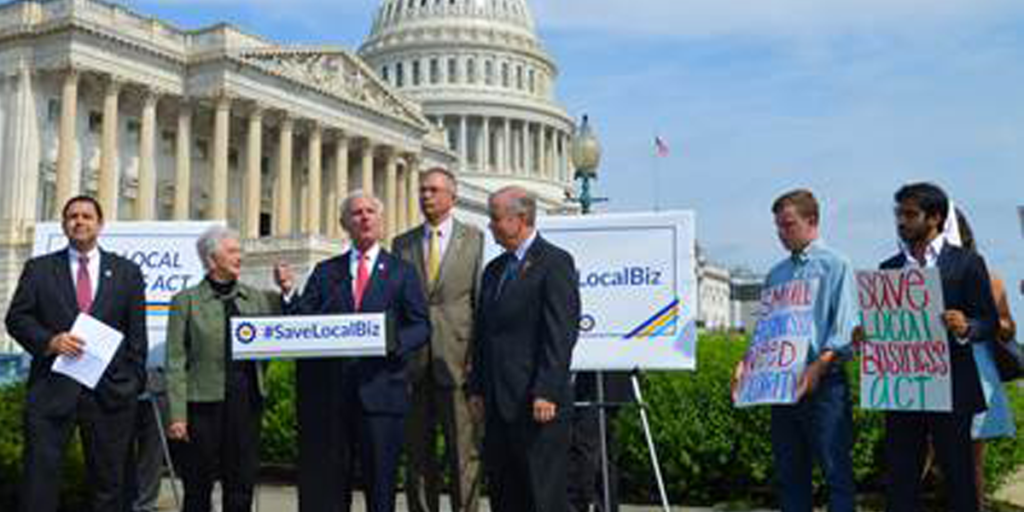
Alabama 1st District U.S. Rep. Bradley Byrne introduced legislation Thursday to protect America’s local businesses by restoring the commonsense definition of what it means to be an employer, protecting companies from being held liable for labor law violations made by their subcontractors. H.R. 3441: The Save Local Business Act, endeavors to undo an Obama-era standard in which the National Labor Relations Board (NLRB) expanded the joint employer standard and thus increased businesses’ exposure to lawsuits and unionization efforts. Byrne’s bill would amend the National Labor Relations Act and the Fair Labor Standards Act to clarify that two or more employers must have “actual, direct, and immediate” control over employees to be considered joint employers. It would: Roll back a convoluted joint employer scheme that threatens job creation and undermines the American Dream. Restore a commonsense definition of employer to provide certainty and stability for workers and employers. Protect workers and local employers from future overreach by unelected bureaucrats and activist judges. “Federal labor policies should be focused on benefiting workers and helping small businesses grow instead of creating barriers that limit opportunity. Also important, Congress – not unelected federal bureaucrats – should set our nation’s labor policies through statute instead of executive fiat,” said Byrne. “Under this bipartisan legislation, workers, and the businesses they work for, will be given much needed clarity and certainty. I am especially pleased our legislation has earned support from both sides of the aisle, and I am committed to continuing to build momentum as the bill moves through the legislative process.” The bill has bipartisan support from 29 co-sponsors, including House Education and the Workforce Committee Chairwoman, North Carolina Republican Rep. Virginia Foxx. “Right now, local employers across the country face an enormous amount of uncertainty because of a vague and confusing joint employer standard,” commented Foxx. “Congress cannot sit on the sidelines while this harmful scheme threatens to destroy jobs and make it harder for entrepreneurs to achieve the American Dream of owning a business. I commend Congressman Byrne for his leadership in this bipartisan effort to protect jobs and the spirit of entrepreneurship in local communities.”
Mo Brooks’ $10K Senate ad guy also behind “Thong Girl 3,” slasher movies
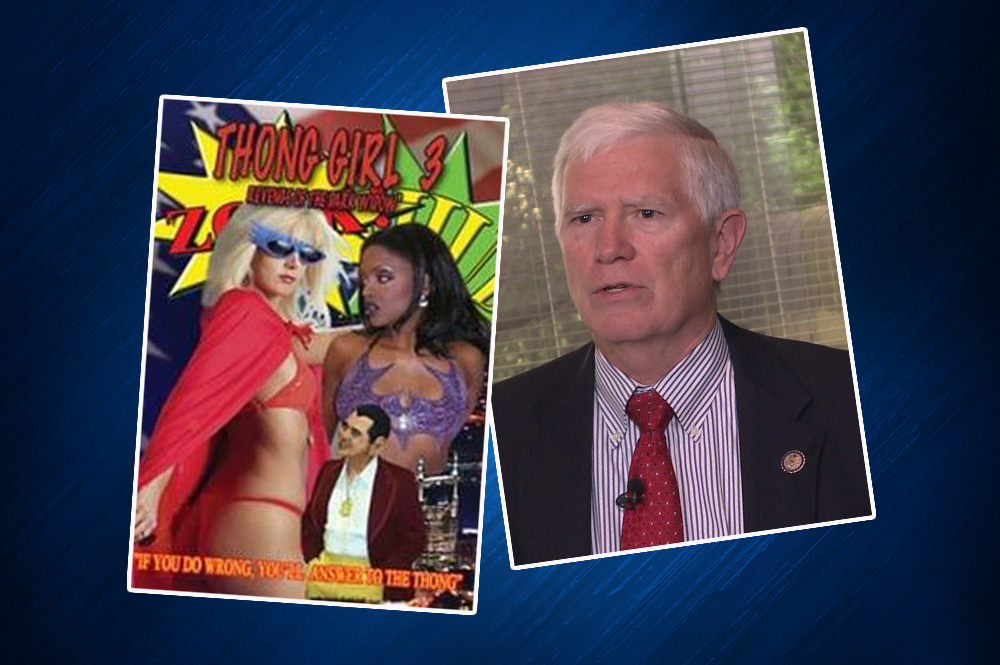
Alabama’s Senate race is making for strange bedfellows, and Congressman Mo Brooks may have to answer to “The Thong.” Brooks, locked in a contentious midsummer U.S. Senate primary, has taken to the airwaves to distinguish himself in a crowded 10-person field, which includes incumbent Sen. Luther Strange and former Alabama Supreme Court Chief Justice Roy Moore. All three are wrestling to carry the “cultural conservative” banner. Most notably, the Huntsville Republican released a new campaign ad last week that used audio clips from the shooting at a charity baseball practice in Alexandria, Virginia. It did not go well, as Brooks’ ad immediately hit the wrong note with many, particularly Rep. Steve Scalise, whose office quickly condemned the spot. Seriously injured in the June shooting, Scalise left the hospital only days ago. “I guess some people have their own ideas about what’s appropriate,” Scalise representative Chris Bond told NBC News. While the ad was outrageous, what may be even more shocking is who is behind Brooks’ advertising. Federal documents list Brooks’ ad vendor as Steinborn Films, the Nashville-based production company headed by director and cinematographer Jeff Steinborn. On his July Quarterly Report, Brooks paid Steinborn Films $10,400 for ad production in May 2017. A slightly deeper dive reveals Steinborn, the guy paid to make Mo Brooks’ ads, was part of the crew behind such low-budget “classics” such as “Thong Girl 3: Revenge of the Dark Widow,” a 2007 video notorious for partially filming (with permission) in the office of Mayor Don Wright, the actual mayor of Gallatin, Tennessee. What makes this connection between Congressman Brooks and Steinborn even more startling is Brooks had made his name in the 1990s by arresting video store owners for renting “obscene” videos. As the Anniston Star reported Aug. 28, 1991: “A Huntsville video store owner is free on bond after being charged with six counts of violating the state’s obscenity law by renting sexually explicit movies … Robert R. Smith, 46, of Huntsville, was arrested Friday after agents from the Madison County district attorney’s office rented six movies, including ‘Boys on Fire’ and “America’s Dirtiest Home Videos 13′ from Rocket City Video.” “District Attorney Mo Brooks said his office learned of the tapes from ‘concerned citizens, one of whom operates a video store,’” the Star wrote. In 1991, Brooks had sued Alabama Movie Rental, Rocket City Video, Total Video, Video World and Video Village, seeking them to stop distributing certain specific films: “Devil in Mr. Holmes,” “Little Oral Annie Takes Manhattan,” “Never Enough,” “Inside Little Oral Annie” and “The Brat.” As Madison County district attorney, Brooks settled a lawsuit — which The Associated Press described at the time as a “clear-cut victory” — with video stores that agreed to remove tapes that prosecutors found obscene. However, the out-of-court settlement seemingly did little, since it did not close any of the five stores or affect their ability to offer other videos. “The video stores went belly-up,” Brooks proclaimed. Flash forward to 2017; Brooks — now seeking the staunch conservative lane in Alabama’s Senate primary – is hiring the guy who helped make “Thong Girl 3” as his ad person. How times have changed. Compare those 1990s films to Thong Girl, made by Brooks’ ad guy; it is not too far a stretch. Thonggirlfilms.net describes the plot: “While shopping at a lingerie store one day, Lana Layonme, an assistant district attorney(!), discovered a very special thong with magical powers. She found that by donning this unique red thong, she had the ability to fly. She also possessed superhuman strength and, much to her surprise (and initial shock) discovered that she was able to fire laser beams from her ass!” A promotional poster for “Thong Girl 3” — a clip is also available on YouTube — offers this enticing tagline: “If You Do Wrong, You’ll Answer To The Thong.” While there is certainly no accounting for taste — and freedom of expression guarantees a market for such films — what does raise eyebrows is a that a former district attorney known for battling “questionable” films is now working with a filmmaker — to the tune of $10K — who Brooks would have tried to go “belly up” only two decades earlier. Nevertheless, “Thong Girl” is not the only film in Steinborn’s oeuvre; other works include gruesome slasher movies like “Blood Cult” (1985) and, most recently, as cinematographer on “Talon Falls” (2017). “Blood Cult,” which lists Steinborn as part of the crew, is described by Horrorsociety.com (spoiler alert): “It begins with a soapy sorority babe as she is cut down by a maniac with a meat cleaver. The local sheriff responds to the murder where he discovers a small gold coin with a dog’s head on it. The sheriff turns to his daughter and her husband who work at the local college library. The couple do some digging and discover that the coin belongs to an ancient blood cult.” Of course, Steinborn’s website doesn’t shy away from this earlier work, which is available for anyone (including Brooks’ campaign) to see; a feature reel includes clips of “Chasing Ghost,” “Cyclone,” and “Talon Falls,” all listed with Thong Girls on his IMDB page. Steinborn is also still Facebook friends with “Thong Girl” producer, writer and director Glen Weiss. Which all leads to a final question — how soon will one of Brooks’ Senate campaign ads be highlighted on the Steinborn feature reel?
Donald Trump emboldens friendly foreign leaders, leaves foes wary
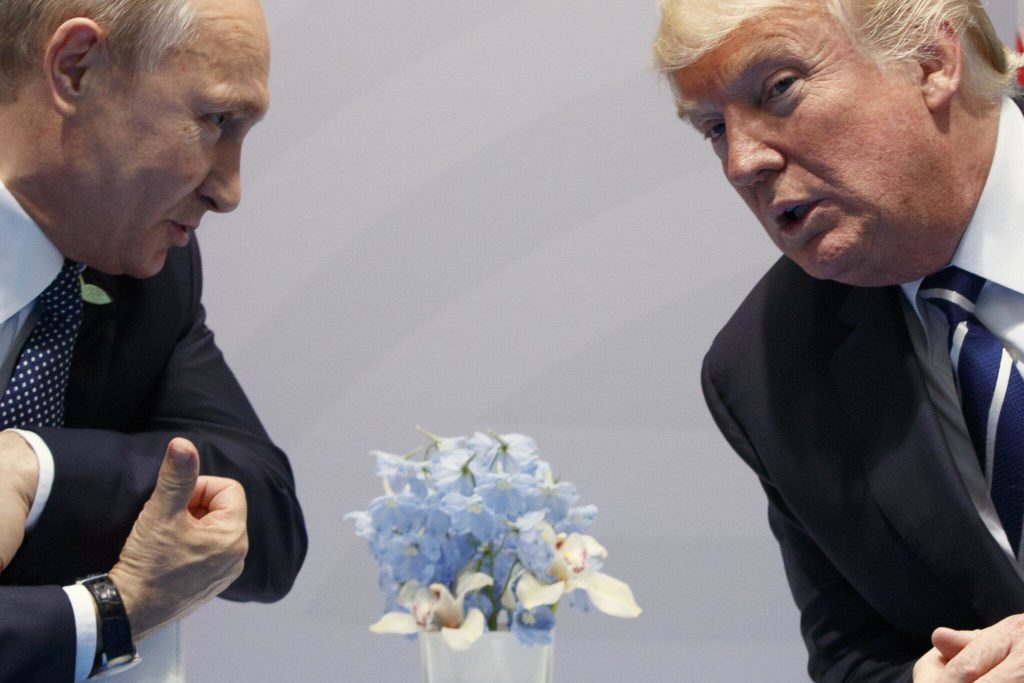
Are you a friend or foe? That seems to be uppermost in President Donald Trump‘s approach to foreign policy in the first six months of office. The probe at home into Russian interference in the 2016 U.S. election continues to be a thorn in his side, bedeviling Trump’s apparent desire to have warm relations with Russia’s Vladimir Putin, and the initial “bromance” with China’s Xi Jinping also buckled under geopolitical and economic disagreements. But there are others who have been lavished with the president’s favor. Who is in the friend camp is clear from the president’s foreign travels, actions and statements. To varying degrees, his support has emboldened favored countries to carry out contentious regional or domestic policies. Some traditional U.S foes, though, could find themselves in a more precarious position than they did under President Barack Obama, who generally avoided direct confrontation and even pursued diplomatic openings with Iran and Cuba. Below, AP journalists assess the friend-or-foe dynamic as seen from key nations: — SAUDI ARABIA In Trump Saudi Arabia trusts. The ultraconservative Sunni kingdom played host to Trump’s first overseas trip when it brought him and officials from other Muslim nations for an anti-terrorism conference in May. Their embrace comes as no surprise as Trump long criticized the Iran nuclear deal, part of the reason for cold relations between the kingdom and President Barack Obama. Trump also has been willing to overlook human rights concerns in his embrace of Mideast leaders, including Saudi King Salman and Egyptian President Abdel-Fattah el-Sissi. Trump sent U.S. special operations forces into Yemen to back the Saudi-led campaign in a January raid that killed some 30 people, including women, children and a Navy SEAL. Trump also has written tweets against Qatar and openly criticized the U.S. ally, host of a major American military base, amid a Saudi-led effort to isolate the country. That’s even as members of his administration try to mediate an end to the rift. King Salman’s 31-year-old son, the recently appointed Crown Prince Mohammed bin Salman, was one of the first foreign officials to rush to America to see Trump. He has met several times with Trump’s son-in-law Jared Kushner. Now next in line to the throne, the crown prince likely hopes to trade on those ties in further cementing his interests in weaning the oil-rich kingdom from its crude-dependent economy as global energy prices remain low. –Jon Gambrell in Dubai, United Arab Emirates — ISRAEL To Trump, Israel definitely falls into the most-trusted-friend category. From early in his campaign, Trump cast himself as an unconditional supporter of Israel who would have a far warmer relationship with Prime Minister Benjamin Netanyahu than Obama did. After repeated clashes with Obama, Israel’s nationalist right had high expectations for Trump. His ambassador to Israel is David Friedman, a bankruptcy lawyer who has raised millions of dollars for the Beit El settlement. That community north of Jerusalem is in the heart of the occupied territory Palestinians want for an independent state. A foundation run by the family of Trump’s son-in-law Jared Kushner – the president’s czar for Middle East peace efforts – also supported Beit El. Tax records show Trump himself donated money to a Jewish seminary in the settlement through his foundation. Trump indicated his affinity by including Israel in his first overseas trip as president, where he was fawned over by his hosts. He speaks warmly about Netanyahu and has reportedly sided with him in spats with the Palestinians. He also encouraged Israelis by taking a tough stand on Iran. At the same time, Trump has not made good on his campaign promise to move the American Embassy to Jerusalem and has spoken of pushing for the “ultimate deal,” raising fears in Israel that it could be pressured into making unwanted concessions. Meanwhile, the Palestinians have made efforts to get in Trump’s good graces, with Palestinian President Mahmoud Abbas traveling to Washington to meet him and praise his leadership. But a new wave of violence over a disputed Jerusalem shrine, sacred to Muslims and Jews, is Trump’s first experience of the decades-long conflict’s realities. How his administration navigates it will be telling. –Aron Heller in Jerusalem — POLAND Trump lavished praise on Poland during a visit this month, hailing its struggles for freedom against past oppression and depicting the country – which strongly opposes taking any Muslim refugees – as a defender of Western civilization. He made no mention of rule of law or human rights, even though the country’s populist ruling party has spent the past 20 months consolidating power in ways that have weakened checks and balances. Within days of the visit, the Law and Justice party moved to pass legislation aimed at giving the government vast new powers over the courts. One bill called for the immediate dismissal of all Supreme Court judges, giving the justice minister power to replace them. Among other things, the change would have given the ruling party direct control over confirming election results, one of the Supreme Court’s functions. This week the country’s president responded to days of mass nationwide protests by vetoing two of three bills on the judiciary, including the one on the Supreme Court. However, he left in place a third bill that gives the justice minister the power to name the heads of all the country’s lower courts, which critics also see as unconstitutional. “Trump’s silence about the Polish government’s problems with democracy and the rule of law encouraged Warsaw to pursue further measures, effectively ending judicial independence and separation of powers soon after the presidential visit,” said Marcin Zaborowski, a political analyst affiliated with Visegrad Insight, a journal about politics in Central Europe. –Vanessa Gera in Warsaw, Poland — IRAN Trump hasn’t yet torn up the Iran nuclear deal, which took the U.S. and other world powers years to negotiate and ended with Tehran accepting curbs on its contested nuclear program in exchange for sanctions relief. Whether that remains the case is an open question. Days into the
Records: Student-loan forgiveness has halted under Donald Trump

The U.S. Education Department has not approved any applications for student-loan forgiveness in cases of possible fraud since President Donald Trump took office, according to records sent to an Illinois senator. Democratic Sen. Richard Durbin released those records Wednesday and blasted the department for its inaction and for a June decision to delay and rewrite Obama-era rules that would have made it easier for students to get loans forgiven if they were deceived by their schools. “This response shows that while the Department of Education has illegally delayed the new borrower defense rule, it has also stopped processing federal student loan relief under current regulations for tens of thousands of defrauded borrowers,” Durbin said in a statement. “The department can’t ignore these borrowers any longer.” Department officials did not immediately respond to a request for comment. Durbin and four other Democratic senators sent a series of questions to the department on May 17 amid concerns that the pipeline to student-loan forgiveness had stalled under the Trump administration. Also signing the letter were Sen. Patty Murray of Washington, Sen. Chuck Schumer of New York, Sen. Sherrod Brown of Ohio, and Sen. Elizabeth Warren of Massachusetts. Under President Barack Obama, the department approved more than 28,000 claims for loan forgiveness from former students of Corinthian Colleges, a chain of for-profit colleges that closed in 2015 amid accusations that it falsified job-placement data and altered student grades. Those claims topped $558 million. But in the letter responding to Durbin’s questions, Acting Under Secretary James Manning wrote that “no borrower defense applications have been approved between Jan. 20, 2017, and today.” The records also revealed that the department has continued to receive new applications from borrowers who say they were victims of fraud. In total, the department said it received nearly 15,000 applications between Jan. 20 and July 5, mostly from Corinthian borrowers and from former students of ITT Technical Institute, a chain that closed last year. The number of new applications is likely to swell even further, experts say, amid a campaign by many state attorneys general to notify students who might be eligible for loan relief. Overall, the department said there are more than 65,000 pending claims for relief. Although most come from Corinthian and ITT students, others are from people who attended schools that are still in operation, including DeVry University and the University of Phoenix. Many advocacy groups and some Democrats in Congress have urged the department to clear the backlog, saying the delay has left thousands of borrowers strapped with debt that’s eligible to be erased under existing federal rules. In June, Education Secretary Betsy DeVos said that “promises made to students under the current rule will be promises kept” and added that her office was working to discharge more than 16,000 loans that were previously approved to be erased under Obama. But in the same announcement, DeVos unveiled plans to rewrite an Obama-era regulation known as the borrower defense to repayment rule, which aimed to quicken the path to loan forgiveness when schools commit fraud, and to hold those schools financially responsible. DeVos called it “a muddled process that’s unfair to students and schools.” Since then, the department has released little information about its progress, and questions sent to a spokeswoman have gone unanswered. Even top officials in the department aren’t being briefed on the progress, according to the records sent to Durbin. The letter from Manning says that while the department “is in the process of establishing reports including borrower defense information, there are currently no regularly produced reports provided to senior officials. Information is provided upon request.” Borrowers who are awaiting a decision from the department have continued to accrue loan interest, which the department revealed amounts to $143 million. And while most borrowers are given a grace period from their loan payments while they wait, the department said it has expired for “fewer than 50 borrowers” and that “these are exceptions.” But over the next six months, the period is set to expire for 31,000 borrowers. Manning wrote that those borrowers “could have their forbearances extended if their applications are still pending.” Republished with permission of The Associated Press.
