
Donald Trump hedges as military presents new Afghanistan strategy
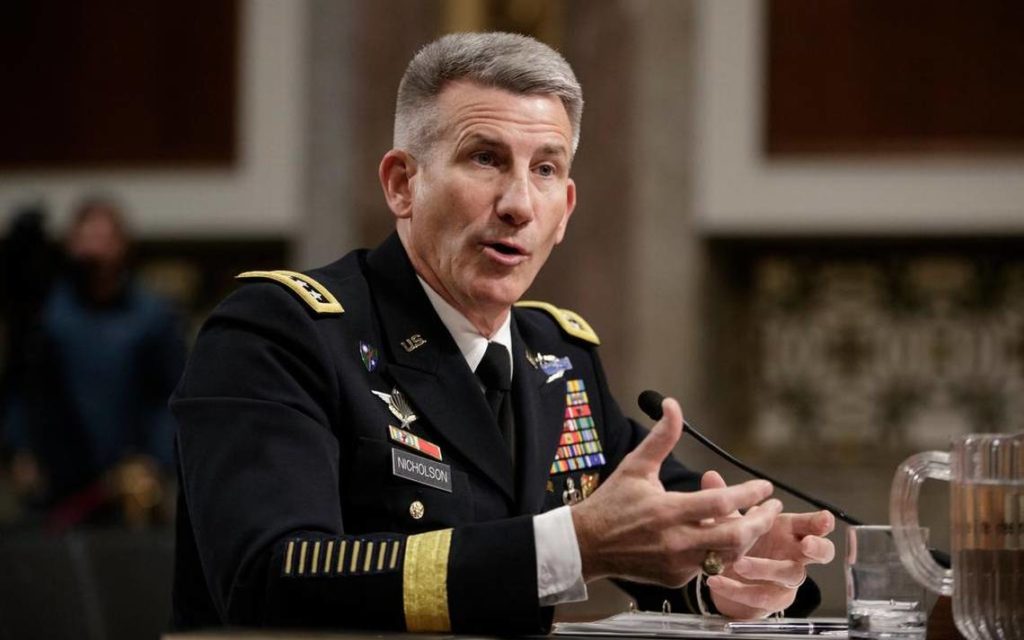
Frustrated by his options, President Donald Trump is withholding approval of a long-delayed Afghanistan war strategy and even mulling a radical shakeup in his national security team as he searches for a “game changer” after 16 years of indecisive conflict. In a recent Situation Room meeting that turned explosive, Trump raised the idea of firing Army Gen. John Nicholson, the top U.S. commander in Afghanistan, according to two officials with knowledge of the discussion. And he suggested installing his national security adviser, Gen. H.R. McMaster, to oversee the mission, said the officials, who weren’t authorized to talk publicly and requested anonymity. The drastic suggestions point to the desperation shared by many in Washington as military and other leaders look for a blueprint for “winning” the Afghan conflict. Trump has been frustrated by what he views as a stalemate. He wants a plan that will allow American forces to pull out once and for all. At a White House lunch with military brass last week, Trump publicly aired his misgivings, saying, “I want to find out why we’ve been there for 17 years.” The Pentagon wants to send almost 4,000 more American forces to expand training of Afghan military forces and beef up U.S. counterterrorism operations against al-Qaida, a growing Islamic State affiliate and other extremist groups. But the troop deployment, which would augment an already existing U.S. force of at least 8,400 troops, has been held up amid broader strategy questions, including how to engage regional powers in an effort to stabilize the fractured nation. These powers include U.S. friends and foes, from Pakistan and India to China, Russia and Iran. Pentagon plans aren’t calling for a radical departure from the limited approach endorsed by former President Barack Obama, and several officials have credited Trump with rightly asking tough questions, such as how the prescribed approach might lead to success. Trump hasn’t welcomed the military’s recommendations with “high-five enthusiasm,” a senior White House official said. Several meetings involving Trump’s National Security Council have been tense as the president demanded answers from top advisers about why American forces needed to be in Afghanistan. Another U.S. official with knowledge of the conversation reported Trump being less interested in hearing about how to restore Afghanistan to long-term stability, and more concerned about dealing a swift and definitive blow to militant groups in the country. The White House has even offered its own, outside-the-box thinking. Officials said Trump’s chief strategist, Steve Bannon, and his son-in-law and adviser, Jared Kushner, have been pushing a plan to have contractors fight the war in Afghanistan instead of U.S. troops. Blackwater Worldwide founder Erik Prince, the brother of Education Secretary Betsy DeVos, was approached by Trump’s top advisers to develop proposals to gradually swap out U.S. troops and put military contractors in their place, a military official said. The military has frowned on such proposals. It believes boosting troop levels will accelerate progress in training Afghan troops and its air force, and help counterterrorism teams pursue targets even more aggressively. They point to improvements among Afghan forces and in anti-corruption efforts. Military leaders — including McMaster, Defense Secretary Jim Mattis and Gen. Joseph Dunford, the Joint Chiefs of Staff chairman, are all said to be on the same page, as is Secretary of State Rex Tillerson. Military officials also have defended Nicholson, saying any punishment of him would be unfair because he hasn’t been given the forces he says he needs. His possible firing was first reported by NBC News. The White House, which declined multiple requests to comment, may shift itself on Afghanistan now that retired Marine Gen. John Kelly is Trump’s new chief of staff. Kelly hasn’t spoken about Afghanistan, however, since his appointment this week. Lawmakers are growing weary. In June, Mattis faced tough questions from Senate Armed Services Committee Chairman John McCain, who told him, “It makes it hard for us to support you when we don’t have a strategy.” Mattis conceded, “We are not winning in Afghanistan right now” and vowed to “correct this as soon as possible.” Doing so requires the president on board. While Trump has been keen to give military officials carte blanche on troop levels and other military affairs, his approach to Afghanistan has grown increasingly assertive. In some ways, his scrutiny of military plans has evoked that of Obama, whom Trump derided as a candidate for not heeding his generals’ advice. Republican lawmakers Thursday urged Trump to listen to his national security advisers on Afghanistan. “Every soldier over there is an insurance policy against our homeland being attacked,” Sen. Lindsey Graham, a leading hawk, told reporters. “My biggest fear is that if you don’t listen to the generals and you try to make this up as you go like Obama and Biden did, you’re going to wind up losing Afghanistan like you did Iraq and the consequences to America are worse.” U.S. indecision is causing Afghanistan’s neighbors to hedge their bets, Sen. Bob Corker, the Senate Foreign Relations Committee chairman, said. As long as they believe Washington is “six months away from stepping out, six months away from giving up,” they will continue to do so, Corker said. Republished with permission of The Associated Press.
Tea Party-aligned PAC backs Mo Brooks, blasts Mitch McConnell’s ‘false attacks’
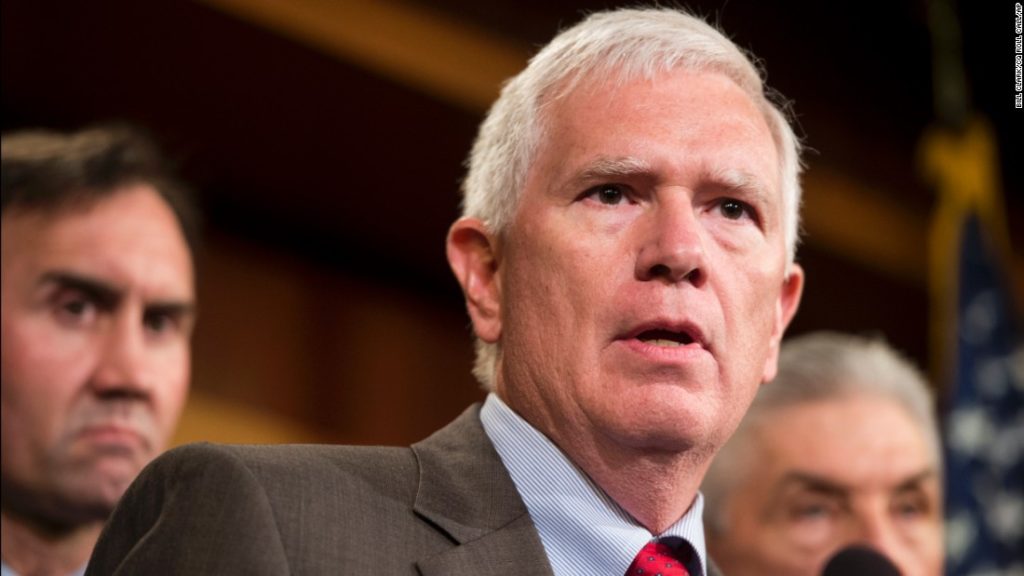
A Tea Party-aligned super PAC is backing Rep. Mo Brooks in his Alabama U.S. Senate bid, as he attempts to push back against “false attacks” from opponents. On Thursday, Brooks announced the endorsement from Senate Conservatives Fund, founded by one time South Carolina Sen. Jim DeMint, was set up in 2008 to promote conservative candidates. Earlier, the Fund supported Pat Toomey in his challenge to Pennsylvania Sen. Arlen Specter, and Florida’s Marco Rubio in his first Senate bid against former Republican Gov. Charlie Crist. In a statement from Brooks’ campaign, the group called Brooks a “principled conservative” with “strong grassroots support.” “We believe he is the conservative candidate with the best chance of winning a likely runoff election. If he’s elected, he will fight to defend the Second Amendment, protect the unborn, stop illegal immigration and repeal Obamacare,” the statement continues. “We’re also proud to help defend Mo Brooks against the false attacks being made by Senator Mitch McConnell and his political machine. “There is no reason why McConnell should be spending millions of dollars to mislead voters in this race and we hope conservatives come together to fight back.” In response, Brooks said: “SCF is one of the premier national conservative political organizations in America, and I’m proud to be endorsed as the conservative candidate most likely to upset the Washington establishment. “Mitch McConnell and his lobbyists and special interest group financiers are spending millions of dollars in hopes of buying Alabama’s Senate seat and keeping a principled conservative out of the Senate. “I’m confident that, with the help of patriotic, conservative groups like SCF and strong support from grassroots activists, our campaign will prevail in spite of the onslaught of attack ads that aim to deceive Alabama voters. SCF’s endorsement proves our campaign has serious momentum in this race as Election Day nears.” In what is shaping up to be a three-candidate race, Brooks faces incumbent Sen. Luther Strange and former Alabama Supreme Court Chief Justice Roy Moore for who will serve the rest of Attorney General Jeff Sessions’ Senate term. Strange is supported by the Senate Leadership Fund, a super PAC aligned with Majority Leader McConnell, which has spent millions of dollars on the race. Other Republican candidates the 9-person field include Dr. James Beretta, Joseph Breault, Alabama Christian Coalition president Randy Brinson, Mary Maxwell, Bryan Peeples and state Sen. Trip Pittman of Baldwin County. The last day for Alabama voters to apply for an absentee ballot for the primary is Aug. 10. If there is no primary winner — with 50 percent plus one — a runoff is Sept. 26; the general election is Dec. 12. Given Alabama’s strong Republican lean, whoever wins the primary — either outright or in the runoff — will most likely represent the state in the U.S. Senate.
Former Martha Roby Chief of Staff Stephen Boyd confirmed Asst. Attorney General
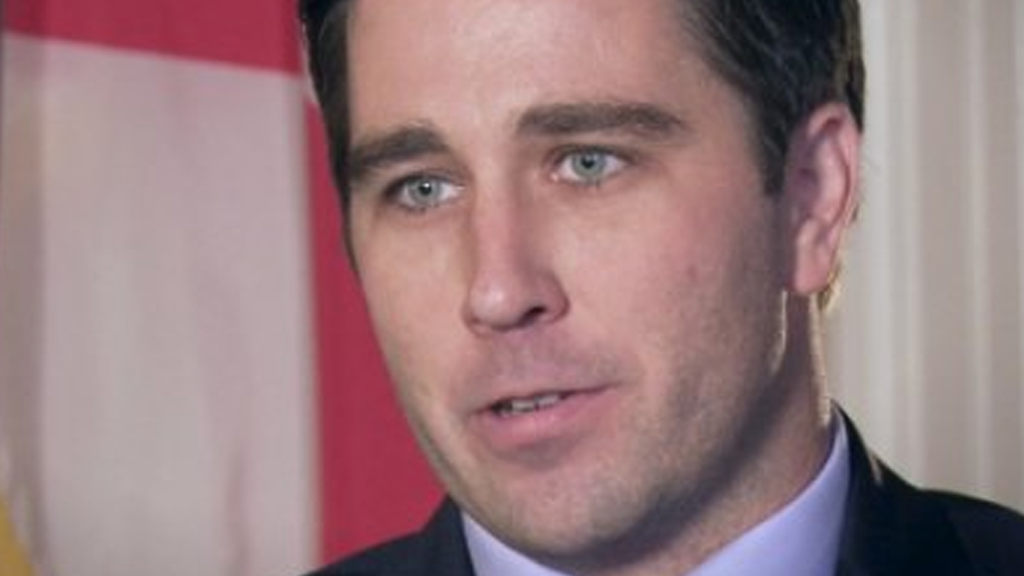
On the last day before August recess, the U.S. Senate confirmed Rep. Martha Roby‘s former Chief of Staff as the Assistant U.S. Attorney General for Legislative Affairs. Stephen Boyd, who served as Roby’s top adviser for more than six years before joining Attorney General Jeff Sessions at the Department of Justice in February, was confirmed amid more than five dozen Trump administration nominees on Thursday. Roby congratulated her former chief of staff following his confirmation. “It is with great pride and admiration that I congratulate Stephen Boyd upon his confirmation as Assistant Attorney General of the United States,” Roby said. “Stephen is exactly the kind of person our country needs to serve in such a position of great influence. In Stephen, Attorney General Jeff Sessions has an experienced, rock-solid adviser and Congress has a principled, trustworthy conduit to the Department of Justice. “I join Stephen’s wife, Brecke and his parents, Ron and Floranne in celebrating this special day.” Prior to launching Roby’s congressional office when she first joined the U.S. House of Representatives, Boyd served as Communications Director for both then-U.S. Senator Sessions and the Senate Committee on the Judiciary.
Video shows Mo Brooks defending vote that withholds funding in war on ISIS
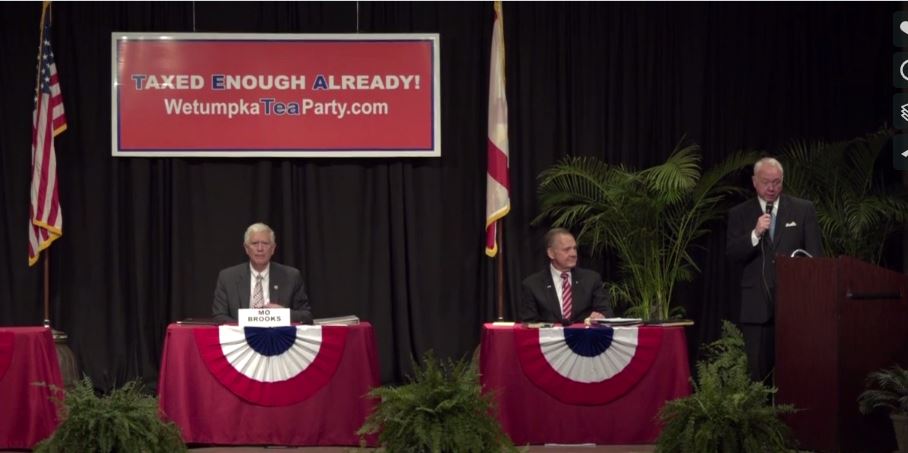
At a candidate forum in Wetumpka this week, U.S. Rep. Mo Brooks went on the defensive over a controversial vote to cut off funding in the fight against Islamic terrorism. Opponents were quick to point that the vote by the Huntsville Republican put him squarely on the side of House Democrats. On Monday, the Wetumpka TEA Party hosted a “Top-Three” U.S. Senate Forum — inviting the three leading candidates polling “over 20 percent by professional polling firms” in the Republican Senate primary, which is now less than two weeks away. Brooks, Sen. Luther Strange and former Alabama Supreme Court Chief Justice Roy Moore were each invited. Strange was a no-show, telling the group he had to stay in Washington D.C. to consider the nomination of attorney Kevin Newsome as District Judge for Alabama’s 11th circuit Court of Appeals. The Senate confirmed Newsome the next day. A video taken at the forum shows Brooks asking “How many of you have seen that ad out there that says I’m supporting the Islamic state?” before admitting he voted against funding in the fight against ISIS. Brooks’ statement seemed to confirm an earlier attack ad from the Senate Leadership Fund, the super PAC connected to Senate Majority Leader Mitch McConnell. SLF is firmly behind Strange in the hotly contested Aug. 15 primary, spending millions of dollars in advertising to support the incumbent and against Brooks and Moore. In an email to supporters, SLF blasted Brooks — the “embattled congressman” — pointing out Brooks was “the only member of the Alabama congressional delegation to vote with [Democratic Minority Leader] Nancy Pelosi.” Defending his actions to the staunchly conservative audience, Brooks explained he believed the president shouldn’t have the power to fight ISIS unless Congress gives permission. “This fits the consistent pattern of Brooks’ strident opposition to President Trump since early 2016 and as recently as last week,” the SLF says. Home busy one: The event, held at Wetumpka Civic Center, was moderated by Montgomery’s News Talk radio host Dan Morris, a former advance man for President Ronald Reagan. After the debate, a straw poll gave first-place to Moore (139 votes). Brooks took second with 103 votes, and Alabama Christian Coalition president Randy Brinson was third with 18 votes. There were 15 undecideds. No-show Strange and state Sen. Tripp Pittman of Baldwin County tied for fifth, with four votes each. Alabama voters have until Aug. 10 to apply for an absentee ballot for the primary. If there is no primary winner — with 50 percent plus one — a runoff is Sept. 26; the general election is Dec. 12. Given Alabama’s strong Republican lean, whoever wins the primary — either outright or in the runoff — will most likely represent the state in the U.S. Senate.
Donald Trump’s new top aide assures Jeff Sessions his job is safe
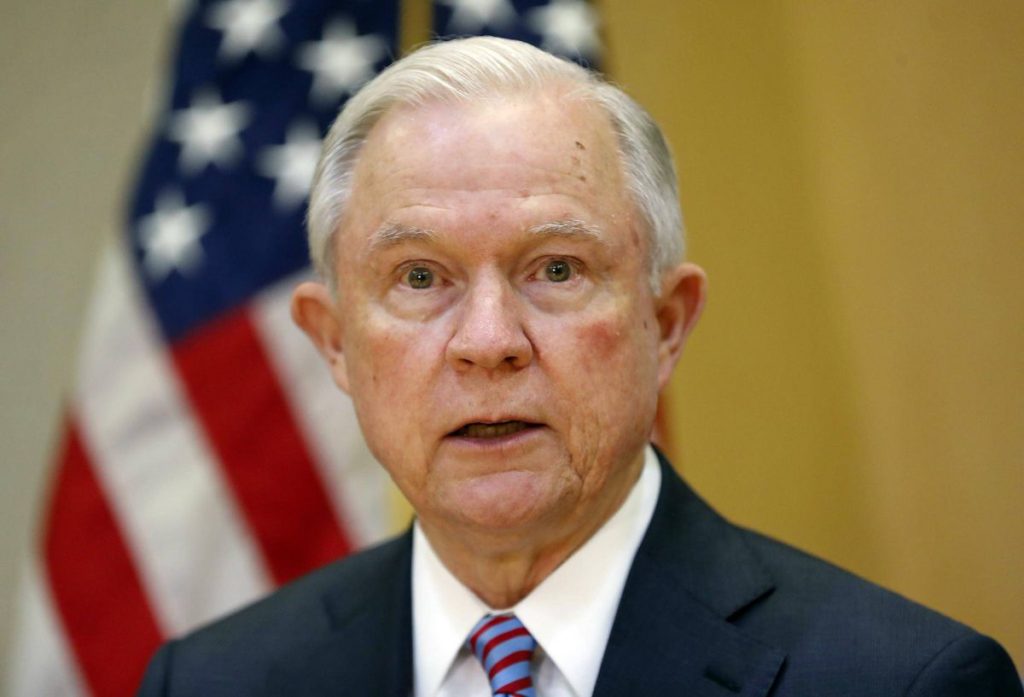
New White House chief of staff John Kelly, in one of his first acts in his new post, called Attorney General Jeff Sessions to reassure him that his position was safe despite the recent onslaught of criticism he has taken from President Donald Trump. Kelly called Sessions on Saturday to stress that the White House was supportive of his work and wanted him to continue his job, according to two people familiar with the call. The people demanded anonymity because they were not authorized to speak publicly about a private conversation. Kelly, who was appointed to the post the day before, described the president as still miffed at Sessions but did not plan to fire him or hope he would resign. Trump has seethed at Sessions, his one-time close ally, since the attorney general recused himself from the probe into Russia’s meddling into the 2016 election. The president viewed that decision as disloyal — the most grievous sin in Trump’s orbit. That simmering anger burst to the surface last week. In an unprecedented display of a president publicly criticizing a sitting member of his own Cabinet, Trump unleashed repeated attacks via Twitter. He called Sessions “beleaguered” and “very weak” and belittled his decision not to investigate Hillary Clinton. He said he was “disappointed” in Sessions and suggested that, had he known he would recuse himself, he never would had offered him the attorney general post. And he dismissed the value in Sessions’ early endorsement — he was the first senator to back Trump — while privately musing to aides about firing the attorney general. “We will see what happens,” Trump said of Sessions’ future when asked at a news conference last week. “Time will well. Time will tell.” Trump is known for openly considering staffing changes without following through. Likewise, Sessions’ newfound job security could also be viewed as temporary and subject to the president’s whims. The White House did not immediately respond to a request for comment about the conversation. The Department of Justice also did not immediately respond. White House press secretary Sarah Huckabee Sanders said Monday that “the president has 100 percent confidence in all members of his Cabinet” and dismissed talk that Sessions or other Cabinet members could be moved. Kelly, a retired general, was brought in from the Department of Homeland Secretary to restore some discipline and stability to a chaotic White House. The outreach to Sessions appears to have been a top priority in that effort. Despite Trump’s continuing anger, his allies quickly recognized the danger in attacking Sessions. The longtime Alabama senator was the forefather of many of Trump’s hardline immigration policies and remains very popular among the president’s conservative base. Sessions and Kelly have also been allies and traveled together to the Mexican border in April to highlight immigration plans when the chief of staff was in his former post as head of homeland security. Moreover, many Republican senators and influential members of the conservative media rushed to the attorney general’s defense when Trump went on the attack last week. They suggested that Sessions has been the most effective member of Trump’s Cabinet delivering on campaign promises, while some White House aides feared that firing Sessions could spark a significant political backlash. Instead, the White House has recently embraced some of Sessions’ directives. On Friday, Trump traveled to Long Island, New York, to tout his administration’s efforts to combat the MS-13 gang at the same time Sessions was in El Salvador for events concerning the same violent cartel. Though Trump did not mention Sessions by name, the attorney general told The Associated Press that he hoped to remain in the post and would serve as long as Trump wanted him. And on Wednesday, senior White House aide Stephen Miller — a former Sessions staffer who has written most of Trump’s speeches on immigration — delivered a full-throated case for slashing legal immigration. The proposal is unlikely to become law since it is opposed by several Republican senators, yet it is popular among much of the president’s base. Republished with permission of The Associated Press.
Bipartisan Senate bill aims to protect special counsel’s job

Two members of the Senate Judiciary Committee are moving to protect Special Counsel Robert Mueller‘s job, putting forth new legislation that aims to ensure the integrity of current and future independent investigations. Republican Sen. Thom Tillis of North Carolina and Democratic Sen. Chris Coons of Delaware plan to introduce the legislation Thursday. The bill would allow any special counsel for the Department of Justice to challenge his or her removal in court, with a review by a three-judge panel within 14 days of the challenge. The bill would be retroactive to May 17, 2017 — the day Mueller was appointed by Deputy Attorney General Rod Rosenstein to investigate Russian meddling in the 2016 election and possible ties to Donald Trump‘s campaign. “It is critical that special counsels have the independence and resources they need to lead investigations,” Tillis said in a statement. “A back-end judicial review process to prevent unmerited removals of special counsels not only helps to ensure their investigatory independence, but also reaffirms our nation’s system of check and balances.” Mueller was appointed as special counsel in May following Trump’s abrupt firing of FBI Director James Comey. Mueller, who was Comey’s predecessor as FBI director, has assembled a team of prosecutors and lawyers with experience in financial fraud, national security and organized crimes to investigate contacts between Moscow and the Trump campaign. Trump has been critical of Mueller since his appointment, and his legal team is looking into potential conflicts surrounding the team Mueller has hired, including the backgrounds of members and political contributions by some members to Hillary Clinton. He has also publicly warned Mueller that he would be out of bounds if he dug into the Trump family’s finances. Mueller has strong support on Capitol Hill. Senators in both parties have expressed concerns that Trump may try to fire Mueller and have warned him not to do so. “Ensuring that the special counsel cannot be removed improperly is critical to the integrity of his investigation,” Coons said. Republican Sen. Lindsey Graham of South Carolina, another member of the Judiciary panel, said last week that he was working on a similar bill that would prevent the firing of a special counsel without judicial review. Graham said then that firing Mueller “would precipitate a firestorm that would be unprecedented in proportions.” The Tillis and Coons bill would allow review after the special counsel had been dismissed. If the panel found there was no good cause for the counsel’s removal, the person would be immediately reinstated. The legislation would also codify existing Justice Department regulations that a special counsel can only be removed for misconduct, dereliction of duty, incapacity, conflict of interest or other good cause, such as a violation of departmental policies. In addition, only the attorney general or the most senior Justice Department official in charge of the matter could fire the special counsel. In the case of the current investigation, Rosenstein is charged with Mueller’s fate because Attorney General Jeff Sessions recused himself from all matters having to do with the Trump-Russia investigation. Republished with permission of The Associated Press.
Jim Zeigler’s personal campaign against Luther Strange
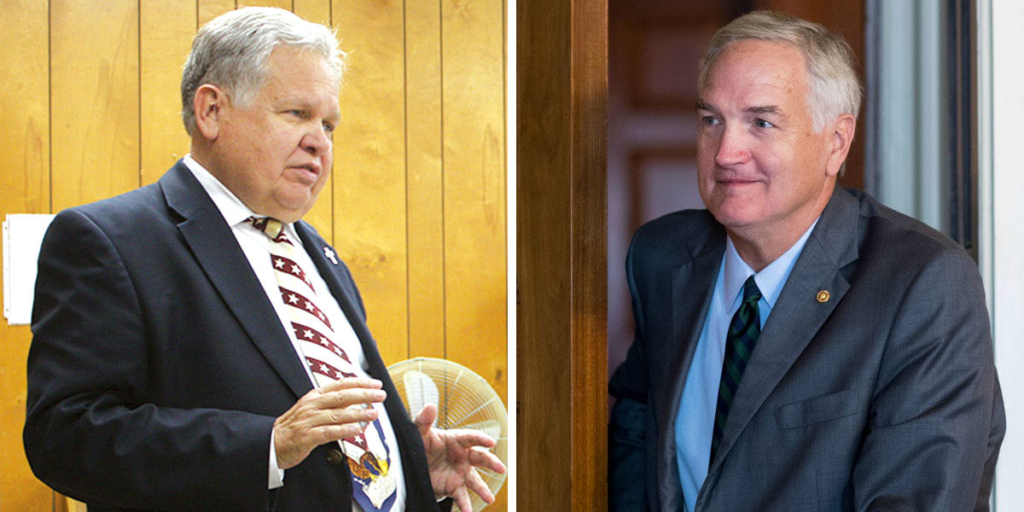
State Auditor Jim Zeigler has made it his personal mission to keep Alabama Sen. Luther Strange from heading back to Washington next year. Zeigler, who has never be one to shy away from verbal jousting, has taken to Facebook, often multiple times a day, to take a stand against Strange. “Why can’t Luther Strange focus on his own record and platform? Instead he spends millions in Washington money attacking his opponents. His ads mention his opponents more than himself. Very strange,” Zeigler said in a Wednesday Facebook post. Throughout the campaign season, Zeigler has posted several anti-Strange articles from various sources on his Facebook pages. “If you know anyone thinking about voting for Luther Strange, ask them to read this. It explains how Strange is strongly financed by Washington Insiders. We need a new senator for Alabama, not Strange for the Washington swamp,” Zeigler said linking to a ConservativeReview.com article. Zeigler’s attacks are not limited to Strange’s record or what he’s been doing in the race. They also seek to delegitimize Strange’s appointment to the Senate altogether. “Luther Strange was appointed Senator by disgraced governor Robert Bentley. Strange was state attorney general and was supposed to have Bentley under investigation. Instead, Strange accepted the senate appointment from Bentley. Now, the Washington Insiders are spending millions to elect Strange. Many do not know this,” Zeigler posted on Thursday. In his posts, Zeigler is referencing Strange’s February appointment to the U.S. Senate by former Gov. Robert Bentley, which came two months after Strange asked an Alabama House committee to pause an impeachment probe of Bentley, who was accused last year of having an affair with a onetime top political adviser. Strange said at the time that his office was doing ‘‘related work’’ though he never publicly elaborated on what it involved or when the work would be completed. The daily barrage of posts also accuse Strange of counting on low voter turnout win the Aug. 15 GOP primary. “If you were appointed by disgraced former Gov. Robert Bentley, who you were supposed to be investigating, how would you try to be elected in Alabama’s U.S. Senate primary? Temporary Sen. Luther Strange is doing it this way: He is counting on a low turnout while spending millions of Washington special interest money,” commented Zeigler. In a similar vein, he’s also accused Strange of counting on low-information voters. “Temporary Sen. Luther Strange is doing it this way: He is counting on millions of dollars in ads paid for by Washington Insiders to sway ‘low-information voters,” Zeigler quipped. Whether or Zeigler is doing any real damage to Strange’s campaign remains to be seen, but nearly 7,700 fans on his exploratory page and and 1,300+ friends on his personal Facebook page where he often shares the posts, one thing is for sure — Zeigler will be doing all he can to make a case against Strange between now and Aug. 15.
Mo Brooks’ Sierra Club problem just won’t go away
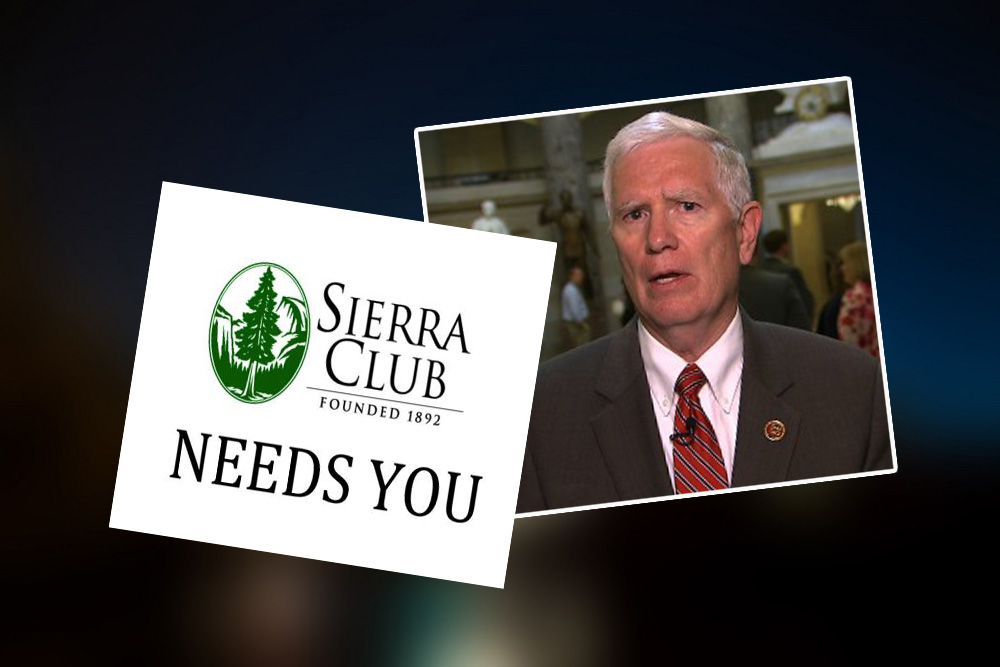
In Alabama’s fast-approaching Senate primary, Mo Brooks is pushing hard to stand out as a “proven conservative leader.” But under the surface, nagging questions remain over Brooks’ self-described claim of a “record of proven conservative leadership … Unmatched by any other candidate in this race.” Early in his congressional career, the Huntsville Republican — now serving his fourth term — made a completely different claim — membership in Sierra Club, both in print and on his 2010 and 2016 campaign websites. Yet — in a bout of political expediency — he quickly threw the activist environmentalist group under the bus as soon as he made it to the Capitol. In the Yellowhammer State, embracing staunch conservative values proves the most efficient strategy for electoral victory, particularly in a state that overwhelmingly supported President Donald Trump in 2016 and continues to hold his attorney general, former Alabama Sen. Jeff Sessions, in sincere regard. But Trump’s popularity in Alabama continues to serve as an obstacle for Brooks, especially after he criticized him as “a serial philanderer” during the 2016 Republican primary. Despite that, on Brooks’ Senate campaign website, he wholeheartedly claims to stand for the president’s vision, asking voters to “help him take [the] fight to the Senate and pass President Trump’s agenda.” While Trump has been a stumbling block for Brooks in the Senate primary, another is his “decades-long” connection to the Sierra Club, the radical progressive group that has publicly blasted Sessions and vows to fight the president at every turn. Brooks may have made much of supporting Sessions — someone well-loved by Alabama voters — by decrying the “public waterboarding” at the hands of Trump’s Twitter account. Brooks has even offered to drop out of the Senate race (as long as all the other Republican candidates do it first) if Sessions were to reclaim his old seat, calling for a “Resolution Reinstating Jeff Sessions as United States Senator.” But that backing of Sessions flies in the face of statements made by the Sierra Club, which Brooks defended in the past, attacking Sessions after his AG confirmation as “racist” with an “atrocious voting record on environmental and civil rights issues [that] shows that he can’t be trusted to defend and enforce the laws that protect our communities.” According to Sierra Club Executive Director Michael Brune: “Appointing Jeff Sessions to lead the Justice Department is an oxymoron — the words ‘Justice’ and ‘Jeff Sessions’ don’t belong in the same sentence, let alone the same title. Senator Jeff Sessions is a proven opponent of environmental protection, civil rights, and civil liberties and he must be stopped.” With comments like that, the Sierra Club continues to be the issue that has dogged Brooks throughout his congressional career. As far back as 2010, Brooks touted his “decade-long membership” in the Sierra Club — even including it in his Congressional campaign website. He explained his affiliation to Decatur Daily as such: “Our rivers to a large degree were open sewers. In the absence of federal legislation, that’s exactly where we would return. I don’t want to go there.” Since then, Brooks defended his connection to the Sierra Club — described by the Center for Responsive Politics as a “left-leaning organization” that generally supports Democrats. “Paradoxically, in the Republican Party Primary I was attacked for being a Sierra Club member and for being too tough on polluters,” Brooks wrote in a September 2010 op-ed in the Huntsville Times. “But there is more to this issue than simply being pro-environment. America cannot afford to impose pollution control costs on American manufacturers that give foreign manufacturers a competitive advantage that, in turn, puts American employers out of business and cost Americans their jobs.” Brooks also continued flaunting his “occasional” Sierra Club membership in his freshman term in Congress, telling Science magazine in 2011: “ I very much believe in controlling pollution, so we have better air to breathe and better water to drink and the proper disposal of hazardous waste. And I like going to our national parks. I’m very much the outdoorsman.” But once Brooks made it to Washington D.C. — and no longer needed the Sierra Club tag to appeal to voters — his record on issues important to the group of which he was a member dropped to a solid zero in the fight for “better water to drink.” With less than two weeks before Alabama’s U.S. Senate primary, the race is shaping up to be a three-candidate battle between Brooks, incumbent Sen. Luther Strange and former Alabama Supreme Court Chief Justice (and well-regarded social conservative hero) Roy Moore. While each of the three has made their support for Trump a key talking point, Brooks is only one in with a history of favorability toward the Sierra Club — and its clearly anti-Trump slant. Making it even more troublesome for Brooks’ claims of “pro-Trump conservatism” is when the Sierra Club makes statements like this, coming from Coal Campaign director Mary Anne Hitt: “We can block the Trump agenda — make no mistake about it. Most of the big changes Trump wants have to go through the U.S. Congress, which is where all those Senate Democrats come in. If they stay strong and united, many of Trump’s bad ideas will be dead in the water. That’s why we have to keep turning out to rallies, going to events with our elected officials, meeting with them and their staff, calling and writing and posting on their social media pages, and making sure they hear the voice of the people.” A lesson for Brooks: It is disingenuous to repeatedly advertise a decades-long connection to a radically left group like the Sierra Club, especially when it is politically expedient, and then seek to claim the title of “most conservative leader.”
Donald Trump set to embark on 1st vacation since inauguration
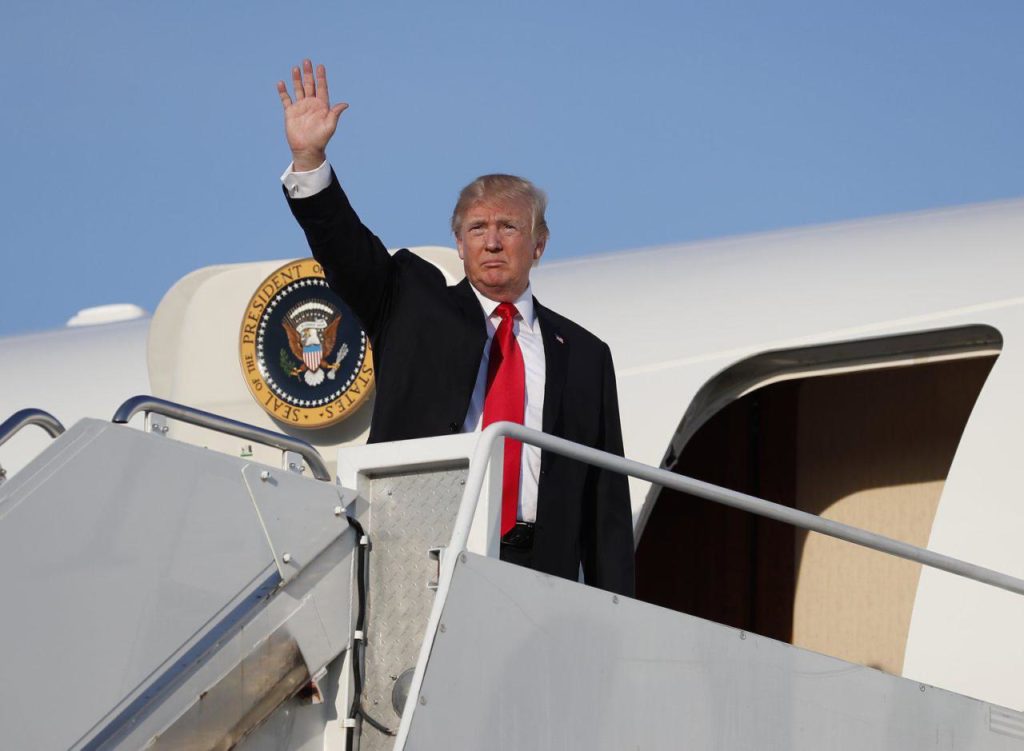
Donald Trump once questioned the wisdom of taking vacations. “What’s the point?” he asked. But now the president is getting ready to join the annual August exodus from this town he calls “the swamp.” Trump is due to set out Friday on his first extended vacation from Washington since the inauguration – a 17-day getaway to his private golf club in central New Jersey. The president’s vacation could be driven, in part, by necessity. Everyone who works in the White House West Wing, including the Oval Office occupant himself, will be forced to clear out by week’s end so that the government can replace the balky, 27-year-old heating and cooling system. But the White House hasn’t been entertaining questions about the president’s August plans. Asked whether Trump would be leaving Washington this month, given his recent warning that Congress should stick around until they vote on health care legislation, White House spokeswoman Sarah Huckabee Sanders said Tuesday: “We’ll continue to keep you guys updated on his August schedule as those details are finalized.” Trump and his supporters like to tout his disdain for taking vacations, when the truth is he takes them constantly. “Don’t take vacations. What’s the point? If you’re not enjoying your work, you’re in the wrong job,” Trump wrote in his 2004 book, “Trump: Think Like a Billionaire.” He told Larry King in an interview that year that “most of the people I know that are successful really don’t take vacations. Their business is their vacation. I rarely leave. You know that,” Trump said. “You and I are friends. How often do you see me going away?” Actually, Trump gets out of town quite often. So far, he has spent 13 of his 28 weekends in office away from the White House, mostly at his properties in Palm Beach, Florida, or in Bedminster, New Jersey, according to an Associated Press count. The figures include a weekend during official travel overseas, and Father’s Day weekend at Camp David, the government-owned presidential retreat in Maryland. Contrast Trump’s own frequent getaways with his criticism, before and during last year’s presidential campaign, of former President Barack Obama‘s vacations and frequent golf outings. “@BarackObama played golf yesterday. Now he heads to a 10 day vacation in Martha’s Vineyard. Nice work ethic,” Trump tweeted in August 2011. Trump said last year that he wouldn’t have time for golf if he became president. “I’m going to be working for you, I’m not going to have time to go play golf,” he told supporters in Virginia. But he plays golf whenever he’s at his clubs; sometimes it’s the full 18 holes, other times less than that. His staff rarely acknowledges that he plays, even when photos of him on the course pop up on social media. Presidents have been escaping Washington’s summer heat and humidity ever since Thomas Jefferson looked out of the White House windows and watched as a white fog that was believed to be toxic rolled in. Harry Truman played poker on the porch in Key West, Florida. Ronald Reagan rode horses at his mountain ranch in California. Bill Clinton and Barack Obama both spent August vacations on Martha’s Vineyard, the tiny Massachusetts island that serves as a summer playground for the rich and famous. George W. Bush retreated to his secluded Crawford, Texas, ranch to clear brush and ride his mountain bike. Besides the replacement of the West Wing’s heating and cooling system, repairs are also to be made to the steps on the South Portico, the side of the White House facing the National Mall. Cosmetic upgrades, including interior painting, replacing carpeting and curtains and fixing water leaks in the press office ceiling, are also on the maintenance list. Repairmen and others are expected to work around the clock during the coming weeks to complete all the upgrades by Aug. 21. Presidents travel with the equivalent of a mini-White House made up of advisers, other aides and security, and they must be prepared to deal with a crisis at all hours and from wherever they are. But chronic stress affects the body’s ability to resist infection, maintain vital functions and avoid injuries, Susan Krauss Whitbourne, then a professor of psychological and brain sciences at the University of Massachusetts Amherst, wrote in a 2010 paper on the website of Psychology Today subtitled “why presidents (and all of us) need vacations.” Stressed out people are more likely to get sick, have accidents, sleep poorly, be more irritable and less fun to be around. Whitebourne wrote that vacations break the “stress cycle.” “Perhaps it’s good that someone as important as our president is showing that he believes it’s beneficial to take a break from the office, get out and enjoy the outdoors in a little bit of a break in mindset and, we would hope, be able to go back to work refreshed and renewed and do a better job,” Whitbourne, who currently teaches at the university’s Boston campus, told the AP in a telephone interview. “I think that’s the theory of vacations.” Republished with permission of The Associated Press.
Keystone XL survived politics but economics could kill it
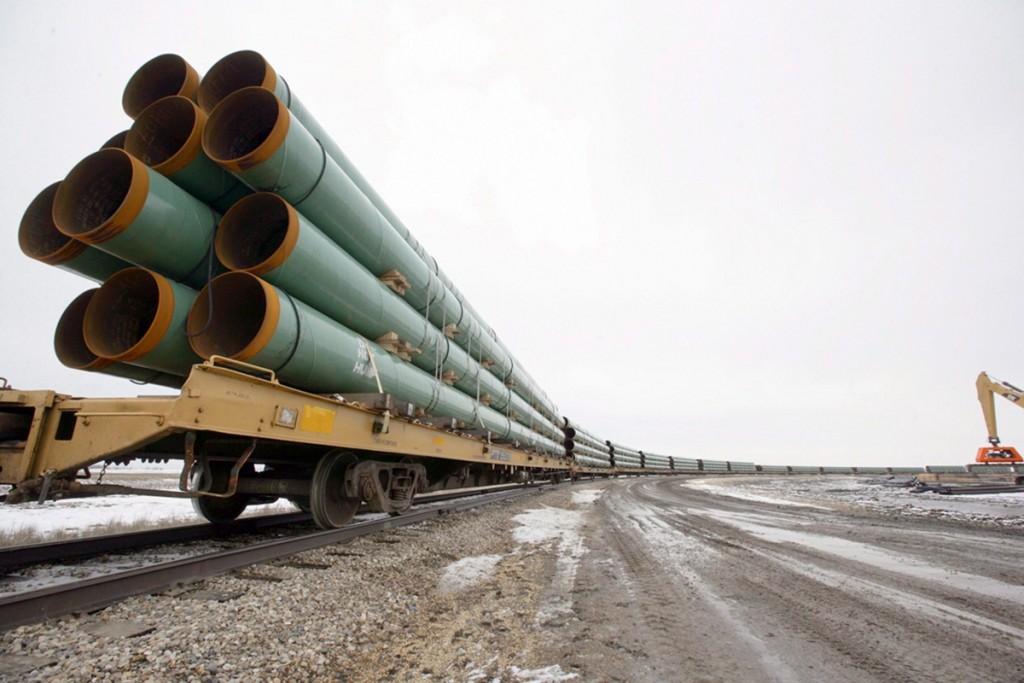
The proposed Keystone XL pipeline survived nine years of protests, lawsuits and political wrangling that saw the Obama administration reject it and President Donald Trump revive it, but now the project faces the possibility of death by economics. Low oil prices and the high cost of extracting Canadian crude from oil sands are casting new doubts on Keystone XL as executives with the Canadian company that wants to build it face the final regulatory hurdle next week in Nebraska. The pipeline proposed in 2008 has faced dozens of state and federal delays, many of them prompted by environmental groups who ultimately persuaded President Barack Obama to deny federal approval in November 2015. President Donald Trump resuscitated the project in March, declaring that Calgary-based TransCanada would create “an incredible pipeline.” After all that, a TransCanada executive raised eyebrows in the energy industry last week when he suggested that the pipeline developer doesn’t know whether it will move forward with the project. Paul Miller, an executive vice president who is overseeing the project, told an investor call that company officials won’t decide until late November or early December whether to start construction. “We’ll make an assessment of the commercial support and the regulatory approvals at that time,” Miller said in the conference call Friday with investors. The company has invited customers to bid for long-term contracts to ship oil on the pipeline. The bidding will run through September. An energy expert said the project has been delayed so long it may no longer make economic sense. “Frankly, in the current price climate, it’s probably not going to be a going venture unless there’s a massive improvement in technology” for processing Canadian crude, said Charles Mason, a University of Wyoming professor of petroleum and gas economics. Crude oil was trading at around $49.50 a barrel on Wednesday, down from highs of more than $100 in 2014. The 1,179-mile pipeline would transport oil from tar sands deposits in Alberta, Canada, across Montana and South Dakota to Nebraska, where it would connect with existing pipelines that feed Texas Gulf Coast refineries. South Dakota and Montana regulators have approved the project, although there are legal challenges pending in both states. Only Nebraska has yet to give regulatory approval. The rest of the route for the oil to the Gulf would travel an existing pipeline in the network. Mason said the biggest economic problem is that synthetic crude from the Canadian deposits is considered a lower-value product because it tends to be heavier, and thus more expensive to refine into gasoline and jet fuel. It’s also more expensive to extract than other oils. Producers have also found other ways to ship oil, primarily by train, and many are reluctant to sign long-term contracts with a pipeline that wouldn’t go into operation for several more years, said Jeff Share, editor of the Houston-based Pipeline & Gas Journal, a leading industry publication. Given the difficulties, Share said TransCanada has probably a “50-50” chance of completing the project. The five-member Nebraska Public Service Commission is supposed to decide by Nov. 23 whether the project serves the public’s interests, based on evidence presented by attorneys in a formal legal proceeding beginning Monday and a series of public hearings held over the last few months. The elected commission is comprised of four Republicans and one Democrat. Environmental opposition to the project has persisted in Nebraska, where opponents say the pipeline would pass through the Sandhills, an ecologically fragile region of grass-covered sand dunes, and would cross the land of farmers and ranchers who don’t want it. Nebraska law enforcement authorities already have had discussions with their counterparts in North Dakota about how that state handled widespread protests during construction of the Dakota Access Pipeline near the Standing Rock Indiana Reservation, said Cody Thomas, a Nebraska State Patrol spokesman. Protesters led by Native American tribes and environmental groups flocked to North Dakota last summer to rally against the Dakota Access Pipeline, and some camped out in bitter cold through early this year, prompting the state to send a large law enforcement contingent that sometimes skirmished with protesters. The pipeline was ultimately completed but legal challenges remain. Pipeline opponents in Nebraska said they are wary of TransCanada’s recent statements and don’t believe the company will surrender without a fight. “We can’t let our guard down,” said Jim Carlson, a farmer near Silver Creek, Nebraska, who grows corn on the pipeline’s proposed route. “We’ve got to continue to be vigilant and proactive. TransCanada could be doing things just to throw us off.” Carlson said TransCanada has offered him $307,000 since the company first contacted him in 2013, but he refuses to sign an easement agreement to grant access to his land. To highlight his opposition, Carlson is installing solar panels on his land directly in the path of the proposed pipeline. If the Nebraska commission approves the route, TransCanada can initiate legal proceedings under eminent domain to gain access to the land of holdout property owners. TransCanada has secured agreement with roughly 90 percent of Nebraska landowners along the route. The company said that if it decides to go ahead with the project, it would need six to nine months to start doing some of the staging of the construction crews followed by two years of construction. Republished with permission of The Associated Press.
Daniel Sutter: What to do about flood insurance
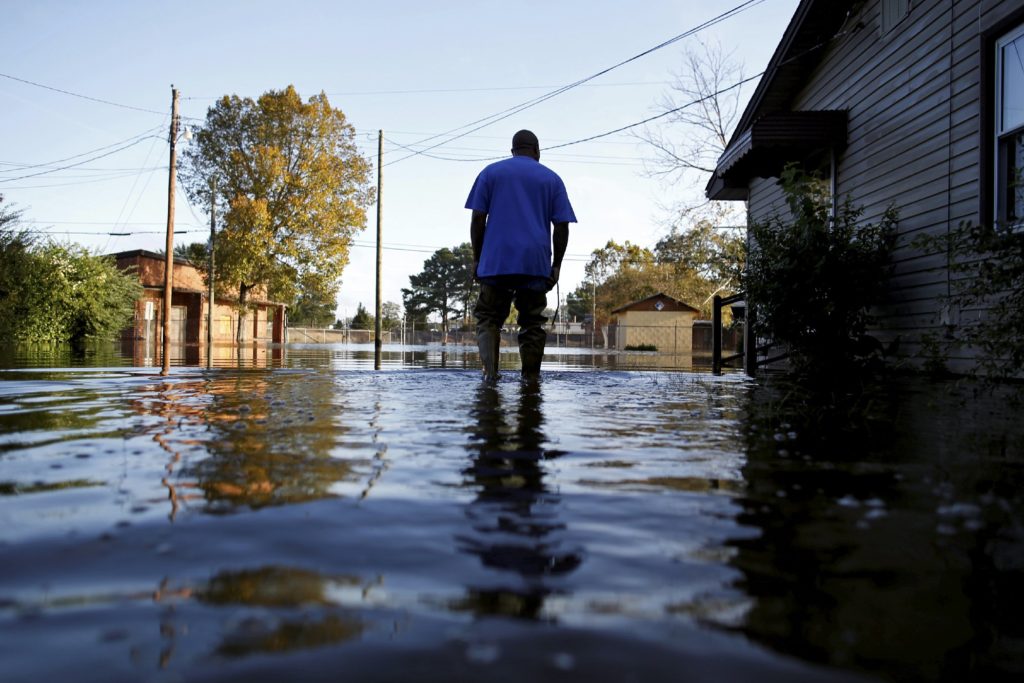
The National Flood Insurance Program (NFIP) expires at the end of September, and Congress is currently debating reauthorization. Congress should follow New Jersey Governor Chris Christie’s recent suggestion and privatize flood insurance. I do not propose that Congress end the program as of October 1. Rather, the reauthorization should initiate a five- or ten-year phase out. Standard residential and commercial policies exclude flood losses. Coverage for floods requires purchase of a separate policy. The NFIP was created in 1968 and writes most of America’s flood insurance. Currently, the NFIP has 5.2 million policies. I believe that government management of flood risk, of which NFIP is a part, has performed poorly. Why? Let’s start with the enormous cost to taxpayers: The NFIP currently owes $25 billion to the U.S. Treasury, thanks to decades of charging too little for insurance. Rates have been inadequate in two ways. First, many properties pay rates set deliberately low relative to their risk of flooding. Second, the NFIP does not charge sufficient rates to cover exceptional events, like Hurricanes Katrina, Ike, and Sandy. The NFIP has $1.3 trillion in coverage and only current premiums with which to pay losses; borrowing from the Treasury as needed has always been the plan. Government subsidies typically involve rules to limit access to avoid just handing out money to all comers. For the NFIP, land use management in flood zones limits access. Communities must join the NFIP to allow residents to buy policies, and then limit building in flood zones. And yet inflation-adjusted, per capita annual flood losses have doubled since the NFIP’s establishment. Clearly, we’re still building in flood zones. Government management of flood plains is also costly. Flood-proofing requirements for damaged properties in flood zones increase rebuilding costs. Disputes between insurers and the NFIP about whether water or wind damaged a property, so prevalent after Katrina, delays rebuilding. Governor Christie’s privatization suggestion reflected New Jersey residents’ frustrations in getting claims paid after Sandy. One of the biggest costs of the NFIP, I think, is public confusion. Five years after Katrina, 30 percent of residents in Louisiana and Mississippi still thought that their homeowners’ insurance covered hurricane flooding. Further, many Americans seem to equate the legal requirements for insurance purchase with flood risk and think that they are not at risk if they do not “have” to buy insurance. Nature, however, does not care about bureaucratic rules. The 500-year flood inundates properties far beyond the 100-year flood plain, and frequently leaves victims with no coverage. Victims without insurance create an irresistible political demand for disaster assistance. Less than 20 percent of New York City residential buildings flooded in Hurricane Sandy were insured, so Congress provided special aid. In addition to costing taxpayers billions, such assistance entrenches expectations of future assistance, further weakening the incentive to buy insurance. The best rationale for the NFIP is that it makes flood zone residents contribute something toward rebuilding. Suppose we consider it inevitable that politicians will help flood victims without the resources to rebuild. Without the NFIP, all people might be uninsured, and taxpayers would have to pay the full cost. Making people buy flood insurance at half the full cost will lower taxpayers’ cost. Yet purchase requirements are not enforced: only 53 percent of properties legally required to be insured were insured. Privatized flood insurance might seem like a radical proposition, but the United Kingdom, Germany, and Australia have market flood insurance. For a market to work, private insurers must be allowed to charge rates high enough to cover full costs, in some cases double or triple NFIP rates. While such increases would significantly burden low income families, a ten year transition would give time for adjustment. Some properties are vulnerable to flooding. This is a fact of nature. Politicians often find denying economic and natural realities to be a winning electoral strategy. The NFIP tells people that living in a flood zone doesn’t cost much, which simply shifts the cost to taxpayers. It is time to end this costly political charade. ••• Daniel Sutter is the Charles G. Koch Professor of Economics with the Manuel H. Johnson Center for Political Economy at Troy University and host of Econversations on TrojanVision. The opinions expressed in this column are the author’s and do not necessarily reflect the views of Troy University.
