
Why won’t Donald Trump condemn white nationalism?

Why doesn’t President Donald Trump just unequivocally condemn white supremacists? It’s a jarring question to ask about an American president. But it’s also one made unavoidable by Trump’s delayed, blame-both-sides response to the violence that erupted Saturday when neo-Nazis, skinheads and members of the Ku Klux Klan protested in Charlottesville, Virginia. Trump has faced such a moment before — one that would have certainly drawn swift, almost predictable condemnations from his recent predecessors, regardless of party. As a candidate and now as president, when racial tensions flared or fringe groups rallied around his message, Trump has shown uncharacteristic caution and a reluctance to distance himself from the hate. At times, his approach has seemingly inflamed racial tensions in a deeply divided country while emboldening groups long in the shadows. On Saturday, as Trump read slowly through a statement about the clashes that left dozens injured and one woman dead, he condemned hatred, bigotry and violence “on many sides.” The president was silent when journalists asked whether he rejected the support of nationalists’ groups. That silence was cheered by the white supremacist website Daily Stormer: “When asked to condemn, he just walked out of the room. Really, really good. God bless him.” Trump denies that he’s racist or sympathetic to such groups. Son-in-law Jared Kushner, the grandson of Holocaust survivors, and daughter Ivanka, who converted to Judaism, are among those who have defended the president against those charges. Still, he has a history of engaging in high-profile, racially fraught battles. Early in his career as a developer, Trump fought charges of bias against blacks seeking to rent at his family-owned apartment complexes. He long promoted the lie that the nation’s first black president, Barack Obama, was not born in the United States. As a candidate, he proposed temporarily banning Muslims from the United States. He retweeted a post from accounts that appeared to have ties to white nationalist groups. And he was slow to reject the endorsement of former KKK leader David Duke. Some of the president’s friends and advisers have argued that Trump is simply refusing to bend to liberals’ desire for political correctness. A boastful, proudly disruptive politician, Trump often has been rewarded for saying impolite and impolitic things. Some supporters cheered him for being someone who said what they could not. Democrats frequently assert that Trump sees a political advantage in courting the support of the far right. Indeed, he has benefited politically from the backing of media outlets such as Breitbart or InfoWars. They have consistently promoted Trump and torn down his opponents, sometimes with biased or inaccurate reports. Charlottesville’s mayor, Democrat Mike Signer, said Sunday that Trump made a choice during his campaign to “go right to the gutter, to play on our worst prejudices.” “I think you are seeing a direct line from what happened here this weekend to those choices,” Singer said on CBS’ “Face the Nation.” White House senior adviser Steve Bannon ran Breitbart before joining Trump’s campaign, and several of the president’s other aides believe Bannon continues to have influence over the website. In “Devil’s Bargain,” a new book about his role in the Trump campaign, Bannon is quoted as saying that attempts by Democratic presidential nominee Hillary Clinton to tie Trump to the alt-right and nationalists did not move voters. “We polled the race stuff and it doesn’t matter,” Bannon said, according to the book. But there here’s no reliable public polling on the scope of Trump’s support among those with white nationalist leanings or the percentage of the electorate they comprise. The reaction from Republicans following Trump’s statement Saturday suggests there may be greater political risks for the president in aligning himself with bigoted groups. “The president needs to step up today and say what it is,” said Sen. Cory Gardner, R-Colo., who was one of several GOP lawmakers urging Trump to be more strident in calling out the nationalists and neo-Nazis that gathered in Charlottesville. Gardner said plainly: “It’s evil. It’s white nationalism.” By Sunday, the White House was scrambling to try to clean up the president’s statement. The White House issued a statement saying the president does condemn “white supremacists, KKK, neo-Nazi and all extremist groups.” The spokeswoman who issued the statement refused to be named. And the president himself remained silent. Republished with permission of The Associated Press.
Bradley Byrne: Who will build our 355 ship Navy?
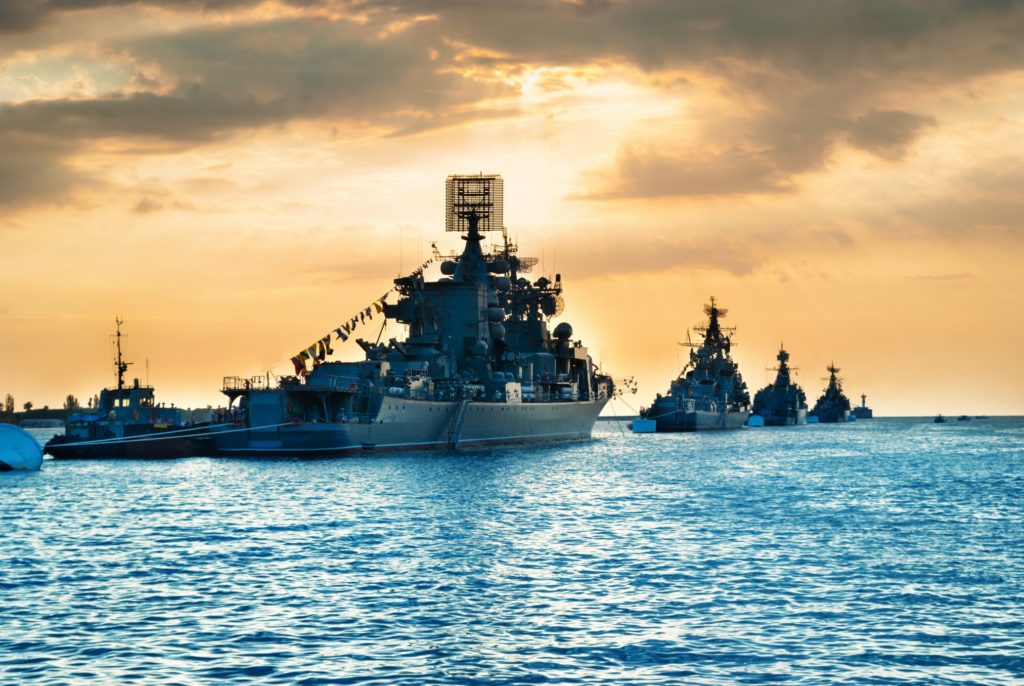
America has the most powerful Navy the world has ever seen. For centuries, our sailors have provided peace and stability around the globe. With over eighty percent of the world’s population living within sixty miles of the sea and ninety percent of world trade moving by sea, a strong and capable U.S. Navy is critical to a bountiful economy and the wellbeing of humanity. Unfortunately, due to defense cuts and a shrinking fleet size, competitors are challenging our naval superiority. This is why it is critically important we support the Navy’s proposed 355 ship fleet and continue to invest in the latest technology. In order to grow our Navy and make sure we continue to be an example of strength for the rest of the world, it is vital that we have a robust shipbuilding industry here at home. Shipbuilding and ship repair have been an important part of our national economy since our country’s founding. Nationally, the industry accounts for roughly 400,000 jobs, provides $25.1 billion in labor income, and contributes over $37.3 billion to the GDP. Shipbuilding is about both national security and a strong economy. Unfortunately, we cannot build up to the 355 ship fleet of tomorrow without a skilled and capable workforce. Our nation continues to experience a severe gap in skilled workers, and the shipbuilding industry is not immune to this problem. This is one example why career and technical education (CTE) programs are so important. They provide American workers with the development and training needed to build the ships that are necessary in order to maintain our naval superiority. Thousands of workers in the United States look to technical education programs as a path forward in their careers. Whether it is a sudden and unexpected career change or a well-planned out career for a high school student, CTE programs offer opportunity and growth for a wide range of Americans. Aaron, one of my constituents in Southwest Alabama, is a great example of a CTE success story. Ten years ago, he started out as a plumber, but after going through a CTE program, he now supervises pipe and machinery for an entire shipyard in coastal Alabama. His supervisor cites him as one of their best leaders. His life was forever changed thanks to CTE, and he is now helping build our nation’s warships. As the former chancellor of the Alabama’s community college system, I have seen these CTE programs firsthand and they work like magic. Encouraging our nation’s workforce to specialize in a valuable trade like shipbuilding and repair improves their lives and also provides tremendous benefits to both our economy and our national security. Earlier this year, the House passed H.R. 2353, the Strengthening Career and Technical Education for the 21st Century Act, on a huge bipartisan vote. Our bipartisan bill updates the Carl D. Perkins Career and Technical Education Act by empowering state and local leaders, improving alignment with in-demand job areas, and increasing transparency and accountability. These reforms will make our CTE programs stronger, which in turn will benefit the overall U.S. economy. The bill is now under consideration in the Senate, and I hope they will act swiftly on this bipartisan bill to help train the workforce of tomorrow, including our nation’s shipbuilders. As President Theodore Roosevelt said in 1902, “A good Navy is not a provocation to war. It is the surest guaranty of peace.” As we work to build up our Navy, let us not lose sight of the importance of maintaining and supporting a skilled workforce to build the 355 ship fleet of tomorrow. • • • Bradley Byrne is a member of U.S. Congress representing Alabama’s 1st Congressional District.
We must take a stand against hate without compromising vital rights
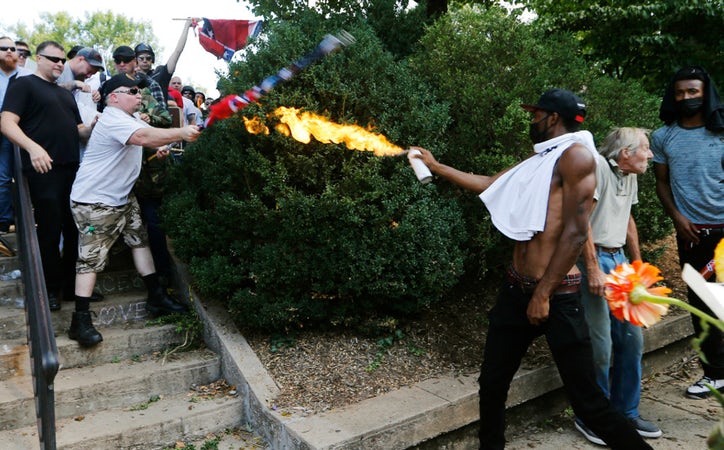
Bigotry and racism are awful and inexcusable. The actions and chants of agitators intended to harass or intimidate those around them are a form of domestic terrorism. Neo-Nazi sympathizers and white supremacists do not speak for the people or the ideals of our great nation and never will. The images and behavior of Americans with Nazi or KKK symbols or attire, signs and displays glorifying of a time and culture of violence, murder, enslavement is sickening and should never be justified or excused. The actions of the driver of the vehicle who viciously attacked counter protestors were evil. Words of unmitigated, direct condemnation is the least we should expect or demand from our nations leaders and President Donald Trump failed us by not delivering that message in a timely manner. The White House issued a statement today saying in part, “The president said very strongly in his statement yesterday that he condemns all forms of violence, bigotry and hatred. Of course that includes white supremacists, KKK neo-Nazi and all extremist groups. He called for national unity and bringing all Americans together.” There will be some readers of this piece who will think I should stop here, but I’m not done. I’ve spent the better part of a day reading as many firsthand accounts, watching videos and scrolling through photos of what happened in Charlottesville, Virginia. The only thing I can say with certainty is this – there were individuals on both sides of the situation, protestors and the counter protestors, who arrived with the intent to hold a peaceful protest. Then, there were others who came to create violent encounters and cause trouble. If I were to base my opinion solely on the headlines I’d think that it was just the white nationalists who were violent or who even started the violence but there’s plenty of evidence to contradict that. What we do know is the driver of the vehicle which took the life of a young counter-protestor was domestic terrorism. I’ve seen posts and read pieces praising counter protestors for violently confronting those who came to participate in the rally but I can no more justify violent behavior by those who share my views than by those who don’t. Violence isn’t the answer. It leaves those caught in the middle of the two sides to live in fear innocent bystanders who just live or work around the areas of protests. Violence doesn’t seek to change the message it fuels the flames of hatred and injustice and cannot be tolerated by anyone. Was violence the intent of the organizers on either side? Not that I can find. It seems the neo-Nazi, white nationalists believed that their rally would grow their disgusting, ridiculous and unwelcome cause. Were the counter protestors not there, had there not been violent confirmations but instead peaceful assemblies by both sides would they have marched and chanted and then left? We will never know. The organizers’ stated goal was to normalize hate and recruit more supporters. This goal (taken on face value) is based on a delusion that more than a small percentage of Americans share their view. Without a doubt, that should be clearer to them today. Those consumed by hate may have forgotten their outdated and vile positions have been already litigated in our nation’s history; we have moved past them. Decency, love, tolerance, community and kindness won out over hate and injustice. People on the losing side will never be celebrated. Nor will those trying to resurrect their cause now be successful. I’ve seen people – smart people – explain that the First Amendment doesn’t or should cover hate speech. That’s not true. The U.S. Supreme Court has ruled on this and with opinions, which I cannot do any better writing myself. So, read what our justices had to say, reported by the Washington Post … Samuel Alito (for four justices) in Matal v. Tam, the “Slants” case: [The idea that the government may restrict] speech expressing ideas that offend … strikes at the heart of the First Amendment. Speech that demeans on the basis of race, ethnicity, gender, religion, age, disability, or any other similar ground is hateful; but the proudest boast of our free speech jurisprudence is that we protect the freedom to express “the thought that we hate.” Justice Anthony Kennedy, in addition to four justices, wrote separately, but on this point the opinions agreed: A law found to discriminate based on viewpoint is an “egregious form of content discrimination,” which is “presumptively unconstitutional.” … A law that can be directed against speech found offensive to some portion of the public can be turned against minority and dissenting views to the detriment of all. The First Amendment does not entrust that power to the government’s benevolence. Instead, our reliance must be on the substantial safeguards of free and open discussion in a democratic society. We are living in an age where offense is too often taken lightly. In is an age where the younger generations seek to be protected from anything that doesn’t suit them or their positions. If we cower to limitations on the fundamental right to free speech and peaceful assembly, then we have already lost to those with whom we disagree. We will not beat back the intentions and beliefs of jack clowns of the so-called Alt-Right by putting them in free speech boxes, limiting their rights or by outright ignoring them. We beat them by showing they’re outnumbered and that they don’t represent either true conservatives or the spirit and will of Americans as a whole. I’m disappointed in Trump’s weak, non-specific statement. The president could (and still should) do better. There were bad actors on both sides – that is an undisputed fact. But to not call out those intending to promote evil was wrong. This should be said again and again — until the light has chased out the darkness — that the goals of their movement deserve no respect and will fail again. We don’t
Donald Trump drawing criticism for not explicitly rebuking white supremacists
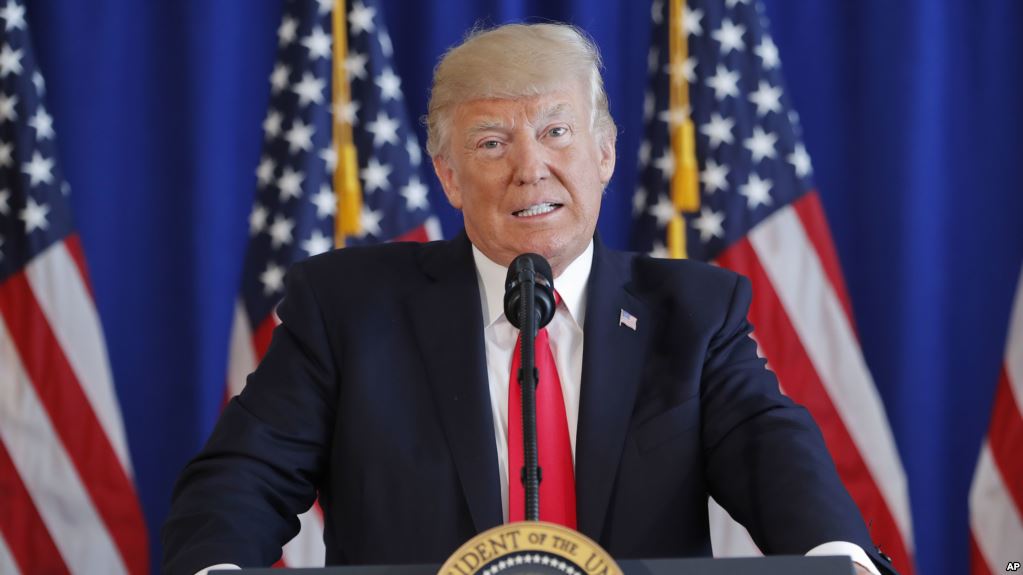
President Donald Trump is drawing criticism from Republicans and Democrats for not explicitly denouncing white supremacists in the aftermath of violent clashes in Virginia, with lawmakers saying he needs to take a public stand against groups that espouse racism and hate. Trump, while on a working vacation at his New Jersey golf club, addressed the nation Saturday soon after a car plowed into a group of anti-racist counter-protesters in Charlottesville, a college town where neo-Nazis and white nationalists had assembled for march. The president did not single out any group, instead blaming “many sides” for the violence. “Hate and the division must stop, and must stop right now,” he said. “We have to come together as Americans with love for our nation and … true affection for each other.” Trump condemned “in the strongest possible terms this egregious display of hatred, bigotry and violence on many sides, on many sides.” He added: “It’s been going on for a long time in our country. Not Donald Trump. Not Barack Obama. It’s been going on for a long, long time.” He did not answer questions from reporters about whether he rejected the support of white nationalists or whether he believed the car crash was an example of domestic terrorism. Aides who appeared on the Sunday news shows said the White House did believe those things, but many fellow Republicans demanded that Trump personally denounce the white supremacists. Sen. Cory Gardner, R-Colo., tweeted: “Mr. President – we must call evil by its name. These were white supremacists and this was domestic terrorism.” Added Sen. Marco Rubio, R-Fla.: “Nothing patriotic about #Nazis,the #KKK or #WhiteSupremacists It’s the direct opposite of what #America seeks to be.” GOP Chris Christie of New Jersey, a staunch Trump supporter, wrote: “We reject the racism and violence of white nationalists like the ones acting out in Charlottesville. Everyone in leadership must speak out.” On the Democrat side, Senate Minority Leader Charles Schumer of New York said “of course we condemn ALL that hate stands for. Until @POTUS specifically condemns alt-right action in Charlottesville, he hasn’t done his job.” The president’s only public statement early Sunday was a retweet saluting two Virginia state police officers killed in helicopter crash after being dispatched to monitor the Charlottesville clashes. The previous day, Trump tweeted condolences to those officers soon after the helicopter crashed. His tweet sending condolences to the woman killed in the protests came more than five hours after the incident. Trump’s national security adviser, H.R. McMaster, said Sunday that he considered the attack in Charlottesville to be terrorism: “I certainly think anytime that you commit an attack against people to incite fear, it is terrorism,” McMaster told ABC’s “This Week.” “It meets the definition of terrorism. But what this is, what you see here, is you see someone who is a criminal, who is committing a criminal act against fellow Americans.” The president’s homeland security adviser, Tom Bossert, defended the president’s statement by suggesting that some of the counter-protesters were violent too. When pressed, he specifically condemned the racist groups. The president’s daughter and White House aide, Ivanka Trump, tweeted Sunday morning: “There should be no place in society for racism, white supremacy and neo-nazis.” White nationalists had assembled in Charlottesville to vent their frustration against the city’s plans to take down a statue of Confederal Gen. Robert E. Lee. Counter-protesters massed in opposition. A few hours after violent encounters between the two groups, a car drove into a crowd of people peacefully protesting the rally. The driver was later taken into custody. Alt-right leader Richard Spencer and former Ku Klux Klan member David Duke attended the demonstrations. Duke told reporters that the white nationalists were working to “fulfill the promises of Donald Trump.” Trump’s speech also drew praise from the neo-Nazi website Daily Stormer, which wrote: “Trump comments were good. He didn’t attack us. He just said the nation should come together. Nothing specific against us. … No condemnation at all.” The website had been promoting the Charlottesville demonstration as part of its “Summer of Hate” edition. Mayor Michael Signer, a Democrat, said he was disgusted that the white nationalists had come to his town and blamed Trump for inflaming racial prejudices with his campaign last year. “I’m not going to make any bones about it. I place the blame for a lot of what you’re seeing in American today right at the doorstep of the White House and the people around the president,” he said. Trump, as a candidate, frequently came under scrutiny for being slow to offer his condemnation of white supremacists. His strongest denunciation of the movement has not come voluntarily, only when asked, and he occasionally trafficked in retweets of racist social media posts during his campaign. His chief strategist, Steve Bannon, once declared that his former news site, Breitbart, was “the platform for the alt-right.” Republished with permission of The Associated Press.
Donald Trump answers call of crisis with familiar bluster, spontaneity and norm-breaking risk that defined his political rise
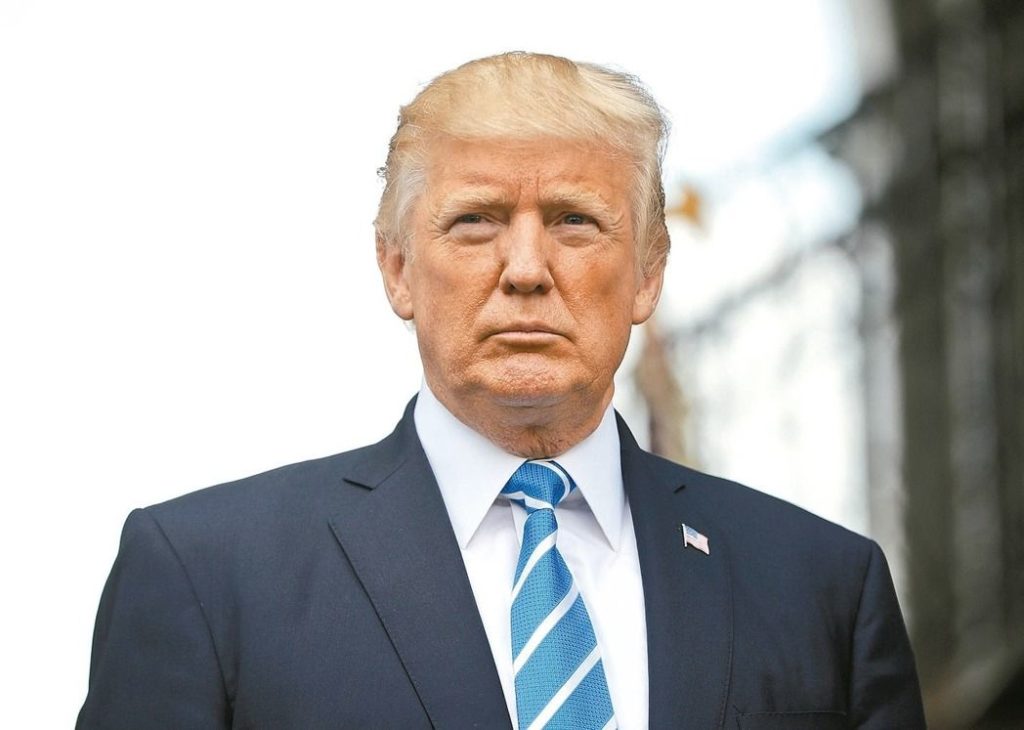
A nuclear showdown. The world’s most unpredictable foe. A world on edge. What will the new president do? Be Trump. Faced with perhaps his gravest international crisis yet, President Donald Trump this week responded precisely as his some of supporters hoped and his critics long feared. The mix of plain-spoken bluster, spontaneity and norm-breaking risk that defined his political rise defined his approach to a round of fresh threats from nuclear North Korea. When Pyongyang punched, Trump counterpunched harder — much as he did on a debate stage flanked by political opponents. But this was not a Florida debate stage or a low-stakes celebrity Twitter war of the sort Trump perfected before entering politics. It was a standoff over North Korea’s rapidly developing nuclear program, complete with trading threats of war and the safety of millions in the balance. Over the course of the week, Trump unleashed provocative rhetoric and dismissed the careful or precise diplomatic language favored by his predecessors. “They should be very nervous,” Trump said of North Korea. “Because things will happen to them like they never thought possible, OK? Still, Trump’s strategy was familiar. He tweeted regularly. He took it personally. He spoke off the cuff. He talked — a lot — holding a two-day blitz of press conferences, each yielding moments that immediately sparked chatter, confusion, criticism and attention. On Friday, after striking a slightly toned-down message to North Korea, Trump offered that he would consider military action in Venezuela, where the president has consolidated power and sparked widespread international condemnation. In the course of a 12-minute exchange with journalists, the remark raised the prospect of the use of military force against two countries in two different hemispheres. Trump’s pugnacious public talk is matched by his private conversations with aides and allies. Trump has told associates that North Korean leader Kim Jong Un has disrespected him and the United States and that he believes the rogue nation will only respond to toughness and the threat of force, according to two people who, like others interviewed, requested anonymity because they were not authorized to discuss private conversations. Some aides were surprised when Trump declared Tuesday, soon after word spread that North Korea had made a nuclear breakthrough, that the isolated nation would face “fire and fury” if the threat continued. The president had not used those words in a conference call with advisers beforehand when discussing the matter. He also told aides, including new chief of staff John Kelly, that he had no intention of softening his tone, according to two White House officials, who also demanded anonymity to discuss the conversations. The president has gone out of his way to discuss the threat posed by North Korea, tweeting frequently and engaging reporters at length four times over two days in his golf club. On Thursday, as he fielded questions from a small group of reporters, he ignored press secretary Sarah Huckabee Sanders, who repeatedly held up a hand-written sign that urged him to take just one final question. Instead, he frequently made eye contact with individual reporters to seek out their inquiries. He ended up talking for 30 minutes, much of it in ominous language about North Korea. His plain-spoken tough talk, which is easily distilled into tweets and the ticker headlines that crawl across cable television, has frequently thrilled supporters. “Trump is simply trying to communicate in vivid, clear language to a dictator not used to listening to anybody that they are facing the potential end of their regime,” said frequent Trump adviser Newt Gingrich. “I think that what he’s trying to do in the short run is to communicate with great intensity that we are serious.” For others, Trump’s rhetoric only appeared to be escalating the crisis. “Presidents have used tough language about adversaries,” said Julian Zelizer, history professor at Princeton University. “The difference is how unscripted this is … this is ad hoc and improvised, which most presidents have understood to be dangerous when nuclear weapons are involved.” Trump dismissed such criticism on Friday evening, as he answered more questions from reporters, and issued more threats. “My critics are only saying that because it’s me,” Trump said. “We have tens of millions of people in this country that are so happy with what I’m saying because they’re saying finally we have a president that’s sticking up for our nation and frankly sticking up for our friends and our allies.” Republished with permission of The Associated Press.
