
Kay Ivey prepping for 2018 run behind the scenes
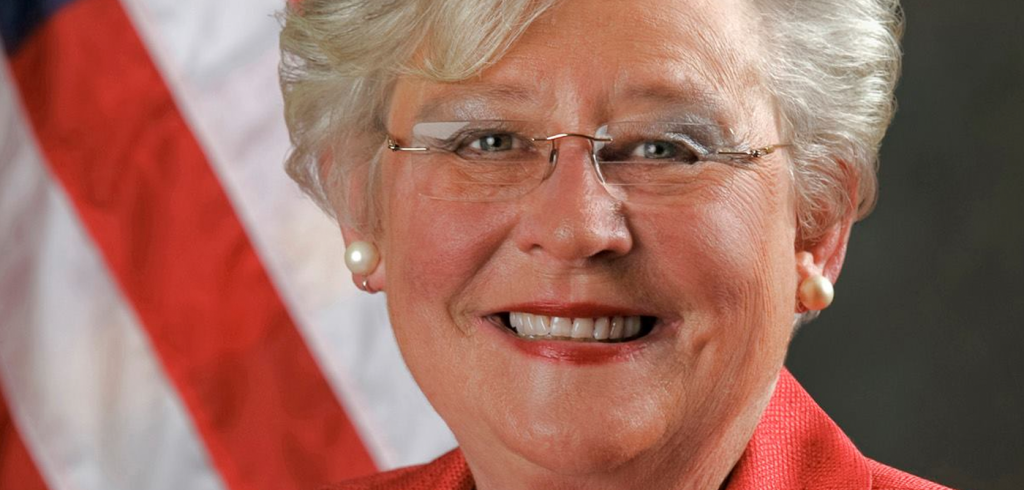
Sitting Republican Gov. Kay Ivey may be gearing up to announce she is running for election in her own right next year. Ivey ascended to the Governor’s Mansion in April after former Republican Gov. Robert Bentley resigned the office amid controversy. Since taking over the office, she has enjoyed some of the highest approval and lowest disapproval ratings among sitting governors nationwide. Ivey publicly weighed in on her 2018 plans in June, when she told reporters she would wait until the fall to announce whether she would run, but announcements from another would-be candidate may have telegraphed the longtime elected official’s next move. Anniston Republican Sen. Del Marsh, whose gubernatorial aspirations are well-known, announced last week that he would run for re-election to the senate, and even added that he looked forward to working with Kay Ivey in the future “if she decides to run” for a full term. Later in the week, Ivey reportedly made “the call” to several big names in the business community and state legislature to tell them of her intentions. While the content of those calls was not confirmed, Ivey spokesman Daniel Sparkman said the sitting governor “is considering her options” and that she “plans to decide in the near future.” The speed at which she decides could be influenced by Huntsville Mayor Tommy Battle, who is already in the race and is currently leading the pack in fundraising. Whether or not Ivey can slow Battle down on the fundraising trail, she could likely look forward to racking up some early wins on the trail by forcing her competitors to change their tack. So far, most of the 2018 crop has run on bringing honor and credibility back to the Governor’s Mansion — a strategy that would have played well directly following Bentley, but which is likely to fall flat running against a governor with approval ratings like Ivey’s.
Embattled Mo Brooks hit with new ethics complaint

Rep. Mo Brooks can now stop telling Alabama voters he “never” received an ethics complaint. On Monday, an Alabama man filed a federal grievance against the congressman and Senate candidate accusing him of improperly using congressional resources both in a campaign ad and on social media. NTKnetwork.com reports insurance agent Joe Fuller filed the complaint against Brooks, locked in a heated race for the second-place spot in the primary Tuesday for Alabama’s Senate seat. In a recent campaign ad — “To the president” — Brooks chides President Donald Trump and Senate Majority Leader Mitch McConnell for supporting his Republican opponent, sitting Sen. Luther Strange. Senate Leadership Fund, the super PAC linked to McConnell, has solidly backed Strange with millions of dollars in advertising. Brooks, Strange and former Alabama Supreme Court Chief Justice Roy Moore have been battling for the top spots in the 9-person primary to decide who could serve the rest of Attorney General Jeff Sessions’ Senate term. A Cygnal/L2 poll released Thursday suggests the race will go to a runoff Sept. 26 between two top vote-getters, since it is unlikely one will take a majority of the vote. In the survey of likely Republican voters, Moore leads the field with 31 percent compared to Strange‘s 23 percent. Brooks, the only other candidate with a chance of making a runoff, follows with 18 percent. Last week, Trump formally endorsed Strange on Twitter, which led to a quick condemnation from Brooks, who had been pushing himself as a pro-Trump candidate. Both in the ad and on Twitter, Brooks asked Trump to reconsider his endorsement. “McConnell and Strange are weak, but together, we can be strong,” Brooks said in the spot, before asking: “Mr. President, isn’t it time we tell McConnell and Strange: ‘You’re fired?’” It was a nod to Trump’s famous catchphrase used in “The Apprentice.” As Fuller’s complaint noted, the ad shows Brooks wearing his congressional pin — an apparent violation of House ethics rules. As the House Ethics Manual states: “Official resources of the House must, as a general rule, be used for the performance of official business of the House, and hence those resources may not be used for campaign or political purposes.” Fuller’s complaint also alleges that Brooks violated 18 U.S. Code § 713, prohibiting a Member of Congress photo from being used on a social media campaign page. Brooks official photo is on his Facebook page. According to 18 U.S. Code § 713: “Whoever knowingly displays any printed or other likenesses of the great seal of the United States … or the seal of the United States House of Representatives, or the seal of the United States Congress … for the purpose of conveying, or in a manner reasonably calculated to convey, a false impression of sponsorship or approval by the Government of the United States or by any department, agency or instrumentality thereof, shall be fined under this title or imprisoned not more than six months, or both.” Brooks continues to insist he has never received a single ethics complaint — an interesting claim considering several questionable ethical lapses as Madison County district attorney in the 1990s. Nevertheless, in a campaign appearance Monday with the Republican Women of Birmingham, Brooks had a slightly different take. The video was streamed on Facebook Live and is also available on Brooks Senate campaign page. At about nine-and-a-half minutes, the video shows Brooks telling the audience that due to “limited resources,” his wife, Martha, handles complaints, ethical concerns, and federal elections Commission issues for his office. Brooks’ comment raises a question: Why would he need someone to handle ethics accusations — especially his own wife — if Brooks never gets any complaints in the first place?
Paul Ryan opponent says he believes ‘pizzagate’ conspiracy
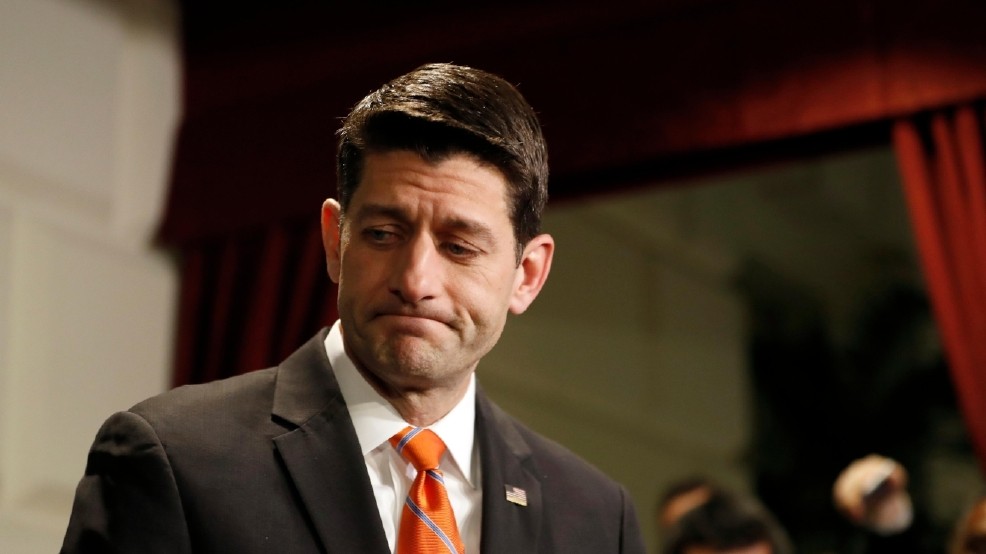
House Speaker Paul Ryan’s Republican challenger says he believes an unfounded right-wing online conspiracy theory dubbed “pizzagate.” Paul Nehlen voiced his opinion during an online question-and-answer session with voters earlier this month on Reddit. He was asked, “What are your thoughts on Pizzagate?” In response, Nehlen wrote, “I believe it is real.” The conspiracy theory claims Democrats harbor child sex slaves at a pizza restaurant in Washington, D.C. The false internet rumor led a gunman to fire an assault weapon inside the pizzeria in December. Nehlen did not explain in the Aug. 3 session why he believed the conspiracy theory. But he tried to explain himself in a series of Twitter messages Monday to The Associated Press. “I believe in the broader possibility that there are those in positions of power to which laws do not equally apply to them, and therefore, I pray (Attorney General Jeff) Sessions unleashes the full power of his assets to root out and prosecute EQUALLY those who prey on children, including human trafficking narco-terrorists, and those in positions of power,” Nehlen said. In the same Reddit conversation from earlier this month, Nehlen disparaged another person in the online conversation as “amazingly retarded.” The original comment that elicited the response from Nehlen was deleted. Nehlen told AP on Monday he was being sardonic. Nehlen lost to Ryan by 68 points last year and is seeking a rematch next year. Nehlen ran to the right of Ryan last year and initially won the endorsement of then-candidate Donald Trump, who later backed Ryan. Ryan campaign spokesman Zack Roday said Nehlen “has consistently proven himself irrelevant” and said his “retarded” remark was “wrong and it is hurtful.” Roday also said Nehlen should not “trade in conspiracy theories.” Republished with permission of The Associated Press.
Bradley Byrne plans additional August Town Halls across 1st District
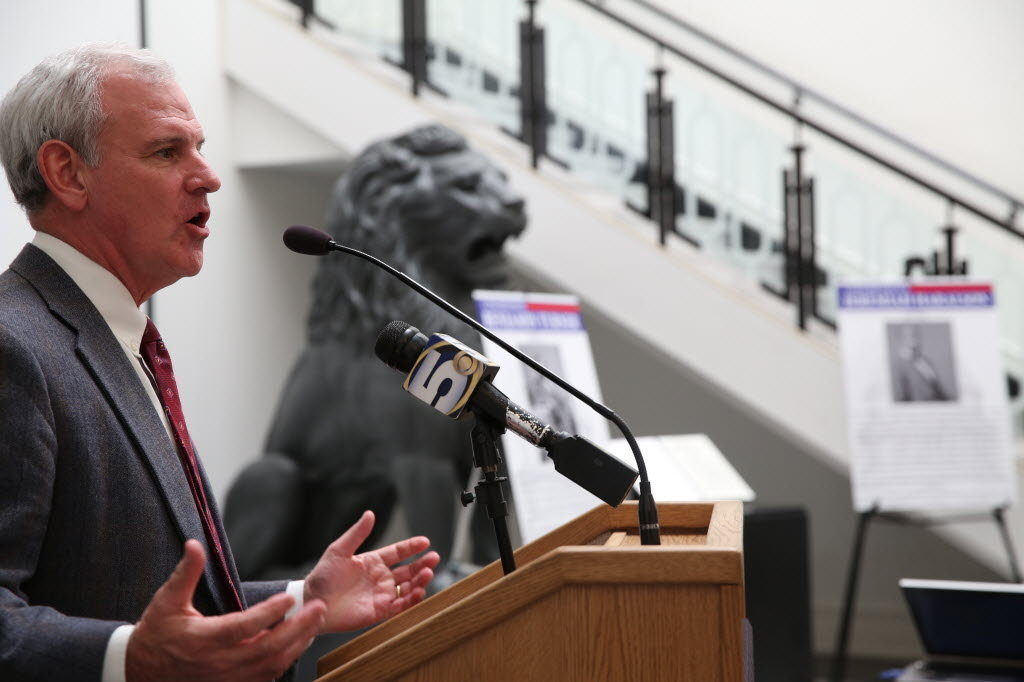
Alabama 1st District U.S. Rep. Bradley Byrne is once again putting his constituents front and center. During the annual Congressional August Recess — a month away from Washington, D.C. designed to give members of Congress an opportunity to reconnect with the constituents they represent — Bryne has planned five additional Town Hall meetings to reconnect with 1st District Alabamians. Throughout next week, the congressman will visit Toulminville, Monroeville, Atmore, Crossroads, and Prichard. Earlier this month, he held Town Hall meetings in Fairhope and Gulf Shores. “I look forward to hearing your ideas and addressing your concerns,” Bryne posted on Facebook announcing the additional meetings. By the end of the month, Byrne will have held 94 in-person town hall meetings since being elected to Congress. Below is Bryne’s upcoming Town Hall schedule: Toulminville Town Hall Meeting August 23, 2017 at 4:00 p.m. CT John L. LeFlore Magnet High School 700 Donald Street Mobile, AL 36617 Monroeville Town Hall Meeting August 29, 2017 at 11:00 a.m. CT Monroeville City Hall 280 Whetstone Street Monroeville, AL 36460 Atmore Town Hall Meeting August 29, 2017 at 3:00 p.m. CT Atmore City Hall 201 East Louisville Street Atmore, AL 36502 Crossroads Town Hall Meeting August 30, 2017 at 9:30 a.m. CT Crossroads Volunteer Fire Department 41761 State Highway 225 Bay Minette, AL 36507 Prichard Town Hall Meeting August 30, 2017 at 3:00 p.m. CT Prichard City Hall 216 E Prichard Avenue Prichard, AL 36610 All of the meetings are free to attend and open to the public.
Donald Trump says racism is ‘evil,’ condemns KKK and neo-Nazis as ‘thugs’
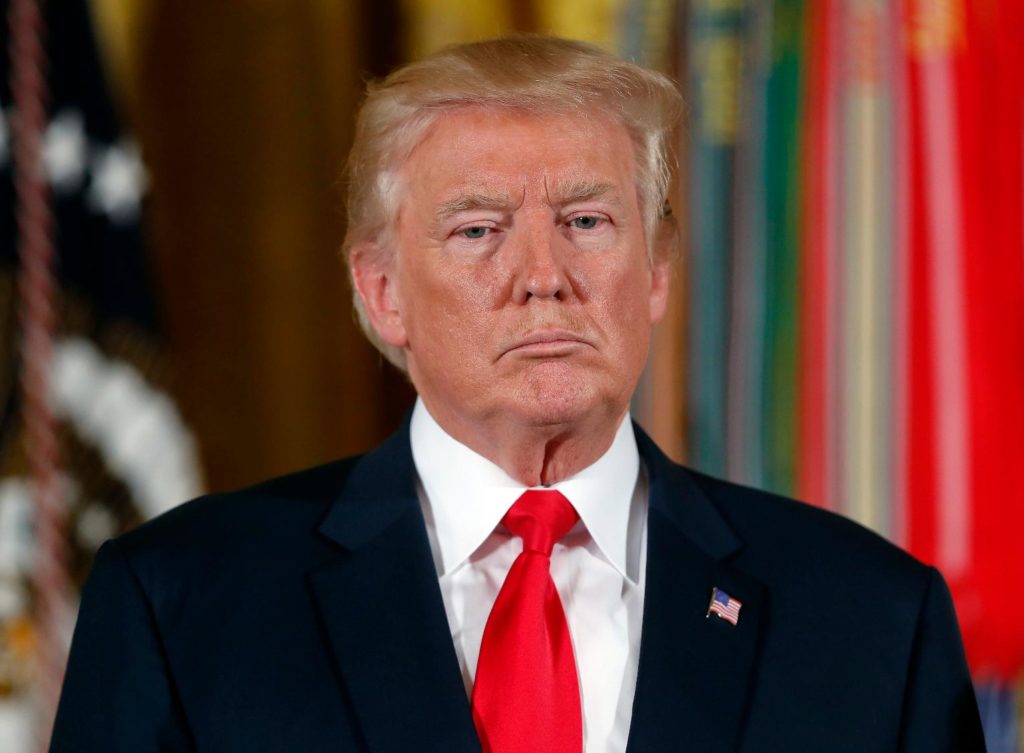
Under relentless pressure, President Donald Trump on Monday named and condemned “repugnant” hate groups and declared that “racism is evil” in a far more forceful statement than he’d made earlier after deadly, race-fueled weekend clashes in Charlottesville, Virginia. Trump’s initial failure on Saturday to denounce the groups by name – instead he bemoaned violence on “many sides” – prompted criticism from fellow Republicans as well as Democrats. This time, the president described members of the KKK, neo-Nazis and white supremacists who take part in violence as “criminals and thugs” in a prepared statement he read at the White House. “Racism is evil,” he said, singling out the hate groups as “repugnant to everything that we hold dear as Americans.” “Those who spread violence in the name of bigotry strike at the very core of America,” he said. In his remarks he also called for unity. “We must love each other, show affection for each other and unite together in condemnation of hatred, bigotry and violence. We must rediscover the bonds of love and loyalty that bring us together as Americans,” he said. Trump also, for the first time, mentioned Heather Heyer by name, as he paid tribute to the woman killed when a car plowed into a group of anti-racist counter-protesters in Charlottesville. The president left after his statement without acknowledging reporters’ shouted questions. At an event on trade later in the day, he was asked why it took two days for him to offer an explicit denunciation of the hate groups. “They have been condemned,” Trump responded before offering a fresh criticism of some media as “fake news.” Trump noted that the Justice Department has opened a civil rights investigation into the car crash that killed Heyer. “To anyone who acted criminally in this weekend’s racist violence, you will be held fully accountable. Justice will be delivered,” he said. His attorney general, Jeff Sessions, said earlier Monday that the violence “does meet the definition of domestic terrorism in our statute.” Sessions told ABC’s “Good Morning America,” ”You can be sure we will charge and advance the investigation toward the most serious charges that can be brought, because this is an unequivocally unacceptable and evil attack that cannot be accepted in America.” Trump gave his statement after meeting with Sessions and FBI Director Christopher Wray. In the hours after the incident on Saturday, Trump addressed the violence in broad strokes, saying that he condemns “in the strongest possible terms this egregious display of hatred, bigotry and violence on many sides, on many sides.” That was met with swift bipartisan criticism. Virginia Gov. Terry McAuliffe, a Democrat, said he spoke to Trump in the hours after the clashes and twice told the president “we have to stop this hateful speech, this rhetoric.” He said he urged Trump “to come out stronger” against the actions of white supremacists. Republicans joined Democrats in criticizing the president for not specifically calling out white nationalists. Sen. Cory Gardner of Colorado said Sunday on NBC, “This isn’t a time for innuendo or to allow room to be read between the lines. This is a time to lay blame.” The White House scrambled to stem the tide of criticism, dispatching aides to the Sunday talk shows and sending out a statement that more forcefully denounced the hate groups. But the White House did not attach a name to the statement. Usually, a statement would be signed by the press secretary or another staffer; not putting a name to one eliminates an individual’s responsibility and often undercuts the significance. White nationalists had assembled in Charlottesville to vent their frustration against the city’s plans to take down a statue of Confederal Gen. Robert E. Lee. Counter-protesters massed in opposition. Alt-right leader Richard Spencer and former Ku Klux Klan leader David Duke attended the demonstrations. Duke told reporters that the white nationalists were working to “fulfill the promises of Donald Trump.” Trump’s initial comments drew praise from the neo-Nazi website Daily Stormer, which wrote: “Trump comments were good. He didn’t attack us. He just said the nation should come together. Nothing specific against us. … No condemnation at all.” The website had been promoting the Charlottesville demonstration as part of its “Summer of Hate” edition. Trump, as a presidential candidate, frequently came under scrutiny for being slow to offer his condemnation of white supremacists. His strongest denunciations of the movement have not come voluntarily, only when asked, and he occasionally has trafficked in retweets of racist social media posts during his campaign. His chief strategist, Steve Bannon, once declared that his former news site, Breitbart, was “the platform for the alt-right.” Early Monday, the CEO of the nation’s third largest pharmaceutical company said he was resigning from the President’s American Manufacturing Council, citing “a responsibility to take a stand against intolerance and extremism.” Trump lashed back almost immediately at Merck CEO Kenneth Frazier on Twitter, saying Frazier “will have more time to LOWER RIPOFF DRUG PRICES!” Republished with permission of The Associated Press.
New survey finds Alabama parents want comprehensive sex education in schools
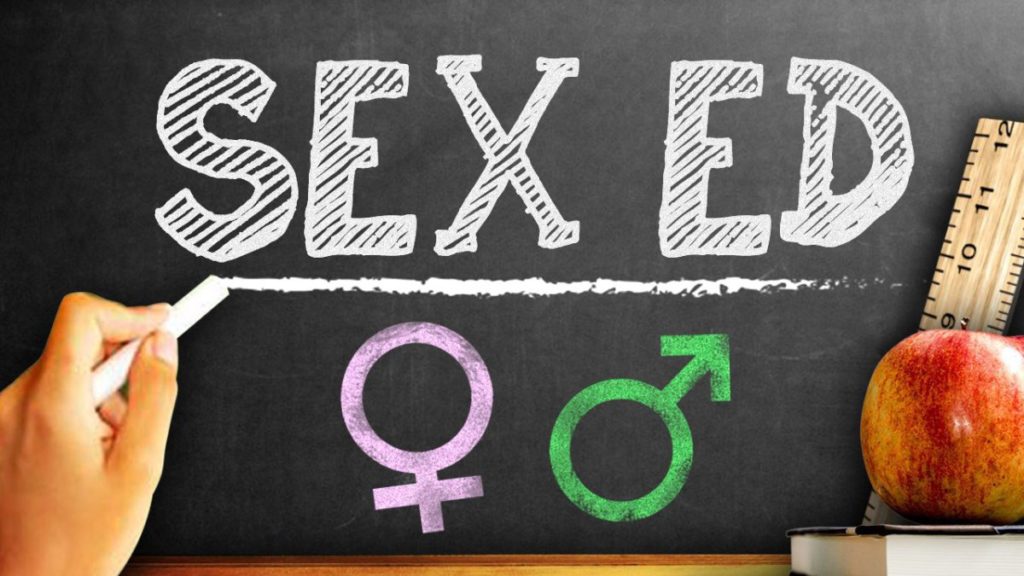
When it comes to having “the talk,” it’s hard to say whether parents or kids are more uncomfortable tackling the topic. That talk, of course, being about sex. Across the country, the availability of comprehensive formal sex education in public schools has been on the decline, leaving students to turn to internet sites like Google for health information. But according to the results of a new phone survey conducted by the University of South Alabama and commissioned by the Alabama Campaign to Prevent Teen Pregnancy, 83 percent of Alabama parents surveyed want them their children to be properly educated on sexual health and support comprehensive sex education in school. “For parents, talking to their children about sexual health and relationships can be a very difficult and complicated conversation,” says ACPTP executive director Jamie Keith. “One of the Campaign’s priorities is to ensure young people receive medically-accurate, age-appropriate and evidence informed sexual health education. In our public schools qualified professionals can answer questions parents may not feel comfortable with answering or for which they may not have the answers.” Respondents were asked 36 topical questions along with five demographic questions. The results found: 98% said it was very important that children learn about HIV/AIDS and sexually transmitted infections (STI) 91% said it was very important that children learn how to talk to their girlfriend, boyfriend or partner about birth control and sexually transmitted diseases 86% said it was very important that the effectiveness of birth control is addressed 98% said it’s very important that children learn about what to do if they’re raped or sexually assaulted.
News coverage roundup ahead of Alabama GOP Senate primary

A brief roundup of news coverage ahead of Tuesday’s Alabama U.S. Senate primary: POLITICO – “The GOP rebel threatening to snag Jeff Sessions’ Senate seat” Roy Moore lacks the war chest of two chief rivals in his bid to become the next senator from Alabama. He didn’t land the coveted endorsement of President Donald Trump and doesn’t enjoy the advantages of incumbency. Yet the controversial former state Supreme Court justice is coasting over his Republican challengers in Tuesday’s closely watched GOP Senate primary. Moore is set to easily secure a place in a September runoff, as the establishment-backed Sen. Luther Strange and Rep. Mo Brooks scrape for the second spot. Should Moore become the GOP nominee and the next senator from Alabama, his bombastic personality and antipathy toward Mitch McConnell (R-Ky.) are sure to make more trouble for the GOP leader, who’s taking constant flak from Trump as it is. McConnell and his allies are spending millions to elect Strange, and in response, Moore has made McConnell the symbol of everything he opposes in Washington. “I resent people from Washington, raising money in Washington, and sending negative ads to Alabama and trying to control the vote of the people,” Moore said in an interview after a GOP executive committee meeting here. “If the Washington crowd wants somebody, the people of Alabama generally don’t.” New York Times – “Despite Donald Trump’s support, Alabama Senator struggles to a primary finish” Sen. Strange wields an endorsement from the president of the United States, is the beneficiary of a multimillion-dollar campaign from allies of Mitch McConnell, the Senate majority leader, and has the backing of influential conservative interest groups like the National Rifle Association. But Strange is wheezing into Tuesday’s Republican Senate primary here. He is grasping to secure a second-place finish and a slot in a September runoff with Roy Moore, the twice-deposed former State Supreme Court justice and evangelical-voter favorite who is expected to be the top vote-getter but may fall short of the majority needed to win outright. And while Republicans have not lost a Senate race in Alabama since 1992, national Democrats have started to quietly consider competing for the seat if their preferred candidate, Doug Jones, wins the nomination and Moore is the Republican standard-bearer. Luther Strange of the Great State of Alabama has my endorsement. He is strong on Border & Wall, the military, tax cuts & law enforcement. — Donald J. Trump (@realDonaldTrump) August 14, 2017 New York Daily News – “In Alabama’s Senate race, contenders fight over who is Trump’s biggest fan” At first glance, U.S. Representative Brooks seems exactly the kind of candidate President Donald Trump would love to see win Tuesday’s Republican primary election for Alabama’s open U.S. Senate seat. The 63-year-old Republican is a Freedom Caucus member and an immigration hardliner who calls opponent Strange “Lying Luther,” echoing Trump’s penchant for bestowing insulting nicknames on his political foes. “Trump would like to drain the swamp; Brooks would like to blow it up,” said Larry Powell, a professor of communication at the University of Alabama at Birmingham. “But their goals are the same.” Yet it was Strange, not Brooks, who earned a coveted prize last week in a race that could measure Trump’s influence in a state he carried easily in last year’s election, despite recent indications that his support among Republicans may be softening. The Associated Press – “Alabama’s U.S. Senate race all about Donald Trump love, swamp hate” In the Alabama race for Attorney General Sessions’ former Senate seat, the Republican slugfest primary is about love of all things Trump — with contenders competing to woo Trump voters — and disdain of the so-called swamp of Washington D.C. While Strange is boosted by Trump’s endorsement, he could also be dragged down by accusations of his ties to establishment Republicans. Strange is backed by a super political action committee tied to Majority Leader Mitch McConnell. The PAC has pumped millions into an advertising blitz on behalf of Strange as it seeks to beat back GOP insurgents. Ever since a series of messy primaries led to losing general election Senate races in 2010 and 2012, Republicans led by McConnell of Kentucky have worked aggressively to defeat challengers deemed as fringe. But that backing has become a major rallying cry for Strange’s challengers. Brooks has labeled him as the candidates of the “swamp critters.” Washington Post – “Donald Trump’s feuding base faces showdown in Alabama Senate race” For Republicans, the Alabama contest is a snapshot of the party’s churning base at this moment in the Trump presidency. In a deep-red state, the dominant squabbles are not over ideological purity — that GOP test of old — but over loyalty to Trump and over who has the most visceral connection with his core voters. The violence in Charlottesville, sparked by white nationalists, has hovered over the final sprint, and Republican candidates have issued statements of condemnation. As with Trump, some of them did not mention white nationalism or white supremacy by name. “I was hoping for a quiet, lazy summer in our very humid state. That’s not to be the case this year,” Terry Lathan, the chair of the Alabama GOP, said in an interview. Until last week, Republicans had been immersed in a bitterly fought but relatively sleepy referendum on Strange, with the incumbent — who is nicknamed “Big Luther” — arguing that he was a dogged foe of President Barack Obama’s policies as state attorney general and a reliable vote for Trump’s priorities. His opponents accused him of being a polished and well-connected “swamp critter” who was more aligned with McConnell than with Trump, who won 62 percent of the vote in Alabama last year. Then Trump tweeted. George Will – “’Republican Gothic’ in Alabama primary” Southern Gothic is a literary genre and, occasionally, a political style that, like the genre, blends strangeness and irony. Consider the current primary campaign to pick the Republican nominee for the U.S. Senate seat in Alabama vacated
How Robert E. Lee went from hero to racist icon
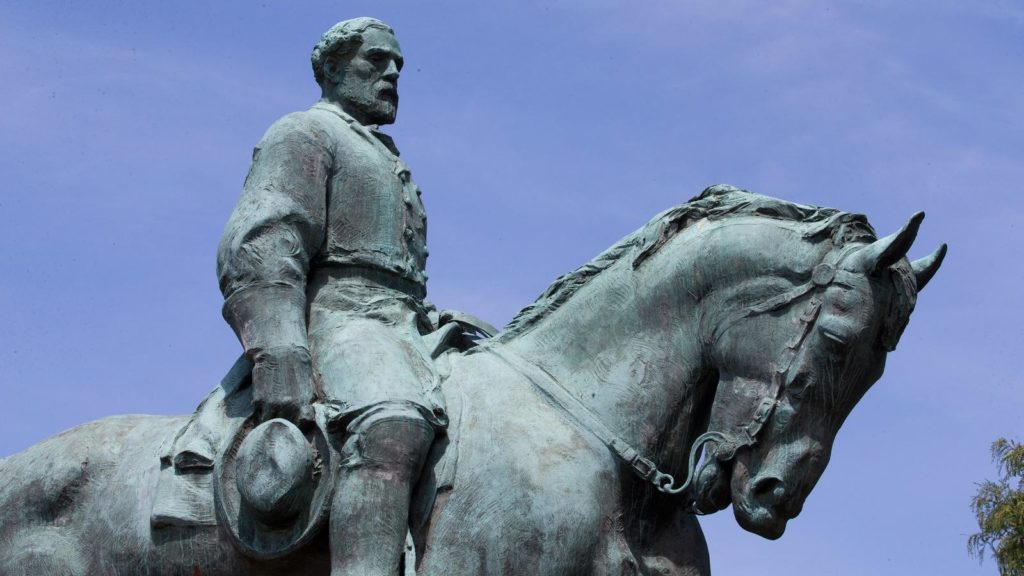
Confederate Army Gen. Robert E. Lee was vilified during the Civil War only to become a heroic symbol of the South’s “Lost Cause” — and eventually a racist icon. His transformation, at the center of the recent violence in Charlottesville, Virginia, reflects the changing moods in the United States around race, mythology and national reconciliation, historians say. Lee monuments, memorials and schools in his name erected at the turn of the 20th Century are now facing scrutiny amid a demographically changing nation. But who was Robert E. Lee beyond the myth? Why are there memorials in his honor in the first place? ___ THE SOLDIER A son of American Revolutionary War hero Henry “Light-Horse Harry” Lee, Robert E. Lee graduated second in his class at West Point and distinguished himself in various battles during the U.S.-Mexico War. As tensions heated around southern secession, Lee’s former mentor, Gen. Winfield Scott, offered him a post to lead the Union’s forces against the South. Lee declined, citing his reservations about fighting against his home state of Virginia. Lee accepted a leadership role in the Confederate forces although he had little experience leading troops. He struggled but eventually became a general in the Confederate Army, winning battles largely because of incompetent Union Gen. George McClellan. He would win other important battles against other Union’s generals, but he was often stalled. He was famously defeated at Gettysburg by Union Maj. Gen. George Meade. Historians say Lee’s massed infantry assault across a wide plain was a gross miscalculation in the era of the rifle. A few weeks after becoming the general in chief of the armies of the Confederate states, Lee surrendered to Union Gen. Ulysses S. Grant at Appomattox Court House in Virginia on April 9, 1865. ___ THE SLAVE OWNER A career army officer, Lee didn’t have much wealth, but he inherited a few slaves from his mother. Still, Lee married into one of the wealthiest slave-holding families in Virginia — the Custis family of Arlington and descendants of Martha Washington. When Lee’s father-in-law died, he took leave from the U.S. Army to run the struggling estate and met resistance from slaves expecting to be freed. Documents show Lee was a cruel figure with his slaves and encouraged his overseers to severely beat slaves captured after trying to escape. One slave said Lee was one of the meanest men she had ever met. In a 1856 letter, Lee wrote that slavery is “a moral & political evil.” But Lee also wrote in the same letter that God would be the one responsible for emancipation and blacks were better off in the U.S. than Africa. ___ THE LOST CAUSE ICON After the Civil War, Lee resisted efforts to build Confederate monuments in his honor and instead wanted the nation to move on from the Civil War. After his death, Southerners adopted “The Lost Cause” revisionist narrative about the Civil War and placed Lee as its central figure. The Last Cause argued the South knew it was fighting a losing war and decided to fight it anyway on principle. It also tried to argue that the war was not about slavery but high constitutional ideals. As The Lost Cause narrative grew in popularity, proponents pushed to memorialize Lee, ignoring his deficiencies as a general and his role as a slave owner. Lee monuments went up in the 1920s just as the Ku Klux Klan was experiencing a resurgence and new Jim Crow segregation laws were adopted. The Robert E. Lee statue in Charlottesville, Virginia, went up in 1924. A year later, the U.S. Congress voted to use federal funds to restore the Lee mansion in the Arlington National Cemetery. The U.S. Mint issued a coin in his honor, and Lee has been on five postage stamps. No other Union figure besides President Abraham Lincoln has similar honors. ___ A NEW MEMORY A generation after the civil rights movement, black and Latino residents began pressuring elected officials to dismantle Lee and other Confederate memorials in places like New Orleans, Houston and South Carolina. The removals partly were based on violent acts committed white supremacists using Confederate imagery and historians questioning the legitimacy of The Lost Cause. A Gen. Robert E. Lee statue was removed from Lee Circle in New Orleans as the last of four monuments to Confederate-era figures to be removed under a 2015 City Council vote. The Houston Independent School District also voted in 2016 to rename Robert E. Lee High School, a school with a large Latino population, as Margaret Long Wisdom High School. Earlier this year, the Charlottesville, Virginia, City Council voted to remove its Lee statue from a city park, sparking a lawsuit from opponents of the move. The debate also drew opposition from white supremacists and neo-Nazis who revered Lee and the Confederacy. The opposition resulted in rallies to defend Lee statues this weekend that resulted in at least three deaths. Republished with permission of The Associated Press.
An undecided voter’s look at the Birmingham mayoral race

I’ve lived in Birmingham for a little over four years. During that time I’ve seen my fair share of the good the city has to offer (kindness of strangers, a great business development environment, and a growing arts and entertainment scene), the bad (crime, crime, and more crime), and the ugly (cough “Brawl at City Hall” cough). One thing I can say for sure is that moving forward as I look at the 12 candidates for mayor in the upcoming municipal elections as an undecided voter is that those living and working in our city deserve more than they’re getting at the moment. Yes, the city has made notable improvements under Mayor William Bell’s leadership but improvements are still needed and they could be done faster and with more efficiency and transparency. Birmingham was recently ranked among the worst states in the nation for large cities. Beating out just 29 other cities in the overall ranking. The same report notes that of the 150 cities Birmingham is ranked 143rd in highest crime rates. You can see the full charts at the end of this post. This campaign cycle has opened my eyes to the fact that many others within our community feel the same way I do. 12 people wouldn’t be running for mayor if things were running smoothly and there wasn’t progress to be made. I join the resounding chorus of people who recognize that the one of the biggest, if not the biggest because it effects so many other issues, facing our town is crime. It is the nationally-known violent crime ranking that to this day still have out-of-state friends and family questioning why I live here. I can only imagine the impact that the violence is having on business development and how much better of a place we would be in if more investment went into crime prevention and deterrence. Bell has made economic development a large part of his time traveling throughout the nation and into other countries to business to move here. But for those on the outside looking in, if you were to see the statistics and the headlines that paint the picture of a city plagued with violent crime, poor education and poverty — why would you move? One has to wonder for every business that comes how many don’t because of problems that the mayor’s office could solve. Nearly every candidate interviewed by AL.Com mentioned crime and poverty (which usually go hand in hand) as a reason for running for office. With our embarrassing national ranking in crime and all that comes with that, from discouraging people to live here or invest in the city, it’s a topic that should easily be number one. Not merely an issue used as a political football as was just weeks ago between the mayor’s office and city council. Local elections are around the corner and the games of politics are strong. Buzz words are being thrown around but solutions themselves are still lacking. You can read the candidates Facebook and webpages and get the sense they all want a better Birmingham but it’s going to take more than want it’s going to take grit and effort and yes, even a little humility. What do I want to see as a resident? First, I want a fully staffed, fully funded police force that doesn’t pass the buck and do the bare minimum (oh and I want it located in the heart of the city, which is where it currently is). I want proactive policing but in ways that have been proven to work I want a police chief who can call an audible and recognize that his department isn’t where it needs to be and brings in help from experienced law enforcement trainers and experts who know how to turn things around. Ultimately, who does this responsibility fall to? The mayor. Beyond safety which is a very big concern. I want a city with a functional plan of community engagement that relies on local business and charities to provide support for those living in poverty or just above it to get out. This doesn’t mean pushing failed agendas such as minimum wage hikes but instead means enticing giving, promoting job training, volunteerism, charity of the kind that makes our nation great. We need local residents and local elected officials who do more than stand up when crisis come but shine a light in the deep crevices where crime starts and prevent it. Start with the youth of our city, show them a better way, give them someone to emulate that’s going to get their lives straight. To me, like so many others I know, Birmingham is a city of hope and promise. To me Birmingham is a place with heart. It’s past time for everyone regardless of where they live in and around Birmingham to look to our mayor and feel like we’re getting solutions not soundbites. Overall City Quality of City Services Total Budget per Capita 121 Birmingham, AL 140 87 City Ranking City Name Financial Stability Education Health Safety Economy Infrastructure & Pollution 140 (45.15) Birmingham, AL 120 53 124 148 141 109 *More information on these rankings can be found at Wallethub.com
Lindsey Graham says GOP in trouble if Obama’s health care law stands
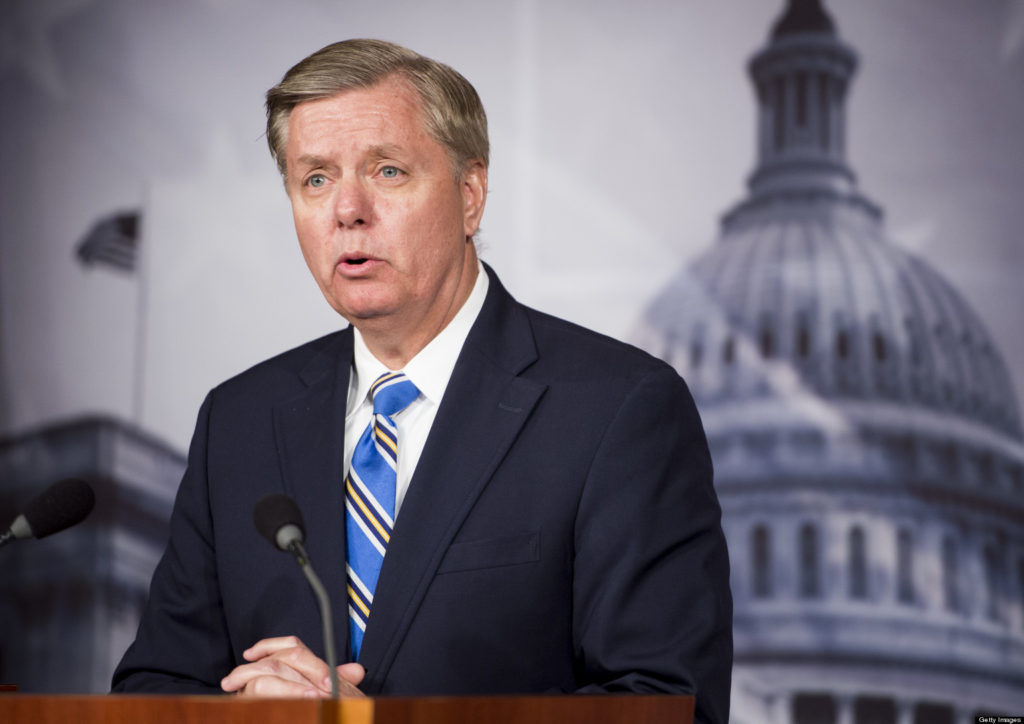
A GOP senator says all Republicans are in trouble politically if they’re unable to scrap former President Barack Obama‘s health care law and replace it with a better one. Sen. Lindsey Graham of South Carolina says he doesn’t mind that President Donald Trump is upset with Republicans for failing to fulfill their seven-year-old pledge on a health overhaul. Graham tells “Fox News Sunday” that if Republicans can’t deliver, “We’re all going to be in trouble, including the president.” Graham’s also defending Senate Majority Leader Mitch McConnell. He says the Kentucky lawmaker is viewed by GOP senators as a “good solid leader.” McConnell tried but failed last month to replace the Affordable Care Act. Trump called the outcome “a disgrace” and suggested McConnell may have to think about stepping aside. Republished with permission of The Associated Press.
Donald Trump doubles down on support for Luther Strange in new Tweet

President Donald Trump jumpstarted his Monday morning doubling-down on Tweet he made last week, publicly throwing his support behind Alabama-Republican U.S. Sen. Luther Strange once again. “Luther Strange of the Great State of Alabama has my endorsement. He is strong on Border & Wall, the military, tax cuts & law enforcement,” Trump tweeted before 7:00 a.m. ET on his way back to D.C. Luther Strange of the Great State of Alabama has my endorsement. He is strong on Border & Wall, the military, tax cuts & law enforcement. — Donald J. Trump (@realDonaldTrump) August 14, 2017 In a surprise move, Trump took Twitter and endorsed Alabama Sen. Luther Strange, last week ahead of the state’s Aug. 15 primary. “Senator Luther Strange has done a great job representing the people of the Great State of Alabama. He has my complete and total endorsement!,” Trump tweeted primetime Aug. 9. Strange was appointed to the seat in February by former Gov. Robert Bentley following the confirmation of Attorney General Jeff Sessions, and is currently serving as a temporary Senate appointment. He is competing in the August primary to fill out the remainder of Sessions’ 6-year term through 2020. On Tuesday, Strange will face a bevy of Republican challengers at the polls including former Ala. Chief Justice Roy Mooreand Alabama 5th District U.S. Rep. Mo Brooks — arguably his top two competitors. If no candidate receives at least 50 percent of the vote, a runoff will take place Sept. 26, with the general election scheduled for Dec. 12.
Betsy DeVos undeterred by critics even as agenda remains stalled
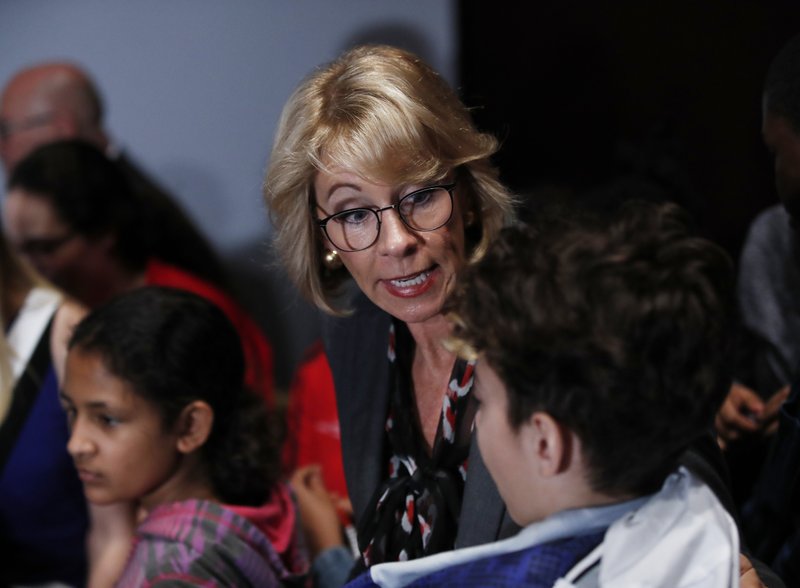
Among the paintings and photographs that decorate Education Secretary Betsy DeVos‘ sunlit, spacious office is the framed roll call from her Senate confirmation. It’s a stark reminder of the bruising process that spurred angry protests, some ridicule and required the vice president’s tie-breaking “yes” vote. Six months on the job, DeVos is no less divisive. Critics see her as hostile to public education and indifferent to civil rights, citing her impassioned push for school choice and her signing off on the repeal of some protections for LGBT students. Conservatives wish she had been less polarizing and more effective in promoting her agenda, noting that the department’s budget requests are stalled in Congress and no tangible school choice plan has emerged. DeVos is undeterred. “We have seen decades of top-down mandated approaches that protect a system at the expense of individual students,” DeVos told The Associated Press. “I am for individual students. I want each of them to have an opportunity to go to a school that works for them.” In her first comprehensive sit-down interview with a national media outlet since taking office, DeVos touched on some of the most pressing issues in K-12 and higher education. She said Washington has a role to “set a tone” and encourage states to adopt choice programs without enacting “a big new federal program that’s going to require a lot of administration.” At the same time, she confirmed that a federal tax-credit voucher program was under consideration as part of a tax overhaul. “It’s certainly part of our discussion,” DeVos said. DeVos, 59, appeared confident, but reserved during the 30-minute interview last week in her office, where photographs of her children and grandchildren and drawings and letters from young students are prominent. Large windows overlook the Capitol. Across the street, visitors lined up outside the National Air and Space Museum, which DeVos toured this year with Ivanka Trump to promote science and engineering among girls. DeVos defended her decision to rewrite Obama-era rules intended to protect students against being deceived by vocational nondegree programs, saying that “the last administration really stepped much more heavily into areas that it should not.” Liberals accuse DeVos of looking out for the interests of for-profit schools, and they point to Trump University, the president’s for-profit school that was sued for fraud. Supporters say the Obama regulations unfairly targeted for-profits and failed to track students’ long-term careers. The decision by the departments of Education and Justice to roll back rules allowing transgender students to use school restrooms of their choice enraged civil rights advocates, who said already vulnerable children could face even more harassment and bullying. Conservatives saw DeVos fulfilling a promise to return control over education issues to states, cities, school districts and parents. “We really believe that states are the best laboratories of democracy on many fronts,” DeVos said. On the issue of school choice, DeVos was resolute. Another major flashpoint: charter schools, which are publicly funded but usually independently operated, and voucher programs that help families cover tuition at private schools. They’re often criticized for a lack of transparency, and studies about their effectiveness have produced mixed results. DeVos disagrees. “I think the first line of accountability is frankly with the parents,” she said. “When parents are choosing school they are proactively making that choice.” For DeVos, who spent more than two decades promoting charter schools in her home state of Michigan, the closure of some low-performing charters was evidence of accountability. “At the same time, there have been zero traditional public schools closed in Michigan for performance and I think that’s a problem,” she said. DeVos got off to a rocky start in the Trump Cabinet. She was satirized for some of her gaffes during the confirmation hearing, such as saying that guns are needed in schools to protect students from grizzly bears. Teacher unions accused her of seeking to privatize public education. Parents and teachers jammed Congress phone lines to oppose her nomination. It took Vice President Mike Pence‘s historic vote – the first by a vice president to break a 50-50 tie on a Cabinet nomination – to secure her position after two Republican senators defected. DeVos is still sometimes met with protesters at public events, and her security detail has been bolstered at an additional cost of $7.8 million. But DeVos isn’t retreating. She actively advocates for school choice, once comparing education to ride-sharing services such as Uber and Lyft, and saying that parents, like riders, need options. Of the 17 K-12 schools that she has visited so far, only seven were traditional public schools. DeVos didn’t attend public school herself or send her children to a public school. Randi Weingarten, president of the American Federation of Teachers, said in a recent speech that DeVos was a “public school denier” and quipped that DeVos can start talking about school choice even in reply to a simple greeting. Conservatives say she may have oversold. “She has made things harder for herself by acting as the secretary for school choice instead of the secretary of education,” said Mike Petrilli, president of the conservative Thomas B. Fordham Institute. “She has missed the opportunity to make it clear that she wants to see all schools succeed.” Moderates are upset. “I have feared that in trying to rush in with a simplified notion of choice – that she will love charters to death,” said Robin Lake, director of the Center on Reinventing Public Education, a pro-charter group. “At this point, six months in, I don’t see any evidence that we are farther along on helping with achievement, equity, with moving the country forward.” Asked to name some of the strengths of public schools that she has observed in her job, DeVos said only that she is “a very strong supporter of public schools.” “But we also need to encourage schools, public schools that are doing a great job to not rest on their laurels but to continue to improve because unless you’re constantly oriented around
