
AG Steve Marshall files suit against city of Birmingham, Mayor William Bell
Alabama Attorney General Steve Marshall announced Wednesday that his office has filed suit in Jefferson County Circuit Court against the City of Birmingham and Mayor William Bell for violating state law by constructing barriers to deliberately obscure a Confederate monument in the city’s downtown Linn Park. “In accordance with the law, my office has determined that by affixing tarps and placing plywood around the Linn Park Memorial such that it is hidden from view, the Defendants have ‘altered’ or ‘otherwise disturbed’ the memorial in violation of the letter and spirit of the Alabama Memorial Preservation Act,” said Marshall. “The City of Birmingham does not have the right to violate the law and leaves my office with no choice but to file suit.” The Alabama Memorial Preservation Act, was passed by state lawmakers earlier this year and signed into law by Gov. Kay Ivey. It prohibits the removal of historic statues more than 40 years old from public spaces. The Confederate monument in question in Linn Park was dedicated in 1905, and thus is protected by the law.
10 Commandments judge Roy Moore forces runoff in Alabama Senate race
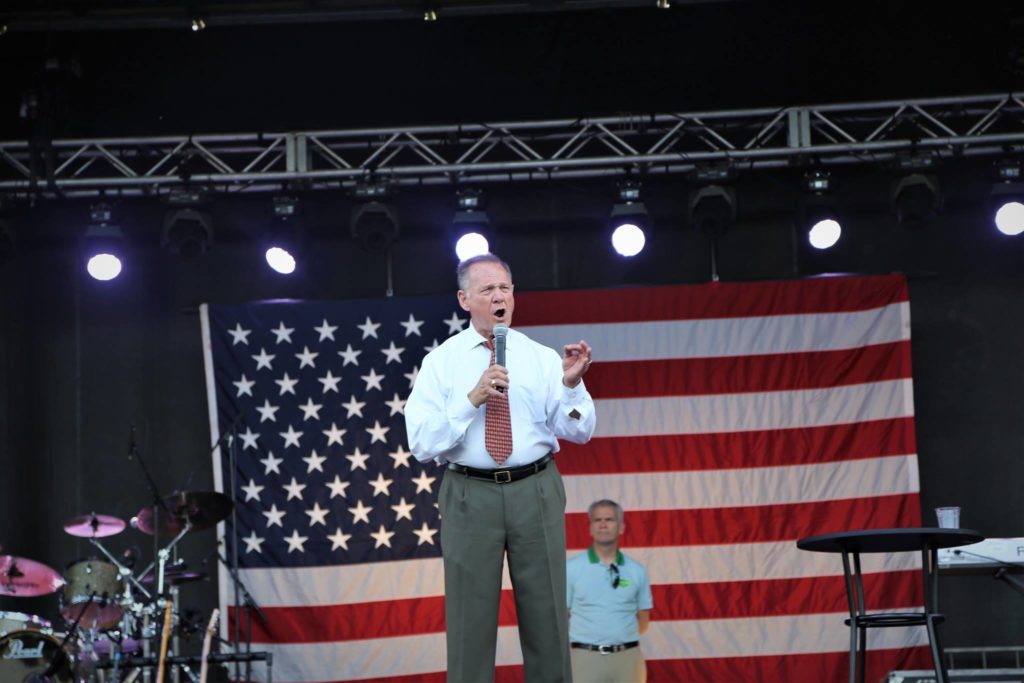
Alabama’s Ten Commandments judge, Roy Moore, has forced President Donald Trump‘s chosen candidate, Sen. Luther Strange, into a September primary runoff that pits cultural conservatives against the Republicans now running Congress. Evangelical voters cherish Moore as a culture-war icon after he was twice stripped of his chief justice duties, for refusing to remove a biblical monument he installed in a state judiciary building and for resisting federal gay marriage rulings. On Tuesday, the firebrand jurist rode a tide of anti-establishment sentiment to secure more votes than Strange for the seat previously held by Attorney General Jeff Sessions. Despite millions of dollars in advertising by a super political action committee tied to Senate Majority Leader Mitch McConnell, Strange trailed Moore by about six percentage points, which was about 25,000 votes in the low-turnout election, according to unofficial returns. “This is a great victory. The attempt by the silk stocking Washington elitists to control the vote of the people of Alabama has failed,” Moore said at his victory party in downtown Montgomery, where a copy of the Ten Commandments was among the decorations. The winner of the Sept. 26 runoff between Moore and Strange will face Democratic nominee Doug Jones in a December election. While President Donald Trump endorsed Strange, Moore tried to present himself as the better carrier of Trump’s outsider appeal. “The takeaway is that Washington is very unpopular,” said Greg Strimple, a Republican pollster for a political action committee aligned with House Speaker Paul Ryan. “Voters still want change,” Strimple said, and Trump cannot simply “transfer his brand” to candidates who fail to establish their own outsider credentials. Strange emphasized Trump’s endorsements, delivered via Twitter and in recorded phone calls to voters – in the state where Trump remains deeply popular among GOP voters. “He knows I’m the person in this race who is going to help him make this country great again,” Strange said, thanking Trump Tuesday night. He said the runoff will show “who is best suited to stand with the people of this country – with our president – to make sure we make America great again.” Trump tweeted congratulations Wednesday to both Moore and Strange “for being the final two.” “Exciting race!” the president wrote. Strange was Alabama’s attorney general before being appointed to the Senate by Gov. Robert Bentley, who soon resigned in scandal. Strange said he did Bentley no favors, but his challengers questioned the ethics of seeking the appointment while investigating the governor. Moore has a loyal following among evangelicals, but is a polarizing figure. His harshest critics call him the “Ayatollah of Alabama” and accuse him of intertwining his personal religious beliefs and judicial responsibilities. Moore wore his ousters from the bench as badges of honor, telling Republican voters they are like battle scars. “He’s the only one who hasn’t been talking crap about the others,” said Jimmy Wright, who voted for Moore in rural Gallant in northeast Alabama. But in Montgomery, retired teacher Tommy Goggans said he voted to try to keep Moore from winning. “He’s been kicked out of everything he’s done.” Jones, the Democratic nominee, served as a U.S. attorney during the Clinton administration and is backed by former Vice President Joe Biden. He’s perhaps best known for leading the prosecution that finally resulted in convictions for two Klansmen in the 1963 bombing of a Birmingham church that killed four little girls. Alabama hasn’t sent a Democrat to the U.S. Senate in 20 years, but Jones says they can’t concede without a fight. “I think there are enough people in the state who are yearning for new leadership and a change,” Jones said. Republished with permission of The Associated Press.
Racial politics haunt GOP in the Donald Trump era
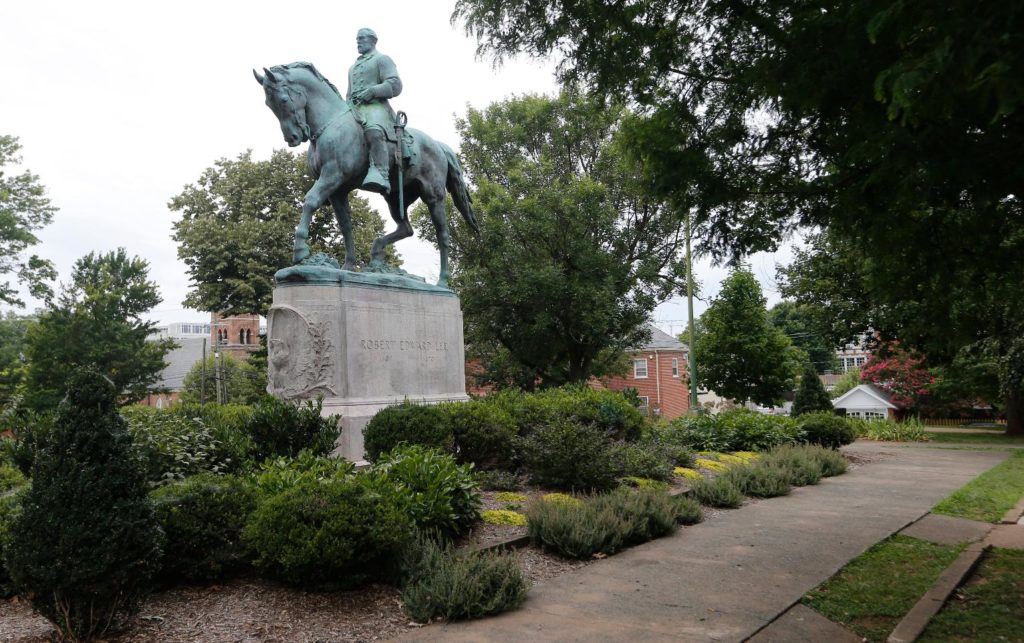
The statue of Robert E. Lee in Charlottesville, Virginia, was the focus of an emotional debate in the state’s Republican primary election weeks before it became a flashpoint in the nation’s struggle over race. Corey Stewart, an outsider candidate for governor sometimes compared to President Donald Trump, seized on possible removal of the Confederate general’s memorial as an “attempt to destroy traditional America.” Stewart, who said in an interview Tuesday that such an action “hits people in the gut,” found unexpectedly strong support, forced his main opponent to defend the statue and almost won. Now the fight over “traditional America” is throwing a spotlight on the Republican Party’s struggle with race in the age of Trump. The deadly white supremacist rally against removal of the Lee statue served as a painful example of the uncomfortable alignment between some in the party’s base and the far-right fringe. But despite the party’s talk of inclusiveness and minority outreach, it’s clear white fears continue to resonate with many in the GOP base. Politicians willing to exploit those issues are often rewarded with support. One big beneficiary, critics say, has been the president himself. For those critics, on both the left and right, Trump’s response to Charlottesville was a glaring example. On Saturday, he denounced hatred and violence on “many sides,” seeming to assign blame equally to counterdemonstrators as well as hate groups protesting the proposed removal of the statue. He waited until Monday to specifically name the groups he was condemning — the KKK, neo-Nazis and white supremacists. On Tuesday, he was back to assigning partial blame to those protesting the white supremacists. “I think there’s blame on both sides,” Trump charged in a fiery Trump Tower news conference. He added, “There are two sides to a story.” “Not all of those people were neo-Nazis, believe me. Not all of those people were white supremacists by any stretch,” Trump continued. “Those people were also there because they wanted to protest the taking down of the statue of Robert E. Lee.” For Republicans who hoped the president might use the moment to send a new message about racism and their party, Trump failed the test. “We have reached a defining moment,” New Hampshire GOP chair Jennifer Horn said. “We, as Republicans, every single one of us, needs to speak up and make it very clear that this is not our party, these are not our values.” Such moments have the potential to undermine years of attempts to portray the party as more welcoming to minority voters. The Republican National Committee, led by Trump’s former chief of staff Reince Priebus, released an exhaustive report in 2013 noting that the GOP’s traditional base of older, white voters was becoming a smaller and smaller portion of the electorate in America. “If we want ethnic minority voters to support Republicans, we have to engage them and show our sincerity,” the RNC wrote. Yet Republican officeholders, including the president, have found success by seizing on semi-hidden “dog whistle” rhetoric and policies largely designed to appeal to whites. — Across the Midwest, Trump and others have appealed to suburban white voters by decrying a rise in urban violence, even as statistics show violent crime is down in many cities. — With no evidence of widespread voter fraud, Republicans nationwide have promoted voter ID laws that several courts determined discriminate against minority voters. — Trump’s promise to build a massive wall along the southern border resonates with conservatives across the West and even in overwhelmingly white Northeastern states where Republicans fear the influx of illegal Hispanic immigrants. — And, particularly in the South, some conservatives continue fight to preserve symbols of a Confederate Army that fought for Southern states’ rights to continue slavery. The relics are simultaneously denounced as symbols of oppression by most blacks and celebrated as marks of Southern pride by many whites. This week in Alabama, three Republicans running in Tuesday’s special U.S. Senate primary demonstrated the careful tiptoeing politicians do around the subject. Rep. Mo Brooks generally bemoaned “bigotry.” Former Alabama Supreme Court Justice Roy Moore rejected “violence and hatred.” Sen. Luther Strange, appointed to the seat when Trump tapped Jeff Sessions as attorney general, made no reference to racial motivations at all. Brooks and Strange also expressed support for Trump’s remarks, and Strange seemed to echo the president’s assertion that “many sides” were at fault, as he encouraged “Americans to stand together in opposition to those who encourage hate or promote violence.” Trump recently endorsed Strange. The careful language reflects a political reality in a state where nearly all Republican votes come from white voters, says David Mowery, an Alabama-based political consultant who has worked for Republicans and Democrats. That doesn’t mean Republicans actively pursue racist votes, he said, but sometimes it means they take the most cautious path to avoid controversy. “I don’t think here that any Republican benefits by talking about it or is necessarily hurt by not talking about it,” he said. Former South Carolina Gov. Nikki Haley, now Trump’s representative to the United Nations, said as recently as 2014 that the Confederate battle flag should fly at the state Capitol. She changed course two summers ago only after a white supremacist who was photographed holding a Confederate flag murdered nine black people inside a South Carolina church. About the same time, then-Gov. Robert Bentley of Alabama removed Confederate banners from a Confederate monument outside his office, though the monument remains. In this year’s Virginia primary for the Republicans’ candidate for governor, outsider Stewart lost to establishment favorite Ed Gillespie, but by less than 2 percentage points. On Sunday, Gillespie attended church in Charlottesville and minced no words in naming names and urging those responsible for the violence to take their “vile hatred” out of the state. “We have stared down racism and Nazism and white supremacy before, and we will stare it down again,” the Republican candidate for governor told a local TV station. His campaign later added that Gillespie continues
Donald Trump renews Twitter criticism of Amazon

President Donald Trump is renewing his attacks on e-commerce giant Amazon, and he says the company is “doing great damage to tax paying retailers.” Trump tweets that “towns, cities and states throughout the U.S. are being hurt – many jobs being lost!” The president has often criticized the company and CEO Jeff Bezos, who also owns The Washington Post. Many traditional retailers are closing stores and blaming Amazon for a shift to buying goods online. But the company has been hiring thousands of warehouse workers on the spot at job fairs across the country. Amazon has announced goal of adding 100,000 full-time workers by the middle of next year. Trump has in the past tweeted that Amazon was not paying “Internet taxes.” But it’s unclear what he meant by that. Amazon.com collects state sales taxes in all 45 states with a sales tax and the District of Columbia, according to their website. State governments have sought to capture sales taxes lost to internet retailers, though they have struggled with a 1992 Supreme Court ruling that retailers must have a physical presence in a state before officials can make them collect sales tax. Amazon did not immediately respond to an emailed request for comment. Republished with permission of The Associated Press. Amazon is doing great damage to tax paying retailers. Towns, cities and states throughout the U.S. are being hurt – many jobs being lost! — Donald J. Trump (@realDonaldTrump) August 16, 2017
Donald Trump tweets congratulations to Roy Moore, Luther Strange in Senate race
President Donald Trump took to Twitter early Wednesday morning to congratulate both Alabama Sen. Luther Strange and former Alabama Chief Justice Roy Moore for making it to the Republican runoff in the U.S. Senate race on Tuesday. “Congratulation to Roy Moore and Luther Strange for being the final two and heading into a September runoff in Alabama. Exciting race!,” Trump tweeted at 6:18 a.m. ET. Congratulation to Roy Moore and Luther Strange for being the final two and heading into a September runoff in Alabama. Exciting race! — Donald J. Trump (@realDonaldTrump) August 16, 2017 Moore and Strange advance to the Sept. 26 primary runoff for the U.S. Senate seat previously held by Attorney General Jeff Sessions, as neither candidate secured the necessary 50 percent of the Aug. 15 vote. The runoff winner will face Democratic nominee Doug Jones in the Dec. 12 general election.
Steve Flowers: No matter who wins Alabama’s Senate seat, we still have Richard Shelby
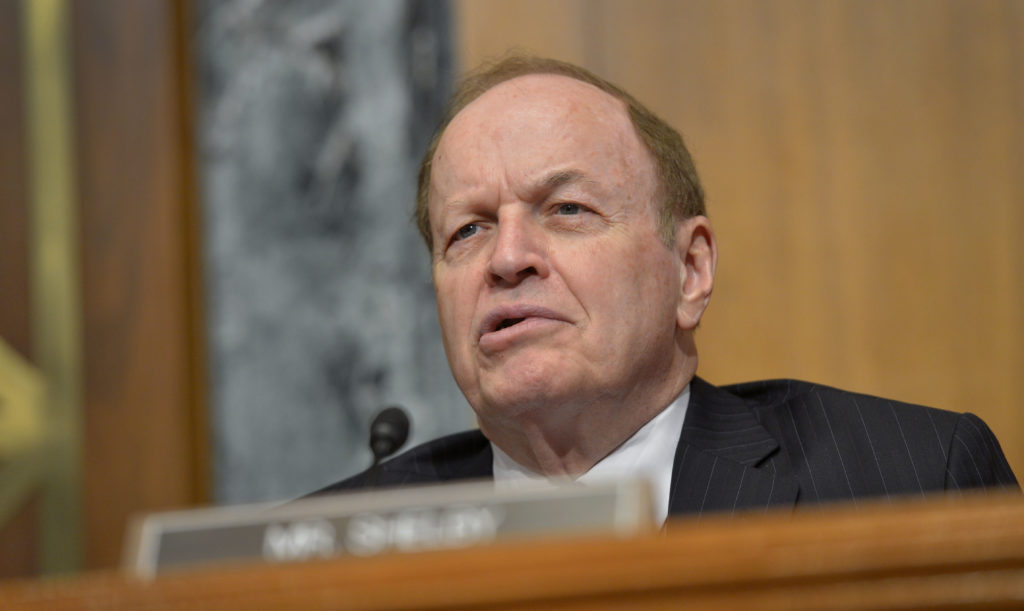
You know the results of Tuesday’s primaries for our U.S. Senate seat. I had to go to press before the vote. However, the assumption was that there would be a runoff in the Republican primary. It is safe to say that the winner of that runoff Sept. 26 will be elected as our next junior U.S. Senator. We are such a reliably Republican state that winning the GOP Primary will be tantamount to election in December. It may surprise you for me to say that it really makes very little difference as to who ultimately wins this seat. Whichever Republican prevails will vote no differently than the other. Despite all the money spent, name calling and campaigning, whoever the Republican primary victor is will vote conservatively right down the line. They will have the identical conservative voting record as Jeff Sessions. They all would vote right on the litmus test hot button GOP issues like abortion, immigration, balanced budget, pro-military, pro-gun and pro-agriculture. Whoever wins will support President Donald Trump and the most conservative Supreme Court nominee available. Therefore, your choice is Tweedle Dee or Tweedle Dum. Your only choice is which personality you like best. It is like whether you like right-wing vanilla or right-wing strawberry ice cream. Whichever Republican you choose out of this batch of ice cream you will still have an ice cream sandwich who will vote for the right wing conservative agenda. Therefore, will one be able to be more efficient? Probably not. Seniority is what dictates power in the Washington Congressional pecking order and guess what — our new Junior U.S. Senator will rank 100th in Seniority in the 100-member U.S. Senate. Their path to power is also limited by their age. If the ultimate victor is one of the projected front-runners, they are getting to the Senate at too old of an age to be a player or make a difference. Roy Moore is 70, Luther Strange is 64, and Mo Brooks is 63. Whoever becomes the Senator will be finished before anybody in Washington knows who they are and none of them will ever chair a committee. Therefore, it really doesn’t matter which Republican ultimately wins. However, do not be dismayed, we have a senior U.S. Senator who can pick up any slack. Folks, our senior Senator is Richard Shelby. We do not even need a second senator when we have Shelby. Shelby, because of his seniority and senatorial prowess and prestige is easily one of the three most powerful members of the United States Senate. Sen. Shelby is the Chair of the Senate Rules Committee. Folks, what that means is that before any law, any budget, or any Supreme Court nominee gets to the floor of the U.S. Senate, Senator Shelby has to approve it. This makes him about as powerful as the president. I am not saying that Shelby trumps Trump in power. However, I am saying that there are about 95 Senators who need the president. There are about five Senators that Trump needs more than they need him. Shelby is one of them. Most special interest groups and really anybody or any entity like the NRA who want anything done in Washington would rather have Richard Shelby on their side rather than Donald Trump. Richard Shelby has reached a pinnacle of power never before seen in Alabama’s rich political lore of U.S. Senators. We have had some great Senators. The names of John H. Bankhead, Lister Hill and John Sparkman are legendary. However, Shelby has surpassed those giants in power and what he has done for Alabama. Richard Shelby is in his 31st year of representing us in the U.S. Senate. He has chaired the Senate Intelligence Committee, the Senate Banking Committee, and now the Senate Rules Committee. Within two years, he will break John Sparkman’s 32-year Senate tenure record. Shelby will probably make a lateral move to chair the Senate Appropriations Committee. If you think he has brought home the bacon the past three decades, you ain’t seen nothing yet. Do not fret about who our junior U.S. Senator is going to be. It really does not matter when you have Richard Shelby. See you next week. ___ Steve Flowers is Alabama’s leading political columnist. His weekly column appears in over 60 Alabama newspapers. He served 16 years in the state Legislature. Steve may be reached at www.steveflowers.us.
Donald Trump leaves top strategist’s future in limbo: ‘We’ll see’
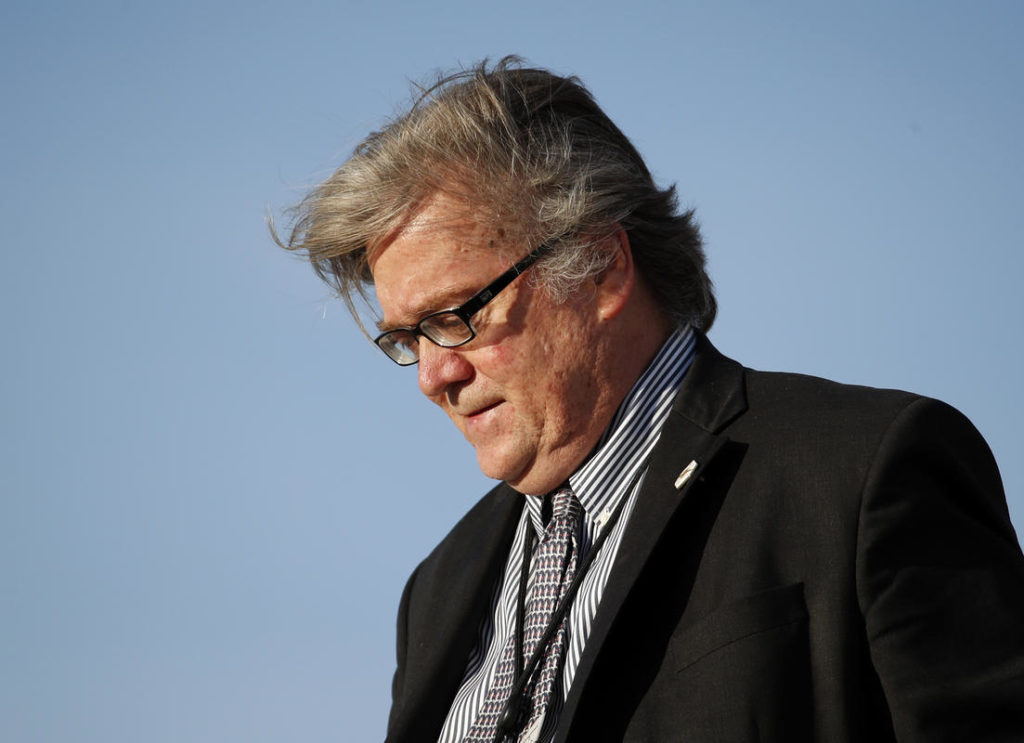
President Donald Trump is saying “we’ll see what happens” with top strategist Steve Bannon. The president refused to express confidence in Bannon during an impromptu news conference Tuesday. “He’s a good person. He actually gets very unfair press in that regard,” Trump said. “But we’ll see what happens with Mr. Bannon.” Bannon was a key general election campaign adviser and has been a forceful but contentious presence in a divided White House. The former leader of conservative Breitbart News has drawn fire from some of Trump’s closest advisers, including son-in-law Jared Kushner. Though Bannon has survived being on the outs at earlier points in the administration, the president is being pressed anew to fire him. The anti-Bannon campaign comes as Trump is facing heated criticism for not immediately condemning by name white supremacists and other hate groups after deadly violence last weekend in Charlottesville, Virginia. Bannon once described Breitbart as “the platform for the alt-right.” Speaking to reporters in Trump Tower, the president said Bannon is a friend and “not a racist.” That less-than-enthusiastic defense called into question Bannon’s own assessment of the situation: He had been telling people that he believed his job was safe, following a conversation in recent days with new chief of staff John Kelly, according to a White House official who demanded anonymity to discuss private exchanges. The decision whether to drop Bannon is more than just a personnel matter. The media guru is viewed in some circles as Trump’s connection to his base and the protector of Trump’s disruptive, conservative agenda. A Tuesday headline on Breitbart equated his potential ouster to the president being urged to “Give Trump Voters Middle Finger.” Ned Ryun, a conservative strategist who occasionally advises the White House, wrote on Twitter, “Cannot tell you how bad a signal it would be to @realdonaldtrump’s base if Bannon is forced out.” But Bannon’s high profile and puppet-master image have at times irked a president who doesn’t like to share the spotlight and bristles at the suggestion that he needs a liaison to his base. In April, Trump diminished Bannon’s role to that of “a guy who works for me.” The president doubled down on that dismissiveness at Tuesday’s press conference, distancing Bannon from his unexpectedly successful presidential campaign. “I went through 17 senators, governors, and I won all the primaries. Mr. Bannon came on very much later than that,” he said. Bannon’s supporters say Trump is being urged by advisers such as chief economic adviser Gary Cohn and deputy national security adviser Dina Powell to fire him. Kelly has also expressed concerns to Trump about Bannon, and is said to be particularly angry with a flood of negative stories about national security adviser H.R. McMaster that some in the White House believe are being leaked by Bannon. That’s according to two people briefed on the personnel discussions taking place who are not authorized to speak publicly. Kelly has grown weary of the conservative attacks on McMaster and believes that even if Bannon is not personally responsible for them, he has not done enough to quell them. Bannon has denied being behind the anti-McMaster campaign. The public squabbling among White House advisers is precisely the sort of drama Kelly was brought in to stop. The chief of staff is embarking on a weeks-long personnel review of West Wing staff and has indicated to aides that significant changes could be coming, according to an official familiar with Kelly’s plans but not authorized to speak publicly. Although Bannon enjoys a vocal core of supporters outside the White House, most of Trump’s most trusted advisers long ago soured on him. Kushner and Ivanka Trump’s opposition to Bannon’s West Wing role is well-known, but they’re staying out of personnel decisions about him, according to a White House official. Bannon’s backers include Rep. Mark Meadows, the head of the House’s Freedom Caucus, an array of Breitbart-like media and the Zionist Organization of America, which has spoken out in opposition to McMaster. Bannon didn’t respond to requests for comment. He has told associates that he has no plans to leave the White House and would only do so if Trump fires him. He has been trying to keep a low profile during Trump’s break from Washington and ride out the storm – the same strategy he employed during clashes earlier this year with Kushner. At the start of the administration, Bannon was its driving force, a near-constant presence in the Oval Office leading the charge to roll back Obama-era regulations and push through the president’s travel ban. Blowback to the botched introduction of the ban, which was rolled out quickly with little outside consultation, angered many in the administration, including Kelly, then head of Homeland Security. In the hours before Trump spoke to the press Tuesday, Kelly was spotted eating lunch at a nearby hotel with aides. Playing on the TV screen above him was a cable news program with its ticker displaying speculation about Bannon’s future. Kelly did not look up. Republished with permission of The Associated Press.
Birmingham Mayor William Bell orders city to cover up Confederate monument
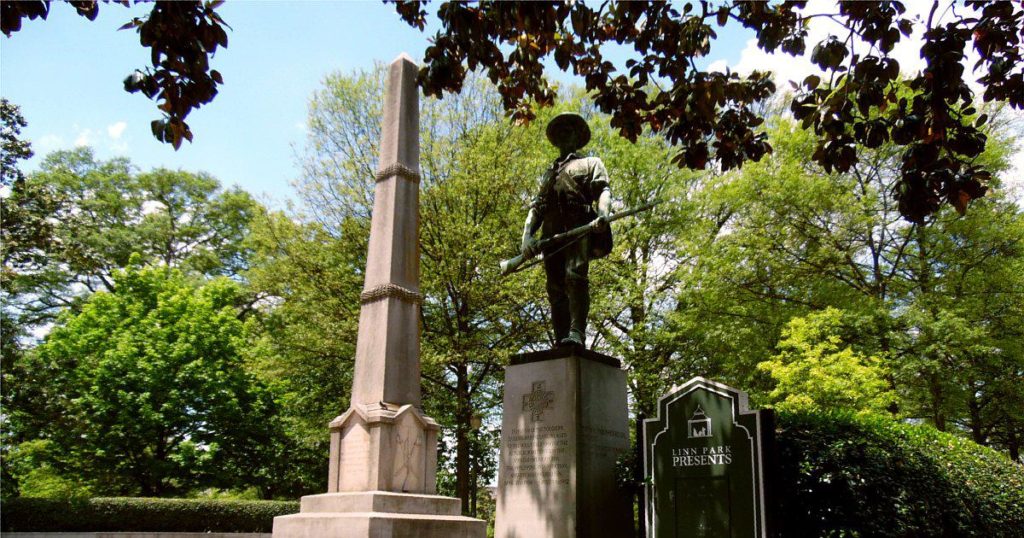
Less than a week after white nationalists rallied in Charlottesville, Va, in support of a monument to Robert E. Lee that ended in deadly violence, Birmingham city leaders moved to cover a Confederate monument that resides on the city’s public property. Mayor William Bell‘s decision to cover the monument in the downtown Linn Park. came quietly, without fanfare, as city workers installed a wooden structure Tuesday night just before 10 p.m. Earlier this year, Gov. Kay Ivey signed a bill into law preventing the removal of historic statues more than 40 years old from public spaces, making the removal of the confederate monument found in Birmingham’s Linn Park illegal. Under the new law, Alabama Attorney General Steve Marshall has the authority to fine the city $25,000 for each violation of the law. Which prompted the creation of a GoFundMe account by a group called “People of Birmingham” with a goal of $25,000 they plan to use to pay the state’s fine. Bell’s office says it’s looking at ways to challenge the state law restricting the Magic City’s authority to remove the monument, but in the meantime they plan to keep it covered.
