
Birmingham Board of Education election results 2017

District 1 Bennie M. Holmes: 277 votes | 6.86 percent Douglas Lee Ragland: 1,027 votes | 25.45 percent Keith Rice: 418 votes | 10.36 percent Cedric Small: 1,497 votes | 37.10 percent Jerry Tate: 816 votes | 20.22 percent District 2 Terri Michal: 1,717 votes | 50.18 percent Brandon McCray: 1,705 votes | 49.82 percent District 3 Larry J. Contri: 1,129 votes | 29.01 percent Mary Drennen Boehm: 2,763 votes | 70.99 percent District 4 Daagye Hendricks: 1,308 votes | 34.29 percent (incumbent) Amber Courtney: 717 votes | 18.79 percent Edward Maddox: 1,790 votes | 46.92 percent District 5 Buford L. Burks: 148 votes | 3.62 percent Eloise M. Crenshaw: 329 votes | 8.05 percent Martha McDowell: 565 votes | 13.82 percent David T. McKinney: 628 votes | 15.36 percent Mickey Millsap: 1,236 votes | 30.23 percent Andrea Mitchell: 332 votes | 8.12 percent Aaisha Muhammad: 476 votes | 11.64 percent Angela Scoggins-Watson: 375 votes | 9.17 percent District 6 Cheri Gardner: 2,946 votes | 79.24 percent (incumbent) Ervin Philemon Hill Sr: 772 votes | 20.76 percent District 7 Wardine Alexander: 1,197 votes | 26.23 percent (incumbent) Patricia S. McAdory: 1,836 votes | 40.24 percent Walter Wilson: 1,530 votes | 33.53 percent District 8 P.B. Henderson: 1,178 votes | 29.58 percent Tyrone Silmon: 1,093 votes | 27.45 percent Sonja Q. Smith: 1,252 votes | 31.44 percent Antwon Womack: 459 votes | 11.53 percent District 9 Sandra Kelley Brown: 3,136 votes | 68.10 percent (incumbent) Lawrence Jackson: 1,469 votes | 31.90 percent *Fully bolded row denotes winner
EPA Administrator taps former Alabama official Trey Glenn to lead Region 4
The former director of the Alabama Department of Environmental Management (ADEM), Trey Glenn, has been named the U.S. Environmental Protection Agency’s (EPA) Region 4 Administrator. Glenn will oversee environmental protection efforts across Alabama, Florida, Georgia, Kentucky, Mississippi, North Carolina, South Carolina, and Tennessee. As director of ADEM from 2005 – 2009, Glenn managed over 600 employees tasked with ensuring a safe, healthy, and productive environment to all Alabama residents. Prior to that he served as division director for the Alabama Office of Water Resources from 2001- 2005 where he was responsible for leading day-to-day operations on coordinating and managing Alabama’s water resources. Most recently, he’s been working as an independent engineer consultant and business owner, focused on environmental issues. EPA Administrator Scott Pruitt made the announcement of his appointment on Monday. Glenn is Pruitt’s first appointment of a regional administrator since being confirmed in February. “Trey Glenn will bring invaluable experience as regional administrator having spent over two decades working in the field of environmental and regulatory policy,” said Pruitt. “Mr. Glenn will help us carry out President Trump’s vision of creating a more streamlined and efficient EPA that focuses on the Agency’s core mission, while also providing more regulatory certainty to our nation’s businesses.” Alabama Governor Kay Ivey echoed Pruitt’s confidence in Glenn. “We are proud to have a person of Trey Glenn’s caliber leading such an important organization for our area. His experience as Director of the Alabama Department of Environmental Management places him in a unique position to be prepared to work with these southern states,” said Ivey. “We are also especially glad to know someone with in-depth knowledge of Alabama will be overseeing our region. Our state looks forward to working closely with Trey and the EPA team to ensure the needs of the state are met and that we stay environmentally friendly.” Alabama’s Senior U.S. Sen. Richard Shelby said he believes Glenn is well-prepared for his new role. “As an accomplished environmental engineer from Alabama, Trey Glenn is well-prepared for this new role and challenge as the EPA Region 4 Administrator,” added Shelby. “Trey has a proven record of leveraging internal and external operations to advance clearly defined goals. Having served as the director of the Alabama Department of Environmental Management, he understands the value and importance of state authority and control. I am confident that Trey will provide respected leadership across the eight state region, while also promoting and protecting a strong and healthy environment.” Business Council of Alabama President and CEO William J. Canary also issued a statement in support of Glenn. “Trey’s experience as director of the Alabama Department of Environmental Management, at the Alabama Office of Water Resources, and his engineering and management work as a business owner in the private sector gives him valuable knowledge that will serve both citizens, businesses, and the environment,” Canary said. “As a valuable member of the BCA advocacy team, Trey provided important leadership and advice in environmental matters for Alabama’s business community.” Lance LeFleur, Director of Alabama Department of Environmental Management, who has working experience with Glenn said he’s confident Glenn will do an outstanding job in his new role. “I have had the opportunity to work with Trey Glenn as I transitioned into my position as Director of the Alabama Department of Environmental Management – a position he previously occupied – so I have seen his capabilities first hand,” assured LeFleur. “President Trump made a wise choice in selecting Trey. I am confident he will do an outstanding job, especially considering he will have an exceptionally fine career staff in Region 4 at his side. I look forward to working with Trey in assuring for Alabama citizens a safe, healthful, and productive environment.”
Birmingham mayoral race heads to a runoff: William Bell vs Randall Woodfin
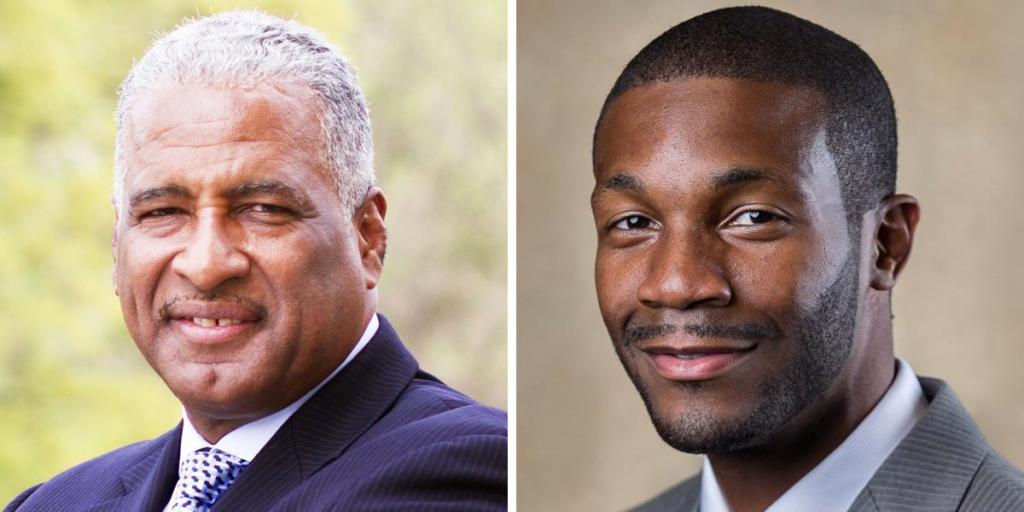
In a result few imagined possible a year ago, progressive Randall Woodfin took first place on Tuesday in the Birmginham mayoral election, forcing a runoff on Oct. 3 with incumbent mayor William Bell. Woodfin, an attorney and former Birmingham school board president, won 41 percent of the vote compared to 37 percent for Bell. To outright win, a candidate needed to earn 50 plus one percent of the vote. Bell has been in office since January 2010.
Election night is here and AL.com is focused on sorority rush

It’s election night in across the Yellowhammer State and while most statewide outlets are following the results of various municipal elections, the headline stories over on AL.com are about sorority rush and Sabrina the Teenage Witch. We’ll just leave it at that.
George and Amal Clooney donate $1M to Montgomery org to fight hate groups
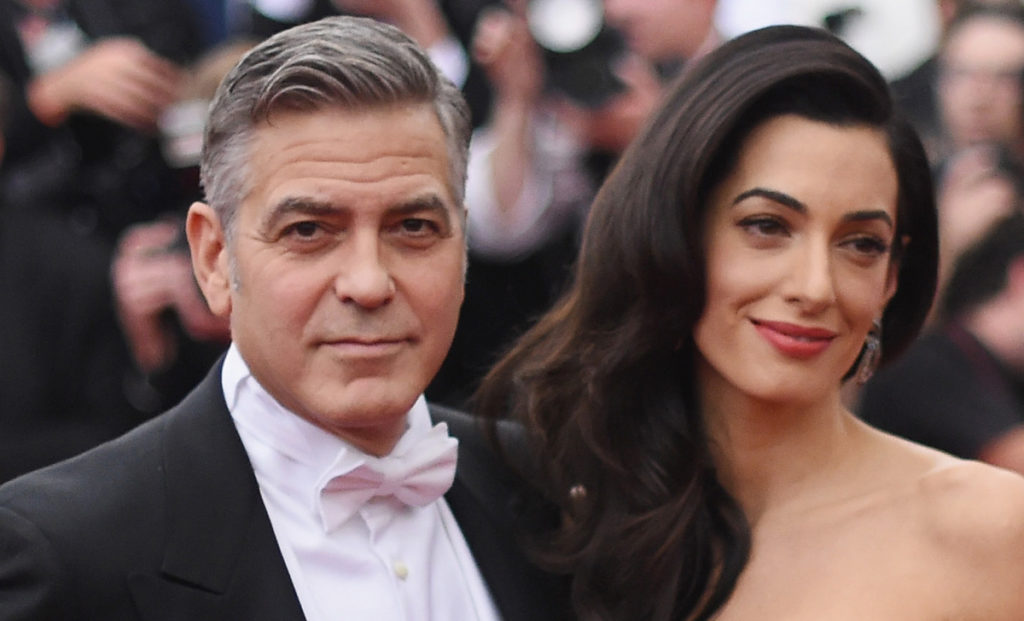
George and Amal Clooney are donating $1 million to fight hate groups. The couple announced Tuesday that their Clooney Foundation for Justice is supporting the Southern Poverty Law Center with a $1 million grant to combat hate groups in the United States. George Clooney says in a statement Tuesday that they wanted to add their voices and financial assistance to the fight for equality. Clooney said, “There are no two sides to bigotry and hate.” The Southern Poverty Law Center monitors the activities of more than 1,600 extremist groups in the U.S. and has used litigation to win judgments against white supremacist organizations. Last month, the Clooney Foundation announced a $2 million grant to support education for Syrian refugee children. Republished with permission of The Associated Press.
Decatur soldier among 5 missing in Black Hawk crash off Hawaii

A 41-year-old Decatur man is among five soldiers who have been missing since an Army UH-60 Black Hawk helicopter crashed Aug. 15 in the waters off northwest Oahu. Army Chief Warrant Officer Brian Woeber, 41 of Decatur, was one of five to be lost after the crash. The Army and Coast Guard had been searching the Hawaiian waters for nearly a week, when they suspended their active search for the missing soldiers. “Suspension of a search-and-rescue case without resolution is a very, very difficult decision, and it weighs heavily, particularly on the hearts of the Coast Guard,” Rear Adm. Vincent B. Atkins, commander of Coast Guard 14th District, told reporters. The decision to suspend the search was based on “extensive review of the case, including our search efforts, all available data and weather conditions,” Atkins explained. The helicopter was participating in a night exercise. It is the third crash of a military aircraft in recent months. The full list of missing soldiers include: 1st Lt. Kathryn M. Bailey, 26, of Hope Mills, N.C. She is an aviation officer. Chief Warrant Officer 3 Brian M. Woeber, 41, of Decatur, Ala. He is a pilot. Chief Warrant Officer 2 Stephen T. Cantrell, 32, of Wichita Falls, Tex. He is a pilot. Staff Sgt. Abigail R. Milam, 33, of Jenkins, Ky. She is a helicopter crew chief. Sgt. Michael L. Nelson, 30, of Antioch, Tenn. He is a helicopter crew chief.
Voting for Birmingham municipal elections underway
Birmingham, Ala.’s municipal election is Tuesday with all city-wide elected offices up for grabs. Polls opened at 7:00 a.m. where voters began to take on the daunting task of choosing from among a whopping 88 candidates for the offices of mayor, city council, and various school board positions. A crowded field of twelve candidates are running for Birmingham mayor, including: incumbent William Bell, Patricia Bell, Randy Davis, Philemon Hill, Trudy Hunter, Carl Jackson, Lanny Jackson, Donald Lomax, Frank Matthews, Fernandez Sims, Randall Woodfin and Chris Woods. All nine seats on the city council and the school board are also up for grabs. 44 candidates are hoping to earn a seat on the city council. Meanwhile, in the school board race, 31 candidates are vying for the nine seats. Five incumbents, Sherman Collins Jr. (running for city council), Brian Giattina, Lyord Watson, April Williams and Randall Woodfin (running for mayor) are not seeking re-election. Polls close at 7:00 p.m. A run-off is scheduled for Tues. Oct. 3 for top contenders who fail to claim a majority — 50 percent plus one, of the votes in their given race. Newly elected City Councilors take office Tues. Oct. 24.
Donald Trump’s path to boosting infrastructure full of potholes

President Donald Trump‘s road to getting legislation through Congress this year to restore the nation’s crumbling infrastructure appears increasingly precarious. Trump has yet to release a plan, despite his campaign pledge to create jobs by building bigger and better transportation and other types of infrastructure projects. Administration officials have said a plan will be released in the third quarter of this year, but Congress is unlikely to jump on the issue right away. Spending bills and extending the government’s ability to borrow are likely to top Congress’ agenda when lawmakers return to work after Labor Day. There is bipartisan skepticism Trump can reach his promised $1 trillion in new infrastructure spending over 10 years if he relies mainly on tax incentives to spur investment. Republished with permission of The Associated Press.
Alabama among worst-ranked community college systems in America

As high school students decide what they want to do after graduation — head straight to the workforce or continue their education — many students are opting for the more affordable two-year community college option as an accessible path forward to the future of their dreams. During the 2016 to 2017 academic year, tuition and fees for full-time, in-state enrollment at a public two-year college averaged $1,760 per semester versus $4,825 at a public four-year institution and $16,740 at a four-year private school. Based on those rates, students who earn their general-education credits at a community college before transferring to an in-state public four-year university would save $12,260 over two years on tuition and fees alone. Nevertheless, according to a new study by personal finance website WalletHub, Alabama is among the worst states in the nation to get a two-year degree when it comes to getting the best education at the cheapest rate. The study, 2017’s States with the Best & Worst Community-College Systems, named Alabama as the 36th lowest-ranked community college system in the country out of 44 states. To determine where students can receive the best education at the lowest price, WalletHub’s analysts compared more than 700 community colleges across 14 key indicators of cost and quality. Here’s a look at how some of Alabama’s community colleges rank among the 728 ranked community colleges across the country: Northeast Alabama Community College: 138 H Councill Trenholm State Technical College: 271 George C Wallace State Community College-Dothan: 294 George C Wallace State Community College-Selma: 340 Jefferson Davis Community College: 362 George C Wallace State Community College-Hanceville: 377 Jefferson State Community College: 379 Northwest-Shoals Community College: 403 Central Alabama Community College: 463 James H Faulkner State Community College: 484 Enterprise State Community College: 543 Lurleen B Wallace Community College: 546 Snead State Community College: 554 Chattahoochee Valley Community College: 564 Gadsden State Community College: 593 Alabama Southern Community College: 624 Bevill State Community College: 642 Bishop State Community College: 703 Lawson State Community College-Birmingham Campus: 708 Shelton State Community College: 709 J F Drake State Community and Technical College: 718 Here’s how Alabama compares to the rest of the country: Source: WalletHub
Donald Trump returns to Arizona – and a chaotic political landscape
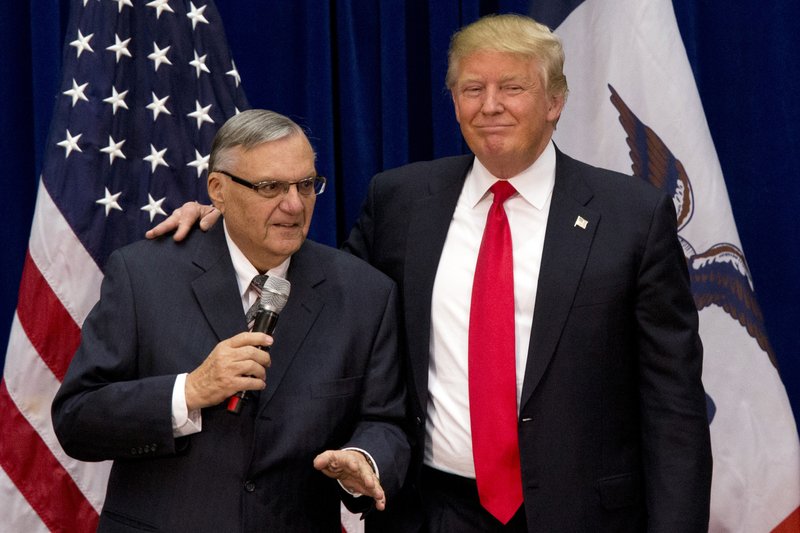
Donald Trump was just a few weeks into his candidacy in 2015 when he came to Phoenix for a speech that ended up being a bigger moment in his campaign than most people realized at the time. Trump savaged his critics and the media, vowed to fine Mexico $100,000 for each immigrant entering the country illegally, talked tough on trade, promised to return America to its winning ways and borrowed a line from Richard Nixon in declaring, “The silent majority is back.” The packed crowd ate it up — the raucous enthusiasm an early sign of the overwhelming support among Trump’s base that would help carry him to the presidency. As Trump returns to Arizona Tuesday in need of another big moment, he will find a place where his agenda and unconventional leadership style have consumed the political landscape and elevated the state’s status in the national fight for control of power in Washington in 2018. It was Arizona senator John McCain who cast the vote that derailed Trump’s effort to repeal the health care law. The other Arizona senator, Jeff Flake, has become the poster child for Republicans who buck the president’s agenda and feel his wrath on Twitter. The president is almost certain to back a GOP challenger to Flake in 2018, complicating Republican efforts to maintain control of the Senate. Trump has also revived the immigration debate and infuriated Latinos here with his talk of pardoning former Sheriff Joe Arpaio over his recent conviction for breaking the law with his signature immigration patrols. The controversy over Civil War monuments has even spilled into Arizona, where the governor has faced repeated calls to take down a handful of Confederate memorials in the state. And an overlooked item in Trump’s agenda, school choice, has made education a hot campaign issue in Arizona. With the strong support of Education Secretary Besty DeVos, Arizona passed the nation’s most ambitious expansion of vouchers this year, and public-school advocates recently submitted more than 100,000 signatures in a petition drive to get the law wiped out on the 2018 ballot. If that isn’t enough fuel for a political bonfire, Trump’s visit to Arizona will be his first political event since the race-driven violence in Virginia and his divisive comments in the aftermath of the protests. That created a dilemma for Republicans like Gov. Doug Ducey on whether to take the stage at the Trump rally while running for re-election. Doing so would subject him to attacks from moderates and the left by appearing with the president so soon after Charlottesville and possibly at the same time as the president pardons Arpaio and throws his endorsement behind Flake’s challenger. But avoiding the stage could hurt him with the base. Ducey’s plan is to greet the president on the airport tarmac and skip the rally, saying he wants to oversee the law enforcement response to protests. The governor supported Trump and appeared on stage at one of his rallies last year in Arizona. Trump would be hard-pressed to find a state where his Republican base is as faithful and vocal as in Arizona, which is a big reason why he came to the state seven times during his campaign and refers to the “special place” it holds for him. The fierce, non-conformist political spirit evident at Trump rallies here traces its roots to the frontier days and allows hard-fisted politicians like him and Arpaio to thrive. “The Republican primary base in Arizona is highly partisan, semi-libertarian in the sense that it’s against the swamp,” said longtime Republican political strategist Chuck Coughlin. “We’re the 48th state to join. We’re still acting like a juvenile. We still act like we’re the last one invited to the party which is sort of what Donald Trump is.” The biggest consequence of Trump’s unorthodox governing style may be seen in Flake’s re-election effort. Flake has been outspoken in his criticism of Trump, taking him to task in pointed jabs in a recent book. Trump has been sending out Tweets signaling his support for far-right former state Sen. Kelli Ward, who is running against Flake in the primary. Other Republicans with less baggage than Ward could also enter the race and complicate things further, making it harder for Republicans to keep the seat in the general election. Rep. Kyrsten Sinema is considered the top threat on the Democratic side. “If the president himself is supporting a challenger to Jeff, it’s a serious problem,” said Coughlin, who has been polling voters about the intraparty turmoil that has unsettled the race. Voters like Julie Brown are indicative of the GOP struggle in the Trump administration between the base and establishment. She attended a Trump rally last year and remains steadfast in her support of the president, even after Charlottesville. “He’s not totally polished and everyone tears apart his words, but you’ll never have to guess what he’s thinking and I like that much better than a politician who just gets up there and buoyantly lies and is bought by lobbyists,” Brown said. “He’s just straightforward, and like I said, it rocks the boat but we need it.” Republished with permission of The Associated Press.
Coal CEO expected Donald Trump help, but administration said no
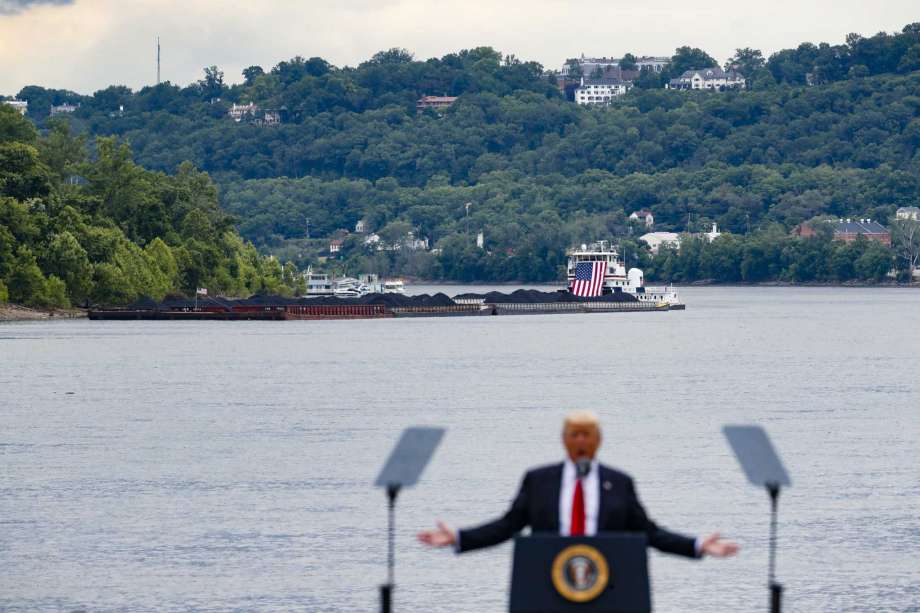
The Trump administration has rejected a coal industry push to win a rarely used emergency order protecting coal-fired power plants, a decision contrary to what one coal executive said the president personally promised him. The Energy Department says it considered issuing the order sought by companies seeking relief for plants it says are overburdened by environmental regulations and market stresses. But the department ultimately ruled it was unnecessary, and the White House agreed, a spokeswoman said. The decision is a rare example of friction between the beleaguered coal industry and the president who has vowed to save it. It also highlights a pattern emerging as the administration crafts policy: The president’s bold declarations – both public and private – are not always carried through to implementation. President Donald Trump committed to the measure in private conversations with executives from Murray Energy Corp. and FirstEnergy Solutions Corp. after public events in July and early August, according to letters to the White House from Murray Energy and its chief executive, Robert Murray. In the letters, obtained by The Associated Press, Murray said failing to act would cause thousands of coal miners to be laid off and put the pensions of thousands more in jeopardy. One of Murray’s letters said Trump agreed and told Energy Secretary Rick Perry, “I want this done” in Murray’s presence. The White House declined to comment on Murray’s assertion. A spokesman for Murray Energy, Gary Broadbent, also declined to comment on the letters. Energy Department spokeswoman Shaylyn Hynes said the agency was sympathetic to the coal industry’s plight. “We look at the facts of each issue and consider the authorities we have to address them, but with respect to this particular case at this particular time, the White House and the Department of Energy are in agreement that the evidence does not warrant the use of this emergency authority,” Hynes said in a statement Sunday. The aid Murray sought from Trump involves invoking a little-known section of the U.S. Federal Power Act that allows the Energy Department to temporarily intervene when the nation’s electricity supply is threatened by an emergency, such as war or natural disaster. Among other measures, it temporarily exempts power plants from obeying environmental laws. In the past, the authority has been used sparingly, such as during the California energy crisis in 2000 and following Hurricane Katrina in 2005. The Obama administration never used it. The Trump administration has used it twice in seven months in narrow instances. Murray’s company is seeking a two-year moratorium on closures of coal-fired power plants, which would be an unprecedented federal intervention in the nation’s energy markets. The company said invoking the provision under the Power Act was “the only viable mechanism” to protect the reliability of the nation’s power supply. Murray told the White House that his key customer, Ohio-based electricity company FirstEnergy Solutions, was at immediate risk of bankruptcy. Without FirstEnergy’s plants burning his coal, Murray said his own company would be forced into “immediate bankruptcy,” triggering the layoffs of more than 6,500 miners. FirstEnergy acknowledged to the AP that bankruptcy of its power-generation business was a possibility. Murray urged Trump to use the provision in the Federal Power Act to halt further coal plant closures by declaring an emergency in the electric power grid. After a conversation with Trump at a July 25 political rally in Youngstown, Ohio, Murray wrote, the president told Perry three times, “I want this done.” Trump also directed the emergency order be given during an Aug. 3 conversation in Huntington, West Virginia, he said. “As stated, disastrous consequences for President Trump, our electric power grid reliability, and tens of thousands of coal miners will result if this is not immediately done,” he wrote. Murray’s claims raise the possibility that Trump was warned against the move by his advisers – some of whom are known to be more cautious – or that he simply made assurances to Murray to avoid immediate confrontation. The people who worked on the decision most directly were Perry, Michael Catanzaro, who works under National Economic Council director Gary Cohn as the top White House energy adviser, and Perry’s chief of staff, Brian McCormack, U.S. officials told the AP. They spoke only on condition of anonymity because they were not authorized to discuss internal policy considerations by name. Murray and his company have been impassioned supporters of Trump, donating hundreds of thousands of dollars to his campaign and inauguration, hosting fundraisers and embracing him as the rescuer of the Appalachian coal industry. The friendliness has been mutual: When Trump repealed an Obama administration regulation barring coal companies from dumping mine waste in streams, Murray and his sons were invited for the signing. The Energy Department has already informed Murray it will not invoke the law, an official with knowledge of the decision told the AP. Coal has become an increasingly unattractive fuel for U.S. electricity companies, which have been retiring old boilers at a record pace. At least two dozen big coal-fired plants are scheduled to shut down in coming months as utilities transition to new steam turbines fueled by cleaner-burning natural gas made more abundant in recent years by new drilling technologies. Trump, who rejects the consensus of scientists that burning fossil fuels is causing global warming, has made reversing the coal industry’s decline a cornerstone of his administration’s energy and environmental policies. Since taking office, he announced that the U.S. will withdraw from the Paris climate accord, and he has moved to block or delay Obama-era regulations seeking to limit carbon emissions. Other coal executives have urged similar government intervention to save their businesses. In a speech last week, the CEO of Peabody Energy Corp., the nation’s largest coal producer, also said a two-year moratorium on coal-plant closures was needed. Perry has already twice invoked the Federal Power Act in narrow ways at the request of utilities seeking to keep old coal-burning plants online past their planned retirement dates. In both cases, the utilities were
85-year-old Alabama Korean War veteran casts first vote

David Gregg doesn’t hesitate to name the most patriotic man he knows – his father, Clyde Gregg. Clyde Gregg, now 85, served in the military as a combat engineer stationed in Germany during the Korean War, and for 42 years as a minister and missionary. Of all the firsts he has experienced, voting in the Aug. 15 U.S. Senate race was one of the most memorable, Clyde Gregg said. Tuesday’s primary marked his first time to ever vote. “I know it’s sort of shocking when people hear I’ve never voted, mainly because I’m so patriotic,” he said. “I never liked politics to start with, but I love my country and I don’t like what it’s becoming.” David Gregg said he was thrilled when his parents told him they were going with him to the polls. Though he’s had strong feelings politically in the past, Clyde Gregg says he doesn’t recall times being more volatile than now, a society he describes as “absolutely out of control.” National events such as the tearing down of historical statues and violent protests occurring on a regular basis have led Clyde to believe one thing: the country’s Constitution is in grave danger of being destroyed. That fear drove him to the polls on Tuesday. “I served this country under that Constitution, and I just decided that there are too many people in Washington trying to destroy it and I’m not going to stand for it,” he said. In response, he and his wife, Nancy, made their first-ever pilgrimage to the polls. It was only the second time Nancy has ever voted. “I remember voting when I was about 19 when I went with my mother, but I haven’t since then,” she said. “I was like anyone else. I didn’t like things that were going on in our country, but I just didn’t voice my dissatisfaction in that way, with my vote.” The couple moved to Florence from their native Indiana last year to be nearer to their son and his family. They say they won’t let the opportunity to vote slip away again. “I’m going to vote in every election I can from now on for as long as I have,” Clyde said. Nancy, who is 80, agrees. “It felt good, like a privilege I have because I’m an American and I’m alive.” She said she studied her choice of candidates before she voted, and will continue to educate herself for future elections. She will also encourage the younger generation to get out and vote, she said. Clyde said he knows some people question how he could go all his life without voting, and he’s heard all the cliches about non-voters. “They say if you don’t vote, you can’t complain,” he said. “Well, I say, I pay taxes and I’ve served this country that I love, and I have a right to voice my opinion. But now, I’ll just be voting, too.” Republished with permission of The Associated Press.
