
Facebook: Accounts from Russia bought ads during US campaign
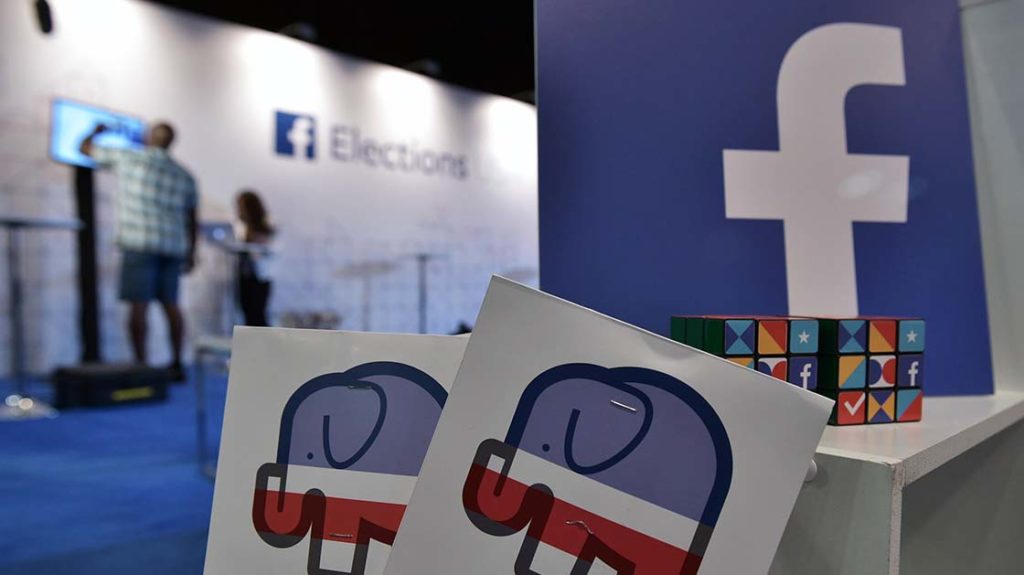
Facebook says it has identified nearly 500 fake accounts, probably run from Russia, that it says spent about $100,000 on ads that amplified politically divisive issues during the 2016 U.S. presidential campaign. Facebook Chief Security Officer Alex Stamos says in a statement Wednesday the company discovered the accounts during a review of ad buys. That review was spurred by a broader investigation into Russian interference in the election. Stamos says the 470 fake accounts and pages didn’t specifically reference the election, a candidate or voting. But he says the 3,000 ads promoted political messages on a range of issues from gun rights to race issues. The ads were purchased between June 2015 and May 2017. Facebook says it shared its findings with federal authorities. Republished with permission from the Associated Press.
Hillary Clinton takes blame in upcoming book but responds to critics

Hillary Clinton takes the blame for her 2016 presidential defeat in her upcoming book but offers choice words for President Donald Trump, her campaign rivals and Russian President Vladimir Putin. Clinton writes in “What Happened” that Vermont Sen. Bernie Sanders caused “lasting damage” to her presidential campaign and pushes back against the notion raised by Vice President Joe Biden that she didn’t campaign forcefully enough for middle class voters. “I go back over my own shortcomings and the mistakes we made. I take responsibility for all of them. You can blame the data, blame the message, blame anything you want – but I was the candidate,” she writes. “It was my campaign. Those were my decisions.” CNN reported Wednesday that it purchased a copy of the book in Jacksonville, Florida ahead of its Sept. 12 release date. In the book, Clinton says she miscalculated “how quickly the ground was shifting under all our feet” and tried to run a traditional campaign “while Trump was running a reality TV show that expertly and relentlessly stoked Americans’ anger and resentment.” During the primary, Clinton writes that advisers often told her not to fight back against Sanders’ criticism for fear of alienating his supporters. She says “his attacks caused lasting damage, making it harder to unify progressives in the general election and paving the way for Trump’s ‘Crooked Hillary’ campaign.” As the campaign moved along, she says then-FBI Director James Comey‘s probe into her private email server, including his late-October decision to issue a letter to Congress on the investigation, disrupted the image of her as a strong leader. Clinton questions whether a stronger response from President Barack Obama to reports of Russian meddling in the election might have made a difference. And she writes with regret that she never got the chance to confront Putin in person. “There’s nothing I was looking forward to more than showing Putin that his efforts to influence our election and install a friendly puppet had failed,” she writes. “I know he must be enjoying everything that’s happened instead. But he hasn’t had the last laugh yet.” Clinton’s previous books include her 2003 memoir, “Living History,” published while she was a U.S. senator from New York, and 2014’s “Hard Choices,” her account of her time as secretary of state. Republished with permission from the Associated Press.
Personnel note: Michael “Mac” McDaniel named Alabama Community College System Director of Aviation
With more than 300 aerospace companies located in Alabama in addition to the strong military aviation presence, the aviation and aerospace industry continues to expand across the Yellowhammer State. Which is why the Alabama Community College System (ACCS) is doing all that it can to help its graduates secure in-demand jobs within the burgeoning industry. At a press conference on Wednesday, ACCS Chancellor Jimmy Baker announced the creation of a new position within the ACCS — Director of Aviation Programs — and the appointment of Michael “Mac” McDaniel to the new post to help do just that. The new position is responsible for the oversight of the System’s Aviation Technology programs across the state. “Alabama’s aviation industry continues to expand with industry giants like Boeing, Airbus, and GE Aviation locating in our own backyard. The Alabama Community College System is working right alongside to ensure our aviation training program is among the best in the nation,” Baker said. “Selecting Mac to oversee our aviation efforts signifies our serious commitment to meeting the industry’s workforce needs. Mac’s nearly three decades of aviation experience will ensure our students across the state are receiving the most relevant and state-of-the-art skills training when it comes to a career in aviation.” McDaniel will join the ACCS from ExpressJet Airlines in Atlanta where he served as the General Manager of Aircraft Maintenance Training. He began his career more than 25 years ago as an aircraft mechanic and since that time has worked for airlines across the U.S. managing their maintenance training initiatives. A graduate of Colorado Northwestern Community College, McDaniel recognizes the vital role community colleges play in preparing students to succeed in their future careers. An expert in aviation maintenance and training, McDaniel is often featured in the industry’s leading trade publications. “I am passionate about training the next generation of aviation employees and leaders and I am thrilled to have the opportunity to lead this effort in Alabama,” McDaniel said of his appointment. “Alabama’s community colleges have a stellar reputation for providing top-of-the-line aviation related training to their students and I’m eager to use my industry expertise to build upon the program.” The Alabama Community College System’s Aviation Technology programs offer Federal Aviation Administration certified training in airframe maintenance and technology, power plant technology, avionics technology, aviation composite materials and general aviation technology. Courses are offered through three of the state’s community colleges: Coastal Alabama Community College, Enterprise State Community College, and Snead State Community College. McDaniel will start his new role on September 11.
Walt Maddox to wait until 2018 to announce decision on gubernatorial bid
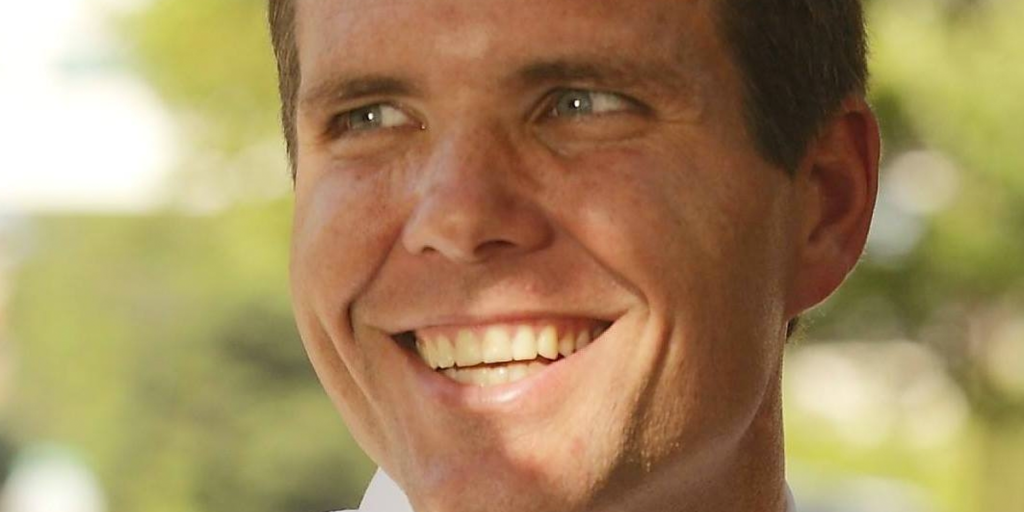
Democrat and Tuscaloosa Mayor Walt Maddox on Tuesday announced he has yet to decide whether or not he will run for governor in 2018, and that he will make his final decision by mid-January. “As I have traveled the state and spoken with many Alabamians, it is evident that Montgomery has failed. Behind these failures, our rural healthcare system is collapsing, our infrastructure is failing, and our education system is struggling to compete with surrounding states,” Maddox said in a statement on his website. “From healthcare to education, from infrastructure to job creation, we are running out of time to forge a new Alabama.” Maddox, who has served as mayor since 2005, was re-elected to a fourth-term in March, went on to say he is investing $50,000 of his own money to continue the exploratory process toward a potential gubernatorial bid. “To that end, and with great excitement, we are investing $50,000 of our own money to continue this momentum forward,” Maddox added. Also seeking the Democratic nomination for governor are Jason Childs, former Chief Justice of the Alabama Supreme Court Sue Bell Cobb, Christopher Countryman and minister Anthony White. Seeking the GOP nomination for governor are sitting Governor Kay Ivey, Huntsville Mayor Tommy Battle, Jefferson County Commissioner David Carrington, evangelist Scott Dawson, Sen. Bill Hightower, Birmingham businessman Josh Jones and former Morgan County Commissioner Stacy Lee George. The gubernatorial primaries will be June 5, 2018. The gubernatorial election will take place Nov. 6, 2018.
House moving swiftly on $7.9B Harvey relief bill
The House on Wednesday moved swiftly toward approving $7.9 billion in Harvey disaster relief as Democratic leaders signaled they would back the measure along with a short-term increase in the nation’s borrowing limit to avoid an economy-rattling default. The announcement by House Minority Leader Nancy Pelosi, D-Calif., and Senate Minority Leader Chuck Schumer of New York is aimed at retaining Democratic influence and trying to ensure the Republican-controlled Congress addresses health care and immigration as the hectic fall agenda kicked off. “Given Republican difficulty in finding the votes for their plan, we believe this proposal offers a bipartisan path forward to ensure prompt delivery of Harvey aid as well as avoiding a default, while both sides work together to address government funding, DREAMERS, and health care,” Pelosi and Schumer wrote. Democratic votes are needed to quickly pass a debt limit increase, even though Republicans control Congress. Many Republicans simply won’t vote to increase the debt limit without cuts elsewhere in government spending. Wednesday’s House vote comes as the government’s response to Harvey is draining existing disaster reserves, with Federal Emergency Management Agency‘s disaster accounts hovering at $1 billion or less. FEMA is warning lawmakers that disaster funds run out on Friday, even as a much more powerful hurricane, Irma, is bearing down on the eastern U.S. This week’s measure is to handle the immediate emergency needs and replenish reserves in advance of Irma. Far more money will be needed once more complete estimates are in this fall, and Harvey could end up exceeding the $110 billion government cost of Hurricane Katrina. The move by Pelosi and Schumer is aimed at winning assurances that minority party Democrats will be treated fairly as Congress advances through its daunting to-do list, which includes extending a popular children’s health program, federal flood insurance, and, perhaps, a budget that would ease tight limits on Pentagon and domestic spending. The statement came out as the House Wednesday took up a $7.9 billion request by President Donald Trump‘s for a $7.9 billion first installment of relief for victims of Harvey. House action on Wednesday would set up a Senate debate that, as of Wednesday, would follow an uncertain path. GOP leaders have signaled that they want to use the urgent Harvey aid bill to solve perhaps the most vexing issue facing Congress this month: Increasing the U.S. debt limit make sure the government can borrow freely again to cover its bills, including Harvey aid. Senate Majority Leader Mitch McConnell, R-Ky., said again Wednesday that increased Harvey costs show the importance of acting swiftly to increase the government’s debt cap to make sure there’s enough borrowed cash to pay out the surge in disaster aid. “I think it’s a terrible idea,” said House Freedom Caucus Chairman Mark Meadows, R-N.C., who conceded that conservatives were getting outmaneuvered. “I think at this point there are bigger issues that we have to focus on,” Meadows said. “I have opposed a debt ceiling increase every time it has come up for a vote,” said Rep. Roger Williams, R-Texas. “I am heavily opposed to lumping these two separate issues together.” Analysts at the Bipartisan Policy Center, a Washington think tank, say Harvey aid wouldn’t cause a cash crunch for weeks. “We’re dealing with all these things at this point in time anyway,” said House Democratic Caucus Chairman Joe Crowley of New York. “Democrats have said we’re for a clean debt ceiling and we’re also for making sure the people from Texas, Louisiana, and elsewhere who’ve been severely damaged by these storms – with one more on the way as well – that their needs need to be addressed as well.” Republished with permission from the Associated Press.
Roy Moore picks up Senate Conservatives Fund endorsement
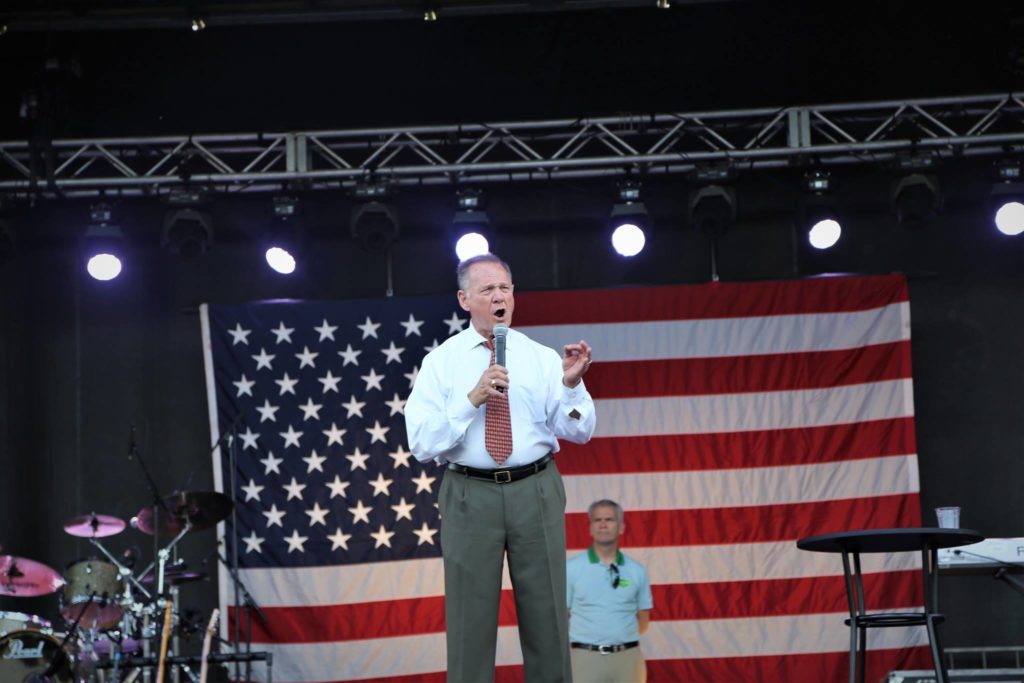
The Senate Conservatives Fund (SCF) on Tuesday announced it is supporting former Alabama Chief Justice Roy Moore in Alabama’s U.S. Senate special election Republican primary runoff over Sen. Luther Strange on Sept. 26. The SCF, a group headed by Ken Cuccinelli — the former Virginia Attorney General and the state’s 2013 Republican gubernatorial candidate — is a national grassroots organization “that seeks to bring bold conservative leadership to Washington by supporting candidates who will fight for the timeless conservative principles of limited government, strong national defense, and traditional family values.” In the announcement of the Moore’s endorsement, Cuccinelli pointed out that an “overwhelming 97 percent” of the group’s supporters backed Moore over Strange in the runoff. “I’m proud to announce the Senate Conservatives Fund’s endorsement of Judge Roy Moore in Alabama’s special election for U.S. Senate,” Cuccinelli wrote. “After collecting feedback from our supporters in Alabama and across the nation last week, an overwhelming 97% said they thought we should endorse Roy Moore in the primary election runoff.” “Roy Moore is a proven conservative leader who will fight to cut spending, reform our nation’s tax system, secure our borders, defund Planned Parenthood, and fully repeal Obamacare,” he added. “Like President Trump, Roy Moore is a political outsider who isn’t afraid to stand up to the liberals in his own party to get results for all Americans. Unlike so many Republicans who break their promises after they are elected, Roy Moore is someone we can count on.” The winner of the primary runoff will advance to the Dec. 12 general election where he will face Democrat Doug Jones for the seat formerly held by Jeff Sessions.
Barack Obama had a ‘pen and phone’ strategy; Donald Trump has an eraser

President Barack Obama had a “pen and phone” strategy. President Donald Trump has an eraser. Since his first days in office, Trump has set out on a wholesale reversal of a long list of accomplishments that Obama achieved through executive action – a less enduring means than the hard-and-fast language of legislation. The latest Obama-era policy to fall is the program shielding from deportation hundreds of thousands of young people brought into the country illegally as children. The Trump administration on Tuesday said the government would stop issuing new work permits while lawmakers debate whether to pass another solution. In explaining his decision, Trump accused Obama of making “an end-run around Congress” to protect the so-called “dreamers.” In effect, this time it’s Trump making an end-run around Obama. Obama, coming out of semi-retirement, retorted that Trump’s action was a “cruel” and “self-defeating” decision tinged with politics. It was yet another demonstration of the easy-come, easy-go nature of presidential achievements attained through unilateral action: What one president does by executive fiat, the next can just as quickly overturn. And it’s not just a Trump-Obama dynamic. Trump’s executive orders will be subject to revision by his successor. And Obama didn’t hesitate to reverse the actions of his predecessor, George W. Bush. For all of that, though, Trump has been “unusually aggressive in his use of unilateral powers,” says Kenneth Mayer, a University of Wisconsin-Madison political scientist and expert on presidential powers and executive orders. While it’s hard to systematically rank presidents on their use of executive actions, Mayer says “there are examples of Trump going beyond what other presidents have done in terms of the frequency and nature of unilateral action.” Trump, lacking any major legislative accomplishments despite the advantage of a Republican-controlled Congress, has issued dozens of executive orders and actions during the past seven months that have had a sweeping effect across the scope of government. They range from huge shifts in international policy to minor tinkering with obscure federal regulations. He’s pulling the United States out of the landmark Paris climate agreement through which nearly 200 countries had committed to combat global warming by reducing polluting emissions. He’s scrapped an Obama administration policy that let national parks ban the sale of bottled water to fight littering. His Education Department has lifted Obama-era guidance to schools to allow transgender students to use the bathroom of their choice. He’s ordered up two deregulatory actions for every new regulation issued. He tweeted out word that transgender individuals would no longer be allowed to serve openly in the military, as provided by the Obama administration, forcing the Pentagon to scramble to draft new rules to that effect. Trump’s actions on environmental matters extend well beyond climate change: He’s moved to rip up Obama’s Clean Power Plan, regulations that sought to reduce emissions from coal-fired power plants. His executive order on regulatory reform has been cited by EPA Administrator Scott Pruitt as a reason to delay or roll back a raft of Obama-era environmental regulations, from cleaning up water pollution from coal mines to blunting limits on emissions of toxic mercury from power plant smokestacks. There’s likely plenty more to come: Trump’s Labor Department wants to undo an Obama administration rule extending mandatory overtime pay to 4.2 million more workers. And the administration is reviewing a potential rule that would let employers opt out of providing no-cost birth control to women for religious and moral reasons. Some changes have been harder to impose than Trump expected: His initial attempt at an executive order temporarily banning travel to the U.S. from several Muslim-majority countries and suspending the U.S. refugee program hit roadblocks in the courts. On his second attempt, the Supreme Court allowed only a sharply scaled back version of the order to go forward pending arguments scheduled for October. Despite his Jan. 25 executive order to jumpstart construction on a U.S.-Mexico border wall, the structure is still far from reality. Obama has largely bitten his tongue as Trump rolled back policy after policy from his presidency. But the former president spoke out clearly Tuesday about the “dreamers” program, saying in a statement that his order had been based on “the well-established legal principle of prosecutorial discretion, deployed by Democratic and Republican presidents alike.” He said he acted unilaterally only after Congress failed to send him legislation to protect the “dreamers.” Obama stepped up his use of executive actions in 2014 as he became frustrated with how difficult it was to push legislation through Congress. He famously declared: “We’re not just going to be waiting for legislation in order to make sure that we’re providing Americans the kind of help they need. I’ve got a pen, and I’ve got a phone.” But the more enduring nature of legislation vs. flimsier executive actions is clear in the difficulty that Republicans have had in repealing Obama’s health care plan: It barely squeaked into law in 2010 but Republicans have been unable to vote it out after pledging for years to repeal it. Presidents know their executive orders can be revoked with the stroke of a pen by their successors. They also know they can put the next president in a bind by creating a program that will be politically difficult to rescind. Trump agonized over his “dreamers” decision and caught criticism for trying to navigate a middle ground by proposing to gradually phase out the program while inviting Congress to come up with a permanent fix. White House press secretary Sarah Huckabee Sanders was left to insist: “It’s not cold-hearted for the president to uphold the law.” Republished with permission from the Associated Press.
Survey: White Christians are now a minority of US population

The share of Americans who identify as white and Christian has dropped below 50 percent, a transformation fueled by immigration and by growing numbers of people who reject organized religion altogether, according to a new survey released Wednesday. Christians overall remain a large majority in the U.S., at nearly 70 percent of Americans. However, white Christians, once predominant in the country’s religious life, now comprise only 43 percent of the population, according to the Public Religion Research Institute, or PRRI, a polling organization based in Washington. Four decades ago, about eight in 10 Americans were white Christians. The change has occurred across the spectrum of Christian traditions in the U.S., including sharp drops in membership in predominantly white mainline Protestant denominations such as Presbyterians and Lutherans; an increasing Latino presence in the Roman Catholic Church as some non-Hispanic white Catholics leave; and shrinking ranks of white evangelicals, who until recently had been viewed as immune to decline. The trends identified in the survey are fueling anxiety about the place of Christians in society, especially among evangelicals, alarmed by support for gay marriage and by the increasing share of Americans – about one-quarter – who don’t identify with a faith group. President Donald Trump, who repeatedly promised to protect the religious liberty of Christians, drew 80 percent of votes by white evangelicals, a constituency that remains among his strongest supporters. About 17 percent of Americans now identify as white evangelical, compared to 23 percent a decade ago, according to the survey. Membership in the conservative Southern Baptist Convention, the largest U.S. Protestant group, dropped to 15.2 million last year, its lowest number since 1990, according to an analysis by Chuck Kelley, president of the New Orleans Baptist Theological Seminary. “So often, white evangelicals have been pointing in judgment to white mainline groups, saying when you have liberal theology you decline,” said Robert Jones, chief executive of PRRI. “I think this data really does challenge that interpretation of linking theological conservatism and growth.” The PRRI survey of more than 100,000 people was conducted from January 2016 to January of this year and has a margin of error of plus or minus 0.4 percentage points. Previous surveys had found that the Protestant majority that shaped the nation’s history had dropped below 50 percent sometime around 2008. The PRRI poll released Wednesday included a more in-depth focus on race and religion. Jones said growth among Latino Christians, and stability in the numbers of African-American Christians, had partly obscured the decline among white Christians. The survey also found that more than a third of all Republicans say they are white evangelicals, and nearly three-quarter identify as white Christians. By comparison, white Christians have become a minority in the Democratic Party, shrinking from 47 percent a decade ago, to 29 percent now. Forty percent of Democrats say they have no religious affiliation. Among American Catholics, 55 percent now identify as white, compared to 87 percent 25 years ago, amid the growing presence of Latino Catholics, according to the report. Over the last decade, the share of white Catholics in the U.S. population dropped from 16 percent to 11 percent. Over the same period, white mainline Protestants declined from 18 percent to 13 percent of all Americans. Republished with permission from the Associated Press.
Steve Flowers: We are in for one heck of a year
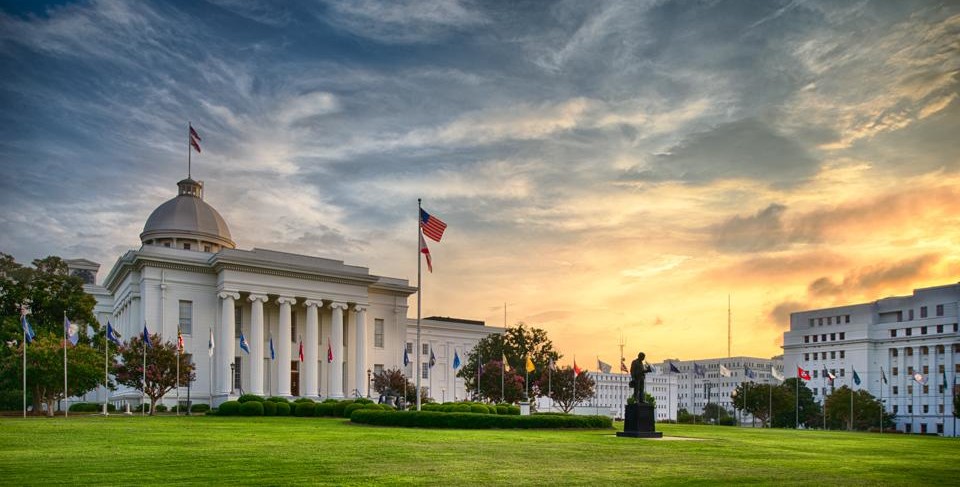
Labor Day is the traditional kickoff to an election year. Folks our quadrennial gubernatorial election year is going to be a doozy. We are in for one heck of a political year next year. Besides the Governor’s race, we have an open Lt. Governor’s race, an open Attorney General’s race, an open Treasurer’s race, and an open Agriculture Commissioner’s race. We have statewide races for Secretary of State and State Auditor. We have five seats up for election on the State Supreme Court. One of those will be a hotly contested battle for Chief Justice. We have two seats up for election on the Public Service Commission. More importantly, we have local races on the 2018 ballot. Local races drive the turnout; all politics are local. All 67 sheriffs run, all probate judges run; there will also be local judicial races and all circuit clerks run. All seven of our congressional seats will be on the ballot. Two of those seats will be in play. Second District Congresswoman Martha Roby is vulnerable and will be challenged and Fifth District Congressman Mo Brooks angered the Washington establishment Republican moneyed power brokers by challenging Luther Strange and he will be in a battle for his political life. The most important races will be for the 35 state Senate seats and 105 House of Representative seats. An unprecedented number of Senators and Representatives will not be running for reelection. Those legislative races will be where most of the special interest money will gravitate. Money follows money. The Legislature appropriates state dollars as well as makes state laws. The Governor proposes and the Legislature disposes. I have observed Alabama politics for quite awhile and 2018 is set to be the best circus I have seen, and I have seen some good ones. There may have been better governor’s races, but from top to bottom of the ballot, this may be the very best. The governor’s race is always the marquee battle royale in Alabama politics. It will get cranked up immediately after the September 26 Republican Senate primary contest, which Roy Moore will probably win. Kay Ivey will officially announce soon. She really began her campaign the day she was sworn in earlier this year. One of her first acts made her a player in the 2018 gubernatorial contest. Robert Bentley had initially called for the open Senate race to be in 2018. However, Ivey had seen polls that revealed that Roy Moore was going to win whatever race he ran for in 2018, whether it was Governor or U.S. Senator. The vague state Judicial Inquiry Commission made him a martyr and hero when they removed him from his Chief Justice post.Neither she nor any host of potential horses would have beaten the Ten Commandment’s Judge. However, she knew that the U.S. Senate seat would allure him and it did. It was an adroit, brilliant Machiavellian move by Ivey. She has moved into the governor’s office and looks gubernatorial. She is in the catbird’s seat in the race for a full four-year term. Her move to have a special election this year rather than a regular election year not only enhanced her odds for election it also cost the state over $10 million. State House of Representatives, Ways and Means Chairman, Steve Clouse, R-Ozark, has wisely and prudently prefiled a bill to clarify the law and clearly state that the election for a vacated Senate Seat would be held with the next general election. It will save the cash strapped General Fund a lot of money in the future. Even though Kay Ivey will be running as the incumbent in the upcoming gubernatorial fray, her entrance has not deterred some major players. Huntsville Mayor, Tommy Battle, will be a player. He could run on a platform of saying if I can make the rest of Alabama a semblance of Huntsville, I am your man. Agriculture Commissioner, John McMillan, has won two statewide races and is in the race. Several other viable candidates are not scared of the aging Ivey. Jefferson County Commissioner David Carrington, Birmingham Evangelist Scott Dawson, and State Senator Bill Hightower are already in the GOP contest. Surprisingly two Democratic thoroughbreds are poised to run. Tuscaloosa Mayor Walt Maddox and former Chief Justice Sue Bell Cobb are ready to pull the trigger. PSC President Twinkle Cavanaugh has moved to the Lt. Governor’s race. This is a wise and prudent move by the 50-year old state political veteran. She will be a prohibitive favorite to win that race. It is purely a name identification contest. Her positive name ID is very high. See you next week. ••• Steve Flowers is Alabama’s leading political columnist. His weekly column appears in over 60 Alabama newspapers. He served 16 years in the state legislature. Steve may be reached at www.steveflowers.us.
