
Bradley Byrne: Ending illegal immigration must be a top priority

One of President Donald Trump’s most popular positions on the campaign trail last year was a commitment to securing our nation’s borders. Since taking office, this has been a shared top priority between President Trump and the House of Representatives. President Trump first demonstrated his commitment to restoring the rule of law and tackling illegal immigration when he appointed Jeff Sessions as his Attorney General. Jeff Sessions was the leader on immigration issues in the Senate, and he understands how allowing illegal immigration to go unchecked makes our country less safe and hurts the overall economy. Since taking office, President Trump and Attorney General Sessions have started to enforce our immigration laws again, deport criminal illegal immigrants, crack down on so-called “sanctuary cities,” and end the unconstitutional DACA program. These policies have resulted in illegal immigration across our southern borders being down over 70 percent since Trump took office. In the House, we are focused on doing our part to combat illegal immigration and ensure the Trump Administration has the resources they need to get the job done. Just a few weeks ago, the House passed a government funding bill that included $1.5 billion for border wall construction. This is the amount President Trump says he needs to start construction of a wall along our southern borders and make repairs to the current border wall. This funding bill is now headed to the Senate, where I fear it may get bogged down in their outdated procedures. Despite the problems in the Senate, I pledge to continue working with President Trump and his administration to ensure funding is provided to build the wall and boost our border security program. Keeping the American people safe and securing the border should not be a partisan issue. Earlier this year, we succeeded in getting a bill signed into law that represented the largest increase in border security funding in almost a decade. That funding bill allowed for the hiring of new border patrol agents and provided funding to purchase new, innovative border security technology. Cities who refuse to enforce federal immigration laws and do not cooperate with federal law enforcement, known as sanctuary cities, are a big issue. Knowing that, earlier this year I voted in favor of a bill to cut off federal funding sources for these sanctuary cities that refuse to enforce our nation’s laws. If a city refuses to enforce the laws of our country, then they should not receive a penny in federal funding. Another big issue stemming from out-of-control illegal immigration is criminal gangs, like MS-13. MS-13 is a brutal and violent criminal gang responsible for many murders across the United States. Recently, the House passed the Criminal Gang Member Removal Act. This commonsense legislation strengthens public safety by making it harder for members of criminal gangs to enter our country. Just as important, the bill makes being a part of a criminal gang a deportable offense. We must do everything in our power to keep gang members out of our country. I applauded the recent decision by President Trump to end President Barack Obama’s Deferred Action for Childhood Arrivals (DACA) program. This program, implemented through executive action, was an affront to the Constitution and our system of government. I am hopeful we can use this decision to pass important border security legislation while deciding how to best deal with those individuals who were brought to our country illegally as children. Ultimately, we must continue working to follow through on our shared priority of cracking down on illegal immigration. The safety, security, and well-being of the American people must always come first. • • • Bradley Byrne is a member of U.S. Congress representing Alabama’s 1st Congressional District.
Roy Moore announces election day schedule
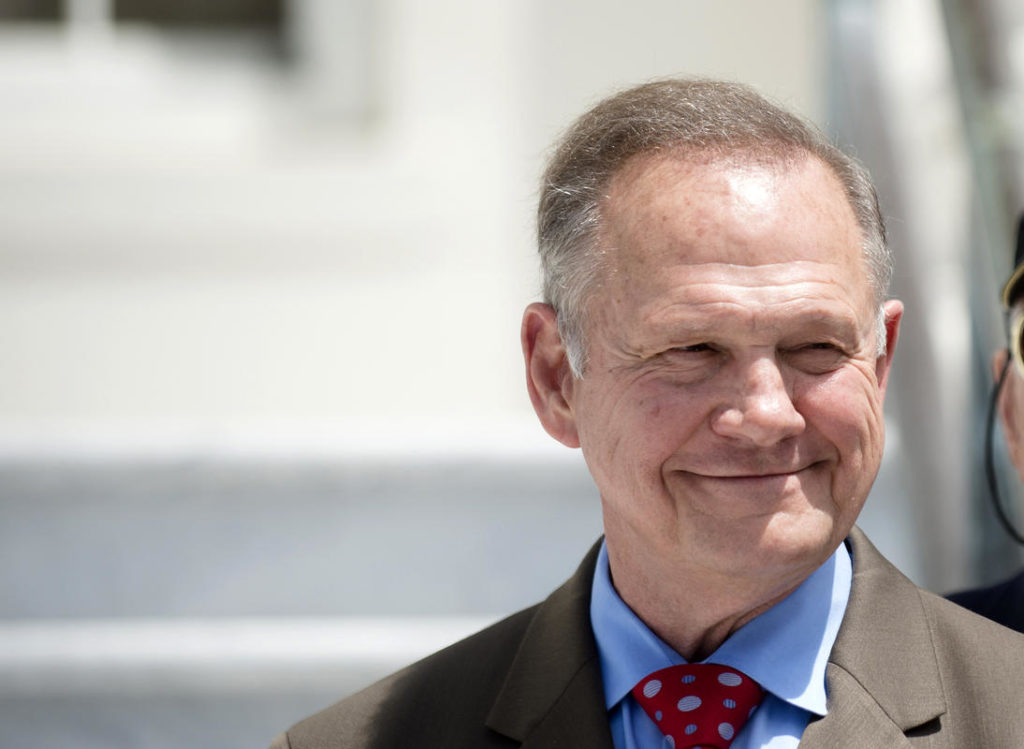
Yellowhammer State Republicans will head to the polls on Tuesday to cast their ballots for either former Alabama Chief Justice Roy Moore or appointed Sen. Luther Strange in the state’s GOP primary runoff election. On Monday, the Judge Roy Moore for Senate Campaign announced Moore’s election day schedule: 10:00 a.m. Judge Moore and Kayla will participate in their traditional horseback ride to the polls. Location: Gallant Fire Hall 9090 Gallant Road Gallant, AL 35972 7:00 p.m. Judge Moore and Kayla will join family and supporters at the RSA Activity Center in Montgomery for the Judge Roy Moore for U.S Senate Victory Party. Location: RSA Activity Center 201 Dexter Ave. Montgomery, AL 36104 Victory Party will be open to credentialed press. Doors will open at 4:00 p.m. For press credentials contact Katie Frost.
Health care bill teeters, GOP adds money to woo dissidents
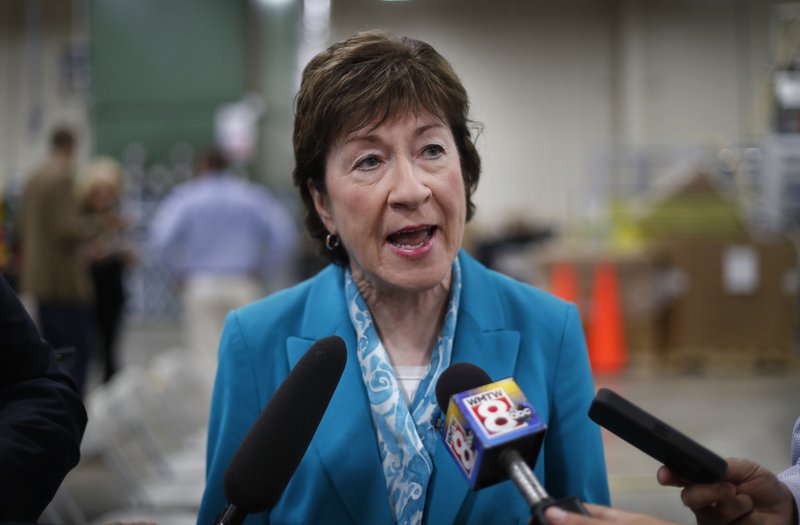
Top Republicans are adding money to their staggering effort to repeal the Obama health care law and say they’re pushing toward a climactic Senate faceoff this week. Yet their path to succeeding in their last-gasp effort has grown narrower, perhaps impossible. GOP senators’ opposition to their party’s drive to scrap President Barack Obama’s Affordable Care Act swelled to lethal numbers Sunday. Moderate Sen. Susan Collins all but closed the door on supporting the teetering bill and conservative Sen. Ted Cruz said that “right now” he doesn’t back it. President Donald Trump has pressed for a fresh vote, and White House legislative liaison Marc Short and Sen. Lindsey Graham, R-S.C., one of the measure’s sponsors, said Republicans would move toward a vote this week. Senate Majority Leader Mitch McConnell, R-Ky., has said he intends to consider the measure but hasn’t firmly committed to a vote. The Congressional Budget Office was expected to release its analysis of the legislation early this week. But the CBO, which is lawmakers’ nonpartisan fiscal analyst, has said that it doesn’t have time to determine the bill’s impact on coverage and premiums, major factors for some lawmakers deciding their votes. Instead, the office is expected to only detail its estimates of the measure’s effect on federal deficits. A vote must occur this week for Republicans to have any chance of prevailing with their narrow Senate majority. Next Sunday, protections expire against a Democratic filibuster, bill-killing delays that Republicans lack the votes to overcome. Already two GOP senators, Rand Paul of Kentucky and John McCain of Arizona, have said they oppose the legislation. All Democrats will vote against it. “No” votes from three of the 52 GOP senators would kill the party’s effort to deliver on its perennial vow to repeal “Obamacare” and would reprise the party’s politically jarring failure to accomplish that this summer. In a late stab at attracting votes, Republicans were adding $14.5 billion to the measure including extra funds for states of dissenting GOP senators, according to documents obtained late Sunday by The Associated Press. A chart Republicans circulated said the legislation’s grants would provide 14 percent more money for Arizona than under Obama’s law; 4 percent more for Kentucky; 49 percent more for Texas; 3 percent more for Alaska, home to undecided GOP Sen. Lisa Murkowski; and 43 percent more for Maine, home to Collins. Some extra money is specifically directed at sparsely populated states. The numbers are misleading, partly because they omit GOP Medicaid cuts from clamping per-person spending caps on the program, said Matt House, spokesman for Senate Minority Leader Chuck Schumer, D-N.Y. In a statement, Schumer said the measure would “throw our health insurance system into chaos.” Collins’ criticisms included the bill’s cuts in the Medicaid program for low-income people and the likelihood that it would result in many losing health coverage and paying higher premiums. “It’s very difficult for me to envision a scenario where I would end up voting for this bill,” said Collins. The conservative Cruz also voiced opposition, underscoring the bill’s problems with both ends of the GOP spectrum. “Right now, they don’t have my vote,” Cruz said at a festival in Austin, Texas. He suggested the measure doesn’t do enough to reduce premiums by allowing insurers to sell less comprehensive coverage than Obama’s law allows. Paul said even though the bill transforms federal health care dollars into block grants that states would control, the GOP bill left too much of that spending intact. McCain has complained that Republicans should have worked with Democrats in reshaping the country’s $3 trillion-a-year health care system and cited uncertainty over the bill’s impact on consumers. Murkowski has remained uncommitted, saying she’s studying the bill’s impact on Alaska. Her state’s officials released a report Friday citing “unique challenges” and deep cuts the measure would impose on the state. She and Collins were the only Republicans who voted “no” on four pivotal votes on earlier versions of the GOP legislation in July. The bill now in play would repeal much of the 2010 law, including its tax penalties on people who don’t buy insurance and on larger employers not offering coverage to workers. States could loosen coverage requirements under the law’s mandates, including prohibiting insurers from charging seriously ill people higher premiums and letting them sell policies covering fewer services. It would eliminate Obama’s expansion of Medicaid and the subsidies the law provides millions of people to reduce their premiums and out of pocket costs, substituting block grants to states. Collins was on CBS’ “Face the Nation” and CNN’s “State of the Union,” Graham appeared on ABC’s “This Week” and Paul was on NBC’s “Meet the Press,” and Short was on CBS, NBC and “Fox News Sunday.” Republished with permission from the Associated Press.
John McCain calls brain cancer prognosis ‘very poor’
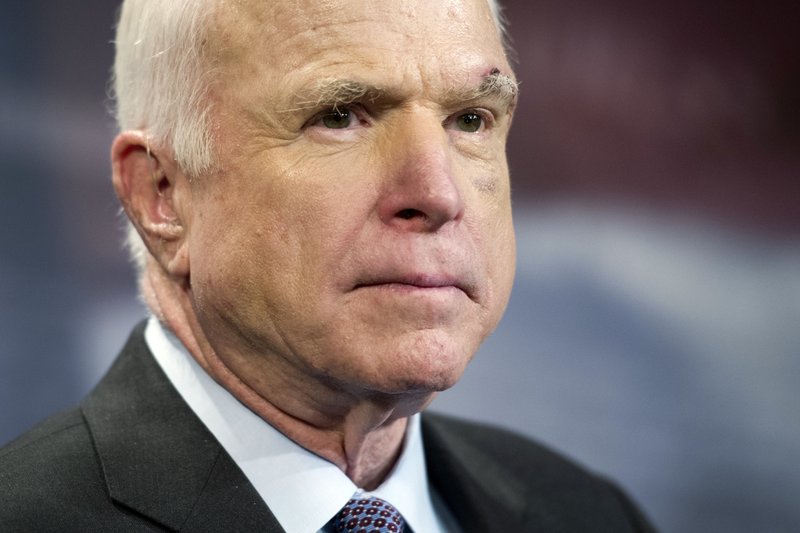
U.S. Sen. John McCain says doctors have given him a “very poor prognosis” as he battles brain cancer. McCain underwent surgery in July for a brain tumor that was later found to be a form of glioblastoma, the same type of cancer that took the life of his former Senate colleague Edward M. Kennedy in 2009. McCain tells CBS’ “60 Minutes” in an interview that aired Sunday night that he thinks about Kennedy a lot. He says Kennedy continued to work despite the diagnosis and “never gave up because he loved the engagement.” McCain says he has “feelings sometimes of fear of what happens,” but counters that with gratitude for having lived “had a great life.” He adds: “it’s not that you’re leaving, it’s that you — that you stayed.” Republished with permission from the Associated Press.
Donald Trump replaces 90-day ban with new travel restrictions
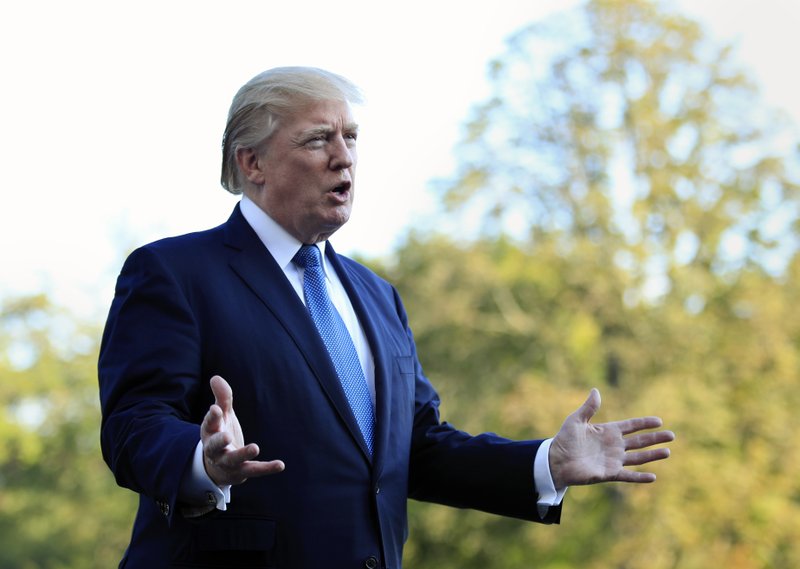
President Donald Trump has signed a proclamation imposing strict new restrictions on travelers from a handful of countries, including five that were covered by his expiring travel ban. Administration officials say the new measures are required to keep the nation safe. The indefinite restrictions apply to citizens of Chad, Iran, Libya, Somalia, Syria, Yemen and North Korea. As part of the presidential proclamation signed Sunday, the U.S. will also bar the entry of certain Venezuelan government officials and their immediate families. The changes will take effect October 18. The announcement came the same day that Trump’s temporary ban on visitors from six Muslim-majority countries was set to expire, 90 days after it went into effect. That ban had barred citizens of Iran, Libya, Somalia, Sudan, Syria and Yemen who lacked a “credible claim of a bona fide relationship with a person or entity in the United States” from entering the U.S. Only one of those countries, Sudan, will no longer be subject to travel restrictions. “Making America Safe is my number one priority. We will not admit those into our country we cannot safely vet,” Trump tweeted late Sunday after the new policy was announced. Unlike the first iteration of Trump’s travel ban, which sparked chaos at airports across the country and a flurry of legal challenges after being hastily written with little input outside the White House, officials stressed they had been working for months on the new rules, in collaboration with various agencies and in conversation with foreign governments. To limit confusion, valid visas would not be revoked as a result of the proclamation. The order also permits, but does not guarantee, case-by-case waivers for citizens of the affected countries. The restrictions are targeted at countries that the Department of Homeland Security says fail to share sufficient information with the U.S. or haven’t taken necessary security precautions. DHS has spent recent months working to develop a new security baseline, which includes factors such as whether countries issue electronic passports with biometric information, report lost or stolen passports to INTERPOL, an international law enforcement body, and share information about travelers’ terror-related and criminal histories. Citizens of countries that don’t meet the standard will face restrictions until they make changes to bring them into compliance. The new rules include the suspension of all immigrant visas for nationals of Chad, Iran, Libya, North Korea, Syria, Yemen and Somalia, and the suspension of non-immigrant visas, such as for business and tourism, to nationals of Chad, Libya, North Korea, Syria and Yemen. Citizens of Iran will not be eligible for tourism and business visas, but remain eligible for student and cultural exchange visas if they undergo additional scrutiny. Such additional scrutiny will also be required for Somali citizens applying for all non-immigrant visas. Critics have accused Trump of overstepping his legal authority and violating the U.S. Constitution’s protections against religious bias each time he has ordered new travel restrictions. And the inclusion of Venezuela and North Korea appeared to be an attempt to block challenges from advocacy groups and others who have called the restrictions a ban on Muslims. Trump during his campaign called for a “total and complete shutdown of Muslims entering the United States.” The U.S. had already imposed wide-ranging sanctions on certain high-ranking Venezuelan government officials to protest the government’s attempts to consolidate power. “The fact that Trump has added North Korea — with few visitors to the U.S. — and a few government officials from Venezuela doesn’t obfuscate the real fact that the administration’s order is still a Muslim ban,” said Anthony D. Romero, executive director of the American Civil Liberties Union, which has been challenging the ban in court. “President Trump’s original sin of targeting Muslims cannot be cured by throwing other countries onto his enemies list.” But administration officials argue the measure is necessary to keep Americans safe. Republished with permission from the Associated Press.
