
Russell Hooks: World class and innovative healthcare may be Birmingham’s key to Amazon’s new HQ
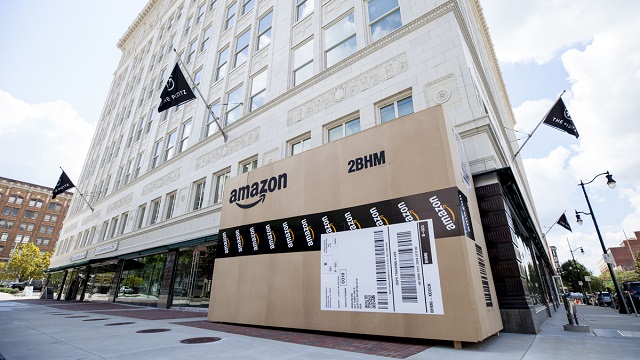
It would be nice to look back and say “I called it!,” to say that this may be one of the most important posts that I’ve published. Bloggers often hope for that elusive post that goes viral and puts them on the national stage. All of this would be awesome, but not for personal recognition. It would be awesome because if any of these things happen, it means that there’s a good chance that Amazon chose to make Birmingham, AL its next home. Last week Amazon sent municipalities all across America into a frenzy when they announced plans to build a second headquarters that would create 50,000 jobs and could, as Business Insider puts it, “detonate a gentrification prosperity bomb.” What city wouldn’t want this opportunity?! It’s more than a shot in the arm for a local economy, it would be an entirely new economy dropped into the middle of one lucky municipality. Remember the Golden Ticket madness at the beginning of Charlie and the Chocolate Factory? That’s what this is. An entire country scrambling to find something that will act as its Golden Ticket. For almost three years, we have used Happenin’s in the ‘Ham to provide “a better view of Birmingham” and to promote our city. I almost wrote a post called “13 Reasons Why…Amazon Should call Birmingham Home,” (super original, right?) and while I could drone on about all the wonderful reasons that Birmingham would be a great choice (the recent renaissance, our southern charm, being the “biggest small town in America”), these are all just fringe benefits for a company as gargantuan as Amazon. No, our Golden Ticket, our Ace in the Hole, is the UAB Health System. When the smoke stopped billowing from the steel plants in the 1970’s, it seemed like Birmingham might have lost its magic. What would fill the void left by the steel industry? It must have felt like the city was on life support, waiting for someone to pull the plug. Thankfully, UAB was there to revive the economy. As of today, the UAB Health System has a $5 billion economic impact on our area, employs 23k workers, was ranked a Top 25 Best Employer in the US by Forbes, and is the 3rd largest public hospital in America. So, why would the UAB Health System, along with other local hospitals, make Birmingham appealing to Amazon? This is where I take a leap and go with my gut, but hear me out. Amazon started out of Jeff Bezos‘s regret for not jumping on board the dotcom boom earlier. He referred to it as his “regret minimization framework.” Simply put, he was going to minimize the chance on missing out on the next big thing. They started selling books then moved to retail. On just about any day you can pull up a new article about how retailers are still reeling from being blindsided, and in denial, about the rapid success and acceptance of online shopping. Recently, Amazon shocked the world by purchasing Whole Foods, and is already turning the grocery industry on its head. The next logical step for them would be to tap into the fastest growing industry out there, healthcare! This sector added 35k jobs per month in 2016, but now providers are looking for ways to maximize efficiencies in cost and care. If there’s one thing Amazon excels at it’s efficiency and cost cutting. Virtual Care and Telemedicine are already being explored as practical ways to deliver care while minimizing costs. Amazon could dominate this frontier faster than you can say, “Alexa, refill my prescription.” Just read the “key takeaways” in this article about the 2017 Global HealthCare Sector Outlook. It fits right into what Amazon is doing in the retail industry. By locating their second headquarters in Birmingham, Amazon would have the perfect place to implement and test ways it can make its entry into the healthcare sector. Despite what the haters are saying, Birmingham DOES meet the basic requirements laid out by Amazon. It is listed as a potential location by The Washington Post, which is owned by (Guess Who?!) Jeff Bezos! Don’t get me wrong, we are by no means at the top of the list, but that doesn’t mean we shouldn’t do everything in our power to create a defining moment for our city and for the state of Alabama. Grabbing the attention of Jeff Bezos and Amazon will take a group effort of both city and state leadership, local entrepreneurs, and the private sector. (I’m looking at you, Alabama Power , Blue Cross Blue Shield, and Regions.) We weren’t even being considered by Mercedes when they sought to build their M-Class production plant, but it just celebrated its 20th anniversary! When Amber and I started Happenin’s in the ‘Ham I drew inspiration from one of Birmingham’s most famous citizens, Capt. Charles Linn. Yep, as in Linn Park. If you walk to the hilltop in Oak Hill Cemetery you will find his mausoleum. Upon it is a plaque that bears the inscription: “When the population was less than 4,000, Linn prophesied: ‘Bury me on the high promontory overlooking the city of Birmingham, in which you men profess to have so little faith, so that I may walk out on Judgement Day and view the greatest industrial city in the entire south.’ A promise fulfilled yet only begun.” The keys to the mausoleum, locked from the inside, are still entombed with him. Let’s have a little faith, Birmingham. The promise of our city has only just begun. #AMZNtoBHM Russell Hooks is the c-founder of Happenin’s in the ‘Ham! with his wife Amber. This opinion piece was republished with his permission. According to their website, Happenin’s in the ‘Ham! is dedicated to sharing the great events and activities you can enjoy around Birmingham! Check them out.
Terri Sewell, Dems push for $40 billion investment in rural broadband

Alabama’s own 7th District U.S. Rep. Terri Sewell joined her Democratic colleagues on Capitol Hill Thursday to unveil the party’s $40 billion plan to bring universal high-speed internet service to all Americans. Dubbed, “A Better Deal: Universal High-Speed Internet,” the plan would invest in broadband infrastructure to connect communities that have been left behind by big internet service providers. The plan would upgrade the nation’s critical safety infrastructure and create accurate maps of areas that lack adequate internet access to ensure rural Americans are not left out. It would also modernize 911 coverage in isolated areas. “Universal high-speed internet is not only possible, but it is necessary to the survival of rural America,” said Sewell. “I come from the Black Belt of Alabama, an area that is rich in culture and history, but one which faces an infrastructure and technology crisis that has handicapped families, workers, businesses and communities. Without reliable access to internet services, my constituents in Alabama are being starved of 21st century opportunities.” According to Sewell, 34 million Americans, including 23 million rural Americans, do not have internet access available at an adequate speed and quality. “Access to the internet has the ability to transform our schools, our hospitals, and our communities by way of connecting rural Americans with resources and professionals from across the country,” Sewell continued. “Today’s proposal to make high-speed internet available to all takes an important step towards providing every American with the tools and opportunities they need to interact and connect with the rest of the world.” Specifically, the plan would: Provide direct federal support for a universal internet grant program to close the ‘last mile’ gap: These new funds would be used to bring high-speed internet infrastructure to areas most in need of quality, affordable service. Support would be distributed on a technology- and provider-neutral basis, and would be designed to secure high-speed internet at levels sufficient for the 21st Century in the most efficient and cost effective means possible. The program would also have broad eligibility so that partners like rural co-ops, local governments, or other alternative entities could compete on an equal playing field with private sector providers. Create accurate maps of areas that lack adequate internet access. Deliver internet speeds needed to compete in the 21st century. Upgrade the nation’s critical safety infrastructure: Grants would be made available to states and localities to upgrade critical public safety infrastructure – most importantly, the nation’s aging 911 systems. Modernizing 911 to ensure that text, data, video, and other essential digital information can flow seamlessly from citizens to first responders through an integrated, interoperable 9-1-1 system.
Alabama lawmakers react to Donald Trump tax plan
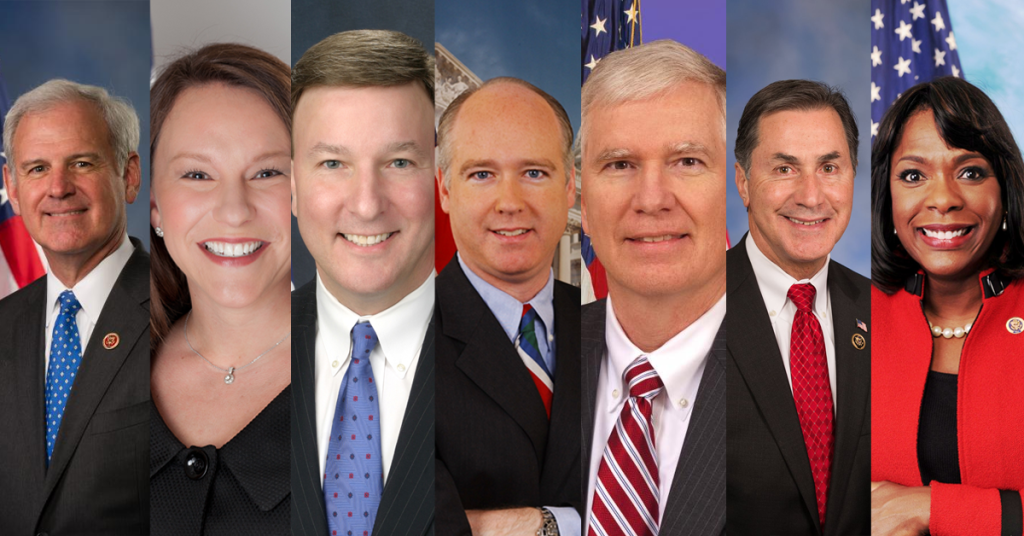
President Donald Trump on Wednesday unveiled the most ambitious rewrite of the tax code in 30 years. Calling it a “once in a generation” opportunity to cut taxes, the president said he wants to cut taxes for middle-class families to make the system both simpler and fairer. Trump said his tax plan will “bring back the jobs and the wealth that have left our country.” Members of Alabama’s congressional delegation were quick to weigh in on the proposal. Unsurprisingly, Republicans are praising it and the Yellowhammer State’s lone Democrat is raising concerns. The proposed tax framework would would shrink the current seven brackets into effectively four brackets: 0%, 12%, 25%, and 35%. The plan also calls for the standard deduction to double and a significant increase in the Child Tax Credit. But the details are left to Congress to work out later. Here’s what the Alabama delegation had to say about the plan: Alabama 1st District U.S. Rep. Bradley Byrne – SUPPORTS: Under the tax reform plan released today, working families would have more money in their pockets, the economy would be revitalized, and small businesses would be incentivized to grow. Just as important, our plan closes special interest loopholes that only benefit the well-connected in an effort to make the tax code fair and simple for all Americans. This will be a process. As the current framework is finalized and built into actual legislation, I look forward to gaining input from individuals and small businesses in Southwest Alabama. Alabama 2nd District U.S. Rep. Martha Roby – SUPPORTS: I’m ready to get this done. It is time to deliver some meaningful results to the American people. Tax reform presents a tremendous opportunity to move this country ahead, and I’m committed to getting it done. Alabama 3rd District U.S. Rep. Mike Rogers – SUPPORTS: I strongly support the tax reform framework outlined today by President Trump and the House Republican Leadership. Tax reform is the single best way to grow our economy. Hard working Americans are due a fairer and simpler tax code. “The tax reform framework is just the first step towards helping families keep more of what they earn, create more good-paying jobs in America and help small businesses. Alabama 4th District U.S. Rep. Robert Aderholt — NO RESPONSE. Alabama 5th District U.S. Rep. Mo Brooks — NO RESPONSE. Alabama 6th District U.S. Rep. Gary Palmer — NO RESPONSE. Alabama 7th District U.S. Rep. Terri Sewell – DOES NOT SUPPORT: While the Ryan-McConnell tax outline released today is short on details, it is clear that the plan prioritizes tax cuts for the wealthy over relief for working families and small businesses. Tax reform should be an opportunity to help hardworking Americans and to build a more competitive economy. Instead, the GOP plan cuts taxes for top earners and leaves Congress to balance the budget on the backs of the middle class. The Ryan-McConnell plan eliminates the alternative minimum tax for high-income individuals at an estimated cost of $413 billion over the next decade. The plan also recommends reducing the top tax bracket from 39.6 percent to 35 percent, a benefit helping only those tax filers earning over $470,000. Altogether, the tax giveaway proposed by Speaker Ryan and Majority Leader McConnell would increase the deficit by an estimated $2.2 trillion, leaving future generations with the bill. Just yesterday, I met with President Trump at the White House, where the President promised that his tax plan would not be a tax cut for the wealthy. I plan on holding the President to his word. We cannot miss an opportunity for tax reform that puts working families and small businesses first.
Attorney at center of Oliver Robinson trial declares innocence
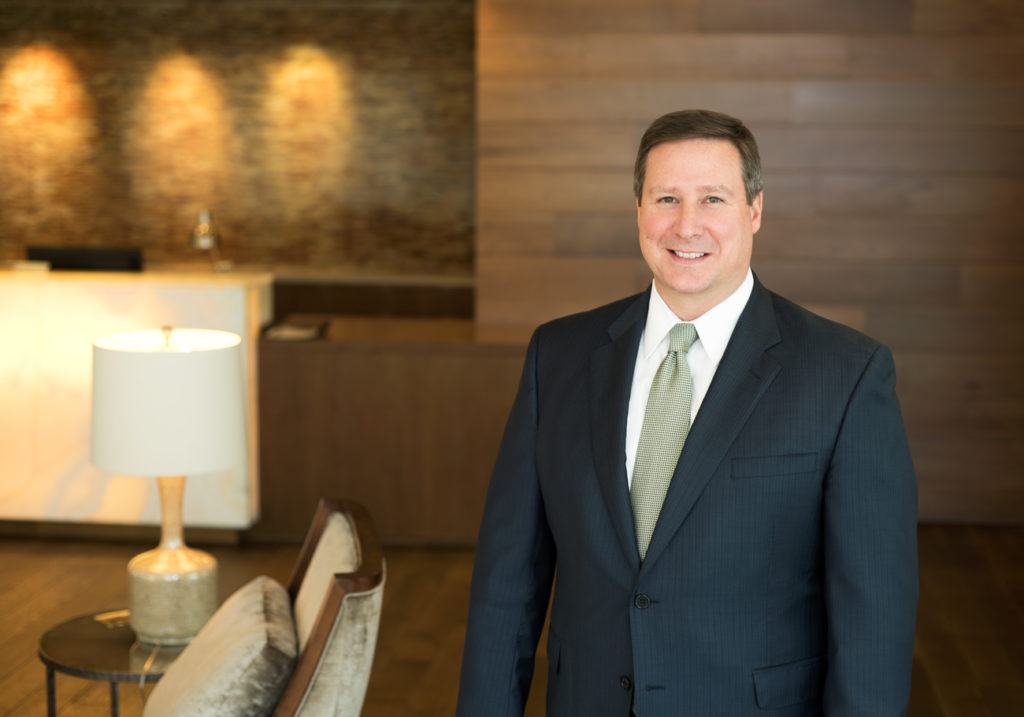
A partner at one of Alabama’s leading law firms declared his innocence ahead of being indicted on charges of bribing a state legislator to oppose an environmental cleanup plan. Federal court documents revealed Thursday Joel Gilbert, partner with Balch & Bingham whose practice is primarily focused on handling environmental litigation, is accused of bribing former state Rep. Oliver Robinson, along with fellow Balch & Bingham attorney Steven McKinney and Drummond Co. Vice President David Roberson. Ahead of Thursday’s indictment, Jack Sharman, the leader of Lightfoot, Franklin & White law firm’s white-collar defense and corporate investigations practice and Gilbert’s attorney, said Wednesday night his client is innocent. He claims Gilbert did not bribe anyone and that evidence will prove he was simply conducting lawful, routine and ethical work for his client, the Drummond Company. “This is a case that never should have been brought. Joel represented a client in a legal dispute with the EPA, a powerful and, in this case, over-reaching federal agency,” Sharman said. “Everything he did while representing that client was lawful and ethical.” Sharman continued, “He is a longtime partner at a leading law firm. A lawyer with a reputation for honesty and integrity, he did what is routine for good counselors to do for corporate and individual clients every day – he engaged a consultant through a written contract to perform real and lawful services.” “The Government has the burden of proof at trial, not Joel, but the evidence – including emails, text messages, contracts, billing records, environmental testing and witness testimony – will prove that Joel is innocent.” Read the full statement below: Joel Gilbert is innocent of these charges. He did not bribe anyone. This is a case that never should have been brought. Joel represented a client in a legal dispute with the EPA, a powerful and, in this case, over-reaching federal agency. Everything he did while representing that client was lawful and ethical. He is a longtime partner at a leading law firm. A lawyer with a reputation for honesty and integrity, he did what is routine for good counselors to do for corporate and individual clients every day – he engaged a consultant through a written contract to perform real and lawful services. The Government has the burden of proof at trial, not Joel, but the evidence – including emails, text messages, contracts, billing records, environmental testing and witness testimony – will prove that Joel is innocent. We will tell the whole story at trial. Because of the recent adverse publicity about these events, however, a few basic facts should be noted. The consulting contract at issue is both lawful and common. Balch & Bingham, Joel’s law firm, entered into a contract with the Oliver Robinson Foundation, on behalf of the firm’s client, Drummond Company, to help with a grassroots effort to understand what EPA was doing in North Birmingham and Tarrant and, where appropriate, to address factual inaccuracies and faulty science. Such contracts and efforts are legal under both federal and state law, including the Alabama Ethics Code. The Alabama Ethics Code is complex, but it explicitly permits public officials, including state legislators and their affiliates, to do consulting work for a fee – the type of arrangement that the Government is now trying to say is criminal. The records will show that the payments under the contract to the Foundation were for community outreach work performed by the Foundation, not to bribe Mr. Robinson. If Oliver Robinson did something he was not supposed to with the fees paid to the Foundation for the Foundation’s work, Joel did not know about it or approve of it. Further, when Oliver Robinson attended a meeting of the Alabama Environmental Management Commission, he did two things. He asked questions and he suggested that, if Drummond was liable for pollution, the company should be held accountable – hardly the actions of a legislator who was improperly influenced. The written transcript of the Commission meeting is clear about these statements. Joel has more than 15 years of legal experience and is widely respected. The facts will show that he is innocent and that he acted in good faith. He is going to trial. At trial, we will present all of the evidence, not just the fragments of information and innuendo provided we expect will be found in the indictment.
John McCain demands accounting from VA on money for private care
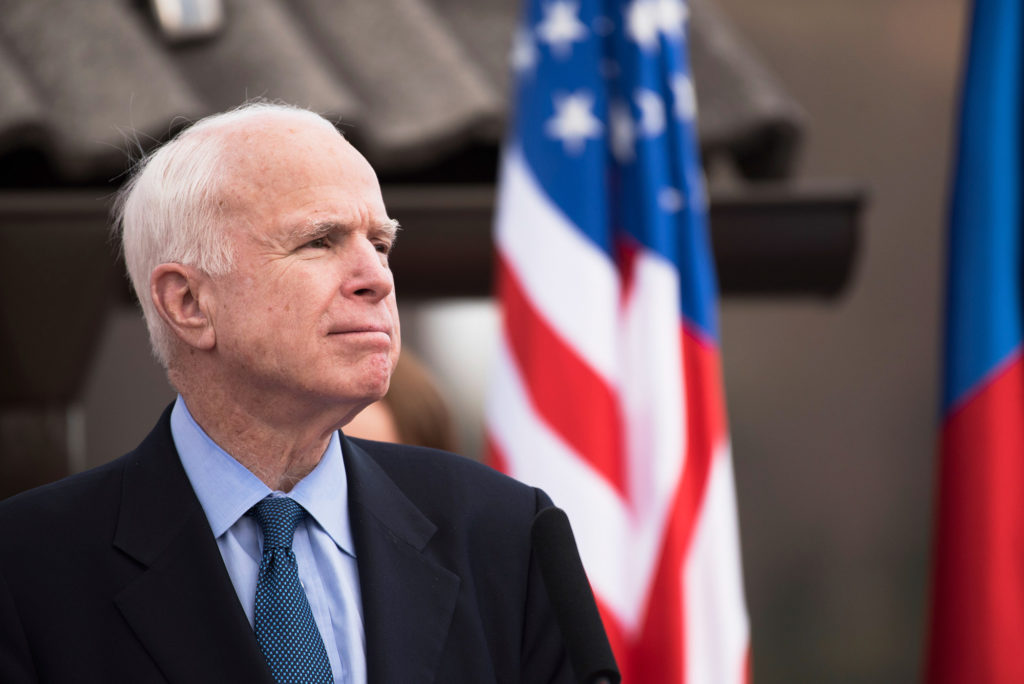
Sen. John McCain is demanding a full accounting from the Department of Veterans Affairs on the financial status of its private-sector health care program after the agency said it could face another budget shortfall as soon as December. The Associated Press reported this week that the VA had acknowledged its Veterans Choice program could run out of money by year’s end despite receiving $2.1 billion in emergency funding just last month. Another shortfall could force the VA to limit referrals to outside doctors, causing delays in medical care for hundreds of thousands of veterans. In a letter to VA Secretary David Shulkin, McCain, who chairs the Senate Armed Services Committee, said he wants to know specifically when the VA expects Choice to run out of money. McCain cites AP’s report, which included a statement from VA that Choice funds could be depleted as early as December or as late as March. The letter, sent late Wednesday, calls for a VA response by the end of the week. The Arizona Republican noted that Congress was led astray earlier this year after VA provided false assurances that Choice funds would last until early 2018. After Shulkin admitted to a budget shortfall in June, McCain joined other senators to express concern to VA about possible financial mismanagement. Congress ultimately approved $2.1 billion in emergency spending for Choice that was intended to last until February. “We said at the time that it was essential, given the growing demand for care under the Choice program, that the VA immediately correct the failures that created such a serious shortfall,” McCain wrote. “It appears as if you have not done so.” In its statement earlier this week to AP, the VA said it hoped to move quickly on a proposed long-term legislative fix that would give veterans even wider access to private doctors. The proposal, under review by the White House budget office, would seek money to keep Choice running for much of next year as VA implements wider changes. Earlier this year, the VA began limiting referrals to outside doctors as money started running low. The Choice program was passed by Congress in 2014 in response to a wait-time scandal at the Phoenix VA medical center that spread nationwide. Some veterans died while waiting months for appointments as VA employees manipulated records to hide delays. The controversy spurred Congress to establish Choice as a pilot program to relieve pressure at VA hospitals. Republished with permission from the Associated Press.
Donald Trump, unpredictable ally for GOP, tests influence on taxes
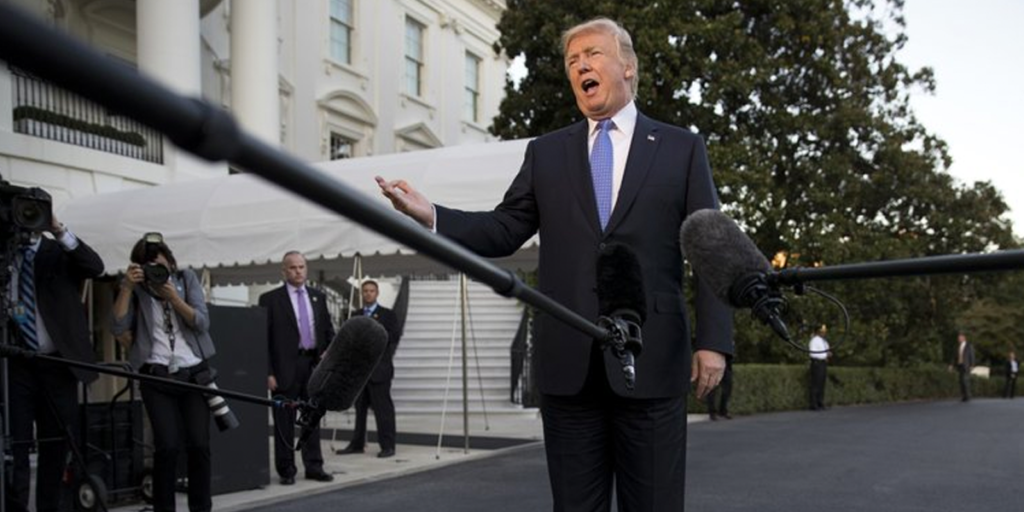
When President Donald Trump announced plans to go to Indiana Wednesday to sell the GOP tax overhaul plan, party leaders cheered his engagement on the high-stakes issue. When the White House said one of Trump’s traveling companions would be Indiana’s Democratic Sen. Joe Donnelly — a top target in next year’s midterm elections — the hopes turned to head-smacking disbelief. The episode underscores the extent to which Trump has been an uneven — or at best, unpredictable — ally for his party, both on policy and politics. Time and again, Trump has complained about his party as loudly as he vents about Democrats, or shifted his position as Republicans leaned on him for support. The dysfunctional dynamic now stands at the center of Republicans’ last chance this year to prove they can pass major legislation — a sweeping, multitrillion-dollar tax cut that GOP officials believe is crucial to the party maintaining its congressional majority in the midterms. “Literally, if they can’t do this, they can’t do anything,” said Tim Pawlenty, the former Republican governor of Minnesota and head of the Financial Services Roundtable, a bank lobbying group. Trump is a constructive force in the effort, Pawlenty said, “if he can stay focused and stay on message.” The president this week repeatedly demonstrated his sometimes fickle friendship. As the party licked its wounds over the failure of its health care legislation, he floated working with Democrats on that issue, something he’s already done on immigration and spending matters. While he agreed to requests from Senate Majority Leader Mitch McConnell to campaign for the establishment-backed candidate in Alabama’s GOP primary, he undercut his impact by pondering aloud whether he’d made a mistake. Luther Strange, the candidate Trump backed, lost Tuesday to firebrand jurist Roy Moore by nine points. Trump quickly endorsed Moore and his tweets backing Strange were deleted. A former Democrat who is ideologically flexible, Trump has been an awkward partner for Republican leaders since the start of his political rise. But McConnell and House Speaker Paul Ryan have privately tried to rally their members during low points in the presidency by reminding them that Trump will sign legislation a Democratic occupant of the Oval Office would not — despite the fact that the GOP Congress hasn’t had any major bills to send to Trump’s desk. The White House has promised GOP leaders that Trump will indeed travel the country selling the tax legislation. Trump advisers have told congressional lawmakers and aides that the president is more deeply engaged on taxes than on any other domestic policy push during his tenure, according to a Republican official who was one of six GOP aides and operatives who insisted on anonymity in order to discuss the president’s standing with his party. But Republicans have heard similar promises from the White House before. Trump ultimately invested little time and energy trying to rally public support behind two GOP bids to overhaul the nation’s health care system. As the party scrambled to salvage last-ditch legislation this week, Trump seemed more focused on stirring up controversy about protests during the national anthem by NFL players. McConnell pulled the bill without holding a vote. Sara Fagen, a Republican strategist who served as White House political director for President George W. Bush, said that for Trump to be a successful advocate for tax reform, he’ll have to repeatedly rally Americans behind the effort and personalize the impact of the tax changes for the middle class. “If he just sits in the upper floor of the White House after 7 p.m. and fires off tweets, that’s not going to help,” Fagen said. Trump’s event in Indiana Wednesday got the campaign off to a conventional start. Standing in front of a massive American flag, the president largely stuck to script and talked about the tax plan with specificity. He called on both parties to join forces on an overhaul, despite the fact that the blueprint he outlined was negotiated by Republicans alone. “Tax reform has not historically been a partisan issue, and it does not have to be a partisan issue today,” Trump said. “There is no reason that Democrats and Republicans in Congress should not come together to deliver this giant win for the American people.” GOP operatives working on the 2018 midterms were miffed by the president’s decision to invite Donnelly, one of the most vulnerable Democratic incumbents, to fly on Air Force One. Donnelly is fighting to keep his seat in a state Trump won in November by nearly 20 points, and to win, he’ll likely need to prove to voters that he doesn’t simply toe the Democratic Party line. It’s the second time Trump has given a vulnerable Democrat an opportunity to highlight bipartisan credentials. Earlier this month, he traveled to North Dakota with home state Sen. Heidi Heitkamp, another at-risk Democrat in 2018. He invited Heitkamp to join him onstage and called her a “good woman.” On Wednesday, Trump thanked Donnelly for joining him in the rally, but left the senator with a less campaign advertisement-ready endorsement. “If Senator Donnelly doesn’t approve it, because you know he’s on the other side, we will come here and we will campaign against him like you wouldn’t believe,” Trump said of Donnelly and the tax package. Donnelly didn’t appear to flinch under that threat. He released a statement following the event that said he didn’t work for “President Trump or any political party” and criticized the tax blueprint for “missing many details that will be critical to determining whether working and middle-class families truly stand to benefit.” Republished with permission from the Associated Press.
$5 trillion question for Donald Trump tax plan: How to pay for it?
How do you pay for an estimated $5.8 trillion tax cut? For President Donald Trump and Republican congressional leaders, that is the mostly unanswered $5,800,000,000,000 question. The plan they released Wednesday took a first step toward outlining how Republicans propose to cover some of the monumental cost over the next 10 years, mainly by removing certain tax breaks. But even those proposed changes were left vague — and wouldn’t remotely pay the full cost of the tax cut. The administration says it would eliminate most personal tax breaks. Possibly gone would be people’s ability to deduct state and local taxes as well as eligible medical expenses. But doing so would still leave the tax cut more than $2 trillion shy of paying for itself. The Trump administration argues that it can accelerate the economy’s growth far beyond its current pace and, in doing so, generate enough federal revenue to cover the shortfall. Most economists have called that wishful thinking. That’s why analysts say the government would have to help pay for the tax cut by slashing programs that serve the middle class. Or it would be forced to run the national debt up to dangerous levels, likely driving up borrowing rates for consumers and businesses. Because the administration has put off a full accounting of the trade-offs it’s prepared to make, the politically perilous decisions are being left for the tax-writing committees in the House and Senate to turn the blueprint into an actual bill. Inevitably, analysts say, any tax-cut plan produces losers. “You can’t have responsible tax reform and everyone wins,” said Marc Goldwein, senior policy director for the Committee for a Responsible Federal Budget. The tax cut is being proposed at a time when the publicly held national debt is already $14.6 trillion. Even if tax rates for companies and families were unchanged, the debt is expected to balloon by an additional $10 trillion over the next decade. That increase largely reflects the rising costs of Social Security and Medicare as the vast generation of baby boomers continues to retire. The proposed tax cuts in the Trump plan would total $5.8 trillion over 10 years, according to an analysis by the Committee for Responsible Federal Budget and other reports. That figure includes the effects of reducing the number of individual tax brackets and shrinking the corporate tax rate to 20 percent from 35 percent, among other changes. (The plan doesn’t specify which income levels would apply to each individual bracket.) The plan does list a few changes to generate additional revenue. But these ideas could undermine some of Trump’s claims that the middle class as a whole would benefit from the changes. For example, families could no longer reduce their taxable income with personal exemptions for dependents in their household. This would return about $1.6 trillion to the government. It could also nullify the benefits Trump says would result from doubling the standard deduction people now receive if they don’t itemize their taxes. Losing the personal exemption means some middle class families might end up paying more in taxes, said Ernie Tedeschi, a former Treasury Department adviser who is a policy economist at the investment bank Evercore ISI. “For the average family, they don’t have enough details yet” to know whether the plan helps them, Tedeschi said. An additional $1.6 trillion would, in theory, be generated by repealing most of the itemized deductions (excluding mortgage interest and charitable deductions). The administration has said itemized deductions usually help only the affluent. But in fact, many middle class households benefit from itemizing deductions in any given year. A prime example is the state and local tax deduction, which can help moderate income households in such high-cost states as California and New York. There are other unmentioned deductions that could be lost to the middle class. Families can now itemize deductions for outsized medical costs or property damaged by natural disasters such as hurricanes, noted Seth Hanlon, a senior fellow at the liberal Center for American Progress and a former economic aide to President Barack Obama. “There is going to be a large number of middle class families that are going to be severely disadvantaged,” Hanlon said. Even with all the additional revenue from these changes and others, the Trump plan would add $2.2 trillion to the debt. Estimates suggest that that figure would swell to $2.7 trillion if additional interest payments on the debt were included. So how to cover that cost? Senate Republicans have signaled their willingness to let the national debt rise by as much as $1.5 trillion over the next decade. Even that wouldn’t likely be enough. The administration has a ready response to that problem. Treasury Secretary Steven Mnuchin and Gary Cohn, Trump’s top economic adviser, argue that the tax cut would spark economic growth exceeding 3 percent annually, well above its recent 2 percent average. That added growth would, they say, generate revenue to cover the remainder of the cost of the tax cut. “Honestly, we think we can get over 3 percent, so it’s not just the 3 percent bogey we’re shooting at,” Cohn said in an interview. Academic economists surveyed by the University of Chicago in May overwhelmingly asserted that the tax cuts would fail to deliver the growth the White House is promising. That perspective is shared by economists monitoring the financial and credit markets. “It’s very hard to imagine growth rates topping 2.5 percent, let alone 3 percent,” said Beth Ann Bovino, U.S. chief economist at S&P Global Ratings. Republished with permission from the Associated Press.
