
Roy Moore meets some GOP lawmakers, but not top 2 in Senate
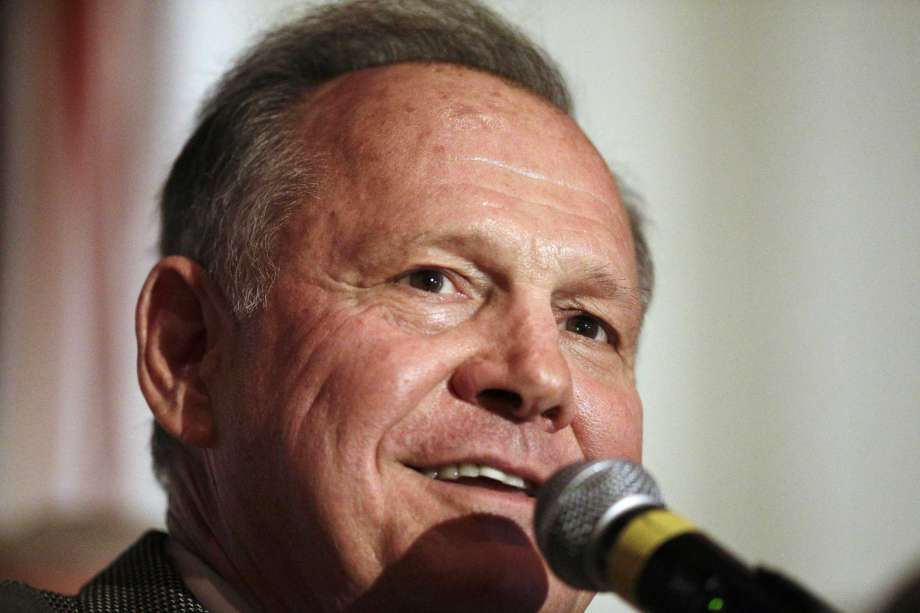
Hard-right Republican Roy Moore is visiting Washington this week, meeting with fellow conservatives and at least one GOP lawmaker who tried unsuccessfully to defeat him in last month’s Alabama Senate primary runoff election. Not on the former state chief justice’s itinerary are stop-ins with the Senate’s two top GOP leaders. But there are signs the party establishment that he bitterly attacked during his campaign is warming to him, or at least making a pragmatic decision to back him in December’s special election against underdog Democrat Doug Jones. “He’s a Republican. I’m going to help him with what I can, if he wants me to,” Alabama GOP Sen. Richard Shelby said in an interview Thursday. Shelby backed defeated incumbent Sen. Luther Strange in the race and said he’s not spoken to Moore since his victory. Moore met late Wednesday with the head of the Senate GOP’s campaign committee, Sen. Cory Gardner, R-Colo. That organization backed Strange in the September GOP runoff primary, as did President Donald Trump. After Moore’s victory, Gardner said, “We support him in keeping this seat in Republican hands.” Until now, Moore has been best known for displaying the Ten Commandments in his courtroom and ordering judges to deny marriage licenses to gay couples. He was twice removed from his post as Alabama chief justice. By late Thursday, Moore hadn’t met with Senate Majority Leader Mitch McConnell, R-Ky., or No. 2 Senate GOP leader John Cornyn of Texas. He has spoken to both leaders by phone since winning the GOP Senate nomination, Republicans say. A political committee aligned with McConnell spent heavily for Strange during the campaign, and Moore regularly savaged McConnell for being ineffective and promised to oust him from his post. Many Republicans view Moore as a major headache for party leaders. “I told him I look forward to meeting him and supporting him in his election,” Cornyn said Thursday about his conversation with Moore. On Wednesday, Moore met with his state’s GOP House members. “He’s very passionate about his issues,” said Rep. Robert Aderholt, R-Ala. “But I don’t think he sets out to be disruptive” to GOP leaders. Aderholt said Moore told the group he’d recently spoken to McConnell by phone. Moore has also used his trip to Washington to meet with Steve Bannon, Aderholt said, Trump’s former White House strategist, who backed Moore in the primary. GOP lawmakers he’s seen include GOP Sens. Rand Paul of Kentucky and Utah’s Mike Lee. Moore also planned to meet with other GOP lawmakers and leading conservatives, including Jim DeMint, former head of the Heritage Foundation, and David McIntosh, president of the Club for Growth. Republished with permission from the Associated Press.
National Dems again target Martha Roby’s voting record, this time on the budget
The Democratic Congressional Campaign Committee (DCCC), the official campaign arm of the Democrats in the House, has once again set their sights on Alabama 2nd District U.S. Rep. Martha Roby. Earlier this year, the DCCC named Roby as their sole target in the Yellowhammer State in their efforts to flip the House. On Tuesday, the group honed in on her support of President Donald Trump’s budget. “Despite President Trump’s repeated promises to not cut Medicare or Medicaid, Rep. Martha Roby voted to pass a budget that would do just that, all to finance massive tax cuts for millionaires, billionaires, and big corporations,” the DCCC wrote in a press release. The DCCC is referring to a Thursday House vote, in which the budget passed along party lines, 219-206 vote. The budget resolution for 2018 sets up a process for shielding the GOP tax bill from a filibuster in the Senate. Additionally it: balances the budget in 10 years; endeavors to strengthen America’s military by funding it at levels above the president’s budget and with increased resources for training, equipment and compensation; calls for a vote on a Balanced Budget Amendment this year; and achieves $7 trillion in deficit reduction over ten years through a combination of $6.5 trillion in savings coupled with economic growth. But according to the DCCC those changes come at a price, claiming the budget would cut Medicare by nearly $500 billion and slash Medicaid by $1 trillion. “Voters will not forget that Rep. Martha Roby just voted to cut taxes for millionaires and billionaires, and paid for it by slashing Medicare and Medicaid,” said DCCC spokesman Jacob Peters. “…they’ll be holding Roby accountable at the ballot box next November.” But a spokesperson for Roby says its no surprise the Dems are attacking Roby’s efforts to balance the budget and fund the military. “It is no surprise that Democrats oppose efforts to balance our budget, properly fund our military, and reduce our deficit,” said Emily Taylor, Martha Roby’s spokesperson. “All of these are priorities for Rep. Roby and our unified Republican government, and she will continue to fight for conservative principles like these on behalf of the people she represents.”
Alabama U-Haul locations offering free storage ahead of Tropical Storm Nate

As Alabamians prepare for Tropical Storm Nate, U-Haul is preemptively offering residents free self-storage for 30 days in facilities across the state to residents who stand to be impacted by the storm and the flooding it is expected to cause. “At this point, we are uncertain about where the storm will strike,” said Chadwick Rome, U-Haul Company of South Alabama president. “We want to proactively offer 30 days of free self-storage so that everyone is prepared. This is one way U-Haul can be a good neighbor to the communities we serve.” Tropical Storm Nate is currently making its way through the southwestern Caribbean and is forecast to strengthen into a hurricane that could affect the U.S. Gulf Coast. According to the National Hurricane Center, Nate could reach hurricane status as early as Saturday when it’s expected to enter the Gulf of Mexico. Its projected track shows it will make landfall as a weak Category 1 hurricane, with winds of about 80 mph, somewhere between New Orleans, and Mobile, Ala., sometime between Saturday night and Sunday morning. The U-Haul Companies of South Alabama, Central Alabama and Northern Alabama have made 26 facilities across 14 cities available to help. Families seeking self-storage assistance should contact the nearest participating facility (locations alphabetized by city): U-Haul Moving & Storage of Auburn 1301 Opelika Road Auburn, Ala. 36830 (334) 887-3412 U-Haul Moving & Storage of Birmingham 540 Valley Ave. Birmingham, Ala. 35209 (205) 942-6833 U-Haul Moving & Storage at Center Point 1636 Center Point Parkway Birmingham, Ala. 35215 (205) 854-7763 U-Haul Moving & Storage of East Lake 7733 First Ave. N. Birmingham, Ala. 35206 (205) 833-1208 U-Haul Moving & Storage of Fairgrounds 3028 Bessemer Road Birmingham, Ala. 35208 (205) 785-1524 U-Haul Moving & Storage of Mountainbrook 3195 Hwy. 280 Birmingham, Ala. 35243 (205) 262-9115 U-Haul Moving & Storage at Uptown 800 28th St. N. Birmingham, Ala. 35203 (205) 730-7821 U-Haul Moving & Storage at 6th Ave. 1802 6th Ave. SE Decatur, Ala. 35601 (256) 350-2955 U-Haul Moving & Storage at Montgomery Hwy. 1402 Montgomery Hwy. Dothan, Ala. 36301 (334) 794-6681 U-Haul Moving & Storage of Fultondale 1588 Carson Road Fultondale, Ala. 35217 (205) 608-1103 U-Haul Moving & Storage of Gadsden 1707 Kyle Ave. Gadsden, Ala. 35901 (256) 543-9502 U-Haul Moving & Storage at Putman Drive 4400 University Drive NW Huntsville, Ala. 35816 (256) 837-0203 U-Haul Moving & Storage at Sparkman Drive 1903 Sparkman Drive NW Huntsville, Ala. 35816 (256) 830-6464 U-Haul Moving & Storage at UAH Campus 4440 University Drive Huntsville, Ala. 35816 (256) 721-6995 U-Haul Moving & Storage of Bel Air 200 W. I-65 Service Road S. Mobile, Ala. 36608 (251) 343-7101 U-Haul Moving & Storage of Downtown Mobile 970 ½ Springhill Ave. Mobile, Ala. 36604 (251) 433-1548 U-Haul Moving & Storage of Springdale 3755 Airport Blvd. Mobile, Ala. 36608 (251) 344-0661 U-Haul Moving & Storage at The Loop 2507 Government St. Mobile, Ala. 36606 (251) 476-6548 U-Haul Moving & Storage of West End Montgomery 3138 Mobile Hwy. Montgomery, Ala. 36108 (334) 262-7701 U-Haul Moving & Storage of Woodmere 2525 Eastern Blvd. Montgomery, Ala. 36117 (334) 239-0471 U-Haul Moving & Storage of Oxford 523 Hamric Drive W Oxford, Ala. 36203 (256) 835-9152 U-Haul Moving & Storage at Pelham 2797 Pelham Parkway Pelham, Ala. 35124 (205) 663-3220 U-Haul Moving & Storage of Prattville 1221 S. Memorial Drive Prattville, Ala. 36067 (334) 380-4348 U-Haul Moving & Storage at Skyland Blvd. 124 Skyland Blvd. E. Tuscaloosa, Ala. 35405 (205) 349-1353 U-Haul Moving & Storage of Vestavia 1024 Montgomery Hwy. Vestavia Hills, Ala. 35216 (205) 822-4932 U-Haul Moving & Storage of Vestavia Hills 1420 Montgomery Hwy. Vestavia Hills, Ala. 35216 (205) 978-7587
Gary Palmer introduces bipartisan Puerto Rico Humanitarian Relief Act

In the wake of Hurricane Maria’s devastation — knocking out power, most of its water, and leaving residents waiting for fuel — Puerto Rico Gov. Ricardo A. Rosselló said the U.S. territory was on the brink of a “humanitarian crisis” and called on Congress to help the island recover. “Puerto Rico, which is part of the United States, can turn into a humanitarian crisis,” Rosselló said. “To avoid that, recognize that we Puerto Ricans are American citizens; when we speak of a catastrophe, everyone must be treated equally.” On Thursday, Republican and Alabama 6th District U.S. Rep. Gary Palmer along with his Democratic colleague, New York 7th District U.S. Rep. Nydia Velázquez, answered Rosselló’s plea for help and introduced H.R. 3966: the Puerto Rico Humanitarian Relief Act. The bill provides a five year moratorium of an obscure shipping law — the Merchant Marine Act of 1920, more commonly known as the Jones Act. The century-old law requires any goods shipped to Puerto Rico from a U.S. port be carried in a U.S. owned, U.S. crewed, U.S. built, and U.S. flagged vessel. According to a 2010 study at the University of Puerto Rico, Puerto Rico loses $537 million every year due to the Jones Act, a devastating figure for a country which essentially declared bankruptcy earlier this year. The Puerto Rico Humanitarian Relief Act would provide relief from this burdensome regulation and allow Puerto Rico the opportunity to rebuild their island without added costs and delays caused by the requirements of the Jones Act. “The Congress has the responsibility to act when enacted laws prove to be burdensome. This is especially true in a humanitarian crisis,” said Palmer. “Our bill provides Puerto Ricans with extended relief from the Jones Act to help them put their lives back together as they rebuild their homes, their communities and their infrastructure. The cost of goods in Puerto Rico is already substantially higher due to Jones Act related shipping costs, and, especially in a humanitarian crisis, every penny counts.” According to a report from the Federal Reserve Bank of New York, it costs $3,063 to ship a twenty-foot container from the East Coast of the United States to Puerto Rico and $1,504 to ship the same container to the nearby Dominican Republic—a destination not subject to the Jones Act. Higher shipping costs could significantly delay efforts to rebuild its economy and rebuild the communities devastated by Hurricane Maria. Velázquez echoed Palmer’s sentiments. “Puerto Rico has a long, difficult road ahead of it and the Jones Act will serve only to impede its physical and economic recovery,”Velázquez explained. As the Island struggles to rebuild, it should not be saddled with the burden of paying significantly more for construction materials and other goods, compared to the mainland.” Velázquez continued, “Moreover, a long term waiver of the Jones Act will stimulate economic activity. I have already called on the President to, at minimum, exempt Puerto Rico from the Jones Act for at least one year and I’m proud to co-author this bipartisan measure seeking a five-year waiver. Importantly, this bill also requires a full study of the Jones Act’s economic impact, so we have the empirical data to end this debate once and for all.”
New report says more than half of GOP plan’s tax cuts in Alabama would go to top 1 percent

Congressional Republicans’ new tax plan would deliver a major boost to the top 1 percent of Alabamians — the middle class, however, not so much. According to a new study released Wednesday by the Institute on Taxation and Economic Policy (ITEP), a nonprofit research organization based in Washington, D.C., Alabamians with incomes of more than $1 million would get an average tax cut of nearly $116,000 a year. Meanwhile, one in seven Alabamians would pay higher taxes under the plan. Key Alabama findings from the ITEP report include: The top 1 percent of Alabama earners – those who make $501,800 or more – would receive 56.2 percent of the tax cuts going to the state. Nearly half, 49.2 percent, of the overall tax cuts that Alabama residents would get under the plan would flow to people with incomes of more than $1 million a year. They would receive an average annual tax cut of $115,900. 12.5 percent of the state’s total tax cuts would go to the three in five Alabamians with incomes of less than $57,900 a year. They would see an average tax cut of $190 a year. One in seven Alabamians, 14.5 percent, would pay higher taxes under the plan. “These tax cuts would be a windfall for the wealthy at the expense of everyone else,” Arise Citizens’ Policy Project executive director Kimble Forrister said. “This plan likely would force massive cuts to future federal funding for Medicaid, education, housing, transportation and other vital services that help everyday families make ends meet. Congress should reject these reckless tax cuts for the rich and focus on investing in education, health care and other services that help all Alabamians and all Americans get ahead.” A U.S. Senate Budget Committee is scheduled to vote soon on a federal spending plan that will lay the groundwork for tax cuts.
Mike Pence pledges that US will go to the moon, Mars and beyond

Trump administration officials are pledging to send Americans back to the moon – and then on to Mars. Space industry leaders say they and NASA are building the spaceships to get there. And they’re promising that in five years, astronauts could be working around the moon – but not quite land there yet. Here’s what Vice President Mike Pence is saying: “We will return American astronauts to the moon, not only to leave behind footprints and flags, but to build the foundations we need to send Americans to Mars and beyond.” But few details, such as cost, are being mentioned in the space visions outlined at the first meeting of the revived National Space Council since it was disbanded in 1993. Republished with permission from the Associated Press.
Tuscaloosa Mayor Walt Maddox joins crowded 2018 Gubernatorial field
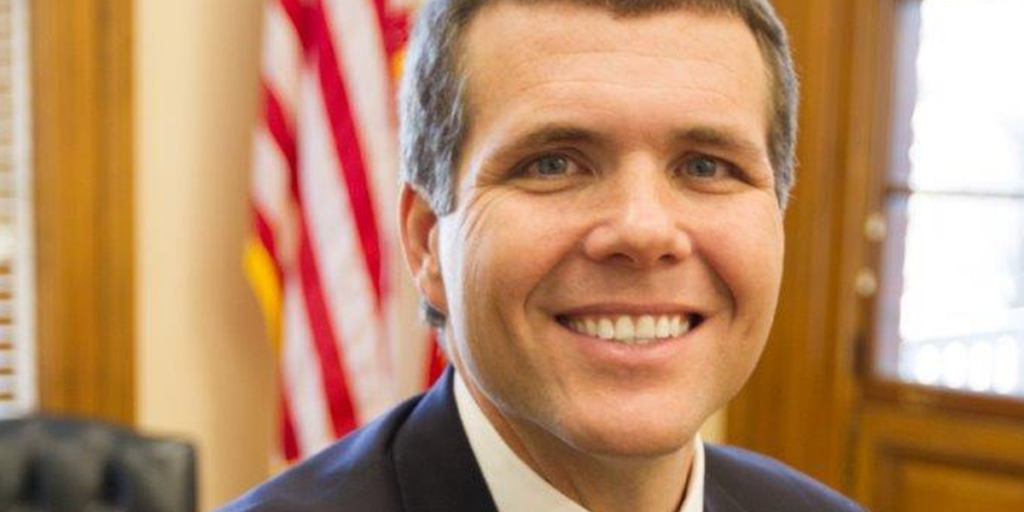
Tuscaloosa Mayor Walt Maddox officially announced he will run for governor of Alabama next year in a video announcement Thursday morning. In the video, Maddox said his announcement was “not a celebration” but “a call to action.” He went on to explain that the state has a “crisis in our leadership” as evidenced by the many political scandals in the past year, referencing the exits of former Gov. Robert Bentley, former House Speaker Mike Hubbard and former Ala. Chief Justice Roy Moore. “In the past 18 months, the Governor, the Speaker, the Chief Justice, and the Majority Leader have left office in shame. And, when courage was required, silence was the only response from Montgomery’s leaders,” Maddox said in a press release. “The crisis of leadership has led to a crisis in state government where Alabama still ranks near the bottom in every quality of life indicator from education to health care. Preserving the status quo is not a strategy for creating a brighter future for all Alabamians.” Maddox says he will rebuild faith in state government, rebuild the state for new and higher paying jobs, rebuild the state’s education and health care system, as well as the state’s infrastructure. Three months ago, Maddox announced the formation of a committee to explore seeking the state’s highest office as a Democrat and wait until 2018 to decide whether or not he was going to run. On Thursday Maddox said “the time for exploration is over.” Since his announcement, 319 individuals invested in his exploratory campaign — more than any declared candidate for governor during the same time period. Maddox, 44, has served Tuscaloosa’s mayor since 2005. He’s a graduated of the University of Alabama at Birmingham with a bachelor’s degree in political science and master’s degree in public administration. He is the second high-profile Democrat to join the crowded field of gubernatorial hopefuls, joining former Alabama Chief Justice Sue Bell Cobb in seeking the Democratic nomination. On the other side of the aisle, Gov. Kay Ivey, Huntsville Mayor Tommy Battle, Agriculture Commissioner John McMillan, evangelist Scott Dawson, Mobile state Sen. Bill Hightower, state corrections officer Stacy George, Birmingham businessman Joshua Jones are seeking the Republican Party’s nomination. Watch Maddox’s video announcement below:
House GOP eyes budget passage that is key to tax debate
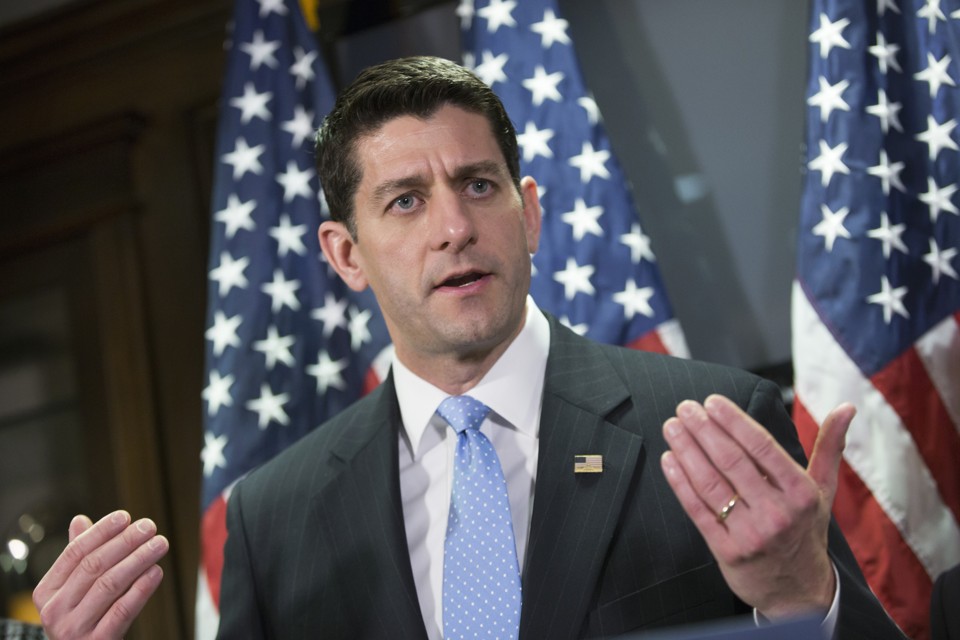
Republicans are focused on cutting taxes instead of deficits as they look to power a $4.1 billion budget plan through the House on Thursday. The 2018 House GOP budget promises deep cuts to social programs and Cabinet agency budgets but its chief purpose is to set the stage for action later this year on a comprehensive Republican overhaul of the U.S. tax code. The tax overhaul is the party’s top political priority as well as a longtime policy dream of key leaders like Speaker Paul Ryan. The plan calls for more than $5 trillion in spending cuts over the coming decade, including a plan to turn Medicare into a voucher-like program for future retirees, slash Medicaid by about $1 trillion over the coming decade, and repeal the “Obamacare” health law. But Republicans are not actually planning to impose any of those cuts with follow-up legislation that would be required under Washington’s byzantine budget rules. Instead, those GOP proposals for spending cuts are limited to nonbinding promises, and even a token 10-year, $200 billion spending cut package demanded by tea party House Republicans appears likely to be scrapped in upcoming talks with the Senate. Instead, the motivating force behind the budget measures is the Republicans’ party-defining drive to cut corporate and individual tax rates and rid the tax code of loopholes. They promise this tax “reform” measure will put the economy in overdrive, driving economic growth to the 3 percent range, and adding a surge of new tax revenues that would help bring the budget toward balance. Passing the measure through the House and Senate would provide key procedural help for the tax measure because it sets the stage for follow-on legislation that can’t be filibustered by Senate Democrats. Republicans used this so-called reconciliation procedure in their failed attempt to kill “Obamacare,” including its tax surcharges on wealthy people. “Through reconciliation, our budget specifically paves the way for pro-growth tax reform that will reduce taxes for middle class Americans and free up American businesses to grow and hire,” said House Budget Committee Chairman Diane Black, R-Tenn. The House vote comes as the Senate Budget Committee is considering a companion plan that differs in key details and is set for a vote Thursday afternoon. Both the House and Senate plans rely on rosy estimates of economic growth and illusory spending cuts to promise to wrestle the federal budget back into surplus within a decade. The House measure also assumes that the upcoming tax bill won’t add to the deficit; the Senate version, however, would permit the measure to add $1.5 trillion to the $20 trillion-plus national debt over the coming 10 years. The final version is likely to stick closely to the Senate measure. The real-world trajectory of Washington, however, is for higher deficits as Republicans focus on tax cuts, a huge hike in the defense budget, and a growing disaster aid tally that is about to hit $45 billion. “The train’s left the station, and if you’re a budget hawk you were left at the station,” said Rep. Mark Sanford, R-S.C. Democrats blasted the sweeping spending cuts proposed by Republicans – $5.4 trillion over 10 years in the House plan and somewhat less in the Senate GOP measure – as an assault on middle-class families and the poor. “This is, like Yogi Berra said, ‘deja vu all over again.’ Republicans used their Trumpcare bill to sneak in tax cuts for the rich,” said Senate Minority Leader Chuck Schumer, D-N.Y. “Now they’re using their tax cut plan … and they’re sneaking in cuts to Medicaid and Medicare. But it’s the same playbook.” Republished with permission from the Associated Press.
Daniel Sutter: Sunday sales, diminishing returns, and democracy

Troy residents will vote next week on legalizing Sunday alcohol sales. The measure surprisingly reflects an economic principle and raises an issue about the role of referenda in democracy. Legality reflects our collective moral judgment. Making an activity illegal signals our collective belief of its impermissibility. Of course, people do not agree on moral values, and the law is sometimes unjust. But signaling right and wrong is important. That said, Sunday sales, I think, involve almost no moral signal. Prohibition was a moral statement; when alcohol sales are legal six days of the week, we have already signaled its permissibility. Blue laws were enacted to restrict business activity on Sundays, but today stores and restaurants generally open. As a libertarian, restrictions on freedom anger me. But honestly, the restriction on freedom here is pretty slight. The mild signal is a consequence of diminishing returns. The concept applies widely in economics. Diminishing returns means that as we consume a good, the value or utility from each unit falls. It also implies that as a firm hires more workers, the resulting increase in production declines. Similarly, the value of freedom to purchase alcohol declines with each day of legal sales per week. Diminishing returns has numerous economic implications. For instance, it helps explain why a necessity like water is cheaper than a luxury like diamonds. Water is indispensable, but enough is available that the value of an extra gallon is small. We have few enough diamonds that the value of one for an engagement ring remains high. For most of us, Sunday sales are a matter of convenience. If you go grocery shopping on Sunday, you currently cannot buy beer or wine. Or you cannot have an adult beverage with dinner. Sunday sales will create value for many people through added convenience. But anyone benefitting too much might want to look into a twelve-step program. Sunday sales matter much more for businesses like bars and restaurants. Bars lose one day of business, while restaurants lose out on sales of an item with a high markup. Because of the NFL, Sunday sales are particularly important for sports-themed restaurants. Buffalo Wild Wings, for example, will not put a franchise in a community without Sunday sales. The law affects the range of dining options available, both on Sunday and throughout the week. The Conecuh Ridge Distillery recently announced plans to build a distillery in Troy. They plan to offer tours and tastings, which offer a great opportunity to sell to interested customers. Sundays should be a prime day for people to visit Troy for a tour, so this is another affected business. If you do not own or work for such a business, you might dismiss such impacts. And yet successful, value-creating businesses drive the prosperity of modern life. We benefit when entrepreneurs risk their savings starting businesses. Why make it harder for entrepreneurs to succeed? So when do referenda contribute to government by the people? The question matters because the will of the people does not magically transform into concrete policies. We rely on representatives to avoid learning all about the affairs of government. But an election every two years provides only limited control, and representatives cannot talk to each constituent about every issue. A referendum allows citizens to make decisions, eliminating a channel for special interest influence. Does this mean we should never have Congress, the state legislature, or city council decide anything? No, in part because elections are costly (although technology is significantly reducing costs). But even if we could securely vote on bills using smart phones, direct democracy involves us learning all of those details of government. Referenda work well on focused, transparent issues where voters can readily figure out where they stand. We cannot decide every issue by referendum, but Sunday sales seem like an appropriate question to put to the people. Whatever the outcome, it will be our decision. And it may be hard to blame this one on special interests. ••• Daniel Sutter is the Charles G. Koch Professor of Economics with the Manuel H. Johnson Center for Political Economy at Troy University and host of Econversations on TrojanVision. The opinions expressed in this column are the author’s and do not necessarily reflect the views of Troy University.
Senators bewildered by Equifax contract with IRS after hack
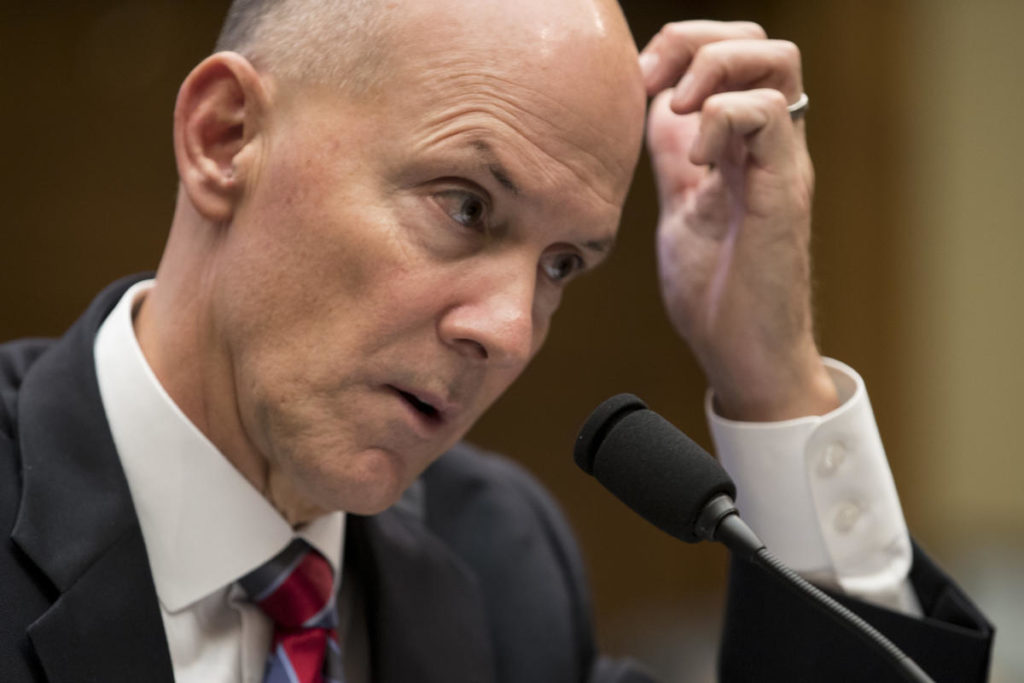
Senators are expressing bewilderment that credit reporting company Equifax has received a $7.25 million contract with the IRS to provide taxpayer and personal identity verification services. A Senate committee is examining the data breach at Equifax that’s affected more than 145 million people. Republican Sen. Ben Sasse (sas) of Nebraska has this question for the company’s former CEO: “Why in the world should you get a no-bid contract right now?” Richard Smith says he doesn’t know whether it was a no-bid contract, but says it’s his understanding the contract was something Equifax has had in the past and “I think it’s being renewed.” The contract says Equifax was the only company capable of providing the services, and it was deemed a “critical” service that couldn’t lapse. Republished with permission from the Associated Press.
