
Melania Trump to donate inaugural ball gown to Smithsonian
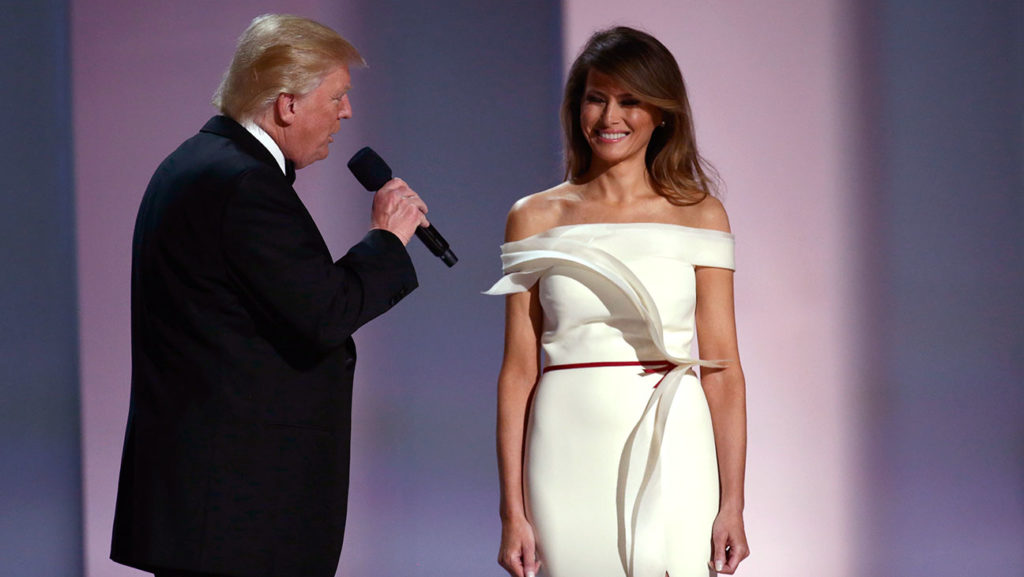
Melania Trump is donating her inaugural ball gown to the First Ladies’ Collection at the Smithsonian Institution. The first lady is handing over the vanilla silk, off-the-shoulder gown during a ceremony Friday in Washington. The gown also featured a slit skirt, ruffled accent trim from the neckline to the hem and a claret ribbon around the waist. Mrs. Trump worked with designer Herve Pierre on the gown. Pierre is also scheduled to attend the event at the National Museum of American History. The Smithsonian says the First Ladies Collection has been one of its most popular attractions for more than a century. Mrs. Trump’s gown will be added to the exhibit that features 26 dresses, including some worn by Jacqueline Kennedy, Laura Bush and Michelle Obama, along with other items. Republished with permission from the Associated Press.
Jeff Sessions defends James Comey firing, ties it to Hillary Clinton email case
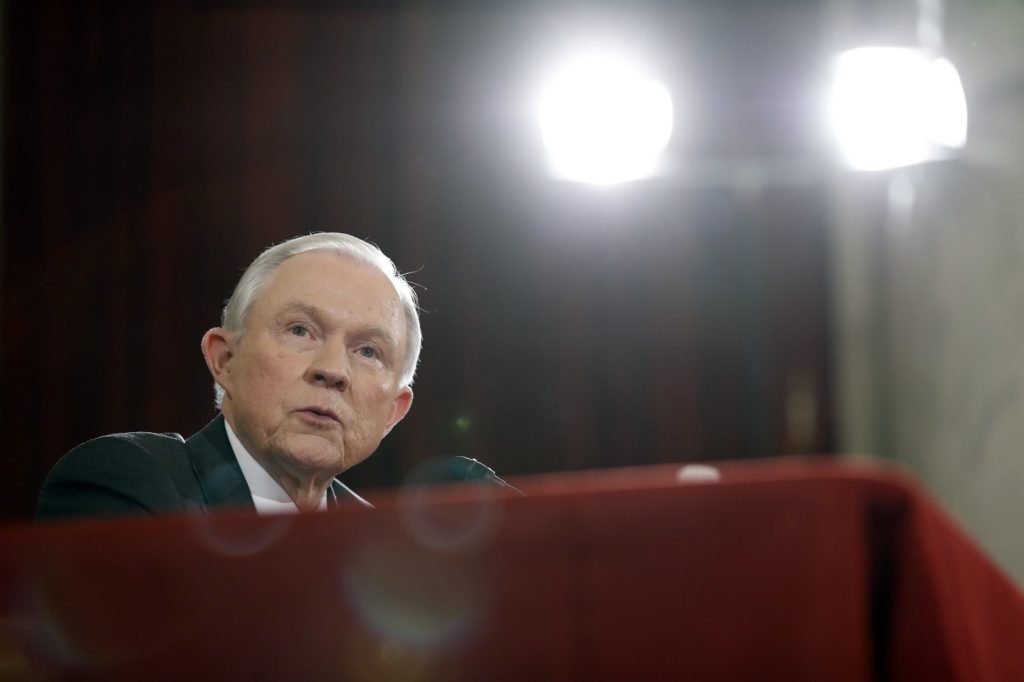
Attorney General Jeff Sessions on Wednesday strongly defended President Donald Trump‘s firing of James Comey, linking the FBI director’s abrupt dismissal to his handling of the Hillary Clinton email server investigation. But he refused to discuss any private conversations he had with the president leading up to Comey’s firing and would not say if he had discussed with the president an FBI investigation into potential coordination between Russia and the Trump campaign. Sessions, appearing before the Senate Judiciary Committee, said it was “the first time I’m aware of” in which an FBI director had performed the traditional role of Justice Department prosecutors by announcing on his own the conclusion of a federal investigation – that no charges would be brought against Clinton. He said he was further galled when Comey, one week before his firing, insisted to Congress that he would have taken the same actions again. Sessions’ insistence that Comey’s firing was motivated by displeasure over the Clinton email case is consistent with the initial White House explanation. But Trump himself has at times appeared to undercut that explanation, saying he would have fired Comey even without the recommendation of the Justice Department and that he was thinking of “this Russia thing” when he dismissed him on May 9. Trump has accused Comey of having prematurely exonerated Clinton, even though the Justice Department’s own explanation for the firing cited his decision to effectively reopen the probe days before the November election. The FBI’s investigation is now being run by the Justice Department’s special counsel, Robert Mueller. After initially balking at the question, Sessions said that he had not been questioned by Mueller’s team of investigators. He has been seen as a possible witness in the case given his involvement in the firing of Comey. Sessions stressed at the outset that he would not discuss any private conversations with the president and he largely abided by that principle, deflecting questions not only about the Russia investigation but also about the president’s pardon of Sheriff Joe Arpaio, among other topics. The Russia probe has shadowed much of Sessions’ tenure as attorney general, even though he recused himself in March because of his role as a stanch Trump campaign ally. It was a central focus the oversight hearing, too, as lawmakers repeatedly pressed Sessions about his contacts with the former Russian ambassador to the U.S., his discussions with Trump about the investigation and his involvement in the firing of Comey. Though he refused to say whether he discussed with Trump Comey’s involvement in the Russia investigation, or his private conversations with Trump, Sessions did say that the president had asked him and Deputy Attorney General Rod Rosenstein for their recommendations about what to do with Comey. “He did ask for our written opinion and we submitted that to him,” Sessions said under questioning from Sen. Dianne Feinstein of California, the committee’s top Democrat. “It did not represent any change in either one of ours opinions.” The routine oversight hearing is Sessions’ first before the committee since his January confirmation, and it comes as has worked quickly to reshape the department with an intense focus on immigration, drugs, gangs and violent crime. He also faced questions from lawmakers about his swift undoing of Obama-era protections for gay and transgender people and his rollback of criminal justice policies that aimed to reduce the federal prison population, among other changes he has made in nine months since taking office. Sessions has tried to pressure so-called sanctuary cities into cooperating with federal immigration authorities by threatening to withhold grant money, and he was the public face of the Trump administration’s decision to end a program benefiting hundreds of thousands of young people who entered the U.S. illegally as children. Congress is seeking a legislative solution to extend the protections before recipients’ work permits expire. It is standard policy for attorneys general to appear each year before the Justice Department’s congressional overseers on the House and Senate judiciary committees. Yet, in a reflection of the extent to which the Russia investigation and his own role as a Trump campaign ally have dominated public attention, Sessions made his first appearance on Capitol Hill as attorney general before the Senate Intelligence Committee. Democratic senators have already made clear they want Sessions to detail his private conversations with Trump, particularly in the run-up to the Comey’s firing, or announce that Trump is invoking executive privilege to protect those communications. Sessions repeatedly refused to discuss his talks with Trump during his three-hour appearance before the Senate intelligence panel. He did not say he was using executive privilege, but rather adhering to longstanding tradition of Justice Department leaders to refrain from revealing the contents of private conversations with the president. That explanation left many Democrats unsatisfied and is unlikely to put to an end demands for detailed accounts of those conversations. Republished with permission from the Associated Press.
White House: VA’s David Shulkin not a candidate for HHS secretary
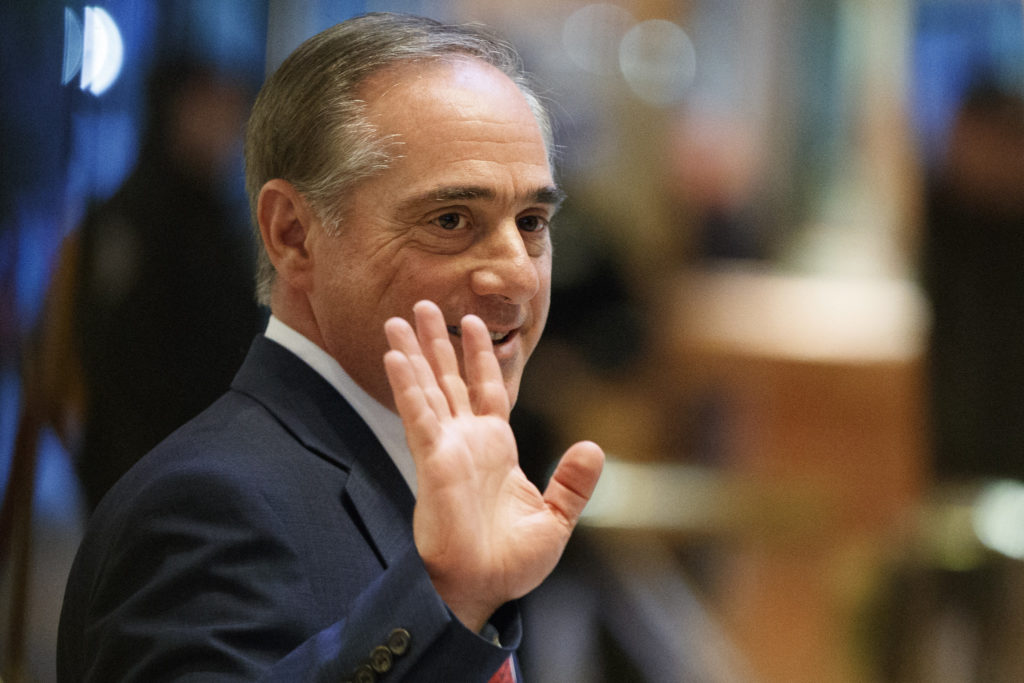
Veterans Affairs Secretary David Shulkin, who is under investigation for taking a 10-day trip to Europe that mixed business with sightseeing, is not being considered for the top job at Health and Human Services, the White House said Wednesday. Shulkin has been cited in media reports as a leading contender to replace former HHS Secretary Tom Price, who resigned last month following an outcry over his use of costly private planes for official travel. The Wall Street Journal reported over the weekend that Shulkin was interviewed by the White House and had “made his case” for becoming HHS secretary. But a White House official said Shulkin did not have an interview and “was never under consideration for the position.” The official, who insisted on anonymity because the official was not authorized to speak on the record about a personnel matter, declined to discuss reasons behind who was being considered and why. A VA spokesman did not comment, referring questions about Cabinet-level positions to the White House. Shulkin is one of several Cabinet members who have faced questions about travel after Price resigned. The VA inspector general earlier this month opened an investigation into Shulkin’s taxpayer-funded trip with his wife to Denmark and England to discuss veterans’ health issues. Travel records released by VA show four days of the July trip were spent on personal activities, including attending a Wimbledon tennis match. The VA said Shulkin traveled on a commercial airline, and that his wife’s airfare and meals were paid for by taxpayers. Major veterans’ organizations had expressed concern about uncertainty at VA should Shulkin leave his job, citing major changes underway to improve care for millions of veterans. The VA has numerous job vacancies, including top posts in its health care division. Shulkin, a physician, served as VA’s undersecretary of health during the Obama administration since 2015. President Donald Trump tapped Shulkin in January to head the VA, the government’s second-largest agency. Republished with permission from the Associated Press.
Strike 3 for Donald Trump’s latest travel ban, judge says it has same woes
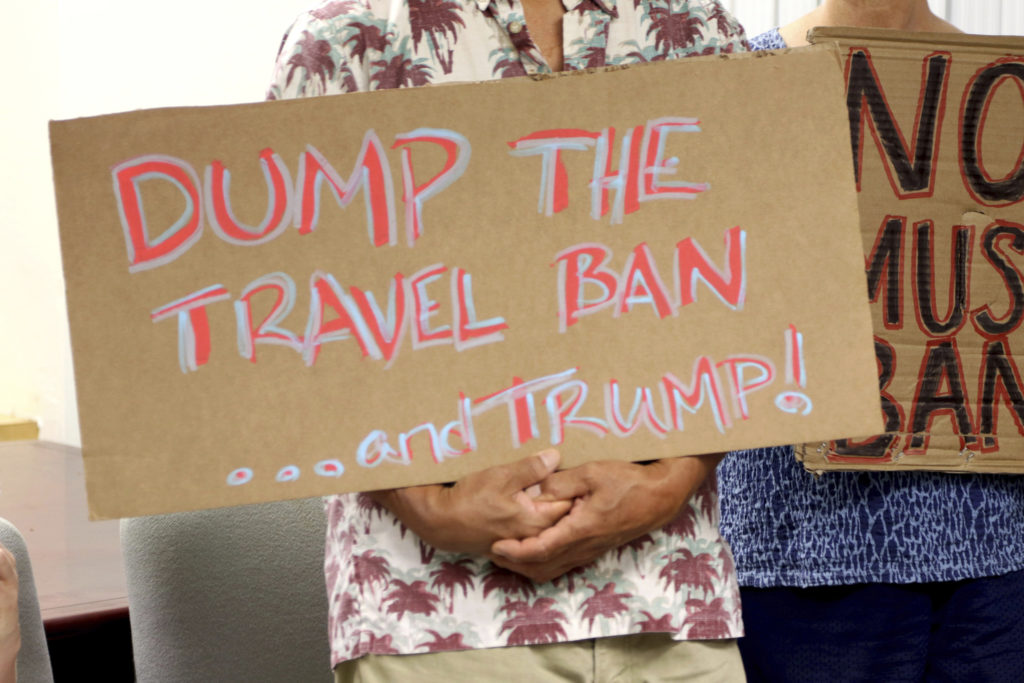
A federal judge in Hawaii blocked most of President Donald Trump‘s latest travel ban Tuesday, just hours before it was set to take effect, saying the revised order “suffers from precisely the same maladies as its predecessor.” It was the third set of travel restrictions issued by President Donald Trump to be thwarted, in whole or in part, by the courts. U.S. District Judge Derrick Watson issued the ruling after the ban on a set of mostly Muslim countries was challenged by the state of Hawaii, which warned that the restrictions would separate families and undermine the recruiting of diverse college students. White House spokeswoman Sarah Huckabee Sanders called the ruling “dangerously flawed” and said it “undercuts the president’s efforts to keep the American people safe.” The Justice Department said it will quickly appeal. At issue was a ban, announced in September and set to go into effect early Wednesday, on travelers from Chad, Iran, Libya, North Korea, Somalia, Syria and Yemen, along with some Venezuelan government officials and their families. The Trump administration said the ban was based on an assessment of each country’s security situation and willingness to share information with the U.S. Watson, appointed to the bench by President Barack Obama, said the new restrictions ignore a federal appeals court ruling against Trump’s previous ban. The latest version “plainly discriminates based on nationality in the manner that the 9th Circuit has found antithetical to … the founding principles of this nation,” Watson wrote. The judge’s ruling applies only to the six Muslim-majority countries on the list. It does not affect the restrictions against North Korea or Venezuela, because the state of Hawaii did not ask for that. “This is the third time Hawaii has gone to court to stop President Trump from issuing a travel ban that discriminates against people based on their nation of origin or religion,” Hawaii Attorney General Doug Chin said in a statement. “Today is another victory for the rule of law.” Hawaii argued the updated ban was a continuation of Trump’s campaign call for a ban on Muslims, despite the addition to the list of two countries without a Muslim majority. In his ruling, the judge said the new ban, like its predecessor, fails to show that nationality alone makes a person a greater security risk to the U.S. “The categorical restrictions on entire populations of men, women and children, based upon nationality, are a poor fit for the issues regarding the sharing of ‘public-safety and terrorism-related information’ that the president identifies,” Watson said. He also said the ban in inconsistent in the way some countries are included or left out. For example, Iraq failed to meet the security benchmark but was omitted from the ban. Somalia met the information-sharing benchmark but was included. Watson also found fault with what sorts of visitors are barred. For instance, all tourists and business travelers from Libya are excluded from the U.S., but student visitors were allowed. The judge said he would set an expedited hearing to determine whether his temporary restraining order blocking the ban should be extended. Other courts are weighing challenges to the ban. In Maryland, the American Civil Liberties Union and other groups are seeking to block the visa and entry restrictions. Washington state, Massachusetts, California, Oregon, New York and Maryland are challenging the order in front of the same federal judge in Seattle who struck down Trump’s initial ban in January. That ban – aimed mostly at Muslim-majority countries – led to chaos and confusion at airports nationwide and triggered several lawsuits, including one from Hawaii. When Trump revised the ban, Hawaii challenged that version, too, and Watson agreed it discriminated on the basis of nationality and religion. A subsequent U.S. Supreme Court ruling allowed the administration to partially reinstate restrictions against Iran, Libya, Somalia, Sudan, Syria and Yemen and against all refugees. Hawaii then successfully challenged the government’s definition of which relatives of people already living in the U.S. would be allowed into the country, and Watson ordered the list expanded. Republished with permission from the Associated Press.
