
House passes Bradley Byrne’s Save Local Business Act

The U.S. House of Representation on Tuesday passed the Save Local Business Act, a bill that rolls back a vague and expansive Obama-era National Labor Relations Board’s (NLRB) ruling that made businesses potentially liable for labor law violations committed by their subcontractors providing certainty for local businesses and their employees. Introduced in July by Alabama 1st District U.S. Rep. Bradley Byrne, who serves as the chairman of the House Workforce Protections Subcommittee, the bill passed by a bipartisan vote of 242 to 181. “For a few years now, I’ve visited local businesses and heard concerns about how the joint employer scheme creates confusion and uncertainty for workers and job creators. With this vote today, the House has shown we are listening to those concerns and doubling down on our commitment to protecting local businesses and their employees,” said Byrne. “As someone who practiced law in this field for years, I have no doubt today’s vote will make things easier for small businesses throughout the country and help clear the air of uncertainty. I want to thank all of my colleagues for their support in passing this critical legislation, and I am especially pleased the bill passed with votes from both sides of the aisle.” Byrne’s bill amends the National Labor Relations Act and the Fair Labor Standards Act to clarify that two or more employers must have “actual, direct, and immediate” control over employees to be considered joint employers. “Today’s House vote is a victory for America’s workers and local businesses that need relief from the NLRB’s extreme and unworkable joint employer scheme. We want to make it easier, not harder, for hardworking men and women to own a business and achieve the American Dream, and that’s exactly what this commonsense bill is all about.,” North Carolina-Republican and House Education and the Workforce Committee Chairwoman Virginia Foxx said of the bill’s passage. “I want to thank Representative Byrne for championing this proposal, as well as all the members of the committee for their hard work and passion that went into advancing this important legislation.” The bill earned support from multiple national organizations, including the Coalition to Save Local Business, the U.S. Chamber of Commerce, the International Franchise Association, the National Taxpayers Union, the National Retail Federation, the Workplace Fairness Institute, the American Hotel and Lodging Association, the National Restaurant Association, and more. Byrne delivered a speech on the House floor in support of his legislation. Watch: A transcript of his speech can be found below. Mr. Speaker, today is a big day. Today is an opportunity for the House to stand up for our nation’s workers and to protect the small, local businesses which form the backbone of the American economy. Today is about restoring decades’ old labor law. Ultimately today is about giving clarity to workers and job creators all across our country. I heard from my friends across the aisle that someone can be an employee without there being an employer. I call that the immaculately conceived employee. There is no such thing under the law nor has there ever been. This bill does not change the definition of employer. It simply takes the definition of joint employer back to the way it was a few years ago. It’s a shame we even have to have this bill. But the activist National Labor Relations Board in 2015 issued a decision that fundamentally up-ended labor law as we knew it. This change didn’t come through the democratically elected Congress but instead from a panel of unelected bureaucrats. The NLRB’s decision has caused deep uncertainty among job creators. For workers, they are left to wonder who their boss really is. That is an incredibly confusing situation to be in. Under the new joint employer standard, what does it mean to have ‘indirect’ or ‘potential’ control over an employee? I practiced labor and employment law for decades, and I do not know what that means so I can only imagine the confusion Main Street businesses have faced due to this standard. Currently there are at least nine different legal tests nationwide to determine joint employer status under the Fair Labor Standards Act and more to come. This patchwork of standards creates regulatory uncertainty, especially for job creators doing business in multiple states. So despite what some on the other side want to believe, this is not an abstract issue. I have visited numerous local businesses in my district, and I know they are very worried about this scheme. I’ve heard from workers who want to remain an employee of a locally owned business with an owner who knows them instead of becoming just another employee in some large corporation. Clearly, I’m not the only one who heard these concerns. This legislation is co-sponsored by 123 of my colleagues, including members from both sides of the aisle. This is a bipartisan issue because it isn’t about politics. Instead, it’s about saving jobs and supporting locally owned businesses. And let me make something crystal clear: this bill does not remove a single protection for today’s workforce. Despite the scare tactics being used by Big Labor bosses and their trial lawyer friends, the same important protections exist under this legislation and any irresponsible employer can be held accountable. So, Mr. Speaker, I urge all of my colleagues to take the side of our locally owned businesses, to take the side of our small business job creators, and to take the side of America’s workers. Let’s stand end the confusion, and let’s pass the Save Local Business Act. I yield back my time.
‘Cremate the cougars’ themed pep rally upset parents at Ala. school
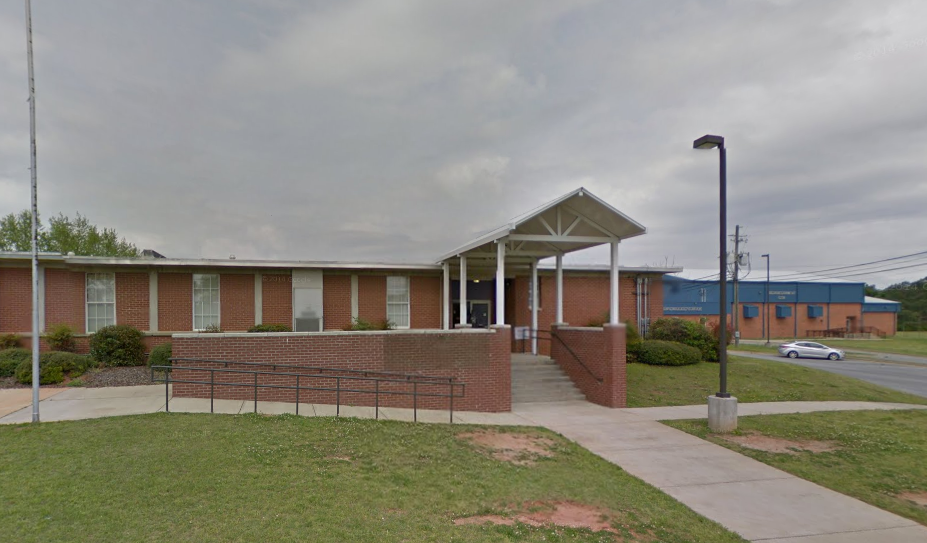
In the small town of Valley, Ala. in Chambers County, W.F. Burns Middle School is making the news for all the wrong reasons, according to some parents. Rather than hosting a typical pep rally in anticipation of the championship football game against the Long Cane Middle School cougars, the school hosted a “cremate the cougars” themed pep rally last Thursday. According to WVTM, the pep rally was a “funeral service [for the cougars] and the players and cheerleaders ripped the opposing team’s mascot, the Long Cane Middle School Cougar’s, into shreds.” “I commented under a teacher’s post and told her I thought they went too far with that and literally ripping to shreds a cougar by the players and cheerleaders to me was promoting violence,” one parent told WVTM.com. The parents are not alone in thinking the school took the pep rally too far. “I know I’m going to make some people mad, but this is middle school people, I totally get it was a hype thing to build moral for the team but actually carrying a real casket is morbid as it comes, they could have made a box out of card board or something and decorate it with their slogans, but I honestly think that a real casket is pushing it a little to far!” Amy Kathryn Hinkle, a Valley resident, posted in response Tuesday on Facebook. But not all locals agree. “This is so dumb. People will do anything to start a fuss and get on the news,” posted Madison Jarnagin. Bradley Morgan, a Southern Union State Community College student and W.F. Burns graduate said this isn’t the first time the school has done this. “I️ did this is when I️ attended W.F. Burns and when I️ was in high school. This is so ridiculous for that women to cause this much trouble,” Morgan wrote on Facebook Monday. School Superintendent Dr. Kelli Hodge confirms Morgan’s history of the pep rallies, explaining these types have pep rallies have gone on for as long as she can remember. “I think we need to look at what it was intended for. It was a skit for a junior high school pep rally,” Hodges explained to WVTM. She said the pep rally was not intended to be offensive.
Martha Roby pays tribute to veterans on House floor
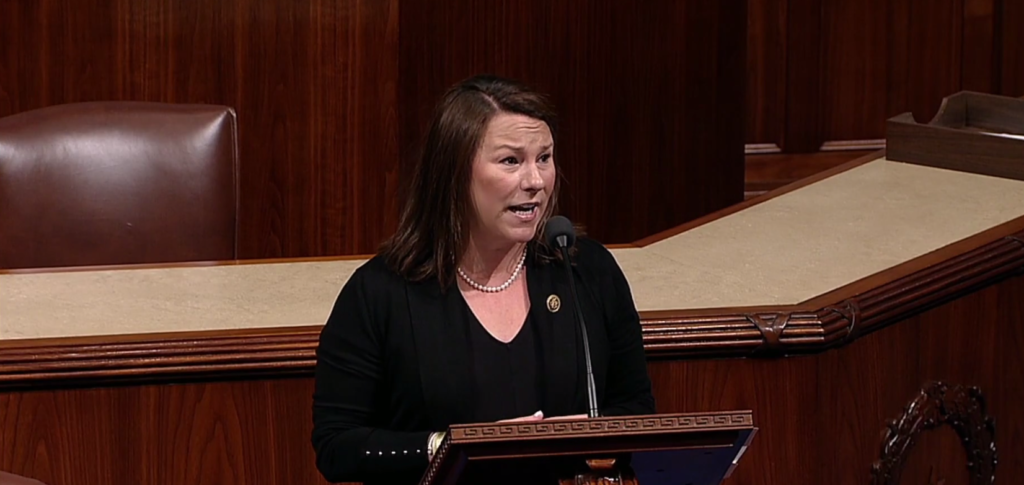
In a speech on the floor of the House of Representatives Tuesday, Alabama 2nd District U.S. Rep. Martha Roby honored America’s veterans and said advocating for those who have served this nation is one of the most rewarding parts of her job. “I take my responsibility to look out for veterans very seriously, whether through pushing for better policies, fighting to improve access to VA medical services, or going to bat for someone the bureaucracy has left behind,” Roby said. “I would like to extend my sincere gratitude to everyone who has served this country and to their families. Our country is great because of the men and women who were willing to sacrifice on our behalf.” Roby also shared the news that the Central Alabama Veterans Health Care System (CAVHCS), which serves all of Alabama’s Second Congressional District, has improved by another star rating. CAVHCS now ranks three out of five stars — a significant improvement from two years ago when the system ranked as one of the nation’s worst. Watch Roby’s tribute below: Read Roby full floor speech, as prepared, below: Thank you, M. Speaker. In the year 1918, on the 11th hour of the 11th day of the 11th month of the year, the armistice ending World War I was signed. Originally known as Armistice Day, Congress later passed and President Dwight Eisenhower signed a resolution officially designating November 11th as Veterans Day. Now, every year, Americans pause on this special day to recognize all those, young and old, who have served our country in uniform. While we should honor the service and sacrifice of our veterans every day, this holiday provides a unique opportunity for us to come together as a nation and pay tribute to the men and women who put their lives on the line for our freedom. This year I’ll be participating in my hometown of Montgomery’s Veterans Day event, and I highly encourage you and your family to attend the festivities in your area. I can promise you that you won’t regret it. For me, it’s not only an opportunity to express my gratitude to those who have served, but it’s also a chance for my children to meet veterans and to better understand the sacrifices that have been made for us. If you can’t attend an event in person, I hope you will take time to reach out to friends or relatives who have served to let them know they are appreciated. Mr. Speaker, this Veterans Day comes as services for veterans are improving – both on a national level and locally in Alabama’s Second Congressional District. I have been impressed by the leadership of Secretary of Veterans Affairs Dr. David Shulkin. He’s been making the long-troubled Department work better for those it serves. Closer to home for me, the Central Alabama Veterans Health Care System has again improved its service rating and now ranks three out of five stars. This is encouraging news, especially considering that just a few short years ago the Central Alabama VA was one of the nation’s worst. Our VA now has the steady leadership of Dr. Linda Boyle, and there’s no question that her guidance has made a difference in making this sustained progress. I’m eager to see it continue. We still have significant issues to address at our Central Alabama VA, which is why I will remain actively engaged in working to turn around the system. Mr. Speaker, it is my distinct honor to represent a district that is home to one of the nation’s highest concentrations of veterans and retired military personnel. One of the most rewarding parts of this job is being able to advocate for those who have served this nation in uniform. I take my responsibility to look out for veterans very seriously, whether through pushing for better policies, fighting to improve access to VA medical services, or going to bat on behalf of someone the bureaucracy has left behind. So Mr. Speaker, I would like to close by extending my sincere gratitude to everyone who has served this country and to their families. Our country is great because of the men and women who were willing to sacrifice on our behalf. Thank you. I yield back.
UAB provides top genetic counseling in Southeast

Many doctors treat patients under the belief “You are your genes,” meaning that every person is a product of his or her own unique heredity. The statement is true to some degree, said Dr. Anna Hurst, a medical geneticist and pediatrician in the Department of Genetics at the University of Alabama at Birmingham (UAB). That is because hereditary factors predispose every person to myriad characteristics including hair, eye and skin color, as well as height, physical conditions and diseases. Recently, there has been a huge increase in awareness about genetic predisposition following actress Angelina Jolie’s announcement that she carries a faulty copy of the BRCA1 gene, indicating that she has a strong hereditary tendency toward breast and/or ovarian cancers. Jolie elected to undergo preventative surgery to ensure she would not develop the cancer that killed her mother. Most cases are not so clear cut, said Dr. Anna Hurst, a medical geneticist and pediatrician at UAB Hospital. In her role, Hurst trains pediatrics and genetics residents at Children’s of Alabama in Birmingham. She and a genetic counselor often see patients together, screening family history forms and meeting as a team to discuss their findings with the patients and medical providers. “I’ve always been fascinated by the subject of genetics and how it affects people’s lives. It’s a complicated science topic, with implications for an entire family,” said Hurst, who trained in pediatrics at Wake Forest Baptist Medical Center and studied medical genetics at UAB. She earned a master’s degree in genetic counseling at the University of South Carolina and an M.D. at the Medical University of South Carolina. A tough discussion Hurst works in UAB’s Genetics Clinic, which assists with gathering patient information. She performs patients’ physical exams and prepares parents for the possible results. “Up to 15 to 20 percent of the time, there can be an inconclusive result,” Hurst said. “There can also be unexpected familial news, and you must prepare the patient and family for the psychosocial results. It is definitely difficult to discuss potential genetic conditions. But, by offering these results, we empower people about how they can use the results to better their health care. “We treat the patient first, not their genotype, or genetic information,” Hurst said. “With patients who are in our Neonatal Intensive Care Unit or in prenatal, it’s really difficult to discuss. The defect can be part of a larger picture. We try to be supportive throughout that time.” Working with families, Hurst said that it’s the counseling team’s role to determine whether there is a genetic reason behind the occurrence of a health condition, or whether the difference occurred spontaneously. Many conditions happen unexpectedly. “Many conditions are sporadic and aren’t preventable,” she said. On the cutting edge The counseling team – comprising a consulting physician, a genetic counselor and other staff – directs families and patients to support groups as needed. UAB sees patients from throughout the Southeast. Hurst noted that insurance companies cover most genetic counseling and some lab testing. The UAB Genetics Clinic accepts referrals and sees patients at the UAB Kirklin Clinic and Children’s of Alabama. Prenatal genetic counseling appointments can be scheduled through the Women & Infants, and Children’s Center. The department also participates in ongoing research opportunities such as the Alabama Genomic Health Initiative. The AGHI allows Alabama residents to take part in a biobank – a type of biorepository that stores human biological samples – for use in research. UAB performs initial genotyping, checking 59 actionable genes. Hurst works on the Pediatric Genomic Sequencing Project funded by HudsonAlpha Institute for Biotechnology and Children’s of Alabama, seeking to identify genetic diagnoses for children with intellectual disabilities and developmental delays. The goal is to see whether earlier diagnoses help in treating individuals. “UAB really is on the cutting edge for genetic testing,” Hurst said. “Genomic medicine has real, practical implications for individuals and patients. UAB has an Undiagnosed Diseases Program for individuals with severe chronic medical conditions who are undiagnosed. We try to find opportunities for people to get genetic testing. We are very fortunate to have programs for neonatal and pediatric patients and adults.” Team approach Genetic counselor Alicia Gomes, a UAB employee since 2010, works in laboratory genetic counseling and pediatric genetic counseling. Gomes meets with patients and families to determine whether they have a personal or family history concerning a genetic disorder, so she can inform the physician. Gomes and Hurst often work as a team in checking for characteristics that may point to a genetic syndrome. Genetic conditions such as Down syndrome or Noonan syndrome often display common facial features or physical conditions that may make a condition diagnosable without requiring genetic testing. “Subtle physical characteristics can sometimes point to one condition over another,” she said. Gomes’ first task is to make patients feel comfortable. “I give the patient the set-up of how the appointment will go,” said Gomes, who graduated in genetic counseling from the University of South Carolina. During the follow-up visit, Gomes meets with the patient and the geneticist, who conducts a physical exam to look for characteristics of genetic conditions. In pediatric genetic counseling, Gomes and physicians often take a “tag-team approach.” Together, they see the patient and address the family’s concerns about the patient’s condition and the reason for testing. If the genetic counselor and doctor determine that genetic testing is necessary to confirm a diagnosis, in most cases, a sample can be taken during the visit and shipped to the necessary laboratory. For some conditions or scenarios, Gomes and the physician may follow up with the patient annually or biannually to help in the management or surveillance of the disorder. In addition, Gomes works as a laboratory genetic counselor to serve as the bridge between clinicians and the lab: “I follow the sample through the testing process to communicate any information between both parties that may be needed to ensure that we can provide a quality test for the patient,” she said. UAB’s molecular testing lab is world-renowned for its work in specific subsets of genetic disorders such as neurofibromatosis, Rasopathies and tuberous sclerosis. Physicians from countries as far away as Australia, Japan, India, China and Singapore have submitted patient
