Don’t forget to shop local on Small Business Saturday, Nov. 25

It’s the biggest shopping weekend of the year, and small businesses across the Yellowhammer State are prepping for Small Business Saturday — a day designed to celebrate and support small businesses and the impact it has on local communities. According to the American Independent Business Alliance, every dollar spent at independent businesses returns three times more money to the local economy than one dollar spent at a chain, and almost 50 times more than buying from an online mega-retailer. “Small Business Saturday is a wonderful opportunity for Alabamians to support local businesses on the first Saturday after Thanksgiving,” said Governor Kay Ivey upon signing a proclamation marking Nov. 25 Small Business Saturday in Alabama. “Small businesses have long been recognized as the economic engine for job growth, economic stability and preserving neighborhoods across Alabama and the nation.” Ivey continued, “Small Business Saturday shopping continues to increase each year and is achieving the goal of showcasing the importance of Main Street businesses to the local community. Please join me and other Alabamians in shopping on Small Business Saturday.” Rosemary Elebash, State Director for the National Federation of Independent Business and chair of the Alabama Small Business Commission, said the day gives Alabamians a “chance to show their appreciation to Alabama’s essential job creators.” “Embracing Small Business Saturday gives Alabamians a chance to show their appreciation to Alabama’s essential job creators by shopping in their local communities, eating at their restaurants and using locally owned service businesses,” said Elebash. “When you shop on Main Street, most of the money stays in the local community. We’re extremely pleased by the success of Small Business Saturday, but we’re more excited by the growing commitment among Alabamians to give small businesses a chance to compete all year round.” 2017 marks the 7th anniversary of Small Business Saturday in Alabama.
First homeowners set to move into Alabama Power’s Smart Neighborhood this month

Smart Neighborhood™ by Alabama Power is quickly moving from a concept to reality, as the first homeowners are scheduled to move into their homes this month. Smart Neighborhood is a state-of-the-art community of 62 homes in Signature Homes’ new Reynolds Landing community in Ross Bridge in Hoover. “This project puts us, our customers and our building and technology partners on the leading edge of energy research and development,” said John Hudson, senior vice president of Marketing and Business Development for Alabama Power. “We are excited about the neighborhood’s progress, and look forward to seeing homeowners move in and begin to experience their new homes’ advanced features.” Each home features emerging energy-efficient technologies, materials and appliances, all connected to the Southeast’s first community-scale microgrid. Performance data and energy usage will be gathered from the homes’ innovative features and analyzed to provide insight into how homes can be built and function more efficiently. Information from the HVAC systems, heat pump water heaters and other connected home technologies will help Alabama Power determine new, creative energy solutions for customers. Work is being done across the board in the project’s three main areas: Enhanced energy-efficient building features. Connected home technologies. The Southeast’s first community-scale microgrid. First few Smart Neighborhood homes wrap up construction Reynolds Landing is abuzz each day as construction continues to develop the new community, with the first few homes completed over the past few weeks. Fewer than one-third of the homes in the neighborhood remain available to buy, according to Dwight Sandlin, CEO of Signature Homes. “The market response to Smart Neighborhood has been outstanding,” Sandlin said. “We have sold 48 homes since June, which is amazing because we have not yet completed our model home for customers to see a completed house.” Progress on the neighborhood has been steady since construction on the first home began this summer. “About 30 homes have broken ground so far, all in various stages of completion, so we are almost at the halfway point of construction,” said Shon Richey, marketing specialist for Alabama Power. Enhanced energy-efficient building features are being used in each home of Smart Neighborhood, making the project a true living laboratory of how homes will be built in the future. “We’ve taken a snapshot of what we anticipate standard building and energy codes for new home construction to be like in 20 years, and are using these to guide the construction,” Richey said. “This will give us great insight into how high-performance homes will function, and what improvements in building can be made now to improve efficiency.” Richey and members of the Smart Neighborhood project team have been working with Signature Homes on energy-efficiency measures. Features designed to reach greater efficiency in each home include: Advanced air sealing. 2×6 Zip walls with up to R-24 blown-in blanket insulation. Radiant barrier roof decking to reduce hot attic temperatures. R-49 blown attic insulation. Triple-pane Low-E windows. These features will work alongside systems such as a Carrier Infinity® Greenspeed Intelligence heat pump and Rheem hybrid electric water heater. “All of this will come together to help homeowners stay more comfortable – and homes be more efficient – year-round,” Richey said. “Less heat will get into these homes in the summer, and less heat will escape in the winter.” The scale of Smart Neighborhood makes it unique and will provide valuable insight and data into how energy-efficient homes and systems in the future will perform. “We are seeing a few of these features being adopted in the home construction market, but none are using the number of features we are, and especially not in a 62-home neighborhood,” Richey said. “These building features are really the foundation of the neighborhood, and will be key in our research.” Sandlin said the use of interfacing technology and energy-efficiency in Smart Neighborhood is expected to create new standards for the home building industry. “The best part is that Reynolds Landing is a real community that Alabama Power can glean information from rather than a theoretical laboratory,” Sandlin said. “I commend Alabama Power for their commitment to learning what is good for their customers, and we are pleased to partner with them on this project.” About Smart Neighborhood Alabama Power announced the Smart Neighborhood project in April. Construction on the neighborhood is expected to be completed in spring 2018. The project is a collaborative partnership with Signature Homes, Southern Company, the Department of Energy’s Oak Ridge National Laboratory and various technology and other vendors. Learn more at smartneighbor.com. Republished with permission from the Alabama NewsCenter.
Roy Moore’s campaign communications director, John Rogers, resigns
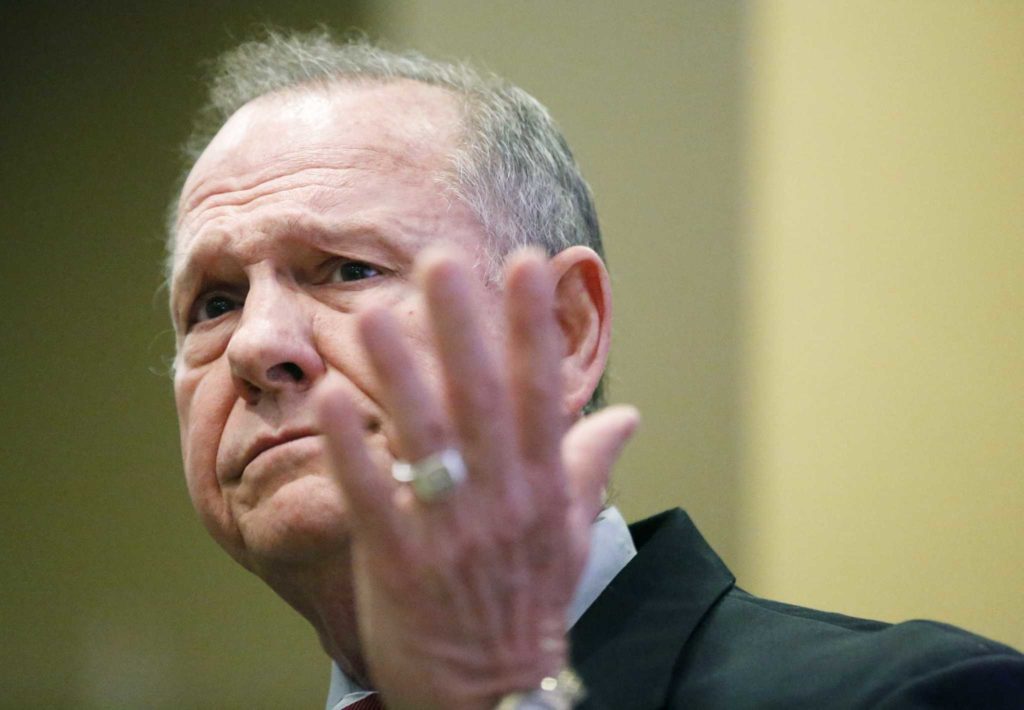
John Rogers, the communications director for Alabama GOP Senate candidate Roy Moore, resigned from his position on the campaign Wednesday. Campaign chairman Bill Armistead confirmed the news. “As we all know, campaigns make changes throughout the duration of the campaign, as do those working in the campaign,” Armistead said in a statement. “John made the decision to leave the campaign last Friday – any representations to the contrary are false – and we wish him well.” Armistead also said that effective immediately, Hannah Ford, who serves as Deputy Campaign Manager, would be the media contact for the final three weeks of the campaign. Rogers’ decision to leave, just weeks before the Dec. 12 special election, comes as Moore continues to draw criticism in the wake of The Washington Post’s explosive report on Thursday Nov. 9 with the accounts of four women who claim Moore sexually pursued them when he was in his 30s and they were in their teens. Moore vehemently denies the accusations.
Alabama legacy moment: Mary Ivy Burks, pioneer environmentalist
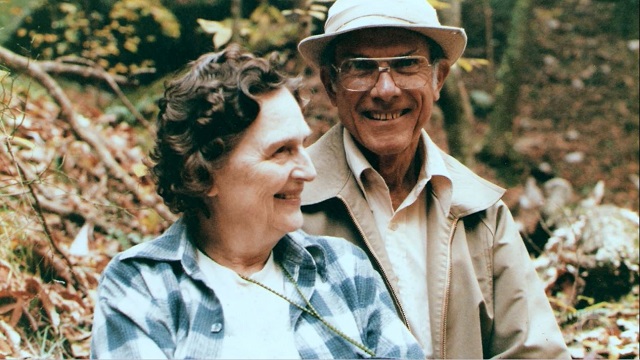
Alabama Public Television is producing a series of videos titled “Alabama Legacy Moments” that offer a quick history of the people, places and stories that have defined Alabama. Done in conjunction with the ongoing bicentennial celebration of the state that concludes in 2019, the short pieces should inspire you to learn more about the rich history of Alabama. “Alabama Legacy Moments” are sponsored by the Alabama Bicentennial Commission and the Alabama Broadcasters Association. This “Legacy Moment” is Mary Ivy Burks. According to the Encyclopedia of Alabama, “Mary Ivy Burks (1920-2007) was a leading force behind the founding of the Alabama Conservancy (now the Alabama Environmental Council), the state’s first independent environmental organization. She served as its first president, its first executive director, and chair of its wilderness committee, overseeing the group’s successful campaign for the creation of the Sipsey Wilderness Area in the William B. Bankhead National Forest. She helped lead a national effort known as the “eastern wilderness movement” and became a respected expert on land preservation and forestry issues.” Alabama Legacy Moment: Mary Ivy Burks from Alabama NewsCenter on Vimeo.
Child sex abuse victim calls out Doug Jones for ‘hypocrisy’ in blasting Roy Moore
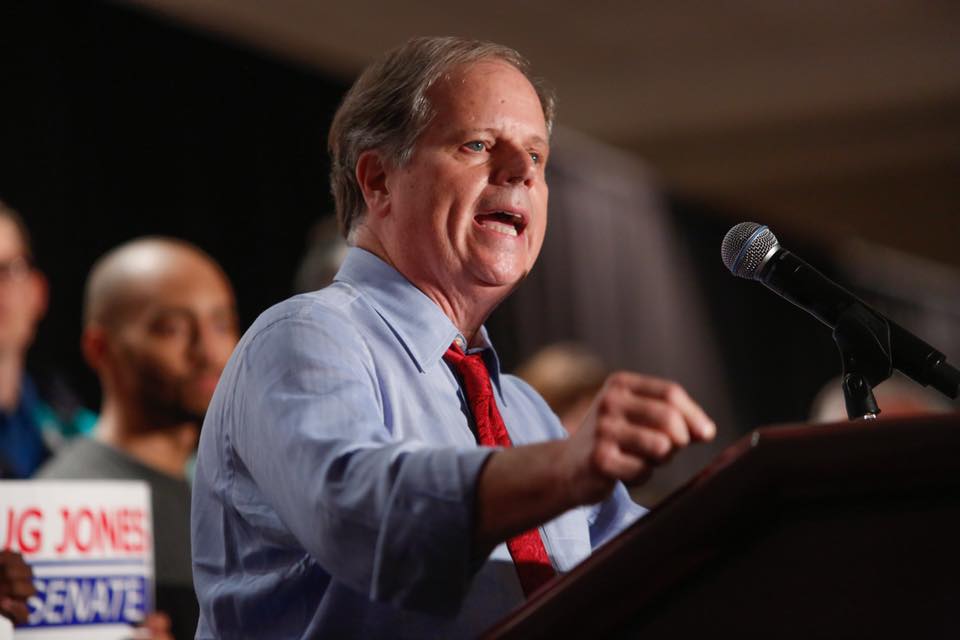
AL.com on Tuesday reported a woman who sued the University of Alabama-Birmingham (UAB) over sexual abuse in 2001, called out Alabama Democratic U.S. Senate candidate Doug Jones for “hypocrisy” for his role as a defense attorney on behalf of the university. Brittany Benefield was a child-prodigy recruited by UAB at 14. While attending the university, living in the doors with football players, she claimed to have suffered sexual abuse by the hands of UAB coaches and the administration when she was only 15-years old. In the high-profile case, Jones said Benefield’s claims were “without merit.” “The charges against UAB administrators and coaches are entirely without merit and represent nothing more than a cynical attempt to extort money by slandering this institution and its employees,” Jones said at the time according to the AL.com report. Now, in light of Jones’ reaction to the allegations against Republican nominee Roy Moore, Benefield has come forward speaking against Jones. “I find it to be the height of hypocrisy that he sets his campaign to be on the moral high ground against Roy Moore,” Benefield told AL.com. She claims some of the things Jones said during the process “really made my jaw hit the floor. I just think Doug Jones is full of … something. He was cold, uncaring, unfeeling and calculated throughout the case.” Benefield is referring to Jones saying the credibility of the allegations against Moore “have a lot more credibility” than his denials. A response in stark contrast to his stance on the allegations Benefield made in 2001. “The credibility of the allegations and the statements of these women in Etowah County seem to have a lot more credibility than denials that he’s made or denials made by his handlers,” Jones said last Wednesday. However, Benefield’s attorney in the trial defended Jones actions. Attorney John Whitaker said Jones acted professionally did not mistreat his client. “Never, ever, do I think that Doug Jones did anything inappropriate,” Whitaker said. Jones faces Moore in the special election on Dec. 12.
Exclusive: Roy Moore rebounds in polls as accusations are discredited
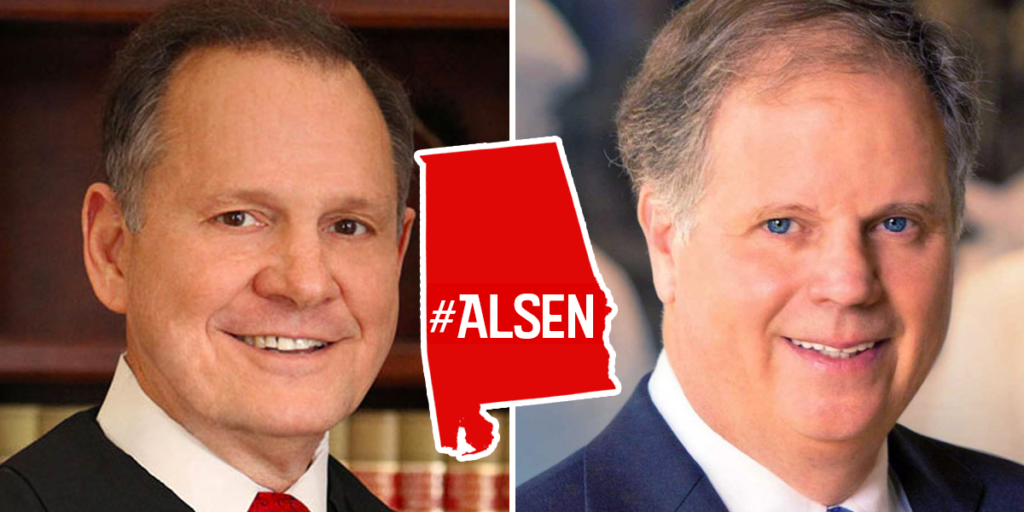
Alabama’s special U.S. Senate election is less than one month away and a new poll shows Republican nominee Roy Moore holding a solid lead over his Democratic opponent Doug Jones. In a poll conducted by Sky Research on Tuesday Nov. 21 among registered Alabama voters, the results show Moore with 46.7 percent support to Jones’ 39.6 percent. 13.7 percent of voters polled remain undecided. With a margin of error of 3.1 percent, Moore maintains significant lead over Jones, but the undecided voters could swing the election either way. When asked “Do you consider your political views to be more in line with the Republican or Democrat party?,” 62.3 percent of 1,059 respondents identified as Republican, while 37.7 percent Democrat. The results come as President Donald Trump on Tuesday avowed his support for the former Alabama Chief Justice for first time since Moore was accused of sexually pursuing at least nine women when he was in his 30s and they were in their teens. Trump had previously said, through the White House Press Secretary Sarah Huckabee Sanders, “Like most Americans, the president believes we cannot allow a mere allegation, in this case, one from many years ago, to destroy a person’s life. However, the president also believes that if these allegations are true, Judge Moore will do the right thing and step aside.” On Tuesday, Trump himself said Moore “totally denies” the allegations against him. Reiterating that the country doesn’t “need” liberal Jones in the seat. “Let me just tell you, Roy Moore denies it. That’s all I can say. He denies it. By the way, he totally denies it,” Trump told reporters as he was departing Washington for his Mar-a-Lago resort for the Thanksgiving holiday. “I can tell you one thing for sure, we don’t need a liberal person in there, a Democrat. I’ve looked at his record — it’s terrible on crime, it’s terrible on the border, it’s terrible on the military.” Tuesday’s poll comes in sharp contrast to Louisiana-based JMC Analytics poll AL.com reported on just a week ago Sunday, just three days after the allegations first came out. “The poll had Jones received 46 percent support in the poll to Moore’s 42 percent. With a margin of error of 4 percent, however, the race is essentially a statistical tie,” reported AL.com. Since that time, women from across the state have stepped forward defending Moore’s character. On Friday, on the steps of the Alabama State Capitol, more than 30 women stood united in their support of the embattled nominee. There, Ann Eubank, the statewide co-chair of Rainy Day Patriots, and the legislative chair of the Alabama Legislative Watchdogs, spoke on behalf of Moore’s character going so far as to say if the ” state Republican Party decide to remove Moore from the ballot, or if they worked to disallow or decertify an election won by Moore, there would be a revolt, which she said would be ‘bad’ for Republicans in next year’s statewide election.” Among the accusations that have been debunked is that Moore was banned from the Gadsen Mall. A former manager appeared on WBRC news to say though they did have written reports of those who were banned he did not recall Moore ever being on that list. That report is in addition to statements released on Monday, where several witnesses came forward to discredit the accusations made by Beverly Nelson and her lawyer Gloria Allred against Moore. On Monday, Rhonda Ledbetter, a retired public school teacher who is currently the senior choir director at a Baptist church and teaches children at a local, church-sponsored day care center, went on record debunking Beverly Nelson’s claim against Moore. “When I heard Beverly Nelson’s story, there were several details that were different from what I remember. I was nervous at coming forward because of all the attention this story has gotten, but as a moral and ethical person I had to speak up about what I know to be true,” Ledbetter recounted. “I was a waitress at Olde Hickory for almost three years from 1977-1979, and I never saw Roy Moore come in to the restaurant. Not one time.” Moore faces the Democratic nominee Doug Jones in the special election on Dec. 12.
Alabama Department of Public Health urges vaccination against HPV

The human papillomavirus – or HPV – is the most common sexually transmitted infection in the world. With more than 170 types of HPV, roughly a dozen strands are linked to cancer. And according to the Centers for Disease Control and Prevention (CDC), more than half of all sexually active people will contract one of the viruses during their lifetime. Which is why the Alabama Department of Public Health (ADPH), Immunization Division, wants to increase awareness about a cancer-prevention vaccine, human papillomavirus (HPV) vaccine. “HPV is such a common virus, and nearly all men and women contract it at some point in their lives. The danger of HPV is the nine different types of strains of infection it causes, seven of which are cancer causing,” said Dr. Karen Landers, District Medical Officer. The HPV vaccine has been approved by the U.S. Food and Drug Administration (FDA) and is recommended by the CDC for both males and females to protect young children from cancer. The vaccine is routinely given at 11 or 12 years of age, but it may be given beginning at age 9 years through age 26 years. Since its introduction in 2006, HPV vaccine has consistently demonstrated effectiveness by decreasing the number of infections and HPV precancers in young people. The vaccine underwent years of extensive safety testing before being licensed by the FDA. According to the National Cancer Institute, the HPV vaccine is highly effective in preventing infection when given before initial exposure to the virus. Video contest to increase awareness In an effort to increase awareness of the HPV vaccine and its benefits, ADPH is conducting a video contest in partnership with the Alabama Chapter of the American Academy of Pediatrics (AAP) that will be open to teenagers who reside in Alabama, ages 15-19. Videos should focus on the occupations or activities they would like to have in the future without the threat of cancers caused by HPV. A panel of judges comprised of ADPH Immunization staff, Cancer Prevention staff, and the AAP will review the video submissions and select the winning video. Submissions are due by Dec. 15, 2017, and the winning video will be announced on Dec. 29, 2017. “Our goal is to educate both young children and parents about the importance of getting vaccinated,” said Dr. Landers. “This is a vaccine that can save lives and allow young Alabamians to have a healthier future.” The winner of the contest will receive a $250 gift card from Target, as well as be promoted on the ADPH website.
Daniel Sutter: Give thanks for prosperity
This is the time to give thanks, and I hope that your family has much to be thankful for this year. Thanksgiving offers a time to reflect on the prosperity we enjoy. Most humans throughout history have lived at the subsistence level, usually only one poor harvest away from facing famine. Just as with the Pilgrims, our prosperity today has a basis in property rights. The Pilgrims enjoyed bountiful harvests after moving from collective to private farms, while today secure property rights allow the market economy to flourish. We have an additional reason to be thankful this year, as America’s economic freedom increased in the most recent Economic Freedom of the World report. Many economists starting with Adam Smith have recognized property rights and markets as creating the “Wealth of Nations.” Without a comprehensive measure of economic freedom, the link between markets and prosperity was difficult to establish. The Cold War offered the example of free and prosperous West Berlin next to poor communist East Berlin, but we would prefer more systematic evidence. In the 1990s, Canada’s Fraser Institute, on the suggestion of Milton Friedman, started measuring how closely a nation approaches the ideal of free markets. Index scores go from 0, the least freedom, to 10, the most. Hong Kong remains the freest nation (at 8.97), while Venezuela is least free (at 2.92). Dozens of studies have now shown that more economic freedom produces prosperity, faster economic growth, lower inequality, longer life expectancy, and higher environmental quality. Economic freedom in the U.S. rose from 7.81 to 7.94 in 2015, the latest year for which data are available, moving us from 13th freeist nation to the 11th. The Index rates nations on government spending, taxes, the legal system and property rights, monetary policy, international trade, and regulation. Our biggest improvement in 2015 was in monetary policy, due to lower inflation. The Fraser Institute always seeks to improve the freedom index. A major new improvement debuting this year is an adjustment for the economic freedom of women. The case for adjusting the Index for discrimination against women is overwhelming. All people have the right to apply their skills and talents in whatever peaceful endeavors they choose. As TCU economist Rosemarie Fike writes in this year’s report, “All human beings have a right to be free, to make their own decisions, and ends of their own life course.” Further, our economy will be more prosperous if the talents and abilities of everyone can be employed. The challenge has been obtaining data on the economic status of women in enough countries and back to 1970, the first year for which we have economic freedom scores. The World Bank’s Women, Business, and the Law project has made this data available. The legal system and property rights component of the freedom score is adjusted using a Gender Disparity Index based on legal restrictions on women’s ability to own property or enter into contracts. Discrimination against women most affects economic freedom in Middle Eastern nations like Saudi Arabia, the United Arab Emirates, Kuwait, and Jordan. The World Bank does not measure cultural restrictions on women’s achievements. Stereotypes and criticism can hold people back as surely as the law. The economic freedom index more broadly, however, focuses on formal, legal limits. Two interesting gender disparity patterns emerge. First, the average level of legal discrimination against women has been falling over time. This is encouraging, although it would be great if equality were achievable today. Second, countries with more economic freedom, apart from the gender adjustment, discriminate less against women. I think that the driving force is recognition that ordinary people (as opposed to just rulers) matter. Once we recognize that people matter, the conclusion that everyone matters, including women and minorities, naturally follows. Property rights helped make the first Thanksgiving possible back in the Plymouth colony. We should give thanks for living in a time and place where economic freedom has made prosperity possible. And this year in the U.S., we have a little more economic freedom to celebrate. So please pass the turkey! ••• Daniel Sutter is the Charles G. Koch Professor of Economics with the Manuel H. Johnson Center for Political Economy at Troy University and host of Econversations on TrojanVision. The opinions expressed in this column are the author’s and do not necessarily reflect the views of Troy University.
Steve Flowers: December’s election is all about Roy Moore
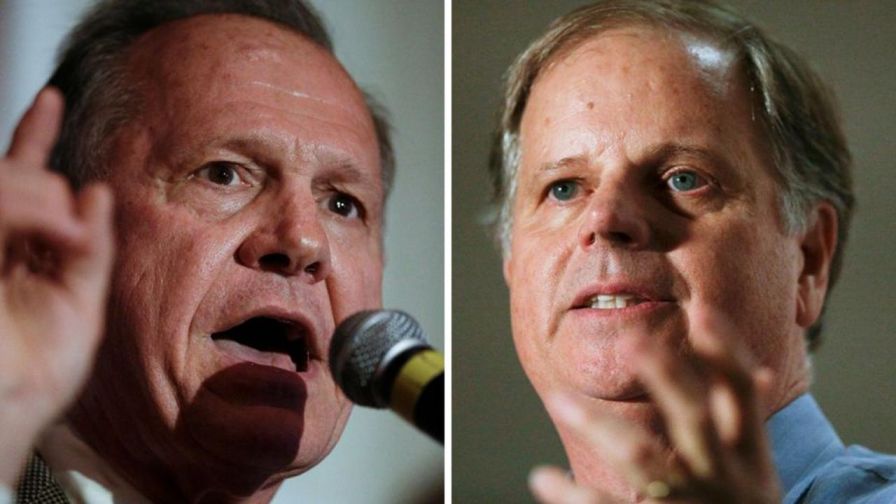
The big question in the Senate race is will allegations against Roy Moore and his purported propensities forty-years ago cause him to lose. We will soon see. The election is less than three weeks away. The book on Moore is easy to read. The polls have consistently revealed that 30 percent of voters like him and 70 percent do not like him. He is a polarizing figure and well known. However, the real poll that counts is the one on Election Day. The reason that he won the GOP primary was that his people showed up to vote for him. His followers are more ardent, fervent, and quite frankly older. Older voters are a lot more likely to vote than younger voters. Therefore, his 30 percent becomes more accentuated and rises to 51 percent. If he wins on December 12, it will be because of turnout. His 30 percent will turn out. The Democrat, Doug Jones really has no following. It is all about Moore. The votes that Jones gets will be the Democratic base coupled with those disenchanted with Moore, who dislike him enough to go vote for a Democrat for a U.S. Senate seat. As George Wallace use to say, “More people vote against someone than for someone.” My guess is that Moore’s 30 percent is unswayed by the Washington Post revelations. They look upon it as a scurrilous last minute political attack by the Washington establishment and left wing media. Some suggexst that it may have energized his base. They feel that he has been unduly attacked. They simply dismiss the allegations as untrue and fabricated and are suspicious of the timing. They ask why did these accusers came forward four weeks before the election and not years ago. The wall around the 30 percent dedicated to Roy Moore appears impregnable. Turnout will be the key to this election the same way it was in the primary. The 75-year-old deacon of the First Baptist Church of Gadsden is going to vote. The question is does the soccer mom in Homewood go vote. Roy Moore’s fate is not the only one to be decided in December. The fate of Business Council lobbyist, Billy Canary, may also be decided in December. BCA’s leadership changes at their annual meeting on December 1. Perry Hand of Baldwin County will take the reins of the once powerful organization. Hand is a very well regarded gentleman in the private and public sector of Alabama. He is an engineer by profession and a principal in Volkert Engineering. He has been an outstanding businessman, road builder, state senator, and Secretary of State. Canary has basically made the Business Council a joke among powerful legislators. He is so disliked and disrespected that he is thought of as a clown or caricature. In visiting with the majority of Republican senators, they say he has never even said “hi” to them. He walks the halls occasionally with a haughty, arrogant air and snubs not only all nine of the Democrats in the state senate as well as the 26 Republicans. I could not find one state senator who would say anything good about the New Yorker. They snicker and say that no bill will pass my committee if he is for it. State Senator, Slade Blackwell, a respected businessman and staunch Republican from a silk stocking Jefferson County area said Canary actually does the BCA more harm than good. He said the BCA members would be better served to give campaign money directly to candidates than have it tainted by Canary. Blackwell, who also chairs the Senate Banking and Insurance Committee, has only spoken to Canary one time in seven years. Dr. Paul Bussman, who is very independent and represents Cullman and parts of Northwest Alabama as a Republican state senator, said that Canary threatened him so abrasively over a piece of legislation in his first term that when he got home he wrote a check for $26,000, the amount the BCA had given his campaign, and sent it back to Canary with the message to not ever talk with him again. The well liked, mild mannered, pro-business state senator, Shay Shelnut, said Canary has never spoken to him in his entire five years in the senate. This is the prevalent theme among most Republican members of the senate. The most important senator, U.S. Senator Richard Shelby, has barred Canary from his office. See you next week. ••• Steve Flowers is Alabama’s leading political columnist. His weekly column appears in over 60 Alabama newspapers. He served 16 years in the state legislature. Steve may be reached at www.steveflowers.us.