
House passes bill allowing concealed carry across state lines
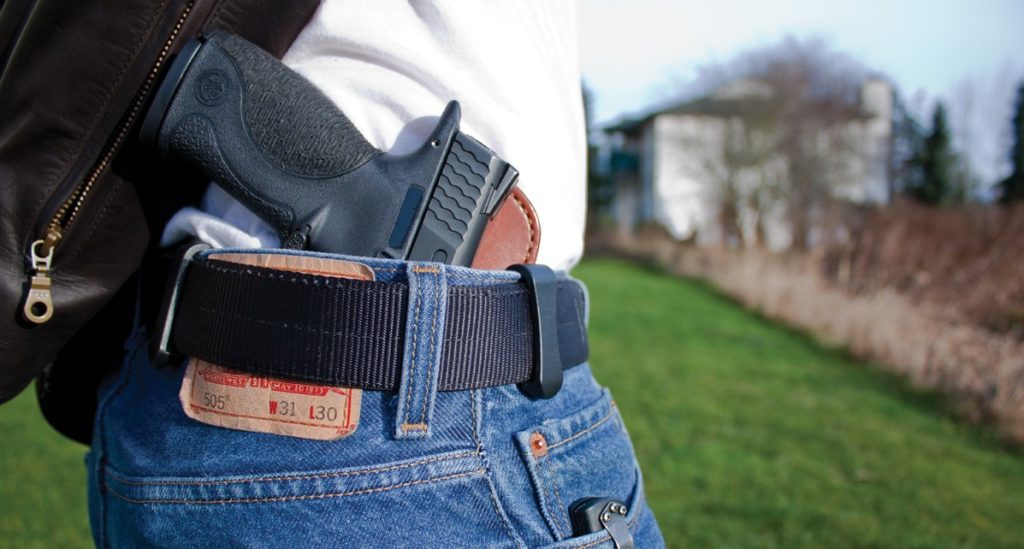
The U.S. House of Representatives voted 231-198 Wednesday to pass a bill that would allow people with concealed carry permits to carry their concealed weapons into other states where concealed weapons are allowed, scoring a major victory for gun-rights supporters. H.R. 38: the Concealed Carry Reciprocity Act allows a person with a valid state-issued concealed firearm permit to carry a concealed firearm in any other state that also issues concealed firearm permits. The bill would also apply for states that allow non-prohibited persons to carry a concealed firearm without a permit. Notably, the bill does not create a national licensing program, but would require states to recognize other states’ valid concealed carry permits. The bill does not allow felons and other prohibited possessors to carry concealed handguns, as they are not legally allowed to have a firearm now, and that does not change under the bill. The legislation, supported by the National Rifle Association (NRA), now faces an uncertain future in the U.S. Senate as eight Democrats most vote in favor of the bill in order for it to become law. Here’s how the Alabama delegation voted: Alabama 1st District U.S. Rep. Bradley Byrne: A citizen’s Second Amendment right should not end when they cross state lines. Under current law, a gunowner is subject to criminal and civil risk by simply exercising their constitutional right to carry their firearm when traveling. With this strong Second Amendment legislation, we can provide much needed clarity and help make our country a safer place. Alabama 2nd District U.S. Rep. Martha Roby Alabama 3rd District U.S. Rep. Mike Rogers As a strong supporter of our Second Amendment rights, I was proud to support the Concealed Carry Reciprocity Act. This common-sense legislation will allow any law-abiding gun owners to concealed carry across state lines without penalty. I am pleased this bill passed the House today. Alabama 4th District U.S. Rep. Robert Aderholt Alabama 5th District U.S. Rep. Mo Brooks Today’s House passage of concealed carry reciprocity is a win both for gun owners everywhere and for the Second Amendment right to bear arms. Constitutional rights don’t end at state lines. This bill helps to ensure that all Americans are able to protect themselves and their families from criminals and terrorists when traveling from state to state. If H.R. 38 is enacted into law, then every citizen’s Constitutional right to carry concealed firearms will be protected and promoted. The Second Amendment is not only a matter of public safety for law-abiding citizens, it is a fundamental part of America’s Bill of Rights. In that vein, I am proud to protect the Second Amendment and promote concealed carry reciprocity Alabama 6th District U.S. Rep. Gary Palmer: As a staunch supporter of the 2nd Amendment, I am a proud cosponsor of and voted in favor of H.R. 38 today. This bill protects the constitutional right for law-abiding citizens to keep and bear arms and ensures that the right does not end when you cross a state line. Overreaching restrictions placed on gun ownership are not only unconstitutional, they inevitably harm law-abiding citizens and do little to dissuade the illegal use of firearms. It is important to note that this bill would not apply to individuals prohibited from possessing a firearm under current federal law. Alabama 7th District U.S. Rep. Terri Sewell
Daniel Sutter: Who are we taxing?
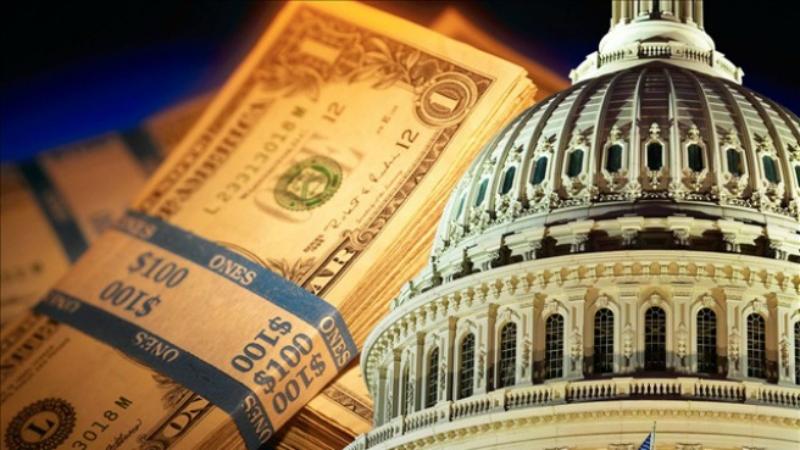
The Senate passed a tax bill last weekend. The details must be ironed out in conference negotiations with the House, but the plan includes a corporate income tax overhaul. This was a campaign promise of President Donald Trump, and is long overdue. The corporate income tax does not apply to all businesses, only those organized as corporations, which include most recognizable national businesses. Washington currently taxes corporate income above a modest threshold at 35 percent, the highest rate of any developed nation. The top rate will fall to 20 percent, in line with other countries. Our rate is high now in part because we are one of three developed nations not to have cut corporate taxes since 2000. The U.S. also currently taxes profits earned by the international subsidiaries of American firms, as opposed to just domestic earnings. The 35 percent rate, less any taxes paid to another nation, essentially applies to all earnings everywhere. The Senate bill would end worldwide taxation. The corporate income tax affects many business decisions. The tax has fueled corporate inversions, which is when an American company reincorporates in another nation. Burger King and Fruit of the Loom, for instance, have renounced their American corporate citizenship. Inversions are for tax purposes and do not move all operations or even the headquarters overseas, but are still troubling. American companies also keep significant earnings overseas, perhaps as much as $2.6 trillion, to avoid our taxes. The Senate bill allows repatriation of these profits with payment of a 14 percent tax. Lowering our top rate and ending worldwide taxation should end this problem. Few companies, though, pay the full corporate tax. The Government Accountability Office found that around 70 percent of all corporations – and 20 percent of the most profitable – pay no corporate tax in a typical year, due to tax breaks. The corporate tax has raised about 10 percent of Federal tax revenue since the 1980s, versus 30 percent in the early 1950s. We do not really rely on the corporate income tax to fund Washington. Modest revenue generation does not imply no harm to our economy. The tax particularly impacts companies unable to secure breaks from Congress. And when CEOs focus on avoiding corporate taxes, they are less likely to improve their products and services or lower costs. A focus on avoiding taxes slows economic growth. Many Americans, I think, still like the idea of making rich corporations pay. Only the corporate tax does not ensure this. Taxes often get shifted, meaning that the people sending a check to the government may not really pay the taxes. Consider the example of gas taxes, which gas stations “pay.” Higher taxes generally increase the pump price, effectively passing on some of the tax to drivers. The potential for tax shifting makes the analysis of who really pays taxes relevant and challenging. Appearances can be deceiving, and politicians count on this with corporate taxes. As Nobel Prize winning economist Joseph Stiglitz writes in a textbook, “Politicians like to give the impression to voters that someone else pays the corporate tax. But the reality is that households, workers, consumers, and investors pay the tax, just as they pay any other tax.” Economists are unsure who really pays the corporate tax, partly because the answer depends on many factors. Candidates include a corporation’s customers, its workers, and investors across the economy. Even if the owners pay, which is likely at least in part, not all stockholders are rich. Many Americans own stocks through pension plans. I personally believe that we should keep taxes and spending low. When we tax ourselves, I think that we should use taxes with clearly understood incidence. This makes the burden of government transparent, encouraging informed decisions by citizens. The corporate income tax fares poorly in this regard. The tax today is like a con game, one riddled with exemptions for privileged firms. Reform is long overdue. ••• Daniel Sutter is the Charles G. Koch Professor of Economics with the Manuel H. Johnson Center for Political Economy at Troy University and host of Econversations on TrojanVision. The opinions expressed in this column are the author’s and do not necessarily reflect the views of Troy University.
Taylor Dawson: Is the American Dream alive and well in Alabama?

A recent Pew Research study found that over 80% of U.S. citizens believe they’ve achieved the American dream, or at least that they’re on the way to doing so. Only 17% of those surveyed said the American dream is “out of reach” for their family. But what about Alabamians? This high level of satisfaction seems like it might not translate in a relatively poor state like ours. U.S. Census data from 2016 indicates that 17.1% of Alabamians live below the poverty line. Based on that, one could reasonably conclude that because the percentage of those living below the poverty line in Alabama almost matches the percentage of those who believe the American dream is out of reach, affluence—or at least living above the poverty line—is the key to the American dream. But it may not be that simple. As the Pew study revealed, 89% of Americans (and Alabamians are likely no exception) agree that wealth is not central to achieving the American dream. There are two big values, however, that were found to be key to its attainment: enjoying fundamental freedoms and having a strong family life. The Pew research found that a whopping 77% agree that the American dream is tied to “freedom of choice in how to live”, and 70% say having “a good family life” is essential to living the dream. Freedom of religion and freedom of expression, including the freedom of speech and press, are protected by the First Amendment. Their preservation simply requires that the government and fellow citizens allow a person to exercise their faith and speak their mind as they see fit. While the freedoms of religion and speech are paramount, other liberties are also essential to the American dream. A large majority of Alabamians embrace the right of a parent to teach their children as they see fit, the principle of free enterprise to engage in business without overregulation and taxation from the government, and the right of a gun-owner to legally purchase and carry a firearm without being treated like a criminal. Needless to say, the survey’s second most agreed-upon basis for achieving the American dream—having a good family life—is far more personal than the protection of various liberties, but no less important. That’s likely the response of those surveyed because they inherently know what research statistically demonstrates. According to Dr. Pat Fagan of the Family Research Council, adults in intact families are statistically more economically productive, and children from broken families learn less, achieve less academically, and drop out of formal education earlier. While financial freedom can certainly make life easier, the ageless adage that money can’t buy happiness seems to hold sway in the minds of most Americans, as it certainly must in the minds of most Alabamians. When it’s all said and done, affluence takes a back seat to the love and security of family in every estimation, and that reaches far beyond the traditional notion of the American dream. ••• Taylor Dawson is Director of Communications for the Alabama Policy Institute (API). API is an independent, nonpartisan, nonprofit research and educational organization dedicated to strengthening free enterprise, defending limited government, and championing strong families. If you would like to speak with the author, please e-mail communications@alabamapolicy.org or call (205) 870-9900.
Birmingham Business Alliance pursuing ‘all-time high’ economic development projects
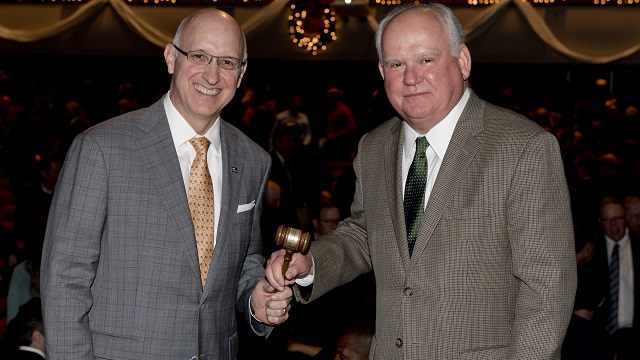
The head of the Birmingham Business Alliance said the metro area is coming off a very successful year for economic development, but the prospects for even more growth in 2018 are “at an all-time high.” BBA CEO Brian Hilson said at the organization’s annual Chairman’s Meeting Tuesday that economic development in the seven-county metro area was very strong in 2017. “So far in 2017, we’ve seen 2,957 jobs and over $560 million in investment announced by 25 different new and expanding companies within our core business sectors,” Hilson said. This year continues a string of successful years for attracting new and expanding industry to the state, Hilson said. “Between 2011 and 2017, we have seen 19,394 jobs and over $3.9 billion in capital investment committed within our seven-county metro area,” he said. That has caused the BBA to be ambitious with its current five-year plan. “At the BBA, we have a goal of 19,000 jobs and $3.5 billion of investment being announced between 2016 and 2020,” Hilson said. “So we’re at the halfway point as we approach the year 2018 and as we continue to execute our five-year strategic plan, which we call Blueprint 2020.” With the current pipeline of potential projects, those numbers could be well within reach. “Our level of project activity is at an all-time high, at least for the six and a half years that I’ve been in Birmingham,” Hilson said in an interview with Alabama NewsCenter. “But probably more important, the quality of those projects and the diversity of skills that they would require of the workforce – it’s not all automotive and it’s not all something else – that’s very encouraging.” Automotive projects dominated the headlines in the metro area in 2017. Commercial truck producer Autocar opened a $120 million plant in Pinson Valley, not far from where auto supplier Kamtek opened a $60 million expansion. Mercedes-Benz announced a $1 billion expansion of its Alabama operations that includes a new $248.2 million campus in Bibb County. Representatives of those three companies as well as Honda’s plant in Lincoln made up a panel discussion of the auto industry and the metro area’s business climate. John Hudson, senior vice president of Marketing and Business Development for Alabama Power, moderated the panel. A shared concern among the panel is that the metro area may become a victim of its own success – namely in a dwindling available workforce. Hilson said the BBA’s Blueprint 2020 calls for at least a 5 percent growth in overall workforce between 2016 and 2020. “What we really want to see, though, is much faster growth than that and for that to happen we will need a higher and better rate of workforce participation, more connectivity between employers and workforces as well as educators and trainers, and, of course, we will need to see our community image continue to get better,” he said. Republished with permission from Alabama NewsCenter.
Baldwin County Board of Education member Angie Swiger resigns
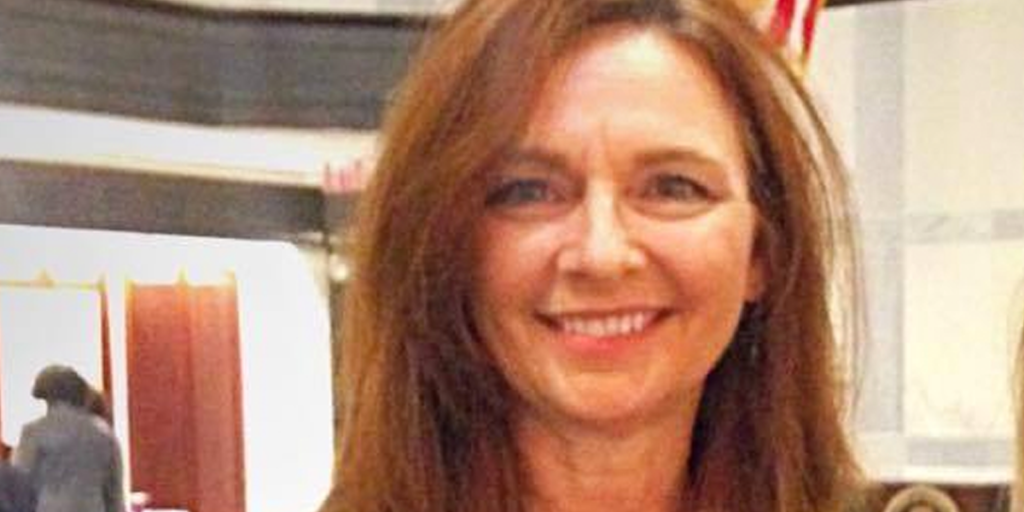
Baldwin County Board of Education board member Angie Swiger resigned from her position as representative of District 5, WKRG reported Tuesday. Swiger is a resident of Gulf Shores and was serving as Vice President and Finance Chair in her second term as the Baldwin County Board of Education District 5 Representative, which encompassed Gulf Shores, Orange Beach, Elberta, and Bon Secour. The board announced her resignation via email Tuesday tonight. “We greatly appreciated Mrs. Swiger’s service to the children and employees of Baldwin County Public Schools,” superintendent Eddie Tyler said. “She has a servant’s heart and a passion for public education. We wish her all the best.” Her term wasn’t up until 2020, according to the board’s website. According to WKRG, Terry Wilhite, Director of Communications for the Baldwin County Public School System, said the board has 30 days to appoint a replacement for Swiger and will advertise for the position accordingly.
Ala. National Guard logistics team called to active duty, to deploy to Afghanistan

The Alabama Army National Guard’s (ANG) Joint Force Headquarters Forward Logistics Team Six based out of Montgomery, Ala. has been called to active duty. 20 ANG soldiers will be deployed to various locations across Afghanistan to teach, assist and advise the Afghan National Security Forces on logistics as it relates to sustaining a force. Each member of the Forward Logistics Team Six team is highly specialized in their functional area and will work with the Ministry of Defense and Ministry of Interior levels of the Afghan government The general public is invited and encouraged to attend the departure ceremony at the Alabama National Guard headquarters building located at 1720 Congressman Dickinson Drive, at 10:30 a.m. on Thurs., Dec. 7. More than 24,000 Alabama National Guard personnel have been called active duty since 9/11. The ANG remains a top contributor among the nation’s National Guard organizations.
Nine tips for keeping package thieves away from the front door this holiday season
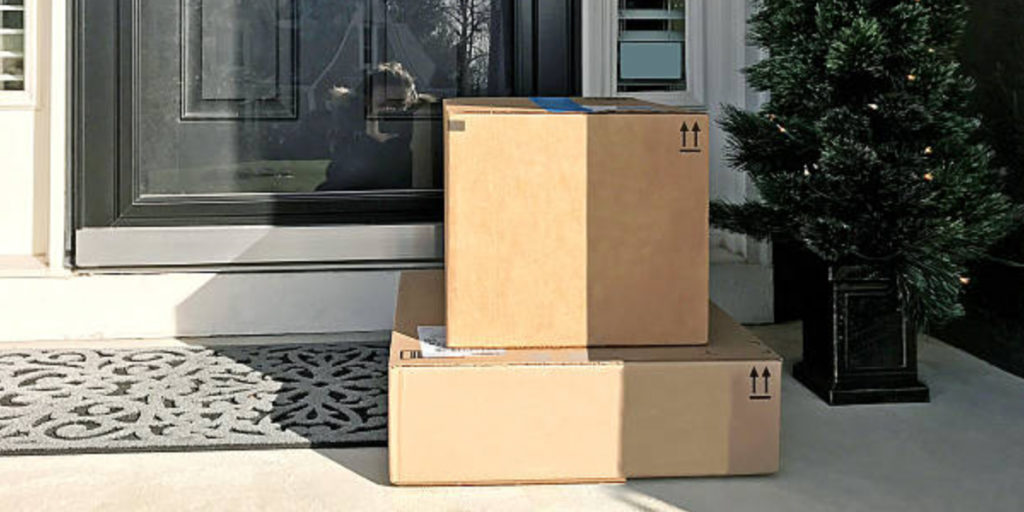
More Americans than ever will be shopping online for gifts this holiday season, avoiding the rush at malls and department stores. In fact, many of those gifts have already been purchased, on Black Friday or Cyber Monday, and will be dropped off this week on front porches and doorsteps across the nation. Online shoppers aren’t the only ones anticipating those deliveries. So are thieves. More than 23 million Americans have already been victims, according to a 2015 report by insuranceQuotes.com. A 2016 report commissioned by the security company August Home and conducted by the research firm Edelman Intelligence estimated that 11 million homeowners were victims of package theft during the prior 12 months. “If a criminal sees a package sitting there on your doorstep, the opportunity is too great. They will steal first and check the value later,” said Officer Brian Hale, a crime prevention specialist with the Hoover Police Department. “We must all try to remove the opportunity that a thief needs to make you a victim.” Here are some tips offered by Hoover Police to help keep your holiday deliveries out of the hands of prowling thieves: Schedule the delivery for a day when you know you will be at home. If that’s not possible, ask a neighbor to pick up your package and keep it until you can retrieve it. Have the package delivered to your work address. But first, be sure your company allows employees to receive personal deliveries. If ordering from a national chain, have the package delivered to pick up at your convenience. Sign up for email or text notification from the courier to let you know when the package has arrived. If available, take advantage of the option that allows someone to sign and acknowledge receipt of a delivery. If no one is at home to sign for the package, it will not be left on the doorstep. Never place a note on the door instructing the courier to leave the package. That’s an open invitation to potential thieves announcing that no one is at home. Install video surveillance of your front porch or entryway, along with a sign stating that your home is under surveillance. Consider installing some of the latest home security products, such as a video doorbell equipped with a camera and intercom system. When someone rings the doorbell, it activates the camera and notifies you on your cell phone. You can have a conversation with the visitor at the door, even if you’re not at home. The person at the door will never realize that you are not at home. If you see something, say something. Be alert for suspicious activity, and call 911 for emergencies. Be prepared to give a description of any suspicious people and vehicles, or anything else that may help the responding officer. “There are many different ways to reduce the chances of having a package stolen,” Hale said. “One tip that doesn’t cost a single dime is simply just being a good neighbor. If you notice that your neighbors have a package on their doorstep, reach out to them and ask if they would like for you to hold onto it until they get home. If you do that, not only have you helped out your neighbors, but you’ve also taken an active role in reducing crime in your neighborhood. Sometimes it’s the little things that have the biggest impact.” Republished with permission from Alabama NewsCenter.
