
Alabama Power wins top EEI awards for fall hurricane restoration
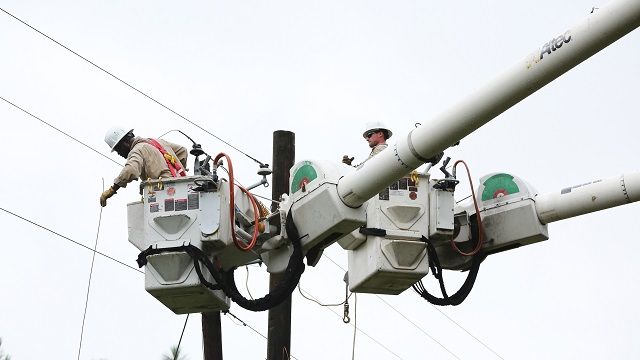
Restoring power outages in the wake of three back-to-back hurricanes seems almost impossible. But Alabama Power employees were up to the challenge last fall when they traveled hundreds of miles to get the lights back on after hurricanes Harvey, Irma and Nate. In recognition of employees’ tireless efforts, the Edison Electric Institute (EEI) announced today that Alabama Power has once again earned two of its prestigious Emergency Response awards. Alabama Power received EEI’s Recovery Award for quickly restoring service to Alabama customers after Hurricane Nate and the Assistance Award for coming to the aid of peer utilities following Harvey and Irma. EEI’s Emergency Response Awards recognize electric utilities that go the extra mile to restore service after storms or other natural disasters. Through the years, Alabama Power has received 19 EEI Recovery and Assistance awards – more than any other utility within the Southern Company system. The tireless work by Alabama Power crews during Hurricanes Harvey, Irma and Nate exemplify our industry’s commitment to customer service,” said EEI President Tom Kuhn. “Your crews worked diligently and often in dangerous conditions to restore service to customers safely and as quickly as possible. The dedicated crews of Alabama Power are very deserving of these awards.” “We know that customers depend on us to keep the power on, so we work hard every day to be ready for any situation,” said Mark Crosswhite, Alabama Power chairman, president and CEO. “Everyone at Alabama Power is committed to putting customers first, and we are honored to be recognized by EEI.” Employees first stepped into action when they traveled to Houston in late August to assist CenterPoint Energy after Hurricane Harvey, which dropped more than 40 inches of rain on eastern Texas before it exited the state. A team of 25 specially trained employees were dispatched to the area with airboats, drones and other equipment to help with power restoration in heavily flooded areas. It was the first time that Alabama Power had used airboats or drones to help in out-of-state restoration efforts. Only days after returning to Alabama, employees were called on again to assist neighboring utilities. In the wake of Hurricane Irma, they first restored service for more than 71,000 customers at home, and then hit the road to assist in responding to massive outages caused by Irma in Georgia and central and south Florida. More than 2,300 employees, support personnel and contractors helped Georgia Power Sept. 13-17 respond to the largest number of outages in Southern Company history, with more than 1 million customers in the dark due to Irma. In addition, Alabama Power customer service representatives worked from their home base, answering overflow calls from Georgia Power customers. After the Georgia Power outages were restored, a smaller team of about 980 employees and contractors headed south to Florida On Sept. 17. There, they worked for the next seven days assisting Florida Power and Light in restoring service to the more than 400,000 customers who were still without power. While in Florida, Alabama Power employees worked mostly in the hard-hit areas of Palmetto, Bonita Springs, Fort Myers and Naples. When Hurricane Irma swept through the state, it knocked out power to 4.5 million customers and caused widespread damage. Employees and contractors were soon on the road again, but this time, it was to respond to outages at home caused by Nate. The hurricane made landfall in Mobile on Oct. 7, bringing high winds, storm surge and causing substantial damage in the Mobile area. It then swept northward, leaving more than 162,000 customers in all six divisions without power. As soon as conditions allowed, Alabama Power linemen, evaluators and support personnel, along with crews from 11 other utilities, began responding to outages and continued for three days until power was fully restored. “Our employees are effective in restoring power because they have the best training and skill set in the industry,” said Scott Moore, Alabama Power senior vice president of Power Delivery. “They take great pride in responding to storms and in delivering a level of customer service that is incredible.” “Likewise, like it or not, we are in an area of the country where storms are almost routine,” he continued. “Our employees get to practice their skills, and because they are so effective, it is not uncommon for other utilities to call and request our assistance in supporting their own restoration efforts.” Alabama Power received the Emergency Recovery and Assistance awards at the EEI Winter Board and Chief Executives meeting in Scottsdale, Arizona, on Jan. 9-11. A Recovery Award also went to Georgia Power for responding quickly to outages caused by Irma. Additionally, Gulf Power and Mississippi Power were recognized with Assistance Awards for out-of-state restoration efforts following Irma. “I am very proud of the work our employees engage in on a daily basis, but even more so when our folks respond to storms and natural disasters,” Moore said. “The skills and professionalism these employees display in responding to storms is truly remarkable. To have recognition at the industry level of the hard work our employees perform during challenging times is a true honor.” Republished with permission from the Alabama NewsCenter.
Montgomery makes NY Times’ global list of 52 places to visit in 2018
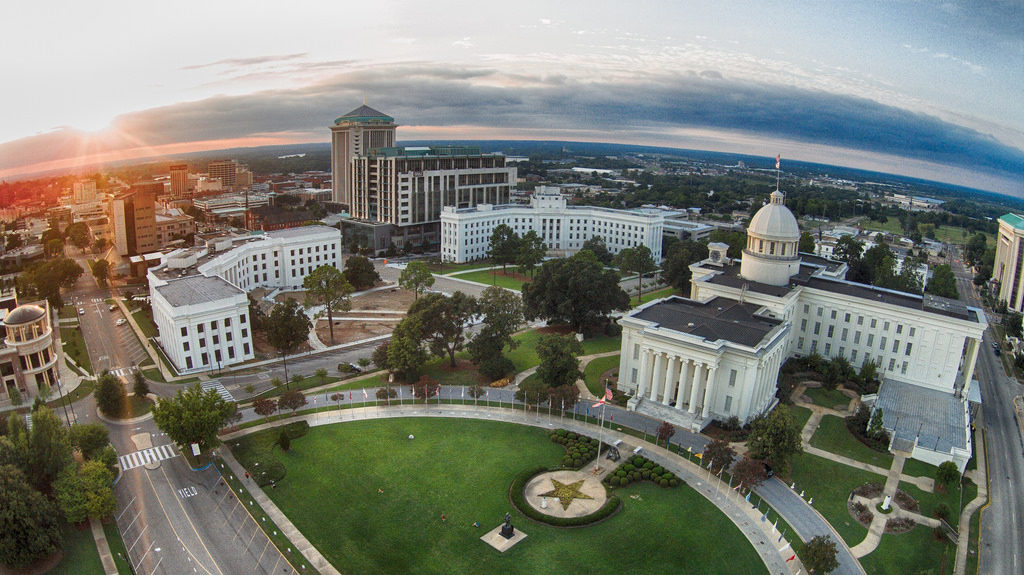
Looking to travel in 2018? There are thousands of getaways across the globe to explore, which is why The New York Times curates an annual list of 52 suggestions as “a starter kit for escaping into the world” to inspire travelers for the new year, and Alabama’s capital city is among them. Coming in at the 49th spot, Montgomery, Ala. joins a handful of other American cities that are listed amongst dozens of international must-sees such as Colombia (“With the war finally over, the entire country is opening up”), Basilicata, Italy (“caves, beaches and more in Italy’s secret southern region”) and Kuélap, Peru (“new access to the fortress in the clouds). The Times cited the city’s upcoming National Memorial for Peace and Justice, the nation’s first memorial dedicated to lynching victims and a new museum dedicated to slavery which opens in the spring, as the top reason to travel to Montgomery this year. A monument to the victims of racial terror rises in a Confederate capital. A number of monuments in Montgomery hail the Confederacy. Come April, one new memorial will speak for the victims of slavery and prejudice. On a hilltop overlooking the city, the National Memorial for Peace and Justice from the nonprofit Equal Justice Initiative will consist of 800 suspended columns etched with the names of over 4,000 victims. Another 800 columns, dedicated to the counties where lynchings occurred, will lie in an adjacent garden until claimed by and erected in those counties.— Elaine Glusac It’s safe to say, the list of “52 Places to Go in 2018,” is finally a list Alabamians can be proud to be a part of.
Five issues to watch Alabama lawmakers tackle in 2018
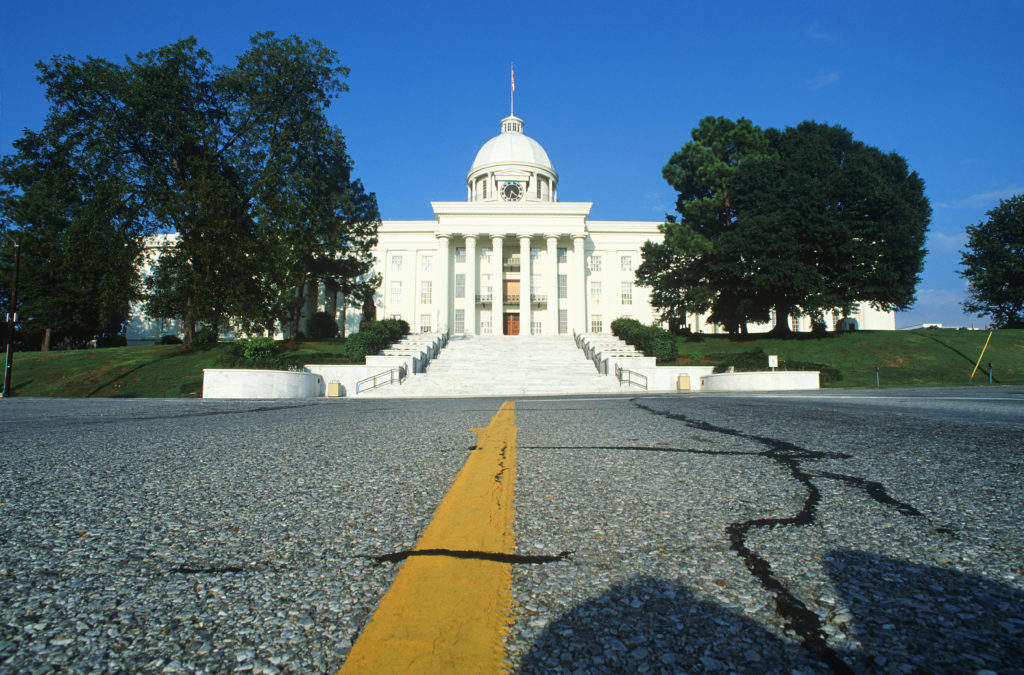
Alabama lawmakers began the 2018 legislative session on Tuesday. Throughout the 30-day session, they’ll endeavor to tackle a hefty list of policy changes on topics ranging from prison reform to opioid treatment — if they can focus on the issues plaguing the state and past their own reelections. Here are five top issues lawmakers will be faced with in 2018: 1. Drug addiction and the opioid epidemic Hundreds of thousands of Americans have lost their lives in recent years due to drug abuse, and the problem only seems to be getting worse. In 2016, more than two million Americans had an addiction to prescription or illicit opioids. In Alabama, a total of 736 people died in 2015 from drug overdoses. Of those, a total of 282 – 38 percent – were caused by opioids, according to a Kaiser Family Foundation review of CDC data. The Alabama Opioid Overdose and Addiction Council, formed by Gov. Kay Ivey, is working on recommendations to present to the state Legislature for strategies to reduce the number of deaths and other effects caused by opioid misuse in Alabama. 2. The federal order to tackle prison reform In June, a federal judge declared the mental health care system in Alabama prisons to be “horrendously inadequate” – an unconstitutional failure that has resulted in a “skyrocketing suicide rate” among prisoners. In an order, U.S. District Judge Myron H. Thompson directed state officials to reform the system and address overcrowding. The Alabama Department of Corrections is seeking a $30 million supplement to its budget this year and a $50 million increase for next year — an additional $80 million over the next two years — to increase the number of corrections officers, potentially up to 1,000, and pay for an expanded medical and mental health care for prisoners. 3. Children’s health insurance Congress has failed to reauthorize funding for the Children’s Health Insurance Program (CHIP), better known as ALL Kids in Alabama, which provides subsidized health insurance for children in low-income families. For the past two years, the state has fully paid for the program through federal funds, if Congress decides not to fund it in 2018, Yellowhammer State legislators would need to appropriate a whopping $53 million in state funds to keep the program afloat. Ozark-Republican and House Ways and Means Chairman Steve Clouse has gone on record saying that if the state has to pick up even a fraction of the cost of program, it will cast a “shadow” over the entire budget. 4. Pay raises for state employees In her State of the State address, Gov. Ivey proposed pay raises for both teachers and state employees. While she did not specify how much of an increase she’d propose, but budget numbers released earlier Tuesday suggest a 2 to 3 percent increase. State employees have not received a cost-of-living increase since 2009, but lawmakers have shied away from a pay raise in recent years due to the perennial budget shortfall in the state General Fund. 5. Juvenile justice reform Alabama’s juvenile justice system may soon see some improvements following a comprehensive review by a group of legislators, judges, law enforcement officials and others. The inter-branch, bipartisan Juvenile Justice Task Force released a set of policy recommendations to Ivey and other state leaders last month that are expected to form the foundation for statutory and budgetary changes that will be considered in the legislative session. The recommendations are intended to decrease crime, lower costs for taxpayers, and create better outcomes for Alabama’s youth and families. Juvenile justice reform is one of Ivey’s top priorities.
Officials react to Alabama Toyota-Mazda plant announcement
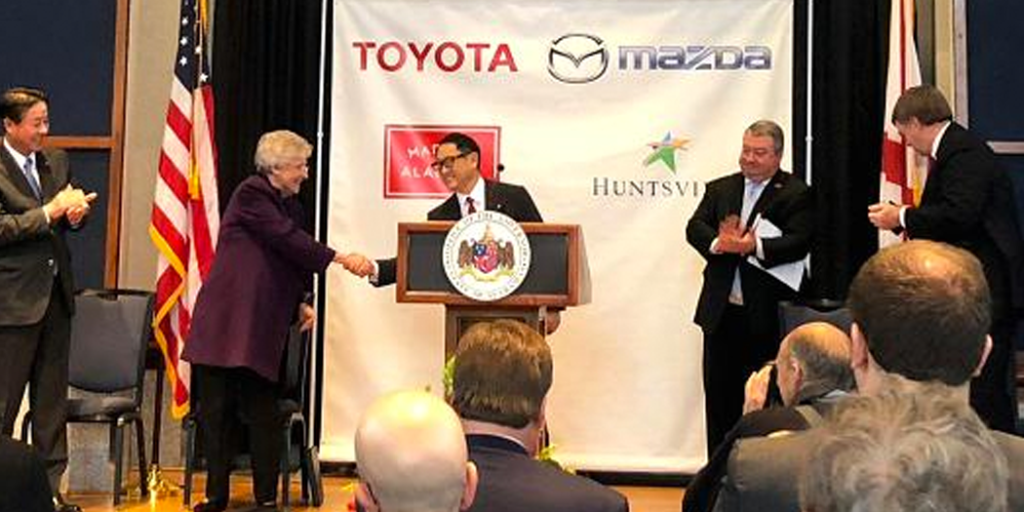
It’s now official — Huntsville, Ala. has been selected by Toyota Motor Corporation and Mazda Motor Corporation as the site of their new $1.6 billion joint-venture auto manufacturing plant. The announcement was made Wednesday afternoon from the Alabama State Capitol building in Montgomery by Governor Kay Ivey, Huntsville Mayor Tommy Battle, and executives from both Toyota and Mazda. The Huntsville-Madison County Chamber of Commerce, as well as leaders from multiple municipalities, joined the event. The new plant will have the capacity to build 300,000 vehicles annually, with production split evenly between two lines for each company to produce a new Mazda crossover model that will be introduced to North American markets and the Toyota Corolla. The facility is expected to create 4,000 jobs and production is expected to begin by 2021. Here’s what Alabama officials had to say of the news: Gov. Kay Ivey: The partnership between Toyota and Mazda will expand innovative automotive manufacturing in Alabama. Their decision to locate this new facility in Huntsville is a testament to the talented workforce in our state. We are proud that this partnership puts Alabama on the forefront of technology in this dynamic global industry. U.S. Sen. Richard Shelby: I am extremely proud that Huntsville was selected by Toyota and Mazda for the joint auto production plant. This facility will create thousands of jobs and strengthen economic growth throughout our state and region. Alabama has a proven track record of creating an environment where world-class manufacturing operations thrive. Today’s announcement speaks volumes about the capabilities and effectiveness of our state’s skilled workforce, highlighting the continued truth that Alabama is open for business. U.S. Sen. Doug Jones: The Toyota and Mazda decision to select Huntsville as the new location for their joint auto plant is both a testament to Northern Alabama’s exceptional advanced manufacturing workforce and further proof that choosing common ground over divisiveness will drive business to our state. Today’s announcement is a tremendous step forward for Alabama’s growing technology sector and our ability to recruit quality businesses in the future. We must build on this momentum, and continue to focus our efforts on issues that affect hard-working Alabamians like creating good-paying jobs and providing students with the tools to attain them. Alabama 2nd District U.S. Rep. Martha Roby: The news that Toyota and Mazda have chosen Alabama as this new plant’s home highlights once again that our great state is open for business. The decision by these companies is truly a testament to our impressive, skilled workforce and our state’s business-friendly environment. This exciting investment in North Alabama not only comes with 4,000 new direct jobs, but also an economic impact that will be felt across the state for many years to come. Alabama 5th District U.S. Rep. Mo Brooks: Toyota and Mazda’s decision to locate in Limestone County is great news for Alabama and the Tennessee Valley! I’m thankful Alabama was selected despite fierce competition from other states vying for this plant. Toyota and Mazda’s decision validates what many of us in Alabama already know. Alabama is not only America’s #1 football state, we are also on a path to be America’s #1 automotive production state. That is a strong testament to the quality of the location, resources, people and government leadership that Alabama offers. The Tennessee Valley did not win the Toyota and Mazda competition overnight. Rather, this victory is the culmination of decades of hard work and leadership offered by local, state and federal officials who have consistently worked together to make the Tennessee Valley a great place to live and work, a place that encourages companies like Polaris, Remington, and now Toyota and Mazda, to rank the Tennessee Valley #1 in America. Alabama 6th District U.S. Rep. Gary Palmer: Toyota and Mazda made a tremendous decision in choosing Alabama for their new, cutting-edge manufacturing plant. I am pleased this new facility will eventually bring 4,000 new jobs and significant economic growth to our state. The fact that Toyota and Mazda picked Alabama is indicative of the hard work and commitment Alabama has made to become the pacesetter in the automobile manufacturing industry. Alabama 7th District U.S. Rep. Terri Sewell: I am thrilled to hear that a Toyota-Mazda automobile plant will be finding a home in the great State of Alabama. I’m proud to see Toyota-Mazda investing in our state’s workforce and continued economic development. This joint venture between Toyota and Mazda will eventually produce 300,000 vehicles a year and create as many as 4,000 jobs opportunities for families in our State. Investments in new technologies and facilities like these are imperative to Alabama’s growing economy. As a Member of Congress, I believe we must strive to create a more job-ready workforce to continue to keep Alabama competitive and entice new business development across the State. Huntsville Mayor Tommy Battle: With this announcement, our world changes overnight. Toyota and Mazda, two of the world’s most innovative automakers, have created a legacy project that will provide jobs for decades to come for Huntsville and Alabama. Limestone County Schools Superintendent Tom Sisk: Because we have been a part of the process from the beginning, our school system has been working diligently behind the scenes to develop a series of plans that will be presented to the school board for consideration. These plans will address contingencies for anticipated growth, and expanded academic offerings for our students and others to prepare to meet the needs of this economic expansion. Madison County Commissioner Dale Strong: Today’s monumental announcement by President Akio Toyoda of the Toyota Corporation and President and CEO Masamichi Kogai of the Mazda Corporation is not a new commitment, but a continued commitment with proven world leaders in automotive ingenuity to the State of Alabama and our people. This project once again demonstrates that our regional, advanced manufacturing workforce is perfectly positioned for today and future generations.
Kimber to open Alabama firearms manufacturing facility with 366 jobs

American firearms manufacturer Kimber Manufacturing, said Tuesday that it’s opening a new manufacturing plant in Troy, Ala., where it expects to employ 366 workers. The company said it will invest $38 million in the production facility over the next five years. “Due to an unprecedented year-over-year growth in demand, every time the company has embarked upon a planned expansion, the newly created capacity is exhausted before the expansion is complete,” said James Cox, Kimber’s chief financial officer. “As we continue to move into uncharted waters in regards to Kimber product demand, it was important to us to build a facility that will allow us to secure a significant new plateau of capacity.” Alabama Gov. Kay Ivey says Kimber’s investment in Troy will create a significant number of high-paying design engineering and manufacturing jobs. “With talented Alabamians already manufacturing a wide range of high-quality products that are in demand around the globe, the state can offer Kimber an ideal business environment and a skilled workforce for its expansion project,” Ivey said. “Kimber’s investment in Troy will create a significant number of high-paying design engineering and manufacturing jobs, and we are committed to helping the company find long-lasting success in Alabama.” Once a small manufacturing company based in Yonkers, N.Y, Kimber has grown rapidly over the past 21 years. The new manufacturing facility in Troy will be Kimber’s sixth U.S. location. “We are pleased with the impressive track record that Alabama has with attracting and retaining world-class manufacturing companies,” said Leslie Edelman, Kimber’s president and chief executive officer. “Growing our company intelligently depends significantly on being in the right manufacturing environment, and in Troy, we have a community dedicated to our long-term success. Working with the Alabama Department of Commerce as well as Mayor Jason Reeves and his team has been a pleasurable and rewarding experience.” Greg Grogan, Kimber’s chief operating officer, said the company will build a large, automated, state-of-the-art design engineering and manufacturing facility in Troy to support Kimber’s strategic growth plans. It should be operational by early 2019. “We will be building a large, automated, state-of-the-art design engineering and manufacturing facility in Troy to support Kimber’s growth plan and strategy,” said Grogan. “Troy offers us expansion with a passionate workforce, affordable utility costs, a pro-business environment, experienced local training support, and long-term incentives from the State of Alabama and the City of Troy alike. This expansion, in conjunction with our existing manufacturing facilities, talented and experienced employees, and best-in-class products provides for exciting times here at Kimber.” “This is a dream come true for the City of Troy and for me personally; a firearms manufacturing company with such a stellar brand as Kimber, creating jobs and capital investment for the community,” City of Troy Mayor Jason Reeves added. “Troy has a strong manufacturing base and Kimber will certainly, positively add to that.”
House Cmte approves bill authorizing gubernatorial appointments, eliminating special Senate elections
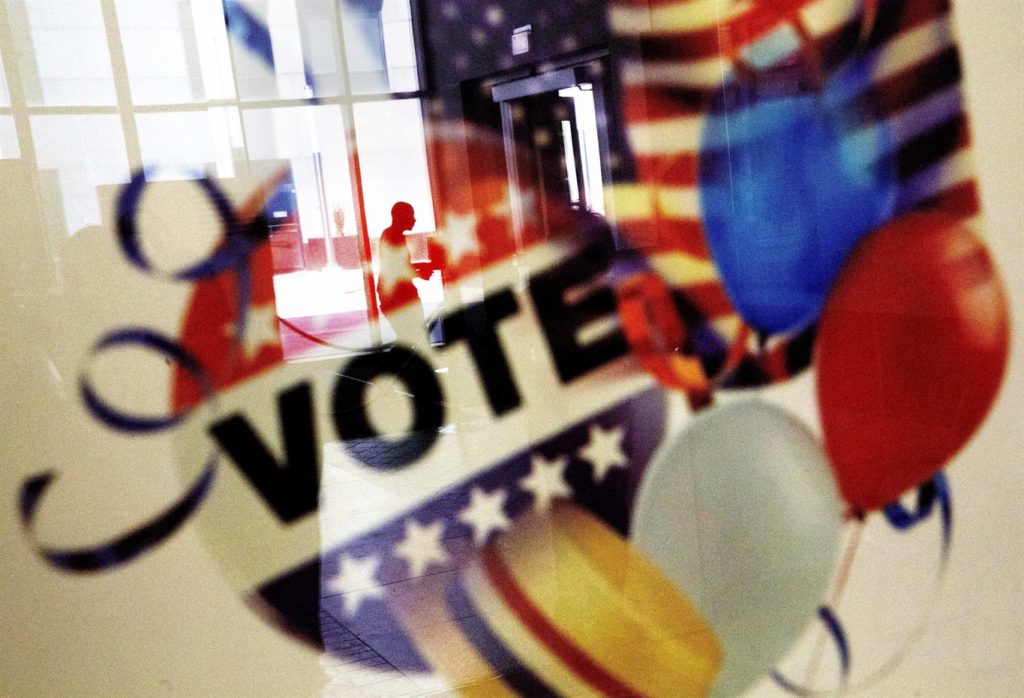
A bill intended to save taxpayers the cost of another special election should a vacancy occur in the U.S. Senate, passed an Alabama House Committee Wednesday morning. The House Constitution, Campaigns and Elections Committee approved HB17 by voice vote. If passed by the Legislature, the bill would allow the governor to appoint an temporary replacement to a vacant Senate seat, followed by an election that would coincide with the next general election occurring more than one year after the vacancy occurs. The state holds general elections every two years. “What this bill simply does is set any U.S. Senate vacancies for regularly scheduled elections every two years,” the bill’s sponsor Ozark-Republican State Rep. Steve Clouse said before the Committee vote. The bill would amend Section 36-9-7 of, and to repeal Section 10 36-9-8 of, the Code of Alabama 1975. Under current law, when a vacancy in the U.S. Senate occurs the governor appoints an interim replacement and then schedules a special election. It comes in the wake of the 2017’s controversial scheduling of a special election after former Sen. Jeff Sessions vacated the seat to become U.S. attorney general. HB17 now moves to the full House for further consideration.
Daniel Sutter: Lessons from lottery jackpots

Did you win the recent Mega Millions or Powerball $400 million jackpots? If not, perhaps you are lucky, since big jackpots often make people miserable. The “lottery curse” and related research findings suggest that perhaps we should rethink our economic priorities. We all know what we would buy with some extra money, so a big jackpot presumably would be much better. Furthermore, the rich and famous look to be having lots of fun. So winning millions should be great, right? And yet many lottery winners end up destitute, in prison, or dead. Although the murders are tragic, I am more interested in the personal or financial wounds lottery winners experience. Cases like Mr. Jack Whittaker, who won $315 million in a West Virginia lottery in 2002. Four years later, Mr. Whittaker was bankrupt, and his daughter and granddaughter died of drug overdoses. In an interview, Mr. Whittaker said that he wished he had thrown the winning ticket away. Additional sad stories abound. Yet with lottery jackpots every week, there are thousands of winners. Dozens of sad stories do not demonstrate a pattern. Research on lottery winners reveals some interesting results. For example, many lottery winners do not go on wild spending sprees. Winners most commonly purchase houses and cars, and give significant amounts to their children and churches. Half or more of winners keep working, although this depends on the winner’s job. Winners with low paying, low skilled jobs are more likely to quit, while professionals with rewarding jobs frequently keep working. Surprisingly, however, lottery winners are not significantly happier than control groups. In happiness research, people answer a question of the form, “Overall, how happy are you in life?” on a numerical scale. Lottery riches do not raise these scores. Cross-country happiness research additionally finds that the richest nations are not the happiest. Prosperity and happiness are correlated, but at a reasonably high level of wealth, more money does not increase happiness. These findings suggest that perhaps economic growth should no longer be an important goal for our economy. To appreciate the current importance of growth, the lack of a year with three percent growth under President Obama has caused great concern. And the recent Republican tax reforms were sold as potentially spurring growth. Deemphasizing growth could have numerous implications for policy. High marginal income taxes on top earners are currently viewed as reducing work effort and slowing growth. But if some people pursuit raises at the expense of life balance and happiness, the high tax rate could increase happiness by making raises less rewarding. The “lottery curse” and happiness research do not, I think, justify a rethinking of economic policy. Psychologists recognize that people adjust their baseline after improvements. We quickly take smart phones and flat screen TVs for granted. We often fixate on that next thing we want. Answers to happiness surveys likely reflect the frustrations without adequate contemplation of the values. And even if new products quickly get taken for granted, going back to old ways may be quite unpleasant. Most of us recognize that money is just a means to an end, and that having more money does not automatically makes us happier. Money cannot tell us what will make us happy. And we appreciate the numerous tradeoffs between money and happiness. High paying jobs often involve lots of time, travel, and stress, which can impact an entire family. Many people pass up a high salary for a job or a lifestyle of their choosing. A free economy and society enables human happiness. Economic freedom allows us to make decisions about things that matter. It is the freedom to earn a living in whatever field we choose, to start a business, live where we want, and even make less money. It is not a coincidence that the Declaration of Independence included the “pursuit of happiness” among our fundamental liberties. No one or thing can give us happiness, even Powerball. Perhaps lottery jackpots, though, can help us relearn a lesson America’s Founders knew long ago. ••• Daniel Sutter is the Charles G. Koch Professor of Economics with the Manuel H. Johnson Center for Political Economy at Troy University and host of Econversations on TrojanVision. The opinions expressed in this column are the author’s and do not necessarily reflect the views of Troy University.
Top five takeaways from Kay Ivey’s State of the State address
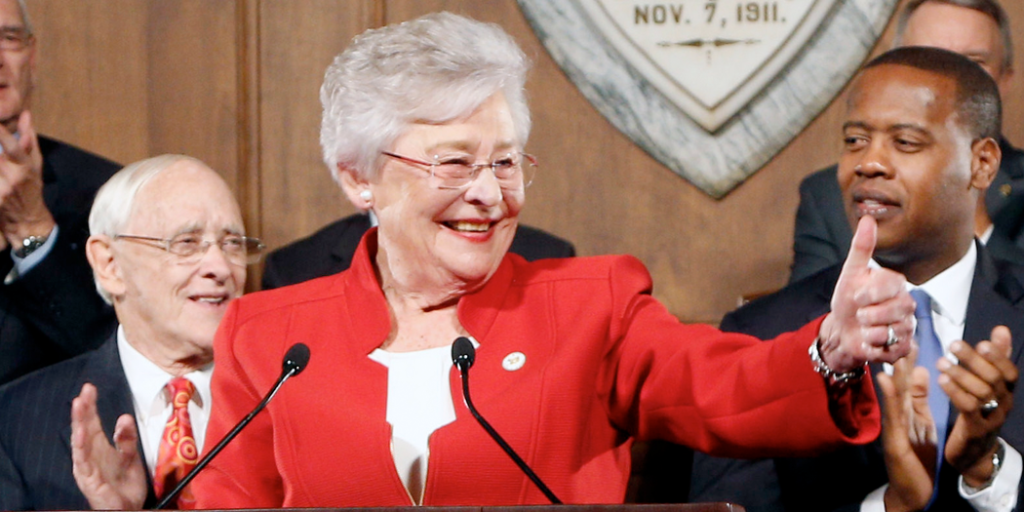
Kay Ivey delivered her first State of the State address Tuesday night before a joint session of the Alabama Legislature. Here are the top five things you should know from her 40-minute speech from the state Capitol: 5. Ivey reacted to the Monday night’s college football national championship game the way we all did “What a game,” Ivey said as she began her speech, referncing the overtime nail-biter of a game featuring the University of Alabama Crimson Tide defeating the University of Georgia Bulldogs 26-23. 4. She says the dark cloud over the state has been lifted, the ship of state steadied Ivey became Alabama’s 54th governor in April, following the resignation of scandal-embroiled former Gov. Robert Bentley amid allegations he abused his power to cover up evidence of an alleged affair with an top advisor. Suffice to say, she had her hands full in trying to turn the ship of state around, considering the Yellowhammer State had seen more crises in the past 12 months than one could count. “A lot has happened since then,” Ivey said. “We have lifted the dark cloud, wounds have started healing, and the people’s faith in a government ‘for and by the people’ is being restored.” “The ship of state has been steadied. Together, let’s move it in a new direction toward progress and sustainability,” she added. “I am honored to be at the helm of this magnificent ship we call Alabama, which benefits from a strong and committed crew, the good people of Alabama. 3. She supports pay raises for state employees Ivey said her budget proposals would include pay raises for teachers, school employees and other government workers. “Every day, we depend on state employees,” she said. “Whether it’s a state trooper patrolling our highways, a teacher staying late to help a struggling student, or a social worker rescuing an abused child, quality state employees are essential to good government. It is long-past time for us to honor their service with better pay.” Ivey did not specify how much of an increase she’d propose, but budget numbers released earlier Tuesday suggest a 2 to 3 percent increase. 2. She’s forward-thinking in educating children Ivey announced the creation of a new school in the Rocket City that will educate high school students about cybersecurity. “Tonight, I am announcing, the formation of the Alabama School of Cyber and Engineering, which will be based in Huntsville,” she said. “This school will prepare some of our state’s highest-achieving students to enter the growing fields of cyber technology and engineering. Just as Huntsville has always been on the leading edge of the rocket and aerospace industries, the Alabama School of Cyber and Engineering will ensure that Alabama students are at the forefront of today’s emerging technologies.” 1. The unemployment rate has fallen every month she’s been in office Alabama’s unemployment rate dropped to its lowest rate in a decade in the months since Ivey assumed office. November saw a record-low 3.5 percent. “The unemployment rate has fallen every month since I became governor,” Ivey said. “What we are doing is working, and as a result, the people of Alabama are working and providing for their families.”
Not all college football programs can afford to compete with Alabama Crimson Tide, others

University of Idaho President Chuck Staben was home with his family in Boise on New Year’s Day when he got an angry message from an alumnus. “Are you watching the Rose Bowl?” it read. “That’s the sort of experience Idaho had before you made your awful decision.” Almost two years after Staben announced that the Vandals would no longer compete in college football’s top division and a month after the school won its final Football Bowl Subdivision game, the angry messages haven’t disappeared. Neither has Staben’s conviction that lower-stakes football is the right thing for his school. “There is this hyper-polarization between the haves and the have-nots,” said Staben, whose team will compete next year in the Football Championship Subdivision. “We’re not deciding between the Rose Bowl and FCS. We’re deciding between being a marginal FBS program and FCS.” The University of Alabama will play the University of Georgia tonight for college football’s national championship, a matchup fueled by rabid fans, talented players and hundreds of millions of dollars. Both schools are among the 15 highest-earning university athletic programs. Alabama athletics, which has won four of the past eight football championships, generated $161 million in revenue in 2015-16; Georgia took in $120 million. Idaho, meanwhile, brought in $10 million across all of its sports, enough to cover less than half of its budget. The rest came from the broader university and student fees. The Rose Bowl experience was a fantasy, and Staben knew it, even if some alumni didn’t. “That isn’t by any means the kind of thing the University of Idaho is likely going to attain,” Staben said. “It’s a totally different league, and you and I and all reasonable people understand that.” Though no university has copied Staben’s move, schools across the country are closely following Idaho’s transition. Staben said presidents at other schools have called to say they admire his courage. Some would love to do the same, they tell him, but they’re too worried about the outcry from alumni. The backlash is real. Angry fans published Staben’s home address online, and he said his car and his wife’s were vandalized. Two major donors to the athletic department withdrew their support. Overall donations dropped around 50 percent, and Staben estimates that the department will lose more than $1 million this year. Longer term, however, he’s betting the school comes out ahead. His department can now offer fewer sports, spend less on travel and award fewer scholarships. There’s less pressure to spend lavishly on football coaching staffs and state-of-the-art practice facilities. “We’re now considering whether we can offer student athletes the chance to study abroad. Can you give them time off from sports to pursue other interests?” Staben said. “I don’t think you’ll see people doing that at the FBS level.” Staben sees an opportunity in basketball, a cheaper sport with its own national stage in the NCAA Tournament. The school is raising money to build a $45 million arena and this week announced a $10 million naming-rights agreement with Idaho Central Credit Union. Funds now stand at $34 million, and despite anger over his football decision, Staben believes the donors will fully fund the project. “Our future is really, really bright,” Athletic Director Rob Spear said at the announcement. So far, Idaho remains an outlier. The FBS continues to grow, creating a glut of schools at the bottom of the division. Of the 112 public universities in the FBS last year, 45 generated less than $20 million directly from athletics. The average Southeastern Conference school generated $131 million. All but a handful of athletic departments need money from the institution to balance their budgets. Those numbers are jarring to Russell Wright, founder and managing director of Atlanta-based Collegiate Consulting, which advised Idaho on its decision. Wright’s company is now gently reaching out to some schools at the bottom of FBS, asking if they might be interested in research on what life would look like in a lower division. “Some of these athletic directors have their heads in sand a bit, but I guarantee that presidents at some of these schools are watching,” Wright said. “When you’ve got a $30 million budget, and your football program goes 4-8 every year, and attendance is 5,000 a game, that’s unsustainable.” Republished with permission from the Alabama NewsCenter.
Steve Flowers: History will record Richard Shelby as Alabama’s greatest senator
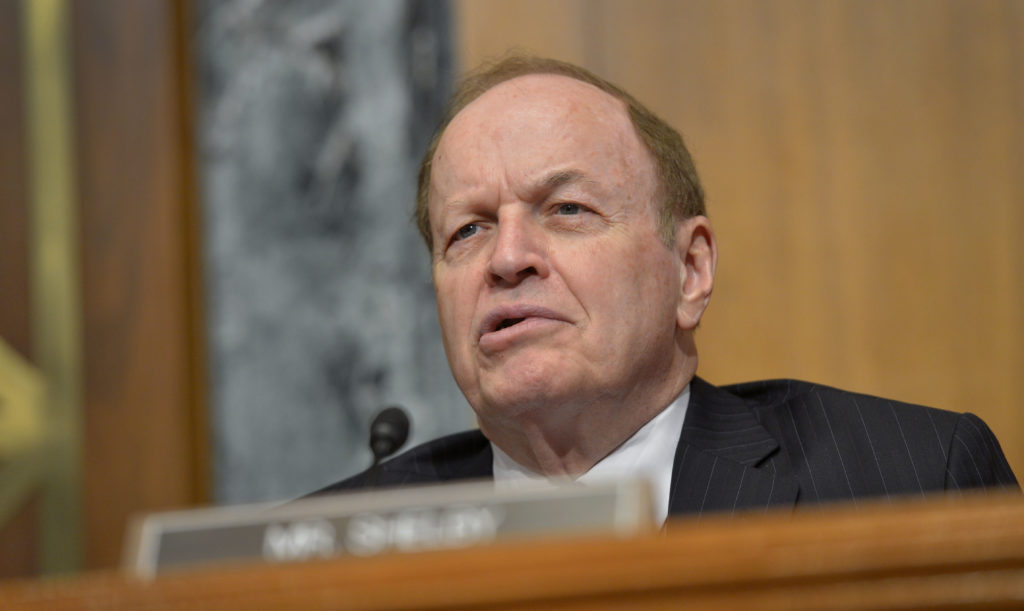
A few months back the Jefferson County Republican Party honored our Senior U.S. Senator, Richard Shelby. It was held at The Club in Birmingham. The view from atop Red Mountain from this elegant club is spectacular, especially at night from the ballroom. The glass enclosure allows you to see the grandeur of the Birmingham skyline. As you glimpse at the scene you can see many of the buildings that are the heart of the University of Alabama/Birmingham. As the tribute to Shelby began, I looked out over the night sky and caught a glimpse of the $70 million Shelby Biomedical Research building. I thought how appropriate that they were honoring a living legend in Alabama political history. Senator Shelby has been an integral part of the growth and expansion of UAB. The UAB Medical Complex and Research Center is now Jefferson County’s premier economic engine and employer. In fact, UAB and the Redstone Arsenal in Huntsville are Alabama’s crown jewels now and for the future. It could be said that UAB and the Redstone Arsenal have flourished because of Richard Shelby and his prowess at bringing home the bacon to Alabama over the past 30 years. In my book, “Six Decades of Colorful Alabama Political Stories,” which was published several years ago, I have a chapter devoted to and entitled “Alabama’s Three Greatest Senators.” Two of those Senators served as a tandem in Washington during the 1940’s, 50’s and 60’s. Lister Hill and John Sparkman were powerful and revered statesmen. Hill, a Montgomerian, served in the U.S. Senate for 30 years from 1938 to 1968. He was a congressman from the second district for 12 years prior to going to the U.S. Senate during the FDR New Deal. Prior to becoming a U.S. Senator, John Sparkman was a congressman for eight years from his native Tennessee Valley. When he retired in 1970, he had been in the Senate for 32 years – the record for an Alabama U.S. Senator. Sparkman is the father of the Redstone Arsenal in Huntsville. In fact they ought to name Huntsville Sparkmanville. Lister Hill whose legacy was in health care was the Father of UAB. Senator Shelby has sustained these two giant legacies. He has used his power and influence to fuel the continued growth of these two pivotal cogs in Alabama’s economic engine. They are both reliant on Federal dollars which Shelby has supplied. Hill and Sparkman were both University of Alabama graduates. Law school and undergraduate. They both were Student Government Presidents. Shelby was also a product of the University of Alabama. He was a Tuscaloosa lawyer prior to going to Congress in 1978. He had served eight years in the State Senate prior to his departure for Washington. He served eight years in Congress prior to being elected to the U.S. Senate in 1986. He was reelected to his sixth six-year term last year. This time next year, he will surpass John Sparkman’s 32 years in the Senate and will have the record for longevity in the U.S. Senate from Alabama. I would contend that Richard Shelby has eclipsed Hill and Sparkman in Alabama political history when it comes to power and influence in Washington. Many times it is difficult to ascertain or recognize greatness when it is current. However, history will record that Richard Shelby would arguably be considered Alabama’s greatest U. S. Senator. John Sparkman chaired banking and had a legacy with housing Americans. Lister Hill authored the Hill-Burton Act which built hospitals all over America. Richard Shelby has been Chairman of the Senate Banking Committee. He has been Chairman of the Senate Intelligence Committee. He is currently Chairman of the Senate Rules Committee. Folks, what that means is that nothing becomes law in the United States or no budget or U.S. appropriation is approved without the consent of our Senior U.S. Senator. Richard Shelby has reached a pinnacle of power never before seen in Alabama political history. It really does not matter who is our Junior Senator. As long as we have Richard Shelby we do not need a second U.S. Senator. See you next week. ••• Steve Flowers is Alabama’s leading political columnist. His weekly column appears in over 60 Alabama newspapers. He served 16 years in the state legislature. Steve may be reached at www.steveflowers.us.
