
Craig Lipscomb qualifies as GOP candidate for House District 30
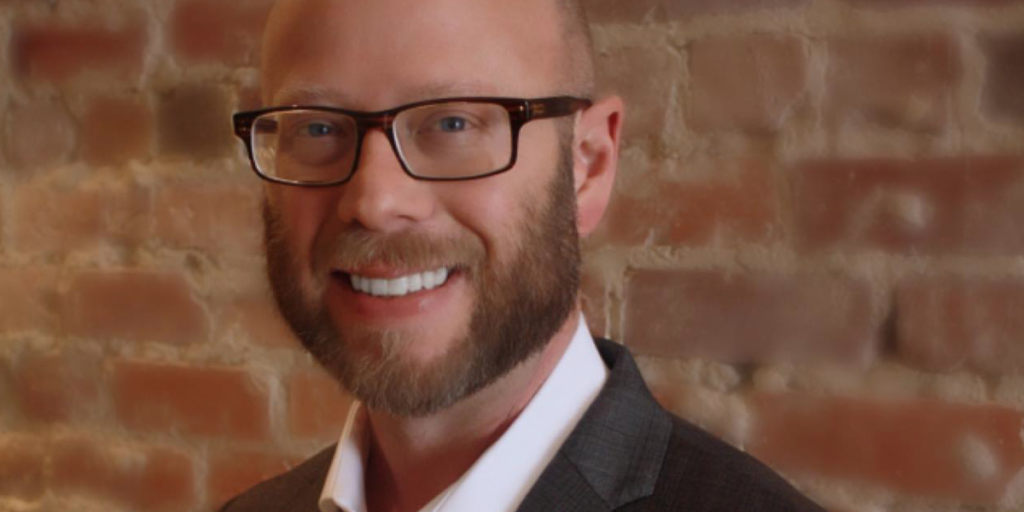
Craig Lipscomb, a Gadsden architect, filed paperwork with the Alabama Republican Party to qualify as a candidate for the Alabama House of Representatives in District 30 on Thursday. That seat is being vacated by Rainbow City-Republican and current State Rep. Mack Butler, who is running for the Alabama State Senate. “I am honored to run for the Republican nomination for House District 30,” Lipscomb said in a news release announcing his candidacy. “This decision is the result of much time and prayer with friends, family and respected members of our community. It was not taken lightly, and I am certain that this is both a wise and appropriate decision for myself and our community.” Lipscomb said he plans to travel throughout the district during his campaign to meet with constituents from Saint Clair and Etowah counties. His campaign will focus on the following issues: FIscal responsibility; Ethics; Economic development; and job growth. During the course of his campaign, Lipscomb also intends to announce his plans to offer affordable trade-specific educational opportunities for children and adults. As well as to release a strategy to comprehensively treat the mentally ill and chemically dependent, decreasing the burden on Alabama’s criminal justice system. Rainbow City-Republican State Senator Phil Williams, Chairman of the Etowah County Republican Party, made note of Lipscomb’s candidacy for the State House of Representatives, saying, “As Etowah County Party Chairman, I am excited to have someone of the caliber of Craig Lipscomb to step up to the plate and offer his service to the community as an elected official. Craig brings a great deal to the table and will definitely show the strength of the Republican ticket in the coming election season.” Craig and his wife, Angela, have two children, Clark and Carleigh. The family attends Harvestfield Church in Rainbow City, where Craig serves as an on-call bass player. Craig has worked in his hometown of Gadsden for over 17 years, and has since opened a successful architecture firm which has received numerous design awards. Lipscomb is the past-President of the Gadsden Symphony Orchestra, serves on the boards of the Gadsden Museum of Art, the Etowah County Chamber of Commerce, and the United Way of Etowah County. He is also a member of the Gadsden Kiwanis Club, Greater Gadsden Homebuilders Association and American Institute of Architects. “Having devoted my life to my family, faith, profession and community service, I feel that it is time to serve my community as their State Representative for District 30,” added Lipscomb. The Republican primary election will take place on June 5, 2018.
Harley Barber expulsion from University of Alabama a missed opportunity
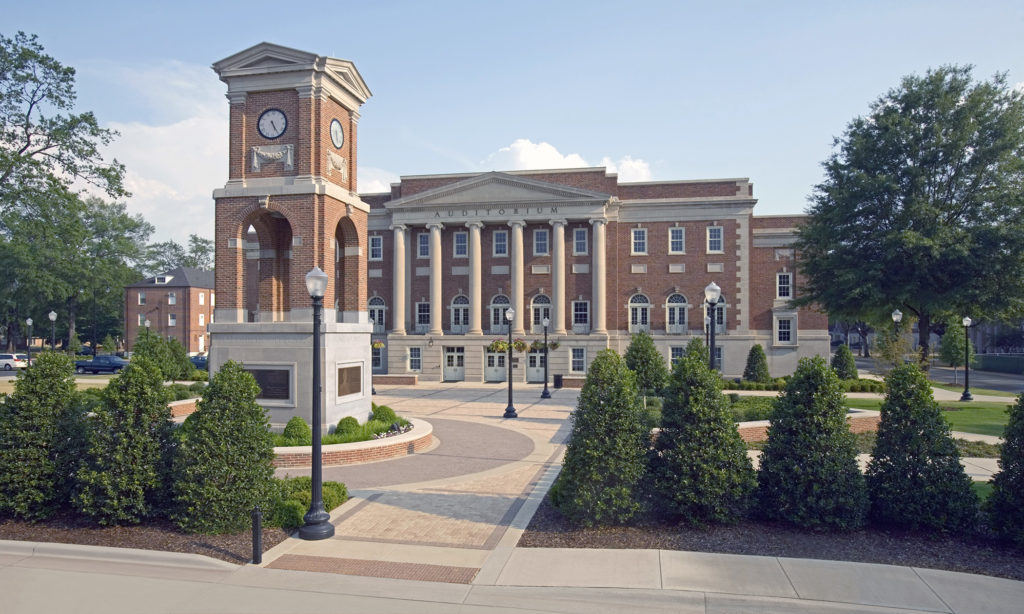
The University of Alabama (UA) missed an opportunity to do what it exists to do: teach. In response to the national attention it received this week, the university expelled student Harley Barber after Barber filmed herself repeatedly making racist comments which then went viral. Before I get to where the University went wrong, let me say so that there is zero doubt — Barber’s comments are disgusting, inexcusable, and indefensible. My commentary on the consequences of her actions should in no way be taken as an effort to defend her hateful speech. That said, this is/was an opportunity for UA to take someone who is clearly immature and ignorant and teach her better. To teach others like her better. Would that have required an investment of time and resources? Yes. Would that investment be worth it for the university, its student body and its community? Yes. There is zero chance that this won’t happen again, a student is found to show intolerance towards another individual or group of individuals, in the digital age that we live in. Rather than expelling her and sending her home, what the administration of UA should have done is offered her guidance and an opportunity to grow and learn. That is after all what going to college is about. If we kicked out people for narrow-mindedness and/or ignorant behavior most campuses would be empty. We don’t know many details about her expulsion, but if it was not conditional on her being able to come back at a later date, I think that’s a tragedy for her and the university. Despite popular opinion at the moment, this young lady is probably not evil. She probably is not going to have a lifetime of racist actions or behaviors. Really what she needs is to have her eyes opened to the realities that hateful discrimination like hers cause. Sit her down with students or facility and put a face and a story behind the effects of hate. Show her the pain that hate has caused. Teach her the history of the intolerable word she used. I’ve never understood the “Zero Tolerance” policy when it comes to mistakes that come from ignorance, insensitivity or even stupidity, as opposed to ones of malice. There is a difference in posting an offensive video saying horrifically stupid thing and committing an act of violence or promoting hateful actions by others. Treating them as equal undermines the concept of personal growth. Barber cannot learn from her bigotry by being sent home, shamed and bullied. She could learn from those around her in an academic setting. She could be placed on probation. Given community service. Given a mentor. Sent to learn about others and hear from them. The opportunities are endless to expand this young woman’s views. Contrary to what has happened in our campuses over the last several years, if not the last decade — our universities are a place for people to grow. Growth requires that we hear contradictory ideas without the comfort of “safe spaces.” Growth requires that we look at our personal biases and challenge what we may strongly believe about ourselves or others. If we can rehabilitate career criminals we can rehabilitate someone who clearly has not been exposed to racial diversity. UA missed an opportunity to better this young lady’s life and to strengthen their campus by making it a place of growth for all. Does she deserve a second chance today? Maybe not. Does she deserve the time and the opportunity to grow? She does. People make mistakes big and small. Who better to educate her and help change her backwards point of views than the diverse staff and student body at UA? If we continue to condemn every backwards thinking individual, rather than take the time to educate them, then we’re dooming our society to continuing in this wayward cycle of hate.
Alabama State Trooper Association calls for end to public safety crisis, additional funding

On Tuesday the Alabama State Trooper Association (ASTA) called for an increase of funding from Gov. Kay Ivey and state legislators for state troopers to combat the dangerous shortage of staffing at the state level of the agency. ASTA President David Steward said despite the growth of the economy and the stability of the General Fund budget, troopers are still woefully understaffed and underfunded. “There are less than 250 Troopers to serve all of Alabama, even though recent studies suggest that over 1,000 Troopers is the appropriate number for a state the size of Alabama,” Steward said. “At current staffing levels, there is one state Trooper for every 214 square miles in Alabama.” According to ASTA, Trooper presence is the single largest deterrent of accidents on Alabama’s highways. Despite this, budget cuts have lead to a 22 percent drop in Trooper staffing since 2014. During that time, auto injuries have risen by 19 percent and auto fatalities are up a whopping 28 percent. “Seconds count in an accident and troopers are having to cover hundreds of miles,” Steward added. “Often one trooper is handling multiple counties.” This is not the first time state legislators have been called on to provide for more funding for State Troopers. In January 2017, former Alabama Law Enforcement Secretary (ALEA) Stan Stabler requested a $60 million General Fund budget increase. The extra funding would have included $14.3 million of which would be appointed to the ALEA for the cost of hiring and equipping 100 new state troopers for a year. ASTA’s request may soon be answered. Ivey requested a $3.2 million increase in Alabama’s General Fund to be allocated to the ALEA to be used for a new class of 30 state troopers. “It’s a start,” said ASTA Executive Director Neil Tew. “30 is something to build on. We’re hoping it will be more the following year.
Personnel note: Volkert names Jerry Stump CEO in “Strategic Succession Plan”
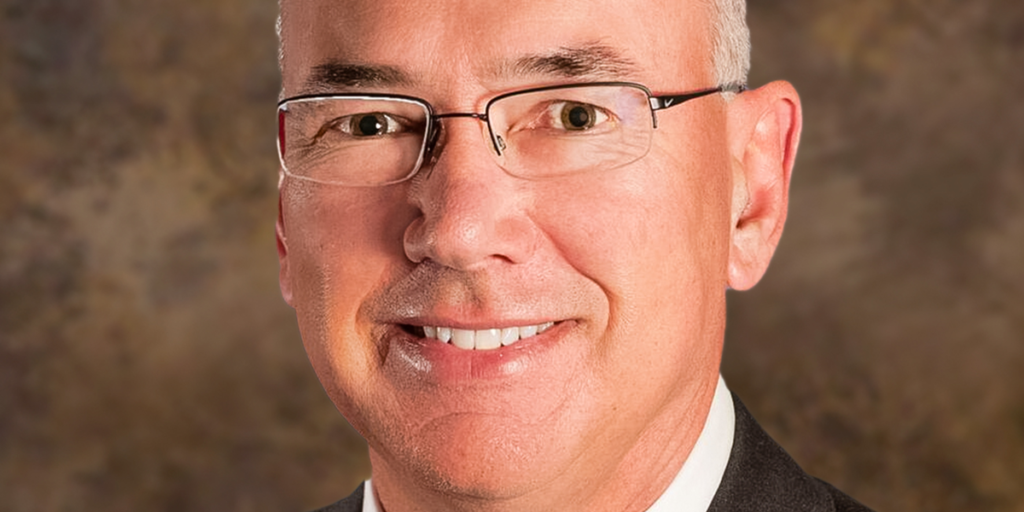
Alabama-based Volkert Inc. has announced effective January 15, CEO and Chairman of the Board Perry Hand is stepping down as CEO. Hand has named President and COO Jerry Stump to be his successor. “This transfer of leadership represents a well-thought-out succession plan that’s been five years in the making,” stated Hand. Hand will remain Chairman of the Board, to support the CEO in corporate activities. He has held many different leadership positions at the firm since 1993, and has occupied the CEO position for the past seven years. Hand hired Stump as COO nearly two years after taking over as CEO himself in 2011. The two men found that they had complementary strengths and together grew Volkert 15 percent each year for the last six years, taking it from a $77 million firm in 2011 to a $180 million firm today. In 2017, the firm also became one of the top 100 U.S. Engineering Firms according to Engineering News-Record’s. Stump said he is “incredibly honored to receive this appointment from Perry Hand.” “Perry has provided leadership, stability, and growth to Volkert through a quarter century of service. No incoming leader could ask for a better example and mentor,” he continued. “I’m excited about our firm’s direction as we continue to engineer the future of infrastructure and improve the communities we serve. In so doing, I’m privileged to work with some of the finest professionals in the industry.” Hand said he can think of no one better than Stump to lead Volkert into its second century of business “Jerry’s outstanding performance as President and Chief Operating Officer has helped our firm achieve growth that is virtually unprecedented in our industry,” added Hand. “In 2017 he received the Chairman’s Award, Volkert’s highest recognition of leadership. I can think of no one better suited to lead this firm into its second century of business than Jerry Stump.” Volkert is a privately held company based in Mobile, Ala. Founded in 1925, it offers engineering, environmental consulting, program management, and construction services.
Questions about the Southern Poverty Law Center continue

The group who once combatted hate groups like Ku Klux Klan (KKK) is now labeling pretty much any group, person or term they disagree with as “hate.” Birmingham’s Southern Poverty Law Center (SPLC), a non-profit that claims it is “dedicated to fighting hate and bigotry and to seeking justice for the most vulnerable members of our society,” is under scrutiny once again for trying to profit from “selling” hate, rather than tracking it. Libertarian TV personality and author John Stossel is among those who have recently questioned some of the SPLC’s hate labels that he doesn’t believe amount to hate whatsoever: Ayaan Hirsi Ali grew up in Somalia, where she suffered female genital mutilation. So now she speaks out against radical Islam. For that, SPLC put her on its list of dangerous “extremists.” Maajid Nawaz was once an Islamic extremist. Then he started criticizing the radicals. SPLC labels him an “anti-Muslim extremist,” too. …They call the Family Research Council a hate group because it says gay men are more likely to sexually abuse children. In the Wendesday Reason.com piece, Stossel went on to assert the SPLC is no longer stopping hate, but “selling hate.” He went on to say: I suspect SPLC labels lots of groups “haters” because crying “hate” brings in money. … SPLC is now a hate group itself. It’s a money-grabbing slander machine. And Stossel isn’t the only one who thinks so. William Jacobson, a law professor at Cornell and critic of the SPLC, told POLITICO over the summer the group has wrapped itself in the mantle of the civil rights struggle to engage in partisan political crusading. “Time and again, I see the SPLC using the reputation it gained decades ago fighting the Klan as a tool to bludgeon mainstream politically conservative opponents,” Jacobson said. “For groups that do not threaten violence, the use of SPLC ‘hate group’ or ‘extremist’ designations frequently are exploited as an excuse to silence speech and speakers,” Jacobson added. “It taints not only the group or person, but others who associate with them.” That doesn’t stop others from seeing the SPLC as the answer to America’s divisiveness. Just last year Apple CEO Tim Cook informed employees that his company is giving $1 million to SPLC and matching employee donations. J.P. Morgan Chase also pitched in $500,000, specifically to further the SPLC’s “work in tracking, exposing and fighting hate groups and other extremist organizations,” said Peter Scher, the bank’s head of corporate responsibility. But what exactly is their money paying for? According to same POLITICO piece, Ken Silverstein, a liberal journalist and another critic of the group “attributes the growing scope of the SPLC’s censures to a financial imperative to wade into hot-button issues that will rile donors.” “The organization has always tried to find ways to milk money out of the public by finding whatever threat they can most credibly promote,” Silverstein told the publication. Such appeared to be the case at Christmas. On Christmas, the SPLC ranked hashtags they found offensive. Shockingly, “#MerryChristmas” topped the list as the second most offensive hashtag of the day. The Hate Tracker website also listed #Christmas, #MerryChristmasEve and #Jesus in its top hateful trends used by what it deems “far-right Twitter users.” “The SPLC is willing to lump anyone who says “Merry Christmas” or “Jesus” in with the most violent and racist groups in America,” Liberty Counsel stated. “This is one more way that the SPLC is exposing its own radical, discredited, anti-Christian hate.” The SPLC said it’s not tracking hate, just hateful“far-right Twitter users” and what they’re saying. “‘Hate Tracker’ webpage doesn’t actually track hate – it just tracks what is being tweeted by allegedly hateful people,” said the SPLC. Nevertheless, many are still left wondering if the SPLC’s mission-focused days are a thing of the past, and if a simple difference of opinion is all it takes to be labeled a hater.
Mo Brooks fights for patients’ ‘Right to Try’
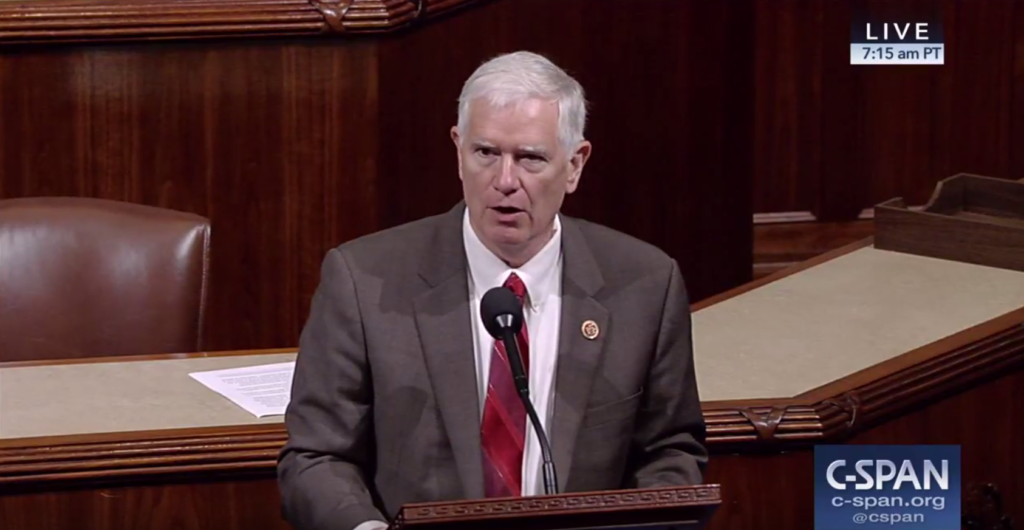
On Thursday, Alabama 5th District U.S. Congressman Mo Brooks delivered a house floor speech requesting a vote on S. 204: the Right to Try Act, which gives terminally ill patients the option to try experimental treatments that have not yet been approved by the Food and Drug Administration (FDA). Often the FDA’s approval of new treatments is a lengthy and complex processes that can takes decades to fully be completed. This bill would allow terminally ill patients to try potentially life-saving experimental treatments and gives patients the right to fight their diseases without having to fight federal bureaucracy. “Patients shouldn’t have to give up their liberty, their freedom, their fight against terminal illness merely because the FDA says so” said Brooks. Brooks was inspired by the story of Steve Mayfield, a beloved football coach at Central High School in Lauderdale County Alabama. Mayfield died in March of 2017 after a long and arduous battle with both Lou Gehrig’s disease (ALS) and the FDA. Like most terminally ill Americans, Mayfield did not have access to investigative treatments due to the FDA’s current policies. “While the Food and Drug Administration grants compassionate use waivers, meant to allow terminal patients access to experimental drugs, only about 1,500 waivers were granted in 2016” said Brooks. “What are other terminally ill Americans to do? Nothing? Just waste away and die without a fight?” Brooks believes the Right to Try Act is the best solution to this problem as it only grants access to treatments that have successfully completed the FDA’s Phase 1 approval requirement. This keeps patients safe from potentially harmful treatment processes while allowing them access to try potentially life changing medical care. “Given the stark contrasts between life and death, between freedom and federal dictates, between hope and hopelessness, the House should take up and pass the Right to Try Act, thereby giving a chance for life to terminally ill patients and their families.” The Senate passed Right to Try legislation last year, and it currently awaits a vote in the House.
Personnel note: Alabama Securities Commission appoints Acting Deputy Director, announces new Chief Litigation Counsel

Alabama Securities Commission (ASC) has announced Amanda Senn, General Counsel has been appointed to Acting Deputy Director for Enforcement and that Gregory Bordenkircher has joined the ASC as Chief Litigation Counsel. Joseph Borg, Director of the ASC made the announcement on Friday. “The promotion of Ms. Senn and the addition to our staff of Mr. Bordenkircher will ensure that the ASC provides the highest caliber of professionalism in our continuing mission to protect the citizens of Alabama,” said Borg. “Acting Deputy Director and General Counsel Senn and Chief Litigation Counsel Bordenkircher both have proven track records in the field of law.” Attorney Senn joined the ASC in 2009 and has served in several capacities with the commission. For the past three years she has served as General Counsel of the ASC, where she is responsible for advising the Commission on securities-related matters, and investigating and prosecuting illegal and fraudulent actions surrounding the sales of securities throughout the state of Alabama. Senn has played a critical role in coordinating and litigating numerous multi-jurisdictional administrative, civil, and criminal actions and is actively involved in the North American Securities Administrators Association (NASAA) and serves as Chairman of the Cybersecurity and Technology Project Group. As Acting Deputy Director, Senn will assist Borg with additional administrative responsibilities in the overall operation of the Commission and supervise the enforcement functions of the Commission. She will continue the role of General Counsel. Senn replaces Stephen Feaga, the previous Deputy Director for Enforcement and Prosecution since February 2012. He left the ASC d is now a partner at Balch and Bingham LLP, a regional law firm, and specializes in White Collar Compliance, Investigations, and Litigation. Bordenkircher joins the ASC as Chief Litigation Counsel where he will be responsible for supervising the investigation and prosecution of securities violations in Alabama. He comes to the ASC from the U.S. Department of Justice (DOJ), where he served as Assistant U.S. Attorney for the Southern District of Alabama from August 1991 until he retired on December 31, 2017. During that time, Bordenkircher worked extensively with the F.B.I., D.E.A, U.S. Secret Service, I.R.S., I.C.E., A.T.F. and state and local authorities in investigating and prosecuting large, complex criminal matters. He has experience in coordinating multi- jurisdictional and multi-agency investigations, including large-scale drug conspiracies and complex white collar public corruption and fraud cases. During his tenure with the U.S. Attorney’s Office, Bordenkircher served as Chief of Complex Litigation Unit and Senior Litigation Counsel, where he supervised and litigated hundreds of federal jury trials which included public corruption cases, complex white-collar cases, large drug conspiracy cases, firearm violations cases and violent crimes cases. In addition, he represented the government in digital evidence challenges in search warrants, suppression hearings, pretrial motions and delivered digital evidence presentations in numerous trials involving white collar fraud, medical fraud, counter espionage, undercover cyber investigations and other federal crimes involving computer and cellular evidence. Additionally, he served the U.S in Iraq as an Assistant U.S. Attorney to the Regime Crimes Liaison’s Office in Iraq, where he was the lead American advisor to the Iraqi prosecution team on the Genocide and War Crimes trial of Saddam Hussein and Ali Hasson al Majid (Chemical Ali).
Daniel Sutter: This is where our taxes go

Nobody likes paying taxes. Accepting inevitability can make paying less painful; Benjamin Franklin observed that only death and taxes were certain in life. Or perhaps Oliver Wendell Holmes’ observation that taxes are the price we pay for civilization might console us. But the handing of sales tax revenue back to retailers may rekindle anger over taxes. Rebating revenue compensates retailers for the cost of serving as the tax collector and goes back to the 1930s, when states first imposed sales taxes. Collection costs were significant, especially before computerized cash registers. Not all states compensated retailers, and some allowed only a modest annual rebate. Sales tax refunds have now become one of the incentives state and local governments use for economic development. Governments for years have offered tax exemptions, regulatory relief, and targeted spending to businesses relocating or expanding in their jurisdiction. Just last week, Toyota and Mazda announced they would build an assembly plant in Huntsville, while gun maker Kimber announced a plant in Troy. Incentives factored in both deals. Other taxes get diverted to business interests. The city of Troy in 2017 considered a surcharge on movie tickets that would be refunded to theater operators; other cities already do this. Property tax revenues can be exclusively used to benefit a selected neighborhood through a tax increment financing district. I do not wish to debate development incentives today. Rather, I wish to consider the subterfuge involved with tax diversions. How much sales tax revenue gets diverted? The only systematic study appears to be a 2008 report by government business incentives watchdog Good Jobs First. “Skimming the Sales Tax” estimated diversion of $1 billion annually, with over $70 million of this total going to Wal-Mart. With the use of incentives increasing, the number is almost certainly bigger today. Compensating for collection costs seems reasonable but debatable, since businesses do not get compensation for collecting payroll taxes. Refunds as incentives are more problematic, for two reasons. First, deception undermines the legitimacy of taxes. Libertarians like to say that taxation is theft, and there is a resemblance. Theft involves armed people forcibly taking money or property from people. Ultimately taxes rely on tax evaders facing arrest or seizure of their property. The consent of citizens distinguishes taxation from theft. We agree to pay sales (and other) taxes to provide government the resources to do what we ask. The sales tax funding of a new jail here in Pike County provides a perfect example. Of course our elected representatives make the decisions for us and representation is imperfect, but in principle we approve taxes. Do you approve of turning over sales tax revenues to retailers? Second, using tax rebates as a stimulus encourages excessive use of incentives for businesses. There are reasons for and against offering inducements to businesses, and people will disagree about how these balance out. Democracy is about citizens deliberating, and decisions which reflect our judgments. Obscuring part of the cost through tax rebates increases the difficulty for citizens in accurately assessing incentives’ net value. We easily see the benefit from a new retail store, but may fail to process the lost tax revenue from rebates. We consequently think that inducements offer better value than they do, and then provide them too often. Confusion over tax diversion can make local governments appear ineffective. Suppose that a local government is funded by a 5 percent local sales tax, which we think should adequately fund its services. Yet if half of the revenue gets refunded, the local government might not have enough money to patch potholes. We hit a pothole and accuse government of wasting our money, instead of recognizing the pothole as a cost of development incentives. Taxation is not theft as long as we decide how much we pay and what we pay for. Refunding sales taxes to retailers as an incentive may be good policy for state and local governments. But it should be policy only if we make a fully informed decision. ••• Daniel Sutter is the Charles G. Koch Professor of Economics with the Manuel H. Johnson Center for Political Economy at Troy University and host of Econversations on TrojanVision. The opinions expressed in this column are the author’s and do not necessarily reflect the views of Troy University.
