
Randall Woodfin begins search for new Birmingham police chief
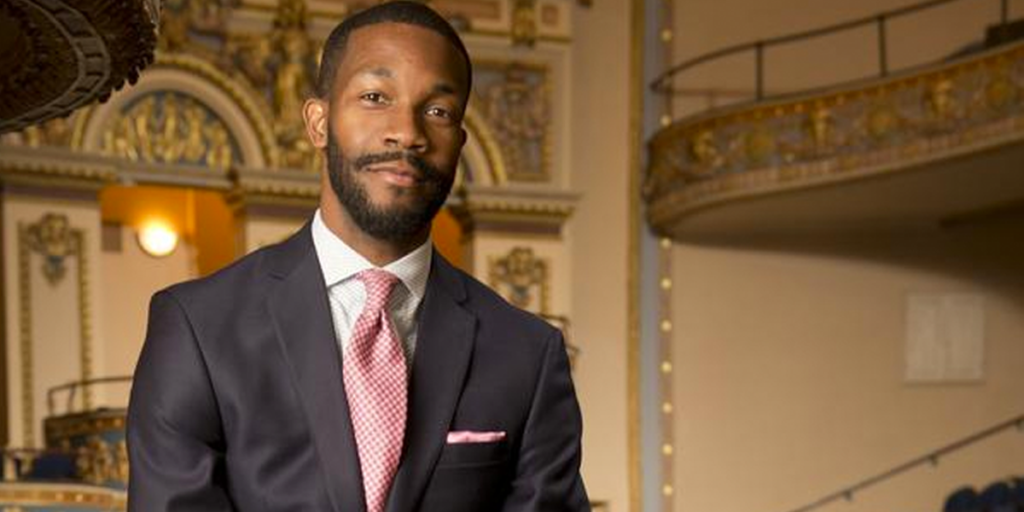
During Tuesday’s city council meeting Birmingham Mayor Randall Woodfin announced a national search for a new police chief and several new department heads. Siena Consulting will be conducting the the search, which will cost the city $124,000. The company will find candidates for the directors of human resources, finance, information management services and public works positions. Woodfin said the search for a new police chief will be “overly open” and that the public will be kept up to date on the status of the search. He doesn’t know if finalists for the position will be made public. During the same meeting Tuesday, Woodfin announced his entrance into a contract with Crowe Horwath LLP and PGV Advisors. They will collaborate with the city on a performance appraisal of operations to determine if city departments are staffed and funded at the correct levels. The following departments will be assessed: finance, community development, human resources, Information Management Services, police, municipal court, law, public works and planning, engineering and permits. The costs associated with this contract were not immediately released. The search for a new police chief comes in the wake of former police Chief A.C. Roper stepping down from his post on November 29, the day after Woodfin took office. Roper served as police chief for 10 years. Woodfin said Roper’s departure will allow the city the freedom to “take a fresh look at solutions to address one of the most pressing issues facing our city, which we all know is crime.” In his State of the City address given Tuesday afternoon, Woodfin stated his administration will “be working in every area of the city to reduce crime, eliminate blight and increase the safety and security of all citizens.” An abundance of retirement announcements and resignations have followed Woodfin’s induction. Human resources director for the city, Peggy Polk, also announced her retirement on Nov. 29. Stephen Fancher, director of public works retired from his post. Information Management Services director Srikanth Karra announced he is leaving his post for another opportunity. Meanwhile Tom Barnett notified the mayor’s office of his retirement from the Finance director position on Tuesday. When Woodfin took office, both the director of community development and director of economic development were dismissed from their positions which have since been filled by their deputy department heads. Since taking office he has reduced the number of Bell appointees from 95 to 48. Woodfin said internal candidates would also be considered in the national search.
Alabama: top ranked in college football and political corruption

Alabama doesn’t only have the number one college football team in the country, according to a new study by Illinois State University’s Institute for Corruption Studies the Yellowhammer State also leads the nation in political corruption. The report puts Alabama at the top of the list for the most corrupt state in the union during 2017. The state comes in second, behind Kentucky, in “illegal corruption,” conduct that is completely against the law. Alabama ranks highest concerning what researchers call “legal corruption” which is business conduct by public officials that is unethical but technically still legal. “Quite frankly, it’s been pretty sticky, especially states like Alabama…once a state becomes corrupt, it stays corrupt for a while.” Oguzhan Dincer, director of the institute, told Yellowhammer News. He said their findings have been fairly consistent since he and Michael Johnston, his research partner, administered their first study in 2014. Alabama’s average for all three branches of government was 11 points for “illegal corruption” and 13 for “legal corruption.” It was virtually unchanged from the 2014 study, when Alabama had 11 points in legal corruption and 9 points in illegal corruption. Dincer said it is most appropriate to group states by their corruption index, and Alabama consistently ranks in the top tier on that index. The 2017 rankings put Alabama at the top when it comes to both kinds of corruption for all three branches. Other studies have tried to evaluate corruption by analyzing conviction data. But according to Dincer these methods have some drawbacks. Partisan bias can play a large role in how politicians are convicted, as Democratic prosecutors more enthusiastically go after Republican wrongdoing, and vice versa. Also, individual prosecutors intensity can vary state by state. Dincer and Johnston instead sought to evaluate the corruption by turning to reporters who cover state government affairs. “Instead of randomly selecting thousands of individuals in every state, we decided to ask reporters,” Dincer said. “We thought they would know better.” Dincer’s team consulted 1,000 journalists who cover state politics, gathering responses from 48 states. All rated their perception of corruption on a scale of 1 to 5 for each branch of their state’s government. Dincer recognizes that relying on journalists has drawbacks, too. He said it is inherently biased and prone to swings due to high-profile cases. He is, however, convinced that the advantages outweigh the drawbacks compared to other methods and desires to build 10 years’ worth of data for the tracking of changes in perception and policy.
GOPAC names State Sen. Greg Reed to 2018 Legislative Leaders Advisory Board
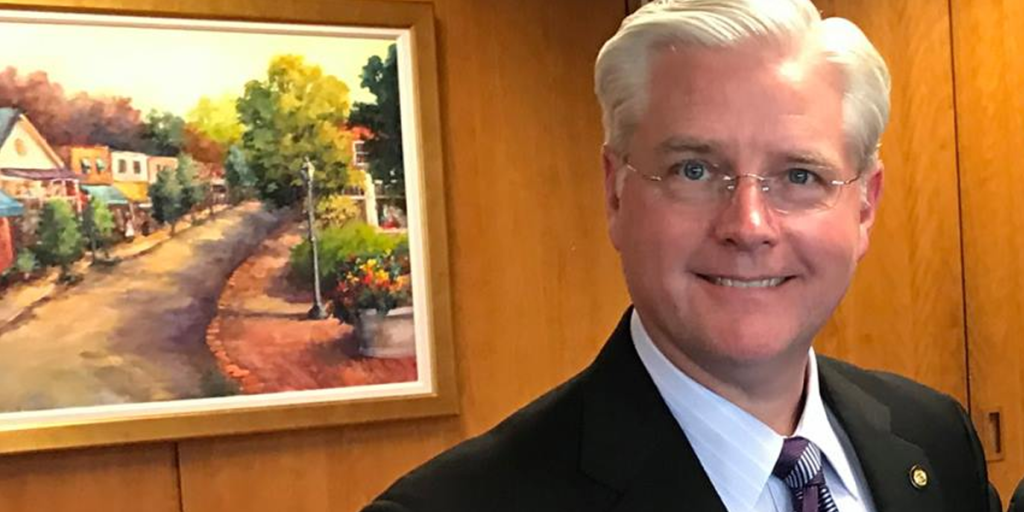
GOPAC — a Washington, D.C.-based nonprofit that’s dedicated to educating and electing a new generation of Republican leaders — has named Jasper-Republican and Alabama Senate Majority Leader Greg Reed to its 2018 Legislative Leaders Advisory Board. “Members of our 2018 Legislative Leaders Advisory Board will be essential in our efforts to build a roster of Republicans ready to lead,” said GOPAC Chairman David Avella. The Board members promote the ideas they are championing by addressing elected officials, candidates and members at GOPAC events and via its digital program. In addition, they nominate a promising state legislator for the Emerging Leaders Program and provide updates on key legislative and political developments. Membership is a one-year term. The full list of members, as provided, is below: State Senate members: President Jack Whitver (IA) President Pro Tempore Bob Peterson (OH) Majority Leader Greg Reed (AL) Majority Leader Kimberly Yee (AZ) Majority Leader Damon Thayer (KY) Majority Leader Ryan Ferns (WV) Deputy Majority Leader Jeremy Miller (MN) Assistant Minority Leader Ben Kieckhefer (NV) Majority Whip Steven Gooch (GA) Minority Whip Steve Hershey (MD) Health Policy Committee Chair Dana Young (FL) Finance Committee Chair Catharine Young (NY) Appropriations Committee Chair Kim David (OK) Finance, Ways and Means Committee Chair Bo Watson (TN) Health and Human Services Committee Chair Charles Schwertner (TX) Rules Committee Chair Deidre Henderson (UT) Rehabilitation and Social Services Committee Chair Bryce Reeves (VA) State House / Assembly members: Speaker Tom Leonard (MI) Speaker Philip Gunn (MS) Speaker Tim Moore (NC) Speaker Cliff Rosenberger (OH) Speaker Charles McCall (OK) Speaker Pro Tempore Tyler August (WI) Majority Leader Mathew Pitsch (AR) Majority Leader Lance Harris (LA) Deputy Minority Floor Leader James Oscarson (NV) Judiciary Committee Chair Chris Sprowls (FL) Policy Committee Chair Kerry Benninghoff (PA) Public Health Committee Chair Four Price (TX) Finance, Ways and Means Subcommittee Chair Gerald McCormick (TN)
Parker Snider: Here in Alabama, the government can legally take your stuff (and not give it back)

Along Highway 31 in Conecuh County, Alabama, lies a small town called Castleberry. Although the city boasts a population of less than 600 and a single caution light, it has its own police department. To fund itself, the Castleberry Police Department takes advantage of speeding passers-by and writes them tickets. Nothing to see here. In the words of President Trump, “Wrong.” According to reports, after pulling a driver over, law enforcement takes whatever money and other possessions they want, justifying their seizure by claiming suspicion that the money and possessions are the profits of a drug crime. They also often tow the car, only to make drivers pay a $500 impound fee to get it back. Passers-by can then continue along their way—feeling robbed, confused, and reasonably angry. This is illegal, right? Wrong again. Although some of the specifics are being tried in court, the Castleberry Police Department is taking advantage of a fully legal practice known as civil asset forfeiture, a maneuver that allows law enforcement officers to legally seize your assets based on suspicion alone. Originally intended to cut off the cash flow of drug cartels, civil asset forfeiture is a practice that is independent of personal guilt or innocence. Instead, the police charge or suspect your assets—money, cars, homes, and any other possessions—of being involved in a crime, and seize them. This is clearly problematic. Along with the strange notion that inanimate objects can be charged for violating the law, this practice flies in the face of the fifth amendment due process clause of the United States Constitution that prevents the government from taking “life, liberty, or property, without due process of law”. Civil asset forfeiture also hinges on flipping the innocent until proven guilty mantra of the American judicial system, as defendants must prove their innocence to get assets back, a reversal that we must reject. In the case that defendants are defiant and decide to hire an attorney to regain their belongings, the legal costs can rival the worth of the seized assets, making such attempts both expensive and, at times, pointless. There’s more. According to current Alabama law and the Institute for Justice, police departments get to keep 100% of the proceeds from seized assets. The more seized, the more money the departments make. With this allowance, law enforcement holds both sword and purse. Such a financial incentive makes abuse and targeting of innocent hard-working people, instead of real criminals, more likely. Over 80% of Americans do not approve of civil asset forfeiture, according to a Cato Institute poll. Due to widespread support for change, the Alabama legislature is considering reform. Current proposed legislation protects innocent property owners and ensures that there is no opportunity to impute illegitimacy on our police. We must call on the Alabama legislature to vote for reforms that eliminate from Alabama law this unconstitutional potential for abuse that, too often, becomes realized. ••• Parker Snider is Manager of Policy Relations for the Alabama Policy Institute (API). API is an independent, nonpartisan, nonprofit research and educational organization dedicated to strengthening free enterprise, defending limited government, and championing strong families. If you would like to speak with the author, please e-mail communications@alabamapolicy.org or call (205) 870-9900.
Alabamians reap benefits of Airbnb
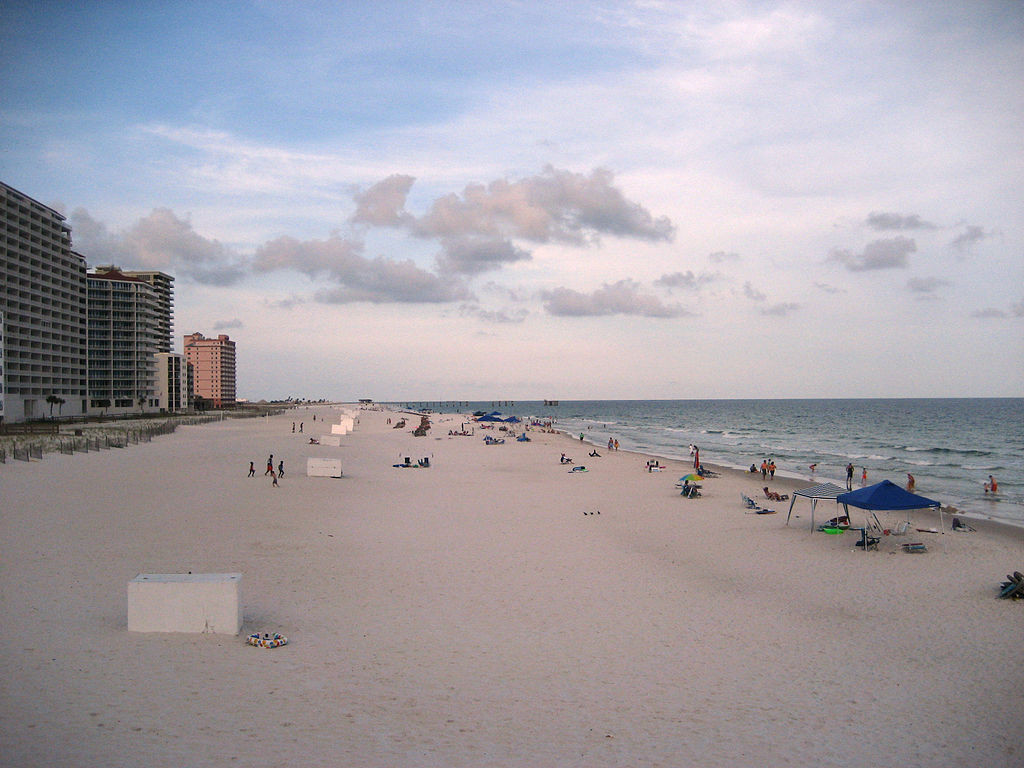
By sharing their homes with beach goers, tourists, and college football fans, Alabamians made over $16 million in 2017 using the popular home-sharing app Airbnb. Airbnb allows short-term accommodation seekers to book rentals online with individual hosts or property owners. According to their yearly totals, compiled from 114,000 guest arrivals in Alabama: The typical Alabama host shared their home 24 nights over the course of the year earning an extra $6,100 in income About 2,100 Alabama families hosted at least one Airbnb guest 57 percent of hosts in state are women Gulf Shores was the most visited Alabama destination, with hosts bringing in 27,700 guests and earning $4.9 million. Birmingham was the runner-up with 14,400 guest arrivals bringing in an extra $1.5 million. Tuscaloosa and Auburn were also popular destinations. Hosts in these cities earned over $1.1 million over the past two football seasons. Airbnb hosts in Alabama did more than make profits in 2017. In September while Hurricane Irma swept through Florida, many Florida residents traveled to Alabama for safe lodgings and to wait out the storm. Airbnb responded quickly and activated their emergency response program in several Alabama cities. The special listings for evacuees, in addition to having no list price, were free from Airnb’s fees and local/state taxes. One host in the Mobile area refunded her guests over $600 for their stay during the hurricane as a chance to “pay it forward.” “Home sharing through Airbnb continues to be a unique and flexible way for Alabama families to make more money, pay their bills, and support their communities,” said Public Policy Director for Airbnb in Alabama, Will Burns. “We look forward to 2018 being another successful year of giving residents in Birmingham, the Gulf Shores, Auburn, and all corners of the state an economic boost, travelers more affordable accommodations, and neighborhood businesses more foot traffic.”
‘Turn the (n-word) tunes off’: racial slur gets Hoover HS teacher placed on leave
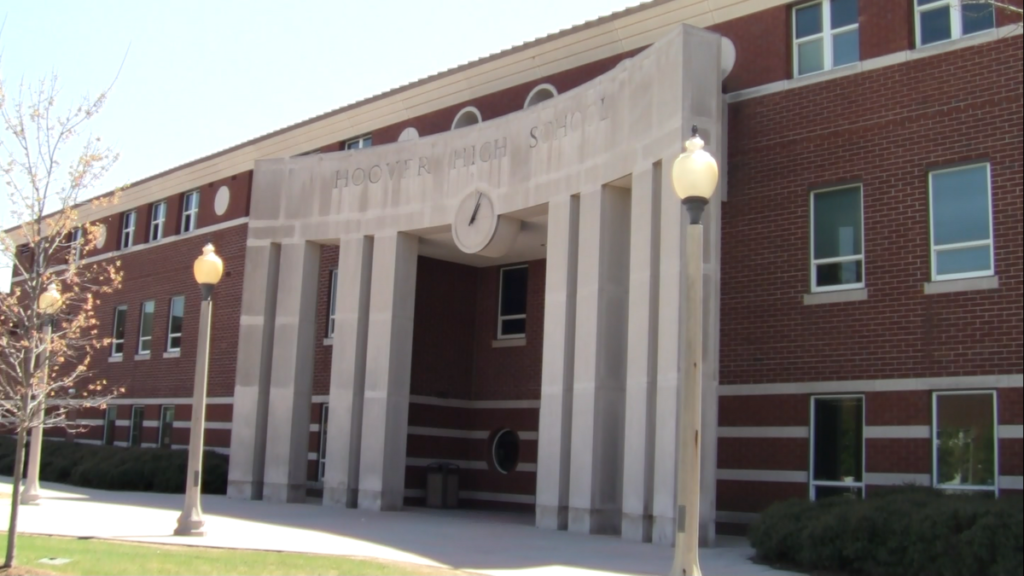
A Hoover High School teacher was placed on administrative leave with pay on Monday after being accused of using a racial slur in front of her class Friday. Hoover school superintendent Dr. Kathy Murphy has confirmed the teacher, Teddie Butcher, admitted to using the (n-word) in her classroom. Students claim Butcher, a white teacher, told the class to “turn the n****r tunes off” after as they were listening to “Dear Mama” by Tupac while working on a project in her food and nutrition class. The school system will be investigating the situation while Butcher remains on administrative leave. “As we are addressing this matter, we will be looking at our board’s policy and obviously taking a look at the state Teacher Code about expectations and we’ll be putting her conduct and behavior up against what we know is professional conduct of one’s self,” Murphy told AL.com.
Birmingham lawyer Tripp Haston named to Who’s Who Legal: Thought Leaders 2018

Bradley Arant Boult Cummings attorney Tripp Haston, a partner in the firm’s Birmingham, Ala. office, has been named a “thought leader” in the Who’s Who Legal: Thought Leaders 2018 in both the Life Sciences and Product Liability Defence categories. He is one of only two U.S. attorneys, and five globally, to be included in both categories. Now in its second edition, the current Who’s Who Legal: Thought Leaders lists 11 U.S. attorneys who are among 31 lawyers from across the globe in the Life Sciences category. The Product Liability Defence category lists 21 attorneys worldwide, including 10 from the United States. “Tripp’s reputation as a leader in the life sciences and product liability litigation is truly worthy of global acclaim,” said Bradley Chairman of the Board and Managing Partner Beau Grenier. “Tripp’s inclusion in the Who’s Who Legal: Thought Leaders guide celebrates the praise he has earned from his peers and clients through regional, national and international engagements.” Co-chair of Bradley’s Life Sciences Industry Team, Haston represents a broad spectrum of clients on regional, national and international engagements. He regularly represents medical device and pharmaceutical clients in products liability litigation. In addition, he has served numerous clients as national trial and coordinating counsel and as a national team member in individual actions as well as mass tort and multi-district litigation. His experience has involved matters throughout the United States, Europe, Asia and South America. Haston is a member and past president of the International Association of Defense Counsel — an invitation-only legal organization of leading defense attorneys from more than 50 countries. In addition, he has served as a board member of DRI, the nation’s largest organization of defense counsel, as well as Lawyers for Civil Justice, an organization comprised of leading corporate counsel and defense bar practitioners dedicated to promoting fairness in the U.S. civil justice system. He also is active in service to the United Way of Central Alabama and has served as an officer and board member of his community’s charitable foundation for its public schools. Haston earned his J.D. (summa cum laude) from the University of Alabama School of Law and his Bachelor of Arts from Auburn University. The Who’s Who Legal directories list more than 24,000 private practice lawyers from more than 150 national jurisdictions, covering 34 areas of corporate and commercial law. Only those listed lawyers who obtained the highest number of nominations from peers, corporate counsel and other market sources in the most recent research cycle were considered for inclusion in the Thought Leaders guide. According to Who’s Who, the Thought Leaders are “among the very best in their field, without exception. Their names are ubiquitous in their own legal spheres and, in many cases, transcend them.” The Who’s Who Legal guides are intended to serve as reference sources for companies seeking to corroborate the reputations of lawyers recommended by another party.
187th Fighter Wing returns home from deployment in Southwest Asia

After three months of deployment to Southwest Asia, airmen from the 187th Fighter Wing returned home to Dannelly Field Air National Guard Base in Montgomery, Ala. on Monday night. According to U.S. Air Force officials, nearly 300 service men and women were deployed in support of Operation Inherent Resolve, a task force that works with regional partners to combat ISIS. In December, the 187th Fighter Wing was selected as the future home of the F-35 Joint Strike Fighter. For over two years, unit commanders, community and state leaders, local business leaders, and Alabama’s congressional delegation worked together to land the coveted mission. Check out a video of their return home:
Alabama skater John Zimmerman IV is heading to the Olympics as a coach

John Zimmerman IV is decades removed from being an aspiring figure skater living in Homewood. But the journey that took him to three United States pairs championships and a recent induction to the U.S. Figure Skating Hall of Fame is never far from his mind. “All day every day, man,” said Zimmerman, now a coach, when asked how often he thinks about his days of glory. “Everything I say and teach the skaters reminds me of what I’ve done and reminds me to learn more to become better myself each day to do better for the skaters that I teach.” These days, the French pairs team of Vanessa James and Morgan Ciprès is benefiting from Zimmerman’s skating experience. He is coaching them as they get set to head to Pyeongchang, South Korea, for the 2018 Winter Olympics. The coach and his charges were in Russia last week for the European Championships, where they led after the short program but finished fourth, missing the podium by one one-hundreth of a point. “This doesn’t qualify us for Olympics. That’s already been done,” he said in a Facebook direct message. “It’s the one competition below World Championships. We must beat the pesky Russians!!! Lol.” Those “pesky Russians” ended up with all three of the top spots. The former competitor, who concluded his skating career on a professional tour, said he is as excited today as he was vying for medals. “It’s like being a parent, I think,” he said. “You are very excited to see people you care about attain the highest results they can. “(I’m) very enthusiastic, but also it’s very normal,” Zimmerman continued. “Vanessa has been there (to the Olympics) twice already, once with another partner and then with Morgan.” While competing under the interlocking rings is not uncommon for either skater, contending for an Olympic medal is. “They are way more excited to be contenders for a medal,” the coach said. “If we skate well at this event, we will be in a great position to have that shot.” Zimmerman’s career has spanned the years the way the bridge named for him spans Shades Creek, which separates Samford University and Lakeshore Drive from Homewood High School and University Park. With skating partner Kyoko Ina, Zimmerman was the 2002 World bronze medalist and a three-time U.S. National champion. He and Ina competed at the 2002 Olympics, placing fifth. Like so many athletes, his focus as a skater was on himself. Now as a coach, his view is broader. “After I competed, I toured for 10 years and that, too, was about ‘me,’” he said. “I’m just happy I did it as well as I could for myself and took it as far as I could. I’m very satisfied with what I accomplished and to be inducted into the U.S. Figure Skating Hall of Fame last week at the National Championships was the icing on the cake.” Zimmerman has been married for 14 years to Italian-American skater Silvia Fontana. Their daughters Sofia and Eva are 5 and 4, respectively, and their son John is 17 months old. “I really feel a complete devotion to my family,” Zimmerman continued. “Working hard as a husband and father alongside my beautiful wife, Sílvia, we are dedicated to our amazing children – Sofia, Eva and Jack – and students whom we teach in Wesley Chapel, Florida.” Republished with permission from the Alabama NewsCenter.
