
Antarctica marine biology explorers embark on 2018 journey
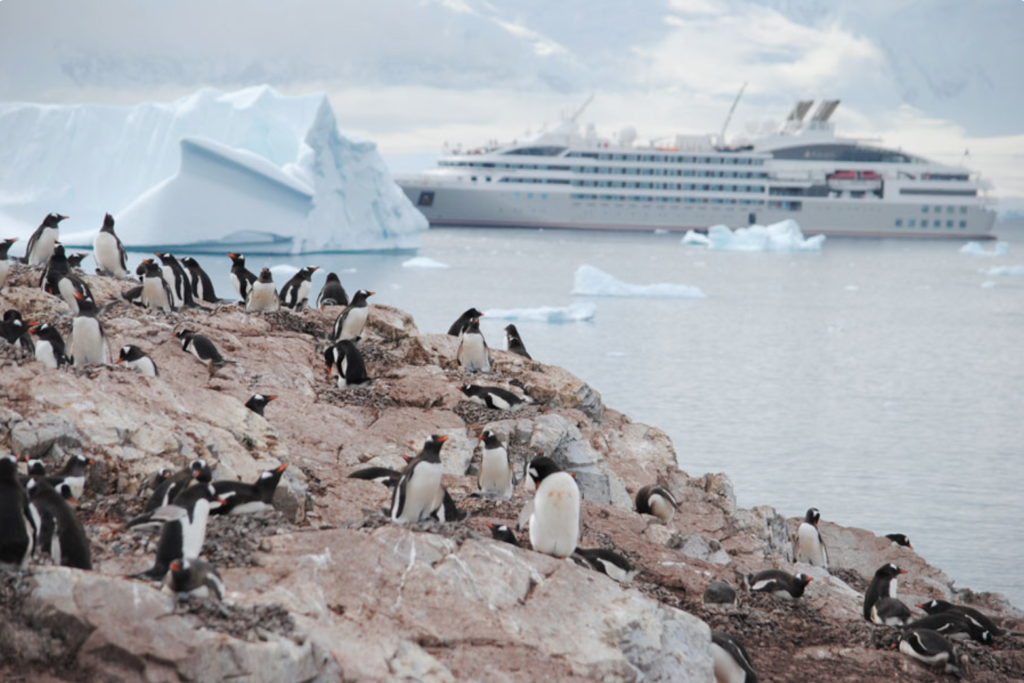
By: Alicia Rohan | University of Alabama at Birmingham Marine biologists from the University of Alabama at Birmingham landed on the White Continent by way of Punta Arenas, Chile, for a research expedition. Over the next 16 weeks, the team of six explorers will spend the 2018 field season at Palmer Station researching the ecology of the very rich Antarctic seafloor communities and how important ecological interactions in those communities are structured through the production of chemical defenses against predation. In previous and planned research, the group also studies dramatic ecological effects of climate change on marine life of the Antarctic Peninsula. “The seafloor communities we study are exceptionally rich with lush beds of large seaweeds, which support very dense assemblages of invertebrate animals,” said Chuck Amsler, Ph.D., professor in the UAB College of Arts and Sciences Department of Biology and co-leader of the expedition. “There are many experiments that can only be conducted in Antarctica. Our research is important to understanding these vibrant communities, and we use unique features of Antarctica as tools that allow us to learn things that are applicable worldwide but can best be studied there.” The long-running team, which has been traveling on research expeditions to Palmer Station for 18 years, will focus their research on the continuation studies of the National Science Foundation-funded research program on the chemical ecology of Antarctic marine algae and invertebrates. Updates on their discoveries and life on Earth’s southernmost continent can be found on the UAB in Antarctica blog a few times each week. “Marine research in Antarctica is both intellectually challenging and physically demanding,” said James McClintock, Ph.D., UAB Polar and Marine Biology Endowed Professor, also a co-leader of the expedition. “Our research continues to reveal the potential impacts of rapid climate warming on Antarctic marine organisms, as well as organismal responses to predicted near-future increases in carbon atmospheric dioxide absorbed by seawater, a process known as ocean acidification.” The team will welcome North Carolina high school teacher Keith Smith to Antarctica for the last month of the trip. Smith, a science teacher at Freedom High School, will be traveling to Anvers Island, Antarctica, as part of the PolarTREC program that recruits teachers to participate in “hands-on field research experiences in the polar regions.” Smith will be able to take his knowledge learned in the research field back to his students and apply it to his work in the classroom. Eighty-seven percent of the glaciers on the western Antarctic Peninsula are in rapid retreat. In recognition of the retreat of these glaciers, an Explorers Club Flag Expedition will be led by McClintock, a 2016 elected Fellow of the Explorers Club. These expeditions are a fundamental component of the Explorer Club mission to engage in scientific exploration and broadly share the results. The flag will be planted on Amsler Island to celebrate Charles and Maggie Amsler’s contributions to science, but also to bring attention to the fact that Amsler Island emerged from under the Marr Glacier in the geological equivalent of ‘the blink of an eye’ due to unprecedented climate warming. Members of the 2018 expedition team include James McClintock; Chuck Amsler; Maggie Amsler, a research associate in the UAB Department of Biology; Michelle Curtis, a graduate research assistant from UAB; Sabrina Heiser, a graduate research assistant from UAB; and Cecilia Brothers, Ph.D., collaborating researcher and UAB alumna. Unique facts about the team traveling on the journey include: 76 previous trips to Antarctica collective on the team, with Curtis serving as the rookie this time around. A total of 1,440 frigid research scuba dives in previous Antarctic expeditions (C. Amsler 848, M. Amsler 411, S. Heiser 181). McClintock’s work in Antarctica in previous years earned him a distinction that few living people in the world have: a spot on the coast of Antarctica named McClintock Point in his honor by the U.S. Board of Geographic Names. Maggie Amsler was on one of the first-ever manned submarine cruises to document the sea floor communities in Antarctica and is likely the first woman to make a submersible dive in Antarctica. Her deepest dive reached 1,001 meters depth, 25 times deeper than the deepest scuba dives the team routinely makes. Maggie and Chuck Amsler were honored by the U.S. Board of Geographic names with the designation of Amsler Island, which is approximately half a mile from Palmer Station. Travel companion Henry the teddy bear will take his farthest trip yet. Henry is part of Gardendale Elementary’s second-grade class project to see where his travels take him. Originally published on the University of Alabama at Birmingham website.
Steve Case’s ‘Rise of the Rest’ tour to showcase Birmingham startups
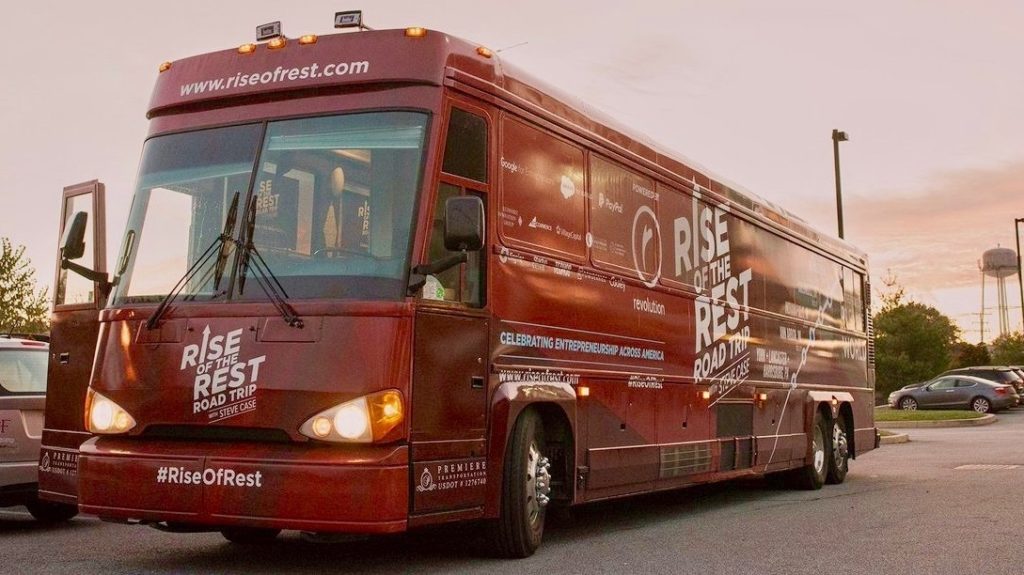
Birmingham’s technology startup scene is poised to receive a substantial boost from an initiative led by Steve Case, the founder of America Online and a champion of supporting emerging innovation ecosystems across the United States. Case will visit Birmingham on May 9 as part of the initiative’s five-city “Rise of the Rest” bus tour, now in its fourth year. The visit is meant to showcase the city’s growing tech startup sector, culminating with a $100,000 investment from the Rise of the Rest Fund in a local business. “For the past four years, we have been encouraged by the entrepreneurs and ecosystem builders we’ve met on our tours and are excited to invest catalytic capital into these Rise of the Rest regions,” said Case, chairman and CEO of Revolution, a Washington, D.C.-based investment firm whose mission is to build disruptive, innovative companies. Since the tour launched, Case and his team have traveled more than 8,000 miles on a bus to visit 33 cities and invest in local startups, according to an announcement. “It’s encouraging to see the interesting businesses and growth potential of startups in these cities,” said J.D. Vance, managing partner of the Rise of the Rest Fund. “We’ve witnessed firsthand the potential for startup ecosystems to transform economies and believe by investing in these companies early we are capitalizing on long-term trends.” The tour stop in Birmingham also features Google for Entrepreneurs, a longtime Rise of the Rest partner, which will provide coaches to help startup founders with their investment pitches. Other cities on the Rise of the Rest Tour are Dallas, Memphis, Chattanooga and Louisville. The tour wasn’t the only good news for Birmingham’s startup scene this week. Bronze Valley Corp., a nonprofit organization that aims to promote diversity and growth in the region’s tech startup sector, launched Wednesday with a conference featuring corporate executives, entrepreneurs and venture capitalists. This story originally appeared on the Alabama Department of Commerce’s Made in Alabama website. Republished with permission from the Alabama NewsCenter.
Alabama lawmakers pass one of two marijuana bills
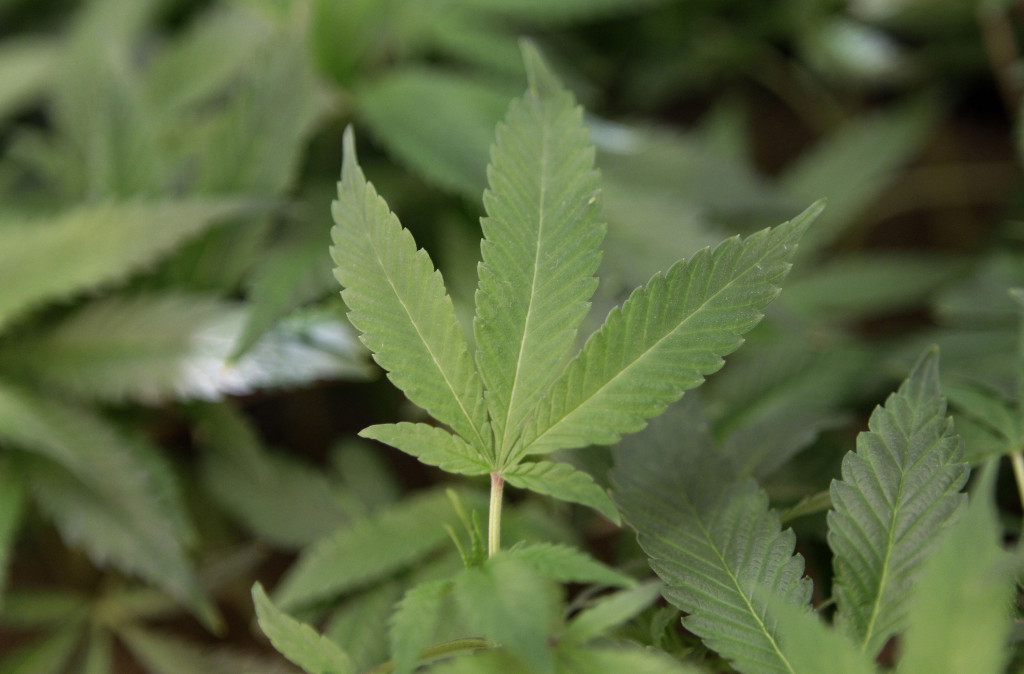
On Wednesday, two Alabama bills to lower penalties for marijuana possession went before House and Senate Judiciary Committees. Birmingham-Democrat state Rep. Patricia Todd’s bill, HB272, which sought to change sentencing for possession of one ounce or less to a violation, and to add fines which would not appear on a person’s criminal record, even after repeat offense, failed to pass the House Judiciary Committee. “I’m sad, but it’s an election year. And a lot of people who voted no told me to my face that they were going to vote yes. And I think the roll-call vote scared a lot of people (who) don’t want to look like they’re soft on drugs. But most people sitting there have no concept or understanding of marijuana,” Todd told the Associated Press. The committee voted 7-5 against the bill, Moody-Republican state Rep. Jim Hill, the chairman of the House Judiciary Committee, believes the bill went too far in saying that possession would be only a violation even after repeat offenses. “I think we’re probably headed toward either some type of either decriminalization or lesser emphasis being placed on marijuana, but it’s illegal. And to say that no matter how many times you use it, how many times it’s personal use, it never rises to the level of a misdemeanor, I just think that’s a mistake,” Hill told AL.com. However, Montgomery-Republican state Sen. Dick Brewbaker’s bill, SB51, was approved by the Senate Judiciary Committee, his bill seeks to up the minimum amount of marijuana needed to be convicted of trafficking from 2.2 pounds to 10 pounds. “Nobody in here wants to hang felonies or drug conviction misdemeanors on a bunch of college kids,” Brewbaker told AL.com. “We’re arresting more people for marijuana than opioids.” Brewbaker’s bill passed on a 6-4 vote, it now moves to the Senate floor, but will also need to be passed by the House to become a law. Although the bill passed through the Senate committee, it already faces some opposition on the Senate floor. Rainbow City-Republican Sen. Phil Williams has gone on record saying he will filibuster the bill if, or when, it comes to the Senate floor.
