
State alcohol regulator’s website gets facelift. Should agency operations?

The state’s ABC Board’s old website was beyond just dated in a visual way. It also included some questionable content including mixed drink recipes. But no more, according to Dean Argo, Govt. Relations and Communications Manager at the Alabama ABC Board, the site was updated on Jan. 1, 2018 for that among other reasons. “The previous site was extremely outdated, hard to navigate, had little to no ability to interact with a visitor, a limited search function and provided little information about the Board, its mission, or division functions. Obviously, it had not been updated in several years,” Dean said in a statement. Dean said the board worked off the state contract for professional services and through the State-managed service provider network (ACRO). The State-managed service provider submitted to us resumes from qualified vendors and they evaluated those resumes and then interviewed individual candidates. From those interviews, they chose a web developer by the name of David Connerth to rework the site. “While we are still working on a couple of areas of the new site, including a section for our public education/awareness program about the dangers and consequences of underage and binge drinking called ‘Under Age – Under Arrest,’ our contract with the web developer was about 6 months in length and will cost approximately $85,000,” Argo added. What’s the purpose of the ABC Board? According to the newly update site, the purpose of the ABC Board is: The ABC Board controls alcoholic beverages through distribution, licensing, and enforcement. The Board operates a chain of retail stores selling the majority of liquor purchased in Alabama. The ABC Board also licenses commercial firms to sell alcoholic beverages. These range from restaurants and nightclubs to small stores selling beer for off-premise use. Applicants for a license are examined carefully to ensure the individuals involved are of solid moral character and will ensure the laws of Alabama and rules of the Board are obeyed. The proposed site for selling or dispensing of beverages is checked through neighborhood survey. After a license is issued, the ABC Board continuously inspects operations of licensees. The Board also conducts audits, collects taxes, and disburses revenue obtained from those taxes, and disburses revenues from the ABC Stores. Recipients of these funds include the Department of Mental Health, Special Education Trust Fund, Department of Human Resources, and the State General Fund. Controversial Role in Alcohol Sales But the board’s work isn’t without controversy as Alabama remains one of the last states in the nation with such strict control over sales and licensing. Legislation to change the structure operations has been introduced for years by State Senator Arthur Orr trying to do away with the portion of the Board that runs package stores. Orr has refiled the legislation this session, SB98, in an effort to privatize ABC stores. Cameron Smith, Vice President and General Counsel at the R Street Institute, took on the issue noting its fiscal sense in a 2015 AL.com post saying, “Orr’s bill would eliminate the cost of more than 600 employees and the expense of leasing ABC stores from the ABC Board’s operational cost. While the move would undoubtedly incur one-time costs associated with eliminating those positions, those costs are far less expensive than the ongoing salaries and benefits of those state employees.” Alabama Today’s own Apryl Marie Fogel wrote a piece on the subject and website, noting you could get some fun recipes there. Those have sense been removed from the website. The conclusion of the post according to her remains relevant today new website or not, “The fact is the prohibition days are long behind us and so should be the days of state-run liquor stores.” BEFORE: AFTER:
$300 million to corrupt firm? Auditor Jim Zeigler says no
Alabama is no stranger to political corruption charges. The state has seen elected officials at every level of government charged and found guilty of crimes. In what some perceive as a tone-deaf move, the state is moving forward to contract with Wexford Health Sources — a company that has found itself in the middle of a bribery case in neighboring Mississippi. Wexford has been named in a suit brought forth by the Mississippi Attorney General Jim Hood to recoup funds and damages related to bribery charges that sent the former Mississippi Corrections Commissioner, Chris Epps, to jail for 20 years. And now, the Alabama Department of Corrections (ADOC) will bring a contract — for prison medical and mental health services — with Wexford to the to the legislature’s Contracts Review Committee on March 1 for approval. The contract, effective April 1, 2018 states Wexford “will provide comprehensive healthcare including both medical and mental health care and management services to State inmates in accordance to applicable laws” through Sept. 30, 2020 for a sum of $360,471,062. [Copy of DOC-Wexford contract] Alabama Today reached out to Bob Horton, Public Information Manager at the State Department of Corrections, for comment on Monday, regarding the contract but has yet to hear back from him. But according to the Associated Press, Horton claims Wexford had not been accused of any wrongdoing when the state decided to sign a contract with them. “When the pick was made that ‘Wexford Health has not been accused of any wronging and the department is confident the review committee selected the right company for the health care contract,” Horton told the AP. On Tuesday, State Auditor Jim Zeigler requested the committee order “the maximum delay allowed by law” on the proposed contract. Zeigler says considering the fact Alabama is under federal court order to improve poor prison conditions for inmates, it would irresponsible to enter into a contract with the company without knowing the court’s final decision in the case. “The State of Alabama has been found liable in a federal lawsuit concerning prison mental health,” Zeigler said in a statement. “We are now awaiting the court’s final decision on the remedies to be required. To enter into the proposed contract now without knowing what the federal court will require is irresponsible.” Zeigler continued, “If this committee orders the maximum delay allowed by law, it will give me time to reason with the Department of Corrections to wait to see what steps will be ordered by the court in this matter. Allowing this contract to go forward without knowing what the court will require is simply premature.” Wexford complaint in Mississippi:
New study finds First Class Pre-K attendees more advanced than peers

A new study released on Tuesday, on behalf of the Alabama Department of Early Childhood Education found children in Alabama who voluntarily participated in the First Class Pre-K program are more likely to be competent in reading and math than their peers. “These findings prove that what we are doing in Alabama is working. Our First Class Pre-K program is second to none and our students are benefitting,” said Gov. Kay Ivey. “Now we must work to take the methods of instruction in Pre-K and implement them into kindergarten, first, second and third grade classrooms. Success breeds success and a strong educational foundation is the basis for the success of all Alabamians in the future.” The study also concluded that the program was notably effective with minority students and students from low-income families. “The latest analysis of the First Class Pre-K program provides the clearest evidence to-date that participation in Alabama’s high-quality, voluntary First Class Pre-K program is helping students succeed throughout their time in school, what is most exciting about this report is how the lessons learned in Alabama’s First Class Pre-K are persistent in every grade and in every race and ethnic group, with the most profound impact demonstrated by some of the state’s most vulnerable children,” added secretary of the Alabama Department of Early Childhood Education, Jeana Ross. The study, titled “Achievement Gap Closure and Gains Associated with Alabama’s First Class Pre-K,” was conducted by the University of Alabama at Birmingham and the Public Affairs Research Council of Alabama. The research team also observed that attendance in Alabama’s First Class Pre-K program: Narrowed the gap in reading proficiency by 28 percent for all children in poverty; 32 percent for White children in poverty; 31 percent for Hispanic children in poverty; and, 26 percent for Black children in poverty. Narrowed the gap in math proficiency by 57 percent for all children in poverty; 71 percent for Hispanic children in poverty; and, 37 percent for Black children in poverty. Increased reading proficiency for children in poverty by 12 percent overall; 25 percent for Hispanic children in poverty; 23 percent for Black children in poverty; and, 3 percent for White children in poverty. Increased math proficiency for children in poverty by 13 percent overall; 17 percent for Hispanic children in poverty; 16 percent for Black children in poverty; and, 10 percent for White children in poverty. The Alabama First Class Pre-K program is located in 941 classrooms across the state. The National Institute for Early Education Research has named the program the nation’s highest quality pre-k program for the past eleven years.
Ask the candidates: Gubernatorial responses on transparency and accountability

Alabama Today sent the candidates a copy of a sitting governor’s daily schedule as sent the evening before to press and interested parties. We noted in the email that Governor Robert Bentley and Governor Kay Ivey had chosen not to do so. It turns out that Governor Ivey has sent her schedule out to some media for several months. Neither her official office nor campaign was able to provide a response as to why Alabama Today was originally included on the list of recipients only to be removed within days leading to the conclusion they weren’t providing them anymore. Good news: It looks as though in a crowded field of candidates transparency is key to many. Here is the question as posed and their responses. The following question: If elected, in the name of transparency and accountability, would you be willing to implement a policy to do so (provide a public schedule to press)? If not why? *In the order in which they were received with the exception of Ivey whose official office and campaign responded at separate times but are being published together. Governor Kay Ivey via Brent Buchanan (campaign): Buchanan, “Governor Kay Ivey promised transparency and to clean up the mess in Montgomery. She has done and will continue to do both. Governor Ivey has been releasing her schedule to the media – any of whom can publish more widely than a government website – for many months.” Governor Kay Ivey via Daniel Sparkman (official office): Sparkman re: Alabama Today request to receive the governor’s schedule*, “it is solely to be used for planning purposes and not for publication. It is also not to be shared outside of your organization.” * Ivey’s official schedule is released at the beginning of each week. We are unsure if it is amended or updated based on changes as is Governor Rick Scott‘s of Florida. It is unlikely, though possible, the governor’s office remains fixed days in advance. Scott Dawson (Republican candidate): The people of Alabama have lost trust in their leadership and the way to regain that trust is by taking openness and transparency beyond what is normally expected. The corporate world talks about “exceeding expectations.” Can you imagine how much better Alabama would be if our leadership talked in those same terms? That’s why I will implement a calendar policy to keep the people informed about how their governor is spending time in their service and more importantly, I will work to be sure that each moment of the day is devoted to the highest degree of ethical behavior and making Alabama a better place for everyone. Mayor Walt Maddox via Chip Hill, Communications Director (Democrat candidate): Walt Maddox not only believes transparency and accountability are vital, he’s taken action that proves it. For example, as Mayor of Tuscaloosa he implemented an online portal where anyone can access the details of city spending. Announced last year, this online portal was established to provide information and data on the city’s budgetary revenues and spending as well as up-to-date crime reports and demographics for Tuscaloosa, among other features. This portal made city information more readily available while allowing taxpayers to see how funds are budgeted and, ultimately, where they are spent. State Sen. Bill Hightower via Chris Brown, campaign advisor (Republican candidate): Bill Hightower firmly believes that the Governor’s office does not belong to any one public official, but it instead belongs to the voters of Alabama. As Governor, Bill Hightower will be committed to transparency and making sure his public schedule is available so that the people of Alabama will know where and how his official time is being spent working for them. Justice Sue Bell Cobb (Democrat candidate): I believe it is paramount for public servants to be open and accountable to those they serve. I would absolutely implement a policy within my administration that the press should be notified in advance of my public schedule. Democracy relies on informed, engaged citizens, and it is the responsibility of leaders to offer themselves for dialogue with whom they serve. We will do just that in the governor’s office
Building falls through for Montgomery’s first charter school

The LEAD Academy, Montgomery, Ala.’s first charter school is still looking for a building for its students. The charter school was approved earlier in February, by the Alabama Public Charter School Commission. Charlotte Meadows, the LEAD Academy board chair expects the academy to have 360 students enrolled in the fall. The problem is, they have nowhere to put them. The plan was to renovate the building that houses the Small Business Resource Center in downtown Montgomery. Board members were ready to move forward with the renovations, but the Chamber of Commerce recently notified them that the building would not be sold to them after all. “We definitely can start in 2019 because we can buy a building and renovate it between now and then,” Meadows told Alabama News. “So that’s not the issue. The issue is finding a specific building that is already move in ready. We just don’t have time between now and August to do a ton of renovations.” The academy will begin the search for a new building to occupy before August. LEAD Academy will focus on K-5 education in the first year, adding higher grades every year. By 2024, the school aims to offer all grades K-12. The focus being on teaching children how to interact effectively with one another and adults. The school’s curriculum will focus on STREAMS: science, technology, reading, engineering, art, math and social/emotional learning. “Start from kindergarten on to help children learn social skills needed to survive in this world. Teach a child to speak face to face, look someone in the eye when you speak to them and shake hands when you meet someone,” said LEAD Academy board member, Lori White.
Stump speeches: Twinkle Andress Cavanaugh on Right-sizing the government
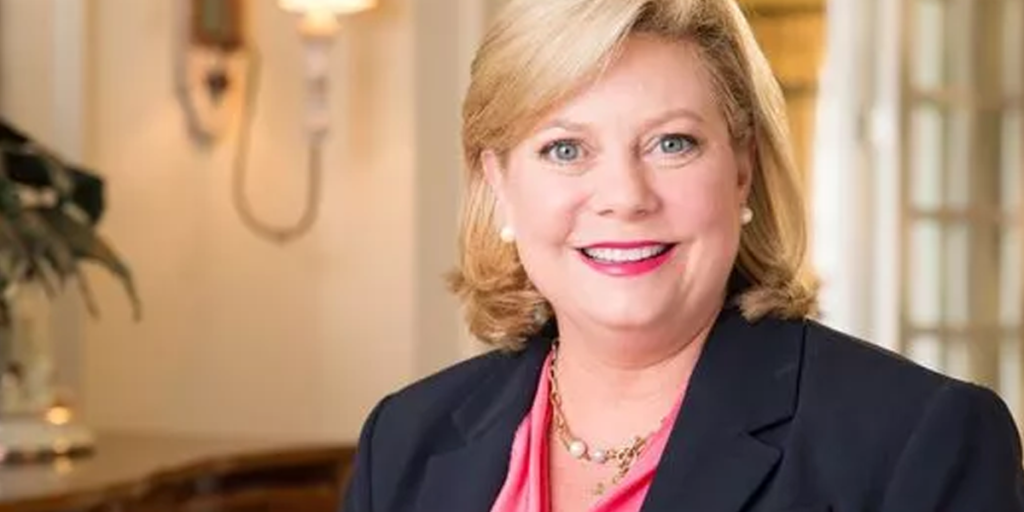
Public Service Commissioner Twinkle Andress Cavanaugh has served on the commission since 2010. While the focus of the commission is regulated industries, Cavanaugh has gone and beyond the call of duty in reevaluating the cost to taxpayers of running commission as a whole. While on the stump running for Lieutenant Governor, she is highlighting more than just the work at the commission has done in dealing with consumer protections, she’s also highlighting her efforts to “Right Size” government. We offered Chairman Cavanaugh the opportunity to tell our readers a little more about these efforts and here’s what she had to say: The first thing I did after being sworn in was grab my red pen and start looking for fat to trim from the commission’s budget. As a small-business owner, I know the value of a dollar and what it feels like to tighten our belts. Alabama’s state budgets were stretched thin during this time. This was during the Great Recession and the slow and painful recovery from it. Families all over Alabama were sitting around the kitchen table hoping they’d have some decent meals to share together. When I grabbed the reins of the PSC, we had 119 employees. I undertook a careful analysis and learned we could do the same job, probably better than ever before, if we sharpened our staff and reduced the headcount. Without firing a single employee, the PSC now has 72 employees, down more than 39% from when I got there. As employees retired or took other positions outside of the commission, we reorganized, retrained, reduced our numbers, and remained laser focused on making sure the commission continued its inspections and regulatory functions without missing a beat. We are now saving nearly $2.6 million annually because of the rightsizing of our staff, without sacrificing our pipeline and railway safety duties. Public servants must lead by example. When I got to the PSC, it looked like that episode of Oprah where she gave the entire audience a new car. We had 59 cars – essentially one car for every two employees. The very first decision I made at the PSC was to tear up the paperwork for the car the commission wanted to assign to me. I had my own personal car, and I didn’t need the taxpayers giving me another one for free. Then I started getting rid of every single car at the commission that wasn’t absolutely needed. I got rid of three out of every five cars the PSC had in its fleet. We went from 59 cars down to 24. Now, the only employees who are assigned cars are those who have daily responsibilities requiring daily travel, like the employees in Gas Pipeline Safety. We also retained a very small pool of cars that can be checked out by employees who absolutely must travel for state business. As you can imagine, as we reduced the headcount in the building, more and more offices were sitting dark and empty and collecting dust. In 2014, I looked into the possibility of moving the entire commission into another building to save money, but I found we could save even more money by merely reducing the amount of space we rent in our current building. Again, leading by example, I reduced my personal office space by 65% and then reduced our commission’s overall office space by 38%. Finally, I put the brakes on employees traveling on the taxpayers’ dime. Since I arrived in 2010, out-of-state travel expenses have been cut by 74% and in-state travel has been cut by 70%. The commission still continues to travel to necessary functions, but the days of frivolous trips taken by previous commissions are over. I’m proud of my work over the last seven years. I work with great commissioners and employees who are as dedicated as any public servants and employees I’ve ever known. I’ve asked a lot of them as we’ve trimmed the fat in our budget and slashed expenses by 32% – or $3.2 million annually. Every dollar we save at the PSC allows the state legislature to appropriate those dollars to other areas of need. As a result, our savings at the PSC help keep taxes and fees as low as possible in Alabama. I want other agencies to follow our lead, examine their budgets line by line, and substantially trim the fat. Every dollar sent to the government was earned by the blood, sweat, tears, and sacrifice of an Alabamian who should trust us to use it wisely. And my faith tells me to be a good steward of money, particularly when I’m managing other people’s money. There is no higher calling in public service than keeping a careful watch over every single dollar sent to the government. Ultimately, we owe it to each Alabamian to carefully examine the use of those dollars and cut expenses anywhere and everywhere possible.” Amount sent to the General Fund 2009 – $3.8 million (year before I got into office) 2018 – $13 million PSC Operating Expenses 2010 – $9.9 million 2017 – $6.7 million The positions or interpretations set forth in this statement are those of Commissioner Twinkle Andress Cavanaugh and do not reflect the official position of the Commission.
Walt Maddox announces scholarships, workforce development proposal
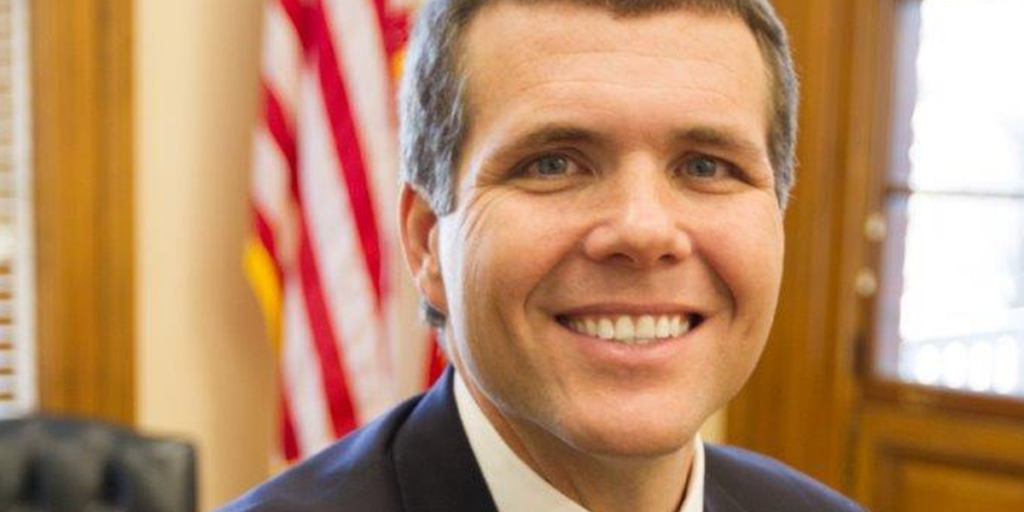
Last week, Tuscaloosa Mayor and Democratic gubernatorial candidate Walt Maddox on Monday unveiled a plan for a statewide education lottery — dubbed the Alabama Education Lottery (AEL) — to help create a 21st Century educational system to help prepare Alabama’s children for competition in the technological age. On Tuesday, Maddox revealed the first component in his lottery plan: college scholarships and workforce readiness. “The cost of higher education continues to rise, which is creating massive student loan debt, and making college virtually unaffordable for hard working Alabamians,” said Maddox. “Making matters worse, Alabama’s greatest economic challenge is developing a knowledge based and technologically-skilled workforce that can compete both nationally and internationally. Understanding this, I will be recommending $125 million be allocated annually for scholarships and workforce readiness.” Under Maddox’s scholarship plan, Alabamians who are pursuing workforce development training, associate degree or a bachelor’s degree, will now have “an affordable pathway to compete for the jobs of tomorrow.” Annually, scholarship recipients will be required to complete 24 hours of community service in the Yellowhammer State. As part of the AEL’s goal of workforce readiness, $5 million annually, in scholarships and grants will be awarded to The Academy of Craft Training (Academy) and to registered apprenticeship programs that that meet national standards for registration with the U.S. Department of Labor (USDOL). The Academy is a public/private partnership between the commercial construction industry and the State of Alabama Career and Technical K-12 Department. Currently, only 250 students in Alabama are being served. Through AEL, Maddox intends to work with industry to expand the Academy across the workforce regions to help expand the opportunities for high school juniors and seniors to receive workforce development training from industry professionals. If elected Governor, Maddox would propose the AEL to the state Legislature. If passed, there would then be a constitutional amendment to be voted on in November 2020 by the people of Alabama.
Get to know: Alli Summerford, candidate for Alabama House District 48
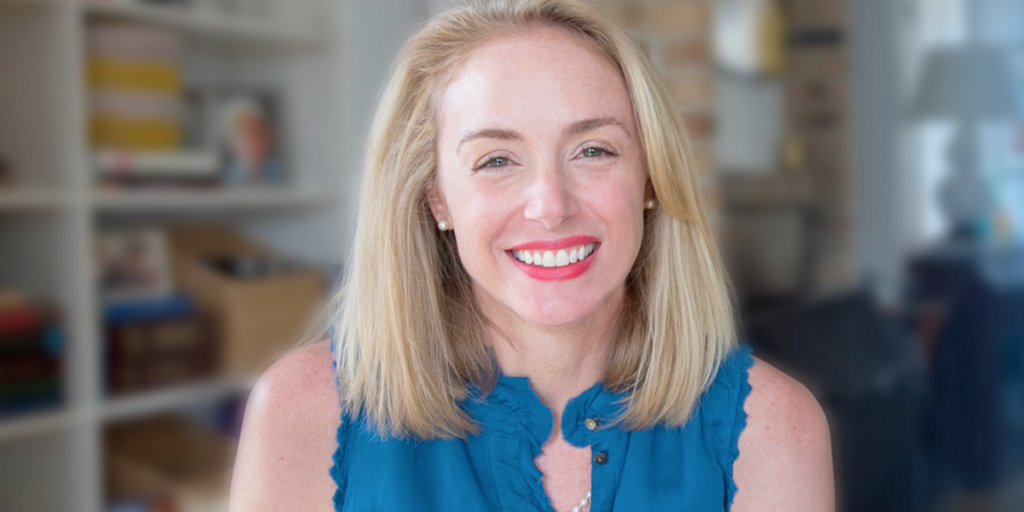
First time candidate Alli Summerford is the sole Democrat running for House District 48, a seat that includes parts of Birmingham, Homewood, Hoover, Irondale, Mountain Brook, Vestavia Hills. While her Republican opponent has yet to be determined — she will face either incumbent Birmingham-Republican Jim Carns or Republican candidate William Wentowski following the June 5 primary — Summerford is the first Democratic candidate for District 48 in over a decade With a little over three months until voters head to the ballots, AlabamaToday.com is inviting all candidates running for office in Alabama this year, to complete a questionnaire we believe offers an interesting, albeit, thumbnail sketch of who they are and why they are running. If you are a candidate and would like to complete the questionnaire, email Elizabeth@ALToday.com. Here Summerford is in her own words: Significant other? How long married? Kids? I’m not married. My son, Gram, is a junior at Mountain Brook High School, where he is a nationally ranked runner. Education background? Professional background? I attended college at the University of Tennessee, Knoxville (a detail I hope you will not hold against me!), where I graduated as valedictorian with a BA in Business Administration and an MBA in New Venture Analysis. What was your first job before college/adulthood and after? My first job was in a shoe store in the mall when I was 15. It was one of those old-fashioned stores where the employees actually put the shoes on the customers’ feet. After college and business school, I had a successful career as a broker in the Memphis commercial real estate firm Trammell Crow.After that, I founded a national web design company, dandelion marketing, that I have run for almost 20 years. I also share my expertise in visual identity and search engine optimization as a consultant and speaker. Along the way, I created a popular website about the ‘80s as a hobby, which I sold to an investor in 2016. In 25 words or less, why are you running for office? Alabama is 49th in everything but football, and we can do better, starting with bringing some new faces and voices into the state house. Did you speak with anybody in your political party before deciding on running? Receive any encouragement? From whom? I spoke with several people, but the thing that encouraged me most was when I attended a speech during Doug Jones’s campaign where he issued a call for decency and common sense, and I left with tears in my eyes. I had never even considered running for office before, but I realized that we are complacent at our peril, and we cannot trust other people to take care of things. Who do you count on for advice besides significant other or clergy? I look to my parents and friends for advice; I am blessed to have a great support system of amazing people I trust. Who is your political consultant? Campaign manager? My campaign manager is Tamara Sansbury, who has been my close friend for almost 20 years. She is also new to politics. Who was the first person to contribute to your campaign? Why did they donate? My first donation came from an old friend and fellow single mom, whose oldest son and my son have been friends since they were little. She and I have some shared experiences, and she was so excited about my taking this leap. Who, if anyone, inspires you in state government? I’m inspired by Anthony Daniels, who is the minority leader in the state house. He shares my passionate commitment to improving healthcare and education in this state. Why do people mistrust elected officials and what are you going to do about it? People mistrust elected officials in Alabama because they have elevated special interests over the people’s interests, through lax campaign finance laws, a long history of cronyism, and a lack of transparency in Montgomery. I’m committed to a legislative agenda that puts the people first by ensuring fair elections and enacting and enforcing tough ethical standards and strong campaign finance laws. What are 3 specific policy positions that you’re running on? (Please don’t simply say “education” or “improving the schools”) First, I don’t believe that the state legislature should tell the people of Mountain Brook how much money they can spend on education, just as I don’t believe that the state legislature should tell Birmingham what its minimum wage should be. It’s time to reform the constitution to empower the people closest to a problem to fix it themselves.Second, my small business builds websites and advises other businesses on internet marketing. Neither of those fields existed when I graduated from high school. We owe it to our children to make sure that they are prepared to adapt to a future that looks a lot different than it looks today. I want to improve teacher compensation so that we attract and retain first-class teachers that are equipped to teach our children.Third, Alabama is one of the unhealthiest states in the nation despite the fact that we are home to some of the leading health institutions in the world. We should expand access to those institutions by expanding Medicaid. The federal government is offering to give us $100 for every $5 we spend on Medicaid. As a small business owner, I know a good deal when I see one, and that is an extremely good deal. What is a “disruptive” issue (i.e. ride-sharing) you are interested in? I’m very interested in solar power and its ability to provide a long-term source of clean, renewable energy. Alabama law discourages the use of solar power, and that needs to change. Name one current state law you would want repealed? I want to repeal the Alabama Uniform Minimum Wage and Right-to-Work Act, which concentrates the power to regulate relationships between workers and their employers in Montgomery, rather than allowing local governments to take the steps they deem necessary. Montgomery has too much power and has wielded it too unwisely. Who was the best governor in Alabama’s modern history? Alabama’s political history is filled with what-ifs, and there are several moments that are inspirational to me, where Alabama could
Southeast Worlds of Work allows Alabama teens to consider multiple career paths
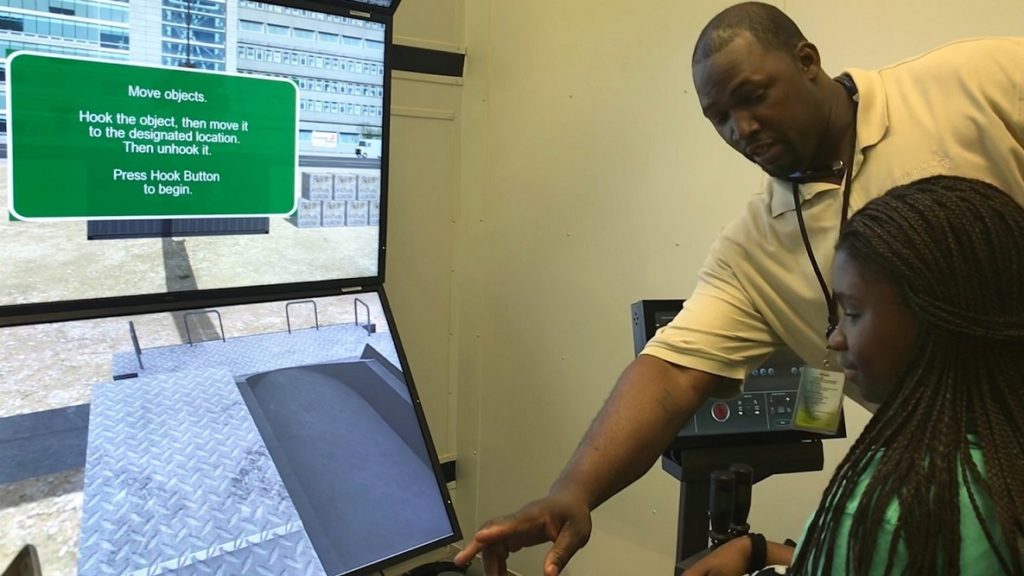
They may not know yet what they want to be when they graduate, but almost 5,000 regional eighth-graders recently explored a variety of career paths during the third annual Southeast Worlds of Work (WOW) at the National Peanut Festival Fairgrounds in Dothan. The students came from Alabama, Georgia and Florida to take part in the fun, educational and hands-on career expo. The expo is a way for students to become familiar with the high-demand, high-wage career opportunities available in the tri-state region. It is also designed to create awareness about career options among students and educators that address the current workforce needs in the area. “This is a terrific opportunity for our business to introduce these students to tech and trade fields that we need them to consider as a career path,” said Kendal Adams, Alabama Power’s Phenix City Distribution manager. “We see this as our chance to meet face to face with the workforce of the future and promote our industry as a consideration for them.” The event showcased more than 50 organizations and businesses in agriculture, automotive technology, aviation and aerospace, construction, health care, manufacturing, media and technology, public service and the military, transportation and logistics, and utilities. The Alabama Power exhibit included displays and demonstrations across the spectrum of the utility industry. Students could operate a crane in a simulator; see what happens when a hawk flies into a powerline and how automated switching re-energizes the line; learn about electrical safety with the Safe-T-Zone display; and operate a mini-derrick. “Naturally, they are not all engaged,” said Adams. “But many times, we encounter students who show a genuine interest and spark and that is very rewarding. We want to reach as many young people as we can and make them aware of the many opportunities Alabama Power has to offer.” Mike Tew, president of Southeast WOW, said he hopes even more area businesses and industries will become involved in the annual event. “It’s only going to grow and get better,” said Tew. “This is our third year and it has gotten bigger and better each year. It is a way for us to enhance our community workforce by developing career interest among students and provide a pipeline for labor for our businesses and industries for the future.” Southeast WOW is a project of Southeast Alabama Works, the workforce council for 10 counties across southeast Alabama. “We go across state lines because we understand where our workforce comes from,” Tew said. This year, students from Barbour, Butler, Coffee, Covington, Crenshaw, Dale, Geneva, Henry, Houston and Pike counties from Alabama; Early, Miller and Seminole counties in Georgia; and Jackson, Holmes and Washington counties from Florida attended. To learn more about Southeast WOW, visit here. Republished with permission from the Alabama NewsCenter.
