
Winning ways return to Birmingham high school
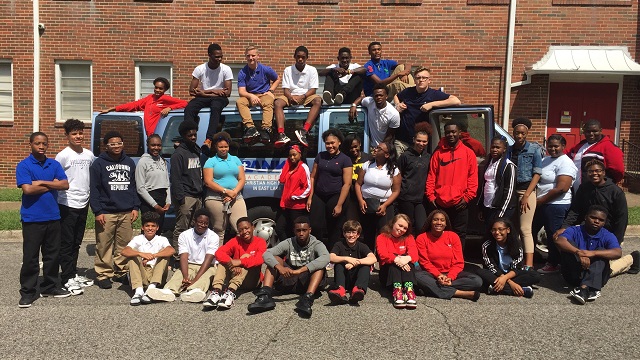
It was the 1960s and teenagers were rocking to the Beatles. In the governor’s office, George Wallace was promising “segregation today, segregation tomorrow, segregation forever.” And on the east side of Birmingham, head coach George O. “Shorty” White was winning the first of three state football championships at Banks High School. Jimmy Sidle, a tall, rangy fellow, was one of the first to earn a college scholarship. He chose Auburn and in 1963 became the first quarterback to lead the nation in rushing with 1,003 yards. Larry Willingham made his mark at Banks, Auburn and with the St. Louis Cardinals as an All-Pro defensive back. Mike Neal and his brother, Rick, were not far behind. Banks kept winning and the college scholarships kept coming. Alabama signed Bobby Johns, Johnny Musso, Gary and Jeff Rutledge, Donny and Johnny Johnston, Billy Strickland and Ronnie Roddam. But then, in 1989, the city transformed Banks High School into a middle school. It was a shocking development that still stings for some students and fans. Now, a school of winning in football as well as the classroom, is an unoccupied eyesore, and some nearby residents have urged the city to tear it down. Whether the city does or doesn’t knock it down, there is a something new to be proud of and respect. Through the efforts of Shorty White’s son, Darryl, and Banks graduates, including Mike Dutton, Steve Foster, Marilyn Davis Purdy, Cal Dodson and Randy Overstreet, a new Banks was born. Banks Academy, a private Christian high school, is carrying on the old Banks High School’s penchant for winning. The Jets won the recent Alabama Christian Athletic Association basketball championship by defeating Harvest Christian 82-58, then squeaking by Cornerstone Christian 86-84. The ACAA is an association of about 30 private Christian schools. Banks Academy finished the season with a 25-4 record and Chase Cornelius was voted Coach of the Year. “When I was offered the job as head coach, my dad enlightened me on what the name Banks meant,” Cornelius said. “It was a name that received national recognition and was a powerhouse, especially in football.” Dutton, a former varsity basketball player and later principal at Banks High School, is on the Banks Academy board of directors. He has a positive outlook about Banks Academy and the work of Darryl White. “He had the vision for this, and his leadership has been tremendous,” Dutton said. “Darryl is the catalyst.” Dutton is confident that Banks Academy students will latch onto the skills and opportunities to be successful in life. The school has 36 students, and that’s not many. But White said he expects enrollment to be 55-plus for the 2018 term, which starts in August. T-shirts acclaiming “Old Name New Tradition” were worn by students when they first enrolled at Banks Academy. “The old tradition is not dead,” said White, “this is just the beginning of a new Banks era.” And he offered a final word: “Football is on the horizon.” Rutledge and Nathan, a look back Banks vs. Woodlawn was a rivalry that split the schools apart in the Sixties, Seventies and Eighties, and there was no bigger game than Jets vs. Colonels in 1974. Traffic backed up for miles to get to Legion Field for the game that featured Banks quarterback Jeff Rutledge and Woodlawn running back Tony Nathan (and featured in the movie “Woodlawn” and a highlight from the book “Woodlawn” on which the movie is based). Tony Nathan (22) breaking away for a long run. (contributed) Traffic backed up for miles to get to Legion Field. And when fans got there, only four gates were open. With kickoff time near, fans had to squeeze their way through the gates and find seats. This was the largest crowd – an estimated 40,000 — to watch a high school game in Alabama. Police estimated that another 20,000 turned around and went home. But on the field it was Banks vs. Woodlawn, Rutledge vs. Nathan, Coach Shorty White vs. Coach Tandy Geralds. The results: White picked up his 100th victory. Rutledge completed nine of 10 passes for 188 yards and a touchdown. Nathan rushed for 112 yards in 31 carries. Banks 18, Woodlawn 7 Republished with permission from the Alabama NewsCenter.
State Senate enhances protections for consumers with data breach notification law

Alabama is one of only two states nationwide that doesn’t require companies to report the theft of electronic consumer information. Thursday morning, the State Senate took action to change that. In an effort to protect Alabama consumers, lawmakers unanimously voted, 24-0, in favor of SB318, the Alabama Data Breach Notification Act, which will require private companies and state agencies to report data breaches to affected consumers. “Equifax reported this week that 2.4 million Americans were affected by a breach last year of the company’s data,” said the bill’s sponsor by Decatur-Republican state Senator Arthur Orr. “Virtually all of our vital personal information – including Social Security numbers, military IDs, drivers’ licenses, bank account numbers, and medical data – is now online. With this bill, consumers will know if their information has been compromised and what steps a company is taking to recover and protect consumers’ data.” If hackers steal sensitive personal information from a private company or a state agency, the Data Breach Notification Act requires the company or agency to notify the affected consumers within forty-five days of the breach’s discovery. Should a breach affect more than: 1,000 people: the company or agency must notify the state Attorney General’s office 500,000 people: the company or agency must post notices online, and in the newspapers, TV, and radio stations where the affected consumers live. “I appreciate Attorney General Steve Marshall for partnering with me on this legislation. It is imperative we do everything we can to protect the privacy of Alabamians’ medical and financial information,” Orr added. If a company or state agency fails to notify consumers of a data breach, the Attorney General’s office can assess fines of $5,000 per day and file a lawsuit on behalf of the affected individuals. “I want to thank Senator Orr for partnering with my office to ensure that Alabama’s consumers share in the same protections afforded to the citizens of 48 other states when it comes to their personal information,” Alabama Attorney General Steve Marshall said. “This is a strong piece of pro-consumer legislation and we applaud the Senate’s action today.” Orr’s proposal now goes to the House of Representatives for consideration.
AeroStar plans $2 million Alabama expansion, doubling workforce
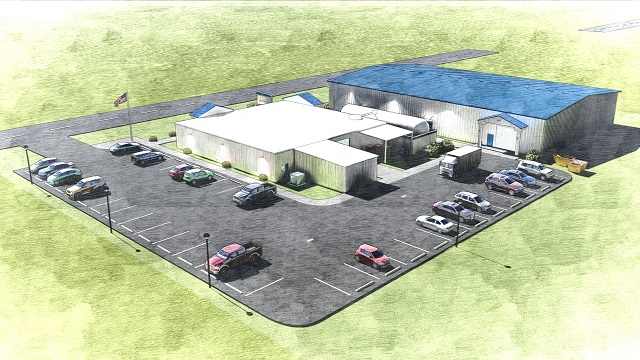
Mobile-based AeroStar on Thursday announced plans to more than double its facility and its employee count over the next several years. Founded in 2011 to service commercial, commuter and military aircraft, the company has maxed out its current approximately 6,000-square-feet footprint. In order to continue its growth pattern Aerostar will make a $2 million investment in land, construction and equipment in order to add another 16,875-square-feet building next to the existing one at Mobile Aeroplex at Brookley. “We’ve seen a dramatic increase over the years of airlines moving to smaller third-party maintenance providers, like ours, for component maintenance needs. To keep up with the stringent turn-round times, we need more technicians and test equipment,” said Greg Guzman, president and managing partner of AeroStar. “To fuel future growth, we need to invest in new test equipment that can keep up with the ever-changing technology of the newer aircraft.” Work is set to begin in March with a completion date anticipated before year-end 2018. David Rodgers, the Mobile Area Chamber’s senior project manager of economic development, said, “Entering into a fast-developing aerospace sector in Mobile, AeroStar made their presence quickly known in the industry. We are excited to see this homegrown business commit to new investment and jobs in our community.” Aerostar currently employs 22, and officials say they will create 28 new positions through the expansion. “There is no greater show of confidence than when existing businesses choose to reinvest in our community,” added City of Mobile Mayor Sandy Stimpson. “We appreciate this investment by AeroStar because it will create jobs for our citizens and add momentum to our push to become a global destination for the aerospace industry.”
Kay Ivey signs ridesharing bill allowing Uber, Lyft statewide
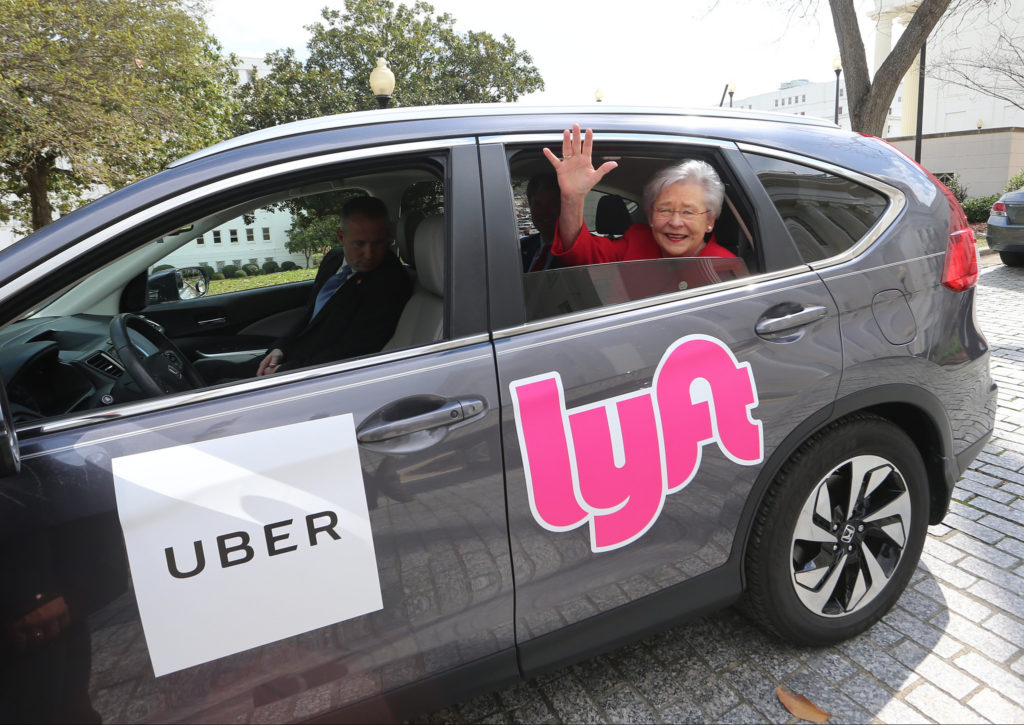
Governor Kay Ivey on Thursday — alongside Mountain Brook-Republican State Rep. David Faulkner and Greensboro-Democrat state Senator Bobby Singleton, Ride for Alabama coalition members and local rideshare drivers — signed Alabama’s rideshare legislation into law during a bill signing ceremony at the State Capitol. Alabama is the 45th state in the nation to welcome comprehensive ridesharing, allowing companies like Lyft and Uber to operate statewide. “Today, we are paving the way for ridesharing throughout all of Alabama, regardless of location or proximity to major metropolitan areas,” Ivey said. “I am proud to have supported this bill throughout the legislative process and commend the hard work of Representative Faulkner and Senator Singleton for sponsoring the bill and Ride for Alabama coalition members for their strong support throughout the legislative process.” “When I first spoke at the Ride For Alabama coalition launch in January, I stated that one of my primary responsibilities in the Alabama House is to ensure that all Alabama residents have access to safe, reliable and efficient methods of transportation,” added Faulkner. “The legislation that I and Senator Singleton carried, and that Governor Ivey signed today, does just that.” Previously, ridesharing companies were allowed to operate only in select, approved cities in Alabama. By enacting statewide legislation, suburban and rural communities will now have access to the many benefits the rideshare industry provides, including enhanced driver earning opportunities. “Rural parts of our state will now have access to these innovative transportation methods, and more Alabama residents will have the opportunity to earn additional income,” said Singleton. “With Governor Ivey giving her signature to this legislation, Alabama’s economy will move forward, public safety will increase and Alabama residents will experience greater quality of life.” Uber and Lyft both thanked Ivey for her support of the legislation. “We want to thank the Governor for her support of this law. Lyft is providing tens of thousands of Alabamians earning opportunities and transportation options that did not exist a few short years ago,” said Scott Coriell, communications manager for Lyft. “We’re excited to expand those benefits to more individuals and families around the state in the coming months.” “With this statewide framework for ridesharing, more Alabamians will benefit from access to safe rides and flexible work opportunities through Uber – and current customers will benefit from an even more reliable experience,” said Uber General Manager, Kasra Moshkani. “We thank Governor Ivey, Representative Faulkner, and Senator Singleton for their leadership and look forward to expanding throughout Alabama.” Throughout the legislative process, the bill was supported publicly by the Ride for Alabama coalition, comprised of multiple Chambers of Commerce and third-party entities, such as the Alabama Hospitality and Restaurant Association, Birmingham Urban League, Decatur-Morgan County Chamber of Commerce, the National Association of Women Law Enforcement Executives, the Alabama Black Chamber of Commerce, and the Alabama Association for the Deaf, among others. The law will take effect July 1.
Fantasy Sports bill unanimously passes Senate Committee, advances

The Senate Tourism and Marketing Committee unanimously approved legislation on Wednesday that would legalize fantasy sports contests. Under existing law, there are no regulations relating to fantasy sports. Sponsored by Huntsville-Republican state Sen. Paul Sanford, SB325 would establish the Fantasy Contests Act and provide for the registration of certain fantasy sports operators conducting fantasy sports contests within the state. Specifically, the bill: Sets the registration and annual renewal fee for operators $5,000 for new operators $85,000 for existing operators with more than 5,000 customers Sets the minimum playing age at 19 Excludes contests based on collegiate and amateur events Installs consumer protections comparable to those in other states History of Fantasy Sports in Alabama In April 2016, former state Attorney General Luther Strange sent cease-and-desist letters to two Daily Fantasy Sports companies — DraftKings and FanDuel — after determining that paid daily fantasy sports contests constitute illegal gambling. In daily fantasy sports (DFS), participants pay to create a roster of players, then pit their roster against those of other participants. Whomever’s roster performs the best that day within a certain pool wins prize money through the site. According to Alabama code section 13A-20-12, a person participates in gambling if he or she “stakes or risks something of value upon the outcome of a contest of chance or a future contingent event not under his control or influence, upon an agreement or understanding that he or someone else will receive something of value in the event of a certain outcome.” Gambling in Alabama is illegal, with a few exceptions including buying securities and commodities, insurance, and some grandfathered activities. DFS sites often contend they are games of skill, not of chance, and thus aren’t covered under most states’ gambling laws, nevertheless the companies complied with Strange’s request. Sanford contends 400,000 Alabamans played fantasy sports before it was banned from the Yellowhammer State. Previous legislative attempts to legalize fantasy sports For three years now state lawmakers have endeavored to legalize fantasy sports. Last year the House passed its version of a bill doing just that, but the Senate adjourned for the session without ever taking it up. The bill now advances to the full Senate.
University of Alabama granted patent for sideline privacy tent
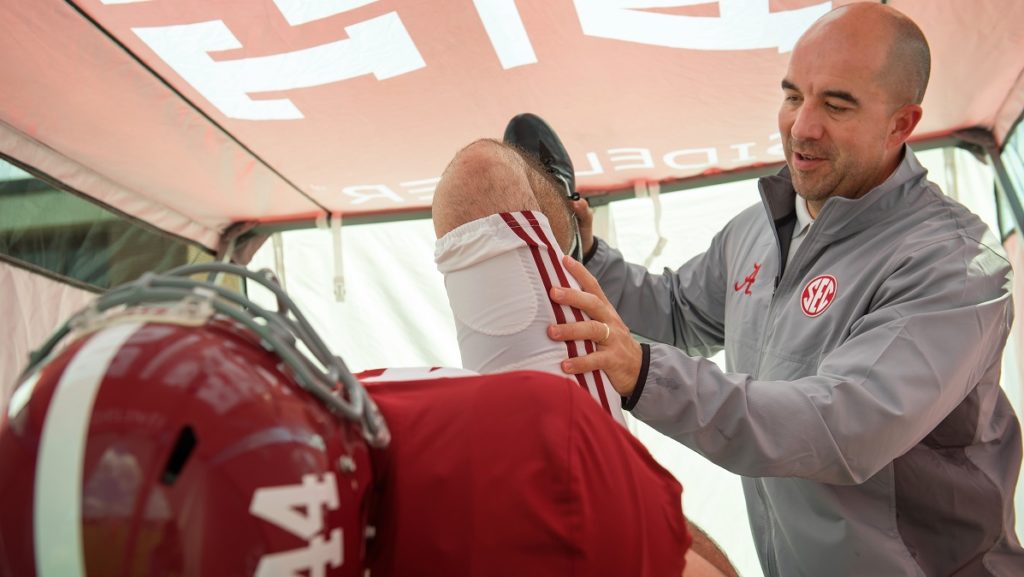
By: Adam Jones | University of Alabama The University of Alabama was recently awarded a patent for a medical privacy tent developed by engineering students and Crimson Tide Athletics, firmly protecting the tent’s unique capability to easily expand or collapse on the sideline of a football field. “The patent clearly adds another layer of protection to what we feel like is a unique idea,” said Jeff Allen, director of sports medicine at UA, who was part of the team that developed the tent. Now called the SidelinER, it can set up within seconds without blocking the view of fans watching the game. Most of the game, the tent is collapsed onto the ground, but if an injured player needs an evaluation by the medical staff, it quickly expands over the examination table. Debuting on the sidelines of Bryant-Denny Stadium in 2015, the SidelinER was used on every sideline in the NFL and by the bulk of major college football teams during the past season. “It’s taken off because physicians and athletic trainers recognize the definite need for a product like this on their sideline,” Allen said. “It’s very easy to operate and easy to use, so people see it can be beneficial.” Addressing a need In 2016, UA’s Office for Technology Transfer licensed the technology to Kinematic Sports, a company formed by Allen and two of the engineering students, Jared Cassity and Patrick Powell, who worked on the senior design project. The United States patent was granted Jan. 2, covering the collapsible and portable design. Allen, Cassity and Powell are the inventors, along with Jared Porteous and Christian Parris, the other two engineering students on the project. They all graduated in 2015. “When the technology was presented, it was clear the idea would directly address a need in the market, so we are thrilled the SidelinER is helping improve treatment of athletes,” said Dr. Rick Swatloski, director of the Office for Technology Transfer. “UA is fortunate to have incredibly innovative faculty, staff and students who generate this and many other innovative technologies.” Allen said his original intention was for the students to create a tent his staff could use for Crimson Tide football games. The finished product turned out to work so well that first season it garnered the attention of the media and the sports medicine and training community. Being on the sideline of a visible football team and flagship university helped, he said. “There’s no question the way the SidelinER has taken off would not have happened without the power of the script ‘A,’” said Allen, referencing UA’s crimson logo. “That ‘A’ is powerful. The support of this university has been incredibly beneficial.” A better exam After three seasons with the SidelinER, Allen said it has become a critical part of sideline medical care. “I can’t believe we did this without the SidelinER,” he said. “I clearly knew there would be a benefit to privacy, but I didn’t realize how much it would improve our medical exam on the sideline. The medical staff and the athlete are much calmer in a private environment, and we get a better medical exam than we used to get.” Kinematic Sports has space in The Edge, a business incubator in downtown Tuscaloosa that is a joint project between UA, the city of Tuscaloosa and the Chamber of Commerce of West Alabama. Cassity leads the company, which is becoming a job creator for the area. “The Edge has been an incredible benefit for us,” Allen said. “We’re proud to be in the city of Tuscaloosa and to be associated with the University of Alabama.” Allen hopes the SidelinER can continue its momentum in college sports as well as prep football with possible applications in emergency response and the military as future markets. This story originally appeared on the University of Alabama’s website.
Alabama Power continues going green with new solar facility
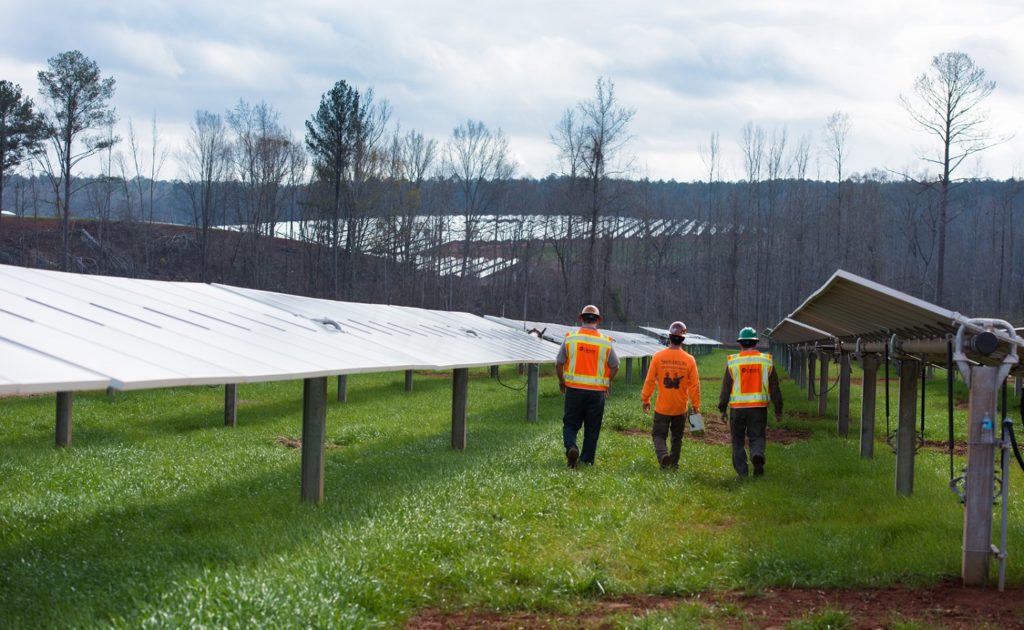
In two weeks, Alabama Power will join in a ribbon cutting ceremony marking the successful launch of its new solar facility, which has been operational for past two months. Last year, the company continued to add renewables to its energy portfolio when they joined forces with Centaurus Renewable Energy and entered a long-term power purchase agreement to secure the rights to all the energy and environmental attributes that the new facility near LaFayette, Ala. generates. Dubbed “Alabama Solar A,” the 72-megawatt — which is the energy equivalent to what is typically needed to power roughly 18,000 homes — facility will generate around 190,000 megawatt hours annually, according to one of the facility developers Michael Gallego, Vice President of Operations for Clēnera. Alabama Solar A adds to Alabama Power’s growing renewables portfolio, which already includes two additional solar arrays at Ft. Rucker and the Anniston Army Depot. Panels at Ft. Rucker can convert the sunlight into 10 megawatts of electricity, enough to power about 1,600 homes. Meanwhile, at the Anniston Army Depot 87,000 solar panels and a seven-megawatt plant, which translates into enough power for 1,100 homes. The company also relies on hydroelectric power, another renewable resource. With 14 hydro facilities on the Coosa, Tallapoosa and Black Warrior rivers, these plants provide about six percent of the company’s power generation. This March, through the Renew Our Rivers campaign, the company will continue to steward the state’s waterways well as they partner with individuals and organizations across the state on cleanups and other events focusing on environmental stewardship, education and conservation. Since the program’s inception in 2000, about 75,000 volunteers have collected over 14 million pounds of trash and debris. In addition to what it’s doing in the Yellowhammer state, Alabama Power is a leading purchaser among Southeast utilities of energy from out-of-state wind farms. The company has agreements with Chisholm View Wind Project in Oklahoma and Buffalo Dunes Wind Project in Kansas for enough energy to power more than 100,000 homes. Under both 20-year contracts, Alabama Power has the flexibility to use generated wind energy to serve customers and retire the associated renewable energy credits (RECs) or sell the energy and RECs to others, either separately or bundled together. The new solar facility, along with its other renewable projects, are a few of the many steps that reveal Alabama Power’s commitment to environmental stewardship is among its highest priorities, as the company continues to endeavor to produce greener energy and minimize its environmental impact.
Lumber maker to invest $110M in new Alabama manufacturing facility, hire 110

A state-of-the-art lumber manufacturing facility is coming to Pike County, bringing more than 110 jobs and a significant economic boost to the region’s forest products industry with it. Governor Kay Ivey announced on Wednesday Rex Lumber Co. plans to build a new $110 million sawmill, which includes both startup and working capital. “Rex Lumber’s new Alabama lumber manufacturing facility will not only bring high-quality jobs but will also create substantial economic benefits for the industry to Pike County,” Ivey said. “We’re thrilled that the company selected Alabama for this project, and we’re committed to helping this new operation succeed and thrive for years to come.” Rex Lumber currently operates three sawmills, two in the Florida Panhandle and one in Mississippi, producing a total of 575 million board feet annually. This will be Rex Lumber’s third sawmill expansion in the last 17 years. Annual production at the facility, located in unincorporated Pike County, will be a minimum of 240 million board feet. Site work at the new Pike County sawmill is scheduled to start on March 15. “Our fourth-generation family owned business is looking forward to a long and prosperous future in Pike County and the great state of Alabama,” said Caroline McRae Dauzat, one of the company’s owners. Founded in the 1920s by W.D. McRae, Rex Lumber continues to be owned and operated by the Finley McRae family of Graceville, Florida. The company ranks among the 10 largest softwood lumber producers in the United States. “This new lumber manufacturing operation will create quality employment opportunities, a significant new timber market, and enhanced economic activity in the region,” said Greg Canfield, secretary of the Alabama Department of Commerce. “Rex Lumber is a proven operator with an excellent track record in the forest products industry, and will be a great addition to Alabama’s business community.” Pike County was chosen over sites considered in several other Southern states. “The Pike County Commission is very pleased to join with Governor Kay Ivey, Rep. Alan Booth, Sen. Jimmy Holley and the Pike County Economic Development Corp. in welcoming Rex Lumber to Pike County,” said Robin Sullivan, chairman of the county commission. “We are pleased to be able to work to get business and industry in Pike County that provides quality, competitive-paying jobs in our area that create a better quality of life in our community.”
Daniel Sutter: Can’t we do something about school shootings?
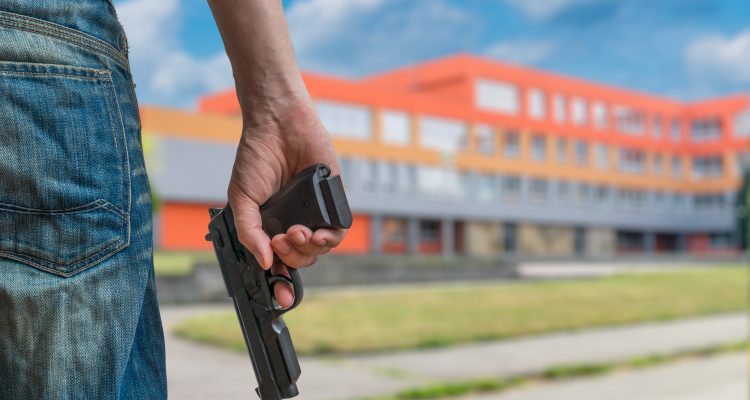
The recent tragedy at Florida’s Marjory Stoneman Douglas High has sadly raised this question again. The failure to prevent the loss of young lives reflects both an unpleasant reality and some problems of politics. Preventing school shootings is very hard in a nation with millions of guns. Once someone decides to do evil, they can usually get guns and pick the time and place for their act. Law enforcement can only react, and mass shootings typically last just minutes. If deterrence, discouragement, and intervention (if possible) fail, protecting 100,000 schools is nearly impossible. The impossibility of preventing shootings does not justify doing nothing. Economics emphasizes that we make choices on the margin. Can measures prevent, or reduce the harm from, school shootings without unacceptably abridging citizens’ gun rights? The occasional failures of agencies administering gun laws provide one component of this difficulty. Convictions that should have prevented the perpetrator of the Sutherland Springs, Texas, church shooting from legally purchasing weapons were never entered into a national database. The FBI and local police did not act on threats made by Florida suspect Nikolas Cruz. And the sheriff’s deputy assigned to Stoneman High failed to engage the shooter. Several elements of politics make this already challenging task even harder. One is short political attention spans, or what public choice economists call rational ignorance. Our actions have little impact on outcomes in a large democracy: one vote almost never decides a Federal election. So voting against our interests because of not paying attention to politics is almost costless. Rational ignorance helps politicians appear to act decisively against societal evils like school shootings. If some politicians claim that banning bump stocks (which allow semi-automatic rifles to fire at higher rates) will prevent mass shootings, who could object? Clever politicians know that easy solutions have little chance of working, and that voters will not hold them accountable for ineffective policy. Defenders of gun rights seemingly fear that even the most innocuous restrictions will contain provisions somehow restricting gun rights. Such lack of trust may be understandable. Laws are difficult to repeal, as Republicans have discovered with the Affordable Care Act. This difficulty can encourage deceit and subterfuge; trick people into supporting a law they will eventually oppose and policy can be altered for years. In markets, deceit and subterfuge typically provide only temporary benefit. Suppose that a home security company offers an armed response against intruders, which turns out to be calling 911. Disappointed customers will cancel their contracts, and the company’s reputation could be harmed permanently. One final relevant element of politics is what economist Bryan Caplan has labeled rational irrationality. Voters face few personal and direct consequences from inconsistent or incorrect beliefs, helping these beliefs persist. What’s the rational irrationality on gun control? If government is for the people, citizens must have a right to reign in an overreaching government. And because a tyrant may not surrender power if citizens ask nicely, “reigning in” must mean armed resistance. But does gun ownership preserve freedom in the United States today, or is this just a libertarian fantasy? And even if an armed populace checked tyranny, would a waiting period necessarily undermine this check? These are hard and troubling questions for libertarians like me. In politics, we can join the NRA and vow no compromise. In other contexts, gun owners might make tradeoffs. A libertarian gun owner with young children might decide that guns locked safely away can still prevent tyranny. Unions and management are often as skeptical of each other’s motives and intentions as the two sides on gun control. And yet strikes are rare, because their cost provides an incentive to get past rhetoric and negotiate a mutually acceptable agreement. Politics features few personal costs and consequently lots of bluster, deceit, and fantasy. Should we be surprised then that we make little progress on really hard problems? ••• Daniel Sutter is the Charles G. Koch Professor of Economics with the Manuel H. Johnson Center for Political Economy at Troy University and host of Econversations on TrojanVision. The opinions expressed in this column are the author’s and do not necessarily reflect the views of Troy University.
