
Ash closure efforts see significant progress at Alabama Power facilities
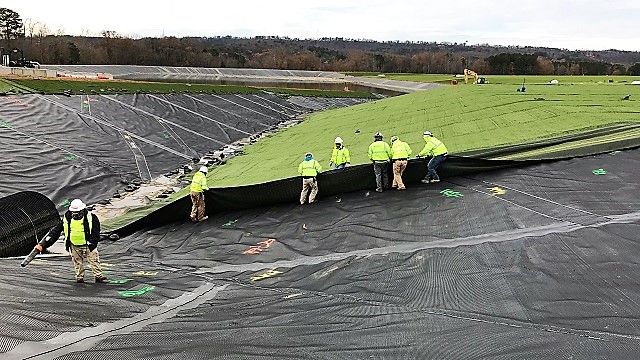
Alabama Power is making measurable progress to comply with federal rules regulating the management of coal ash, with steps to safely close all its ash facilities. The company has managed coal ash, also known as coal combustion residuals or CCRs, for decades in compliance with all regulations and continues to do so. Alabama Power is working to maintain a reliable generation fleet while conducting the closure process as efficiently as possible. Following the issuance of new rules by the U.S. Environmental Protection Agency in 2015, Alabama Power announced plans to close the ash facilities at six coal-fired power plants. The company expects all facilities to stop receiving ash within a year. Alabama Power is installing state-of-the-art dry ash handling and wastewater treatment facilities designed to meet or do better than all environmental standards and replace the function of ash facilities. The company worked with professionally licensed third-party engineers to evaluate and identify the safest and most effective closure plans. The closing of the ash facility at Plant Gadsden has been completed, while work on Plants Barry, Gaston, Gorgas, Greene County and Miller continues to move forward. Closures are site specific and involve complex processes that balance multiple factors such as plant location, size of the CCR facility and amount of material. “Alabama Power is committed to building on its long history of complying with state and federal regulations, including following the new rules set by EPA three years ago,” said Susan Comensky, Alabama Power vice president of Environmental Affairs. “In managing CCRs, as with all our operations, the safety of the customers and communities we serve is paramount,” she added. “Our employees live and work in these communities too.” The procedure being used to close the ash facilities is called close in place, which EPA recognizes as safe and effective. It includes dewatering, capping and implementing robust flood control measures. Alabama Power also will move material away from the river and ultimately reduce a facility’s footprint by as much as half. CCRs, including ash and gypsum, can be safely recycled for a variety of beneficial uses – such as in cement, concrete, wallboard and agricultural applications – and Alabama Power continues to make these opportunities a priority, Comensky noted. Currently, the company beneficially reuses almost half of the ash and gypsum material in those applications. A part of the EPA’s CCR rule required Alabama Power – along with all other electric utilities across the country that manage coal ash facilities – to analyze multiple groundwater samples from around coal-fired generating plants and report the results by March 2. Alabama Power recently completed analyzing multiple groundwater samples taken from more than 150 locations at Plants Barry, Gaston, Gorgas, Greene County and Miller. The initial results, from a process involving experts from Alabama Power’s nationally accredited environmental lab, are available on the company’s website and have been proactively communicated to the Alabama Department of Environmental Management (ADEM). The testing of groundwater around the facilities will continue for 30 years, long after they are closed, in compliance with state and federal rules. Alabama Power will work with ADEM on the closure plans. Alabama Power has a strong record of working to protect the environment and is committed to open communication with the communities it serves, said Comensky. Overall, in the past 15 years Alabama Power has invested more than $4 billion on environmental controls at power plants, resulting in significant reductions in emissions. The company also works with a wide range of public agencies and non-profit organizations to improve wildlife habitat, protect endangered species and conserve natural resources. *Cautionary Statement Regarding Forward-Looking Statements is included on the original story found on Alabama News Center.
Upskirting victims push to fill loophole in Alabama law
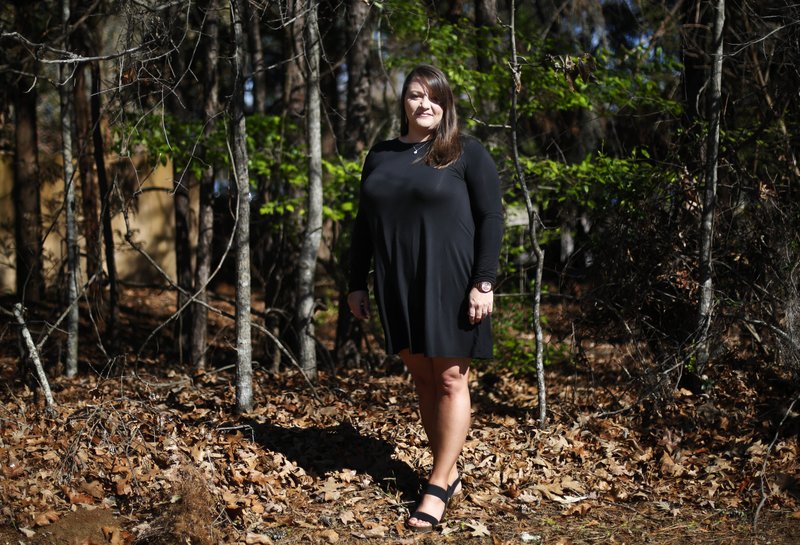
Six months after a stranger snapped a photo up Tatum Hollon’s dress in Walmart, she walked out of her local courthouse feeling robbed of justice. The judge dismissed the charge against the man who took the photo because no law existed to prosecute his actions. “It felt like I was violated all over again,” Hollon, 36, a stay-at-home mom from Prattville, told The Associated Press. “We came forward and they said, we’d love to help but there’s nothing we can do. And it breaks you.” Her case caught the attention of Sen. Clyde Chambliss, a Republican and father of three daughters from Prattville, who introduced a bill to criminalize what has come to be called upskirting. All U.S. states prohibit photography of individuals in a private place like a dressing room where they can expect privacy. More than half also ban upskirting and photos of intimate body parts in a public place. Last week, Missouri Gov. Eric Greitens was indicted for allegedly taking a photo of a nude or partially nude woman in 2015 and transmitting it in a way that could be accessed by a computer. Chambliss’ bill would make taking a picture or video of a person’s intimate body parts without consent and with a reasonable expectation of privacy a misdemeanor. If the images are distributed with sexual intent, it would be a felony punishable by up to two years in prison. The bill passed the Senate and moves to the House for a final vote. Hollon was in Prattville’s Walmart in April 2017 when a man crouched behind her and took a picture up her dress. The next day, Hollon reported to the police because she wanted to protect her 15-year-old daughter in the future, she said as her eyes welled with tears. Michelle Lunsford, 46, a sales associate from Millbrook, had a similar experience with the same man in Prattville’s Lowes a month earlier. After she saw Hollon post a video of the man on Facebook, the women pressed charges together. Prattville prosecutors tried to use Alabama’s aggravated criminal surveillance law that prohibits photography in private places to convict the perpetrator, but stores didn’t qualify as private. Barry Matson, the Executive Director of Alabama’s Office of Prosecution Services, has encountered cases of inappropriate photos taken from cameras hidden in shoes or installed inside tanning salons. He said there’s a loophole in current legislation: although child pornography laws protect minor victims, the same safeguards don’t exist for adults in Alabama. The bill initially received pushback for charging everyone – regardless of their age – with a felony. The legislation was amended to only charge individuals over 16 with a felony. Tim Thrasher, the regional director for Alabama’s Youth Advocate Programs, said he was concerned about harsh penalties for teenagers and suggested education as a deterrent. The bill also exempts Department of Corrections officers who conduct strip searches or investigations in jails, sparking some concern. “If they’re acting within the furtherance of their duties, that’s a good exception,” said Brad Ekdahl, Prattville city prosecutor. “If they’re using and making videos for sexual gratification, that’s a different issue.” Situations would be prosecuted case-by-case, he said. Hollon and Lunsford don’t know what happened to the photos their perpetrator took. Nearly a year later, the women are wary in public. Hollon carries pepper spray and a taser in her purse and plans to get a pistol permit. Lunsford said she tells her 9-year-old daughter to wear shorts under her dress when they go shopping. “If this bill does get passed, they’re not going to get away with it. That’s my justice,” Lunsford said. “It’s nice knowing our daughters are protected.” Republished with permission of The Associated Press.
Police ID Maylene, Alabama man who killed himself near White House

Authorities have identified the man who shot himself to death in front of the White House. Police say it was 26-year-old Cameron Ross Burgess of Maylene, Ala., who approached the fence along the north side of the White House and fired several rounds from a handgun shortly before noon on Saturday. President Donald Trump and first lady Melania Trump were in Florida at the time. And the Secret Service says no member of the first family was at the White House when the incident took place. Authorities say none of the shots appear to have been directed toward the White House. Republished with permission of The Associated Press.
Commemoration of ‘Bloody Sunday’ set in Alabama
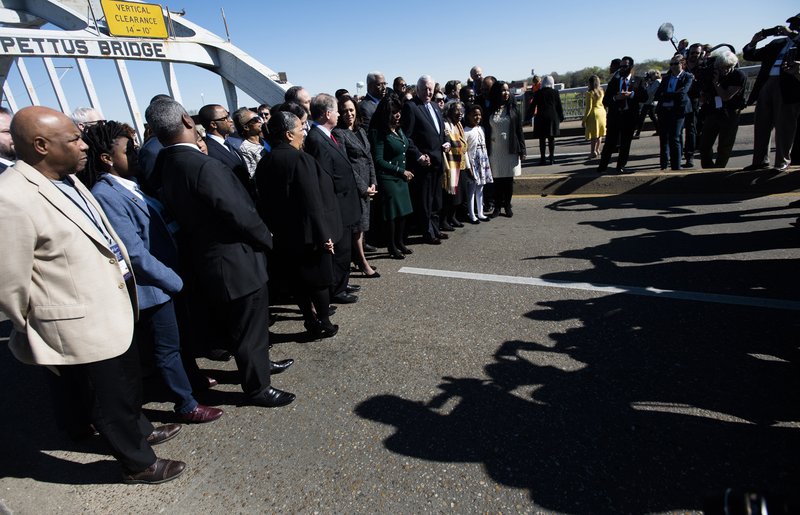
Several members of Congress have joined civil rights activists and others for the annual commemoration of a day of racial violence in Selma dating to 1965. A bipartisan group including Rep. John Lewis of Georgia led the crossing of the Edmund Pettus Bridge on Sunday afternoon. It was to recall “Bloody Sunday,” when voting rights protesters were attacked by police as they attempted to cross the bridge. Lewis, then a young organizer, was among those injured then. That violence set the stage for the Selma-to-Montgomery march, which helped build support for congressional approval of the Voting Rights Act months later. The annual celebration drew tens of thousands of people in 2015, when then-President Barack Obama spoke near the base of the bridge as former President George W. Bush listened. Republished with permission of The Associated Press.
UAB stroke study receives $20 million grant

The University of Alabama at Birmingham’s stroke study received a $20 million grant to help look into strokes in the South and among African-Americans. UAB’s Regions for Geographic and Racial Differences in Stroke will receive funds through 2023, Al.com reported. The study has gotten almost $100 million in grant funding in the past 15 years. More than 30,000 people have participated in the REGARDS study. The National Institute of Neurological Disorders and Stroke is funding the grant. University officials say study participants have taken part in the program for 14 years. The study is based in UAB’s School of Public Health. It includes collaborators from the University of Vermont, University of Cincinnati, Indiana University, Drexel University and Columbia University. UAB professor of biostatistics George Howard said the stroke mortality rate between the ages of 45 and 65 is 200 to 300 percent higher for African-Americans. He also said 11 percent of deaths from strokes in white people happen before age 65, but the number rises to 28 percent for African-Americans. Experts found that living in Alabama, Arkansas, Georgia, Louisiana, Mississippi, North Carolina, South Carolina and Tennessee early in life increases the risk of stroke, the newspaper reported. Republished with permission of The Associated Press.
