
Fate hazy for GOP bill helping dying patients try new drugs
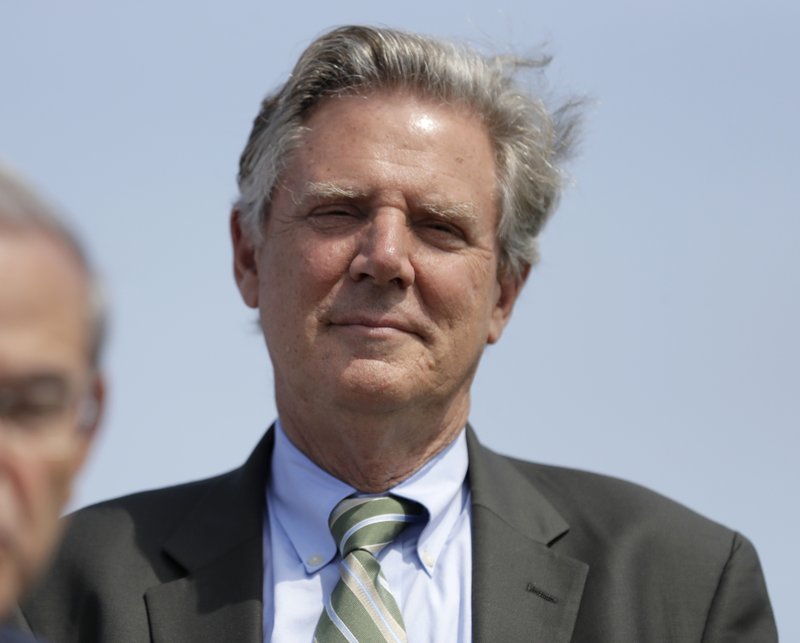
A leading House Democrat announced his opposition Monday to a Republican bill making it easier for some terminally ill patients to try experimental drugs, clouding the measure’s fate. Republicans are hoping for House approval Tuesday, seven months after a similar package cleared the Senate. The “Right to Try” bill gained added momentum after President Donald Trump called for its passage in January’s State of the Union address. Under the bill, if a doctor and drug maker agree to let a patient with life-threatening ailments try an experimental treatment, the federal Food and Drug Administration would no longer need to consent. The FDA would have to be notified of the decision and of any problems that occur. New Jersey Rep. Frank Pallone, top Democrat on the House Energy and Commerce Committee, said the measure is risky, unneeded and “provides false hope to patients.” He also noted that the bill doesn’t require drug makers to provide these treatments to patients, which is often where stumbling blocks can occur. Companies sometimes prefer using what they’ve produced for clinical trials needed for final FDA approval, or worry that a problem could hurt the drug’s marketing prospects. A recent study by the Government Accountability Office, Congress’ investigative agency, found the FDA currently approves 99 percent of such requests, often within hours. The measure strikes a balance between safety and providing “hopeful news for patients desperately seeking the right way to try” experimental treatments, said Energy and Commerce Chairman Greg Walden of Oregon and Michael Burgess of Texas, another top panel Republican. Pallone’s stance is important because GOP leaders want to rush the legislation through the House using a process, normally reserved for uncontroversial measures, that could require a two-thirds majority. If all Republicans vote yes, they’d need the backing of at least 50 Democrats. House Minority Leader Nancy Pelosi, D-Calif., hadn’t taken a public position on the bill by late Monday afternoon. Republicans released the latest version of their proposal Saturday. More than 40 patients’ groups have expressed opposition to the measure, saying it would “likely do more harm than good.” PhRMA, the trade group representing major drug companies, has taken no public stance. Republished with the permission of the Associated Press.
US sets new record for censoring, withholding government files
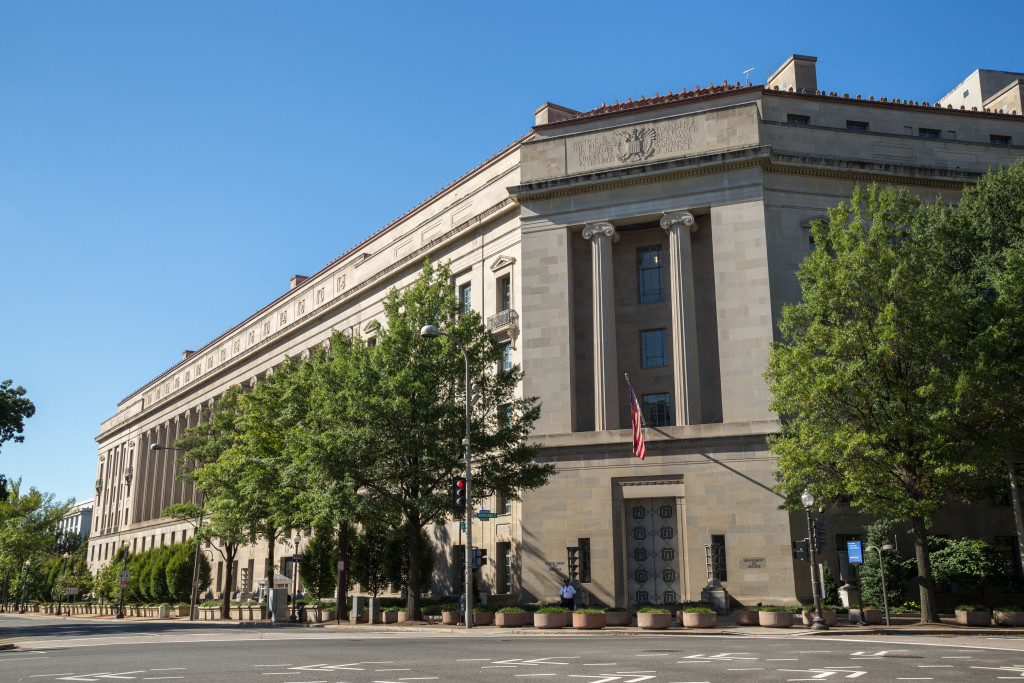
The federal government censored, withheld or said it couldn’t find records sought by citizens, journalists and others more often last year than at any point in the past decade, according to an Associated Press analysis of new data. The calculations cover eight months under President Donald Trump, the first hints about how his administration complies with the Freedom of Information Act. The surge of people who sought records but ended up empty-handed was driven by the government saying more than ever it could not find a single page of requested files and asserting in other cases that it would be illegal under U.S. laws to release the information. People who asked for records under the Freedom of Information Act received censored files or nothing in 78 percent of 823,222 requests, a record over the past decade. When it provided no records, the government said it could find no information related to the request in a little over half those cases. It turned over everything requested in roughly one of every five FOIA requests, according to the AP analysis. Records requests can take months — even years — to get fulfilled. Even then, the government censored documents in nearly two-thirds of cases when it turned over anything. The federal government also spent $40.6 million last year in legal fees defending its decisions to withhold federal files, also a record. That included the time when a U.S. judge ruled against the AP and other news organizations asking for details about who and how much the FBI paid to unlock the iPhone used by a gunman in a mass shooting in San Bernardino, California. When the government loses in court, it sometimes must pay the winner’s attorney’s fees. For example, the New York Times was awarded $51,910 from the CIA in May in a fight over records about chemical weapons in Iraq. It was impossible, based on the government’s own accounting, to determine whether researchers, journalists and others asked for records that did not actually exist or whether federal employees did not search hard enough before giving up. The government said it found nothing 180,924 times, an 18 percent increase over the previous year. “Federal agencies are failing to take advantage of modern technology to store, locate and produce records in response to FOIA requests, and the public is losing out as a result,” said Adam A. Marshall, the Knight Foundation litigation attorney at the Washington-based Reporters Committee for Freedom of the Press. He said citizens and others should try to precisely describe how they want filings cabinets, hard drives or email accounts searched, but “you shouldn’t have to be an expert in records management just to submit a FOIA.” In other cases, the times the government said it would be illegal under other U.S. laws to release requested information nearly doubled to 63,749. Those laws include broad prohibitions against revealing details about U.S. intelligence activities or foreign governments, trade secrets, individual banking or tax records and more. Many of those requests probably involved files related to the U.S. investigation into how Russia interfered in the 2016 presidential election or the related grand jury investigations or about Trump’s personal or business tax returns, said Kel McClanahan, a Washington lawyer who frequently sues the U.S. government for records. “How many people do you think asked for Trump’s tax returns?” he asked. A disturbing trend continued: In more than one-in-three cases, the government reversed itself when challenged and acknowledged that it had improperly tried to withhold pages. But people filed such appeals only 14,713 times, or about 4.3 percent of cases in which the government said it found records but held back some or all of the material. The Trump administration, in a new report last week, noted that it received a record number of information requests last year. It said many agencies reduced their backlogs of overdue requests. The administration also said it was directing federal agencies to improve the number of requests they process and do some more quickly. Performance under the records law by the Trump administration has been a source of curiosity, since Trump has eschewed some of the common conventions of transparency. For example, the president has declined to release his personal tax returns or logs of official visitors to the White House, and ethics waivers granted to many of Trump’s political appointees do not include details about their former or current corporate clients. But Trump is personally more accessible to reporters asking questions than President Barack Obama, and he released as many details about his medical records as previous presidents. The Freedom of Information Act figures, released Friday, cover the actions of 116 departments and agencies during the fiscal 2017, which ended Sept. 30. The highest number of requests went to the departments of Homeland Security, Justice, Defense, Health and Human Services, and Agriculture, along with the National Archives and Records Administration and Veterans Administration. The administration released its figures ahead of Sunshine Week, when news organizations promote open government and freedom of information. Under the records law, citizens and foreigners can compel the U.S. government to turn over copies of federal records for no or little cost. Anyone who seeks information through the law is generally supposed to get it unless disclosure would hurt national security, violate personal privacy, or expose business secrets or confidential decision-making in certain areas. Republished with the permission of the Associated Press.
Floyd Carter Sr., one of the remaining Tuskegee Airmen and NYPD veteran, dies at 95

Floyd Carter Sr., one of the remaining members of the famed all-African-American Tuskegee Airmen, died Thurs., March 8. He was 95. Carter joined the Army Air Corps in 1944 and was commissioned a year later as a 2nd lt. bombardier navigator. In 1946, he received his pilot wings and transferred to the Air Force Reserves the following year where he went on to fly with trailblazing Tuskegee Airmen. According to the Daily News, he during the Korean and Vietnam wars, and led the first squadron of supply-laden planes into Berlin during the famed Cold War airlift of 1948-49. During the Tet Offensive, Carter flew U.S. supplies and troops into South Vietnam. The term ‘‘Tuskegee Airmen’’ refers to all who were involved in a program the War Department established as a segregated unit in the Army Air Force (AAF) which was termed the ‘‘Tuskegee Experiment.’’ Trained at Tuskegee Army Air Field in Tuskegee, Ala., these men had to overcome biased notions of their fighting ability. their heroic service led to the greater achievement of integrating the U.S. Armed Forces—a watershed event in American history. Their brave actions broke forever the myths that allowed segregation, inequity and injustice toward African-Americans to exist in our military. In March 2007, then-President George W. Bush, on behalf of the U.S. Congress, awarded the Congressional Gold Medal to Carter and the Tuskegee Airmen. “I thank you for the honor you have brought to our country, and the medal you are about to receive means that our country honors you,” Bush said to the roughly 300-member audience of surviving airmen, Tuskegee Airmen widows, and other relatives, prior to presenting the congressional award. Not only was Carter a decorated combat vet of three wars, he was also a 27-year veteran of the NYPD. He joined the force in 1953, became a detective within three years, and retired 27 years later in 1980. While serving on the NYPD, Carter worked as a bodyguard for visiting heads of state. His son Floyd Jr., recalls him spending time with Cuban leader Fidel Castro and Soviet head Nikita Khrushchev. The NYPD stopped to remember Carter following his passing. “We mourn the loss of a true American Hero. Lt. Col. Floyd J. Carter, USAF Ret. Famous Tuskegee Airmen & a Congressional Medal of Honor recipient, served WWII, Korea & Vietnam wars. Retired from NYPD, 26 yrs as a Det. 2nd Grade. Our Community & Nation has lost a giant,” Tweeted the NYPD 47th Precinct. We mourn the loss of a true American Hero. Lt. Col. Floyd J. Carter, USAF Ret. Famous Tuskegee Airmen & a Congressional Medal of Honor recipient, served WWII, Korea & Vietnam wars. Retired from NYPD, 26 yrs as a Det. 2nd Grade. Our Community & Nation has lost a giant. pic.twitter.com/6J3bzgdQyu — NYPD 47th Precinct (@NYPD47Pct) March 9, 2018 The NYPD echoed the 47th precints sentiments on Twitter. “We are saddened by the death of 27-year vet of the NYPD – Detective Floyd Carter Sr. Det. Carter dedicated his life serving our nation & NYC. He was one of the remainig Tuskegee Airmen & a vet of 3 wars. He inspired many to follow in his footsteps. #Hero,” they also tweeted. We are saddened by the death of 27-year vet of the NYPD – Detective Floyd Carter Sr. Det. Carter dedicated his life serving our nation & NYC. He was one of the remainig Tuskegee Airmen & a vet of 3 wars. He inspired many to follow in his footsteps. #Hero https://t.co/0q4jPSnLO4 pic.twitter.com/vThiYqCaEd — NYPD NEWS (@NYPDnews) March 11, 2018 Carter is survived by his wife Atherine, their two children Floyd Jr. and Rozalind, grandchildren and great-grand children.
January unemployment rate sets new record low, nearly 40,000 fewer unemployed

Alabama’s unemployment rate is down to 3.7 percent — a new record low. The state released preliminary, seasonally adjusted numbers Monday morning showing the jobless rate declined one-tenth of a percent in January from December’s revised rate of 3.8 percent, well below January 2017’s rate of 5.5%. January’s rate represents 80,841 unemployed persons, compared to 82,378 in December and 120,788 in January 2017. “As we start a new year, we’re pleased to announce that we’re starting off with a new record low unemployment rate,” Governor Kay Ivey said of the news. “Nearly 40,000 fewer people are counted as unemployed, also setting a new record low. We have been working hard for months to bring quality, high-paying jobs to Alabama, and we’re putting our people back to work. We will continue this work in 2018, and we hope to maintain these fantastic numbers.” The U.S. jobless rate continues to hold steady at 4.1 percent, making Alabama’s unemployment rate is four-tenths of a percent better. “It is not uncommon for preliminary rates to be adjusted as more precise data becomes available, especially around highly seasonal periods, such as the holidays,” said Fitzgerald Washington, Secretary of the Department of Labor. “Even with the adjustments, we are still in an extremely good place. It was recently announced that our yearly average unemployment rate in 2017 dropped more than any other state in the country. Our wage and salary employment continues to show yearly increases, and all 67 counties have experienced significant yearly drops in their unemployment rates, some as high as 4.9 percentage points.” Over the year, wage and salary employment increased 17,700, with gains in the leisure and hospitality sector (+6,000), the education and health services sector (+5,600), and the professional and business services sector (+4,800), among others. Counties with the lowest unemployment rates are: Shelby County: 3.0% Cullman County: 3.5% Marshall, Madison, Elmore, and Blount Counties: 3.6% Counties with the highest unemployment rates are: Wilcox County: 10.4% Clarke County: 8.1% Lowndes County: 7.5%. All 67 counties experienced yearly drops in their unemployment rates, ranging from 1.2 percentage points in Autauga County to 4.9 percentage points in Wilcox County. Major cities with the lowest unemployment rates are: Vestavia Hills: 2.5% Homewood and Hoover: 2.8% Alabaster and Northport: 2.9% Major cities with the highest unemployment rates are: Prichard: 7.7% Selma: 7.0% Anniston: 5.8%
Human Rights Campaign report lists Alabama as ‘High Priority to Achieve Basic Equality’

According to The Human Rights Campaign (HRC) Foundation, and the Equality Federation; Alabama has some catching up to do. HRC, the nation’s largest lesbian, gay, bisexual, transgender and queer (LGBTQ) civil rights organization, announced its fourth annual State Equality Index report including detailed scorecards for every state and a comprehensive review of 2017 state legislation concerning LGBTQ equality. Each state was placed into one of four categories based on their pro- and anti-LGBTQ state laws. Alabama was listed in the “High Priority to Achieve Basic Equality,” category. “Despite a historic victory in Birmingham with the state’s first LGBTQ-inclusive nondiscrimination ordinance being passed in September 2017, the State Equality Index identifies many areas of opportunity and advancement for LGBTQ equality in Alabama,” said Executive Director of Equality Alabama, Alex Smith in a news release. “Equality Alabama is poised both to fight against a preemption of this ordinance in the 2018 legislative session and to support pro-equality pieces of legislation that aim to provide nondiscrimination protections statewide, make it easier for transgender and gender nonconforming individuals to change the gender marker on their birth certificates and state IDs, and remove homophobic language from the state’s sexual health education statutes.” According to the report, Alabama does not have any provisions for LGBTQ identifiers in the following categories: HOUSING: The state does not prohibit housing discrimination based on sexual orientation and gender identity. EMPLOYMENT: The state does not prohibit employment discrimination based on sexual orientation and gender identity. HATE CRIMES: The state does have a law that addresses hate or bias crimes based on sexual orientation only. PUBLIC ACCOMMODATIONS: The state does not prohibit discrimination in public accommodations based on sexual orientation and gender identity. SCHOOL ANTI-BULLYING: The state does not have a law that addresses harassment and/or bullying of students based on sexual orientation and gender identity. EDUCATION: The state does not have a law that addresses discrimination against students based on sexual orientation and gender identity. TRANSGENDER HEALTHCARE: The state has neither a ban on insurance exclusions for transgender healthcare nor does it provide transgender-inclusive health benefits to state employees. GENDER MARKER CHANGE ON IDENTIFICATION DOCUMENTS: The state does not have laws or policies that facilitate gender marker change on driver’s licenses or birth certificates. CONVERSION THERAPY: This state has no restrictions on so-called “conversion therapy.” Alabama is one of the 31 states listed in the report as lacking explicit state-level protections for all LGBTQ people. Even at a time of historically high support for LGBTQ equality, an estimated 12 million LGBTQ Americans and their families remain at risk of being evicted or denied services because of their sexual orientation or gender identity. “If an LGBTQ couple drove from Maine to California today, their legal rights and civil rights protections could change more than 20 times at state borders and city lines. The vast majority of Americans today understand that this crazy quilt of protections — and lack thereof — is wrong, impractical, and unacceptable,” said Chad Griffin, HRC President. “The time has come for us to do away with this ragged patchwork of state laws that fail to protect LGBTQ people equally by passing the Equality Act once and for all.
Bradley Byrne: Making Congress work again
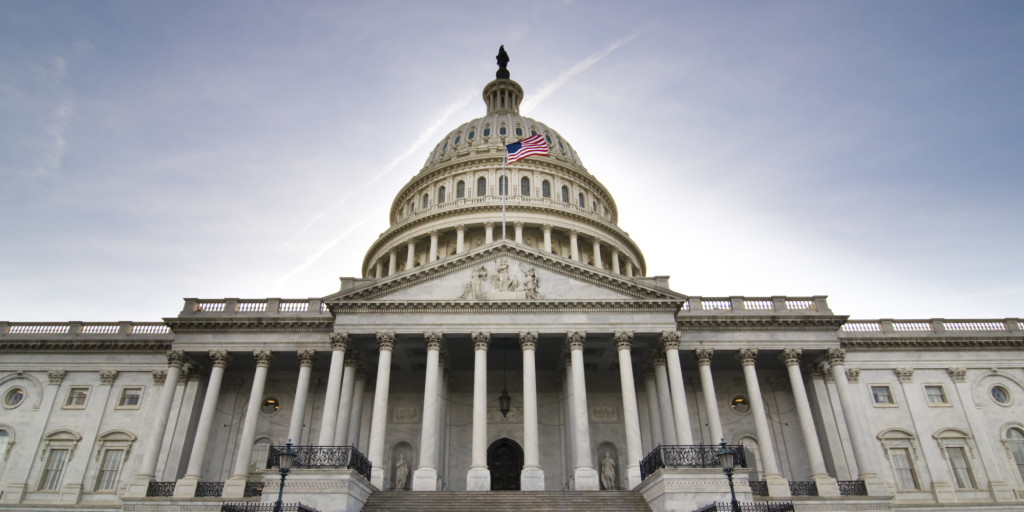
Anyone who has followed Congress over the last twenty years knows that things have been pretty dysfunctional. While I believe our Founding Fathers intended for the Legislative Branch to be deliberative, I think they would be troubled by how broken things have become. One of the top drivers of the dysfunction is the budget and government funding process. Did you know that the last time Congress passed a budget and all twelve government funding bills on time was 1994? Instead, we have found ourselves in a very dangerous cycle of governing from one funding crisis to the next. At the same time, two-thirds of federal spending is on autopilot as the national debt and federal spending continues to grow. We must do better. I am tired of just talking about how the process is broken. We need less talk and more solutions, so I introduced the Protecting Our Children’s Future Act. I chose this title because getting our budgeting and spending right really is all about the future of our country. Our legislation reforms the Congressional budget process to make things work again. Just as important, it lays out a process that would make it easier to cut spending and reduce the deficit. First, our bill moves to a biennial budget timeline. This means that the budget and funding bills would cover two years instead of just one. This would allow Congressional committees to spend more time overseeing how money is spent, and it will create fewer opportunities for budgetary holdups. Second, the bill subjects all government funding bills to the reconciliation process. This would result in just a 51-vote majority being needed for passage in the Senate if funding bills stay within the budget. President Donald Trump has proposed some major cuts to federal spending over the last two budget cycles. Unfortunately, Democrats have held many of these cuts hostage with a filibuster. Our bill would end this practice. Third, our bill puts in place a “No Budget, No Pay” provision for all Members of Congress. Members of Congress would not be paid until a budget passed out of the House and Senate. American families must have a budget. If Congress fails to do so, then we should not be paid. Fourth, we need a budget timeline that more accurately reflects the calendar. For example, the current time frame expects a newly elected President to submit their budget proposal right after being sworn in. Instead of the fiscal year beginning in October, we would start the calendar on January 1 each year. Our bill would make the process much more realistic and simplistic. Fifth, the bill shifts most mandatory spending to discretionary. This would take all spending other than Social Security retirement benefits, Medicare, TRICARE, and veteran programs off autopilot. Congress cannot do its most important job to allocate federal resources if two-thirds of the budget is outside the spending process. Finally, the bill moves to zero-based budgeting. All programs and expenditures would have to be justified by agencies from the ground up at the beginning of each budget cycle. No longer would a program or agency be assumed an automatic increase. Every taxpayer dollar would have to be justified. If you are like me, you probably think these changes sound pretty commonsense. Well, they are. We need to stop making things so confusing and complicated and just use a little more commonsense. By doing so, we can rein in federal spending, reduce the national debt, and create a more efficient federal government. I urge my colleagues on both sides of the aisle to support the Protecting Our Children’s Future Act, and let’s make Congress work again. • • • Bradley Byrne is a member of U.S. Congress representing Alabama’s 1st Congressional District.
Governor Kay Ivey’s appointments: Judicial related
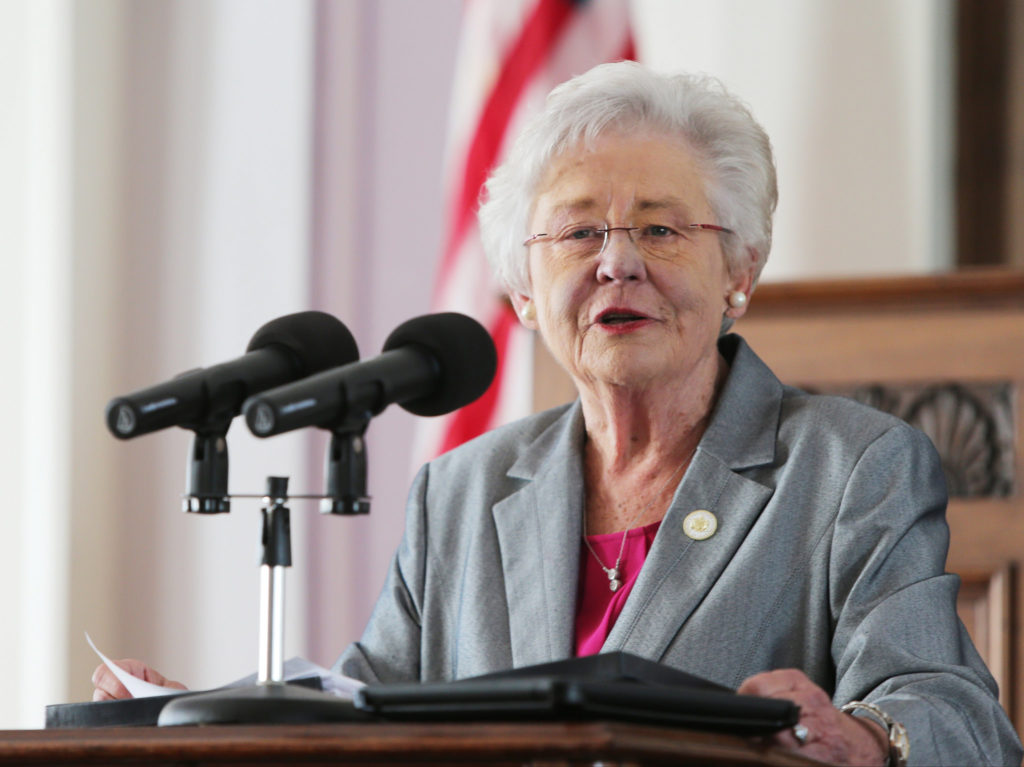
While it has taken us a while to get a hold of Governor Kay Ivey‘s appointments list — of those Alabamians she has appointed to boards, commissions and committees — we are excited to say we finally have (most of) it and we’re breaking it down categorically for you. Keeping with our efforts to shine light on what’s going on behind the scenes at all levels of government, we’re continuing our appointments coverage with justice/legal/judicial related ones. Information on open board positions is on the appointments webpage. Court of the Judiciary Walter Body: 07/18/2017 Lamar County Probate Judge Dale McGee: 02/05/2018 Juvenile Justice State Advisory Group Tyler Flowers: 07/18/2017 Blaize Naman: 07/18/2017 John Jarrett: 07/18/2017 Sophia Warner: 07/18/2017 Cameron Moreland: 09/20/2017 Jefferson County DA Michael Anderton: 12/01/2017 Railway Police Jay Lacy: 08/18/2017 Michael Smith: 08/18/2017 Alabama Board of Pardons & Paroles Terry G. Davis
Donald Trump backs off push for raising assault rifle purchase age
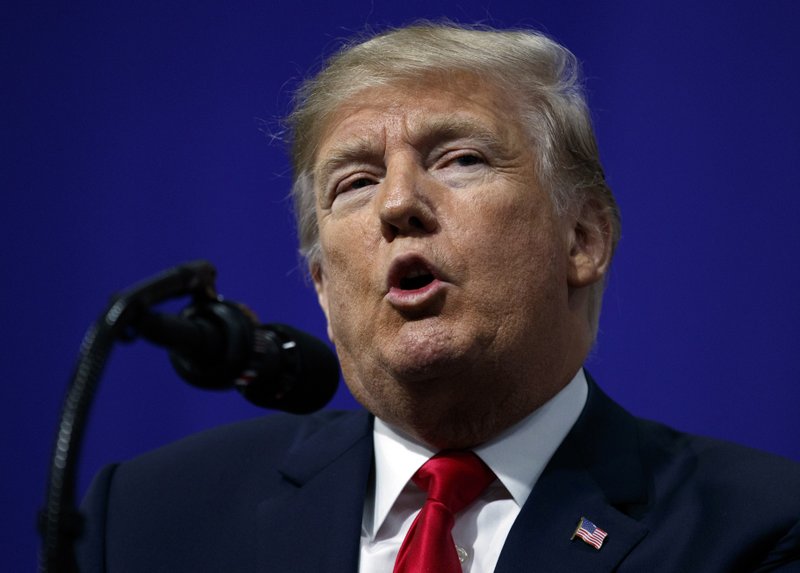
The White House unveiled a new plan to prevent school shootings that backs off President Donald Trump’s support for increasing the minimum age for purchasing assault weapons to 21. Instead, a new federal commission on school safety will examine the age issue as part of a package the White House announced Sunday in response to the school shooting in Parkland, Florida, last month that left 17 dead. The administration also pledged to help states pay for firearms training for teachers and reiterated its call to improve the background check and mental health systems. In a call with reporters Sunday evening, administration officials described the plan as a fulfillment of Trump’s call for action in the wake of the Parkland shooting. “Today we are announcing meaningful actions, steps that can be taken right away to help protect students,” said Education Secretary Betsy DeVos, who will chair the commission. DeVos said that “far too often, the focus” after such tragedies “has been only on the most contentious fights, the things that have divided people and sent them into their entrenched corners.” She described the plan as “pragmatic.” The plan was immediately panned by gun control advocates, including the Brady Campaign to Prevent Gun Violence. “Americans expecting real leadership to prevent gun violence will be disappointed and troubled by President Trump’s dangerous retreat from his promise,” said Avery Gardiner, the group’s co-president. Senate Minority Leader Chuck Schumer of New York described it as “tiny baby steps designed not to upset the NRA, when the gun violence epidemic in this country demands that giant steps be taken.” Trump was deeply moved by the February shooting and convened a series of listening sessions in the weeks after the massacre. In televised meetings with lawmakers, survivors of recent school shootings and the families of victims, Trump made a strong case for arming teachers, but also increasing the age for purchasing long guns. “I mean, so they buy a revolver — a handgun — they buy at the age of 21. And yet, these other weapons that we talk about … they’re allowed to buy them at 18. So how does that make sense?” he told school officials last month. “We’re going to work on getting the age up to 21 instead of 18.” But Trump has also spoken repeatedly in recent weeks with the heads of the powerful National Rifle Association, which considers increasing the age of purchase to be an assault on the Second Amendment. The NRA on Friday sued Florida over a new gun law signed by Republican Gov. Rick Scott that bans the purchase of firearms by anyone under the age of 21. Instead, the issue will be one of a list of topics to be studied by the DeVos commission, which will then provide recommendations to the president. Administration officials said they had not set a deadline for the commission’s recommendations, but expected they’d made in under a year. During the meetings, Trump also advocated arming certain teachers and school staffers, arguing that gun-free schools are “like an invitation for these very sick people” to commit murder. As part plan, the White House has directed the Justice Department to help states partner with local law enforcement to provide “rigorous firearms training to specifically qualified volunteer school personnel,” said Andrew Bremberg, director of the president’s Domestic Policy Council. The White House did not immediately say how much money would be made available. Trump also called on states to pass temporary, court-issued Risk Protection Orders, which allow law enforcement to confiscate guns from individuals who pose risks to themselves and others, and temporarily prevent them from buying firearms. And he called for the reform and expansion of mental health programs, as well as a full audit and review of the FBI tip line. The bureau has been criticized for not following up on warnings about the suspect in the Parkland school shooting. The White House is also calling on Congress to two pieces of legislation. One would improve the National Instant Criminal Background Check system by penalizing federal agencies that don’t properly report required records and reward states that comply by providing them with federal grant preferences. The other would create a federal grant program to train students, teachers and school officials how to identify signs of potential violence and intervene early. Republished with permission from the Associated Press.
