
Push for greater equality: Adline Clarke proposes ‘gender pay gap’ bill

It’s a fact: women earn less than men. According to the U.S. Department of Labor, women who worked full-time, year-round in 2014 earned on average, 79% of men’s median annual earnings. That’s not sitting well with one Alabama lawmaker who’s hoping her gender pay gap legislation makes it across the finish line as the 2018 legislative session nears its close. HB368, sponsored by Mobile-Democrat State Rep. Adline Clarke, would prohibit employers from paying their employees less than the wage they would pay a member of the opposite sex for a similar job or responsibilities when viewed as a composite of skill, effort, and responsibility, as specified. Alabama is one of only two states, along with Mississippi, without an equal pay law. “Nearly every state has a law prohibiting employers differently based solely on gender. I’m disappointed. I would have thought we would have passed a long long before now,” Clarke told AL.com “Timing is everything.” However, HB368, also known as the “Gender Pay Gap,” would not just make wage inequality illegal, but would also add several provisions to the law including: Requires an employer to affirmatively demonstrate that a wage differential is based upon one or more specified factors Prohibits an employer from discharging, or in any manner discriminating against. or retaliating against an employee for the enforcement of these provisions Provides for enforcement of the bill Provides that an employer may not prohibit an employee from disclosing the employee’s own wages, discussing the wages of others, inquiring about another employee’s wages, or aiding or encouraging any other employee to exercise his or her rights under these provisions And requires an employer to maintain a record of wages paid to his 15 or her employee for a certain amount of time. The proposal, filed on Feb. 1, is scheduled to appear before the Alabama House State Government Committee on March 21. Alexander City-Republican State Rep. Mark Tuggle, the committee’s chairman, hopes to have Clarke’s proposal on the committee agenda next week. The bill currently has 26 co-sponsors, both Republicans and Democrats: Autauga County-Democrat Kelvin Lawrence Mobile County-Democrat Barbara Drummond Barbour County-Democrat Barry Forte Perry County-Democrat Prince Chestnut Jefferson County-Democrat Rolanda Hollis Madison County-Democrat Anthony Daniels Jefferson County-Democrat Rod Scott Tallapoosa County-Democrat Pebblin Warren Choctaw County-Democrat Elaine Beech Madison County-Democrat Laura Hall Jefferson County-Democrat Merika Coleman Jefferson County-Democrat Mary Moore Mobile County-Democrat Napolean Bracy Blount County-Republican Connie Rowe Shelby County-Republican April Weaver Talladega County-Democrat Barbara Boyd Jefferson County-Democrat Juandalynn Givan Etowah County-Republican Becky Nordgren Morgan County-Republican Terri Collins Montgomery County-Democrat John F. Knight Montgomery County-Democrat Thad McClammy Tuscaloosa County-Democrat Artis McCampbell Mobile County-Democrat James Buskey Bibb County-Democrat Ralph Howard Lauderdale County-Democrat Marcel Black Houston County-Democrat Dexter Grimsley
Daniel Sutter: When campuses were in turmoil
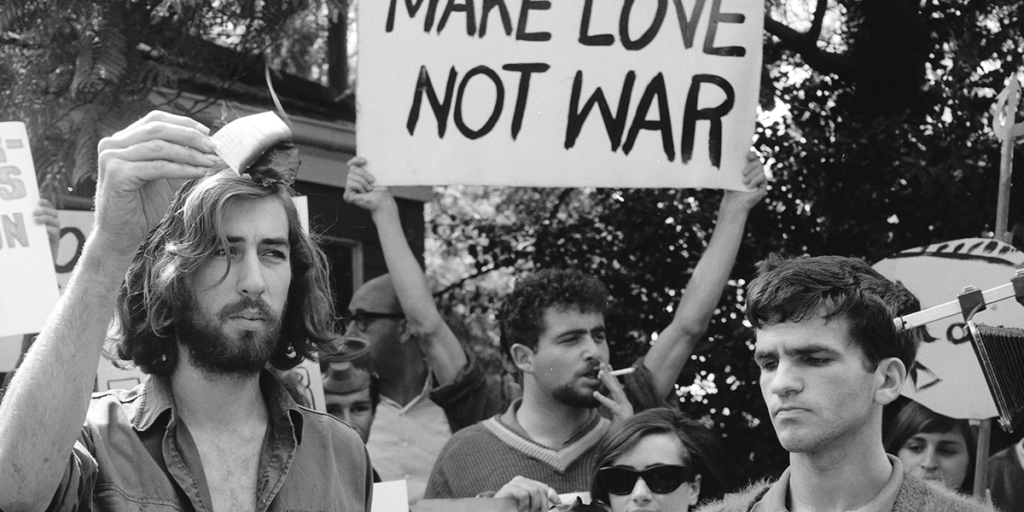
Fifty years ago, protests and violence in opposition to the Vietnam War and the draft roiled college campuses. The War appeared hopelessly deadlocked after the Tet Offensive. Protestors burned draft cards, ransacked draft offices, and fled for Canada. At the end of March 1968, President Lyndon B. Johnson announced that he would not seek reelection. In January 1973, President Richard Nixon ended the draft, delivering on a campaign promise. Why did the policy change within just five years? Dr. David Henderson, an economist and long-time professor at the Naval Postgraduate School, contends that economists played an important role. The case illustrates how academic research can shape public policy, hopefully for the better. Let’s first consider the economics of a military draft. One argument for a draft is that it lowers the cost of the military. This, however, is based on confusion. A draft reduces the government’s budgetary cost. The full cost of the military is the value of the resources used, including personnel. Uncle Sam paid G.I.’s a monthly salary, but the amount did not have to adequately compensate the soldiers, who faced prison for refusing to serve. Forcing service does not reduce and can even increase the full cost; persons creating great value in the economy may end up carrying a rifle. During World War II, draft exemptions were granted for critical jobs in war industries. And the military made effective use of talented individuals, including future Nobel Prize winners like economist Milton Friedman and physicist Richard Feynman (who was part of the Manhattan Project). The military understood the full economic cost and sought to use personnel efficiently. Research by economists in the 1960s speculatively estimated the supply of volunteers. Individuals’ willingness to volunteer depends on many factors, including pay, the likelihood of war, an individual’s patriotism, and the conditions of service (e.g., the minimum term of enlistment). This research showed critically that a sufficient number of volunteers could be secured. Conscription involves concerns beyond economics, like justice. Even on such questions, though, economics provides insight. For instance, how should we allocate the burden of defending the nation, including the risk of being killed or wounded in service? Some believe that a draft lottery distributes this burden more fairly, as all those eligible could be selected. (The rules for deferments and exemptions certainly matter; the poor and minorities still did a disproportionate share of the fighting in Vietnam.) Economics shows how conscription is equivalent to a tax. Draftees serve for less pay than they would require to volunteer; if they received $10,000 per year less, it is as if they were taxed this amount. This “tax” was on top of the risks of combat. A volunteer military’s higher salaries make taxpayers cover more of the cost, which arguably is fairer. How did economists influence policy? While proving the influence of specific ideas on specific changes is nearly impossible, Professor Henderson offers a strong argument. The aforementioned research documented the costs of conscription and the feasibility of a volunteer military. A conference at the University of Chicago in 1966 organized by Milton Friedman brought together four hundred professors, opinion leaders, and politicians, including Ted Kennedy and Donald Rumsfeld. And President Nixon’s Advisory Commission on an All-Volunteer Force, chaired by former Defense Secretary Thomas Gates, included Professor Friedman and other prominent economists. The Commission held hearings and their report provided the formal basis for ending conscription. Perhaps most significantly, the participants at the University of Chicago conference and members of the Gates Commission included many supporters of the draft. The economists’ arguments changed opinions, demonstrating their strength. The Gates Commission conveyed this message to the public. Although not widely read, economists’ research affects which policy proposals appear reasonable. Hopefully this leads to better government policies, like the all-volunteer military. The Johnson Center, with support from the Institute for Humane Studies, is very pleased to bring Professor Henderson to Troy University for a talk about this episode in public policy. His talk will be at 5 p.m. on Tuesday, March 20, in Bibb Graves Hall, and is free and open to the public. ••• Daniel Sutter is the Charles G. Koch Professor of Economics with the Manuel H. Johnson Center for Political Economy at Troy University and host of Econversations on TrojanVision. For more information about Dr. Henderson’s talk, contact johnsoncenterevents@troy.edu.
Lt. Gov. candidate Sen. Rusty Glover drops plan for permanent daylight saving time

Lt. Governor candidate and Semmes-Republican, state Senator Rusty Glover has introduced a resolution to put the state on permanent Daylight Saving Time (DST). SJR101, co-sponsored by 27 Republican and Democrat senators, states the U.S. should permanently adopt what is now DST as the new standard for time in the country year-round. Glover said he was pleased to see so much bipartisan support. “Like most Alabamians, I would like to see our state keep Daylight Savings Time year round instead of changing our clocks back in the fall,” Glover said in a press release. “Research has shown the immense benefits this would bring to our state and her citizens.” The resolution also urges President Donald Trump and the Secretary of the United States Department of Transportation to allow all requesting states to switch to permanent DST. Glover’s resolution comes in the wake of neighbor-state Florida passing a similar bill hoping to utilize a similar loophole that applies to states who are split by two time zones, like Alabama. However, Glover says the group of cities who participate in a different time zone on Alabama’s eastern border with Georgia are not recognized by Congress which would make us a split state. “I believe in Alabama and I believe in her people,” Glover continued. “As Lieutenant Governor I will be a leader and listen to what is important to the people of our state. I’ve heard their requests to keep Daylight Savings Time and I intend to do what I can to change it.”
Prichard mayor claims Alabama Gulf Coast Recovery Council failed to consider his city

The Alabama Gulf Coast Recovery Council — tasked with distributing funds earned from the civil penalties paid by companies involved in the 2010 Deepwater Horizon oil spill — made recommendations last week to fund more than 40 improvement projects to the region. Totaling $315 million (which includes $118 million for projects in Baldwin County and $161 for projects in Mobile County), the projects are mostly economic or environmental in nature. But not everyone who hoped to get funding for a project got it. Prichard Mayor Jimmie Gardner voiced his dismay over his city being left out of the funding projects during a news conference on Monday. “I understand that the City of Mobile is the hub of this area,” Gardner said during the news conference. “I support that, but if we don’t start funding these other cities who may not have the budget that a city like Mobile may have, you’re just a part of a problem in allowing these cities to deteriorate. Help them do better.” Prichard had hoped money to receive funds for drainage and sewer infrastructure improvements on West Turner Road and Lovejoy Loop. “As in most of our counties in Alabama, the infrastructure underneath the ground is poor. The city of Prichard has very old pipes which causes for the flooding. The BP restore act money was for drainage to be corrected on West Turner Road and Lovejoy Loop,” the city Tweeted. As in most of our counties in Alabama, the infrastructure underneath the ground is poor. The city of Prichard has very old pipes which causes for the flooding. The BP restore act money was for drainage to be corrected on West Turner Road and Lovejoy Loop. https://t.co/oqhdEBJiXx — The City of Prichard (@PrichardPride) March 10, 2018 Gardner also criticized the fact his Mobile-County city was not represented on the 10-member council — which includes Baldwin County Commissioner Frank Burt, Dauphin Island Mayor Jeff Collier, Bayou La Batre Mayor Terry Downey, Gulf Shores Mayor Robert Craft, Orange Beach Mayor Tony Kennon, Fairhope Mayor Karin Wilson, Mobile Mayor Sandy Stimpson, Mobile County Commission President Merceria Ludgood, Alabama State Port Authority Executive Director Jimmy Lyons and former U.S. Rep. Jo Bonner, who is serving as a liaison to Gov. Kay Ivey — that selected the projects. “We got to look at a better way to make sure that everyone has a fair opportunity, beyond someone else suggesting ‘my project is better than your project,’” Gardner added. He is now asking its residents to make use of the public comment period to request funding for Prichard. “Everyone please remember there is a 45-day public comment period. The city of Prichard and a couple of other municipalities did not receive any BP Restore funds. I believe there was a slight disparity in the allocation of the funds + heaviness towards Baldwin and mobile counties,” Tweeted the city person Gardner’s request. Everyone please remember there is a 45-day public comment period. The city of Prichard and a couple of other municipalities did not receive any BP Restore funds. I believe there was a slight disparity in the allocation of the funds + heaviness towards Baldwin and mobile counties. https://t.co/YssnWdjyw1 — The City of Prichard (@PrichardPride) March 10, 2018
PA race tighter-than-tight; Dem claims win, GOP hangs in
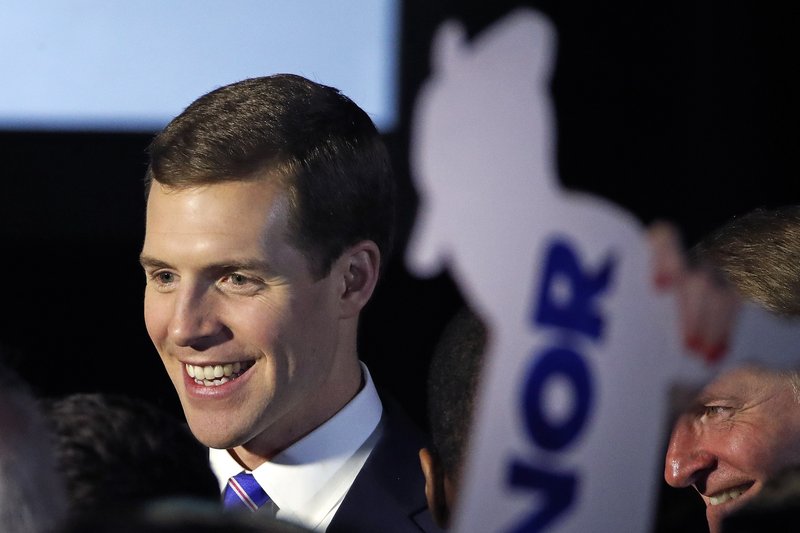
A razor’s edge separated Democrat Conor Lamb and Republican Rick Saccone early Wednesday in their closely watched special election in Pennsylvania, where a surprisingly strong bid by first-time candidate Lamb severely tested Donald Trump’s sway in a GOP stronghold. Lamb claimed victory before exuberant supporters early Wednesday as the number of votes still to be counted dwindled in a contest that has drawn national attention as a bellwether for the midterm elections in November when the Republican Party’s House and Senate majorities are at risk. The Marine veteran told his crowd that voters had directed him to “do your job” in Washington. “Mission accepted,” he declared. Earlier, Saccone told his own supporters, “It’s not over yet, we’re going to fight all the way, all the way to the end, we’ll never give up.” Lamb told CNN Wednesday he hadn’t yet heard from Saccone, but added, “I congratulate him on fighting hard the whole way.” Regardless of the outcome — and a recount was possible — Lamb’s showing in a district Trump won by 20 points in the presidential race was sure to stoke anxiety among Republicans nationwide and renewed enthusiasm among Democrats. Wednesday morning, Lamb’s lead stood at 641 votes — out of more than 224,000 votes cast, according to unofficial results. Election officials said there are about 200 absentee votes and an unknown number of provisional ballots still to be counted. The four counties in the western Pennsylvania district have seven days to count provisional ballots. In a race this close, either candidate’s supporters can ask for a recount. However there are stiff requirements, including requiring three voters in the same precinct who can attest that error or fraud was committed. The ultimate winner will face re-election in just eight months, and the congressional district as currently shaped will likely vanish next year thanks to a court-ordered redrawing of the state’s district maps. Yet President Trump and his chief allies invested tremendous time and resources in keeping the seat in Republican hands, mindful the contest could be used to measure Trump’s lasting appeal among white, working-class voters and Democrats’ anti-Trump fervor. The White House scrambled to rally voters behind Saccone, who cast himself as the president’s “wingman,” but he struggled at times to connect with the blue-collar coalition that fueled Trump’s victory little more than a year ago. Trump campaigned for Saccone last weekend, urging voters not to “be conned by this guy Lamb.” Asked about Trump’s approach, Lamb told CNN: “There was a lot of foolishness in this election and a lot of really cartoonish campaigning, and I think by the time of the president’s visit…there was just a little bit of burnout on that type of campaigning.” Lamb, a 33-year old former federal prosecutor, asserted his independence from national Democratic Party leaders and studiously downplayed his opposition to the Republican president in the district where Trump’s support has slipped. But he also offered a full embrace of organized labor, hammered Republican tax cuts and promised to defend Social Security, Medicare and pensions. As he declared victory, he traced his politics to his grandfather — who was Pennsylvania state Senate leader — and President Franklin Roosevelt. “People have a right to know that their government walks on their side of the street,” Lamb said. “What that means is I’ll work on the problems that our people face … and I’ll work with anyone to do that.” He praised unions and their members — many of whom had supported Trump. The AFL-CIO estimates there are 87,000 union household votes in the district. “Organized labor built western Pennsylvania,” Lamb said. “Let me tell you something, they have reasserted their right to have a major part in our future.” The vice president, the president’s eldest son, the president’s daughter and the president’s chief counselor also campaigned for Saccone. Outside groups aligned with Republicans poured more than $10 million of dollars into the contest. For Democrats, a win would reverberate nationwide, while even a narrow loss would be viewed as a sign of increased Democratic potential as the midterm season begins. Lamb’s excited supporters included his middle school football and basketball coach, Joe DelSardo, who recalled him as “a leader from the beginning.” The former coach described the district as having “a lot of suit-and-tie people and people who dig in the dirt.” Lamb, he said, “can talk to all of them, and that’s why he can win.” Registered Republican Brett Gelb said he voted for Saccone, largely because the Republican candidate promised to support the president. “Saccone backs a lot of President Trump’s plans for the country,” said Gelb, a 48-year-old fire technician who lives in Mt. Lebanon. He added, “I do think Trump is doing a good job. I think he needs backup.” Democrats must flip 24 GOP-held seats this fall to seize control of the House, and months ago few had counted on the district to be in play. The seat has been in Republican hands for the past 15 years. It was open now only because longtime Republican congressman Tim Murphy, who espoused strong anti-abortion views, resigned last fall amid revelations of an extramarital affair in which he urged his mistress to get an abortion. Saccone tried to persuade the GOP-leaning electorate that their choice was about “making America great again,” as the president repeatedly says. Saccone, a 60-year-old Air Force veteran turned state lawmaker and college instructor, enjoyed enthusiastic backing from the social conservatives who’ve anchored his state career. He’s been perhaps at his most animated when emphasizing his opposition to abortion rights. Yet Saccone struggled to raise money, and that consistent fundraising deficit left him with limited resources to air the message he delivered one-on-one: His four decades of experience in the private sector, international business and now the Legislature should make voters’ choice a no-brainer. National Republican groups filled airwaves and social media with depictions of Lamb as little more than a lemming for Nancy Pelosi — the Democratic House leader that Republicans love
Walt Maddox calls out NRA questionnaire, defends Constitutional rights
Recently the National Rifle Association (NRA) queried Democratic candidate for Governor, Walt Maddox asking him about his stance on legislative issues pertaining to the 2nd Amendment. While most candidate fill out endless questionnaires without hesitation, Maddox took the opportunity to call out the NRA for their line of questioning, noting it appears to be a “quid pro quo agreement” that should he support NRA-backed legislation they would support his campaign. “I find it uncomfortable that your survey and this process somehow implies that if I make a commitment on legislation that I would get your support. That strikes me as being the kind of quid pro quo agreement that has landed too many state leaders either in jail or out of office in recent years,” Maddox wrote the NRA. “If you walked into my office and told me you would provide endorsements, financial backing and votes in return for my commitment on legislation I believe we would rapidly be approaching grounds for an indictable offense.” Instead, Maddox said he will uphold a high ethnical standard and will not “make a commitment on any specific legislation.” He went on to clarify his support for 2nd Amendment and constitutional rights. “But let me make my position clear. I will never favor taking any existing constitutional right away from any American unless we, as a people, come to the conclusion that restraint of some rights helps ensure the pursuit of life, liberty and the pursuit of happiness by all,” Maddox added. Maddox will face former state Supreme Court Chief Justice Sue Bell Cobb, along with Christopher Countryman, James Fields, Doug Smith and Anthony White in the June 5 Democratic primary. The winner will go on to face the Republican nominee in the general election, to be selected among: Gov. Kay Ivey, Tommy Battle, Bill Hightower, Scott Dawson, or Michael McAllister. Read Maddox’s full response to the NRA below: Thank you for asking for my responses to your questionnaire. I realize that your efforts are designed to support values which you sincerely hold dearly. I also cherish the constitutional rights guaranteed to all citizens through the Second Amendment. So it is with tremendous self-examination and thought that I am writing this letter to respond to your survey. First, there are a number of questions on your survey that ask for my commitment on very specific legislation that is either pending or may be proposed. I find it uncomfortable that your survey and this process somehow implies that if I make a commitment on legislation that I would get your support. That strikes me as being the kind of quid pro quo agreement that has landed too many state leaders either in jail or out of office in recent years. If you walked into my office and told me you would provide endorsements, financial backing and votes in return for my commitment on legislation I believe we would rapidly be approaching grounds for an indictable offense. Because I uphold the highest ethical standard, I will not entertain or make a commitment on any specific legislation. But let me make my position clear. I will never favor taking any existing constitutional right away from any American unless we, as a people, come to the conclusion that restraint of some rights helps ensure the pursuit of life, liberty and the pursuit of happiness by all. The first amendment to our Constitution guarantees free speech. But we, as a people, have long recognized that speech can be a powerful weapon and as such must be restrained in ways to protect the rights of others. The right to bear arms is central to the creation and preservation of our republic but it clearly is no more central that our right to free speech. So, I stand with those who would protect the liberties provided through our second amendment. As Governor, I will fight to ensure the preservation of all rights guaranteed by our Constitution.
Cabinet chaos: Trump’s team battles scandal, irrelevance
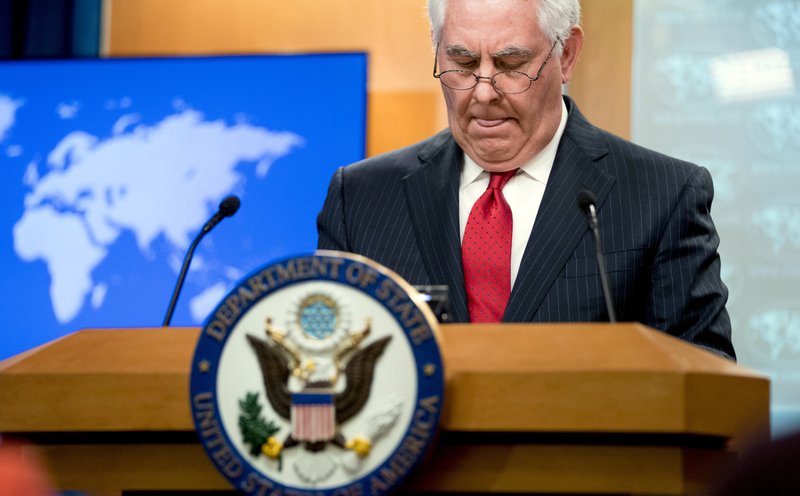
One Cabinet member was grilled by Congress about alleged misuse of taxpayer funds for private flights. Another faced an extraordinary revolt within his own department amid a swirling ethics scandal. A third has come under scrutiny for her failure to answer basic questions about her job in a nationally televised interview. And none of them was the one Trump fired. President Donald Trump’s Cabinet in recent weeks has been enveloped in a cloud of controversy, undermining the administration’s ability to advance its agenda and drawing the ire of a president increasingly willing to cast aside allies and go it alone. Trump’s ouster of Secretary of State Rex Tillerson on Tuesday may have just been the first salvo in a shakeup of a Cabinet that, with few exceptions, has been a team of rivals for bad headlines and largely sidelined by the White House. “Donald Trump is a lone-wolf president who doesn’t want to co-govern with anybody and doesn’t want anyone else getting the credit,” said presidential historian Douglas Brinkley of Rice University. “For his Cabinet, he brought in a bizarre strand of outsiders and right-wing ideologues. Many are famed conservative or wealthy business people, but that doesn’t mean you understand good governance.” The string of embarrassing headlines for Trump’s advisers, as well as the president’s growing distance from them, stands in sharp contrast to how he portrayed the group last year. “There are those that are saying it’s one of the finest group of people ever assembled as a Cabinet,” Trump said then. On Tuesday, the president hinted after firing Tillerson that more changes may be forthcoming, saying an ideal Cabinet is in the making. “I’ve gotten to know a lot of people very well over the last year,” Trump told reporters at the White House, “and I’m really at a point where we’re getting very close to having the Cabinet and other things that I want.” Even as Trump routinely convened Cabinet meetings in front of the cameras for “Dear Leader”-type tributes over the past year, his relationship with many of its members began to splinter. Last summer he began publicly bashing Attorney General Jeff Sessions, a former close adviser who was the first senator to back his campaign. Furious that the attorney general recused himself from the Russia probe that has loomed over the White House, Trump has privately mused about firing Sessions and taken to delivering unprecedented Twitter broadsides against him. Trump has used the words “beleaguered” and “disgraceful” to describe Sessions, who only recently stood up to the president and defended his recusal decision. Tillerson also frequently clashed with Trump, who never forgave the outgoing secretary of state for reportedly calling him “a moron” last summer after grumbling that the president had no grasp of foreign affairs. The pair never developed a particularly warm relationship. Last November, during a full day of meetings in Beijing, Trump and his senior staff were served plates of wilted Caesar salad as they gathered in a private room in the Great Hall of the People. None of the Americans moved to eat the unappetizing dish, but Trump prodded Tillerson to give it a try, according to a senior administration official. “Rex,” the president said, “eat the salad.” Tillerson declined, despite Trump’s urging. After repeatedly undermining and contradicting Tillerson, Trump at last fired his secretary of state in a tweet. Trump in recent days has told confidants that he feels emboldened. He’s proud of his unilateral decisions to impose sweeping tariffs on metal imports and to meet with North Korean dictator Kim Jong Un, and far less willing to put up with disloyalty around him, according to a person who has spoken to the president in recent days but was not authorized to discuss private conversations publicly. Trump’s esteem for the Cabinet has faded in recent months, according to two White House officials and two outside advisers. He also told confidants that he was in the midst of making changes to improve personnel and, according to one person who spoke with him, “get rid of the dead weight” — which could put a number of embattled Cabinet secretaries on notice. The officials all spoke on condition of anonymity to discuss internal matters. Interior Secretary Ryan Zinke underwent questioning Tuesday by Senate Democrats, who accused him of spending tens of thousands of dollars on office renovations and private flights while proposing deep cuts to conservation programs. Zinke pushed back, saying he “never took a private jet anywhere” — because all three flights he had taken on private planes as secretary were on aircraft with propellers, not jet engines. Veterans Affairs Secretary David Shulkin’s days on the job may be limited after a bruising internal report found ethics violations in connection with his trip to Europe with his wife last summer, according to senior administration officials. He also has faced a potential mutiny from his own staff: A political adviser installed by Trump at the Department of Veterans Affairs has openly mused to other VA staff about ousting the former Obama administration official. Trump has floated the notion of moving Energy Secretary Rick Perry to the VA to right the ship, believing Shulkin has become a distraction, according to two people familiar with White House discussions. They were not authorized to discuss internal deliberations and spoke on condition of anonymity. Others under the microscope: —White House aides deemed Education Secretary Betsy DeVos’ recent appearance on “60 Minutes” a disaster as she struggled to defend the administration’s school safety plan and could not answer basic questions about the nation’s education system. —Housing and Urban Development Secretary Ben Carson came under fire last month after reports his agency was spending $31,000 for a new dining set, a purchase HUD officials said was made without Carson’s knowledge. —Environmental Protection Agency Administrator Scott Pruitt has faced questions about $25,000 spent on a soundproof “privacy booth” inside his office to prevent eavesdropping on his phone calls and another $9,000 on biometric locks. —The first Cabinet member to
Prosecuting those who lie to buy guns could strain resources

A Trump administration plan to crack down on people who lie to buy guns faces a giant hurdle: It relies on federal agents and prosecutors who are already overwhelmed with other responsibilities. Prosecutors and officials from the U.S. Bureau of Alcohol, Tobacco, Firearms and Explosives have historically preferred to use their limited resources to deal with violent crimes rather than aggressively pursue people who give false information on background check forms. Lying on the forms is a felony, and prosecutors sometimes struggle to win convictions. Still, both sides of the gun control debate welcomed the effort, as President Donald Trump faced criticism for backpedaling from his earlier demands for sweeping reforms in favor of the powerful National Rifle Association. By enforcing existing federal law, Attorney General Jeff Sessions’ plan allows the Trump administration to show it is taking action on gun crime in the aftermath of the Florida school shootings while avoiding more restrictive approaches that would never win approval from gun-rights groups or congressional Republicans. Tens of thousands of people are denied guns each year because of problems with their background checks. But a review by the Justice Department’s inspector general found prosecutions for lying during that process are rare. The ATF referred more than 500 so-called lie-and-try cases to federal prosecutors between 2008 and 2015, the review found, but fewer than 32 cases each year were even considered for prosecution. “We must vigilantly protect the integrity of the background check system through appropriate prosecution of those who attempt to circumvent the law,” Sessions wrote in a memo directing federal prosecutors to bring more cases. It was among several Justice Department initiatives unrolled in response to the shootings in Parkland, Fla., which left 17 people dead. Sessions told federal prosecutors to focus primarily on people denied guns because they are violent felons, fugitives or have domestic violence convictions, which the Justice Department says will help preserve limited resources for cases that pose the greatest threat to public safety. But some current and former law enforcement officials feared that any additional emphasis on such cases would detract from more pressing concerns, such as prosecuting people who buy guns on behalf of felons or those who try to buy guns illegally and are successful. Lie-and-try cases are hard to try in court because prosecutors must convince a jury that a prospective gun buyer intended to lie, rather than just made a mistake or misunderstood what the law allows, which is sometimes the case. And officials stress there are other ways for someone who can’t legally own a gun to get one, such as from private sellers or at gun shows, where federal background checks aren’t required. “There is a reason why they are not getting prosecuted heavily at the moment, and that’s because they are less-than-compelling cases. They’re not getting guns,” John Walsh, a former U.S. attorney in Colorado, said. Walsh’s 2013 testimony about the Obama administration’s gun control proposals quickly turned to a grilling from Republican lawmakers about why so few people were being prosecuted for lying in their attempts to buy guns. An Obama appointee, he argued there was no way the Justice Department could have prosecuted more than a million people who were rejected for gun purchases over a 15-year period. An ATF spokesman said the agency supports the administration’s approach and would shift resources accordingly. There are reasons for concern about those who try and fail to buy guns. Government-funded studies show they are more likely to be arrested in the five years following the denial than in the five years before it. But Walsh said he doubted Sessions’ directive would result in a tidal wave of new cases. The memo asks federal prosecutors to work with local ATF leaders to review their guidelines for handling the cases and to submit a specially tailored plan for approval. It doesn’t say what could happen to U.S. attorney’s offices that don’t comply. “This is in the nature of window dressing,” Walsh said. The move puts additional pressure on the perennially resource-strapped agency at a time when it has already been asked to take on a growing role in the Trump administration’s broader crackdown on violent crime. Trump, for example, ordered ATF to work toward banning rapid-fire bump stocks like those used in last year’s Las Vegas massacre despite the agency’s prior approval of the devices. Extra ATF agents were deployed last summer to cities like Chicago and Baltimore that saw spikes in shootings. “It’s kind of a tiered approach on how you have to manage resources,” said Michael Bouchard, a retired assistant director who is now president of the ATF Association. “You’re going to take people away from doing things that are going to have a significant impact on violent crime.” Lie-and-try prosecutions would not have prevented the shootings in Las Vegas or Florida because the gunmen bought their guns legally. A man who slaughtered more than two dozen parishioners at a Texas church last year got his weapon only because information about his domestic violence conviction was never entered into the federal database. After that shooting Sessions launched a wide-ranging review of the system, which also sought information on the number of recent lie-and-try investigations. But the Justice Department on Tuesday would not release the data or other results of the review beyond an executive summary. Republished with the permission of the Associated Press.
State House votes to reinstate school safety task force
The Alabama House of Representatives on Tuesday voted to reinstate a school safety task force in the wake of the recent deadly school shootings in Parkland, Fla. and Birmingham, Ala. Lawmakers voted 83-6 for HB447, which establishes the Alabama Task Force on School Safety and Security. Sponsored by Decatur-Republican State Rep. Terri Collins, the bill charges the task force to annually study the current educational and safety laws, rules, and policies in Alabama in order to assist the Legislature in making effective changes to protect and benefit the citizens of this state. The legislation did not pass without debate. Democratic lawmakers criticized the task force. They contend the House needs to take up legislation that also includes gun control and mental health. The bill now moves to the Senate for consideration.
Alabama fantasy sports bill fails in Senate ahead of vote

The daily fantasy sports (DFS) industry apparently will not be getting the green-light to operate in Alabama any time soon. Despite unanimously passing the Senate Tourism and Marketing Committee earlier this month, SB325 —which would establish the Fantasy Contests Act and provide for the registration of certain fantasy sports operators conducting fantasy sports contests within the state — was decisively shut down on the floor during Tuesday’s session before even given a chance to take a vote on the matter. History of Fantasy Sports in Alabama In April 2016, former state Attorney General Luther Strange sent cease-and-desist letters to two Daily Fantasy Sports companies — DraftKings and FanDuel — after determining that paid daily fantasy sports contests constitute illegal gambling. In DFS, participants pay to create a roster of players, then pit their roster against those of other participants. Whomever’s roster performs the best that day within a certain pool wins prize money through the site. According to Alabama code section 13A-20-12, a person participates in gambling if he or she “stakes or risks something of value upon the outcome of a contest of chance or a future contingent event not under his control or influence, upon an agreement or understanding that he or someone else will receive something of value in the event of a certain outcome.” Gambling in Alabama is illegal, with a few exceptions including buying securities and commodities, insurance, and some grandfathered activities. DFS sites often contend they are games of skill, not of chance, and thus aren’t covered under most states’ gambling laws, nevertheless the companies complied with Strange’s request. Sanford contends 400,000 Alabamans played fantasy sports before it was banned from the Yellowhammer State. Previous legislative attempts to legalize fantasy sports For three years now state lawmakers have endeavored to legalize fantasy sports. Last year the House passed its version of a bill doing just that, but the Senate adjourned for the session without ever taking it up. Since the bill’s sponsor, Huntsville-Republican state Sen. Paul Sanford, is retiring it is unknown whether or not the legislation will be introduced again in the future.
Martha Roby picks up endorsement from National Right to Life
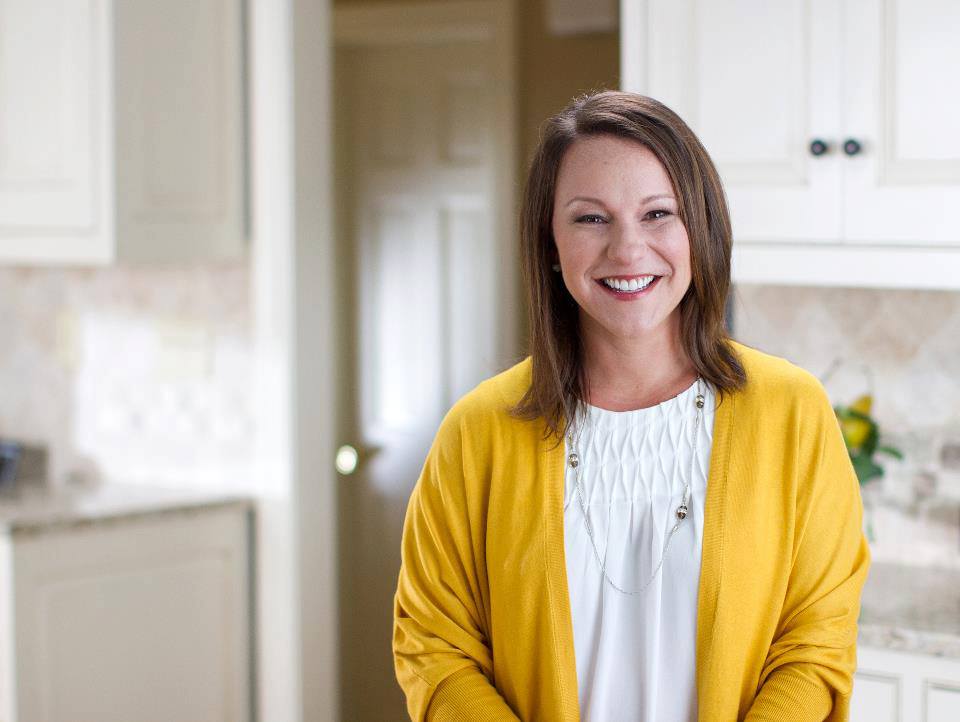
On Tuesday, National Right to Life announced its endorsement of Alabama 2nd District U.S. Rep. Martha Roby in her re-election efforts. The pro-life group praised Roby’s strong pro-life voice in Congress. “All voters who are concerned with the right to life and with the protection of the most vulnerable members of the human family should vote to return Representative Roby to Congress so that she can continue to work to advance vital pro-life public policies,” the group said in a statement. They also pointed out her 100 percent score based on her pro-life voting record and highlighted her leadership on several related legislative items: Roby cosponsored and voted in favor of the Pain-Capable Unborn Child Protection Act, legislation that would ban abortion after 20 weeks. Roby cosponsored and voted in favor of the No Taxpayer Funding for Abortion Act, a bill that would establish a permanent, government-wide policy against funding abortions or health insurance plans that cover them. Roby voted to block federal funding for Planned Parenthood. “I am grateful to the National Right to Life Committee for its unwavering commitment to the pro-life cause,” Roby said of the endorsement. “I am honored to have the support of this important organization, and I look forward to continuing our work together on behalf of those who cannot fight for themselves.”
MöllerTech opens $46.3 million Alabama plant, ramps up hiring

MöllerTech officially opened its $46.3 million auto supplier plant in Bibb County yesterday morning as the Mercedes-Benz supplier prepares to produce parts for the next generation of vehicles at the German automaker’s Alabama plant. The plant already has equipment installed and 50 workers in place in the facility in the Scott G. Davis Industrial Park. “About 18 months ago we had the groundbreaking. So, here we are in this wonderful facility and with 50 people employed already,” said Steve Jordan, MöllerTech North American CEO. “A lot of these individuals have already grown within the organization, so I’m looking forward to employing more. I think we will be up to 220 at the end of 2019.” Those workers will produce interior parts to go in the vehicles that Mercedes will build in neighboring Tuscaloosa County after the automaker completes a $1 billion expansion later this year. “It’s a challenging time for us as we get ready for the next generation of cars,” said Jason Hoff, CEO of Mercedes-Benz U.S. International. “We have a lot of work to do on our own facility. We’re completing our $1 billion investment that we announced a couple of years ago. So, you know, it’s getting into the crunch time.” Economic developers are feeling that “crunch time” as they seek to provide industrial sites and a workforce ready to take jobs as the automotive industry continues to grow in the state. “We expect to continue to see growth in the automotive sector,” Alabama Commerce Secretary Greg Canfield said. “With the density of OEMs (original equipment manufacturers) locating in the state of Alabama, we’re going to see more and more interest from the supply chain looking at Alabama because, hey, Alabama is the now the center and the heart of the Southern automotive sector.” Within the existing automotive industry in the state, Alabama has to be ready to shift as the industry shifts into areas like electric vehicles and other advances. “The supplier market has to be responsive to (change) as well and as that happens in economic development we have to be prepared with sites and facilities,” said Brian Hilson, CEO of the Birmingham Business Alliance. “We also have to be prepared from a workforce standpoint because we will have new technologies and workforce requirements that will go with those that we will have to be ready for.” Canfield said Alabama is already working closely with and their suppliers to prepare for change years in advance. “The interesting thing that we find about the automotive sector that really makes it a lot of fun to work with is they’re thinking so far in advance,” he said. “So, when we engage with the automotive OEMs and tier ones and other suppliers down the line – whether they’re tier two or tier three – we’re talking about impacts that are going to occur three to five years in the future. That really helps us get a better understanding of the direction and the flow of the automotive sector in Alabama.” Jordan said even before the new MöllerTech plant produces its first part for Mercedes, his company is already anticipating getting a contract for future work. “Our company is 290 years old. We’ve just opened this building and we plan to be here for many, many years to come,” he said. “So, with this next generation of Mercedes vehicles we currently have, we want future ones as well. We hope to have a great future and partnership with Mercedes.” Republished with permission from the Alabama NewsCenter.
