
Pay raise for teachers approved by Alabama lawmakers

Alabama lawmakers have approved a 2.5 percent pay raise for teachers and school employees that will cost more than $100 million. The Alabama Senate voted 29-0 Thursday for the pay raise in the education budget for the next fiscal year. The total $6.7 billion budget included a controversial $1.2 million boost to Alabama State University to offset the damage of a finance investigation that found no wrongdoing. It also added $18 million to expand the state’s pre-kindergarten program. Gov. Kay Ivey called for a teacher pay increase in her State of the State speech at the start of the session. The amended bill returns to the House for a final vote. The legislature also approved a 3 percent raise for state employees and a one-time bonus for retirees this year. Republished with the permission of the Associated Press.
Hoping the walkout was a wake up for today’s youth
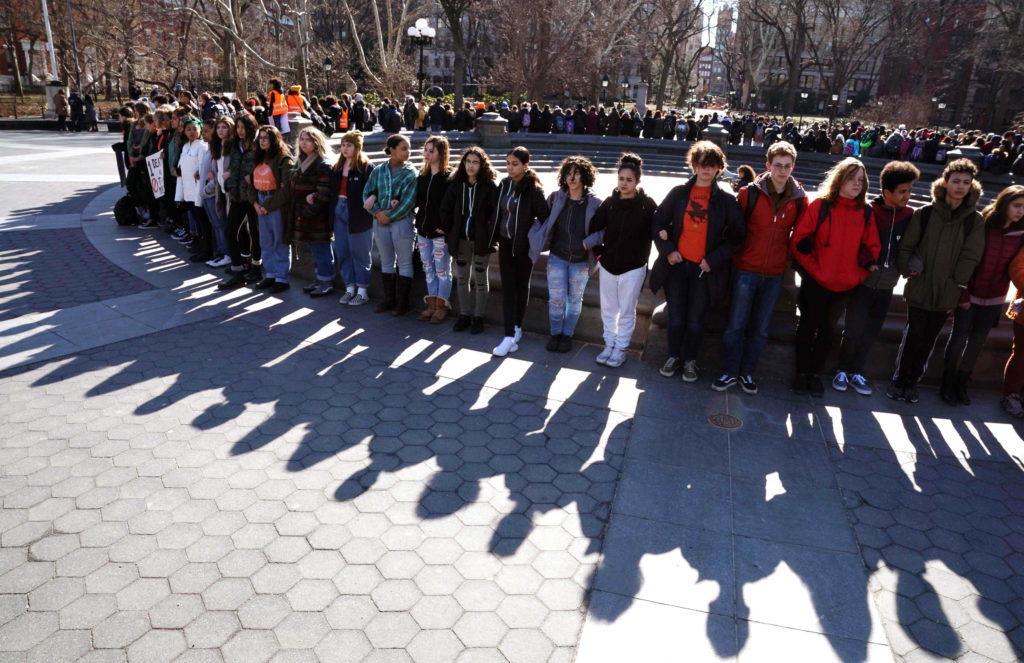
I’ve seen a lot of mixed opinions about the national school walkout yesterday meant to honor the 17 victims of the Marjory Stoneman Douglas High School shooting Parkland, Fla. The sentiments range from proud of the students to hostile towards their message. I’m proud of those engaged even though I whole heartedly disagree with the gun control message they’re pushing. What is important is that teens are waking up to the fact that their voice should, and does, carry weight. I’m a very strong 2nd Amendment supporter so I disagree with the premise that firearms are the problem and that firearm restrictions are the solution. However, the fact youth realize that true grassroots activism can cause change is a good thing for our country. With our election participation rates being so ridiculously low for youth — just 24 million people under the age of 29 voted in 2016. In Alabama’s special U.S. Senate election in December, only 23 percent of the voters, which translates to translates to approximately 175,000 were under the age of 29 — it’s refreshing to see young people actually getting involved in the political process. On the other side of this event was a movement to “Walk up, not walk out.” While I like the walk out for its sign of unity, strength and activism, I love the idea of taking action and making a difference better. High school is a very cliquish time. Which can be hard on even the most popular and well adjusted students. What’s worse is those who find themselves lost without friends or a sense of belonging which is easy during the young awkward years. In this digital day and age, bullying and meanness and loneliness are real issues and the impacts they have are huge. Opening the eyes of today’s youth and teaching them to be empathic is a good thing. It’s not up to our students to identify those who could commit these types of heinous crimes, but it is important for those to be aware of their classmates and to talk to adults about them if they have legitimate concerns. Learning more about your peers, those outside your social circle is something that is real and will have tangible results in the lives of students. Is every school outcast a mass shooter about to happen NO? The quiet loner could be the student who’s new to the school, the student who’s homeless or is living in poverty, the student who’s dealing with a sick mom or dad, it could be a student who’s introverted and misunderstood. The possibilities are endless and your child won’t know until they reach out and say hello. The chances of that person being a threat to the kind kids are incredibly rare (read statistically not really happening). Again, this isn’t about identifying and stopping the next shooter this is about making our world a better place in general. Students want something they can do. Well they can make a friend and learn something new. They can practice kindness and empathy not with the goal of ending violence but with the goal of being good people. If that comes out of yesterday’s protests and efforts, then it’s a win for all of us. In Alabama, we had a number of schools and students to participate. I think that it opens the door for parents what our responsibilty is for kids in our communities. For the walk out or walk up crowd, I think it’s the kind of activism we need. Just as supporters of the 2nd Amendment want hold tight to their Constitutional rights, we can’t ignore the 1st Amendment. It’s marches and sit-ins and peaceful demonstrations that put our country in a place where women now have the right to vote. And blacks have the rights that they should’ve had all along. So this is a good thing for all of us.
Alabama Reactions to National School Walkout
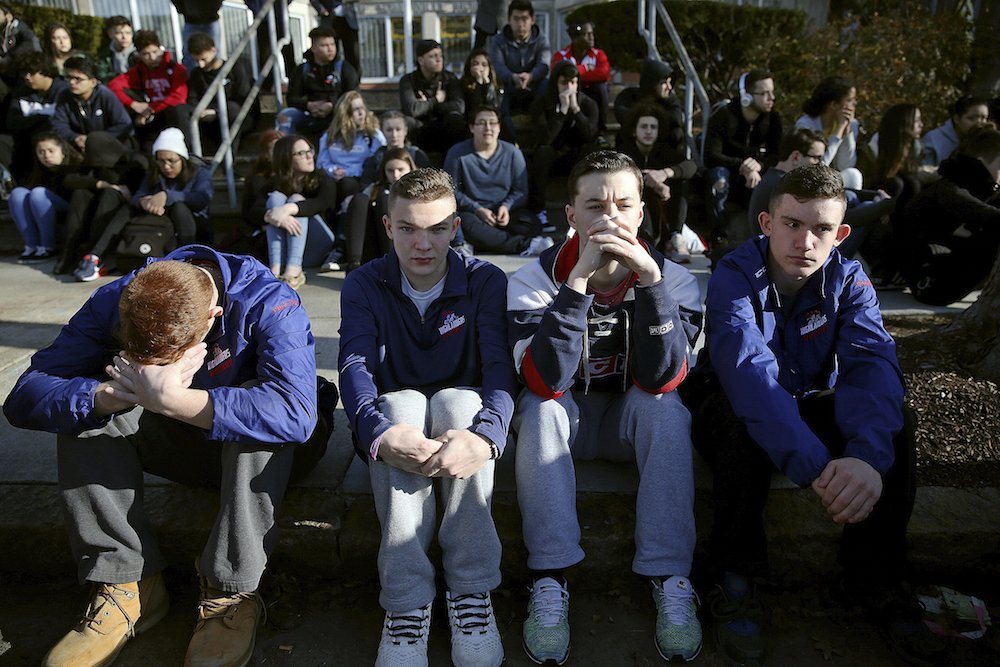
Thousands of schools around the nation participated in The National School Walkout on Wednesday. The walkout was formed to protest current gun laws, and to honor the 17 victims of the Marjory Stoneman Douglas High School shooting that took place in Parkland, Fla. last month. Several schools in Alabama participated in the walkout by leaving their classes at 10 a.m. to stand outside in silence for 17 minutes to honor the students and faculty members who lost their lives. Huffman High School students added and extra minute of silence in honor of their classmate Courtlin Arrington. Here are some of Alabama’s reaction’s to the National Walkout: WIAT CBS 42 (via Twitter): PHOTOS: Schools in central Alabama participate in National School Walkout Day https://t.co/32TiisICKI — WIAT CBS42 (@WIAT42) March 14, 2018 Nicole Fierro, WPMI NBC 15 (via Twitter): NOW: Students are showing signs, linking arms and wearing black and orange at the Alabama School of Mathematics and Sciences. They are joining thousands across the country participating in a national walk out to protest gun violence. @mynbc15 #Nationalwalkout #WalkoutWednesday pic.twitter.com/sDI5cc7XCw — Nicole Fierro (@FierroNicole) March 14, 2018 Alabama 7th District U.S. Rep. Terri Sewell (via Twitter): In honor of Courtlin Arrington, age 17, of Huffman High School in Birmingham,AL I joined the students for today’s #EnoughIsEnoughDMV event at the Capitol. #NeverAgain #NationalWalkoutDay pic.twitter.com/PE270jby3V — Rep. Terri A. Sewell (@RepTerriSewell) March 14, 2018 Alabama 1st District U.S. Rep. Bradley Bryne (via Facebook): Lee County (AL) Dems (via Twitter): Students in Atlanta take a knee to protest gun violence on day of national walkout https://t.co/NbUzYlSUr4 — Lee County (AL) Dems (@LCDCAlabama) March 14, 2018 State House Democratic Leader Anthony Daniels (via statement): “Those students who marched in the streets in Birmingham, Alabama in 1963 so their collective voices could be heard helped change the course of history in our state and in our nation. One day we will look back and point to yesterday’s student walk out aimed at bringing attention to the senseless violence gripping our nation as a turning point in our effort to make our country a safer place for our children, our families and all those who live and work here. So I support their cause, their commitment and their rights under the First Amendment to push back against those who want to protect policies and programs that do not work and endanger us all. I pray our elected leadership will listen and respond to these students. They deserve to learn in an environment free from fear and anxiety.”
Colonial Pipeline Company to pay $3.3M to Alabama for damages

Both the Alabama Attorney General Steve Marshall and the Alabama Department of Environmental Management (ADEM), announced an agreement with the Colonial Pipeline Company on Thursday. The agreement resolves environmental claims made when the company’s gasoline pipeline ruptured in Shelby County, and three other areas in Alabama, in September and October 2016. During the September 9, 2016 disaster, Colonial’s gasoline pipeline leaked into a rural area of Shelby county, southeast of Helena. While a portion of the gasoline was recovered, reports indicate that the pipeline leaked approximately 250,000 gallons into the area. The leak was caused by pipe fatigue that resulted from improper compaction of soil below that portion of the pipeline. The October 31, 2016 pipeline explosion and fire killed one and injured six workers, and involved the release of over 180,000 gallons of gasoline near County Road 251 in Shelby County. Gov. Robert Bentley declared a month-long State of Emergency after the disaster. It was reported that the explosion was caused by an accidental strike to the pipeline by excavating equipment. The strike to the pipeline ignited gasoline, which resulted in releases into the environment. The three remaining releases totaled approximately 21 barrels of petroleum products, a portion of which was recovered. “This agreement first and foremost addresses the environmental damage to land and water caused by significant gasoline spills in Shelby County during 2016,” said Marshall. “I am pleased by the outstanding work of ADEM’s legal team who worked closely with our lawyers to achieve a settlement which I believe is fair, reasonable and benefits the people of Alabama.” The settlement includes several specifications for Colonial including: Colonial must complete the cleanup of petroleum products released into the soil and waters of the State, which will be overseen by ADEM $1.3 million civil penalty $1.8 million in projects to benefit the State of Alabama $200,000 to the Alabama Department of Conservation and Natural Resources as restitution for damages incurred by the closure of its Cahaba River Wildlife Management Area for nearly three months
Child Care Safety Act passes Senate, heads to Kay Ivey’s desk

The Alabama Senate on Thursday morning gave final approval to the ‘Child Care Safety Act,’ which endeavors to give oversight to child care centers statewide for the protection and benefit of the children. Sponsored by Tuskegee-Democrat state Rep. Pebblin Warren, HB76 passed by a vote of 22-4. “Today is a great day for the children of Alabama,” said Warren. “This legislation will go a long way to ensuring a safer environment for children across the state who attend these facilities.I greatly appreciate all the support from my colleagues and look forward to the Governor signing this important legislation.” Under the legislation, the Alabama Department of Human Resources (ADHR) would be able to inspect the nearly 1,000 faith-based centers throughout Alabama once a year. It would also require criminal background checks on the people whose care children are being placed into and proof of insurance. Under current law, Alabama is only one of seven states that still allows daycare centers to operate without regulation if they are a part of a church or ministry. Nearly half of the 1,914 day cares statewide claim the religious exemption, allowing them avoid background checks for workers and facility inspection The bill has already won the approval of the State House, and now heads to Gov. Kay Ivey‘s desk for final consideration. Ivey expressed her support of the legislation in August following the tragic death of a five year old at an unlicensed daycare center in Mobile, Ala., and is expected to sign the bill into law.
Alabama becomes early adopter of new computer science standards

The Alabama State Board of Education on Tuesday announced new statewide learning standards that will help students integrate technology into their current studies. The Digital Literacy and Computer Science (DLCS) standards blend the ability to use information and communication technologies with the study of computers to create an integrated approach to instruction that can enhance any existing educational subject. Alabama is an early adopter in these practices; being one of only 15 states in the nation to adopt them. The standards are not a stand-alone course; they work within the existing standards in all subject areas — reading, math, history, science, social studies, etc. — and in all grades. The DLCS standards will provide access to various forms of digital learning and computer science, allowing students to become computational thinkers and to familiarize themselves with the digital culture, which is fueling much of the current, and future workforce. “We want Alabama children to have the benefit of the most significant education standards – especially those that take advantage of an emerging world of careers,” said Ed Richardson, Interim State Superintendent of Education. “The future belongs to those who are best prepared to meet the challenges of a changing educational, professional, and technological landscape.” Making sure teachers are trained and prepared to implement the DLCS standards is a priority of the SBOE. A+ College Ready, CODE.org, and other organizations have partnered together to educate teachers on how to effectively incorporate DLCS into their classrooms. “Proficiency in computer science has positive impacts across the curriculum and should be a priority statewide,” said Dr. Cynthia McCarty, a representative on Alabama Governor Kay Ivey’s Computer Science Advisory Council, and SBOE Representative for District 6. “We know that the careers of the future are increasingly dependent on having some familiarity with computer science, algorithms, and the cognitive and technical skills these standards provide, I would like to see every school in the state embrace this opportunity and continue preparing our students for the future and high-demand careers.” School systems across the state are given the option to participate in using the new standards for the 2018-2019 school year, but all schools will be required to use the standards at the beginning of the 2019-2020 school year.
Birmingham City Councilor takes 16 students to D.C. for Black Women’s Roundtable
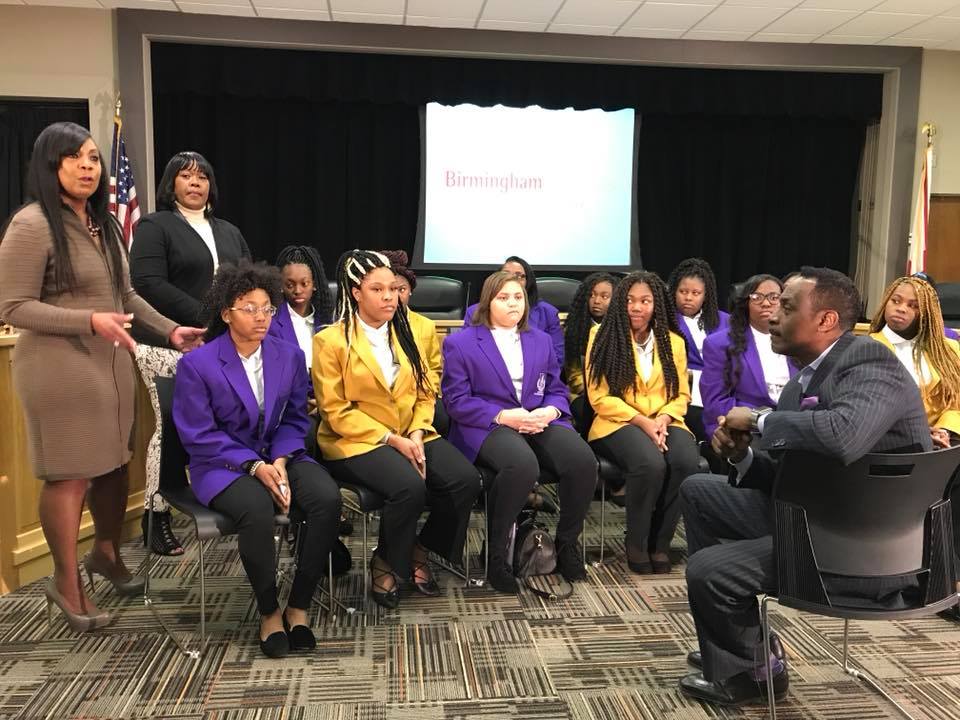
Every year, Birmingham City Councilor Sheila Tyson takes students to 7th Annual Black Women’s Roundtable (BWR) Summit in Washington, D.C. in her quest to enrich the lives of young women through civic education. 2018 is no different, as Tyson made her way to D.C. on Wednesday with sixteen young Birmingham, Ala. ladies representing the Student Government Association from Parker and Wenonah High Schools to participate in five days of symposiums at the BWR, an intergenerational civic engagement network of the National Coalition on Black Civic Participation. Throughout their trip the group will learn the importance of entrepreneurship, issues of economic security and prosperity, income inequality and how they can contribute to solutions through civic engagement. Tyson and the group will join several members of Congress, and national community leaders from across the nation to voice their concerns on federal matters concerning their communities. Students will also meet with state representatives, including Alabama 7th District U.S. Rep. Terri Sewell, to discuss action steps to resolving issues in their communities and learn more on what policies and proposed funding is in place to address each of them. They will also be getting a private tour of the newest Smithsonian Museum, the National Museum of African American History and Culture. Tyson expressed the importance of building and organizing young women to learn the true power of their voices as forces of change ahead of the trip. “I’m beyond thrilled to be a part of this movement and travel with our young ladies to Capitol Hill and stand strong on issues within our communities,” Tyson said. “It is a privilege to teach them the many fundamentals of civic engagement and help them realize the power they hold with making changes not only in our communities, but our nation as a whole.” Parker High Principal Darrell Hudson said he’s excited that some of his school’s “shining stars’’ are making the trip, some of whom will be flying for the first time. “I think this is going to be a great opportunity. It will be a game changer’’ for them, Hudson said. Parker students on the trip include: Tykenya Todd, Lankea Burgin, Nariah Mayo, Tamika Green, LaTammara Davis, Zariah Threatt, Janecio Andrews and Markita Phillips. Wenonah students on the trip include: Courtlyn Scott, Aniya Kinnion, Jessica Moore and Shanyia Kimbrough. Tyson said the trip was made possible thanks to donors outside of Alabama.
Birmingham, Mobile landmark renovations among those receiving Alabama historic tax credits
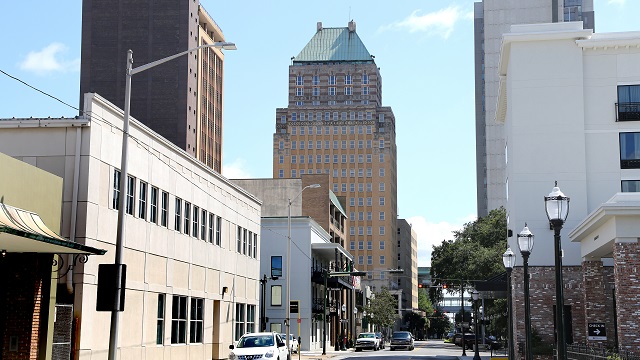
The Alabama Historical Commission announced $20 million in tax credits last week that will be used to help renovate 12 structures across the state. Previous tax credits helped finance more than 50 redevelopment projects, including several multimillion-dollar ones in Birmingham like the Lyric Theatre, the Redmont Hotel and the Pizitz. To qualify for the credits, properties must be at least 60 years old and have historical significance. A historical commission committee decided which projects would receive the merit-based awards this year. In past years, the commission awarded credits on a first-come, first-served basis. Another change this year is at least 40 percent of tax credits went to projects in rural counties. Birmingham received the lion’s share of allocations in 2018, with $6.8 million going to three projects. In the Magic City, $5 million in tax credits will help the group that renovated the Redmont transform the Protective Life Building (2027 Richard Arrington Jr. Blvd.) into a 96-room hotel. REV Birmingham CEO David Fleming said tax credits continue to be an essential tool for stimulating local economies. “The impact of historic tax credits in downtown Birmingham is undeniable. From the Elyton Hotel and Thomas Jefferson Tower to the Pizitz and Lyric Theatre, the incentive has enabled millions of dollars of investment in structures that give our city its unique character,” Fleming said. “The demand for these projects is demonstrated by the number of applicants this year. These credits return great value to the state.” Mobile was also well-represented in this year’s tax credits, receiving more than $5 million for three projects. Most of those credits will go toward renovating the Merchants National Bank building (104 St. Francis St.). When finished, the building will house 84 loft apartments as well as commercial, retail and restaurant space. “Downtown Mobile projects like the Merchants National Bank building are great examples of the multiplying return on investment made possible by the state historic tax credit,” said Patty M. Howell, director of regional affairs for the Mobile Area Chamber of Commerce. “In addition to saving a beautiful old building that would otherwise crumble, these projects allow properties to again generate positive tax revenues.” Projects approved for tax credits in 2018 include: Protective Life Building/Commerce Center (2027 Richard Arrington Jr. Blvd. in Birmingham), $5 million Merchants National Bank (104 St. Francis St. in Mobile), $5 million Family Service Laundry Building (2200 Magnolia Ave. S. in Birmingham,) $1.6 million Martin Building (2308 Fourth Ave. S. in Birmingham), $182,000 Kennedy-Foster House (1842 25th Ave. in Tuscaloosa), $62,000 Foote-Heisterhagen House (2160 Old Shell Road in Mobile), $50,000 Lyons Building (111 Dauphin St. in Mobile), $37,500 The largest rural project approved for tax credits was the $5 million awarded toward renovating of the Pratt Continental Gin in Prattville. Other rural projects approved for tax credits include: Howell School (408 E. Newton St. in Dothan), $1.5 million James Hotel (1200 Water Ave. in Selma), $1 million Fain Theatre (101 E. Bridge St. in Wetumpka), $221,000 Womack’s Hardware (107 N. Mount Pleasant Ave. in Monroeville), $147,000 The Alabama Legislature capped the amount of tax credits awarded in 2018 at $20 million. Fleming recommended the state re-evaluate that number in the future to spur even more investment. An additional 14 projects totaling more than $16 million in tax credit requests sit on a waiting list for consideration in 2019. “Alabama’s 2018 tax credit is now capped at $20 million to be spread across the state. This leaves many good impactful projects waiting,” Fleming said. “Imagine the progress in historic areas across Alabama if the cap were raised. It is worth considering.” Republished with permission from the Alabama NewsCenter.
Rex Tillerson’s dismissal may hasten demise of Iran nuclear deal
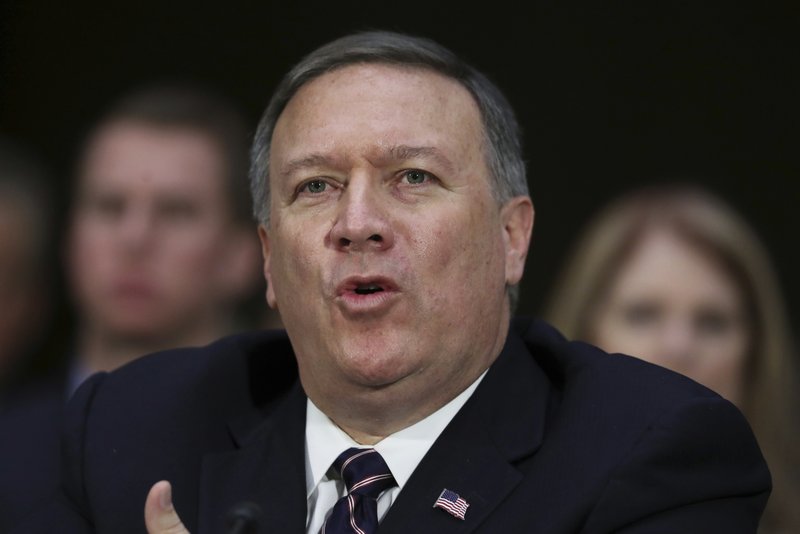
The Iran nuclear deal was in near terminal condition and on life support even before President Donald Trump fired Secretary of State Rex Tillerson. Tillerson’s dismissal this week may hasten its demise. As CIA chief and Iran hawk Mike Pompeo prepares to run the State Department, the Trump administration is weighing a speedier withdrawal from the agreement than even the president has threatened, according to two U.S. officials and two outside advisers briefed on the matter. They were not authorized to discuss the sensitive negotiations publicly and spoke on condition of anonymity. While such a scenario is unlikely, the fact it is being floated as an option may give U.S. officials more leverage in negotiations with European signatories to salvage the accord by toughening it. Two such negotiating sessions have already been held and a third is set for Thursday in Berlin. Trump, who calls the Obama administration’s signature foreign policy achievement the worst deal ever negotiated, has vowed to walk away from the 2015 agreement in mid-May unless Britain, Germany and France join the U.S. in addressing what the president says are its fatal flaws. These include no penalties for Iran’s missile work and support for militant groups in Lebanon, Syria, Yemen and elsewhere. The deal that was negotiated by the Obama administration and six other countries limits Iran’s enrichment and stockpiling of material that could be applied to a nuclear weapons program. In exchange, Tehran was granted widespread relief from international trade, oil and banking sanctions. Trump’s next deadline to extend some of those concessions is May 12, and he has vowed not to do so again unless the Europeans meet his demands. Any U.S. withdrawal would likely crater the agreement. If the U.S. begins threatening fines and other punishments for sanctions violations, countries around the world are likely to curtail commerce with Iran. That could prompt the Iranians to walk away as well, and perhaps even restart nuclear activities banned under the accord. An indication of the Trump administration’s thinking could come Friday, when the U.S., Britain, China, France, Germany, Russia, the European Union and Iran meet for a periodic review at the International Atomic Energy Agency headquarters in Vienna. State Department policy planning chief Brian Hook, who is running the negotiations with Europe, will lead the U.S. delegation to the larger meeting in Austria’s capital. Hook, who Tillerson leaned on heavily for policy advice and direction, could meet separately in Vienna with the Iranian delegation head, Deputy Foreign Minister Abbas Aragchi. For his part, Aragchi sees the writing on the wall. He told a parliamentary committee in Tehran on Wednesday that Tillerson’s ouster was proof that Trump would pull out and promised that Iran would withdraw if the U.S. does. In the U.S., Iran deal supporters braced for what they see as the inevitable. Pompeo “is certain to advise the president to withdraw the United States from our obligations under the nuclear agreement,” said Diplomacy Works, a group of mainly former Obama administration officials that lobbies for staying in the deal. Hook had been tasked by Tillerson with getting the Europeans to agree to as many of Trump’s demands as possible, with an eye toward selling the president on extending the sanctions waivers. Doing so would buy U.S. negotiators time to deal with elements of the agreement Trump has disparaged — such as its expiration dates on key nuclear constraints — and missile and terrorism concerns. With Tillerson gone, the emphasis will likely change. The ex-oilman had waged an often lonely battle within Trump’s Cabinet to save the deal. He succeeded for 13 months. But each time Trump faced another sanctions deadline, Tillerson met increased resistance to keeping the agreement alive. In firing Tillerson on Tuesday, Trump in particular noted his disagreement over the Iran accord. Trump won’t have that problem with Pompeo, who has lambasted the deal on a level similar to Trump, making clear the two men are of the same opinion. Trump said that he and Pompeo “have a very similar thought process” on the deal. As a congressman, Pompeo vociferously denounced the accord when it was struck. “The (deal) can perhaps delay Iran’s nuclear weapons program for a few years,” he wrote at the time. “Conversely, it has virtually guaranteed that Iran will have the freedom to build an arsenal of nuclear weapons at the end of the commitment.” His stance and position with Trump could give Pompeo leverage with the Europeans that Tillerson never enjoyed. U.S. officials said American positions have hardened over the past several weeks, notably on Iranian ballistic missile testing and the deal’s provisions that allow Iran to gradually resume advanced atomic work. Because Iran and the Europeans refuse to renegotiate the nuclear deal, U.S. officials are seeking to create a supplemental agreement with Europe to address these matters. At Thursday’s meeting in Berlin, U.S. and the European officials are hoping to compare draft written proposals and combine points of agreement into a new document that could form the basis of a side deal. U.S. and European diplomats say they’re closer on long-range ballistic missile launches, inspections and new sanctions on Iranian-backed militant groups. Gaps are larger on medium-range missiles that could hit Israel, Saudi Arabia and other Gulf Arab states and on the deal’s particulars for when advanced atomic work can restart. The U.S. focus turned to medium-range missiles after Israeli Prime Minister Benjamin Netanyahu met Trump in Washington earlier this month. Iran maintains that it must have medium-range missiles to defend itself, an argument the Europeans have been sympathetic to. The differences are even more stark on the sunset provisions, which are codified in the nuclear deal and which the Europeans and Iran regard as inviolable, according to the diplomats. One senior negotiator involved in the talks said last week that Europe is prepared to be “creative” in addressing the provisions but would not budge from opposing any measure that would punish Iran for activity that is otherwise permitted under the 2015 agreement. Republished with
Harper Lee’s estate sues over Broadway version of ‘To Kill A Mockingbird’

The upcoming Broadway adaptation of “To Kill a Mockingbird” has been hit with a lawsuit by the estate of the late Alabama author Harper Lee, who wrote the beloved 1960 novel. The federal lawsuit was filed in Alabama this week by the late author’s lawyer Tonja Carter against the theater company of New York producer Scott Rudin. It alleges screenwriter Aaron Sorkin wrongly altered Atticus Finch and other characters from the book in the script, despite a clause in the contract stipulating that “the play shall not derogate or depart in any manner from the spirit of the novel nor alter its characters.” The lawsuit states Atticus is “based on Ms Lee’s own father, a small-town Alabama lawyer who represented black defendants in a criminal trial”, and “is portrayed in the novel as a model of wisdom, integrity, and professionalism,” noting any shift from that, departs from the spirit of the novel, thus the suit asks a judge to enforce that portion of the contract. A firm that represents Rudin’s company said Sorkin’s script “is a faithful adaptation of a singular novel which has been crafted well within the constraints of the agreement executed by both Harper Lee and the play’s producers before Ms. Lee’s death. This action undertaken by the estate of Harper Lee is an unfortunate step in a situation where there is simply artistic disagreement over the creation of a play that Ms. Lee herself wanted to see produced, and is the kind of disagreement which one expects would be worked out easily between two parties who have a mutual interest in seeing a work produced.” The statement continued calling out the estate lawyer’s history litigious behavior. “The estate has an unfortunate history of litigious behavior and of both filing and being the recipient of numerous lawsuits, and has been the subject of considerable controversy surrounding its handling of the work of Harper Lee both during her illness and after her death. This is, unfortunately, simply another such lawsuit, the latest of many, and we believe that it is without merit. While we hope this gets resolved, if it does not, the suit will be vigorously defended,” the statement added. The play is set to open December 13.
