
Baldwin County breaks ground on two school expansions
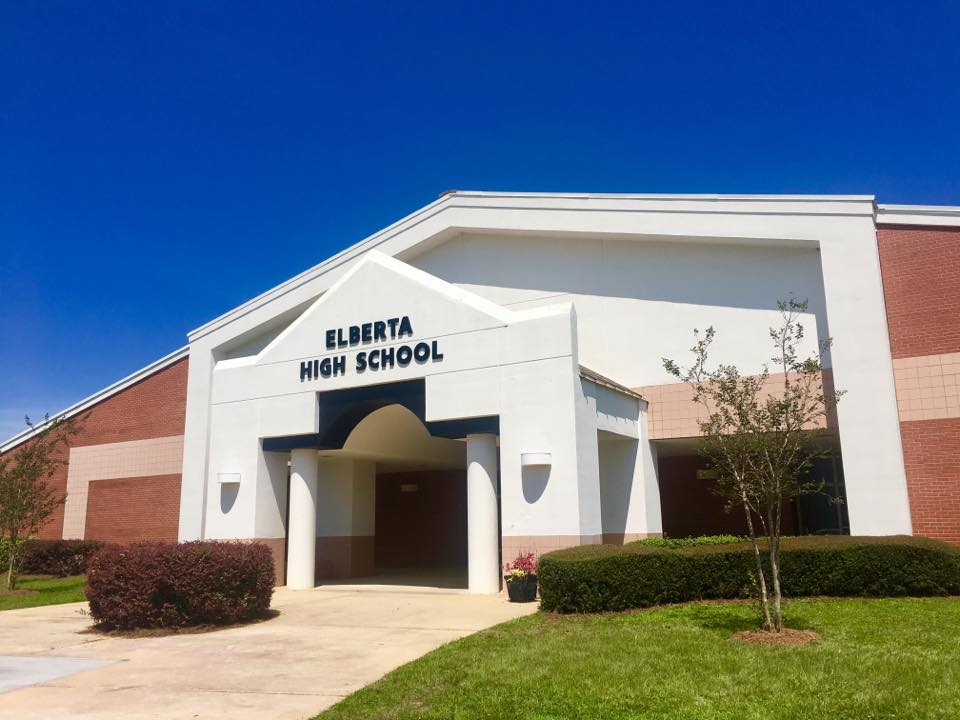
Two Baldwin County schools broke ground on their combined 80,000 square feet of new school additions on Wednesday. The two expansions will include an addition to Elberta High School in Elberta, Ala. and an addition to Magnolia School, an elementary school located in Magnolia Springs, Ala.. The Elberta expansion is expected to cost around $8.5 million dollars, while the Magnolia School is estimated to cost $6 million. Both projects should take less than a year to complete. The expansions come at an integral time for Baldwin County, as it is currently the fastest growing county in the state and is expected to move from seventh most populated county in 2010, to fourth in 2040. “Our children are going to be able to come here and starting in kindergarten and go through our system here in Elberta all the way through the twelfth grade and that’s just incredible,” Jim Hamby, Elberta’s mayor told WALA. Elberta High School’s long awaited new expansion begins at phase II of the school system’s “pay as you go” program. Phase one funded accommodations for Elberta’s middle school and ninth grade students. Phase II consists of a two-story, 48,000 square foot building with 40 classrooms, and eventually the school will add a new cafeteria, band room, and parking for 300 cars. Magnolia School’s ground was officially broken on a 36,000 square foot, expansion that will add 35 new classrooms to the elementary school. The new wing is being built to take in students that currently attend Swift School in Bon Secour, Ala.. And although the project’s ground was broken Wednesday, the project won’t be completed before the start of next school year. “We’re going to be moving in some portables and go ahead and move the Swift students with the re-zoning at the beginning of the year next year,” Debra Phillips, Magnolia School principal told WALA. “We’re just really excited that they’re coming. It will be about another hundred and forty students for us.”
Facebook’s Mark Zuckerberg: ‘significant number’ of fake news attempts in Ala. special election
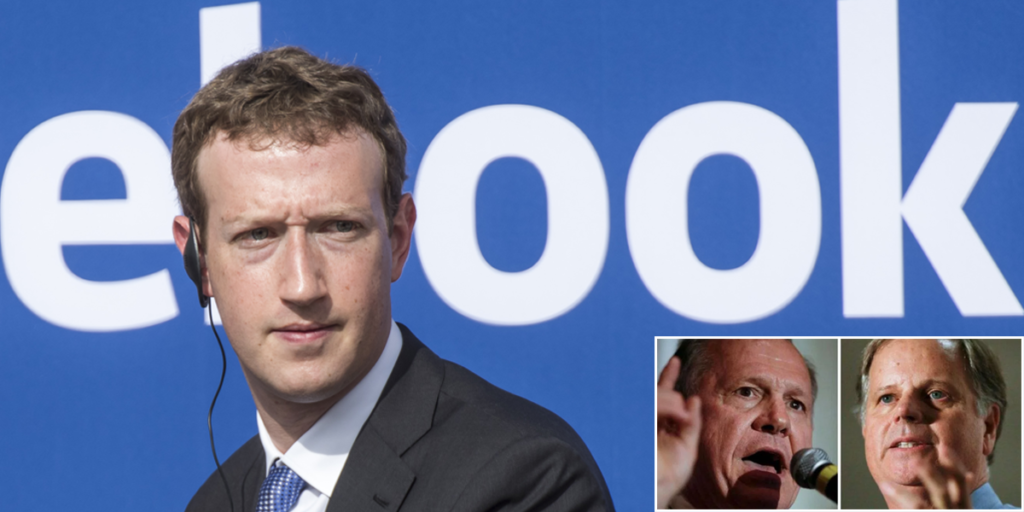
During an interview with The New York Times on Wednesday Facebook CEO Mark Zuckerberg, said the popular platform worked to shut down “fake news” during Alabama’s contentious special election in December between Republican Roy Moore and Democrat Doug Jones. Zuckerberg explained a number of Macedonian accounts attempted to the influence the outcome of the race. “In last year, in 2017 with the special election in Alabama, we deployed some new (artificial intelligence) tools to identify fake accounts and false news, and we found a significant number of Macedonian accounts that were trying to spread false news, and were able to eliminate those,” Zuckerberg said to The Times. “And that, actually, is something I haven’t talked about publicly before, so you’re the first people I’m telling about that.” Ultimately, Jones bested Moore in the race and went on to become Alabama’s junior U.S. Senator replacing Jeff Sessions who vacated the seat to become the U.S. Attorney General under President Donald Trump. Kayla Moore, Moore’s wife, posted on Facebook Thursday that they did not know about the Macedonian efforts. The were “news to us” she said. “The entire world was watching the race so there’s no telling what went on, but we were simply trying to run an Alabama campaign with the help of conservatives all across the state and the nation,” said Kayla.
Alabama legislature approves Rural Hospital Resource Center
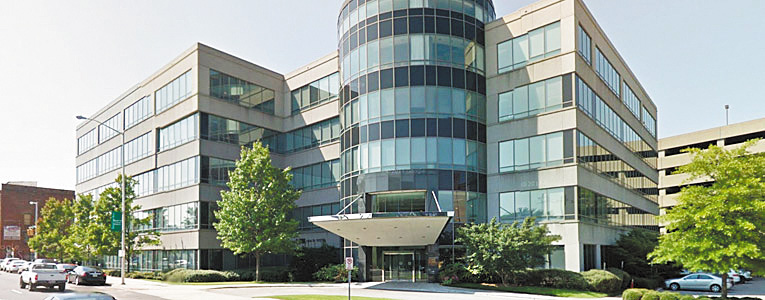
The Alabama Legislature has approved a bill to create a resource center housed at the University of Alabama at Birmingham (UAB) Health System to provide support for nonprofit, rural, public hospitals in the state that are facing economic pressures. SB351, sponsored by Jasper-Republican state Sen. Greg Reed and it’s House companion bill HB446 sponsored by Cullman-Republican Randall Shedd, would create the Alabama Rural Hospital Resource Center, staffed and managed by the UAB Health System. It would assist rural public hospitals in areas including purchasing and supply chain, strategic planning, insurance and cost reporting, coding, recruitment, and compliance. “I believe that increasing access to quality health care for Alabamians in rural areas is essential,” Reed said. “The physicians and researchers at UAB are among the best in the world, and this new center will give Alabama’s rural hospitals direct access to game-changing innovations in medicine and health care management.” Shedd said the bill will help ensure appropriate health care is available to all Alabamians. “This is a concept that provides benefit to all parties involved, but most of all to the residents of rural Alabama who have seen their local hospital close or be forced to cut services,” Shedd added. “This can help ensure that appropriate health care is available to all Alabamians where they live and work.” The plan would call for the UAB Health System to add staff to provide expertise, advice and resources to hospitals that request assistance. “As the flagship health enterprise in the state, UAB has robust systems in place in the areas where a rural hospital might have needs — areas including coding, supply chain or regulatory compliance,” weighed-in Will Ferniany, Ph.D., CEO of the UAB Health System. “We can offer our knowledge, insights, and support as a means of helping rural hospitals across the state remain viable and open.” Ferniany says the resource center is one part of a larger effort by the UAB Health System to help stabilize small, rural hospitals and improve access to needed medical care for all residents of Alabama. That effort gained steam following a 2016 law enabling universities with medical schools to create University Health Authorities. “Many rural hospitals are in crisis,” Ferniany explained. “The resource center is designed to help keep those nonprofit, public hospitals operational so that Alabamians can get medical care close to home when appropriate. That helps ensure that a tertiary care facility like UAB Hospital will have available resources for the situations for which we are uniquely positioned to provide care — including Level 1 trauma, transplantation, and advanced cancer care, for example.” Hospitals that are eligible to request assistance from the center would be located in areas that meet federal designations of rural areas or have a shortage of health care resources under federal guidelines. More than 30 public hospitals in Alabama meet those criteria. The bill now goes to Gov. Kay Ivey for her signature, and the center will need approval from the University of Alabama System Board of Trustees.
Parker Snider: Alabama’s unrestrained “permission slip to work” laws affect real Alabamians

Across the country, lawmakers are realizing the costs associated with the rampant overuse of occupational licensing laws. Alabama Policy Institute’s recent report shows that over 21% of Alabama workers are licensed. This means that more than one in five Alabamians need a government permission slip to work. Although the original impetus behind states’ licensing practices was the assurance of public safety, the current system of occupational licensing has become so burdensome that voices from left, right, and center have noticed. The Trump and Obama administrations, The Institute for Justice, and the Brookings Institute, among others, are all in agreement: occupational licensing practices need to be changed. The fact is that these laws affect real people – real, everyday Alabamians. Bruce Locke, a retired construction company owner and north Alabama native, is one of those people. A dedicated husband, father, grandpa, and Army veteran, Mr. Locke, after retiring, became an auctioneer. Before he could work, however, Mr. Locke had to pay for state-approved education, apprentice for one year, and hand over hundreds of dollars in fees to the government. He fulfilled the state’s licensure requirements but, after years of being a successful auctioneer, was suddenly fined $500 by the Alabama State Board of Auctioneers. According to the board-hired investigator, Mr. Locke, who had a current license to work, was being fined for not filling out a specific form. The problem, however, is that Mr. Locke, after being a licensed auctioneer for years, had no knowledge of this form. When he asked, Mr. Locke learned that the form was created recently. Even so, he was not told about the form nor given any sort of warning. He was instead fined. Mr. Locke, therefore, under the threat of losing his business, had no choice but to pay the $500 fine. He later, out of frustration and disgust in the board’s apparent greed, gave up his license and sold his business. This is just one example of occupational licensing gone awry. Thanks to occupational licensing, Alabama ran a profitable man out of business, forsaking revenue in both sales and income tax. The truth is, as Mr. Locke put it, “There are a lot of states that do not have auctioneer licenses, and they’re doing just fine.” He’s right. There are twenty states that do not license occupation of auctioneers. In fact, the report found, more broadly, that Alabama licenses thirty-one occupations that are not widely licensed in other states, including locksmiths and sign language interpreters. If it were truly a matter of public safety, one would think there would be relative conformity among the states. The report, however, found that licensing practices are widely varied, even among our neighboring and nearby states. One explanation of this may be economic protectionism – when members of an occupation, in a desire to limit competition, lobby the state legislature to establish licensure. In Montgomery, lawmakers are reviewing legislation that addresses occupational licensing, specifically when it affects military families and veterans. Conservatives should applaud these attempts to curb big government’s grip on citizens while continuing to push for more comprehensive reforms. You can view Mr. Locke telling his story below and API’s recent report on occupational licensing here.
State House passes school security funding bill

A bill that would allow Alabama schools to use reserve money from an education savings fund for school security passed the State House on Thursday. Lawmakers voted 96-4 in favor of SB323 sponsored by Montrose-Republican state Sen. Trip Pittman. which specifically would amend the Education Trust Fund Rolling Reserve Act to allow funds in the Education Trust Fund Budget Stabilization Fund to be used to cover the costs of school security. The legislation returns to the Senate with amendments, if passed it expected to be signed into law by Gov. Kay Ivey who announced her support for the bill earlier this month. “Ensuring safety in our schools is a bipartisan issue, and we must do all we can to prevent violence and be sure we are ready to respond in the event such violence does occur,” Ivey said.
Will Ainsworth reacts to the arming teacher bill failing this session

An uphill battle from the start, Guntersville-Republican State Rep. Will Ainsworth‘s bill, HB435, to arm public school teachers has died this session. Ainsworth said he and other lawmakers will be signing a petition urging Gov. Kay Ivey to call a special session this summer on school safety. “Democrats killed any chance of our bill coming to the floor,” Ainsworth said of a video he posted on Facebook. “To say I’m frustrated, in an understatement, it’s shocking what they did.” “We literally have 500, maybe more schools in this state, that do not even have a school resource officer, but yet Democrats decided today that they were going to filibuster, filibuster, filibuster, and not even give local schools the option to arm teachers,” Ainsworth said in the video Watch it below:
Tommy Battle extends debate invitation to Kay Ivey, awaits response
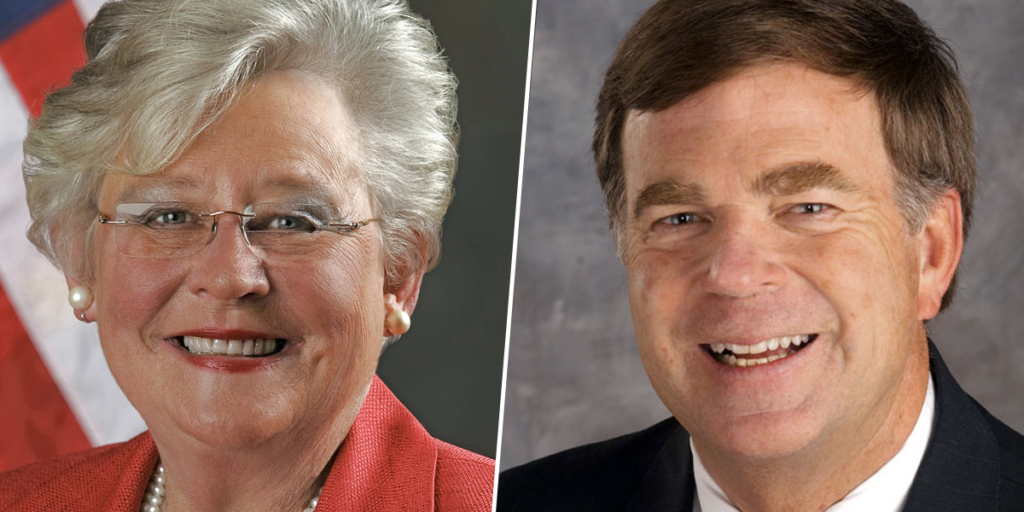
Huntsville Mayor and Republican gubernatorial candidate Tommy Battle on Tuesday extended an invitation to Governor Kay Ivey to appear with him at several political events, candidate forums, and debates across the state. Battle sent his request via e-mail to Ivey’s team on Tuesday, and although they acknowledged they received the invitation, as of Wednesday Ivey’s team had yet to deliver a response. Battle’s formal invitation to Ivey is a nod to a move Ivey herself made in 1982. When running as a Democrat for State Auditor, she sent her opponent Jan Cook a telegram invitation to appear across the state with her to discuss their respective qualifications. Cook said her scheduled as already full and denied Ivey’s request. Ivey then proceeded to hold a a news conferences on the capitol steps in Montgomery, with an empty chair labeled with her Cook’s name, sitting beside her; making blatant note of her absence. Earlier this month Ivey made a comment to the Associated Press that she would be happy to take part in debates. Battle agreed and announced that he would take Ivey up on that offer, “all residents of Alabama deserve to hear from each candidate, personally, about their qualifications and their vision for our great state, especially since neither of us have yet to be elected Governor.” His e-mail to Ivey is a formal invitation to initiate that process. Battle has committed to attend the following events, and hopes that Ivey will also attend: April 12 – 7 a.m.: A debate hosted by the Birmingham Business Journal April 12 – 7 p.m.: A debate hosted by NBC 13 in Birmingham April 14 – 8 a.m.: A candidate forum hosted by the Mid Alabama Republican Club in Birmingham May 9 – 2 p.m.: A candidate forum hosted by the Association of Builders and Contractors in Huntsville May 10 – 11:30 a.m.: A candidate forum hosted by the Moody Area Chamber of Commerce Whether or not Battle be attending the events an empty chair by his side… that remains to be seen. The full text of the letter is as follows: I know you believe the people of the state of Alabama are important to both of us. Our campaign is constantly talking about the importance of economic development, repairing our roads and bridges and how to boost education as a whole across all of Alabama. We both agree Alabamians deserve to hear from us, personally, about our vision to lead our state into the 21st century, since neither of us have yet been elected as governor. I want to extend an invitation to you to appear with me at debates, candidate forums and political events throughout the state to discuss our individual records and qualifications to be elected governor. I look forward to your response. I wish you and your campaign staff safe travels as the Republican primary approaches.
Richard Shelby encourages support, passage of $60 billion appropriations bill
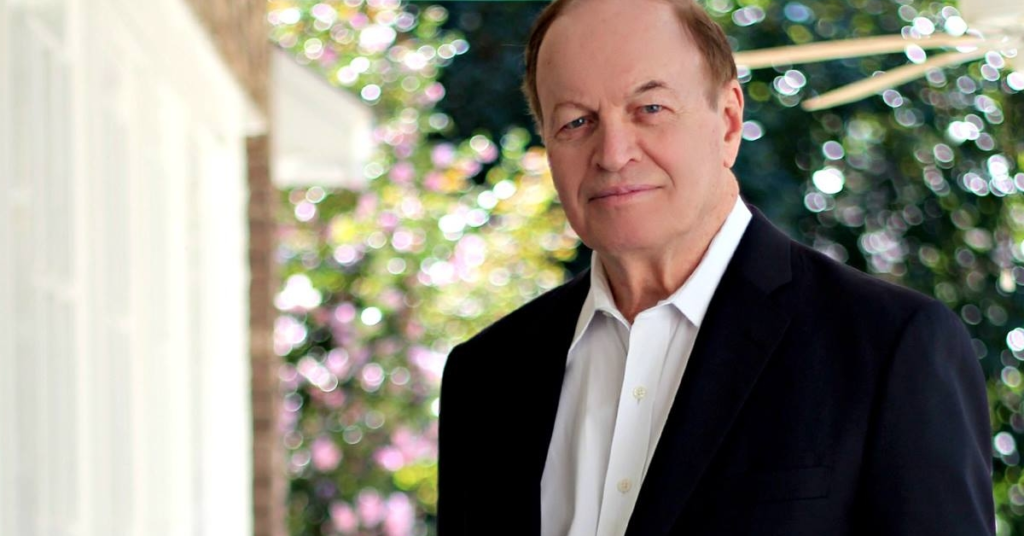
Alabama U.S. Senator Richard Shelby, chairman of the Senate Appropriations Subcommittee on Commerce, Justice, Science and Related Agencies (CJS), on Wednesday announced the filing of a Fiscal Year 2018 appropriations bill. The bill would provide crucial funding to the U.S. Departments of Commerce and Justice, the National Aeronautics and Space Administration (NASA), and the National Science Foundation. “This is a strong bill that provides significant support for my priorities on the Commerce, Justice, and Science subcommittee, such as law enforcement, national security, economic development, scientific research, and space exploration,” said Shelby. “Furthermore, it will rebuild and strengthen our military with the biggest increase in defense funding in 15 years, while also creating opportunities to renew America’s aging infrastructure throughout the nation. I urge my colleagues to join me in supporting this bipartisan bill.” The bill would provide: $30 million in grants to support troubled coal mining communities across the nation $20.7 billion for NASA space, educational, and technology programs $2.9 billion for DOJ State and Local Law Enforcement Activities, including the Office on Violence Against Women, juvenile justice programs, and community crime prevention $32 million for Community Oriented Policing Services’ (COPS) to combat the opioid and heroin crisis. $177.5 million for initiatives to address rape kit and other DNA evidence backlogs Highlights from the bill, and full details of funding can be found below: Science National Aeronautics and Space Administration (NASA) – $20.7 billion for NASA, $1.1 billion above the FY2017 enacted level and $1.6 billion above the budget request, to support the human and robotic exploration of space, fund science missions that enhance the understanding of the Earth, the solar system, and the universe, and support fundamental aeronautics research. This includes: $2.15 billion for the Space Launch System (SLS), which is $212 million above the request. $1.3 billion for the Orion crewed spacecraft, $164 million above the request, to continue development of NASA’s next deep-space crewed capsule. $760 million for Space Technology, $74 million above the FY2017 enacted level to advance projects in early stages of development that are expected to demonstrate capabilities needed for future space exploration. $100 million is provided for Education programs that were proposed to be eliminated in the budget request. NASA EPSCoR is funded at $18 million, Space Grant is funded at $40 million, the Minority University Research and Education Project is funded at $32 million, and STEM Education and Accountability Projects are funded at $10 million. Department of Commerce The bill funds the U.S. Department of Commerce at $11.1 billion, $1.9 billion more than FY2017, to focus on core economic development activities, protecting intellectual property rights, strengthening trade enforcement, advancing cybersecurity research, and improving severe weather forecasting. Economic Development Administration (EDA) – $301.5 million for the EDA, $25.5 million more than FY2017. Increased funding expands the Public Works program to support brick-and-mortar projects in communities across the country and broadband infrastructure and access to unserved areas of the country. The bill also provides $30 million in grants to assist troubled coal mining communities. National Institute of Standards and Technology (NIST) – $1.2 billion for NIST, $247 million above the FY2017 enacted level. This amount includes a $10 million increase over the FY2017 level for the NIST Manufacturing Extension Partnership. Targeted funding will continue to support our nation’s cybersecurity posture through cutting-edge research, expanded advanced manufacturing opportunities, and the promotion of high quality standards to maintain fairness in the marketplace. National Oceanic and Atmospheric Administration (NOAA) – $5.9 billion, $234 million above the FY2017 enacted level. The bill provides full funding for NOAA’s flagship weather satellites, which are critical for accurate weather warnings to protect lives and property. Increased funding is provided for the National Weather Service to address failing infrastructure at its Weather Forecast Offices across the country. In addition, the bill includes increased funding for our nation’s fisheries. This includes continued support for more accurate and agency-independent data and language allowing NOAA to experiment with alternative management regimes. Provisions in the bill will help expand opportunities for American commercial and recreational fishermen. Department of Justice The bill funds the Department of Justice (DOJ) at $30.3 billion, $1.3 billion above the FY2017 enacted level. The constantly-changing landscape of criminal activity at home and abroad tests the DOJ’s ability to deal with emerging threats. The bill ensures that federal law enforcement agencies work together to focus limited resources in a manner that safeguards taxpayer dollars while preserving public safety. Executive Office for Immigration Review (EOIR) – The bill provides $504.5 million for EOIR, $64.5 million above the FY2017 enacted level, which includes funding for at least 100 new Immigration Judge (IJ) Teams to help reduce the extensive and growing backlog of pending immigration cases. Federal Bureau of Investigation (FBI), Salaries and Expenses – $9.03 billion, a $263 million increase above the FY2017 enacted level. Within funding provided, the FBI is expected to enhance its investigative and intelligence efforts related to terrorism, national security, human trafficking, and cyber threats, while also enforcing U.S. criminal laws. The bill directs the FBI to ensure full funding for the operations of the National Instant Criminal Background Check System (NICS), and to review protocols associated with communication and information sharing between the Public Access Line and FBI field offices. Law Enforcement Grant Programs – $2.9 billion for DOJ State and Local Law Enforcement Activities, including the Office on Violence Against Women, juvenile justice programs, and community crime prevention grant programs. The bill contains $330 million to fund the Comprehensive Addiction and Recovery Act of 2016 (CARA) grant program, a $227 million increase over FY2017, and $32 million for Community Oriented Policing Services’ (COPS) anti-heroin task forces grants. Overall, a $299.5 million increase in grant funding is provided above the FY2017 level to combat the opioid and heroin crisis. The bill also contains $415.5 million for Byrne Justice Assistance Grants (JAG) and $177.5 million for initiatives to address rape kit and other DNA evidence backlogs. DOJ is directed to require all applicants for Byrne-JAG, COPS, and State Criminal Alien Assistance Program (SCAAP) grants to certify that they are in compliance with all
State Senate votes to reform controversial practice of civil asset forfeiture

The Alabama Senate on Wednesday voted 25-1 to reform one of the state’s most controversial practices — civil asset forfeiture. Civil asset forfeiture allows police to seize — and then keep or sell — any property they suspect is part of criminal activity. Owners need not ever be arrested or convicted of a crime for their cash, cars, or even real estate to be taken away permanently by the government. Which is Birmingham-Republican state Rep. Arnold Mooney introduced to HB518, to try and help improve the often unchecked, and unfair process. HB518 creates the Forfeiture Database and Reporting Act, which would require law enforcement to report information including the date of property seizure, the type of property seized, the place of the seizure, the value of the seizure, the alleged criminal offense that led to the seizure, as well as the outcomes of criminal cases related to seizure when applicable. Mooney had originally introduced a bill HB287 — along a companion bill in the Senate, SB213, introduced by his colleague Decatur-Republican State Sen. Arthur Orr — that would have required a criminal conviction for property seizures. But the bills ultimately went nowhere due to pushback from prosecutors and law enforcement officers who argued the seizures are a valuable crime-fighting tool. The bill now moves to the State House.
Leaders finalize U.S. budget bill voting could begin Thursday
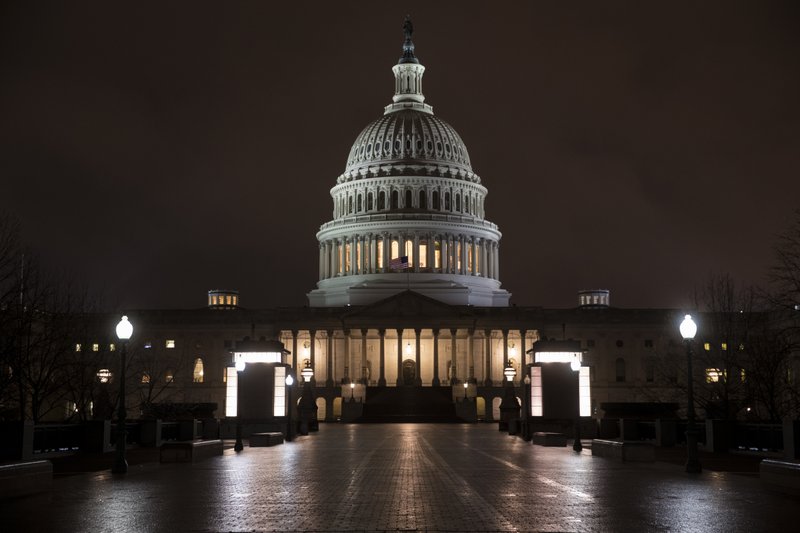
Congressional leaders have finalized a sweeping $1.3 trillion budget bill that substantially boosts military and domestic spending but leaves behind young immigrant “Dreamers,” deprives President Donald Trump some of his border wall money and takes only incremental steps to address gun violence. As negotiators stumbled toward an end-of-the-week deadline to fund the government or face a federal shutdown, House Speaker Paul Ryan dashed to the White House amid concerns Trump’s support was wavering. Although some conservative Republicans balked at the size of the spending increases and the rush to pass the bill, the White House said the president backed the legislation. Trump himself sounded less than enthused, tweeting late Wednesday: “Had to waste money on Dem giveaways in order to take care of military pay increase and new equipment.” Talks had stretched into Wednesday evening before the 2,232-page text was finally released. “No bill of this size is perfect,” Ryan said. “But this legislation addresses important priorities and makes us stronger at home and abroad.” Leaders hoped to start voting as soon as Thursday. A stopgap measure may be needed to ensure federal offices aren’t hit with a partial shutdown at midnight Friday when funding for the government expires. Negotiators have been working for days — and nights — on details of the bill, which is widely viewed as the last major piece of legislation likely to move through Congress in this election year. Lawmakers in both parties sought to attach their top priorities. Two of the biggest remaining issues had been border wall funds and a legislative response to gun violence after the clamor for action following recent school shootings, including the one in Parkland, Florida. On guns, leaders agreed to tuck in bipartisan provisions to bolster school safety funds and improve compliance with the criminal background check system for firearm purchases. The bill states that the U.S. Centers for Disease Control and Prevention can do research on gun violence, though not advocacy, an idea Democrats pushed. But there was no resolution for Dreamers, the young immigrants who have been living in the United States illegally since childhood but whose deportation protections are being challenged in court after Trump tried to end the Deferred Action for Childhood Arrivals program, or DACA. Democrats temporarily shut down the government earlier this year as they fought for that protection. But the issue only rose to a discussion item when Trump made a late-hour push for a deal in exchange for $25 billion in border wall funds. Instead, Trump is now poised to win $1.6 billion for barriers along the border, but none of it for the new prototypes he recently visited in California. Less than half the nearly 95 miles of border construction, including levees along the Rio Grande in Texas, would be for new barriers, with the rest for repair of existing segments. In one win for immigrant advocates, negotiators rejected Trump’s plans to hire hundreds of new Border Patrol and immigration enforcement agents. “We are disappointed that we did not reach agreement on Dreamer protections that were worthy of these patriotic young people,” said House Minority Leader Nancy Pelosi. The emerging plan removes a much-debated earmark protecting money for a rail tunnel under the Hudson River. The item was a top priority of Trump’s most powerful Democratic rival, Senate Minority Leader Chuck Schumer of New York, but Trump vowed to veto the bill over the earmark. Under the legislation, the project would remain eligible for funding, however, and a Schumer aide said it was likely to win well more than half of the $900 million sought for the project this year. The core purpose of the bill is to increase spending for military and domestic programs that have been sharply squeezed under a 2011 agreement that was supposed to cap spending. It gives Trump a huge budget increase for the military, while Democrats scored wins on infrastructure and other domestic programs that they failed to get under President Barack Obama. That largesse has drawn opposition from some fiscal conservatives and could make passage a potentially tricky process. Last month, Kentucky Sen. Rand Paul triggered a brief government shutdown over his objections to the deficit spending. On Wednesday, he tweeted his opposition to the emerging legislation, known as an “omnibus.” “It’s a good thing we have Republican control of Congress or the Democrats might bust the budget caps, fund planned parenthood and Obamacare, and sneak gun control without due process into an Omni … wait, what?” Paul tweeted. Most essential was support from Trump, who has been known to threaten to veto legislation even when his team is involved in the negotiations. Word of Trump’s discontent sent Ryan to the White House, where he was invited to a face-to-face with the president, with Senate Majority Leader Mitch McConnell on the phone. White House aides said the president’s support was never in doubt, but one senior White House official said the president was concerned that details of the package weren’t being presented as well as they could be, both to members of Congress and the public. The group discussed how they could better sell the package, said the official, who was granted anonymity to discuss the private conversation. “The president and the leaders discussed their support for the bill,” said White House press secretary Sarah Huckabee Sanders, adding that it would fund Trump priorities such as wall construction, add money to combat the opioid crisis and provide new infrastructure spending. Both parties touted $4.6 billion in total funding to fight the nation’s opioid addiction epidemic, a $3 billion increase. More than $2 billion would go to strengthen school safety through grants for training, security measures and treatment for the mentally ill. Medical research at the National Institutes of Health, a longstanding bipartisan priority, would receive a record $3 billion increase to $37 billion. Funding was also included for election security ahead of the 2018 midterms. Child care and development block grants would receive a huge $2.4 billion increase to $5.2 billion.
Nicole Jones: Our state will benefit from the passage of the Alabama Jobs Enhancement Act

Economic developers in Alabama are community-minded individuals who wake up every morning with a goal – to recruit and retain business and industry within our state and enhance the quality of life for Alabamians. It is a rewarding profession built upon the cultivation of relationships and trust earned by maintaining confidentiality throughout a highly complex and competitive process. The passage of the Alabama Jobs Enhancement Act (HB317) is important to the well-being of all Alabamians because it allows our state to maintain an environment conducive for economic growth. The bill reads correctly as it states, “an economic development professional is not a lobbyist.” The two professions are different. Economic developers are not lobbyists and should not register as such. When companies are in the initial stages of potential project or site selection, most of the time they wish to remain confidential for business reasons, hence the reason for nondisclosure agreements (NDAs). We are under NDAs all of the time. The ability to trust officials in the public and private sector with whom they interact with throughout the process is a factor companies consider when choosing new sites. HB317 is critical to maintaining confidentiality as well as the business-friendly climate established throughout our state. Job creation and retention equals employment opportunities, and continued employment, for Alabamians. As Governor Kay Ivey released in a statement recently, Alabama now has a record 3.7% unemployment rate, the lowest in history. Despite some confusion perpetuated by individuals who do not understand economic development as a profession, HB317 is not an attempt to weaken ethics laws or allow anyone to profit from public office. Rather, it is an attempt to modernize economic development language and statutes, for example, by removing verbiage requiring notification for project incentives that no longer exist. HB317 requires more transparency than current statutes in the following ways: It requires economic developers to notify the Alabama Department of Commerce when they have a project entity that requests tax abatements and/or seeks incentives under the Alabama Jobs Act and other new laws (stipulations not put into place currently). And, it requires the Alabama Department of Commerce to disclose project information no more than two years after a location announcement (which, as of today, does not have to happen, ever). Not passing HB317 could have a devastating effect on economic growth within our state. As stated earlier, economic development is a relationship-building process, and projects oftentimes take years to come to fruition. Almost all economic development projects require confidentiality, so if a site selector working on behalf of a company is required to (incorrectly) register as a lobbyist and disclose the name of his or her client in the initial stages of site selection, Alabama would be marked off of the list of potential sites before the process actually begins. In other words, we (Alabama) would not even get a seat at the table. As part of daily protocol, site selectors will broadcast a general request/criteria needed for a potential location, and chambers of commerce, for example, may not know for months into a project’s life cycle who the company making the request is. This gives company officials the opportunity to weed out areas that will not work for their business goals – or sometimes better understand if pursuing a new location is even worth the investment. Economic development is a team effort. It requires the actions of oftentimes hundreds of people in the public and private sector who present information to potential companies in the areas of labor quantity and availability, transportation systems, school systems and other quality of life issues, housing, state and local incentives, taxes, utilities, education and training resources – just to name a few. Conflict-of-interest issues regarding elected officials and their role with outside employment need to be addressed with a general law that defines conflict-of-interest and employment and need not be confused with HB317. As the Coastal Gateway Regional Economic Development Alliance eloquently pointed out, “HB317 is also notable for what it doesn’t do: It doesn’t change or provide exceptions for Chamber of Commerce employees or others who engage in traditional lobbying activities, and it doesn’t change the prohibition on using public office for personal gain nor the prohibition on corruptly influencing a public official.” The goal of HB317 is to modernize economic development incentive programs, not address ethics issues. Alabama will benefit from HB317. The state of Alabama competes for projects with other states, and other states (as well as out-of-state site selectors) are carefully watching this legislation and are ready to use it to their advantage. Members of the media have already reported to our firm that out-of-state site selectors whom they have never heard of have suddenly contacted them with “interest” in HB317. We, Alabama, currently have an environment conducive for economic growth and have received national recognition for a favorable business climate. Others around the nation know it, all the way up to The White House. Toyota-Mazda, Rex Lumber, Kimber, New Flyer, and Provalus are only a few names of many recent announcements. It is unfortunate that the misuse of power by previous elected officials has created an air of distrust amongst the general public. There is, however, a simple, black-and-white answer that extends far beyond the scope of HB317: Pick who you want to represent (your client or your district). Do not double-dip. Ultimately, then Alabama wins, and isn’t that supposed to truly be the end goal of economic development – to improve the economic well-being and quality of life for Alabamians? That is what hundreds of us do every day throughout our state. I join with the majority of Alabama’s economic development community and respectfully ask legislators to pass the Alabama Jobs Enhancement Act (HB317). ••• Nicole Jones is one of the first in the state of Alabama to hold the Government and Economic Development Institute’s Economic Development Leadership Certification. As an economic developer, Nicole Jones recruits and retains business, industry, and community every day to create a better quality of life
Kay Ivey presents Trade Excellence Awards to 8 Alabama companies
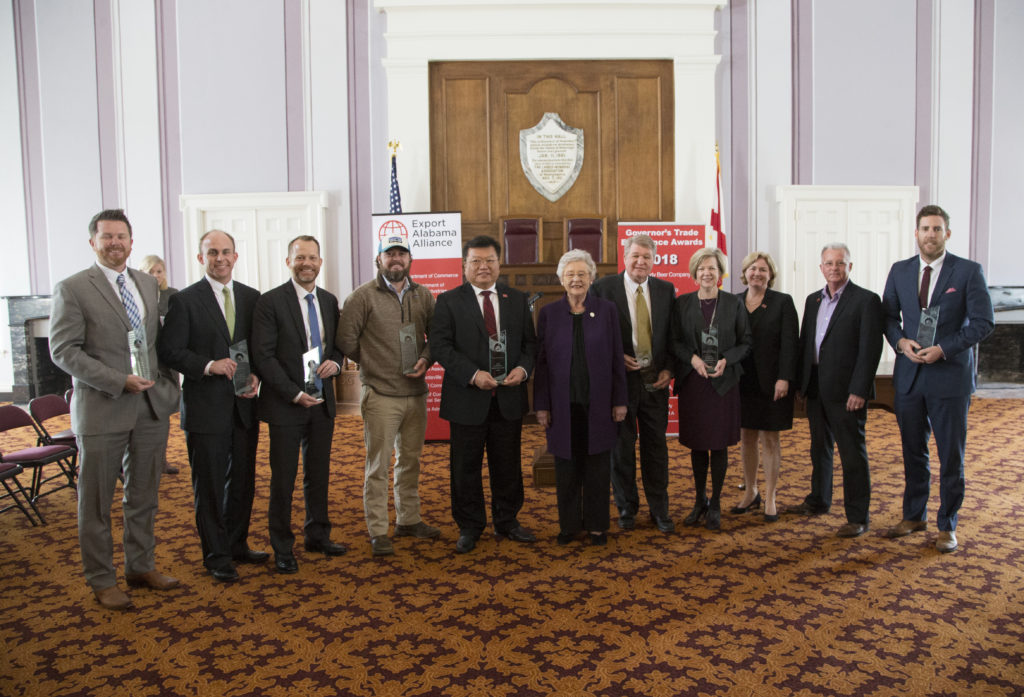
Governor Kay Ivey on Wednesday recognized eight Alabama companies for success in selling their goods and services to countries around the globe. Recipients of the 2018 Governor’s Trade Excellence Awards represent a diverse swath of Alabama’s business landscape, including high-tech manufacturers, innovative software developers and a craft beer brewer. Ivey honored the eight companies at a ceremony Wednesday at the State Capitol in Montgomery, Ala. “Today, we celebrate the ingenuity and dedication of eight Alabama companies who recognize that commerce does not end at our state’s borders,” Ivey said. “These companies’ vision to be international leaders in their respective fields is most impressive, and we look forward to their continued efforts in overseas markets.” The governor also acknowledged that each of this year’s Governor’s Trade Excellence Award recipients are small businesses, a pillar of Alabama’s economy. “Small business is big business in the state of Alabama,” Ivey added. “Small businesses employ more than 772,000 people, nearly half of Alabama’s workforce, in more than 380,000 establishments. Their importance cannot be understated.” Here is the full list of this year’s winners: Back Forty Beer Company (Gadsden, Ala.): Was founded in 2009 to bring top-quality craft beer to Northeast Alabama and now brews almost 20 different brands with distribution in five states. In addition, the brewery exported beer to China, Canada, Malaysia and The Netherlands in 2016-2017. Conversant Bio (Huntsville, Ala.): Is a human tissue procurement company that provides Institutional Review Board approved samples to researchers working on cures for the world’s most prominent diseases. Conversant exports to 21 countries and has worked on more than 3,000 research projects. Diamond Fortress Technologies Inc. (Birmingham, Ala.): Became the first company to successfully develop a mobile touchless fingerprint biometrics software solution. It exports to countries including Mexico, Pakistan, Colombia, India, Australia, Sweden and South Africa. A DFT subsidiary also promotes banking and other financial services in lower and lower-middle income countries as defined by the World Bank. Douglas Manufacturing (Pell City, Ala.): Is a leading manufacturer of conveyor components and engineered conveying solutions. The company’s primary export markets are North America, Central America, South America and the Caribbean, serving industries that include pulp and paper, steel, chemical, cement, coal, fertilizer, biofuel, oil and natural gas, and agriculture. Irrigation Components International Inc. (Daphne, Ala.): Is the world’s leader in center pivot spare parts sales. ICII has been providing irrigation parts to dealers, distributors and OEMs for more than 30 years. It serves more than 35 countries worldwide. Keet Consulting Services LLC (Pelham, Ala.): Has been serving the Geographic Information Systems industry since 1999, with export markets that include Australia, Canada, Poland, Spain and the United Kingdom. The company provides a wide range of services, including application development, GIS implementation and RouteMan, which is sold internationally and helps companies manage route delivery and route sales. North Alabama International Trade Association (Huntsville, Ala.) Is a business-driven nonprofit membership organization committed to increasing activity in international trade in North Alabama for the past 35 years. The organization is managed by and partners with the Madison County Commission International Trade Development Center. Regitar USA Inc. (Montgomery, Ala.): Is a major manufacturer and distributor of automotive electronics, power tools and mobile safety products. It exports around the world, with primary emphasis on North, Central and South America, the Caribbean, the Middle East, Australia and New Zealand. Alabama SBDC Day During the Governor’s Trade Excellence Award Ceremony, Ivey also recognized the Alabama Small Business Development Center, which helped more than 3,000 small businesses last year. In the past five years, the Alabama SBDC program has helped small businesses create more than 4,800 jobs and access more than $368 million in new capital. Hosted at the University of Alabama, the Alabama SBDC partners with eight other universities in Alabama, in a network that leverages university expertise from the respective colleges of business to provide management and technical assistance to small businesses. The governor issued a proclamation, designating March 21, 2018 as “Alabama SBDC Day.” The organization has 30 professional business advisers who cover all 67 Alabama counties from 10 field offices. “The SBDC is a strong resource partner for the Alabama Department of Commerce’s Office of International Trade and its Office of Small Business Advocacy,” noted Ivey. “This organization also works closely with ADECA’s Small Business Credit Initiative. In addition, the University of Alabama’s International Trade Center helps companies that are new to exporting learn how to become successful exporters like our award winners. They also help in encouraging these companies take advantage of the Alabama Department of Commerce’s trade expansion programs.” Export Benefits Alabama’s exports climbed to a record level of $21.7 billion in 2017, with automobiles, aircraft components, chemicals, paper and minerals fueling the increase. “Exporting is a driving force of Alabama’s economy, which benefits in the form of new jobs and investments for those exporters here at home,” Secretary of the Alabama Department of Commerce Greg Canfield added. “We congratulate today’s winners and are preparing to help them and other companies increase their global sales plans this coming year.” Hilda Lockhart, Director of Commerce’s Office of International Trade, said this year’s award winners are models for peers which may be looking to follow a similar path in exporting their goods and services overseas. “Each of these companies are driven by a desire to compete on the global stage, and their creativity, hard work and strategic planning have helped them achieve those goals,” she said.
