
Bill to appoint county school superintendents to be considered by State House

Alabamians may soon lose their say in county school superintendents, as a bill in the state legislature takes the power away from voters and puts it into the hands of local boards of education. Sponsored by Montgomery-Republican state Sen. Dick Brewbaker, SB280 would require all county superintendents to be appointed by the county board of education rather than elected by local residents. Currently, 37 — Autauga, Bibb, Blount, Chambers, Cherokee, Chilton, Choctaw, Clarke, Clay, Cleburne, Colbert, Conecuh, Coosa, DeKalb, Dale, Elmore, Fayette, Geneva, Henry, Houston, Jackson, Lamar, Lauderdale, Lawrence, Madison, Marion, Marshall, Morgan, Pickens, Randolph, Shelby, St. Clair, Tallapoosa, Walker, Washington, and Winston — of the state’s 137 superintendents are elected. Eagle Forum of Alabama has come out in opposition to the bill. “This legislation will have two horrible impacts on local education. First SB280 will force over fifty percent of the Alabama counties to stop holding free elections,” the group said online. “Counties that hold elections for County Superintendent of Education will be forced to have the local board of education handpick the County Superintendent. SB280 removes current rights from local education leaders and parents who live in the county.” Despite the opposition, Brewbaker’s legislation isn’t coming from out of left field. Aside from Alabama, only Mississippi and Florida allow school superintendents to be elected. The Senate passed the legislation on March 3. The bill is on the proposed special order calendar in the State House for Tuesday.
Alabamians joins March For Our Lives protests to end gun violence
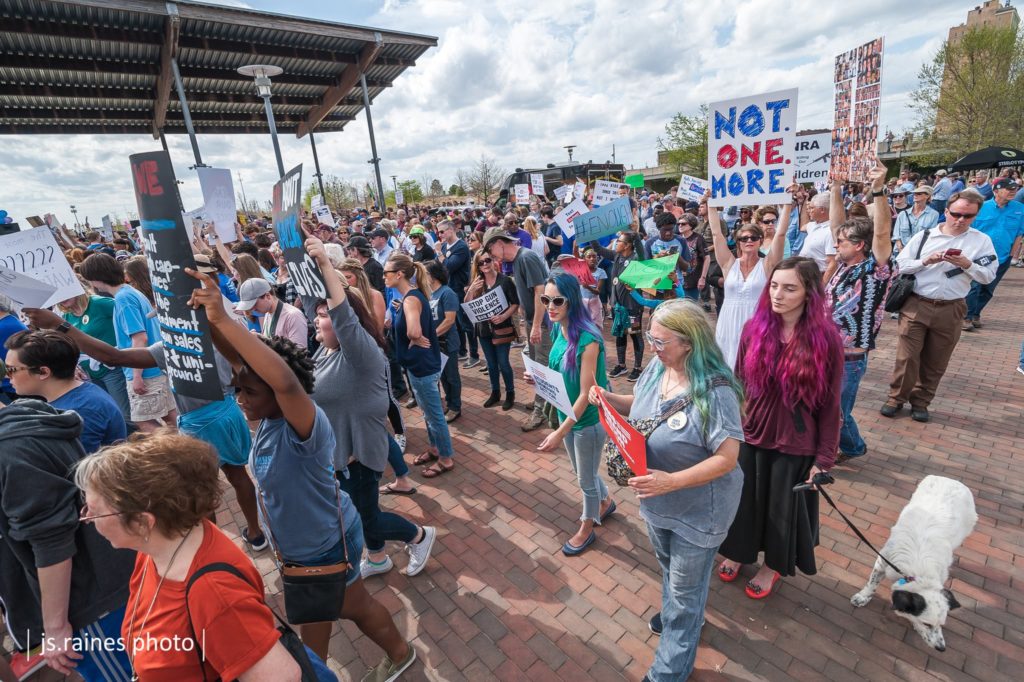
Hundreds of people across the state of Alabama participated in March for Our Lives campaign on Saturday. The protests were organized by young people nationwide to call upon lawmakers to address the issue of gun violence in American schools and implement comprehensive gun control legislation. The March for Our Lives campaign is a demonstration created and organized by a group of students who survived the February 14 shooting at Marjory Stoneman Douglas High School in Parkland, Fla. According to CNN; a petition on the event’s website gives three primary demands: Pass a law to ban the assault weapons frequently used to carry out mass shootings Stop the sale of high-capacity magazines, restricting the amount of ammunition Close loopholes in America’s background checks and implement laws that require background checks on every gun purchase, including those that occur online or at gun shows Here are some highlights from the marches across the state: Alabama 7th District U.S. Rep. Terri Sewell (via Twitter:) Today I marched with my niece in memory of Courtlin Arrington of Huffman High School in Birmingham’s March for Our Lives. #NeverAgain #MarchForOurLives #EndGunViolence pic.twitter.com/Jk5pfGUxMV — Terri A. Sewell (@Sewell4Congress) March 24, 2018 Andrew Yawn (via Twitter:) #MarchForOurLives begins in Montgomery, Ala., the birthplace of the civil rights movement where peaceful protest continues to live #alpolitics pic.twitter.com/OVDpvwNTyt — Andrew Yawn (@yawn_meister) March 24, 2018 About says it all.#MarchForOurLives #MarchForOurLivesSign #alpolitics pic.twitter.com/ojBKpzyGOB — Andrew Yawn (@yawn_meister) March 24, 2018 Mickey Welsh (via Twitter:) Video: Students speak out at March For Our Lives rally in Montgomery https://t.co/AiHG9YOr4g via @mgmadvertiser #Montgomery #alpolitics #MarchForOurLives #NeverAgain — Mickey Welsh (@mickeywelsh) March 24, 2018 Zack Buckner Community Activist (via Facebook): Birmingham’s March for Our Lives Event 2018 (via Facebook🙂 Cheryl Williams Swainston (via Facebook:) Tabitha Isner, Democratic candidate for Alabama’s 2nd U.S. District (via Twitter:) Today at the #MarchForOurLives event in Dothan, Alabama, I invited my primary opponent @audri4alabama to join me in ripping up the #NRA candidate questionnaire that was sent to me this week. We stand TOGETHER for common sense gun reform. #alpolitics pic.twitter.com/TznFFx8mu6 — Isner for Congress (@TabithaK) March 25, 2018
Former state Sen. Roger Bedford endorses Walt Maddox
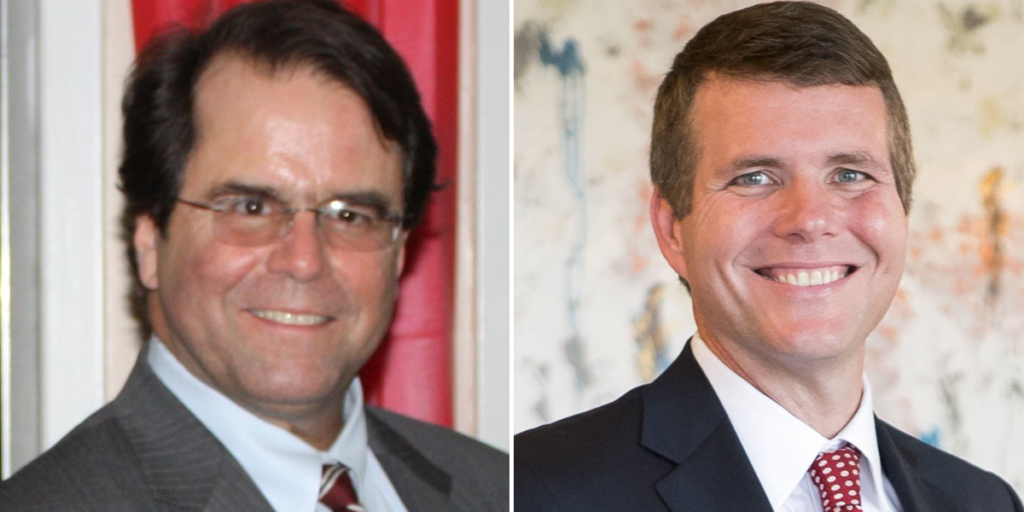
Russellville-Democrat, former state Sen. Roger Bedford on Friday announced he was endorsing Tuscaloosa Mayor Walt Maddox for Governor of Alabama. Bedford says Maddox is the “new fresh face we need in Montgomery.” “I know first-hand that Walt Maddox has what it takes. He has a proven record in Tuscaloosa and is a new fresh face we need in Montgomery,” said Bedford. “He has the knowledge, demeanor, and work ethic to make a difference and will make us proud to call him our governor.” Bedford represented northwest Alabama for 20 years — from 1994 to 2014 — during which time he served as minority leader from 2011 to 2013.In 1996 he was the Democratic nominee for U.S. Senate, but was ultimately defeated by Republican Jeff Sessions. Maddox said he is honored to have the endorsement. “As one of the longest serving state Senators in Alabama history, Roger Bedford is one of the most respected Democrats in this state and I am honored to have his endorsement,” he said in a statement. Bedford’s endorsement adds to Maddox’s growing list of endorsements from influential leaders across the state. Maddox will face former state Supreme Court Chief Justice Sue Bell Cobb, along with Christopher Countryman, James Fields, Doug Smith and Anthony White in the June 5 Democratic primary. The winner will go on to face the Republican nominee in the general election, to be selected among: Gov. Kay Ivey, Tommy Battle, Bill Hightower, Scott Dawson, or Michael McAllister.
Bradley Byrne: Defending Religious Freedom
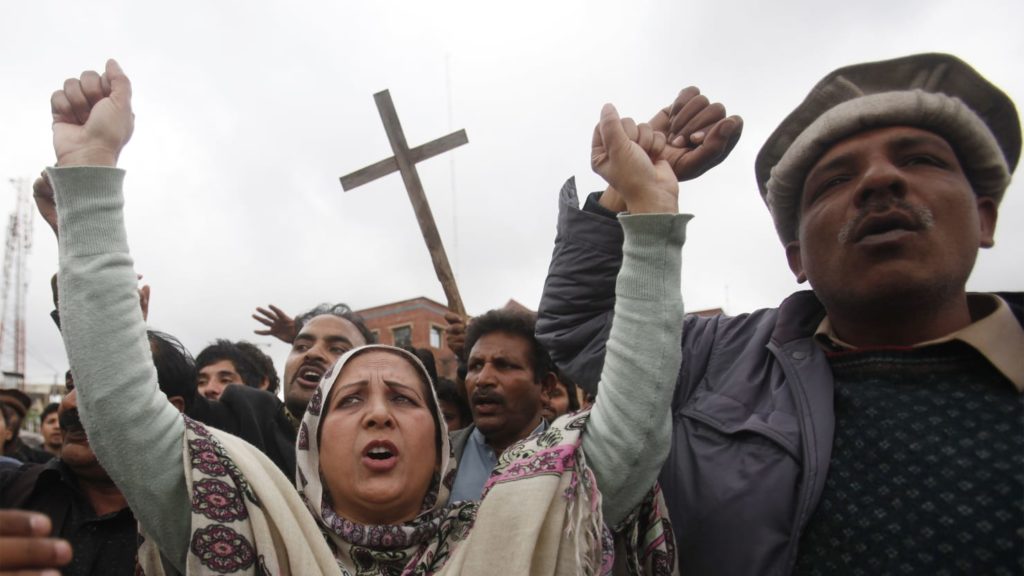
Each year, during Holy Week, Christians gather in the pews to remember the death and crucifixion of Jesus and celebrate his resurrection. As we retell the story of the Passion and celebrate Easter, we count our many blessings and profess our faith as Christians. For many Americans, Easter marks a time of reflection and celebration spent with family members. It can be easy to take for granted our freedom to practice our beliefs freely. Unfortunately, in other parts of the world, people of minority religious backgrounds are in danger of being persecuted for their beliefs. Alarmingly, many of them live in fear of openly professing their faith. As we know all too well, Jesus Christ himself was persecuted and unjustly died for his religious beliefs. We should be guided by his teaching that injustice toward any individual, no matter their beliefs, should not be allowed to continue. Recently, Christian Solidarity Worldwide, an organization promoting religious freedom and raising awareness on the worldwide persecution of Christians and other religious groups, published a startling report revealing the influence that persecution of religious minority children has on obtaining a quality education. No child should ever be turned away from an education simply for following their faith. Even more troubling, as the Islamic State of Iraq and Syria (ISIS) and other Islamic extremists hold power in parts of the Middle East, Christian churches and holy sites are being desecrated and Christians themselves are being forced from their homes, attacked, captured, killed, and even beheaded. While much progress has been made in the fight against ISIS, these shocking stories of injustice reiterate a need for action. In response to this growing threat, the House passed H.R. 390, the Iraq and Syria Genocide Emergency Relief and Accountability Act of 2017, to support entities, including faith-based organizations, that are serving victims of genocide, crimes against humanity, and war crimes committed by ISIS and other terrorist organizations. Additionally, the bill encourages foreign countries to add information about suspected perpetrators of terror attacks to their security databases. By addressing the source of these attacks, we can better protect Christians and other religious minorities being attacked for their beliefs. The passage of this legislation was a positive step for religious freedom across the globe. I have always made it a priority to bring attention to the heartbreaking reality of religious persecution that takes place around the world. While things may appear comfortable on our own soil, we must keep in mind that the problem of religious persecution around the globe is sadly getting worse, not better. We must also remember that the issue of religious freedom is about more than just Christians. The ability for people to exercise their faith without fear of retribution is key to a stable democracy, recognized by our founding fathers nearly 250 years ago. Our national interests are best served when the world is stable and individuals are not deprived of basic freedoms. As Ronald Reagan said, “A government which does not respect the rights of its own people and laws is unlikely to respect those of its neighbors.” This Easter, in addition to your regular reflections, I urge you to stop and say a special prayer for our brothers and sisters who are under attack across the globe for their faith. I also encourage you to say a prayer for our country and our leaders, that we may realize this worldwide struggle and move forward to bring about true change that preserves the freedom of religion around the globe. From my family to yours: Happy Easter and may God continue to bless our great nation. ### Bradley Byrne is a member of U.S. Congress representing Alabama’s 1st Congressional District.
Key redistricting case goes in front of The Supreme Court
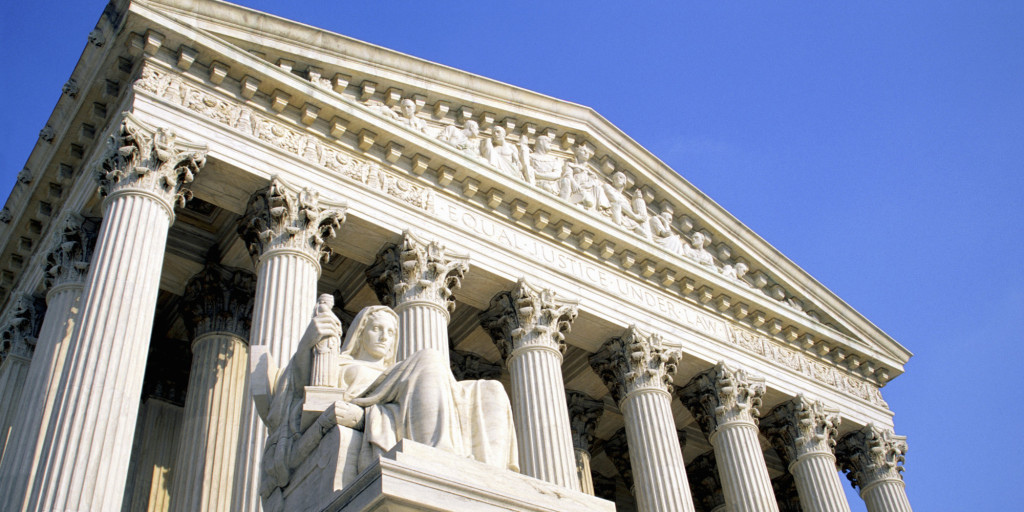
The Supreme Court has already heard a major case about political line-drawing that has the potential to reshape American politics. Now, before even deciding that one, the court is taking up another similar case. The arguments justices will hear Wednesday in the second case, a Republican challenge to a Democratic-leaning congressional district in Maryland, could offer fresh clues to what they are thinking about partisan gerrymandering, an increasingly hot topic before courts. Decisions in the Maryland case and the earlier one from Wisconsin are expected by late June. The arguments come nearly six months after the court heard a dispute over Wisconsin legislative districts that Democrats claim were drawn to maximize Republican control in a state that is closely divided between the parties. The Supreme Court has never thrown out electoral districts on partisan grounds and it’s not clear the justices will do so now. But supporters of limits on partisanship in redistricting are encouraged that the justices are considering two cases. “In taking these two cases, the Supreme Court wants to say something about partisan gerrymandering. It’s clear the Supreme Court is not walking away from the issue,” said Michael Li, senior counsel at the New York University law school’s Brennan Center for Justice. The justices’ involvement in partisan redistricting reflects a period of unusual activity in the courts on this topic. Over the past 16 months, courts struck down political districting plans drawn by Republicans in North Carolina, Pennsylvania and Wisconsin. Federal judges threw out a state legislative map in Wisconsin and a congressional plan in North Carolina. In Pennsylvania, the state Supreme Court invalidated the state’s congressional districts and replaced them with a court-drawn plan. When the Supreme Court heard Wisconsin’s appeal, the court appeared to be split along familiar lines. Four liberal justices seemed inclined to strike down the legislative map and four conservatives appeared more favorable to it. That left Justice Anthony Kennedy seemingly in control of the outcome. A relatively quick resolution of the case also appeared likely, based on the way the court handled the case. A lower court had earlier struck down the districts and ordered new ones drawn. The justices blocked the drawing of a new map last summer, but set the case for arguments in the first week of its new term in October. Then in December, the court said it would hear the case about Maryland’s 6th congressional district, but provided no further explanation about why it was adding a second redistricting case. Democrats who controlled redistricting in Maryland in 2011 made a conscious decision to try to increase the party’s control of congressional districts from 6-2 to 7-1, said Michael Kimberly, the lawyer representing the Republican challengers. They took a district that had been centered in rural, Republican-leaning northwestern Maryland, where a longtime Republican incumbent won by 28 percentage points in 2010 and turned it into a district that took in some Democratic Washington, D.C., suburbs and elected a Democrat who won by 21 percentage points in 2012. The change violated the First Amendment rights of the Republican voters, Kimberly said. Maryland Attorney General Brian Frosh, a Democrat, said in defending the district that it is competitive for both parties and has elected a moderate Democrat. In 2014, a friendlier year for Republican candidates, Democratic Rep. John Delaney’s victory margin dropped to less than 2 points, though it rose again in 2016. In some ways, the Wisconsin and Maryland cases complement each other. In Wisconsin, the justices have a broad theory about partisan line-drawing. The lower court that ruled for the Democratic challengers concluded that the districting plans were drawn to discriminate against Democrats, the Republicans’ advantage would endure even in the face of a strong Democratic showing at the polls and the plans could not be explained by other, non-partisan reasons. In Maryland, the single-district approach looks a lot like the way civil rights groups try to prove that race played too large a role in the drawing of districts. It would be both a more limited approach than the Wisconsin case, but also feel more familiar to justices who have decided many claims of racial bias in redistricting. With two cases before them, the justices now have one in which each party is complaining about the other. That could be significant based on Chief Justice John Roberts’ stated distaste for putting the court’s credibility at stake in politically charged cases. “We’ll have to decide in every case whether the Democrats win or the Republicans win,” Roberts said in the Wisconsin arguments. Another possibility is that the justices could already have decided that there’s a procedural problem in the Wisconsin case, limiting their ability to address the merits of the Democratic voters’ claim. However the court views the two cases, it seems increasingly likely that a decision striking down districts won’t result in any changes this year. The court frowns on making these sorts of changes so close to an election. The deadline to get on the primary ballot in Wisconsin is June 1. Maryland’s deadline was last month. The court also has blocked new congressional districts in North Carolina. Only in Pennsylvania, where the state Supreme Court invoked the state constitution to strike down the congressional map, has a new map been put in place. The Supreme Court refused an emergency request from Pennsylvania Republicans to block it. Republished with the permission of the Associated Press.
Poll: Americans open to Donald Trump’s planned North Korea talks

Americans appear open to President Donald Trump’s surprise decision to negotiate directly with North Korean leader Kim Jong Un, and at the same time are less concerned than in recent months by the threat posed by the pariah nation’s nuclear weapons. That’s according to a new poll from The Associated Press-NORC Center for Public Affairs Research, taken after Trump agreed to what would be unprecedented meeting between a U.S. and a North Korean leader. North Korea has yet to publicly confirm plans for the summit, slated for May, but the poll results suggest its potential has eased fears of war that intensified last year as the North made rapid strides in its nuclear and missile capabilities. “If you sit down and talk over any matter, there can be a resolution to it without starting a war,” said Sarah Dobbs, a 64-year-old retiree from Norman, Oklahoma, who described herself as a Democrat and is among the 48 percent of Americans who favor Trump’s plan to talk with Kim. “No other president has ever done something this bold. That’s why I think: Why not let Trump have at it?” she said. The poll found that 29 percent oppose the plans for talks between the two nations, while 21 percent say they’re neither in favor nor opposed. The survey also found an uptick in approval of Trump’s handling of relations with North Korea as the focus has shifted from possible U.S. military action to diplomacy. That figure is now 42 percent, up from 34 percent last October amid a coarse back and forth between the two leaders. Last September, Trump dubbed Kim “Rocket Man” and threatened to “totally destroy” North Korea. Kim responded with threats and insults of his own, calling Trump “deranged” and a “dotard.” North Korea’s foreign minister suggested that it might conduct an atmospheric nuclear test in the Pacific — a threat it hasn’t followed through on. Since then, the proportion of Americans who say they’re very or extremely concerned about the nuclear threat North Korea poses to the U.S. has dropped to 50 percent from 67 percent. It’s a decline that registered with both Republicans and Democrats. Americans also see the threat as having lessened for U.S. allies Japan and South Korea, as well as U.S. overseas territories such as Guam. Trump agreed to talk after Kim conveyed through South Korean intermediaries an offer to discuss “denuclearization” and halt nuclear and missile tests. South Korea’s leader is due to have his own summit with Kim in April. Americans are divided over the potential goals of U.S. discussions with North Korea. Forty-four percent say the North must completely give up its nukes, the long-standing goal of U.S. policy. Forty percent think the U.S. should consider a deal if the North agrees to make progress toward that goal. Only 13 percent think the country shouldn’t consider a deal with North Korea at all. “I would like to see a denuclearization of North Korea, but I don’t know how feasible that is,” said Aaron Saunders, a 26-year-old medical research associate from Three Rivers, Michigan, who was generally supportive of Trump’s handling of the issue — aside from his tweeting. Theresa Ferraro, 71, of Lowell, Massachusetts, said a summit might make the world safer, but she questioned the president’s temperament for negotiations. “He speaks out too much,” she said. “I’m outspoken myself, but you gotta know when to zip it and I don’t think he knows.” Despite the general openness toward negotiations with North Korea, Americans have mixed views about the direction of U.S. national security. One in three say that it will get better over the next year. Similar proportions say it will get worse and stay about the same. But there are clearer differences on partisan lines. Two-thirds of Republicans expect national security to improve, while a slightly smaller proportion of Democrats expect it to get worse in the year ahead. Americans have largely negative views about how the U.S. is viewed around the world. Some 53 percent think respect for American will decline in the next ahead, with just 26 percent expecting it to improve. And 48 percent think U.S. influence around the world will decline in the next year, compared with just 27 percent who believe it will get better. Pamela Williams, 69, of New York City, criticized Trump for boasting about U.S. military strength and having what she saw as flippant attitude to matters of war and peace. “I have not seen anything that he’s done since taking office that he’s taken seriously. Everything is a joke to him,” she said. Republished with the permission of the Associated Press.
Gambling king, VictoryLand owner Milton McGregor dies at 78
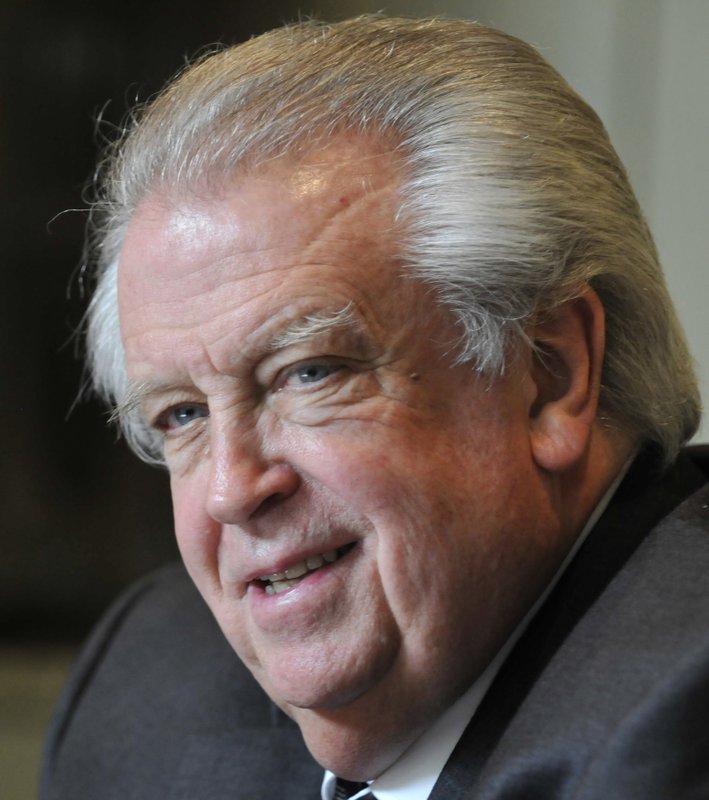
Gambling king and VictoryLand casino founder Milton McGregor died Sunday at the age of 78. Public relations firm Direct Communications said McGregor died peacefully in his Montgomery, Ala. home. An affable and charming fixture of the state’s business and political worlds, he advertised his casino with the slogan, which he drawled in Southern baritone, “Come join us… you can be a winner too.” His business interests included banking and nursing homes, but he was best known for developing a dog track-turned-casino in the Bible Belt state. The operation at one point boasted 6,400 electronic gambling machines, more than many Las Vegas casinos. Raised the son of a widow who ran a small town grocery, McGregor began finding success in the 1980s at the start of the video game craze, with an arcade and a business leasing the games. He opened VictoryLand dog track casino in Macon County in 1984 and later acquired a defunct horse track in Birmingham for dog racing. He then bet big on electronic bingo. Alabama law allows bingo in some locations, including Macon County. McGregor invested millions of dollars in a VictoryLand expansion, filling it with machines that played lightning quick games of bingo electronically, but on the outside replicated the experience of playing a slot machine with whirling displays and chimes. He added a swanky 300-room adjacent hotel and restaurants in an attempt to compete with neighboring Mississippi casinos. Macon County politicians praised McGregor for bringing jobs to the economically depressed county. But not everyone in the conservative state was pleased by his efforts. The state launched a still ongoing effort to close the casino, saying the slot machine-like games were illegal and not what was intended by the state laws allowing bingo. McGregor came out on the winning side of a high-profile government corruption case in 2012. Federal prosecutors in 2010 indicted McGregor, another casino developer, lobbyists and politicians on charges that they orchestrated a scheme to buy votes at the Alabama State House for gambling legislation. Prosecutors said McGregor was trying to ensure the continued operation of the casino that they said profited $40 million in a single year. A first trial ended with a hung jury. A second jury acquitted McGregor of all charges, and McGregor reopened the casino. “Now I’m focused on getting 3,000 people back to work and charities and governmental agencies receiving revenue, as they should have been all the time,” McGregor told The Associated Press after his acquittal. McGregor is survived by his wife of 50 years, Patricia Turner McGregor, daughter Kim McGregor and husband Dan Hix, daughter Cindy and husband Lewis Benefield. Republished with permission from the Associated Press.
