
Tommy Battle challenges Kay Ivey to explain contributions from special interests, industry
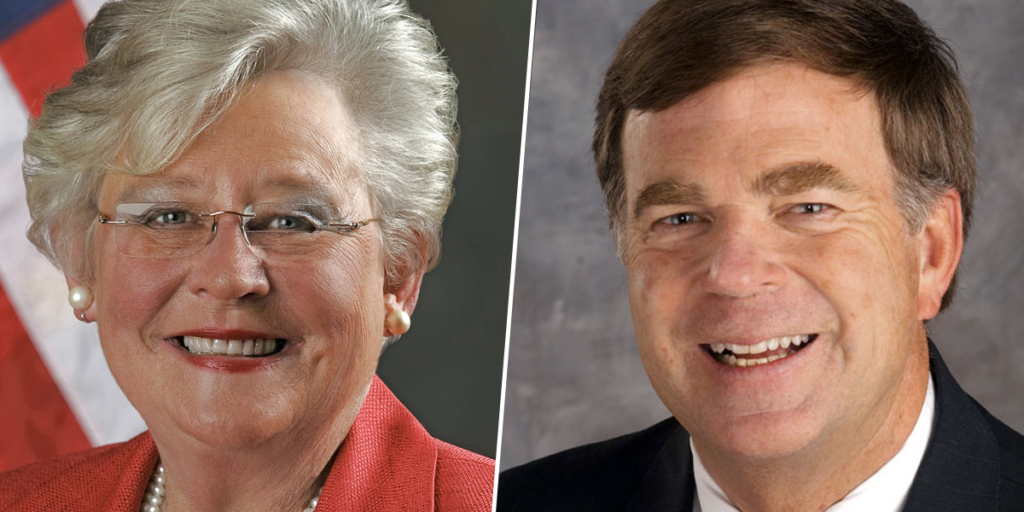
Campaign finance reports filed with the Alabama Secretary of State’s Office on Tuesday, revealed Governor Kay Ivey in the lead with over $3 million in fundraising money; but they also revealed an interesting fact about her campaign. According to the reports, Ivey’s campaign has received more than $1 million in contributions from 114 different special interest group or PAC donations. Some of the PAC’s contributing to Ivey’s campaign are: Alabama Power Company State Employees PAC, Business Council of Alabama’s PAC, Alabama Farmer Federation’s PAC, Alabama Forestry PAC, MCG PAC, and BIZPAC. While Ivey rakes in the millions, her GOP opponents — Tommy Battle, Bill Hightower, and Scott Dawson — are trying their best to keep up. As of Wednesday Battle has raised a total of $1.8 million; Hightower a total of $860,847; and Dawson a total to $731,782 for his campaign. In a release sent on Thursday, Battle touts his campaign has received more than 1,100 individual contributions from “real Alabamians” since the beginning of his campaign, which he claims are more than any other candidate running. “Only 14 PACs have contributed towards Battle’s fundraising efforts. In contrast, Governor Ivey’s numbers show she’s topped more than $1 million in contributions from her 114 PAC donations,” said Battle’s campaign. “Our numbers show that the people of Alabama are behind us. They’re looking for a better vision and a better plan for moving Alabama forward,” said Battle. “As Governor Ivey said in 1982, I think the voters deserve to hear from my opponent about what commitments these endorsements carry.” Battle has consistently challenged Ivey over the course of his campaign, most recently pushing her to commit to joining himself and other candidates in some of the debates scheduled before the primaries. A call to action that as of Tuesday, Ivey has yet to answer.
Northrup Grumman-Huntsville awarded contract to modules for Navy ships
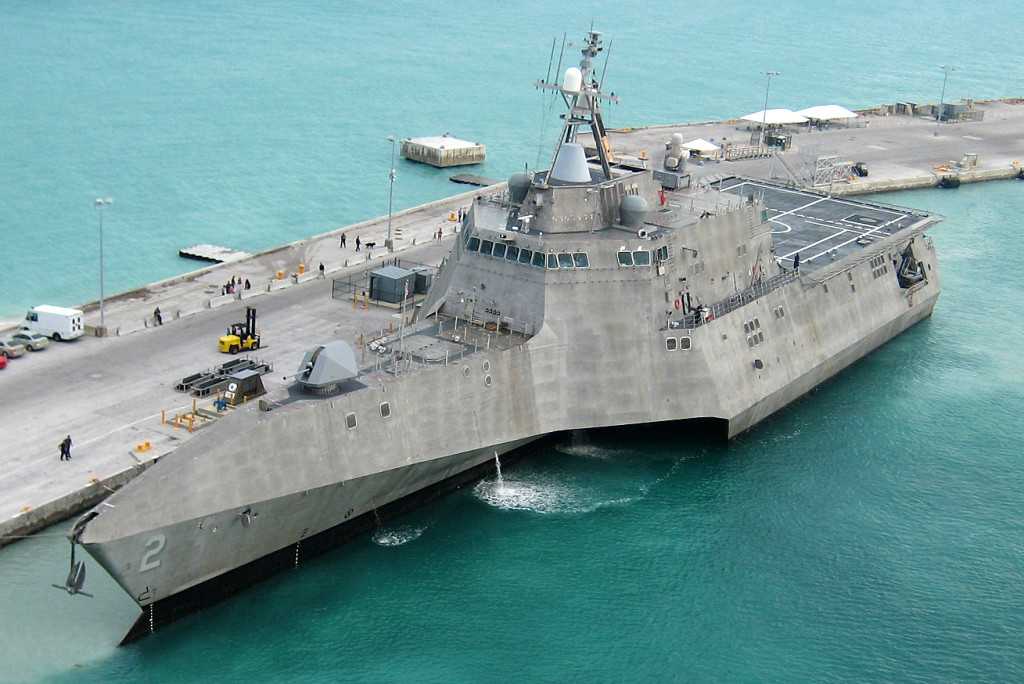
Northrop Grumman has been award a contract from the U.S. Navy for gun mission modules on Littoral Combat Ships (LCS). The Department of Defense (DoD) announced the deal Monday. According to the DoD, 91% of the work will be performed in Huntsville, Ala. and is expected to be completed by December 2019. The deal is valued at more than $7,420,308 million under the terms of a firm-fixed-price contract, a modification to a previous award. “Exciting news! Northrup Grumman in Huntsville was just awarded a contract to build gun mission modules for Littoral Combat Ships. Proud to see the whole state of Alabama working together to build these capable and efficient naval ships,” said Alabama 1st District U.S. Rep. Bradley Byrne.
Daniel Sutter: Money and March Madness

March Madness just concluded with Villanova winning the title. Given the ongoing college basketball bribery investigation, the bigger question may be whether the Wildcats will eventually vacate the title. The bribery case first broke last September with ten arrests, including four assistant coaches, based on an FBI investigation dating from 2015. The scandal has already claimed Louisville coach Rick Pitino, fired before this season. The extent of the bribery remains unclear. News reports have implicated twenty top programs as targets, and claimed that the FBI has hours of recorded phone calls. Of course these reports may prove inaccurate. Shoe manufacturer Adidas and sports agents funded the payments leading to September’s arrests. Adidas allegedly paid to lure top recruits to teams using their shoes and uniforms. The sports agents allegedly paid to get stars to commit to use them as agents when entering the NBA. The payments clearly violate NCAA rules, since college players are student-athletes, not professionals. Of course, the NCAA basketball tournament is big business. March Madness earns over $1 billion annually in ticket sales, broadcast rights fees, and sponsorships. Universities and the NCAA market basketball and football like commercial properties. Some sports economists claim that the NCAA is a cartel. A cartel is a group of independent businesses which coordinate to act like a monopolist, restricting production to increase profits. OPEC, the Organization of Petroleum Exporting Countries, is probably the world’s best-known cartel. OPEC sells a product to consumers, while the NCAA “employs” players. So the NCAA tries to suppress players’ “salaries.” Successful cartels must resist competitive pressures. Sellers of oil want to cut their price a little to sell more oil, while college teams want to pay top recruits to win more games and championships. Economic theory highlights why cartels form and collapse. Being the only cheater on a cartel agreement is the best of all possible worlds for an oil exporter or basketball program. Consequently a cartel tries to detect and punish cheating, but doesn’t always succeed. The fear of cartels, or trusts, led to the passage of our anti-trust laws outlawing anti-competitive collusion. Research shows, however, that cartels are not terribly successful, except under certain circumstances. The diamond cartel, sustained by a small number of mines, is probably the most effective. Cartels also succeed by “capturing” government agencies tasked with regulating businesses. Railroads, trucking, and airlines in the U.S. used regulation to maintain cartels until deregulation in the late 1970s. The NCAA has successfully argued that sports are an element of education. Indeed, sports certainly help student-athletes learn valuable life lessons. And athletes receive scholarships, room and board, tutoring help, and now cost of attendance as compensation. Players clearly do not get paid a competitive share of the revenue they generate. Economics identifies the effects of not fairly compensating players. One is increased spending on other elements of sports programs, like coaches’ salaries and facilities. Another is the use of athletics revenue to pay for other university programs, like non-revenue sports and music (through marching bands). Perhaps the most unfair element of college sports is preventing a talented three point shooter or defensive lineman from pursuing a sports career if they cannot succeed in unrelated academic tasks like conjugating a verb or calculating the slope of a line. The NFL effectively makes playing college football a requirement by restricting draft eligibility to players three years out of high school. The NBA’s “one and done” draft rule has a similar impact. Still, few Americans get very angry about any injustice done to college athletes. More serious harms connected to college sports, like sexual abuse or assault, represent the greatest cost of not paying players. The culture of secrecy which hides illicit payments to athletes seems to enable predators like Michigan State’s (and USA Gymnastics’) Dr. Larry Nassar and Penn State’s Jerry Sandusky. Athletes get paid to play and benefit, while the victims of sexual predators are scarred for life. The façade of amateurism in college sports would be farce if not for the real harms it shields. ••• Daniel Sutter is the Charles G. Koch Professor of Economics with the Manuel H. Johnson Center for Political Economy at Troy University and host of Econversations on TrojanVision. The opinions expressed in this column are the author’s and do not necessarily reflect the views of Troy University.
Here are the best and worst school districts in Alabama
Approximately 43% of school funding comes from state governments. Just as the quality of school districts vary heavily within a state, the quality of state education systems vary heavily across the country. With Alabama schools ranking as some of the lowest in the country, ranking 44th among the 50 states, according to a January report by Education Week. 24/7 Wall St. is a financial news and commentary Web site, decided to take a deeper dive into that data to see what school district is the best and the worst in every state. Best school district 24/7 Wall Street determined the Mountain Brook City School District is the best in the state. Located in Jefferson County, the district spends $12,324 per student (total enrollment: 4,461). With an impressive 96.8% high school graduation rate, 85.1% of the adults in the district also have a bachelor’s degree. “School spending contributes to better student outcomes, and is one of the largest contributors to the disparity in academic success across the country. With greater funding, schools can afford better teachers, state-of-the-art educational technology, and other resources that help students succeed,” wrote 24/7 Wall St. in their report. “Educated parents are more likely to read to their children, and enhance their children’s development by exposing them to more complex speech patterns and a broader vocabulary.” The fact Mountain Brook City Schools rank number one makes sense — Mountain Brook, a suburb of Birmingham, is the wealthiest town in Alabama. According to 24/7 Wall St, the city has a median household income of $126,534 and a poverty rate of just 3%. Meanwhile the state median income is $43,623 — the 4th lowest in the nation. Worst school district The worst school district in the state is Chickasaw City School District. Located in Mobile County, the district spends $8,347 per student (total enrollment: 950). While the high school graduation rate is unknown, only 12.4% of adults in the district have a bachelor’s degree. Compared to Mountain Brook, Chickasaw City numbers are staggering with a median household income of $28,893 the poverty rate is 38.9% — which doesn’t even rank as the worst stats in the state. “Family income may have the largest direct impact on a student’s academic outcomes. Parents with greater financial resources have the ability to move to more expensive communities with better schools. They can also afford resources to better their child’s education such as tutoring and other extracurricular activities,” added the report. Methodology To determine the best school district in every state, 24/7 Wall St. developed an index based on various measures of child poverty, per-pupil expenditure, graduation rate, teachers per student, the percentage of adults with a bachelor’s degree, preschool enrollment, and AP enrollment. To determine the worst school district in every state, 24/7 Wall St. developed an index based on various socioeconomic measures, school finance, student success, and environmental factors, all using data from the most recent period available.
Donald Trump signs proclamation directing troops to secure border
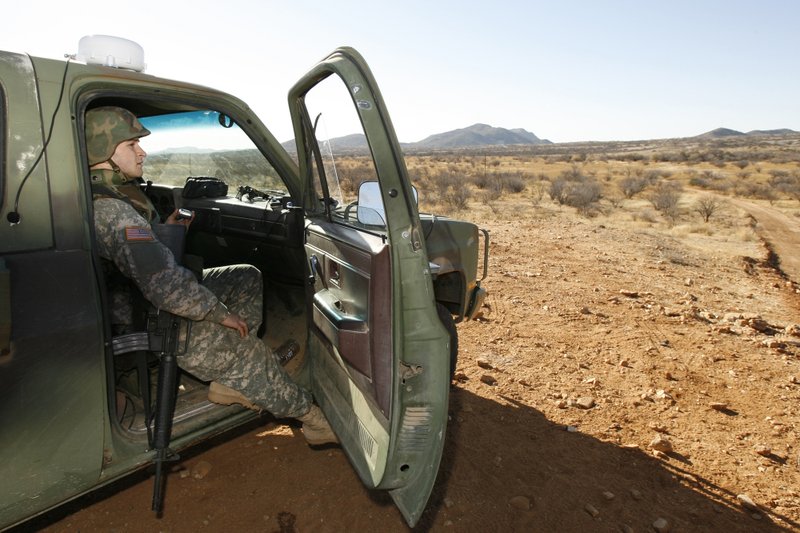
Asserting the situation had reached “a point of crisis,” to fight illegal immigration. “The lawlessness that continues at our southern border is fundamentally incompatible with the safety, security, and sovereignty of the American people,” Trump wrote in a memo authorizing the move, adding that his administration had “no choice but to act.” The announcement came hours after Trump pledged “strong action today” on immigration and a day after he said he announced he wanted to use the military to secure the southern border until his long-promised, stalled border wall is erected. Homeland Security Secretary Kirstjen Nielsen said she had been working with governors of the southwest border states to develop agreements on where and how many Guardsmen will be deployed. She suggested some troops could begin arriving as soon as Wednesday night, though other administration officials cautioned that details on troop levels, locations and timing were still being worked out. Trump has been frustrated by slow action on building his “big, beautiful wall” along the Mexican border — the signature promise of his campaign — as well as a recent uptick in illegal border crossings, which had plunged during the early months of his presidency, giving Trump an accomplishment to point to when he had few. Federal law prohibits the use of active-duty service members for law enforcement inside the U.S., unless specifically authorized by Congress. But over the past 12 years, presidents have twice sent National Guard troops to the border to bolster security and assist with surveillance and other support. Nielsen said the effort would be similar to a 2006 operation in which President George W. Bush deployed troops to help U.S. Customs and Border Protection personnel with non-law enforcement duties while additional border agents were hired and trained. President Barack Obama also sent about 1,200 troops in 2010 to beef up efforts against drug smuggling and illegal immigration. Nielsen said her department had developed a list of locations where it would like assistance on things like aerial surveillance and other support, and was discussing with the governors how to facilitate the plans. She declined to say how many personnel would be needed or how much the operation would cost, but she insisted, “It will be as many as is needed to fill the gaps that we have today.” One congressional aide said that lawmakers anticipate 300 to 1,200 troops will be deployed and that the cost was expected to be at least $60 million to $120 million a year. The Pentagon would probably need authorization from Congress for any funding beyond a few months, said the aide, who wasn’t authorized to speak publicly and spoke on condition of anonymity. Under the mechanism the administration is looking to use, the Guard would not be mobilized as a federal force. Instead, governors would control the Guard within their states. Governors of the four U.S. states bordering Mexico were largely supportive of the move. The office of California Gov. Jerry Brown, a Democrat who has sparred with Trump on immigration issues, said any federal request would be promptly reviewed to determine how the state could best offer its assistance. The Mexican foreign ministry said Nielsen told Mexico’s top diplomat that troops deployed to the border “will not carry arms or carry out migration or customs control activities.” Senators in Mexico urged President Enrique Pena Nieto to temporarily suspend cooperation with the U.S. on immigration and security issues. In a nonbinding statement approved unanimously Wednesday, the senators asked Mexico’s government to freeze joint efforts “in the fight against transnational organized crime” until Trump starts acting “with the civility and respect that the people of Mexico deserve.” Trump first revealed Tuesday that he’d been discussing the idea of using the military at the border with Defense Secretary Jim Mattis. “We’re going to be doing things militarily. Until we can have a wall and proper security, we’re going to be guarding our border with the military,” Trump said. He spent the first months of his presidency bragging about a dramatic drop in illegal border crossings, which some DHS officials had even dubbed the “Trump effect.” Indeed, arrests at the border last April were at the lowest level since DHS was created in 2003, and the 2017 fiscal year saw a 45-year low for Border Patrol arrests. But the numbers have been slowly ticking up since last April and are now on par with many months of the Obama administration. New statistics released Wednesday show about 50,000 arrests of people trying to cross the southwest border last month, a 37 percent increase from the previous month, and a 203 percent increase compared to March 2017. The monthly increase follows typical seasonal fluctuations. Trump’s new focus on hard-line immigration policies appears aimed, at least in part, in drawing a political contrast with Democrats heading into the midterm elections. He has also been under growing pressure from conservative backers who have accused him of betraying his base for not delivering on the wall, and he was set off by images played on his favorite network, Fox News, of a “caravan” of migrants making their way through Mexico. In Texas, which already has about 100 National Guard members stationed on the border, Republican Gov. Greg Abbott, said the president’s decision “reinforces Texas’ longstanding commitment to secure our southern border and uphold the Rule of Law.” New Mexico Gov. Susana Martinez, a Republican, said she appreciated the Trump administration’s efforts to involve states in the effort to better secure the border. Arizona Gov. Doug Ducey, also a Republican, tweeted that his state “welcomes the deployment of National Guard to the border. Washington has ignored this issue for too long and help is needed.” Republished with the permission of the Associated Press.
China-U.S. tariffs: Mostly losers, but some winners too
China’s threat to raise tariffs on U.S. exports could be a disaster for American soybean farmers but a boon to their Brazilian and Argentine competitors, European aerospace companies and Japanese whiskey distillers. Regulators picked products China can get elsewhere when they made a $50 billion list including soybeans and small aircraft for possible retaliation in a trade spat with Washington. That should help minimize China’s losses if U.S. President Donald Trump goes ahead with a planned tariff hike and Beijing responds, said economist Lu Feng at Peking University’s School of National Development. “Compared with the U.S. list, which focuses on high-tech, China’s list is more diversified,” said Lu. “The impact to China’s overall economy is under control.” The two sides have not set a date for raising duties. Trump has approved higher duties on Chinese telecoms, aerospace and other technology goods but left time to negotiate by announcing a comment period through May 11. Beijing says its timing depends on what Trump does. Already, the threat of disruption has jolted the business world. Share prices of American exporters of aircraft, farm equipment and grain sagged Wednesday after Beijing announced its list of 106 products. Others picked for a possible 25 percent rise in Chinese import duty include beef, electric vehicles, industrial chemicals, orange juice and tobacco. Losers, including Chinese consumers who might face higher food prices, will likely outnumber winners. “It definitely will affect my choices,” said Wang Xiaoyu, a 20-year-old student in Beijing. “For daily necessities, mobile phones or electronics, I am more likely to choose domestic brands or choose products with the same price as U.S. products before the price hike.” While importers that buy big volumes of American soybeans and other goods might struggle to fill the whole gap, those shortfalls could create business opportunities for rival suppliers. “The obvious ‘winners’ would be the other major suppliers of these products,” said Adam Slater of Oxford Economics in an email. The biggest impact of higher Chinese duties would fall on American soybean farmers. China accounted for almost 60 percent of their exports and $12.4 billion in revenue for the year that ended on Aug. 31. Farmers in Brazil, Argentina or Australia might step up to supply Chinese buyers who use soybeans as animal feed and to produce cooking oil. A 25 percent price hike for American pork, whiskey and tobacco could make sources in Europe, Russia, Japan and elsewhere more attractive. It was unclear whether Beijing might try to make an exception for Chinese-owned U.S. exporters such as pork producer Smithfield Foods. WH Group, which bought Smithfield in 2013, opened a facility in the center Chinese city of Zhengzhou to produce its brands but uses meat imported from the United States. At the same time, American meat producers might save money if weaker Chinese demand depresses the price of soybeans they use to feed cows and pigs. Higher prices for American small aircraft and aviation technology also could give French and German competitors a chance to gain market share. U.S. aviation-related exports to China totaled $13.2 billion in 2016. That accounted for 58 percent of Chinese imports, giving potential rivals plenty of room to grow. “We will continue in our own efforts to proactively engage both governments,” said Boeing Co. in a statement. “A strong and vibrant aerospace industry is important to the economic prosperity and national security of both countries. Other potential winners include developing countries that might replace China as a supplier to American markets, according to William Jackson of Capital Economics. Mexico produces many of the goods targeted for U.S. tariffs on Chinese imports such as televisions and electrical circuits, he said in a report. South Korea, Malaysia and Thailand export semiconductors and other technology. “To the extent that the tariffs do result in the U.S. importing from elsewhere, other emerging markets might stand to benefit,” wrote Jackson. Republished with the permission of the Associated Press.
Mo Brooks praises Donald Trump’s decision to use military along southern border
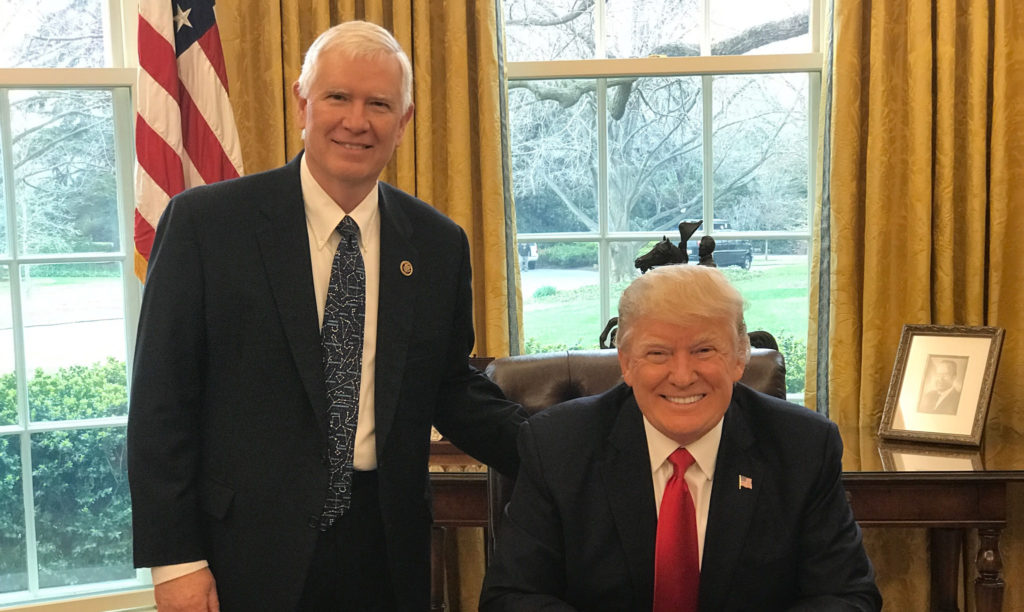
Alabama 5th District U.S. Congressman Mo Brooks says he fully supports President Donald Trump’s decision to use American troops to defend the nation’s southern border. Trump signed a memorandum on Wednesday to deploy the National Guard to the southwest border, following several days of his calling for more border security. Brooks shortly thereafter released a statement of support saying, “I fully support President Trump’s use of our military to secure the border against invasion by foreign nationals.” “Until Congress gives President Trump funding for the physical border wall, his decision to send troops to the border, consistent with his Constitutional power as commander in chief, not only sends a strong message to the world that our borders will be secure, but more importantly preserves America’s national sovereignty,” Brooks continued. The President also tweeted on Wednesday, “Our Border Laws are very weak while those of Mexico & Canada are very strong. Congress must change these Obama era, and other, laws NOW!..We will be taking strong action today.” Our Border Laws are very weak while those of Mexico & Canada are very strong. Congress must change these Obama era, and other, laws NOW! The Democrats stand in our way – they want people to pour into our country unchecked….CRIME! We will be taking strong action today. — Donald J. Trump (@realDonaldTrump) April 4, 2018 At the White House that afternoon, Trump spoke of his intention to deploy the National Guard to the southern border because of Congress’s failure to properly defend the nation against the invasion. “So, we are preparing for the military to secure our border between Mexico and the United States. We have a meeting on it with General Mattis and everybody, and I think it’s something we have to do,” said the President. Brooks agrees — it’s time to take action. “Recent, highly-publicized caravans of thousands of foreigners heading for America’s border emphasize that it is past time for Congress to reform laws that entice and reward foreign nationals who illegally invade America,” added Brooks. “For too long, illegal aliens have exploited weak laws and then sought and sometimes gained de facto permanent legal status at great cost and damage to American taxpayers.”
Special grand jury finds no new charges warranted in Robert Bentley investigation
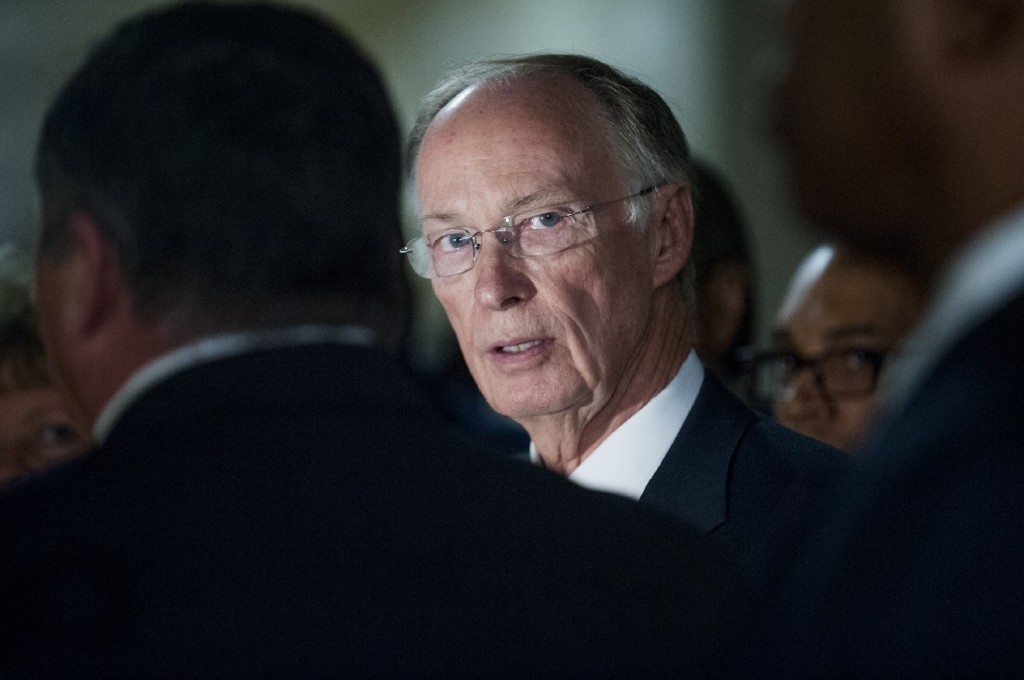
Supernumerary District Attorney Ellen Brooks announced Wednesday the investigation of former Governor Robert Bentley and others has concluded. Brooks released the final report of a Special Grand Jury, empaneled in Montgomery County on July 11, 2016, that determined no additional charges against Bentley are warranted. Montgomery County Circuit Judge Johnny Hardwick accepted the report and dissolved the grand jury accordingly. “Many of the allegations we investigated were not supported by the facts,” the report reads. “With respect to the other allegations, the facts did not constitute a crime.” But the grand jury did point out several issues with Alabama’s current ethics laws. “We found a number of serious concerns about current state law that hinder successful prosecution,” the report read: The ethics law does not cover non-spousal intimate or romantic relationships. The law authorizes the governor to appoint the Secretary of Law Enforcement and does not prohibit the governor from initiating, directing, or receiving reports on criminal investigations for illegitimate political purposes. State law does not prohibit non-government personnel from performing the work of a public employee while being paid by a private entity, a so-called “loaned executive” arrangement. The report urged lawmakers to look into updating the laws as soon as possible. “While this list is not exhaustive, the issues are sufficiently serious as to warrant the Alabama Legislature to revisit the Alabama Ethics Law and the Alabama Fair Campaign Practices Act as soon as possible.” Nearly one year ago, on April 10, 2017, Bentley resigned following allegations he used state resources to cover up an affair he was having with one of his former aides. State Auditor Jim Zeigler filed an ethics complaint against Bentley, to investigate whether any state resources were unlawfully used in the alleged relationship. Ultimately the investigation led the Alabama Ethics Commission to find probable cause Bentley violated ethics laws and campaign finance laws. Upon his resignation Bentley was booked on two misdemeanor charges —one for failing to file a major contribution report and another for knowingly using campaign contributions for personal use. He plead guilty to both charges, each carried a $300 bond, and was sentenced to 12 months of unsupervised probation.
Gun rights groups BamaCarry backs Will Ainsworth for Lieutenant Governor
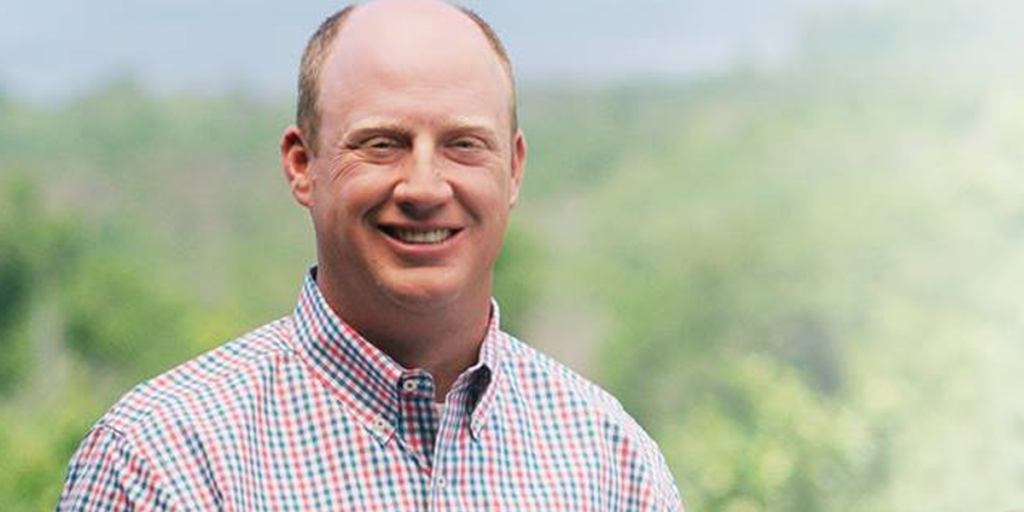
Alabama’s only “no compromise” gun rights group — who believe in gun rights “the way the founders of our country and the original authors of our State constitution intended” and are working working towards Constitutional carry in the State of Alabama— BamaCarry, on Wednesday endorsed Guntersville-Republican State Rep. Will Ainsworth for Lieutenant Governor. “Throughout his time in the Alabama Legislature and in every vote he has cast, Will Ainsworth has proven to be a staunch defender of the Second Amendment and a strong supporter of gun rights for citizens across the state,” said BamaCarry organizer Bruce Wade. “Will Ainsworth understands that gun free zones put law-abiding citizens in danger, and his plan allowing teachers to voluntarily carry firearms is the only proposal that will defend our classrooms and protect our children.” In February, Ainsworth introduced legislation in the State House that would allow some public school teachers and administrators to undergo firearms training and arm themselves during school hours, in order to help prevent school shoots like the one that occurred at Marjory Stoneman Douglas High School in Parkland, Fla. “Our children are sitting ducks in gun-free schools. As the parent of three public school students, I believe we must act now in order to prevent another tragedy,” Ainsworth posted on Facebook. Ainsworth will face Public Service Commission President Twinkle Andress Cavanaugh and State Senator Rusty Glover in the June 5 Republican primary. The winner of the GOP primary will advance to the general election again Democratic hopeful Dr. Will Boyd.
