
Gerald Dial: Alabama Space Authority working to ID location for new space port

Lineville-Republican State Senator Gerald Dial sent a letter to U.S. Sen. Richard Shelby informing him the Alabama Space Authority — formed by the State Legislature in 2017 to promote the research and development of the aerospace and aviation industries in Alabama — is beginning work to identify the location for a space port in Alabama, in an effort to position the state as a leader in the burgeoning space flight industry. A space port is a site for launching and receiving space craft; between 1996 and 2017, the Federal Aviation Administration (FAA) licensed ten space ports in seven states. In the letter to Shelby, Dial, the chairman of the Space Authority, cites the existence of the Marshall Space Flight Center, Redstone Arsenal, and the Maxwell Air Force Base as reasons why Alabama can be a leader in the commercial and military space flight industry. “Senator Shelby has been a tremendous ally and friend of Alabama’s aerospace industry, and this letter is meant to update him and his office on our efforts to first identify a prime location for the space port, and then to move forward with construction plans,” Dial said. “Senator Shelby was just named chairman of the U.S. Senate’s appropriations committee, and that position certainly increases his opportunities to represent Alabama’s interests, including our push to become a leader in the commercial and military space flight industry.” The Space Authority held its inaugural meeting on March 16 at the U.S. Space and Rocket Center in Huntsville, and heard from Glenn Rizner, chief of staff for the FAA’s Commercial Space Transportation Office, on the FAA’s application process for space launch site licenses. Read Dial’s letter to Shelby below:
Alabama ranks third in premature death: opioids, smoking, diabetes to blame
The opioid epidemic, smoking, and diabetes are driving the increase premature death in rates in Alabama, despite the fact premature death rates are falling across the country as a whole. In a new study published Tuesday in the Journal of the American Medical Association found Alabama ranked third-worst in premature death, or dying between the ages of 20 to 55, behind only West Virginia and Mississippi respectively. Meanwhile, nationally premature death rates have decreased over the past 16 years. In 1990, 745 per every 100,000 people died early. By 2016, that number decreased to 578 per 100,000 people. For the study, researchers analyzed data from the Global Burden of Disease (GBD) study, a research tool to quantify health loss from hundreds of diseases, injuries, and risk factors, so that health systems can be improved and disparities can be eliminated. The GBD has collected U.S. data since 1990 from data sources including the Centers for Disease Control and Prevention, the National Health and Nutrition Examination Surveys and state inpatient databases. Researchers analyzed the data from 1990 to 2016 to identify specific state trends and compiled the probability of death among three age groups: 0 to 20, 20 to 55 and 55 to 90. Specifically the study tracked 333 causes and 84 risk factors for premature death and disability. “In terms of health outcomes, the United States is not united,” said Dr. Howard Koh, who co-authored an editorial accompanying the new study. Koh explained that a reason for the increasing death rate in some states, like Alabama, were ‘diseases of despair,’ including substance-use disorders. In Alabama, the combined years of life lost to opioid misuse, across all age groups studied, increased by a whopping 900+ percent. The 10 states with the highest probability of premature death: Alabama, Arkansas, Kentucky, Louisiana, Mississippi, New Mexico, Oklahoma, South Carolina, Tennessee and West Virginia. “Overall the nation and some of our states are falling behind other, less developed countries,” Ali Mokdad, a University of Washington epidemiologist who co-wrote the study, said in a statement. “The strain on America’s health resources is getting worse, and the need for prevention services and greater access to and quality of medical care is increasing.” Mokdad’s colleague, director of the Institute for Health Metrics and Evaluation at the University of Washington Dr. Chris Murray, who also co-authored the study, agrees. “To an increasing degree, overweight, obesity, and sugary diets are driving up health-care costs and are costing Americans years of healthy life. They are undermining progress toward better health,” added Murray. “We are seeing dangerous disparities among states. Unless and until leaders of our health care system work together to mitigate risks, such as tobacco, alcohol, and diet more Americans will die prematurely, and in many cases, unnecessarily.”
Alabama’s residential new construction market continues to expand
Sales of newly constructed homes in Alabama continued to grow in February. New construction sales increased 22 percent from January and increased 14 percent from February 2017. Statewide*, 507 newly constructed homes were sold in February, up from 416 total sales in January and up from 445 total sales in February 2017. Year-to-date, new construction sales are up 6 percent from 2017. Alabama’s new construction market grew at a faster pace than the nation’s as a whole during February. Nationwide, new construction sales increased 8.5 percent from January, when approximately 47,000 units were sold. There were approximately 51,000 newly constructed homes sold nationwide during February, showing no change from one year ago. Although the total number of homes listed for sale both in Alabama and in the nation is trending downward, new construction inventory continues to grow in both Alabama and the United States. During February there were 3,138 new construction units listed for sale in the state, an increase of 1.9 percent from January and an increase of 20.9 percent from February 2017. During February approximately 301,000 new construction units were listed for sale nationwide, an increase of 1.4 percent from January and an increase of 16.2 percent from February 2017. There were 6.2 months of supply in Alabama’s new construction market during February, while there were 5.9 months of supply nationwide. However, Alabama’s new construction market did go against national trends in one area: pricing. Statewide, the median sales price for new construction was $224,470 during February. The median sales price decreased 1.7 percent from January and decreased 3.5 percent from February 2017. Nationwide, the median sales price was $326,800 during February, representing an increase of 0.6 percent from January and an increase of 9 percent from February 2017. Building permits and housing starts are early indicators of activity in the new construction market, and they are also helpful when measuring overall economic conditions, as the housing market is one of the first sectors to rise or fall when the economy grows or contracts. Permit data for new housing also show that Alabama’s new construction market is growing at a faster rate than the nation as a whole. Statewide, 1,225 building permits for new construction were issued during February. Permits increased 1.1 percent from January and increased 10.1 percent from February 2017. Nationwide, 92,091 permits were issued, representing a decrease of 4.7 percent from January and an increase of 8.6 percent from February 2017. According to the U.S. Census Bureau, “start of construction occurs when excavation begins for the footings or foundation of a building.” The Alabama Center for Real Estate uses building permit data to calculate projected housing starts. Statewide, there were 1,219 housing starts during February, a decrease of 2.9 percent from January and an increase of 13 percent from February 2017. Using the same calculation, ACRE projected 95,555 housing starts nationwide during February, a decrease of 0.7 percent from January and an increase of 9.1 percent from February 2017. Building permits and housing starts are growing in Alabama and the United States, and this is encouraging news for economic conditions going forward. Total New Construction Sales in Select Alabama Markets February 2018 January 2018 February 2017 Baldwin County 100 73 44 Birmingham Metro 125 89 135 Huntsville Metro 112 110 117 Lee County 36 30 34 Limestone County 46 37 32 Mobile Metro 17 17 17 Montgomery Metro 35 24 29 Tuscaloosa Metro 15 14 16 *ACRE receives new construction sales data from the following counties/areas: Baldwin County, Birmingham Metro Area, Calhoun County, Huntsville Metro Area, Lee County, Mobile Metro Area, Montgomery Metro Area, Tuscaloosa County and the Wiregrass Region. Combined, these counties/areas represent +/- 70 percent of Alabama’s total population.
Will Ainsworth: Answering Alabama’s infrastructure needs in the 21st century
Toyota/Mazda, Polaris, Remington, Hyundai, Honda, Airbus, Boeing… These are just a few of the dozens upon dozens of new and expanding industries that have chosen to locate in Alabama and provide jobs and opportunity to our citizens in recent years. It is no secret that Alabama continues to lead not only the southeast but the entire nation in economic development categories across the board, and the state’s Department of Commerce could fill a room with all of the “Silver Shovel” awards and other industrial recruitment honors it has captured over the past few decades. But if we are going to continue our forward progress and provide even more jobs, hope, and security to Alabama’s families, our attention must begin to focus upon repairing the state’s crumbling transportation infrastructure. Portions of our interstate are simply uncomfortable to drive upon, various bridges in every portion of the state are too dangerous for use, and, as someone who travels a great deal through rural Alabama, I can attest that the roads often feel like driving on broken piecrust. A health economy and a thriving state demand a road system that allows for the easy transport of commercial goods and the safe travel of our citizens. But critical infrastructure needs are not endemic to Alabama. Most states rely upon gas taxes to fund their transportation needs, and the advent of high mileage vehicles and electric cars have caused those revenues to tumble across the nation. As a result, roadways from coast to coast are in need of repair. President Donald Trump recognized these needs and campaigned for office on an expansive infrastructure proposal that will address road, bridge, highway, tunnel, railroad, and even airport improvements in each of the 50 states. As a Republican candidate for lieutenant governor, I embrace President Trump’s proposal and recognize that Alabama’s list of priority projects stretches from border to border. Anyone who has driven I-65 between Huntsville and Mobile has, at some point in their journeys, likely been stuck at a dead-stop standstill for no apparent reason. It is frustrating, it is senseless, and it wastes drivers’ time, fuel, and money. I believe strongly that we should work toward one day three-laning I-65 from the Tennessee border to the waters of the Gulf Coast. State Highway 157 in Cullman currently has a completed bridge with no access road leading to it because the project remains unfinished. U.S. Highway 98 in Mobile County has proven so deadly that it has earned the nickname “Bloody 98,” and while funding from the BP oil spill settlement will be used to jump start the project, additional funding is needed, and more work remains to be done. Farm-to-market roads across the state have been long neglected, and they deserve attention because of the essential role that agriculture plays in our state’s economy. Completing these projects and hundreds of others like them will require leaders with the determination to push forward and the vision to do them right. My transportation plan includes close examination of the steps our sister southeastern states have already taken to resolve their infrastructure issues and mimicking their successes while avoiding their pitfalls. Reducing regulations, implementing cost-cutting measures, and reexamining overly-cautions environmental mandates could dramatically reduce construction costs and help us put our money into asphalt instead of bureaucracy. Public/private partnerships, which allow the private sector to carry the majority of construction and maintenance costs, are another area worthy of exploring. Utilizing groundbreaking technologies in the roadbuilding industry can also cut costs in the long-term and save millions of taxpayer dollars that can be reinvested in roadways. New high-density mineral bonds in asphalt, for example, can be used to repel the moisture and ultraviolet light rays that are major contributing factors in the cracking, raveling, and deterioration of our streets, highways, and interstates. By implementing our sister states’ models, innovative approaches, conservative policies, and new technologies, I remain confident we can provide Alabama’s citizens and businesses with the quality transportation system that they deserve. ••• Guntersville-Republican State Rep. Will Ainsworth is a Republican candidate for lieutenant governor. Elected to the Legislature in 2014, Ainsworth currently represents Alabama’s House District 27, which includes portions of Marshall, DeKalb, and Blount counties.
AP sources: House Speaker Paul Ryan won’t run for re-election
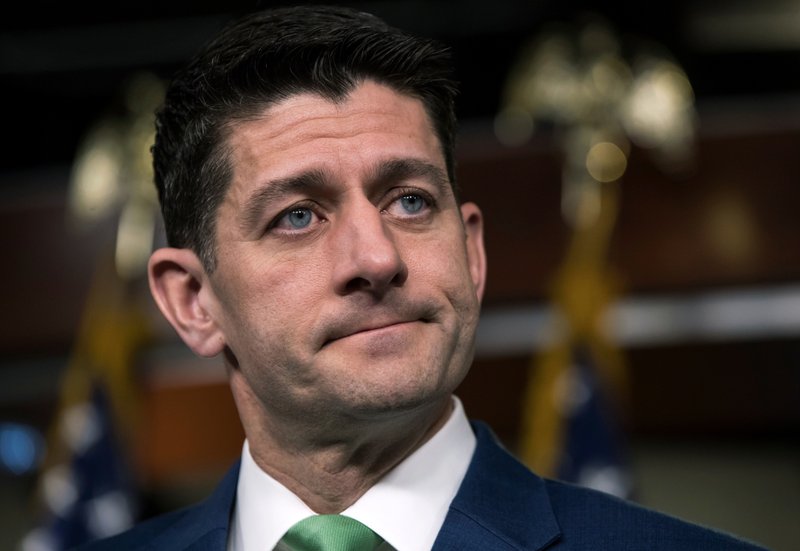
Republican House Speaker Paul Ryan will not run for re-election, people close to the Wisconsin lawmaker said Wednesday. Ryan’s plans have been the source of much speculation amid Republican concerns over keeping their majority in the House of Representatives. Ryan had made tax cuts a centerpiece of his legislative agenda, and Congress delivered on that late last year. Ryan, 48, planned to face reporters later Wednesday morning. Two people with knowledge of Ryan’s thinking said he has decided against seeking another term, but they did not say why. Both sought anonymity because they were not authorized to speak publicly. Ryan, a Republican from Janesville, Wisconsin, was first elected to Congress in 1998 after former House Speaker John Boehner retired. He was former GOP presidential nominee Mitt Romney’s running mate in 2012. Ryan and his wife have three children. Republished with permission from the Associated Press.
Roy Moore countersues accuser Leigh Corfman for slander, defamation
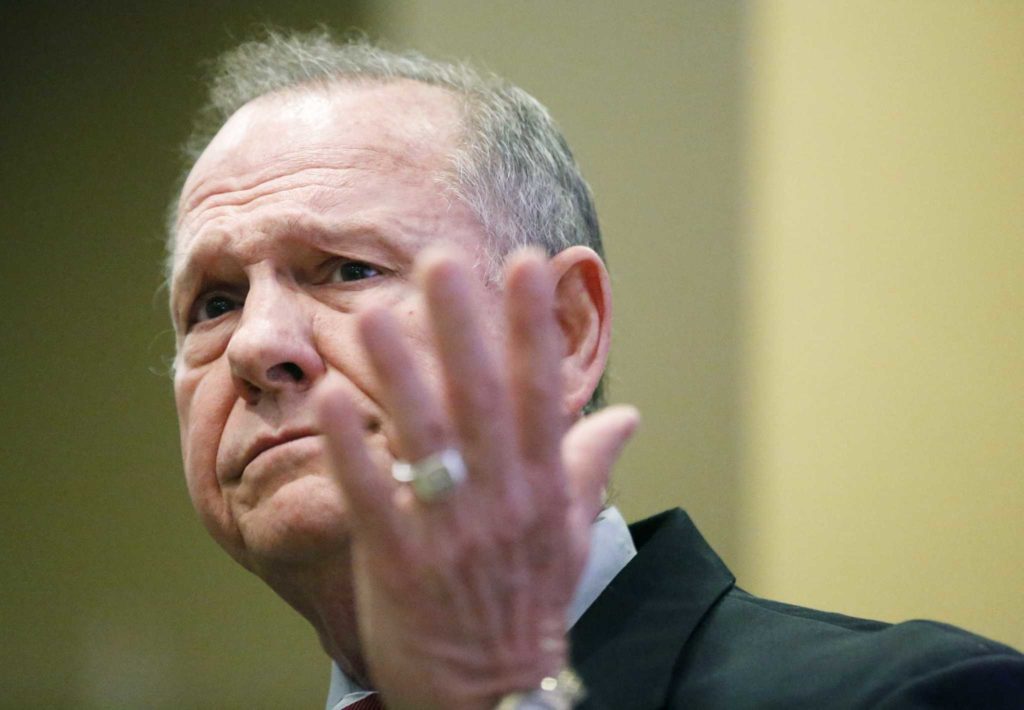
Former Alabama Chief Justice and U.S. Senate Republican nominee Roy Moore has filed a counterclaim for slander and defamation against Leigh Corfman, who has accused him of making unwanted sexual advances and filed a defamation lawsuit against him in January. In a 23-page filing made in Montgomery County Circuit Court, Moore accuses Corfman of making “slanderous” and “libelous” statements to the Washington Post. “The statements made by Leigh Corfman were slanderous, libelous and were of such magnitude as to amount to defamation of Mr. Moore,” reads the counterclaim. “No evidence other than the self-serving testimony of Leigh Corfman exists to support her contention that she was sexually abused or pursued romantically by Mr. Moore when she was fourteen years of age.” The claim continues, “Leigh Corfman knowingly, willingly and voluntarily made statements to the Washington Post regarding her alleged sexual abuse by Mr. Moore that she knew to be false. Leigh Corfman knowingly, willingly and maliciously made statements she knew to be false to the Washington Post with the intention and knowledge that such statements would damage the reputation of Mr. Moore.” Moore claims Corman’s allegations caused “irrevocable damage” to his reputation “that affected the outcome of the Senate election in December 2017.” “Mr. Moore avers that but for Leigh Corfman making false and malicious statements to members of national and local media, his reputation would not have suffered irrevocable damage that affected the outcome of the Senate election in December 2017,” the counterclaim added. In November, The Washington Post published a bombshell report with the accounts of Corfman and three other women who claimed Moore sexually pursued them when he was in his 30s and they were in their teens. Corfman specifically said she was only 14 years old when Moore, then 32, approached her outside a courtroom in Etowah County, Ala. According to the report, he ultimately drove her to his home in the woods,told her she was pretty and kissed her, and then undressed her. Moore has vehemently denied Corfman’s allegations of abuse, calling them “politically motivated,” “completely false” and “malicious.” She asserts those words are defamatory in the suit. Corfman is not seeking financial compensation, only legal fees, and is looking for Moore to publicly apologize for what he has said about her. She is also seeking a court-enforced ban on Moore or his campaign that would prohibit him from allegedly criticizing her in the future. One of Moore’s attorneys said this all has been a “political attempt” to smears Moore’s reputation. “This is and has been a political attempt to smear the good name and reputation of Judge Roy Moore and we will not let their injustice continue,” attorney Melissa Isaak said Tuesday. “Yesterday we filed claims for slander and defamation against Leigh Corfman, and claimed damages for attorneys fees under the Alabama Litigation Accountability Act. We also continue to argue that this case should be tried in Etowah County and wonder why Leigh Corfman has chosen to file this case in Montgomery and not Etowah County where both she and Judge Moore reside and where her own character and reputation are well known?”
Jeff Sessions to address immigration at border sheriffs meeting
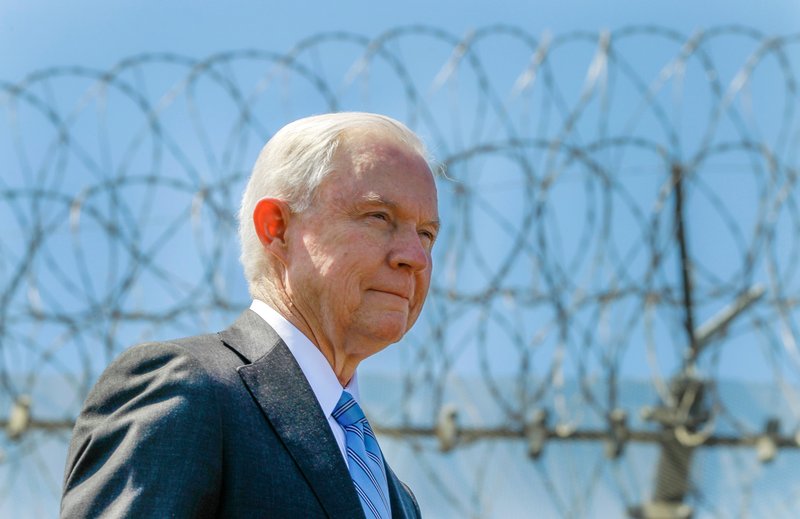
As thousands of National Guard troops deploy to the Mexico border, U.S. Attorney General Jeff Sessions plans to bring his firm stance on immigration enforcement to New Mexico where a group of Southwest border sheriffs are meeting Wednesday. Sessions will speak in Las Cruces at the Texas Border Sheriff’s Coalition Annual Spring Meeting with the Southwestern Border Sheriff’s Coalition, which is made up of 31 sheriff’s departments from Texas, New Mexico, Arizona and California. Their counties are located within 25 miles (40 kilometers) of the U.S.-Mexico border. Immigrant rights activists promised to protest Sessions’ visit on Wednesday, as they rejected his past characterization of the border region during a 2017 visit to El Paso, Texas, as “ground zero” in the Trump administration’s fight against cartels, and human traffickers. “He treated our home like a war zone, referring to it as ‘ground zero,’” said Fernando Garcia, executive director of the Border Network for Human Rights in El Paso. “He was wrong then, and he is wrong now.” El Paso is some 50 miles (80 kilometers) south of Las Cruces. Sessions’ trip to Las Cruces, a city about an hour north of the border, comes as construction begins nearby on 20-miles (32-kilometers) of steel fencing that officials say is a part of President Donald Trump’s promised wall. U.S. Customs and Border Protection officials have described the new, heightened barrier as a structure that will be harder to get over, under and through than the old post and rail barriers that has lined the stretch of the border’s El Paso sector. Sessions has issued an order directing federal prosecutors to put more emphasis on charging people with illegal entry, citing a “crisis” on the border. A 37 percent increase in illegal border crossings in March brought more than 50,000 immigrants into the United States, which was triple the number of reported illegal border crossings in the same period last year. It was still far lower, however, than the surges during the last years of the Obama administration and prior decades. The attorney general’s “zero-tolerance” for border-crossing prosecutions calls for taking action against people who are caught illegally entering the United States for the first time. In the past, such offenses have been treated as misdemeanors. He also recently set quotas for immigration judges to reduce enormous court backlogs, saying they must complete 700 cases a year to earn a satisfactory grade. The quotas take effect Oct. 1. Republished with permission from the Associated Press.
Steve Flowers: a closer look at our current congressional delegation
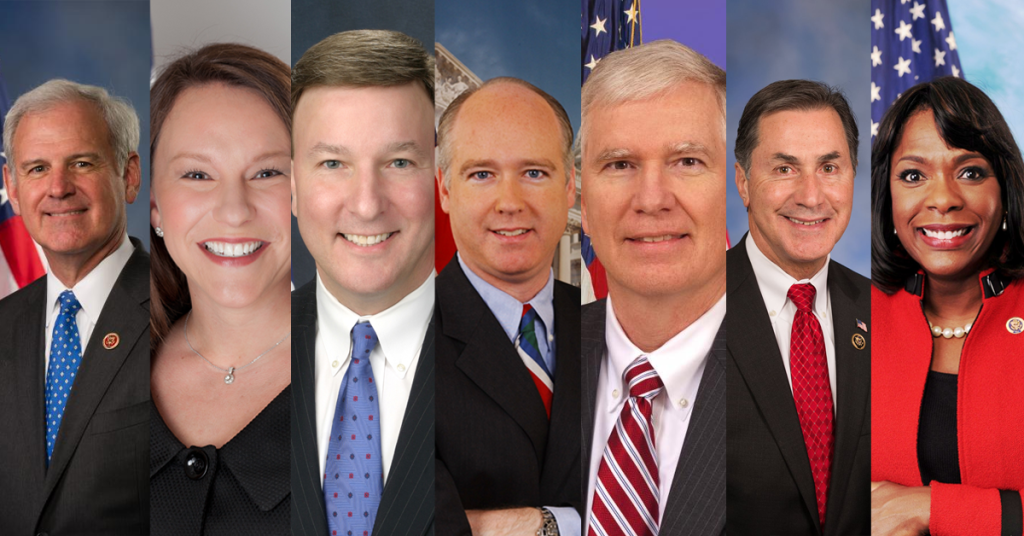
There are dramatic differences between our congressional delegation of the 1940’s-1960’s and our group on the Potomac today. Obviously, their partisan badges have changed, as have Alabamians. There is also a tremendous difference in power and seniority of that era versus today’s group. That bygone era of Alabama congressmen were very progressive New Deal Democrats; whereas, our delegation today is one of the most conservative in America. Their paths to Congress were also very different. It was as though the earlier folks had been born to be in Congress. They all went to the University of Alabama for college and law school, went off to fight in the World War, came back to their hometown to practice law for a short while before going off to Congress for a 20-30 year tenure of “Going Along to Get Along.” Today’s delegation seems to have gotten there by accident. Of the seven, two went to Duke, one to Harvard, one to New York University, one to Birmingham Southern, one to Jacksonville State, and one to the University of Alabama. Six of the seven have law degrees, which is the only similarity to the bygone era. As we look toward next year’s election, let’s take a look at our current congressional delegates since all are on the ballot this year. Congressmen run every two years but seldom lose. Once you get to Washington the power of incumbency is tremendous. All of the Washington special interest money gravitates to incumbents. First district congressman, Bradley Bryne, is a Republican who was born and raised in Baldwin County in the heart of the traditional first district. This district is primarily a Baldwin and Mobile seat. Historically it has had great congressmen. Frank Boykin, Jack Edwards, Sonny Callahan, and Jo Bonner have more than aptly represented them over the past 80 years. Byrne is a lawyer by profession. He graduated from Duke undergraduate and University of Alabama Law School. He served five years in the Alabama State Senate before becoming chancellor of the State Community College System where he served several years. He ran for governor in 2010 and led the first primary, but lost to Robert Bentley in the runoff. He won a Special Election to Congress in December of 2013. He has taken to Congress like a duck to water. He is 62 and serves on the Armed Services and Rules Committees. He will win reelection to a third term this year. Second District Congresswoman, Martha Roby, is the only seat in play this year. She is vulnerable. Roby made a terrible mistake by saying that she was not going to vote for the Republican nominee, Donald Trump, last year. The backlash was dramatic. She is being challenged by three significant GOP opponents. Former Montgomery Mayor and Congressman, Bobby Bright, will be tough. State Representative, Barry Moore, of Enterprise chose to challenge Roby rather than seek reelection to the Legislature. He has been running against Roby for over a year. Rich Hobson is Roy Moore’s chief ally. He will be the heir apparent to Judge Moore’s Wiregrass organization. Bright, Moore and Hobson were all born and raised in the Wiregrass. Third district congressman, Mike Rogers, R-Anniston, is building some seniority and will be a safe bet for reelection. At the end of this term, he will have 16-years seniority. He serves on the Armed Services and Agriculture Committees where he is building power. The crown jewel of our congressional delegation is Robert Aderholt, R-Haleyville. Aderholt got to Congress at 30 years old and has 22 years of seniority. He is only 52 and is a ranking member of the Appropriations Committee. He will be reelected to a 12th term next year. Congressman Mo Brooks ran a very good race for the U.S. Senate last year. He will probably run again in 2020 against Democrat Doug Jones. He will be reelected to his Congressional seat this year, and get ready for another Senate run. Sixth district Birmingham Congressman, Gary Palmer, will win reelection to his suburban Jefferson/Shelby Republican seat. He is unopposed for a third term. Our only Democratic Congressperson is a Harvard educated lady. Terri Sewell is a lawyer, who had a successful law practice in Birmingham before being elected to Congress from the Seventh District eight years ago. The Selma native is on a fast track in Washington. She will go back for another two-year term. See you next week. ••• Steve Flowers is Alabama’s leading political columnist. His weekly column appears in over 60 Alabama newspapers. He served 16 years in the state legislature. Steve may be reached at www.steveflowers.us.
