
Bill Veitch files lawsuit to stop ballot printing for primary ballots
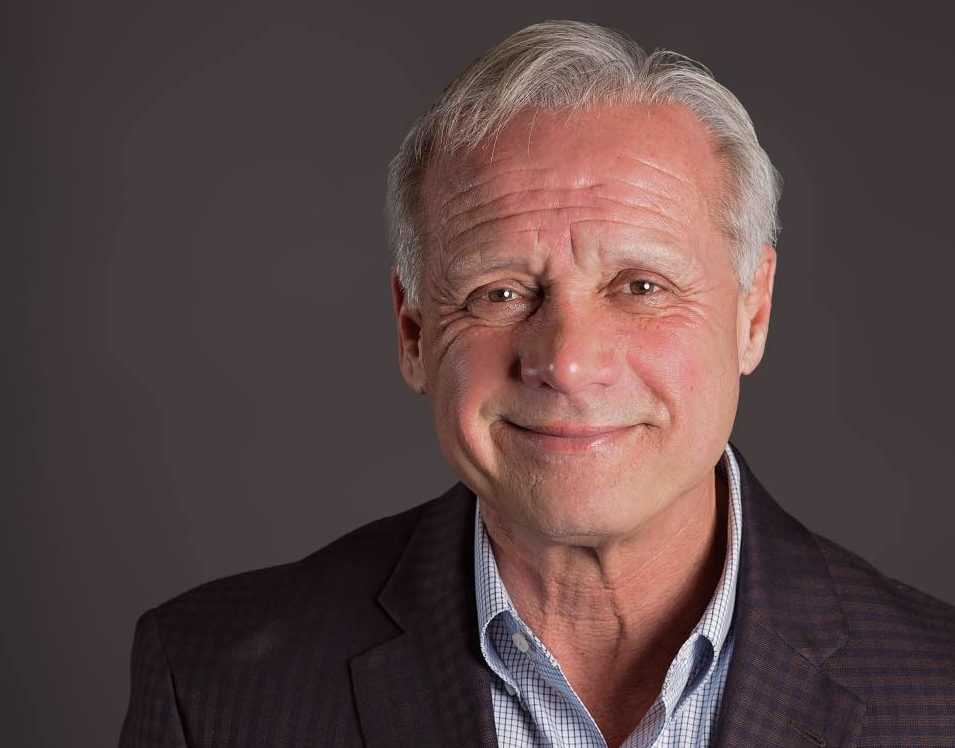
Presiding Jefferson County Circuit Court Judge Joseph Boohaker issued a restraining order on Friday that halted printing of June 5 primary ballots in the Bessemer Cutoff. The printing was stopped due to a lawsuit that Bill Veitch, a Republican candidate for the Birmingham division of Jefferson County, filed on Friday afternoon. “Without your knowledge and consent someone in Birmingham decided your cut-off votes don’t matter. Every single voter in the cut-off from Hoover, McCalla, Hueytown, Bessemer, Midfield and Brighton matter to me and your voice should be heard,” Veitch said in a facebook post on Friday. In the lawsuit, Veitch argues that all voters in Jefferson County should be allowed to vote in the primary, not just those who live in the Birmingham division. He then asked that a judge declare a 1953 law unconstitutional, that Jefferson County Probate Judge Alan King put the names of all candidates in the upcoming primary for District Attorney on ballots for both the Birmingham and divisions, and called for the restraining order that halted the ballot printing. According to AL.com, “Veitch lives in the Bessemer Cutoff, which means if the names of the District Attorney candidates were left off the ballot, he couldn’t vote for himself in the Republican Primary. It also means Democrats in the Bessemer division couldn’t vote for the district attorney candidates in Birmingham in their primary.” “The Bessemer District Attorney is listed in the state code as an assistant,” Veitch told AL.com. “The district attorney for the Birmingham division, however, has authority over all the county. ‘If that’s true that the (Birmingham) district attorney has jurisdiction all over the county shouldn’t they (Bessemer voters) be allowed to vote on those who have jurisdiction over all of them?” Veitch will face Mike Anderton in the Republican primary on June 5. The winner will then face Danny Carr, Raymond L. Johnson, or Jr. Carr in a a November special election to determine who will fill the seat. The full text of the lawsuit can be found below: Bill Veitch lawsuit uploaded by KentFaulk on Scribd
Attorney General candidates make their case in candidate forum
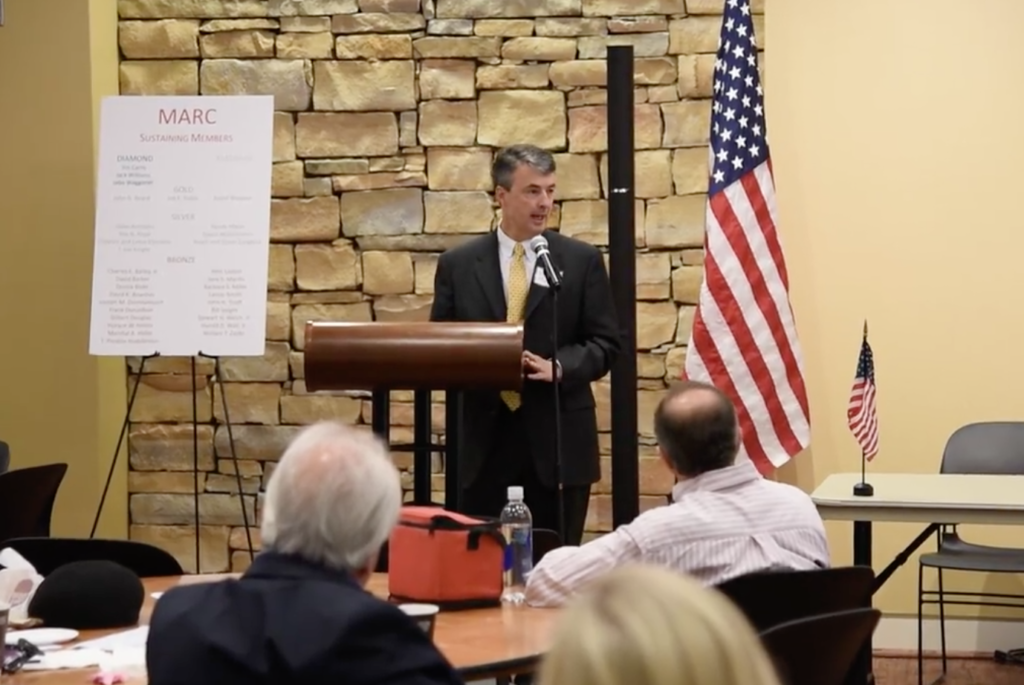
Republican candidates for attorney general shared a stage for the first time in an occasionally contentious forum that previewed a race shaping up to be one of the most hotly contested of 2018. Attorney General Steve Marshall, former U.S. Attorney Alice Martin, former Attorney General Troy King and GOP lawyer Chess Bedsole spoke Saturday to the Mid-Alabama Republican Club. Marshall, who was appointed by then-Gov. Robert Bentley, said he is running an independent office focused on enforcing the law, not politics. Martin emphasized her record prosecuting public corruption cases, while King said the state had been embarrassed by recent scandals. Martin criticized Marshall as a party-switcher. Bedsole said he was the only one who had not sought the appointment from Bentley, who resigned during an ethics investigation. Republished with the permission of the Associated Press.
Ed Richardson says Montgomery schools need to cut teachers jobs
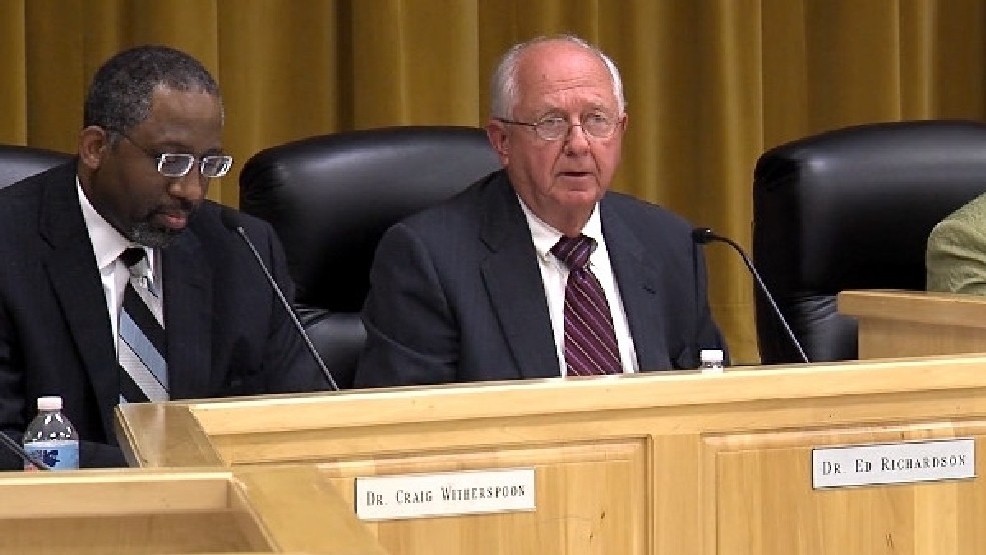
An interim superintendent in Alabama says about 200 teacher positions in Montgomery will have to be eliminated and outsource 400 support jobs to stabilize finances. Al.com reports that Ed Richardson says the Alabama Education Association could have prevented the job cuts for Montgomery Public Schools if it had not gone to court to block his plan to sell Georgia Washington Middle School to the town of Pike Road. Richardson led a state intervention into Montgomery schools because of financial and academic problems. Montgomery Mayor Todd Strange joined Richardson during the news conference Thursday. The city has no authority over education, but the city expended some time and money studying the possibility of a city school system but determined it was not feasible. The AEA represents teachers and other education employees. “Now here’s a system that’s already struggling with academic problems,” Richardson said. “The original plan, we did not have to cut any teacher nor outsource any employees. And now we’re faced with that distasteful task and by the end of this month, April, we will make those decisions.” The AEA said in a statement that Richardson had a conflict of interest since he worked as a consultant for the Pike Road system. “Anyone paying attention to the matter knows Ed Richardson has a personal issue with AEA,” AEA President Sherry Tucker said in a statement. “This is causing him to make decisions that he thinks will hurt AEA, regardless of if they will help the children of Montgomery County.” However, Richardson said the AEA’s claim is “totally false.” “Wherever I’m employed is where I give my full attention,” Richardson said. “In this case it’s trying to get the intervention for Montgomery Public Schools in a position where they have a chance to be released sometime in the near future.” Richardson said he still expects Georgia Washington and the three other schools to close. Robert Porterfield, president of the Montgomery Public Schools Board, said Richardson was being prematurely negative. “We were accredited before the state came and we have not been unaccredited and I think you’re making a big to-do out of this before the board gets an opportunity to even see what they’ve come up with,” Porterfield said. Republished with the permission of the Associated Press.
State Board of Education names four superintendent finalists
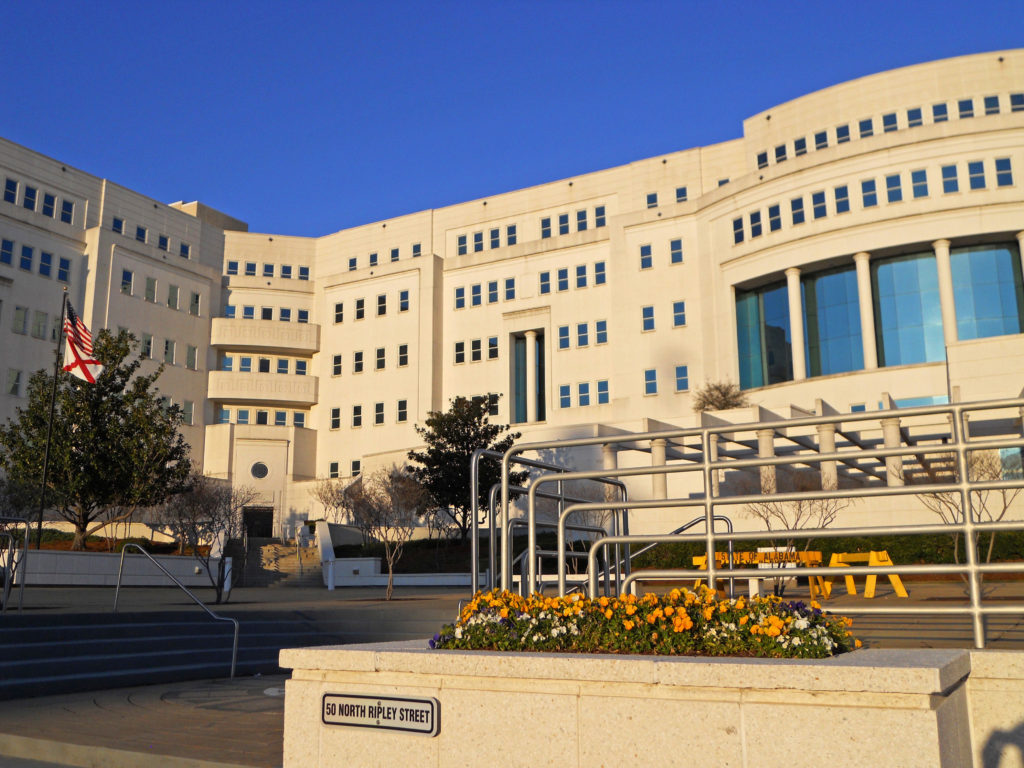
The search for Alabama’s next education superintendent was narrowed Friday to four finalists, as Alabama State Board of Education members looked mostly within the state for the next public schools chief. Jefferson County Superintendent Craig Pouncey, Hoover City Schools Superintendent Kathy Murphy, Superintendent Association of Alabama Executive Director Eric Mackey and former Texas Education Commissioner Robert Scott are the four finalists for the position Alabama Gov. Kay Ivey, who as governor serves as board president, told board members Friday that this is one of the most important decisions they will make. “Having an effective superintendent is absolutely essential to the future of our educational endeavors,” Ivey said. Board members are seeking a replacement for former Superintendent Michael Sentance who resigned in September after one year and one day on the job. Sentance stepped down after receiving a poor performance evaluation. A search firm whittled a field of more than 40 applicants to seven semifinalists. The finalists were selected after board members ranked the seven semifinalists under a scoring matrix. Board members are scheduled to interview finalists and select a new superintendent April 20. Pouncey now heads the Jefferson County school system and has served as a deputy state superintendent and chief of staff at the Alabama Department of Education. Mackey has led the state superintendent association since 2010 and has served as superintendent of Jacksonville City Schools and a school principal. Murphy is the superintendent of Hoover City Schools and has served as superintendent of Monroe County schools and as high school principal. Scott is a principal at the Texas Star Alliance, a lobbying and public affairs firm, and served as Texas education commissioner for five years under Gov. Rick Perry. Pouncey had been a finalist for the state superintendent post in 2016 but lost to Sentance. Pouncey has an ongoing lawsuit against one board member, Mary Scott Hunter, and others saying was a victim of a scheme to keep him from winning the superintendent post two years ago. Before the 2016 vote, someone anonymously gave board members a packet of information, including internal department emails, accusing Pouncey of getting state staff to write his 2009 dissertation when he was with the department. Pouncey said the accusation was untrue, and a subsequent department report found that employee statements cleared Pouncey. Hunter said she does not plan to recuse herself from the vote next week, saying she can be fair and impartial. “It’s certainly an odd situation, but it’s not a situation of my making,” Hunter said. Republished with the permission of the Associated Press.
Top five take aways from the gubernatorial debates
With the June 5 Democratic and Republican gubernatorial primaries only 52 days away, candidates have begun to participate in debates across the state, trying to persuade voters to their side. On Wednesday, and Thursday night WVTM hosted two gubernatorial debates, one for each party. On Wednesday, former Alabama Chief Justice Sue Bell Cobb, Tuscaloosa Mayor Walt Maddox and former state legislator James Fields participated in the Democratic debate. And on Thursday, Huntsville Mayor Tommy Battle, state Sen. Bill Hightower and evangelist Scott Dawson participated in the Republican debate. Here are 5 takeaways from the debates: 5. Candidates are open to Medical Marijuana, but not recreational Marijuana. The legalization of Marijuana was a question that debate panelists asked both the Republican and Democratic candidates. And although all three candidates referred to the plant as a “gateway” drug, Dawson and Hightower said they were not opposed to allowing medical marijuana within the state, as long as it was highly regulated and available only to those who really need it. Battle however, was opposed, saying “Medical marijuana opens up the same gateway, the gateway that goes to the opioids, which goes to heroin, which also becomes a national crisis, and it has become a national crisis.” During the Democratic debate candidates were asked specifically about the decriminalization of marijuana and medical marijuana. All three Democratic candidates support the legalization of medical marijuana. Maddox said there are three necessary steps to take within the state; decriminalization, institute full use of medical marijuana, and to continue to look at states who have recreational use, collect data from them, and use that data to move forward. 4. Most candidates are in support of an Education Lottery The question of an Education Lottery was also posed in both debates, Maddox and Cobb are known for their support of an education lottery, and Fields said that he would introduce a “clean piece of legislation” for Alabamians to vote on, if they want an education lottery. In the Republican debate; Hightower and Dawson were both opposed, with Hightower saying he really dislikes that lotteries are marketed to minorities and that the financial burden they carry rests on minority groups. Battle said we would allow citizens to vote on a lottery, and that he supports it, although he believes it’s not a cure-all for the state’s problems. 3. Candidates took party stances on increasing the Minimum wage In the republican debate candidates were asked about increasing the state’s minimum wage; no candidates were in support of raising the minimum wage. Battle and Dawson cited their experiences, and how low their starting pay was when they were young. “Raising the minimum wage hurts the poor, it’s cuts them out of jobs. And there’s something worse than not having a minimum wage, and that’s not having a job,” said Hightower. Democratic candidates Cobb and Maddox discussed the minimum wage when Cobb asked Maddox, “How would you convince the voters of Alabama that you truly are for increasing the minimum wage since you used all of your power and influence to defeat the minimum wage when it came before the city council in Tuscaloosa.” To which Maddox replied, “Lets be clear, I support the minimum wage increase, in fact the City of Tuscaloosa is the only entity I know on the record supporting not only a statewide minimum wage, but tying it to the CPI…The legislation she’s talking about would have allowed cities to raise minimum wage, which would have violated Alabama law…It would have been wrong of me to promise something to the citizens of Tuscaloosa that I couldn’t deliver.” Fields did not get the opportunity to comment on a minimum wage increase. 2. Roy Moore is still a hot-button issue Although not mentioned in the Democratic debates, Roy Moore was mentioned several times during the Republican debates. The debate panel asked candidates wether or not they voted for Moore, and was mentioned when the panelists asked about Ten Commandments legislation. Battle said he supported the Republican candidate, but that if the allegations were true, Moore did not need to serve in the Senate. “You have to give the benefit of doubt, you have to look at [the fact that] this was 40 years ago; [and these are] serious accusations. But I will answer the question; Yes. I did vote for Roy Moore,” said Dawson. 1. Kay Ivey declined the invitation to participate. d The most talked about issue covered in the Republican debates was the fact that incumbent Governor Kay Ivey declined the invitation to participate in the debates. She was, instead, throwing the first pitch at the Baron’s baseball game just down the hill from the debate. All candidates criticized Ivey’s choice and agreed that by skipping the debate, saying Ivey did a disservice to all Alabama voters. Candidates were asked why they thought they would be better candidates than Ivey. “Well I’m here, answering your questions for one,” said Hightower. “People lose the value of public service, and thats a shame…being at a baseball game, throwing the first ball out versus coming to talk about the issues and what really affects our communities, that’s a shame,” said Battle. Dawson said he took it personally because he flew back from a pastor’s meeting in Kansas city to be at the debate. “Alabama deserves; we deserve; as a voter I deserve; to hear her vision her dream, and her passion for the future of Alabama,” said Dawson.
“Are ‘useless’ exams raising the cost of healthcare in Alabama?

Every year, across the nation, physicians are required to participate in the Continuing medical education program, advertised as a way to keep doctors up to date on new findings and treatments for various healthcare needs. Although these requirements sound like a good idea; many doctors find that some of the tests add no value to themselves or their patients, and some believe they are contributing to the rise of healthcare costs. One test that has come under fire lately is the Maintenance of Certification or MOC test. According to the Modern Medicine Network, “New York-based internist Jonathan Weiss, MD, says that until he and others pushed back, the American Board of Internal Medicine (ABIM) was adding more requirements for MOC and reducing the time intervals between them ‘every time I turned around.’ Not only that, but ‘at no point did I feel the material being asked of me was terribly germane to what I did on a day-to-day basis,’ he says. “The process is fatally and fundamentally flawed.”M In Alabama, physicians are required to complete 25 AMA PRA Category 1 Credits or their equivalent every calendar year, in which the MOC tests are included. But according to Niran Al-Agba and Meg Edison, both pediatricians and members of the Practicing Physicians of America board, MOC tests are not educative at all. “It is credentialization, not education. The tests don’t mirror real-world scenarios.They provide no educational value,” they told Fortune Magazine. Not only do the tests provide no real world experience or education, but they are costly, and time consuming. According to The Hospitalist, the MOC program could cost “$5.7 billion in physicians’ time and fees over the next decade. “We estimate that physicians will spend 33 million hours over 10 years to fulfill MOC requirements,” said Dr. Dhruv S. Kazi in the same report. According to Al-Agba and Edison, limiting MOC requirements would help alleviate the growing physician shortage and save millions of physicians hours each year; time that should be spent on patients, not a board certification.
