
Jeff Sessions defends Trump pardons of Joe Arpaio, Scooter Libby
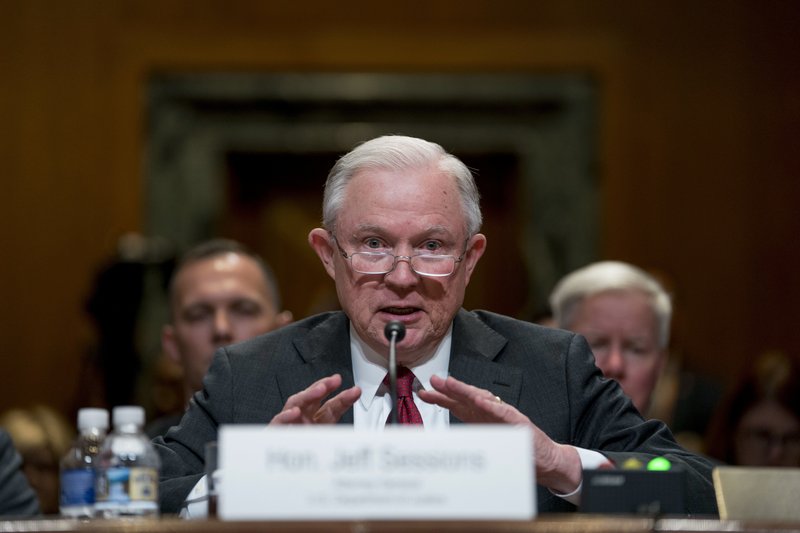
Attorney General Jeff Sessions on Wednesday defended President Donald Trump’s right to pardon former Sheriff Joe Arpaio and former Bush administration official I. Lewis “Scooter” Libby. Both of those pardons were issued by Trump and bypassed the involvement of the Justice Department and its pardon attorney, which historically reviews petitions for clemency and makes recommendations. Sessions made the comments at a Senate subcommittee hearing where Sen. Chris Van Hollen, a Maryland Democrat, reminded him that as a Republican senator from Alabama, Sessions had once defended the role of the Justice Department’s pardon attorney. Sessions said he stood by that assessment. But he also said that there was no question that the president had the constitutional authority to issue pardons without the Justice Department’s involvement and that there was no requirement that a president seek the opinion of the pardon attorney. “It’s clearly within the power of the president to execute pardons without the pardon attorney,” Sessions said. He acknowledged under questioning that he could not recall any pardon during President Barack Obama’s administration that did not go through the Justice Department, but he complained about pardons from President Bill Clinton that he considered objectionable. “I would just say that pardons that President Clinton were made were stunning, shocking and unacceptable on the merits,” he said in a raised voice. That was likely a reference to the 2001 pardon of fugitive businessman Marc Rich, an act that later came under federal investigation. He defended Arpaio as a legitimate pardon candidate because of the former Arizona sheriff’s advanced age of 85 and misdemeanor contempt-of-court conviction. He also said Libby had “contributed greatly to America.” Libby, a former top aide to Vice President Dick Cheney, was convicted in 2007 of lying to investigators and obstruction of justice following the 2003 leak of the covert identity of CIA officer Valerie Plame, though no one was ever charged for the leak. At another point in the hearing, Sessions declined to answer whether he had recused himself from an ongoing Justice Department investigation into Michael Cohen, Trump’s personal lawyer. Sessions said he continued to honor his decision from last year to step aside from the investigation into potential coordination between Russia and the Trump campaign, but he said it would be inappropriate beyond that to discuss particular matters he was recused from. “It is the policy of the Department of Justice that those who recuse themselves not state the details of it, or confirm the existence of an investigation or the scope or nature of that investigation,” Sessions said. He also said he supported his deputy, Rod Rosenstein, who appointed Robert Mueller as special counsel in the Russia investigation and who, like Sessions, has been under steady public attack from the president. Republished with permission from the Associated Press.
What’s inside Montgomery’s new national peace memorial and slavery legacy museum
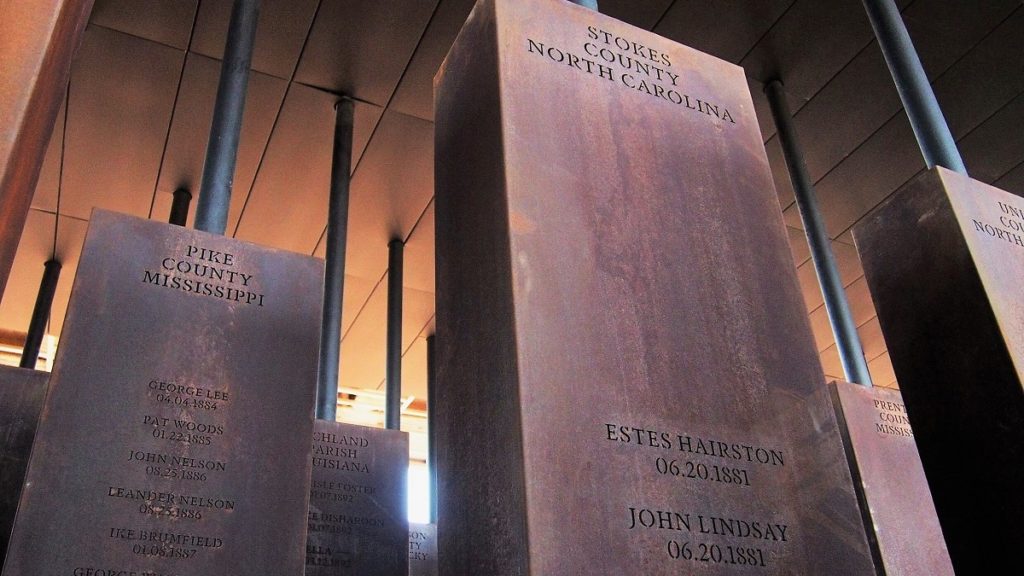
The Equal Justice Initiative (EJI) will open two institutions Thursday as part of its work to advance truth and reconciliation around race in America and to confront the legacy of slavery, lynching and segregation. The openings of the National Memorial for Peace and Justice and the Legacy Museum: From Enslavement to Mass Incarceration will be accompanied by several days of panel discussions and presentations from national civil rights figures. There will also be performances and concerts featuring acclaimed artists and an opening ceremony. The Montgomery-based EJI litigates on behalf of prisoners who may have been wrongly convicted of crimes, were without effective legal counsel or who may have been denied a fair trial, as well as juveniles prosecuted as adults. The memorial and museum are designed to promote the just treatment of all people. “There is still so much to be done in this country to recover from our history of racial inequality,” said EJI Founder and Executive Director Bryan Stevenson. “I’m hopeful that sites like the ones we’re building and conversations like the ones we’re organizing will empower and inspire people to have the courage to create a more just and healthy future. We can achieve more in America when we commit to truth-telling about our past.” Here are closer looks at the memorial and the museum. The National Memorial for Peace and Justice This is the nation’s first memorial dedicated to the legacy of enslaved black people, people terrorized by lynching, African-Americans humiliated by racial segregation and Jim Crow, and people of color burdened with contemporary presumptions of guilt and police violence. Work on the memorial began in 2010, when EJI staff began investigating thousands of lynchings in the South, many of which had never been documented. Six million black people fled the South as refugees and exiles as a result of lynchings, and the EJI was interested in understanding not only lynching but the terror and trauma it created in the black community. This interest led to the 2015 EJI report Lynching in America: Confronting the Legacy of Racial Terror, which documented thousands of lynchings in 12 states. Since its initial release, the original research has been supplemented with data related to lynchings in states beyond the Deep South. EJI staffers visited hundreds of lynching sites, collected soil and erected public markers in an effort to reshape the cultural landscape with monuments and memorials that accurately reflect history. For the National Memorial for Peace and Justice, the EJI partnered with artists like Ghanaian native Kwame Akoto-Bamfo, whose sculpture on slavery confronts visitors when they enter the memorial. From there, text, narrations and monuments to lynching victims take visitors on a journey from slavery through lynching and racial terror. In the center of the site, visitors encounter a memorial square, created with assistance from the MASS Design Group. The memorial experience continues through the civil rights era, brought to life through a Dana King sculpture dedicated to the women who sustained the Montgomery Bus Boycott. Finally, the memorial journey ends with contemporary issues of police violence and racially biased criminal justice expressed in a work by artist Hank Willis Thomas. Displayed throughout the memorial are writings from Toni Morrison and words from the Rev. Martin Luther King Jr., and there is a reflection space in honor of pioneering African-American journalist Ida B. Wells. One of the most poignant features is the memorial square, featuring 800 six-foot monuments that symbolize the thousands of racial terror lynching victims in the U.S. and the counties and states where this terrorism took place. Legacy Museum: From Enslavement to Mass Incarceration The 11,000-square-foot museum, built on the site of a former warehouse that imprisoned enslaved black people, is midway between a historic slave market and the main river dock and train station where tens of thousands of enslaved people were trafficked during the height of the domestic slave trade. By 1860, Montgomery was the capital of the domestic slave trade in Alabama, one of the two largest slave-owning states in America. The Legacy Museum employs technology to dramatize the enslavement of African-Americans, as well as the evolution of racial terror lynchings, legalized racial segregation and racial hierarchy in America. Relying on rarely seen first-person accounts of the domestic slave trade, the EJI’s research materials, videography, exhibits on lynching and recently composed content on segregation, the museum explores the history of racial inequality and its relationship to a range of contemporary issues, including mass incarceration and police violence. “Our nation’s history of racial injustice casts a shadow across the American landscape,” Stevenson said. “This shadow cannot be lifted until we shine the light of truth on the destructive violence that shaped our nation, traumatized people of color and compromised our commitment to the rule of law and to equal justice.” Museum visitors encounter slave-pen replicas, where they can see, hear and get close to what it was like to be imprisoned while awaiting sale at the nearby auction block. First-person accounts from enslaved people narrate the sights and sounds of the domestic slave trade. Extensive research and videography vividly expose the racial terrorism of lynching and the humiliation of the Jim Crow South. And compelling data-rich exhibits about America’s history of racial injustice and its legacy give visitors the opportunity to investigate the dynamic connections across generations of Americans affected by the narrative of racial difference. The Legacy Museum houses the nation’s most comprehensive collection of data on lynching. It also presents previously unseen archival information about the domestic slave trade brought to life through new technology. As a physical site and an outreach program, the facility is an engine for education about the legacy of racial inequality. To read more about EJI, click here. Republished with the permission of Alabama Newscenter.
Donald Trump meeting with Apple’s Tim Cook on trade

President Donald Trump says he’s “looking forward” to meeting with Apple CEO Tim Cook at the White House Wednesday. Trump says in a tweet that they “will be talking about many things, including how the U.S. has been treated unfairly for many years, by many countries, on trade.” The president is set to host Cook in the Oval Office a day after Cook attended Trump’s state dinner Tuesday night for French President Emmanuel Macron. Trump has had a fraught relationship with the electronics company, criticizing Apple on Twitter over its decision not to cooperate with law enforcement on breaching its phone encryption and the size of the screens on iPhones. But Trump has praised the company’s planned investment in the U.S. after the passage of last year’s tax cuts. Republished with the permission of the Associated Press.
Terri Sewell seeks veteran for fellowship in Birmingham office

Alabama 7th District U.S. Rep. Terri Sewell, through a partnership with the House of Representatives’ Wounded Warrior Fellowship Program, is seeking a wounded warrior or medically retired veteran to work in Birmingham District office focusing casework for military constituents and veterans affairs. The selected veteran will work as a Constituent Service Representative, working with constituents in the congressional office to handle constituent casework, including veteran related work and act as a facilitator between constituents and federal, state, and local agencies. “We make a promise to our veterans that we will care for them when they return and enable a smooth transition back to civilian life. Honoring that commitment is one of my highest priorities here in Congress,” Sewell said. “That is why I am pleased to be working with Wounded Warrior Program to help make sure veterans and military personnel living in America have access to our federal government and the care and services they have earned.” The Wounded Warrior Fellowship Program was established by the House of Representatives to provide employment opportunities for wounded or disabled veterans within Member offices. The fellowship is intended to provide veterans with experience and exposure to ultimately broaden their scope of transition opportunities. Veterans must meet all of the following requirements: Honorably discharged; Released from active duty within the last five years; Pay grades at or below E-5 or O-3; 20% or greater service connected disability rating; and Purple Heart recipients are exempt from the service connected disability rating requirement. In addition to a current resume, applicants must submit a copy of their DD214 and a VA letter confirming that they have at least a 30 percent service-connected disability rating. Interested veterans should go to https://www.usajobs.gov/ and search “Wounded Warrior Fellowship Program” for more information and how to apply.
Will Ainsworth makes 2018 races largest ad buy yet
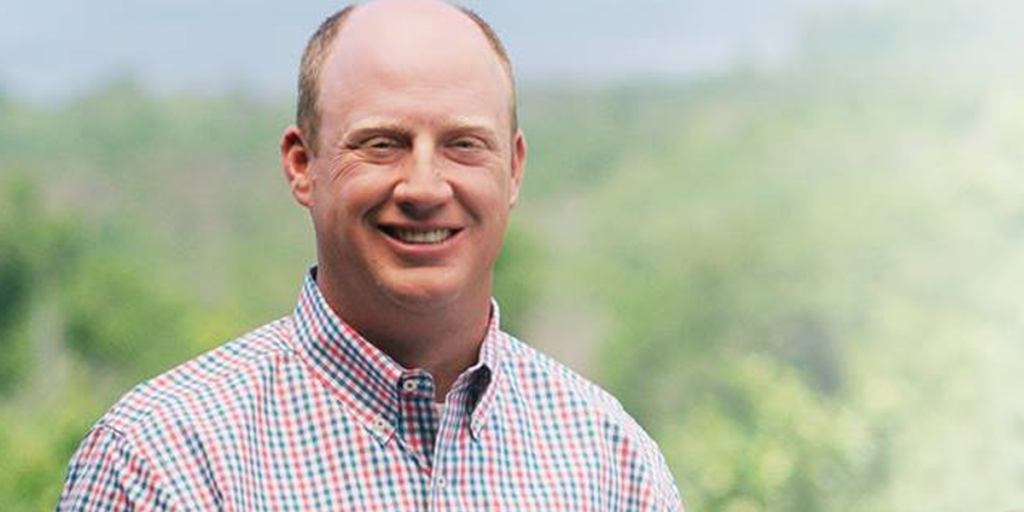
Guntersville-Republican State Rep and candidate for Lieutenant Governor Will Ainsworth announced a cumulative ad buy totaling $1 million on Wednesday. The campaign spot is the largest ad buy of all of the 2018 races, thus far. The new ad is designed for Ainsworth to introduce himself to voters and tout his Christian faith. It is currently airing on network and cable stations across the state as well as in digital and social media formats. “Unlike his career politician opponents, Will Ainsworth is a fresh face with new ideas, and this ad will help voters learn what guides his beliefs, thoughts, and actions,” Ainsworth campaign director Lewis McDonald said. “As a former youth pastor, Will has a devout commitment to his Christian faith, and he will lead the fight to preserve the morals and values that the Bible instructs us to follow.” Ainsworth will face Public Service Commission President Twinkle Andress Cavanaugh and State Senator Rusty Glover in the June 5 Republican primary. The winner of the GOP primary will advance to the general election again Democratic hopeful Dr. Will Boyd. Watch the ad below:
White House condemns ruling on Donald Trump’s ‘Dreamers’ program

The White House on Wednesday sharply criticized a federal judge’s ruling that the Trump administration must resume a program that has shielded hundreds of thousands of young immigrants from deportation. While the government has 90 days to restate its arguments before the order takes effect, presidential press secretary Sarah Huckabee characterized the ruling as “good news” for smuggling organizations and criminal networks and “horrible news for our national security.” If Tuesday’s ruling by U.S. District Judge John D. Bates in Washington survives the three-month reprieve, it would be a new setback for the Trump team because it would require the administration to accept requests from first-time applicants for the Obama-era program. Two nationwide injunctions earlier this year applied only to renewal requests for the Deferred Action for Childhood Arrivals program. DACA recipients are commonly referred to as “Dreamers,” based on never-passed proposals in Congress called the DREAM Act that would have provided similar protections for young immigrants. Siding with Princeton University and the NAACP, Bates said the administration’s decision in September to phase out the program over six months relied on “meager legal reasoning.” He invited the Department of Homeland Security to try again, “this time providing a fuller explanation for the determination that the program lacks statutory and constitutional authority.” The judge wrote that the administration’s explanation was “particularly egregious” because it didn’t mention that many of the hundreds of thousands covered by the program had obtained jobs and pursued education based on the assumption that they would be allowed to renew. DHS didn’t immediately respond to a request for comment. The administration contends the program started in 2012 is a misuse of executive power and that it had to act because Texas and other states threatened to sue. In January, U.S. District Judge William Alsup in San Francisco ruled that the administration failed to justify ending the program; his nationwide injunction forced the administration to resume accepting renewal requests within a week. A federal judge in New York issued a similar ruling in February; a judge in Maryland sided with the administration. The Supreme Court in February denied the administration’s unusual request to leapfrog appeals courts and take on Alsup’s injunction, ensuring that DACA would stay in effect for the time being. The 9th U.S. Circuit Court of Appeals put its review of Alsup’s decision on a fast track, but legal experts don’t expect a decision until June at the earliest. From there, it is expected to go to the Supreme Court, which may not rule until the spring of 2019. The administration could appeal immediately Bates’ ruling or try again with Bates in the 90-day window he gave. Consolidating the DACA challenges into a single case is a possibility, said Stephen Yale-Loehr, a professor of immigration law practice at Cornell University. “It’s complicated now because you have these different cases,” Yale-Loehr said. Nearly 690,000 people were enrolled when the Trump administration said it was ending the program, and 8 out of 10 were from Mexico. To qualify, they needed to have arrived before they turned 16, been younger than 31 in June 2012, completed high school or served in the military, and had clean criminal records. The two-year-permits are subject to renewal. Yale-Loehr estimates that tens of thousands of people who meet the criteria but never applied could benefit from Bates’ ruling. The NAACP, joined by two major labor unions, sued the administration in September. Princeton, joined by Microsoft Corp. and a student, followed in November. Bates, an appointee of President George W. Bush, combined the two cases. Princeton President Christopher L. Eisgruber said he was “delighted.” “While the decision does not fully resolve the uncertainty facing DACA beneficiaries, it unequivocally rejects the rationale the government has offered for ending the program and makes clear that the (Department of Homeland Security) acted arbitrarily and capriciously,” he said. Microsoft’s president, Brad Smith, said he hoped the ruling would motivate Congress to deliver a legislative fix. Bradford M. Berry, NAACP’s general counsel, called the ruling “a major win for advocates for justice and a compassionate democracy.” Republished with the permission of the Associated Press.
These are the 3 finalists for Birmingham’s new police chief

The search for the next Birmingham, Ala. police chief has been narrowed down to three finalists the city announced on Sunday. The search for the Magic City’s new police chief began back in February with the city collecting applications from Feb. 1 to March 9. More than 50 candidates – both locally and across the nation – applied for the position. Those applicants were winnowed down to 11 finalists were invited to take part in an assessment process on March 19. There, participants were asked to handle a series of realistic leadership situations. Once those candidates completed the assessment process, a detailed review of their performance was conducted and the three finalists were selected. Mayor Randall Woodfin is in the processing of interviewing the finalists this week. The finalists Malik Aziz: currently a division commander with the Dallas Police Department. He has more than 28 years law enforcement experience. Henry Irby III: currently a deputy chief with the Birmingham Police Department. He has more than 32 years law enforcement experience. Patrick D. Smith: currently a police commander with the Los Angeles Police Department. Has more than 27 years law enforcement experience.
Ivey leads Alabama team in talks with Japanese automakers

Gov. Kay Ivey is leading a small team of Alabama economic development specialists on a business development mission to Japan for high-level meetings with leaders of global automakers Toyota, Mazda and Honda. The Alabama delegation is departing for Japan today and will return on Thursday following appointments in Tokyo. The mission’s strategic goal is to facilitate growth in the state’s automotive sector and extend relationships with the manufacturers. Bill Hagerty is the U.S. ambassador to Japan. (contributed) “The auto industry has been a key driver of economic growth in Alabama for two decades, and we want to make sure we’re positioned to see that growth accelerate in coming years,” Ivey said. “It’s important that we work closely with these automakers to ensure they thrive in Alabama because that will bring more jobs and investment to the state.” In addition to meeting with executives from the three automakers, the Alabama group will visit the U.S. Embassy in Tokyo to meet with Ambassador Bill Hagerty. There, the discussion is expected to center on the business climate in Japan and unfolding trade developments affecting both countries. “Ambassador Hagerty was one of the first people to call me and congratulate Alabama on attracting the Toyota-Mazda investment. This meeting shows the importance that Alabama plays on the world stage and I appreciate the work the ambassador does on behalf of our nation,” Ivey said. “I look forward to the meeting and to working with him to continue the strong relationship between Japan and Alabama.” Mission agenda The Japan mission comes as the Mazda Toyota Manufacturing USA joint venture partnership is beginning to move forward with plans for a $1.6 billion assembly plant in Huntsville that will employ 4,000 people and spawn a significant network of suppliers. Greg Canfield, secretary of the Alabama Department of Commerce, said the discussions with Mazda and Toyota executives will focus on moving the assembly plant project forward. In addition, the talks will center on how their critical supply chain can be filled out leading up to a planned production launch in 2021. “While we have a longstanding relationship with Toyota, we’re still developing bonds with Mazda, which has no manufacturing presence in the U.S.,” Canfield said. “We can use our extensive experience in assisting automakers expand their footprint to help the company build out a productive and efficient operation in Alabama.” Leaders from Toyota and Mazda announced their decision in January 2018 to open the assembly plant at a site in Huntsville that’s just 14 miles from a Toyota engine plant that has almost 1,400 workers after multiple expansions. Joining Ivey and Canfield in the meetings with Mazda and Toyota executives will be Huntsville Mayor Tommy Battle, Tennessee Valley Authority CEO Bill Johnson and Chip Cherry, president and CEO of the Huntsville/Madison County Chamber of Commerce. Steve Pelham, Ivey’s chief of staff, and Hollie Pegg, assistant director of business development at the Alabama Department of Commerce, will also be included in these meetings. Honda appointment Ivey, Canfield, Pelham and Pegg will also engage in talks with leaders of Honda, which operates a $2.6 billion assembly plant in Talladega County with 4,500 full-time workers. In early 2017, Honda announced an $85 million expansion as part of a multi-phase project to improve manufacturing flexibility at the Alabama factory and prepare it for future technologies. Canfield said the meetingAla with Honda is meant to reinforce Alabama’s strong relationship with the automaker and discuss how the state can support the facility’s new leadership and future growth plans. “Honda is a very important member of the Alabama automotive manufacturing family, and we’re committed to working closely with this great company as it pursues new levels of success at its Talladega County operation,” he said. Ivey said she hopes these meetings will lead to additional economic growth for Alabama and more trade between the state and Japan. Republished with the permission of Alabama Newscenter.
Final four announced for Alabama Teacher of the Year

The Alabama State Department of Education(ALSDE) has narrowed down its list of 16 educator-finalists from across the Yellowhammer State down to four for the Alabama’s 2018-2019 Teacher of the Year award. “Highly-skilled, dedicated, and caring teachers are essential to achieving excellence and in preparing our nation’s next generation of outstanding professionals,” is how the ALSDE describes these individuals. The four will proceed forward in the competition and will undergo an extensive interview process with the state judging committee. The winner will be announced during a ceremony at the RSA Plaza Terrace in Montgomery, Ala. on May 9. Alabama’s Teacher of the Year spends the majority of the school year serving as a full-time ambassador for education and the teaching profession as well as presenting workshops to various groups. Additionally, the winner will become Alabama’s candidate for the National Teacher of the Year award. The four finalists Meghan Allen | Minor Community School from the Jefferson County School System: My students with limited verbal skills can learn and develop ways to use their voice more effectively. For my students who are non-verbal, they need pictures, static devices, or dynamic displays to communicate. We must give our students a voice and teach them to use it. We value all students, and instruction must reflect their needs and value. Dr. Blake Busbin | Auburn High School from Auburn City School System: Teachers and community members stand to benefit from greater cooperation in discovering ways in which the community’s expertise can lend itself to enhancing learning. Guest speakers, such as individuals representing varied career fields, are one popular inclusion, but they can be so much greater. Experts in given fields can assist in student project development or evaluation during presentations heightening the relevancy and authenticity of project-based learning. Carol McLaughlin | Greystone Elementary School of the Hoover City School System: Our world is connected in ways we never imagined ten years ago. It is essential students use these connections to learn, solve problems, and be active global citizens. With technology, students can find answers to questions, by connecting them to experts around the world. Classrooms are no longer limited by the knowledge of the teachers or the books in the library. Zestian Simmons | Booker T. Washington Magnet High School in Montgomery from the Montgomery County Public School System: A learning environment should not be limited to the classroom but should include the local community, innovative projects, and digital learning that connects students to the world. To keep the curriculum relevant, the classroom curriculum should always contain a sufficient level of rigor for the primary purpose of skill development and mastery and current material.
American Legion leader says racism at heart of allegations

An American Legion commander in Alabama says racism is at the heart of why he’s been accused of misappropriating $10,000. The first black commander for one Phenix City post was suspended in February from his position as senior vice commander for the state American Legion. The Columbus Ledger-Enquirer cites a post complaint that says 62-year-old Leroy Davis took $10,000 from the post’s bank account without authorization and gave it to another employer. But a letter by county commissioners says Davis was given permission to move the money. Davis says the suspension is an effort to block him from becoming state commander. Post adjutant Wayne Mitchell was one of Davis’ accusers and denies racism played a part. Republished with the permission of the Associated Press.
Lax vetting on Trump nominees begins to frustrate senators
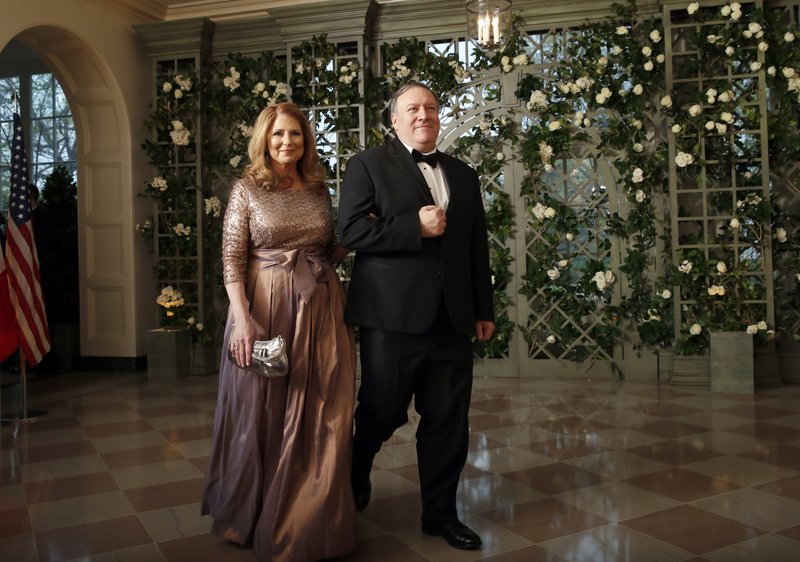
As President Donald Trump’s pick to lead Veterans Affairs skids to a halt, senators from both parties are voicing frustration that the White House is skipping crucial vetting of nominees and leaving lawmakers to clean up the mess. That sentiment was evident Tuesday on Capitol Hill after senators delayed hearings for White House physician Ronny Jackson, Trump’s surprise pick to head the VA. Jackson is facing questions about improper workplace behavior, and even Trump himself acknowledged that there were concerns about his nominee’s experience. “The White House still seems to be feeling its way on the nomination process,” said Sen. Susan Collins, R-Maine, “and does not fully appreciate how important it is to do a thorough vetting and FBI background check on nominees.” Sen. John Thune, R-S.D., said that while lawmakers want to be “deferential as much as we can” to the president’s preferences for his Cabinet, “it would be nice to know some of the issues that come up after the fact before the fact.” Trump, who promised to fill his administration with the “best people,” often gravitates toward advisers he has a personal connection with or who look the part, drawing on the approach he took as a business executive. But as president, the result is a growing list of Cabinet secretaries and other officials who do not appear to undergo the rigorous scrutiny typically expected for White House hires. Andy Puzder, Trump’s initial choice to lead the Labor Department, stepped aside before his confirmation hearings, in part over taxes he belatedly paid on a former housekeeper not authorized to work in the United States. Health and Human Services Secretary Tom Price won confirmation, but ultimately resigned amid disclosures about his expensive travel habits. Others are fighting similar charges, most notably Scott Pruitt, the embattled head of Environmental Protection Agency. Pruitt faces multiple allegations of improper housing, expensing and other practices, prompting several lawmakers to call for him to step down. The Senate has increasingly become a partisan battleground for nomination fights, a war that escalated when President Barack Obama was in the White House and Senate Democrats, who had majority control, changed the rules to allow majority vote for confirming most nominees — the so-called nuclear option — to get around GOP filibusters. Republicans returned the favor once Trump was in the White House, and they had the Senate majority, deploying the tactic to seat Neil Gorsuch on the Supreme Court. Some GOP senators argue that Democrats are slow-walking even those Trump nominees with a solid track record, including Mike Pompeo, who got votes from 14 Democrats and one aligned independent last year during his confirmation for CIA director. Pompeo is now in line to run the State Department, but has faced stiff opposition from some of the same Democrats who backed him a year ago. The Democratic opponents are going to “embarrass themselves,” said Sen. John Cornyn, R-Texas. Thune called it “really a new low.” But questions about the White House’s vetting standards have no doubt given Democrats fresh ammunition to challenge Trump’s Cabinet picks. “Our Republican colleagues bemoan the pace of the nominations,” said Senate Minority Leader Chuck Schumer, D-N.Y. But he said because of the administration’s “quick, sloppy vetting process,” the Senate job of vetting nominees “is more important than ever before.” Sen. Patty Murray, D-Wash., said senators don’t have to agree with a nominee’s position on the issue, but the Senate has a historic role — to advise and consent — that the president’s picks are up to the job. “We’re not going to allow nominees to be jammed through without proper scrutiny and debate,” Murray said. “Now hopefully, the events of the last 24 hours have made it very clear why this is so important.” Asked about the adequacy of vetting process Tuesday, Senate Majority Leader Mitch McConnell said that such questions are better raised with the White House. “Look,” McConnell said, “it’s up to the administration to do the vetting.” Republished with the permission of the Associated Press.
French President Emmanuel Macron urges US to reject isolationism

French President Emmanuel Macron urged the United States to reject fear and isolationism Wednesday and instead embrace the historic bond between the two countries to launch a new era of 21st century leadership and security. Macron told a joint meeting of Congress, “the American and French people have had a rendezvous with freedom.” Speaking almost directly to President Donald Trump, Macron quickly turned to the top issues of Syria, the Iran nuclear deal, free trade and the Paris accord on climate change — topics where he and Trump disagree — as he urged the United States not to retreat from its historic and military role in world affairs. “We are living in a time of anger and fear” because of “global threats,” Macron told lawmakers. “You can play with fears and angers for a time, but they do not construct anything.” With a nod to great American leaders, including former President Franklin Roosevelt, he warned against withdrawing from the world in fear. “We have two possible ways ahead. We can choose isolationism, withdrawal and nationalism. It can be tempting to us as a temporary remedy to our fears,” he said. “But closing the door to the world will not stop the evolution of the world.” He proposed a “new breed of militarism” that was more effective, accountable and results-oriented. “This requires more than ever the United States involvement,” he said. At times during the nearly hour-long speech, delivered in English, he took turns playing into his friendly relationship with Trump, while nudging, forcefully at times, against their differences. He reiterated French support for U.S. sanctions on Pyongyang toward the denuclearization of the Korean peninsula, and said as for Iran, “our objective is clear: Iran shall never possess any nuclear weapons.” But he warned against simply abandoning the multi-nation Iran nuclear deal, as Trump has considered, promoting a “more comprehensive deal” he has been discussing with White House officials during his U.S. visit. In a nod to what Trump calls, “Fake News,” Macron warned that lies disseminated online are threatening freedoms worldwide, and in a play on Trump’s famous campaign slogan, Macron said he was confident the U.S. will re-join the Paris climate agreement. “Let us work together in order to make our planet great again,” he said, “and create new jobs and new opportunities while safeguarding our earth.” If Earth’s climate continues to warm, “there is no Planet B,” he added. The independent centrist president, who does not always receive such a robust welcome at home, was greeted with repeated standing ovations from members of Congress — including Republicans, who have not always aligned with French leaders on policy. In recounting common bonds from the earliest days of the United States, Macron talked about a meeting between Ben Franklin and the French philosopher Voltaire, “kissing each other’s cheeks.” In an apparent reference to his friendly meetings this week with Trump, he said, “It can remind you of something.” Macron was speaking as part of his visit to the United States. It’s the first time a president from France has addressed Congress in more than a decade, but follows a tradition of foreign leaders appearing at the U.S. Capitol. Republished with the permission of the Associated Press.
