
Reverend Al Sharpton hosting town hall in Mobile over Waffle House arrest
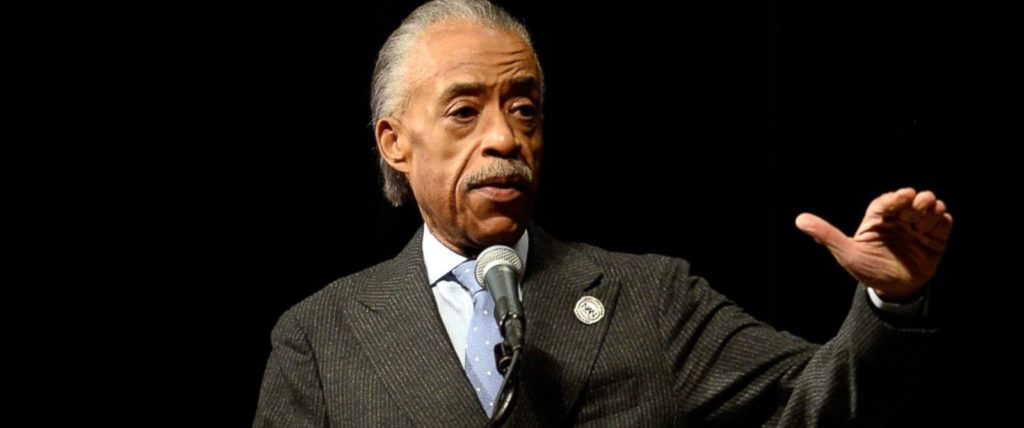
Reverend Al Sharpton, and prominent civil rights attorney Benjamin Crump, will be in Mobile on Tuesday to host a town hall meeting on the controversial Saraland Waffle House arrest earlier this week. The meeting will take place on May 1 at Bethel AME Church at 7 p.m. Chikesia Clemons, the woman who was arrested at the Waffle House will also be at the meeting. The controversial arrest of Clemons took place last Sunday after she entered a Saraland Waffle House with a group of friends. According the the employees, Clemons was intoxicated and smelled of alcohol when she entered, and then proceeded to act extremely aggressive towards staff members. Clemons and Canita Adams were asked to leave the establishment after an altercation over plastic utensils; Waffle House corporate policy requires staff members charge $0.50 for customers that wish to use plastic utensils to dine-in. According to Waffle house employees, after giving the utensils to Clemons free of charge, tensions between the staff members and patrons rose until employees asked Clemons and her group to leave. They did, but Clemons and Adams returned, “Witnesses, who included six employees and one customer, told police that the two women were loud and used profanities toward employees. ‘Words were used toward the employees such f*ck, b*tch, calling women whores,’ Detective Mims told AL.com. ‘They were told to cool down and stop using the profanities.’ “‘I’ll come over this counter and beat your f**king ass, bitch I’m gonna have your job, you ain’t gonna be here tomorrow,” said Clemons according to witness statements read by Detective Mims. Waffle House employees called the Saraland Police who arrested Clemons while she insisted she did nothing wrong. Clemons mother, Chiquitta Clemons-Howard, told AL.com a different story. According to Clomons-Howard, the incident did begin when a Waffle House employee tried to charge Clemons $0.50 for plastic utensils but when she refused to pay for the utensils, the employee responded by canceling her order. Clemons then asked for the district manager’s contact information, and while she was waiting for the employee to bring the district manager’s business card, the police arrived and arrested her. In an edited video of the incident which has since gone viral, Clemons is shown being pulled out of her chair and after resisting arrest, is thrown onto the ground by Saraland Police Officers. An officer is then heard saying that if she continued to resist the arrest by pulling her arm away while he was trying to handcuff her, her arm would break. Some viewer have said this was a threat however the police department insists it was a warning. Read further details of Mobile Town Hall meeting below:
Enjoying leftovers: Sheriffs feed inmates, keep extra cash
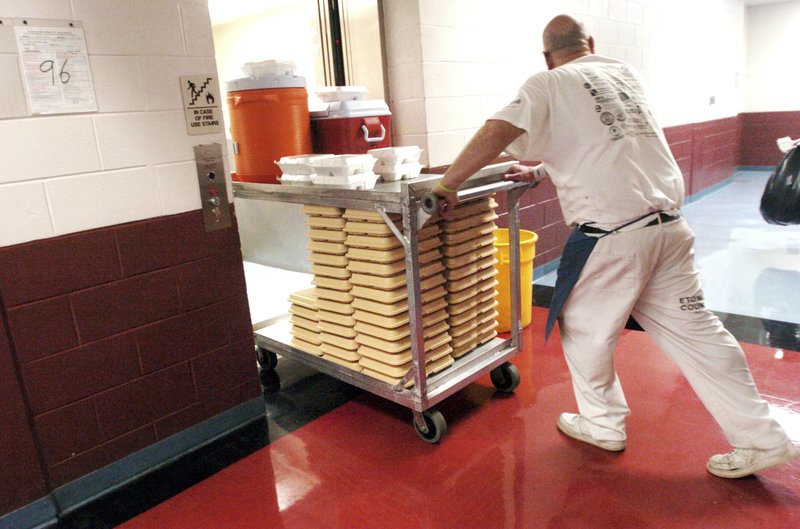
In Alabama, the less sheriffs spend on feeding inmates, the more money they get to put in their pockets. For decades, sheriffs have made extra money – sometimes hundreds of thousands of dollars – under a Depression-era system by feeding prisoners for only pennies per meal. Critics say the meals can be unhealthy, and a lawsuit against dozens of sheriffs combined with media reports about the practice threaten to end the one-of-a-kind system. Legislators this year approved potential changes that would prevent sheriffs in two counties from keeping the excess money — including one where a former sheriff was jailed after feeding prisoners corndogs while pocketing more than $200,000 — and wider change is possible. “I think everyone agrees that something needs to be done,” said Sonny Brasfield, executive director of the Association of County Commissions of Alabama. Republican Sen. Arthur Orr said he is working on a bill to abolish the practice. “This law is from the 1930s. Times change. It’s time we move on into the 21st century,” said Orr. Back when chain gangs were common in the late 1920s, Alabama passed a law that gave sheriffs $1.75 a day from the state to feed each prisoner, and sheriffs got to pocket anything that was left over. Jails in most of Alabama’s 67 counties remain on the system generations later. Sheriffs also get small payments from the state per jail. Some also receive payments from cities and the federal government for holding prisoners, further boosting income. Add up all the money and a dash of frugality, like purchasing low-cost grub and accepting donated food, and sheriffs can wind up with large profits from jailhouse kitchens. Attorney Aaron Littman, who helped sue earlier this year trying to find out how much sheriffs are making off jail food, said lawyers regularly hear complaints about poor living conditions and lousy food in jails. “It’s no way to run government,” said Littman, of the Atlanta-based Southern Center for Human Rights. Alabama is the only state with such a setup, he said. Littman questions the legality of sheriffs pocketing the money. The Southern Center, which advocates for change in the criminal justice system, sued with the nonprofit Alabama Appleseed for Law and Justice in January to make 49 sheriffs release information that would show how much they are making off jail food. Sheriffs have refused, arguing in court that the numbers are personal and private. Some of the amounts have been revealed. Monroe County Sheriff Tom Tate collected “excess” jail feeding funds of $110,458 over three years ending in 2016 — a tidy amount for a south Alabama county with only 22,000 residents and a median family income estimated at $42,335 annually by the Census Bureau, according to an accounting turned over to a plaintiff’s lawyer. In mid-sized Etowah County, where the jail holds 900 people on average, Sheriff Todd Entrekin recently released tax forms showing he made a profit of $672,392 from the jail kitchen in 2015 and 2016. Entrekin made the documents public during a news conference where he denied malnourishing prisoners and denied news reports linking food profits and a beach condominium he and his wife purchased for $740,000 last year. “Nobody here is underfed. Nobody here is mistreated. I will say it’s not the Ritz, so you won’t be treated like a king. You will be treated like someone who has broken the law, which means you won’t get your choice about what or when you eat,” Entrekin told reporters. Last year, a federal judge held Morgan County Sheriff Ana Franklin in contempt and fined her $1,000 because she took $160,000 from a jail food account. She used to make a personal car loan that later failed, court documents showed. The judge ruled Franklin’s actions violated an agreement reached by former Morgan County Sheriff Greg Bartlett, who was briefly held in his own jail in 2009 after a federal judge held him in contempt for feeding skimpy meals to boost his profit, which Bartlett said was $212,000 over three years. Bartlett went in with another sheriff to purchase a truckload of corndogs for $1,000 and fed them to prisoners for weeks, evidence showed. Franklin argued she wasn’t bound by Bartlett’s agreement, but a court disagreed. Sheriffs in Morgan and neighboring Cullman County in coming years would be required to spend any excess food money on police needs under proposed constitutional amendments approved this year by lawmakers, but voters still must OK the measures. It’s unclear how much is at stake since they, like most other sheriffs, haven’t publicly released detailed information about their operations. Sheriffs’ responses to the suit seeking financial information have been coordinated in part by the Alabama Sheriff’s Association, where longtime executive director Bobby Timmons did not return a message seeking comment. Republished with the permission of the Associated Press.
Kay Ivey applauds Alabama Military Stability Foundation selection for Executive Director
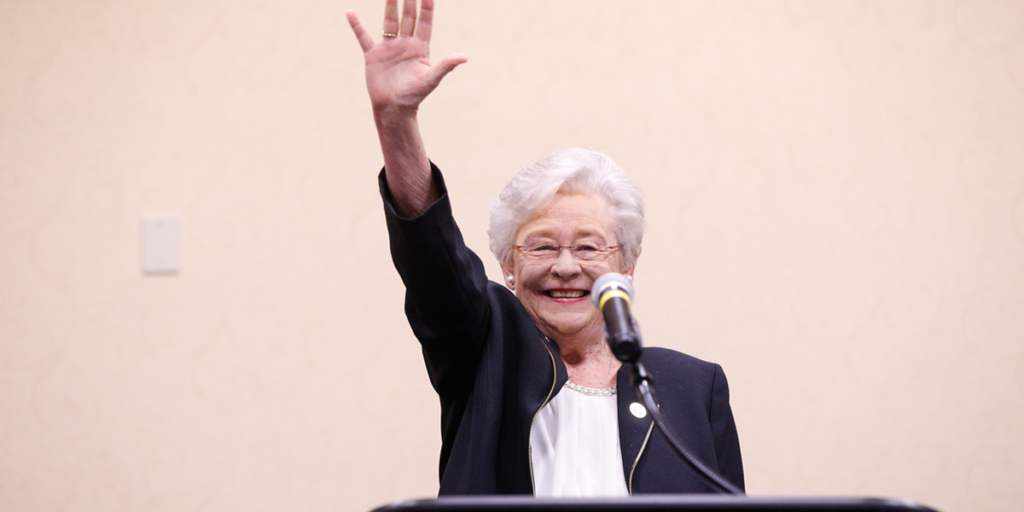
Governor Kay Ivey, chair of the Alabama Military Stability Commission, complimented the Alabama Military Stability Foundation’s selection of Robert La Branche as Executive Director on Friday. “I commend the Alabama Military Stability Foundation on their selection of Robert La Branche to serve as Executive Director. As chair of the Military Stability Commission, I value the partnership of the Foundation in financially supporting the work of the Commission,” said Ivey. “Robert’s dedication to our nation’s military will be a major contributor to the success of both organizations. Alabamians are steadfast in our support for our military, as is Robert. I’ve known Robert for several years and am confident that he will be exceptional in furthering Alabama’s commitment to protecting our nation.” The Alabama Military Stability Commission, led by Ivey, works in partnership with the Alabama Military Stability Foundation. By studying and evaluating all currently assigned military forces and civilian contractors, as well as how these resources move in and out of Alabama, the two groups assure the stability of Alabama-assigned Department of Defense resources. “I am honored to have been selected by the Alabama Military Stability Foundation to serve as Executive Director and once again assist our great state’s defense community. Alabama and our people have a rich heritage of answering the call to serve our nation through the armed forces,” said La Branche. “I look forward to working with the Foundation, the Commission, Governor Ivey and community leaders throughout Alabama to preserve and expand our military assets and missions.” La Branche had an eight-year career as an aerospace, defense, and foreign policy staffer in the Washington, D.C. in the offices of Sen. Jeff Sessions and members of the Alabama, Florida, and Texas Delegations. In late 2014, Director La Branche returned to Alabama and is currently an aerospace and defense consultant as Principal of Real Strategies, LLC in Huntsville, and serves as Regional Deputy Director for Public Policy for the American Institute of Aeronautics and Astronautics.
Environmentalists challenge Alabama Power’s solar fees

An environmental group claims Alabama Power Co. is wrongly charging fees that increase costs for customers who install solar panels. The Southern Environmental Law Center and others filed a complaint Thursday with the Alabama Public Service Commission challenging surcharges the utility imposes on homes, businesses and schools. The group says Alabama Power’s fees for customers with solar arrays amount to about $300 annually, cutting into savings they’d otherwise receive from using solar. It says the fees add about $9,000 in cost over the lifetime of an average solar system. Critics say the charges are depressing Alabama’s solar-power industry, which trails much of the nation. The petition asks the commission to bar Alabama Power from collecting the additional charge. Alabama Power says it was reviewing the complaint and declined further comment Friday. The utility-regulating Public Service Commission let the charges take effect about five years ago. Most people with rooftop solar arrays also purchase power from utilities, and the fee is charged in addition to customers’ normal bill for electricity. The Southern Environmental Law Center and a Birmingham-based law firm, Ragsdale LLC, filed the complaint on behalf of two people and Gasp Inc., which advocates energy production that reduces air pollution. Gasp executive director Michael Hansen, in a statement, said neighboring states are experiencing business and job growth linked to the solar energy industry that largely is bypassing Alabama because of the utility’s policies. “If solar customers were treated fairly, Alabama would have the opportunity to reap these same benefits,” he said. Alabama Power is a subsidiary of the Atlanta-based Southern Co. Utility regulators in neighboring Georgia rejected a similar solar surcharge proposed there by Georgia Power Co., also a Southern Co. subsidiary, in 2013. Republished with the permission of the Associated Press.
Lynching memorial and museum in Alabama draw crowds, tears
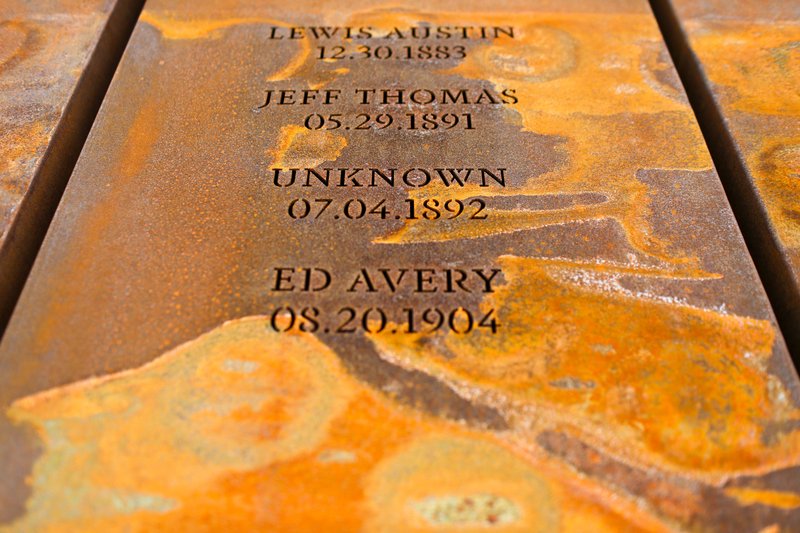
Tears and expressions of grief met the opening of the nation’s first memorial to the victims of lynching Thursday in Alabama. Hundreds lined up in the rain to get a first look at the memorial and museum in Montgomery. The National Memorial for Peace and Justice commemorates 4,400 black people who were slain in lynchings and other racial killings between 1877 and 1950. Their names, where known, are engraved on 800 dark, rectangular steel columns, one for each U.S. county where lynchings occurred. A related museum, called The Legacy Museum: From Enslavement to Mass Incarceration, is opening in Montgomery. Many visitors shed tears and stared intently at the commemorative columns, many of which are suspended in the air from above. Toni Battle drove from San Francisco to attend. “I’m a descendant of three lynching victims,” Battle said, her face wet with tears. “I wanted to come and honor them and also those in my family that couldn’t be here.” Ava DuVernay, the Oscar-nominated film director, told several thousand people at a conference marking the memorial launch to “to be evangelists and say what you saw and what you experienced here. … Every American who believes in justice and dignity must come here … Don’t just leave feeling like, ‘That was amazing. I cried.’ … Go out and tell what you saw.” As for her own reaction, DuVernay said: “This place has scratched a scab. It’s really open for me right now.” Angel Smith Dixon, who is biracial, came from Lawrenceville, Georgia, to see the memorial. “We’re publicly grieving this atrocity for the first time as a nation. … You can’t grieve something you can’t see, something you don’t acknowledge. Part of the healing process, the first step is to acknowledge it.” The Rev. Jesse Jackson, a longtime civil rights activist, told reporters after visiting the memorial that it would help to dispel America’s silence on lynching. “Whites wouldn’t talk about it because of shame. Blacks wouldn’t talk about it because of fear,” he said. The crowd included white and black visitors. Mary Ann Braubach, who is white, came from Los Angeles to attend. “As an American, I feel this is a past we have to confront,” she said as she choked back tears. DuVernay, Jackson, playwright Anna Deavere Smith, the singing group Sweet Honey in the Rock, Congressman John Lewis and other activists and artists spoke and performed at an opening ceremony Thursday night that was by turns somber and celebratory. Among those introduced and cheered with standing ovations were activists from the 1950s Montgomery bus boycott, Freedom Rider Bernard Lafayette, and one of the original Little Rock Nine, Elizabeth Eckford. “There are forces in America today trying to take us back,” Lewis said, adding, “We’re not going back. We’re going forward with this museum.” Singer Patti Labelle ended the evening with a soulful rendition of “A Change is Gonna Come.” Other launch events include a “Peace and Justice Summit” featuring celebrities and activists like Marian Wright Edelman and Gloria Steinem in addition to DuVernay. The summit, museum and memorial are projects of the Equal Justice Initiative, a Montgomery-based legal advocacy group founded by attorney Bryan Stevenson. Stevenson won a MacArthur “genius” award for his human rights work. The group bills the project as “the nation’s first memorial dedicated to the legacy of enslaved black people, people terrorized by lynching, African-Americans humiliated by racial segregation and Jim Crow, and people of color burdened with contemporary presumptions of guilt and police violence.” Several thousand people gave Stevenson a two-minute standing ovation at a morning session of the Peace and Justice Summit. Later in the day, Edelman, founder of the Children’s Defense Fund, urged the audience to continue their activism beyond the day’s events on issues like ending child poverty and gun violence: “Don’t come here and celebrate the museum … when we’re letting things happen on an even greater scale.” Republished with the permission of the Associated Press.
