
True story of waking up to find ALDOT is secretly planning to build a fly-over bridge in your backyard
![[Photo Credit: Flickr user John Malone]](https://altoday.com/wp-content/uploads/2018/05/13258174014_555055548f_k-1024x683.jpg)
Baldwin County, Alabama is home to the picturesque cities of Gulf Shores and Orange Beach, among other charmingly quaint cities and towns. This uniquely beautiful part of the state annually draw tens of thousands of tourists and homeowners from around the nation to their beaches of crystal white sands. Local residents enjoy the southern charm of Alabama beaches, and food and entertainment amenities that feed a thriving tourist destination. For Mike Powell and his wife Lisa their move to Gulf Shores from Georgia should have allowed them the peaceful and quiet lifestyle they desired with the ability to stay active and enjoy their close knit community, but these days their lives are anything but quiet. When the couple first moved to Gulf Shores the sound from their front porch was near silence. For just over the last year, they would sit outside and enjoy the sounds of nature. Now, all they hear is the annoyingly distinct sound of traffic from the neighboring Foley Beach Expressway. Why the drastic change? Behind their house is a nearly 200 acre piece of undeveloped property with trees and land that previously served as a natural barrier for sound. Land that has now begun to be cleared with parts removed for what some locals are calling the #BridgeToNoWhere — a second fly-over bridge just shy of a mile and a half from the current Foley Beach Express Toll-Road. The existing and now proposed bridge would be built over the small canal leading from Gulf Shores to the beaches. At the time the bridge was first proposed in 2015-2016, the Powell‘s portion of neighborhood didn’t even exist. When state officials tabled the plan, it became a moot point to those in the area, something that would have been of no concern to future homebuyers like the Powell’s and the potential buyers of the next 100 houses that are currently waiting to be built. Alas in the dark of night or so it seems the plan was not only been resurrected, it has been brought back to life and fast-tracked with the new residents and potential residents about to be blindsided. Which is exactly what happened on Dec. 04, 2017. Powell was driving on the Foley Beach Express Way when he spotted the white Alabama Department of Transportation (ALDOT) truck coming from a new clearing in the undeveloped property described above. He pulled into the area and stopped the driver to ask what was going on. “We’re building a bridge,” the workers told him. When he mentioned that there’s another bridge down the road, they said “no, no, no. It’s going to be a new bridge.” Imagine Powell‘s surprise as he was told they were making way for that new bridge, practically in his backyard. More accurately, the bridge will be approximately 1/2 mile from his driveway and 1/4 from his neighbors. “We were going to have a City Council meeting about the schools that afternoon in front of the mayor and the staff, and I went and rushed and got these pictures developed and brought them before the board,” Powell said referring to a handful of photos he had from that day on his cell phone. “That’s when we were told by the mayor and the staff that they were planning a bridge.” It was the first time it was publicly talked about since 2016. There was no notice from the state or city officials. No hearings for public input, the work had already begun. A few weeks later Mike and Lisa met with Mark Ackerman, Public Works Director for the City of Gulf Shores, to get a better idea what the city was planning to build. “He personally took us in his vehicle and showed us where this [new bridge] was going to go down Foley Beach Expressway and come up back around County Road 4. But at that time he was saying there was just going to be this little bridge going up over our property about eight-nine feet high, because there were some wetlands there,” explained Powell. That made sense to the Powell‘s, so they left it alone, but they continued to hear more and more noises. Worried about the increasing sound levels, Powell reached out to ALDOT and in early January drove up to Mobile to meet with regional staffers Edwin Perry the regions Pre-Construction Engineer and Vincent Beebe the Assistant Region Pre-Construction Engineer, who are heading up the project. The pair took Powell to a conference room showing him map based design of the proposed bridge, looking down at them Powell noticed a significant problem – his neighborhood wasn’t even on the map. The property images the state had been using were from 2015. They hadn’t been updated when the project was revived towards the end of 2017. “When we got there to the Mobile office they had a table with the plans all out. Not a model, but a map, like a Google map,” explained Powell. “And I go, ‘where are our houses?’ Our part of the subdivision wasn’t there yet. So I asked them, ‘have you been to our subdivision?’ They responded, ‘no.’” Those working on the project in Mobile had failed to realize nearly 250 houses had been built in the area beside where they were planning to put their bridge. At that time no one overseeing the project had even been out to visit the site; it’s unclear if that has changed. “So I asked them how big this was going to be and what sort of volume of traffic they expected, and they couldn’t even answer that question,” Lisa weighed-in. “‘We’re not really sure’,” they told her. Since that time, Powell and his wife have had endless questions about the project set to destroy the peaceful life they once enjoyed. The problem? Answers have been hard to come by and when they can get them, they keep changing. First, they were told the bridge would be an evacuation route (this has since changed and the purpose has been designated as a way to ease Highway 59 traffic congestion). During
Dems want to scrap tax cut for rich to fund teachers’ raises
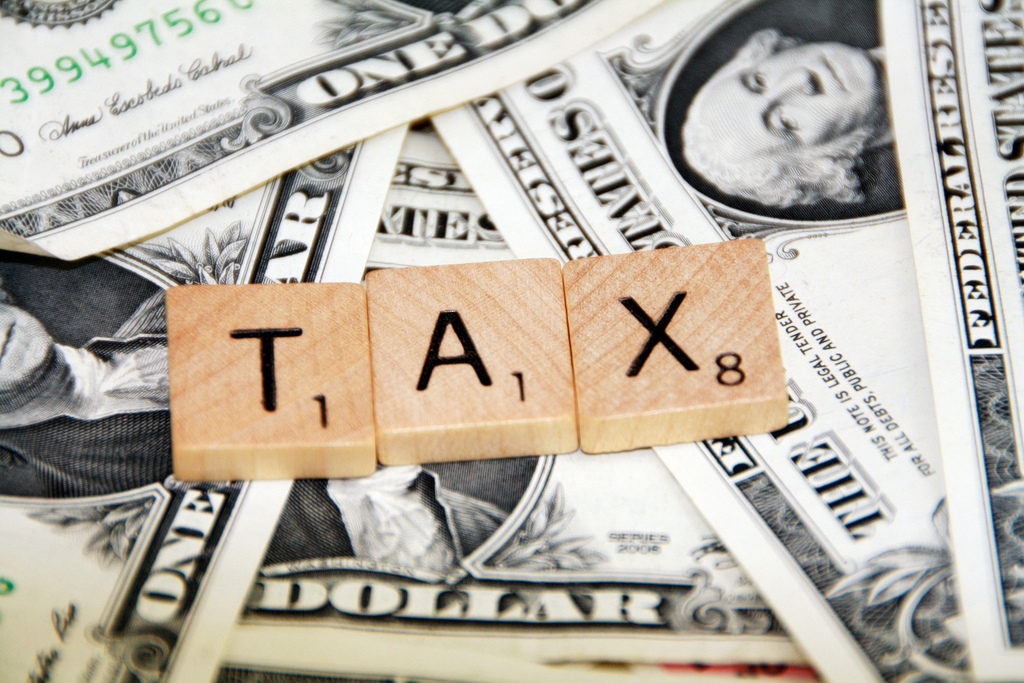
Congressional Democrats want to give a big salary bump to teachers and pay for it by canceling the tax cut for the nation’s top 1 percent of earners. Senate Democratic Leader Chuck Schumer and House Democratic Leader Nancy Pelosi on Tuesday are expected to propose giving states and school districts $50 billion over a decade for teacher raises and recruitment. The Democrats’ plan is an election-year slam at the tax cuts passed by the Republican-controlled Congress and signed into law by President Donald Trump. Democrats say the cuts are a windfall for the wealthy at the expense of other Americans. Teachers have been rallying for pay raises this year, particularly in states where they’re prevented from unionizing. Republicans defending their congressional majorities are certain to oppose any tax cut rollback. Republished with the permission of the Associated Press.
More bipartisan support for civil rights site as US monument
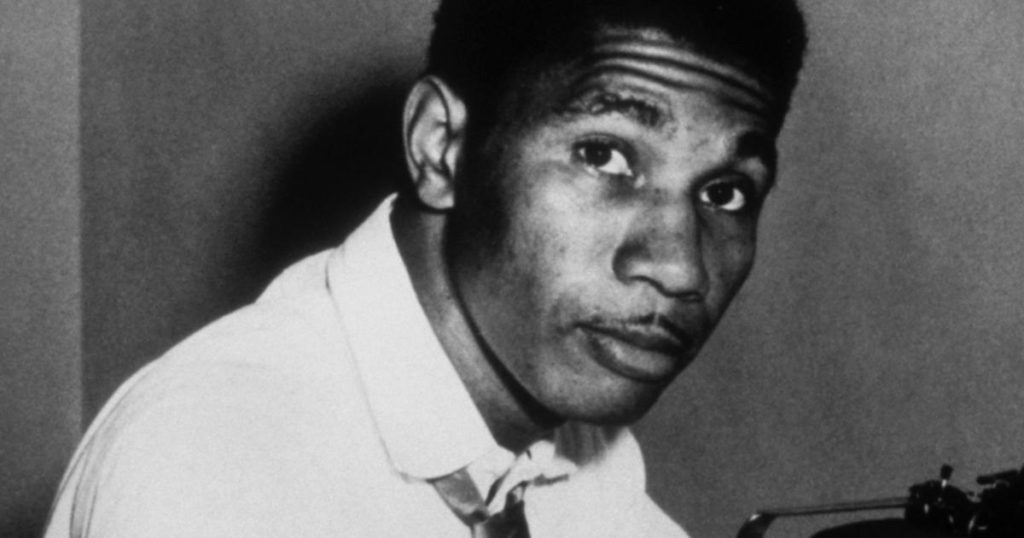
An effort to turn the home of a slain civil rights leader into a national monument is gaining more bipartisan support. Republican U.S. Sens. Roger Wicker and Cindy Hyde-Smith of Mississippi and Democratic Sen. Doug Jones of Alabama introduced a bill Monday to make the Medgar Evers home a monument. The U.S. House passed a bill last week to do the same thing. The two chambers must agree on a single bill before it could go to the president. As Mississippi’s first NAACP field secretary beginning in 1954, Evers organized protests and boycotts to fight segregation. He was assassinated by a white supremacist outside his family’s Jackson home in 1963. Interior Secretary Ryan Zinke has recommended national monument status for the Evers home, which is now owned by Tougaloo College. Republished with the permission of the Associated Press.
Donald Trump suggests summit with Kim Jong Un could be delayed

President Donald Trump suggested Tuesday that a planned historic meeting with North Korea’s Kim Jong Un could be delayed, saying the summit “may not work out for June 12.” Trump raised the possibility that the meeting could be pushed back during a White House meeting with South Korea President Moon Jae-in as the two leaders sought to coordinate strategy as concerns mounted over ensuring a successful outcome for the North Korea summit. Trump told reporters: “If it doesn’t happen, maybe it happens later,” reflecting recent setbacks to bring about reconciliation between the two Koreas. The North pulled out of planned peace talks with the South last week, objecting to long-scheduled joint military exercises between U.S. and the Republic of Korea forces, and it threatened to abandon the planned Trump-Kim meeting over the U.S. insistence on denuclearizing the peninsula. Moon said in the Oval Office that the “fate and the future” of the Korean Peninsula hinged on the talks, telling the U.S. president that they were “one step closer” to the dream of a denuclearized Korean Peninsula. “There are certain conditions that we want,” Trump said. He added if they aren’t met, “we won’t have the meeting.” He declined to elaborate on those conditions. Republished with the permission of the Associated Press.
Billionaire investor Carl Icahn may bid to buy Birmingham’s Energen

There’s buzz around the Magic City that billionaire investor Carl Icahn is considering a bid to buy Birmingham-based oil and gas producer Energen Corp. Outlets across the country have begun to speculate as well. “Activist investor Keith Meister on Monday reunited with billionaire investor Carl Icahn and said in a regulatory filing that they may try to buy oil and gas producer Energen Corp,” wrote Svea Herbst-Bayliss for Reuters. “The announcement comes roughly two months after the Birmingham, Alabama-based company settled a long-simmering fight with Meister’s New York-based hedge fund Corvex Management by agreeing to review its businesses and adding two members to the board.” The Reuters’ piece continued, “Now Meister and Icahn have laid out a path where they might step into the strategic review process and prepare to take over the company themselves.” Cara Lombardo and Allison Prang at the Wall Street Journal back up the considerations. “Activist investors Corvex Management LP and Carl Icahn say they are potentially interested in buying oil-and-gas company Energen Corp.EGN 6.46% , according to a securities filing,” the duo wrote. Why Energen? Energen operates exclusively in the Permian Basin of west Texas and New Mexico and is focused on return-driven growth from the drilling and development of multiple horizontal shale formations in the Delaware and Midland basins using its Generation 3 frac design. As of July 1, 2017, the company has identified 4,116 net engineered, unrisked, potential drilling locations in the Delaware and Midland basins with an estimated 2.5 billion barrels of oil-equivalent, net, undeveloped resource potential. And the company is doing well for itself in 2018. Energen’s net income more than tripled to $118.9 million, or $1.22 per share in the first quarter of the year, from $33.4 million, or 34 cents per share, just a year ago. “In the first quarter of 2018, Energen built on the strong execution, growth, and financial strength it demonstrated in 2017,” said James McManus, Energen’s chairman and chief executive officer. “In short, we are extremely pleased with our performance in the quarter and confident that Energen is well-positioned to continue delivering strong results and creating shareholder value.”
Paul Ryan vents frustration over GOP infighting over immigration
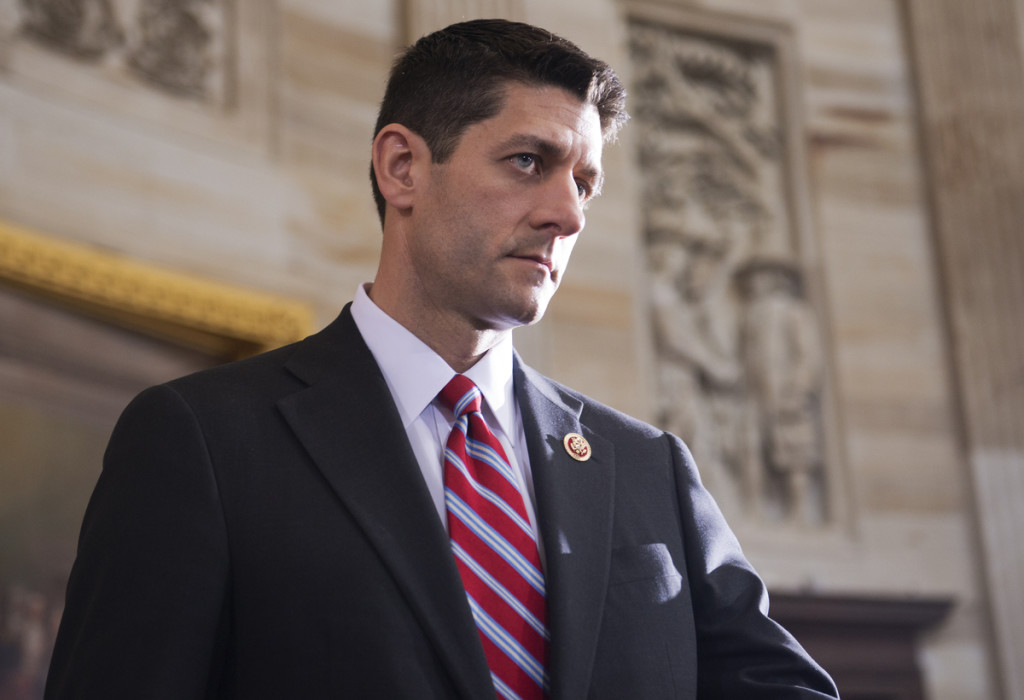
A frustrated Speaker Paul Ryan chided House Republicans for election-season infighting over immigration that sank the party’s farm bill last week, participants in a closed-door meeting said Tuesday. Leaders said they will schedule a late- June showdown over immigration, an issue that has divided the GOP for years. “I think he said ‘gee whiz’ and ‘gosh’ and used the word ‘crap’ once,” Rep. Mark Amodei, R-Nev., said of Ryan’s remarks to his colleagues. “For Paul Ryan, ‘crap’ is pretty blue language.” At a news conference minutes later, the Wisconsin Republican criticized anew an effort by GOP moderates to force votes on immigration by collecting signatures from a majority of House members on a little-used procedure called a discharge petition. The centrists need just five more GOP signatures to prevail. “I can guarantee you a discharge petition will not make law,” Ryan said. That was a reference to the expectation that the votes moderates want to have would produce a bill that President Donald Trump would consider too weak and veto. Ryan also defended himself against calls from conservatives that he step down as speaker in the wake of the party’s anarchy over the farm bill and continuing disarray on immigration. Ryan will retire from the House after this year but has said he will remain as speaker until he leaves office. “Members drafted me into this job because of who I am and what I stand for,” he said. He was elected speaker in 2015 after conservatives pressured his predecessor, John Boehner, R-Ohio, to step aside. Asked if he would remain as speaker all year, he said, “Obviously I serve at the pleasure of the members.” He said Republicans should concentrate on the party’s legislative agenda and not have “a divisive leadership election.” Lawmakers exiting the GOP meeting said leaders told them the House would vote on immigration during the third week of June. They said it was unclear exactly what they would vote on. The centrist push for immigration votes is considered likely to result in passage of a middle-ground measure backed by a handful of Republicans and all Democrats. Ryan has said he will avert that outcome, though it’s unclear how, and many conservatives consider it intolerable. Conservative and moderate GOP leaders negotiated privately Monday over ways to win centrist support for a conservative-backed measure that for months has floundered short of the 218 Republican votes it would need for House passage. They discussed changes that would help young “Dreamer” immigrants brought to the U.S. illegally as children and immigrant farm workers stay longer in the U.S., said one lawmaker who described the private discussions on condition of anonymity. The conservative bill would currently reduce legal immigration, clear the way for construction of President Donald Trump’s border wall with Mexico and let Dreamers stay in the U.S. for renewable three-year periods. All Democrats oppose the measure and it would have no chance of clearing the more moderate Senate. The farm bill crashed last Friday, partly because of opposition by members of the hard-right House Freedom Caucus. They had refused a leadership offer for a vote on the conservative immigration bill in June, which they said was too late. Some members of the Freedom Caucus suggested it would be time for Ryan to step down should moderates prevail. “If we run an amnesty bill out of a Republican House, I think all options are on the table,” said Rep. Scott Perry, R-Pa., a member of the group, when asked if Ryan should remain as speaker if the moderates’ effort succeeds. Many conservatives say legislation protecting immigrants in the U.S. illegally from deportation is amnesty. Other Republicans said it seemed unlikely Ryan would abandon his post. They said potential successors including Majority Leader Kevin McCarthy, R-Calif., so far lack the GOP votes they’d need to win the job. The moderates need 218 signatures — a House majority — on a petition to force votes on immigration bills. With all 193 Democrats expected to sign, the moderates need five more than the 20 signatures they already have. If they succeed, a vote could occur no earlier than late June. Republished with the permission of the Associated Press.
U.S. clings to health coverage gains despite political drama
Americans kept up their health insurance last year despite President Donald Trump’s all-out push to dismantle the Obama-era coverage expansion. That’s the counter-intuitive conclusion from a major government survey Tuesday. After nearly a full year of Trump, the uninsured rate was 9.1 percent for 2017, almost the same as toward the end of the Obama administration, according the Centers for Disease Control and Prevention. That works out to a little more than 29 million people uninsured. Overall, the uninsured rate has dropped from 16 percent when the Affordable Care Act was signed in 2010, which translates roughly to 19 million people gaining coverage. “Despite all the noise and despite the chain-rattling Republicans have done with their failed attempts at repeal, at the end of the day the number of uninsured has stayed flat,” said health economist Gail Wilensky, a longtime GOP adviser. “That’s good news for the country, and it might turn out to be good news for Republicans when it comes time for the midterm elections.” But the CDC’s National Health Interview Survey also showed uninsured numbers edged higher for some groups, raising questions about potential problems this year and beyond. It doesn’t reflect congressional repeal of the health law’s unpopular requirement that individuals carry health insurance, since that doesn’t take effect until next year. Considered authoritative by experts, the CDC report contradicts popular story lines from both ends of the political spectrum. On the right, Trump and others warn that Obamacare is “imploding.” (Instead, enrollment is fairly resilient.) On the left, Democrats blame Trump administration “sabotage” for coverage losses. (No hemorrhaging was found.) “It’s a testament to the high value people place on health insurance,” said Katherine Hempstead, a senior health policy adviser at the nonpartisan Robert Wood Johnson Foundation. “People will tenaciously hang on to their health insurance.” Still, the survey found some worrisome indicators of issues potentially ahead: —The uninsured rate rose among “not poor” adults. (Translation: middle class.) That increase was statistically significant, rising to 8.2 percent in 2017. Hempstead said it may reflect the impact of sharp premium increases for individual plans for people in the solid middle class, who aren’t eligible for subsidized coverage under the ACA. “They are uniquely required to pay the full retail cost of health care,” she said. —The uninsured rate also rose significantly in states that have not taken advantage of the ACA’s Medicaid expansion for low-income people. It averaged 19 percent for adults in states that had not expanded Medicaid, a big difference from about 9 percent uninsured in states expanding low-income coverage. The Medicaid expansion survived repeal efforts and several states are moving to join the 32 others, plus Washington, D.C., that have expanded. Last year was tumultuous for health care, with Trump and Congress finally poised to deliver on the GOP vow to repeal President Barack Obama’s signature law. After repeated tries, the effort collapsed in the Senate. But Republicans did manage to undo the law’s unpopular requirement that most Americans maintain coverage or risk fines. Many experts believe the number of uninsured will increase when repeal of the so-called individual mandate goes into effect in 2019. Trump also used his executive authority to undermine Obama’s law. He pulled the plug on legally contested subsidies for deductibles and copayments, triggering a spike in premiums. His administration cut the HealthCare.gov sign-up season in half, and slashed the ad budget. Changes pending this year will allow insurers to offer lower-cost plans that have fewer benefits, and can also turn away people in poor health. Separately, the CDC survey showed no slowing down of the longstanding shift to high-deductible health insurance, with nearly 44 percent of Americans now in plans that require individuals to pay at least $1,300 of medical bills each year, or $2,600 for family coverage. Two independent private surveys have recently shown an increase the U.S. uninsured rate, but the CDC’s approach is different. The government survey relies on face-to-face interviews, not telephone polling. And it’s based on data from about 78,000 people — a very large pool. “This report is as credible a data source on the uninsured as we have,” said Wilensky. Republished with the permission of the Associated Press.
Scott Pruitt: Dealing with water contaminant a ‘national priority’
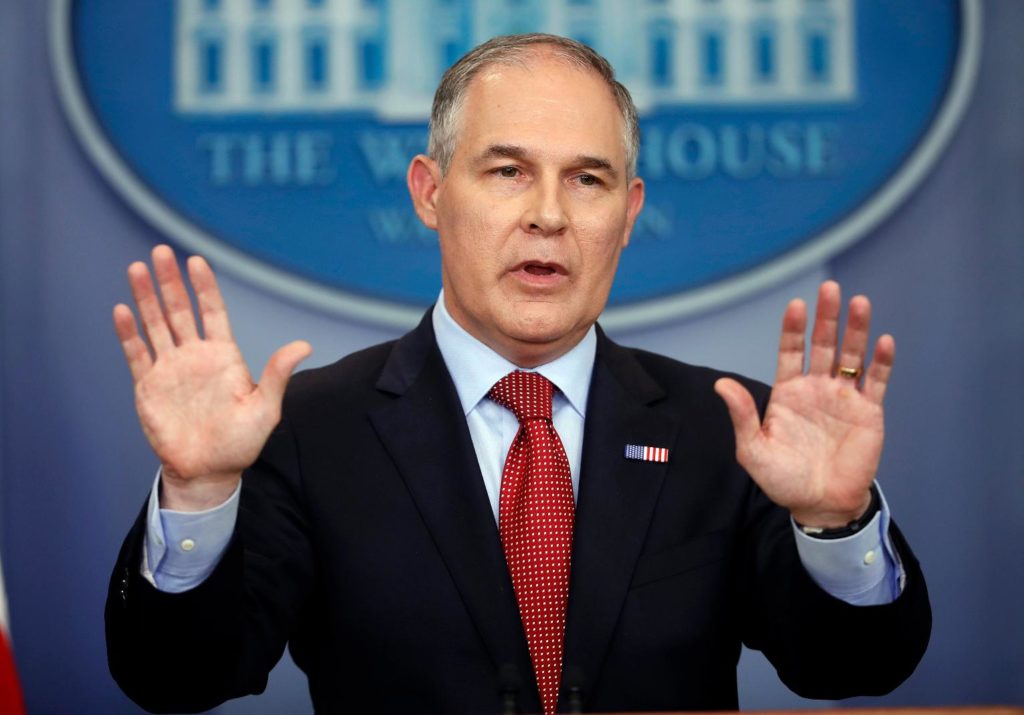
Dealing with a slate of toxic chemicals contaminating some drinking water systems around the country is a national priority, Environmental Protection Agency chief Scott Pruitt said Tuesday. Pruitt, who drew scrutiny from lawmakers after EPA emails released this month showed that the agency had intervened in the publication of a new government study on the contaminants, convened what he called a national summit on the chemicals. The chemicals are as perfluoroalkyl and polyfluoroalkyl. Used in some nonstick coatings, in firefighting foam and elsewhere, the chemicals can cause developmental defects and other health problems. Authorities say the contaminants are present in dangerous levels in some water systems, including several near military bases and industries. Pruitt drew questions from Republican and Democratic lawmakers last week after emails obtained under the Freedom of Information Act revealed an unidentified White House official calling a pending federal toxicological report on the chemical a “potential public-relations nightmare.” The emails also revealed EPA officials intervening in the release of the study, which remains unpublished. Politico first reported on the emails. Pruitt, formerly the Republican attorney general of Oklahoma, invited what the EPA said were 200 people to Tuesday’s Washington session on the chemicals. The people attending represented states, tribes, the chemical industry and other sectors, along with some environmental representatives. “It’s clear this issue is a national priority,” Pruitt said, opening the session. He pledged to start work toward establishing a legal maximum limit for the contaminants in drinking water systems. The EPA would reach out to communities with drinking water contaminated by the chemicals over the summer, agency officials said. The EPA is “very focused upon action,” Pruitt said. “We want to hear from all of you as we take the next step.” Environmental groups and some lawmakers have accused Pruitt of meeting more often with industry representatives, conservative political groups and lobbyists than with ordinary people affected by dangers that the EPA regulates. The EPA barred some news organizations, including The Associated Press, from Tuesday’s meeting. EPA spokesman Jahan Wilcox said the session was invitation-only and there was no room for the AP, but did not say what criteria were used in determining which media the agency invited. Republished with the permission of the Associated Press.
Will Barfoot and the art of the political mulligan
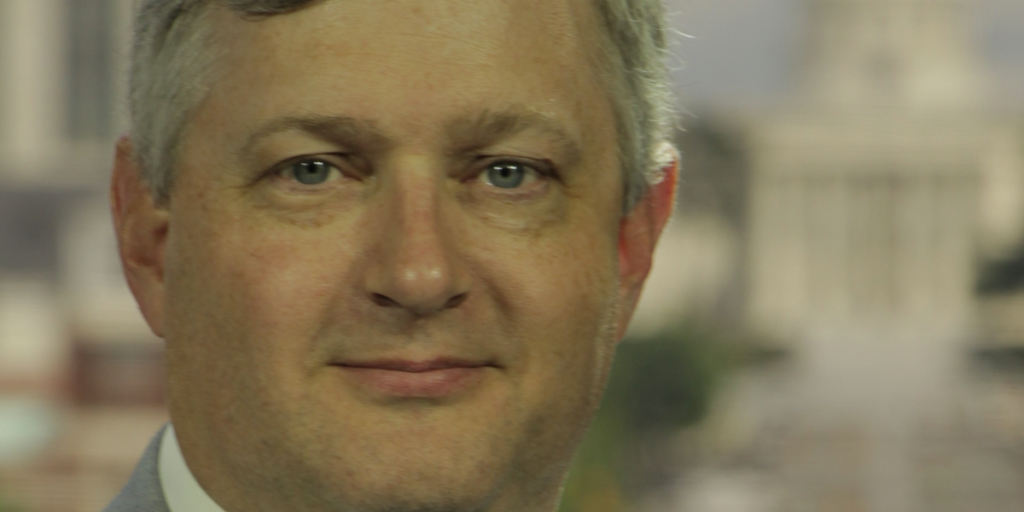
With the election of President Donald Trump, the true spirit of the Republican Party — small government and fiscal conservatism — is even more popular than it was during Ronald Regan’s presidency. This especially true in Alabama where Trump’s approval rating hovers around 63 percent. It’s no wonder why candidates in competitive primaries across the state are running to the right, regardless of the political ideologies, hoping to woo a segment of the electorate that loves Trump and loathes Democrats. That’s why it’s important for voters to look beyond what candidates are saying in trying to align themselves with Trump, but to also look at what they’ve said and done in the past. Flash-back to 2006 12 years ago, Montgomery-attorney Will Barfoot ran for the Republican nomination for Alabama’s Senate District 25 seat, which covers parts of Elmore, Montgomery and Crenshaw counties. Ultimately he was bested by Larry Dixon in the primary, but not before Dixon and his other GOP opponent Suzelle Josey pointed out that they didn’t believe Barfoot was Republican enough. They believed he was cozying up to Democrats for donations a bit too much for GOP-comfort and criticized his willingness to accept support from anyone. In May 2006, the Montgomery Advertiser doubled-down on the accusations against Barfoot when one of their staff writers wrote a piece titled “Candidate crossing party lines,” detailing how Barfoot said he welcomed “support from the Democrat-aligned Alabama Education Association, a group the Alabama Republican Party has come out against with a resolution not to take campaign money from the powerful teachers’ lobby.” “AEA union boss Paul Hubert has tried basically to buy the State house and run the Democratic agenda, said then Alabama Republican Party Chair, and current Lt. Governor-hopeful, Twinkle Andress Cavanaugh told the Advertiser.. “We frown upon anybody taking the money.” Taking home only 32 percent of the votes, the election was a swing and a miss for Barfoot, who’s steered clear of running for office again the past decade. 2018 election Fast-forward 12 years later and we find Barfoot is taking a mulligan. Having learned his lesson in 2006 — and hoping to cash in on a forgetful electorate — he’s now running as an über-conservative. Gone are the days of trying to woo Democratic supporters, Barfoot has yet to take a check from a Democratic organization’s (according to his campaign finance reports anyway) this election cycle. Instead, he’s touting himself as the anti-career politician with out-of-the-box ideas. Senate District 25 The seat is currently held by Pike Road-Republican Senator Dick Brewbaker who announced in November 2015 that he will not seek re-election. Barfoot faces Vice-Chairman of the Montgomery County Commission Ronda Walker in the June 5 Republican primary. The winner go to face whomever advances from the Democratic primary: David Sadler or Frank Snowden in the November 6 general election.
Donald Trump wades deeper into abortion politics as midterms loom
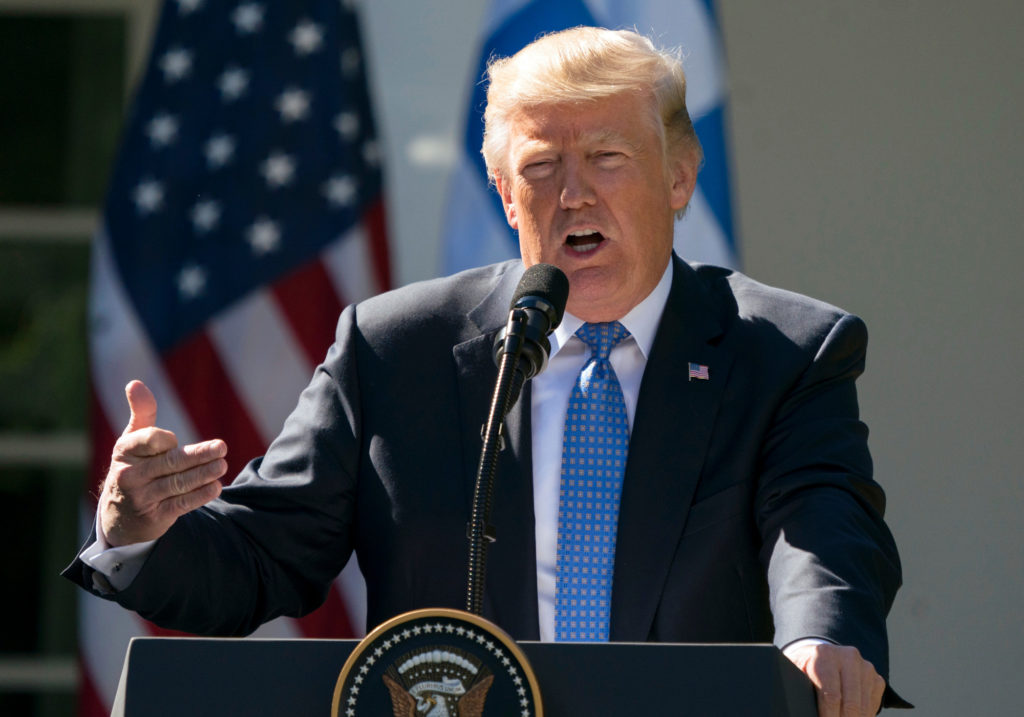
President Donald Trump has long been an unlikely sweetheart for conservative and evangelical voters. Now, in the lead-up to the midterm elections, the thrice-married former Democrat who used to describe himself as “very pro-choice” is offering catnip to conservative voters with a new administration push to strip funding from Planned Parenthood and other family planning clinics. The initiative, announced last week, has arrived just in time for Trump to highlight it Tuesday night when he speaks at the Susan B. Anthony List’s annual “Campaign for Life Gala.” It is aimed at resurrecting parts of a Reagan-era mandate banning federally funded family planning clinics from referring women for abortions, or sharing space with abortion providers. Marjorie Dannenfelser, president of the anti-abortion Susan B. Anthony List, says the move “will help tremendously” in the midterm elections. It’s also the latest evidence that as he frets over the Russia investigation and prepares for a planned summit with North Korea, Trump has also been focused on fulfilling campaign promises and tending to issues that galvanize his base: holding a series of events to rail against the dangers of illegal immigration, pulling out of the Iran-nuclear deal and wading anew into the fight over abortion rights. Trump is far from a natural fit for conservative voters. He recently admitted to reimbursing his lawyer for paying pay hush money to a porn star who claimed she had sex with Trump (a charge that he denies). And Trump has bragged about groping women without their permission. During the campaign, he sometimes had trouble articulating his views on abortion, at one point suggesting women should be punished for having abortions. His campaign later walked back the statement, saying that if abortion were ever outlawed, he believed that doctors who perform them should be punished. Nonetheless, white evangelical voters overwhelmingly supported Trump in 2016, and that support has only grown. A PRRI survey released last month found white evangelical support for Trump at an all-time high, with 75 percent of those polled holding a favorable view of the president and just 22 percent holding an unfavorable view. Support for Trump within the general population in the poll stood at just 42 percent. Religious groups like the Catholic Medical Association approve of a series of actions Trump has taken, beginning with his appointment of judges who oppose abortion rights, including Supreme Court Justice Neil Gorsuch, and Trump’s reinstatement of the global “gag rule” that bars federal funding for nongovernmental organizations that provide abortion referrals. Trump has also surrounded himself with staffers with deep ties to conservative groups, including counselor Kellyanne Conway and Director of Strategic Communications Mercedes Schlapp. Ralph Reed, chairman of the private Faith & Freedom Coalition, also pointed to the president’s dismantling of the Iran nuclear deal and his decision to move the U.S. Embassy in Israel from Tel Aviv to Jerusalem as steps that have played especially well with evangelical voters. But he said the president’s actions on abortion hold special sway, in part because of Trump’s early struggle with the issue. “On a policy level, I see it as a series of promises made and promises kept. And in this case, a pro-life promise made and pro-life promise kept. And I would argue those are the most important promises to keep because he was someone who was believed, accurately or otherwise, as a recent arrival to conservatism and someone who had an ideologically mixed past,” Reed said. Reed added that as president, “Trump has done everything that he can to keep faith with the faith-based voters that provided him with his margin of victory in 2016.” When it comes to the midterms, Reed said, “I expect Donald Trump to be rewarded for these efforts by a similarly historic turnout among evangelical and other pro-life voters.” Dannenfelser, whose group works to elect candidates who want to reduce and ultimately end abortion, is planning to raise and spend $25 million this cycle, up from the $18 million the group spent in the lead-up to the 2016 elections. She said the president’s latest move would play especially well with voters in states like Missouri, where Republican Attorney General Josh Hawley is challenging Democratic Sen. Claire McCaskill, one of the Senate’s most vulnerable incumbents, as well as in Indiana and North Dakota, where Republican Rep. Kevin Cramer is challenging Democratic Sen. Heidi Heitkamp. “He has proved himself refreshingly predictable,” Dannenfelser said of Trump’s record on abortion issues. The other side, meanwhile, is preparing for a potential legal fight against Trump’s latest action and aiming to build support for candidates who support abortion rights. “We have to fight back in the best way we know how,” the group Emily’s List wrote in a fundraising email, “electing pro-choice Democratic women who will always protect reproductive freedom.” Republished with permission from the Associated Press.
Terri Sewell, Doug Jones announce Public Health Fair to combat wastewater crisis

Alabama’s two Congressional Democrats — 7th District U.S. Rep. Terri Sewell and Sen. Doug Jones — are teaming up to raise public awareness about the health consequences associated with failing septic systems and wastewater contamination. Together, they will host a Public Health Fair in Hayneville, Ala. The event, which is free and open to the public, will also provide attendees safe and confidential health screenings. “For struggling families in rural America, including those in Alabama’s rural Black Belt, deteriorating wastewater infrastructure has created a health crisis that is unacceptable for us to ignore as elected officials,” Sewell said. “In rural communities like Lowndes County, some residents don’t have proper access to primary health care services, where they can get screened and treated for conditions that arise from failing wastewater systems.” Sewell continued, “Our upcoming public health fair will provide rural Alabamians with the tools and resources they need to keep their families and homes healthy. This public health fair is a necessary step in the right direction, designed to open lines of communication with health experts, community leaders, and rural families, and provide free and confidential health screenings to Lowndes County residents.” The Public Health Fair will take place on Wednesday, May 30, from 5:00 – 7:00 p.m. inside Lowndes Interpretive Center. Health services provided will include a wide array of screenings. Attendees will also learn more about resources available for assistance with properly installed septic systems. “No one should have to live in a home where wastewater is straight-piped into their backyard, putting their families at risk for serious and costly health consequences,” Jones said. “Unfortunately, communities across rural Alabama are facing this public health crisis and it’s long overdue that they get the resources they need to make lasting progress. That’s why I’m proud to partner with my colleague Congresswoman Sewell to host this upcoming public health fair, which will give us an opportunity to hear directly from folks who are facing these challenges and help them keep their families safe and healthy.” Experts suggest 60 percent of homes in some parts of rural Alabama drain wastewater without treatment from a septic system.1 Researchers from the University of Alabama estimate that more than 500,000 gallons of raw sewage enter rivers and streams in Alabama’s Black Belt each day. Last week, Sewell along with Republican and Alabama 3rd District U.S. Rep. Mike Rogers introduced the bipartisan H.R. 5837: Rural Septic Tank Access Act on Wednesday, which provides grants for the construction and repair of decentralized wastewater systems in underserved communities. Jones is a co-sponsor of a companion bill in the Senate.
Bill Hightower runs for governor on flat tax, term limits
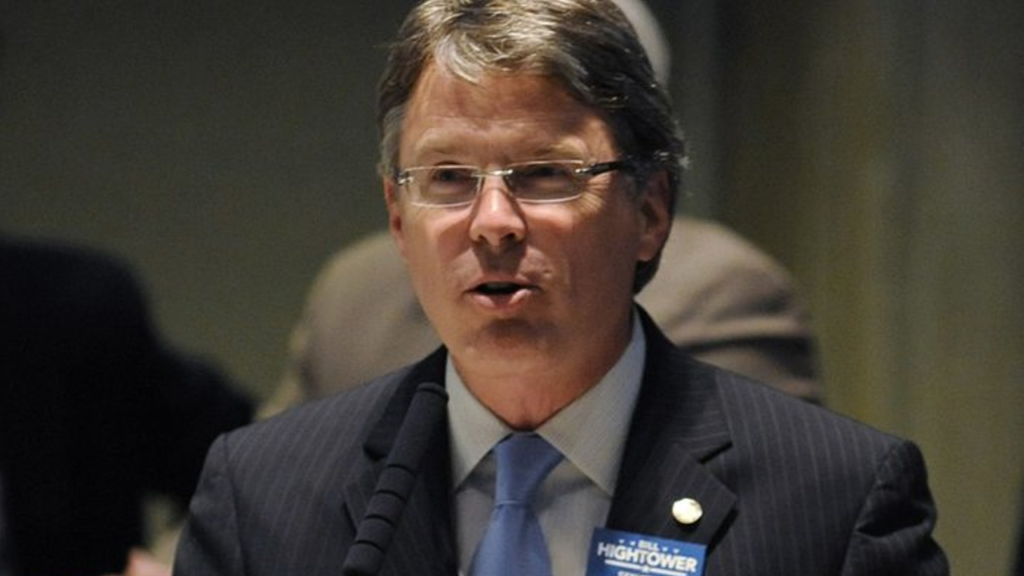
State Sen. Bill Hightower is stressing his background as a businessman as he runs for governor on a sweeping platform of proposed government overhauls that include term limits for legislators and replacing the state income tax code with a flat tax. “I think Alabama needs a businessman. I think Alabama needs something different than they ever had before,” Hightower said in an interview with The Associated Press. Hightower is challenging Alabama Gov. Kay Ivey in the June 5 Republican primary along with evangelist Scott Dawson and Huntsville Mayor Tommy Battle. A relative newcomer in state politics, Hightower was first elected to the Alabama Senate in a 2013 special election and won a full term in 2014. Hightower said he didn’t feel as strongly about term limits when he first was elected to the Alabama Legislature, but believes that lawmakers should be limited to three consecutive terms. “It seems like the enemy of improvement became the professional politician, the people who are trying to keep the status quo. Term limits will change Montgomery in a way which I think will enable us to make the reforms,” Hightower said. A graduate of the University of South Alabama who earned an MBA at Vanderbilt University, Hightower worked for large manufacturing companies, living overseas. He moved back to Mobile in 2002, saying he and his wife wanted to raise their children “at home” in Alabama. “My background in corporate was a lot of strategic planning. I want to develop that plan that’s going to serve Alabama well,” Hightower said. As a member of the Legislature, Hightower proposed to change Alabama’s income tax to a flat tax, and said he will propose that again if elected governor. “You just go online, or go on a post card and pay your taxes.” He said he would also like to end budgetary earmarks and “reprioritize” spending, noting that Alabama earmarks more revenue than any other state. “Nobody else in the nation is saying Alabama does it right and I’m convinced waste and fraud is in the budget,” Hightower said. Alabama lawmakers have previously rejected those proposals — un-earmarking, a flat tax and term limits — as bills on those topics failed to win approval. However, Hightower said believes the ideas are popular with voters and will gather momentum. The Republican senator said he is against tax increases until the state enacts budgetary reforms. On infrastructure, Hightower said he wants to create an Alabama Road and Bridge Commission, sell unneeded state property holdings to fund construction and commission a study to determine the feasibility of connecting major Alabama cities by high-speed rail. He said he would also like to increase partnerships between the two-year college system, businesses and high schools to improve vocational education. Hightower has been critical of Ivey’s decision to skip two debates, saying it’s important for the public and press to get a chance to “vet the candidates.” “She’s not being properly vetted,” Hightower said. Hightower was also the first candidate to raise the issue of health, releasing his own medical records and challenging candidates to do the same. Ivey, who became Alabama’s governor last year when her predecessor resigned in a sex-tinged scandal, has both a fundraising and name recognition advantage over her lesser-known primary challengers. However, Hightower believes Ivey will be forced into a July runoff with one of her competitors. Hightower said he believes voters largely make up their minds in the final two weeks of the campaign, and are interested in the policies and proposals of candidates. “You can’t accuse me of being light on policy,” Hightower said. Republished with permission from the Associated Press.
