
Former, current GOP elected officials expected to set record straight on PSC candidate Jim Bonner
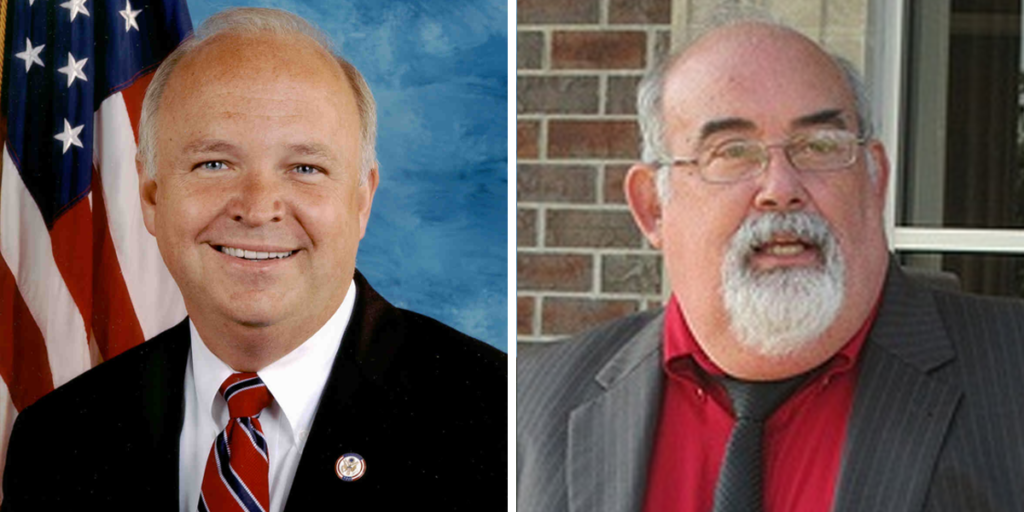
Former and Current Republican elected officials from Mobile and Baldwin Counties will gather Friday to discuss “a very important statewide primary race.” Many speculate the unnamed race is the Public Service Commission (PSC) Place 1 race between Jim Bonner, a controversial Republican candidate for the position, who is unexpectedly polling ahead of his opponent, six-year incumber Jeremy Oden. Former Republican U.S. Congressman Jo Bonner, Daphne-Republican State Rep. Randy Davis, Fairhope-Republican State Rep. Joe Faust, Bay Minette-Republican State Rep. Steve McMillan, Mobile-Republican State Rep. Chris Pringle, and Stockton-Republican State Rep. Harry Shiver, along with other Mobile and Baldwin County officials will be in attendance in Bienville Square at 9 a.m. PSC candidate Jim Bonner has recently made statewide news for polling ahead of Oden. Many believe Jim Bonner is making good on a case of mistaken identity and riding the coattails of former Alabama Congressman Jo Bonner of Mobile. In addition, many of the same critics are hitting Jim Bonner for a series of “questionable” posts on social media calling him anti-Semitic and racist. On Tuesday, the ALGOP censured Jim Bonner for his statements on both social media and the radio. “The Alabama Republican Party Candidate Committee voted unanimously to publicly censure and strongly condemn Mr. Jim Bonner, candidate for Public Service Commission, Place 1,” said ALGOP Chairman Terry Lathan in the release. “Mr. Bonner’s recent comments on his social media as well as radio shows are not condoned by the Alabama Republican Party. Mr. Bonner is welcome to his opinions and his first amendment right of free speech. The Alabama Republican Party is welcome to our opinion as well, and we reject the egregious comments Mr. Bonner continues to spew.” Specifics on the news conference have yet to be announced.
State launches summer literacy pilot program to prevent dreaded ‘summer slide’

Earlier this year, Gov. Kay Ivey announced the addition of the Alabama Summer Achievement Program (ASAP) to her already thriving “Strong Start, Strong Finish” initiative in effort to prevent the backsliding that often occurs over the summer for children in low-income families. Children can fall behind an average of two months in reading and math during the summer, in what is known as the summer slide, and these learning losses are cumulative. Summer learning programs are a proven, critical tool for reducing the achievement gap between low-income students and their more affluent peers. Children with access to books over the summer see significantly higher gains in reading abilities from spring to fall. The program will ensure that students who are reading below grade proficiency in grades 1-3 will have a chance to catch up over the summer through a six week program. On Thursday, Ivey, in conjunction with Montgomery Public Schools, the Alabama Department of Early Childhood Education, the Alabama State Department of Education, and the Alabama Reading Initiative announced the pilot of ASAP at four local Montgomery public schools: Dannelly, Fitzpatrick, Highland Avenue, and E.D. Nixon elementary schools. Under the direction of the Alabama Reading Initiative and with support from the Alabama Department of Early Childhood Education, ASAP will provide students entering kindergarten through fourth grade more than seventy hours of reading and literacy instruction over six weeks. “Too many children lose ground academically over the summer months. Without access to the enriching activities available to more affluent peers, research shows that children from low-income families lose as much as three months of reading comprehension skills over the summer,” Ivey said. “Studies show that summer learning programs can produce statistically significant gains in reading performance.” Program details This highly structured research-based initiative will be taught by qualified, effective pre-K and elementary teachers, reading coaches and literacy specialists. The program will run from June 11 through July 24 from 8:00 a.m. to 12:00 p.m., Monday through Friday. Breakfast and lunch will be provided at no cost, and bus transportation will also be provided to children attending their zoned school location. Each school will also be served by a principal, site coordinator, nurse, secretary, custodian and security guard. Teachers will provide developmentally appropriate, project based learning experiences to enhance children’s early literacy abilities and foster a love of learning. Teachers, coaches, and specialists will also receive quality professional development and onsite support, including training in social-emotional learning. Additionally, children will be actively engaged in developmentally appropriate: Whole group literacy instruction: oral language, vocabulary, listening comprehension Small group reading instruction: phonemic awareness, phonics, fluency Independent reading practice: reading comprehension, reading/writing workshop Handwriting and spelling instruction One-on-one reading intervention: differentiated reading instruction Support for the program Governor Ivey strongly supported funding increases for the Alabama Reading Initiative, State Department of Education, and Department of Early Childhood Education in the 2019 Education Trust Fund budget. The 2019 Education Trust Fund is the largest investment in education in a decade. “Research shows that children who participate in Alabama First Class Pre-K are better prepared for school,” Early Childhood Education Secretary Jeana Ross said. “We are proud to collaborate with Montgomery Public Schools and the State Department of Education to provide the nation’s highest quality pre-K experience to children who have not had this opportunity, working together to ensure more of Montgomery’s children are school ready.” Children who are eligible to attend Kindergarten in the 2018-2019 school year, whether they did or did not attend pre-K or Head Start, are encouraged to apply for First Class Pre-K with ASAP this summer. “Governor Ivey’s ‘Strong Start, Strong Finish’ education initiative is a smart, comprehensive approach to improving student achievement. A key component of that initiative, the Alabama Summer Achievement Program, addresses some very real circumstances that negatively impact some of our most vulnerable communities,” added State Superintendent Eric Mackey. “Much needed summertime learning opportunities are a ‘win-win’ for all involved. We should take advantage of any opportunity to help even the playing field, and give our students the support they need to succeed academically.” Registration for ASAP is now online. Participation is limited. Those interested sign-up here “ASAP.”
Alabama leaders react to Kay Ivey arming school administrators

In the wake of school shootings across the county, Gov. Kay Ivey took precautionary action on Wednesday by announcing a new plan that provides for an additional security measure in schools that do not have a School Resource Officer (SRO). The new Alabama Sentry Program will permit administrators in schools, without an SRO, to maintain a firearm on campus in a secured safe in order to be prepared to respond to an active shooter situation only after the administrator successfully complete training created and certified by the Alabama Law Enforcement Agency (ALEA). Several Alabama lawmakers have voiced their opinions on the new program. Here are some of Alabama’s reaction’s to the new Alabama Sentry Program: Attorney General Steve Marshall: “I share Governor Ivey’s concerns that every effort be made to ensure that all Alabama’s schools have the ability to protect our children by quickly responding to threats to their safety,” said Marshall. “Under the voluntary Sentry Program, specially trained administrators in schools without SROs will be ready to meet armed intruders with lethal force in order to defend students, faculty, staff and visitors. “I appreciate Governor Ivey allowing my office to review her new Sentry Program and believe it represents an effective way to bolster school safety in every community. Guntersville-Republican State Rep. Will Ainsworth: This is a good news and I want to thank @GovernorKayIvey for taking steps to protect our children. https://t.co/Pz2K5ByiOC — Will Ainsworth (@willainsworthAL) May 30, 2018 Public Service Commission President, Twinkle Andress Cavanaugh: State Board of Education member, Mary Scott Hunter voiced her opinion on Dale Jackson’s show: “It’s a good first step,” said Hunter. “I think that she (Ivey) should’ve been stronger in this interview on the deterrent aspect of it and that we don’t have SRO’s in every school; and we need somebody armed in every school. I don’t like the term resource officer, I think the term should be school security officer because we’re really concerned right now about security.”
Montgomery Public Schools accreditation status changed to ‘under review’

It’s been a tumultuous year for the Montgomery County Board of Education. On Wednesday, they received a report from AdvancEd, a non-partisan organization that accredits the school system, that found the school system “needing improvement” after conducting a special review in late March. The report, conducted by a six-member team of educators, thus resulted in the change the status of Montgomery Public Schools (MPS) from from “accredited” to “accredited under review.” AdvancEd rated MPS in 31 areas within three categories: leadership capacity, learning capacity and resource capacity. The results were reported in four ratings: Needs Improvement: Identifies key areas that need more focused improvement efforts Emerging: Represents areas to enhance and extend current improvement efforts Meets Expectations: Pinpoints quality practices that meet the Standards Exceeds Expectations: Demonstrates noteworthy practices producing clear results that exceed expectations MPS received the lowest possible ranking, ‘needs improvement,’ in an overwhelming 19 areas, ’emerging’ in 11 area and ‘meets expectations’ in only one area. For now MPS has not lost its accreditation. The team presented MPS with six improvement standards that they will return in December to access and track the progress made by MPS. What state officials are saying New State School Board Superintendent Dr. Eric Mackey said it’s one of the worst reports ever released by AdvancEd. “It is one of the worst reports that AdvancED has ever done, and they cover multiple states throughout the southeast and beyond,” he said. “And so it’s not a good reflection on where we are in our community.” Montgomery Mayor Todd Strange encouraged Montgomery residents to vote Tuesday for a more unified school board. “The vote you make Tuesday, in the local board of education, is our future,” commented Strange. View the full report below:
Kay Ivey signs increased penalties for human trafficking into law
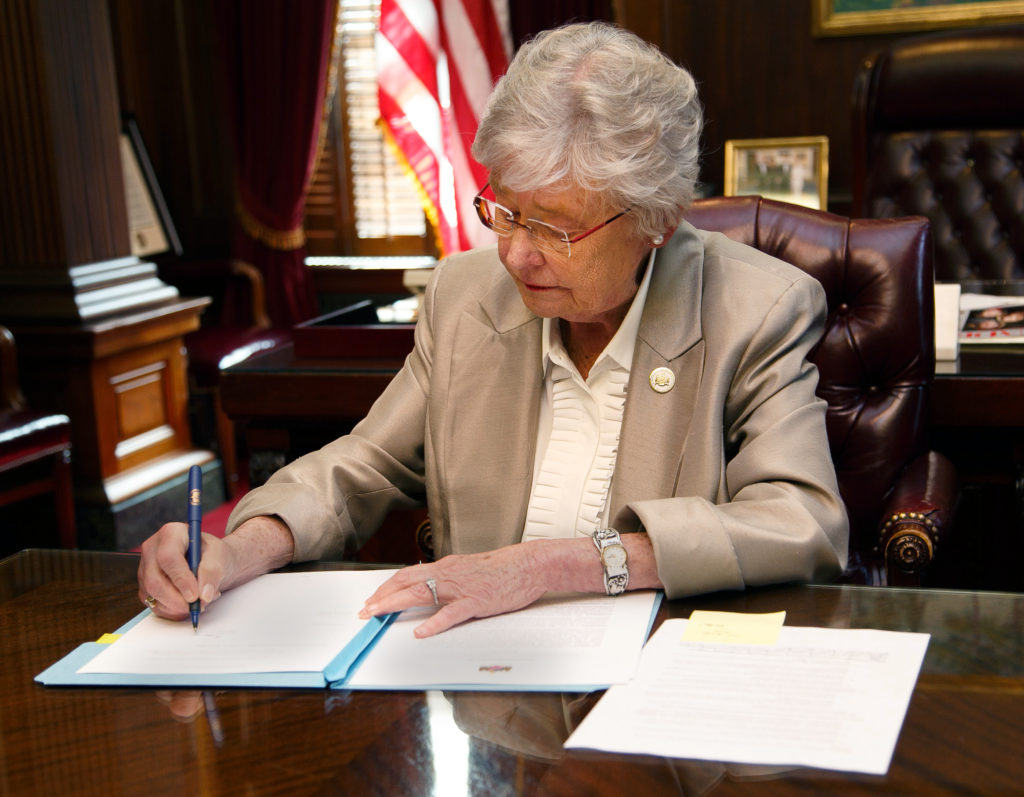
Alabama Governor Kay Ivey signed legislation on Wednesday enhancing the criminal penalties for obstructing the enforcement of the human trafficking laws in Alabama. “I was proud to be the House sponsor for a bill this last legislative session that significantly increased the penalties for human trafficking,” said Rainbow City-Republican State Rep. Mack Butler on Facebook. “This crime is on the rise in all 50 states and is a $32 billion a year industry. I’m very thankful the governor gave her quick approval and signed this bill into law.” While many Alabamians are unaware of its ongoings, sex trafficking is actively happening not only abroad, but also in Alabama. According to the National Human Trafficking Hotline at least 36 human trafficking cases were reported in the Yellowhammer State in 2017. They also report more than 111 victims of human trafficking in Alabama have called its hotline for help this year. Under the new law, a person commits the crime of human trafficking in the first degree if: He or she knowingly subjects another person to labor servitude or sexual servitude through use of coercion or deception. He or she knowingly obtains, recruits, entices, solicits, induces, threatens, isolates, harbors, holds, restrains, transports, provides, or maintains any minor for the purpose of causing a minor to engage in sexual servitude. For purposes of this section, it is not required that the defendant have knowledge of a minor victim’s age, nor is reasonable mistake of age a defense to liability under this section. A corporation, or any other legal entity other than an individual, may be prosecuted for human trafficking in the first degree for an act or omission only if an agent of the corporation or entity performs the conduct which is an element of the crime while acting within the scope of his or her office or employment and on behalf of the corporation or entity, and the commission of the crime was either authorized, requested, commanded, performed, or within the scope of the person’s employment on behalf of the corporation or entity or constituted a pattern of conduct that an agent of the corporation or entity knew or should have known was occurring. Any person who obstructs, or attempts to obstruct, or in any way interferes with or prevents the enforcement of this section shall be guilty of a Class A felony. Human trafficking in the first degree would be a Class A felony. Under the new law, a person commits the crime of human trafficking in the second degree if: A person knowingly benefits, financially or by receiving anything of value, from participation in a venture or engagement for the purpose of sexual servitude or labor servitude. A person knowingly recruits, entices, solicits, induces, harbors, transports, holds, restrains, provides, maintains, subjects, or obtains by any means another person for the purpose of labor servitude or sexual servitude. A corporation, or any other legal entity other than an individual, may be prosecuted for human trafficking in the second degree for an act or omission only if an agent of the corporation or entity performs the conduct which is an element of the crime while acting within the scope of his or her office or employment and on behalf of the corporation or entity, and the commission of the crime was either authorized, requested, commanded, performed, or within the scope of the person’s employment on behalf of the corporation or entity or constituted a pattern of conduct that an agent of the corporation or entity knew or should have known was occurring. Any person who obstructs, or attempts to obstruct, or in any way interferes with or prevents the enforcement of this section shall be guilty of a Class B felony.
Get to know: Rusty Glover Republican candidate for Lieutenant Governor
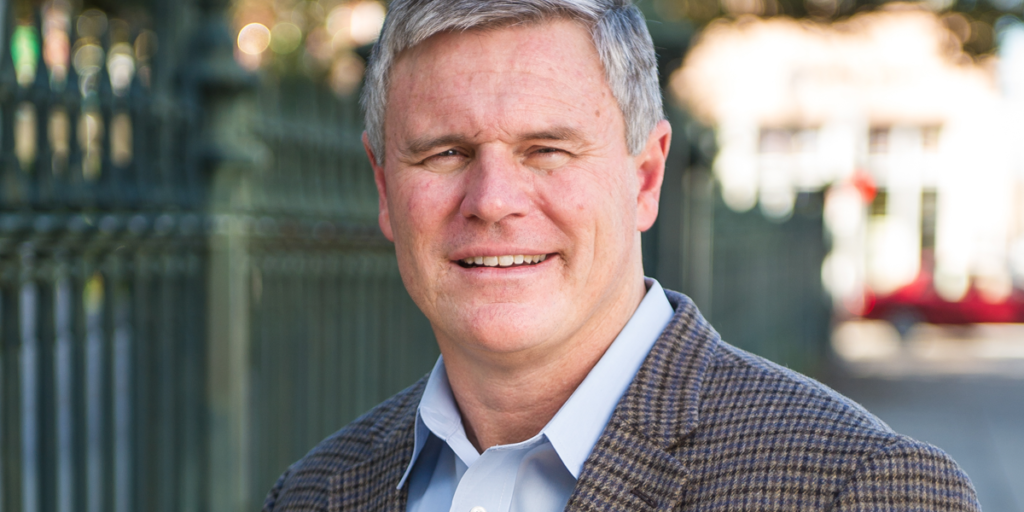
Alabama State Senator Rusty Glover is one of three Republicans vying for their Party’s nomination for Lieutenant Governor in Tuesday’s primary election. The 51-year-old Mobile-native has served in the Alabama Legislature for 15 years — as a member of Alabama House of Representatives from 2002-2006 and the Senate from 2006-present. Now he’s running for Lieutenant Governor to defend conservative values, demand transparency in Montgomery, and bring good-paying jobs to all of Alabama. While some voters know much about the office of Lieutenant Governor, current Gov. Kay Ivey attributes her time in the position as what prepared her to take over the Governorship last April. As written in state law, the Lieutenant Governor is the President of the Senate and is entitled to vote in the event of a tie, much like that of the Vice President of the United States. They are also vested with certain prescribed legislative duties, powers, and responsibilities. Here Glover is in his own words: Significant other? How long married? Kids? I have been married to Connie for 27 years. I have 2 children – Katie, 25 and Kellie, 21. Education background? Professional background? I graduated from the Faulkner Community College and then from the University of South Alabama, with a bachelor’s degree – and I also hold two master’s degrees from the University of South Alabama, one in education and one in history. What was your first job before college/adulthood and after? Before college I worked for a Textbook Depository Company and harvested pecans. After college I taught high school at Mary G. Montgomery High School. In 25 words or less, why are you running for office? I am running to serve Alabamians by utilizing my 25 years of experience in the classroom, and 3 terms in the Senate, to promote good legislation for schools, jobs, and our families. Did you speak with anybody in your political party before deciding on running? Receive any encouragement? From whom? Actually I did not speak to anyone before running, I decided to run completely on my own.. After making the decision, I spoke with my friends, family and other legislators – all of whom supported my decision. Who do you count on for advice besides significant other or clergy? My father. Who is your political consultant? Campaign manager? I am utilizing a 3 member team from Britney Garner and Garner Consulting. Who was the first person to contribute to your campaign? Why did they donate? Richard Wilson – a high school football teammate – who owns a small business in Troy, Alabama, was the first to donate. He donated because he believes in my character, trustworthiness as a leader in the state. Who, if anyone, inspires you in state government? Nobody at this time. Why do people mistrust elected officials and what are you going to do about it? Because there are some two have gone astray, and convicted of misdeeds – and what I can do is set an example by having an open, transparent office that will keep me above suspicion. What are 3 specific policy positions that you’re running on? (Please don’t simply say “education” or “improving the schools”) First, I believe in improving pathways to community colleges. For too long, we have neglected our community colleges which provide a solid opportunity to improve the state’s economic position. Second, I want to see improvements in ports, airports, docks, bridges, and digital infrastructure. Third, the protection and the advancement of the family through job training and utilizing faith-based services. What is a “disruptive” issue (i.e. ride-sharing) you are interested in? Common Core – and its full repeal. Name one current state law you would want repealed? There are several bills that have produced red tape for small businesses – I would choose to focus on these, such as small business licensure. Who was the best governor in Alabama’s modern history? There are good points which have occurred in every administration. As a historian, to choose one, that might possibly denigrate other administrations, which have worked hard on various issues. What will set you apart from other candidates in this race? The first job of the Lt. Governor is to preside over the Senate.As the only one in the race who has even been in the Senate, I can use my experience and ability to lead the Senate in efficiently passing good legislation for Alabamians. What’s the first thing you read each morning? The Bible. Right now, I am about to finish Acts in the New Testament. Where do you get your political news? I seek out a variety of sources, from reputable internet newspapers and television outlets which are local to Alabama. Favorite TV series? Hawaii 5-0 Social media presence? Twitter handle? Facebook? Who posts you, campaign staff, combination? I am on Facebook and Twitter. Both myself and my communications coordinator post on my Facebook page. However, most all posts must first receive my approval. In 140 characters, what’s a Tweet that best describes your campaign message. Putting the People First. Hobbies? None right now – I’m campaigning! (But I do try to laminate news articles for may constituents, in addition to hunting and fishing). Favorite sport and sports team? College Football – and all teams from our state. With less than a week to go until voters head to the ballots for the June 5 primary elections, AlabamaToday.com is inviting all candidates running for office in Alabama this year, to complete a questionnaire we believe offers an interesting, albeit, thumbnail sketch of who they are and why they are running. If you are a candidate and would like to complete the questionnaire, email Elizabeth@ALToday.com.
Judge tells Alabama to release lethal injection information

Alabama officials were ordered Wednesday to release information about the state’s lethal injection procedure as a federal judge granted news organizations’ request to unseal records in the wake of an aborted execution. U.S. Judge Karon O. Bowdre ruled that the public has a “common law right of access to the sealed records relating to Alabama’s lethal injection protocol.” However, Bowdre said the state can keep some information secret in the interest of security, such as the names of low-level prison employees involved in executions. The judge ordered the state to tell her by June 7 if there is identifying information in any of the records that the court plans to make public. Alabama for years has released scant details about its execution process or where it obtains the drugs used. A spokesman for Alabama Attorney General Steve Marshall said the office is reviewing the order. The Associated Press, The Montgomery Advertiser and the Alabama Media Group had filed a motion seeking the release of the protocol. The motion was filed in federal court in a lawsuit brought by death row inmate Doyle Lee Hamm. Alabama halted Hamm’s execution in February when the execution team could not connect an intravenous line to Hamm, who had damaged veins because of lymphoma, hepatitis and past drug use. “It may also help the public to understand how the same scenario might be repeated or avoided under the protocol as it currently stands,” Bowdre wrote of the release of the information. Republished with the permission of the Associated Press.
U.S. to push steel, aluminum tariffs on E.U., Canada and Mexico
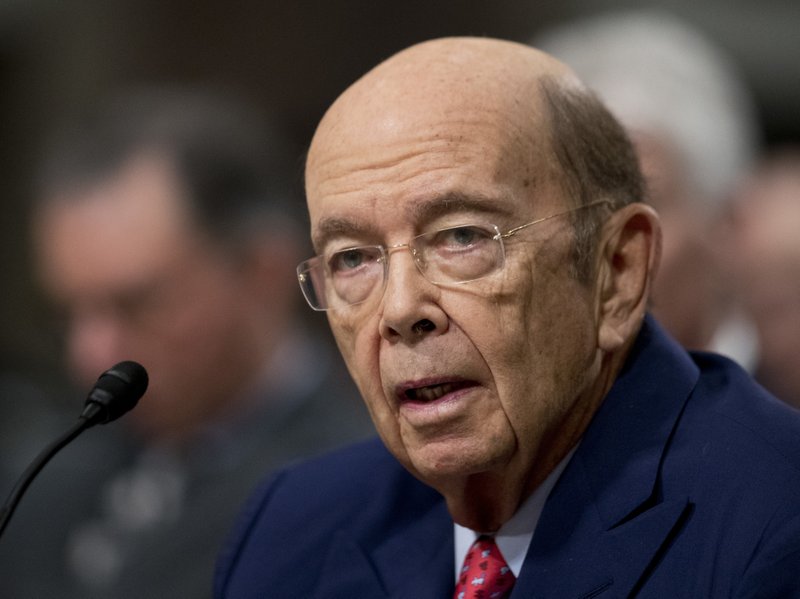
The Trump administration announced Thursday it will impose tariffs on steel and aluminum imports from Europe, Mexico and Canada after failing to win concessions from the American allies. The decision could provoke retaliatory penalties and exacerbate trans-Atlantic and North American trade tensions. Commerce Secretary Wilbur Ross said the tariffs would be 25 percent on steel and 10 percent on aluminum as the administration followed through on the penalties after earlier granting exemptions to buy time for negotiations. Ross told reporters that talks with Canada and Mexico over revising the North American Free Trade Agreement were “taking longer than we had hoped.” Talks with Europe had “made some progress” but not enough for additional exemptions, he said in a conference call from Paris. “We continue to be quite willing and indeed eager to have further discussions,” Ross said. He said he planned to travel to China on Friday for trade talks between the world’s two biggest economies. European officials had braced for the tariffs and the EU has threatened to retaliate against U.S. orange juice, peanut butter and other goods in return. In terms of the NAFTA talks, the tariffs could hinder the negotiations among the North American neighbors. Fears of a global trade war are already weighing on investor confidence and could hinder the global economic upturn. European officials argue that tit-for-tat tariffs will hurt growth on both sides of the Atlantic. Republished with the permission of the Associated Press.
No fireworks in Democrats’ final debate for governor
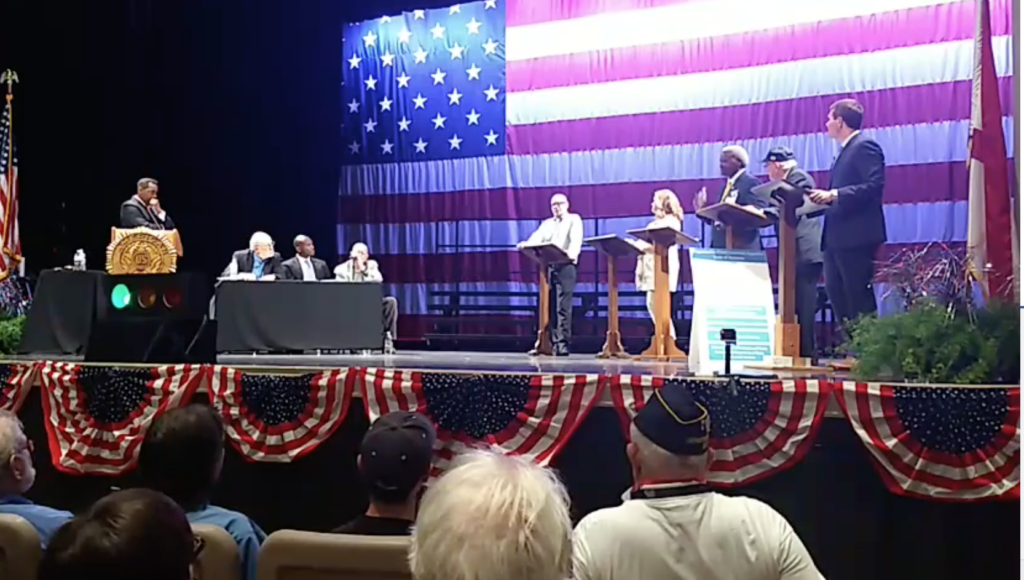
Democratic gubernatorial hopefuls spent their final debate Wednesday focused on policy, instead of taking jabs at each other, as their party seeks a revival in the GOP-dominated state. Former Alabama Chief Justice Sue Bell Cobb, Tuscaloosa Mayor Walt Maddox, former state legislator James Fields, Doug Smith and Chris Countryman appeared in the Wednesday debate hosted by Alabama Boys State, a civics and leadership program for teens. Alabama has not elected a Democrat to the governor’s office in 20 years, but the candidates — casting an eye toward the November general election — argued Alabama needs a change in leadership. Cobb said the state has been damaged by the “drama and embarrassment” of a series of GOP scandals, including a Republican governor who resigned in the wake of a sex-tinged scandal and a Republican House speaker convicted on ethics charges. “We’ve got to have leaders that will not embarrass us, will do the job and provide the visionary leadership Alabama deserves,” Cobb said. Maddox in his opening statement recalled as a teen hearing then Democratic candidate Paul Hubbert in the 1990 gubernatorial election talk about improving access to health care and education. Twenty-eight years later Alabama remains, “48th, 49th and 50th in everything that matters,” Maddox said. “Alabama is at a crossroads between the past and the future,” Maddox said. In the hour-plus debate, candidates spoke in favor of Medicaid expansion, establishing a state lottery and the need to boost economic opportunities to keep young people from leaving the state. Fields, in response to a question about funding infrastructure, said he opposed raising the tax on gasoline — a measure favored by some politicians in both parties — because he said it would be a tax, “on the poor.” “We are going to put the tax where it needs to be and that’s on property. Folks, poor people don’t own a lot of property but we want to continue to tax the poor,” Fields said. He said he also favored removing the tax on food. Countryman said the state needs to invest in renewable energy sources to curb dependence on fossil fuels. Countryman said he also favored legalization of medical marijuana and to look at the possible legalization for recreational use. Smith, an economist, said the state has stagnated in economic growth. The forum in front of the mostly teen audience was cordial despite contentious moments in earlier debates between Maddox and Cobb. The two are considered the front runners in Tuesday’s primary contest. The winner will face the Republican nominee in November. Republished with the permission of the Associated Press.
Kay Ivey announces plan to arm school administrators

In the wake of school shootings across the county, Gov. Kay Ivey is taking precautionary action. On Wednesday she announced a new plan that provides for an additional security measure in schools that do not have a School Resource Officer (SRO). Dubbed the Alabama Sentry Program, the voluntary program will permit administrators in schools, without an SRO, to maintain a firearm on campus in a secured safe in order to be prepared to respond to an active shooter situation. The Sentry Program will require that the administrator successfully complete training created and certified by the Alabama Law Enforcement Agency (ALEA). Unlike teachers, school administrators have complete access to their schools and are responsible for the safety of all students at the school, not an individual classroom. “The Governor’s SAFE Council recommended adding more School Resource Officers throughout our state, a solution that I support, and will work with the legislature to implement. However, until we have a concrete plan to increase the number of SROs, we must provide a way for schools to protect their students in the upcoming school year. I have created the Alabama Sentry Program to provide additional security measures for our children, and to utilize the current summer break to train those who volunteer to be a sentry,” Ivey explained. “The Alabama Sentry plan is a reasonable and measured approach to provide an additional tool for schools without a resource officer. With the unfortunate continued occurrence of school violence across our country, we cannot afford to wait until the next legislative session.” The Sentry Program will be established immediately, through administrative action, under existing law, as a bill to arm school teachers failed this legislative session. Joining Ivey for the announcement were Alabama Secretary of Law Enforcement Hal Taylor and Alabama’s new Superintendent of Education, Dr. Eric Mackey. “I believe this is a common-sense approach to increasing security in our schools. The SAFE Council worked hard with officials from around the state to create a list of recommendations. I applaud Governor Ivey and members of the SAFE Council for creating this program,” Taylor said. “School security is one of the highest priorities for law enforcement and this program will help first responders identify and stop threats quicker and before they happen.” A school administrator must seek the approval of their local superintendent, local school board, and county sheriff to participate in the Sentry Program. School administrators seeking to assume the duties of school sentry: must possess a valid Alabama school administrator certificate and a valid concealed-carry pistol permit; must be appointed as a reserve sheriff’s deputy; must be an active school administrator in a public elementary or secondary school without an SRO; and must pass a drug screening, a mental-health assessment, and a stress test. Sentries will be subject to random drug screenings, annual training, mental-health, and stress test recertification. “Schools are sanctuaries of learning and, as such, they must be safe places for our children to learn, knowing that the adults around them are watching out for their safety and security. With recent events around our country, now is the time to act,” Dr. Mackey added. “The Alabama Sentry Program is one way for us to put more safety resources in schools without having to seek new funding. This is truly a step in the right direction. I look forward to working with Secretary Taylor and the entire SAFE Council to implement this program.” A school sentry’s duties will be written to include “the use of lethal force to defend the students, faculty, staff, and visitors of his or her school from the threat of imminent bodily harm or death by an armed intruder.” School sentries shall only exercise their duties in response to an armed intruder. School sentries will be required to keep their firearms in a secured weapon storage system. School sentries, or their employing board of education, shall be responsible for acquiring and maintaining a weapons-storage system, an approved weapon, ammunition, and a specially-designed bullet-proof vest. The program is slated to be in place to start the 2018-2019 school year.
Saving Jeff Sessions: Inside the GOP effort to protect the Attorney General
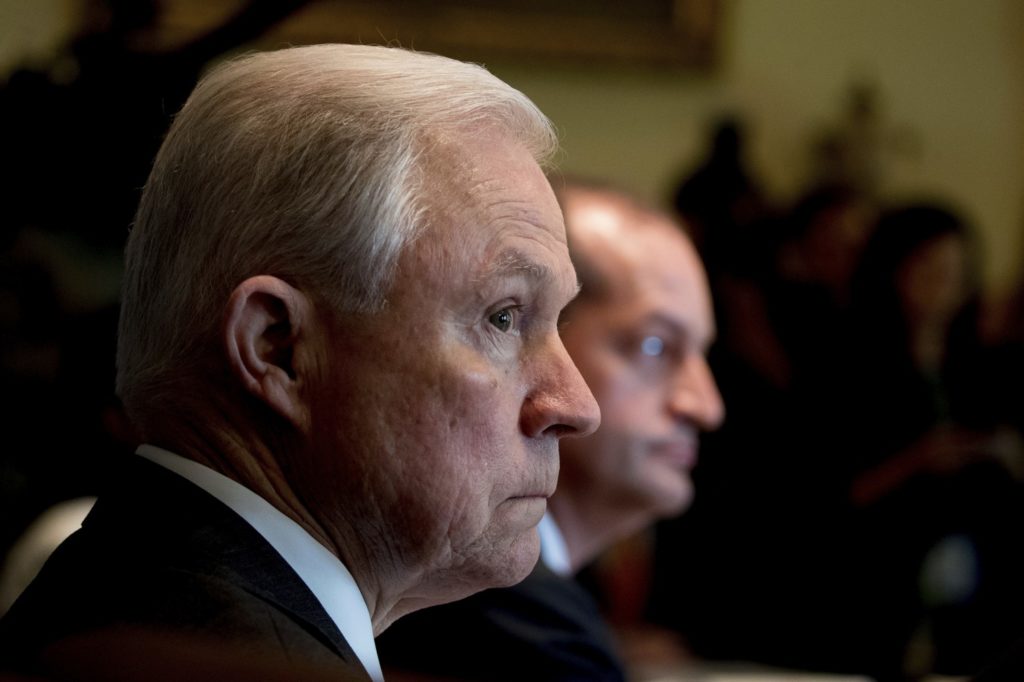
Days after President Donald Trump deemed Jeff Sessions “beleaguered” and threatened to fire him last July, members of the president’s inner circle made a desperate case to save the attorney general’s job. The White House chief of staff, Reince Priebus, and the president’s chief strategist, Steve Bannon, pleaded with Trump during a heated Oval Office meeting to keep Sessions, warning that his dismissal would only pour gasoline on the Russia investigation. And, they said, it could alienate those in Trump’s conservative base, supporters enamored with the attorney general’s tough stances on law enforcement and immigration. Priebus and Bannon both were out of their jobs within the month. But Sessions survived, his reprieve delivered by John Kelly as one of his first acts as chief of staff. Ten months later, the Republican campaign to save Sessions has continued and — at least for now — succeeded. In private meetings, public appearances on television and late-night phone calls, Trump’s advisers and allies have done all they can to persuade the president not to fire a Cabinet official he dismisses as disloyal. The effort is one of the few effective Republican attempts to install guardrails around a president who delights in defying advice and breaking the rules. It’s an ongoing effort, though not everyone is convinced the relationship is sustainable for the long term. As recently as this month, Trump lawyer Rudy Giuliani said the president had raised the issue again, wondering aloud if he’d made a mistake in not firing Sessions. And both Giuliani and influential Republican lawmakers have hinted that, once special counsel Robert Mueller’s probe wraps up, Sessions could be in danger again. “There’s no doubt he’s complained about him, there’s no doubt he has some grievances. I don’t know they’ve aired them out yet. He’s not going to fire him before this is over,” Giuliani told reporters Wednesday. “Nor do I think he should.” Trump showed Wednesday the campaign to save Sessions hasn’t tempered his anger at the attorney general’s decision to recuse himself from the Russia probe, an act the president believed birthed the Mueller investigation, which is imperiling his presidency. In a tweet, Trump again declared he regretted appointing the former Alabama senator to the job in a familiar, but no less stunning, public rebuke of a sitting Cabinet official. Despite the withering complaints, Trump appears to comprehend the potential consequences of firing Sessions and seems resigned to the idea that he’s stuck with him for the time being, according to nearly a dozen people close to the decision, who spoke on condition of anonymity to discuss private conversations. The case that Sessions’ protectors have outlined to Trump time and again largely consists of three components: Firing Sessions, a witness in Mueller’s investigation of obstruction of justice, would add legal peril to his standing in the Russia probe; doing so would anger the president’s political base, which Trump cares deeply about, especially with midterm election looming this fall; and a number of Republican senators would rebel against the treatment of a longtime colleague who was following Justice Department guidelines in his recusal. Senate Judiciary Committee Chairman Chuck Grassley, R-Iowa, has said that he will not schedule a confirmation hearing for another attorney general nominee if Sessions is fired. Giuliani told The Associated Press on Wednesday that Trump has asked him multiple times, before and after the former New York mayor joined the president’s legal team last month, about whether Sessions should have been fired. Giuliani said Trump consulted him last summer during the height of his rage about Sessions’ recusal. More recently, he said, Trump has not actively considered firing Sessions but has wondered if he made the right decision in not doing so previously. “And when he asks, ‘Should I have done that?’ I say, ’No, the way it is now has worked out,’” Giuliani said, adding that he did not believe Trump would fire Sessions. Later, speaking to reporters at the White House, he compared the president’s temper to that of the late George Steinbrenner, the mercurial owner of the New York Yankees. Influential conservatives have also heard Trump lash out about Sessions and, though some have sympathy for the concerns, have repeatedly talked him out of doing anything drastic, said one person in touch with both men who spoke on condition of anonymity to discuss private conversations. The person recalled a venting session after a meeting at the White House last fall, when the president aired his frustrations with the attorney general about his recusal. The person expressed sympathy but argued against firing Sessions, in part because of his success in carrying out the president’s agenda. Trump’s complaints about Sessions have at times won sympathy from some friends who believe Sessions’ recusal was too broad and ill-timed and undercut the positive attention from a State of the Union address the president had recently delivered. While the recusal remains Sessions’ original sin in Trump’s eyes, the president has also fumed that he sees Sessions as failing to get a handle on immigration and not placing enough emphasis on combating transnational criminal organizations. After being berated by Trump over the recusal decision last spring, Sessions offered his resignation, but the overture was rejected. He is widely viewed as determined to stay in the job because he believes in the president’s agenda, which largely mirrors his own interests, and is reluctant to leave a job for which he gave up a Senate seat. Hours after the president’s attack on Wednesday, Sessions visited the White House for a routine litigation issue, a Justice Department official said. There may be a limit to how long the campaign to save Sessions can hold on. Giuliani on Wednesday only offered assurances Trump would not fire Sessions during the Mueller investigation, because of the “distraction” it would cause. And a number of Republican senators who have supported Sessions have indicated in recent days that they are warming to Trump’s complaints. Sen. Lindsey Graham of South Carolina, who in March said firing
State cuts burdensome red tape for Alabama businesses

Ask any business attorney or accountant and you will discover the business division of the office of the Secretary of State has not been traditionally recognized for either speed of services, customer service, or efficiency. Secretary of State John Merrill is working hard to change that. On Wednesday, his office announced corporate filings in the area of business services have now been processed the same day that they are received by the Office for 100 consecutive weeks. At the direction of Merrill, his team undertook some significant restructuring and reorganization to allow the staff in that division to process Alabamian’s business formation documents the same day that they are received in the Office of the Secretary of State, which he believes is an indication the office “no longer moves at the speed of government,” but is now “moving at the speed of business.” “When I started campaigning to become Secretary of State in 2013, I was informed that the business division at the Alabama Secretary of State’s Office was seven to nine months behind on business filings. That was shocking and unacceptable to the people of Alabama and something that I knew needed attention, structure, and accountability. Through the implementation of common sense measures, and the removal of team members that were not willing and able to contribute to the team’s overall goal, we have rebuilt the business services team and processes into one that no longer moves at the speed of government, we are now moving at the speed of business,” Merrill explained. The Alabama Secretary of State’s Office is the repository for all business filings in the state of Alabama. State law requires the state to record these filings and for them to be made available to the public for inspection. It also requires a fee be charged and empowers the Secretary of State to charge an additional $100 to expedite the filings process; however, with Merrill’s increased efficiencies in the administration of these processes, this fee is no longer necessary, providing additional cost savings to the people of the Alabama. In an effort to further expedite the processing time for new or existing businesses in Alabama, Secretary Merrill has implemented an online filing system to allow businesses to complete the registration process without extended time away from their new venture. At the time, Baldwin County’s Probate Judge Tim Russell and Jackson County’s Probate Judge Victor Manning are the only counties that have implemented the program, which is completely free for any county that agrees to participate, but Merrill believes more are coming soon. Merrill continued, “Taking this service online provides additional access and resources to the people of Alabama and allows small business owners to focus on the important things that come with starting or managing a small business. This will continue to help move Alabama forward allowing for the expeditious creation of jobs and overall improvements in the life of all Alabamians, through the removal of inefficient bureaucratic red tape.”
