Justice Department move on health law has risks for GOP
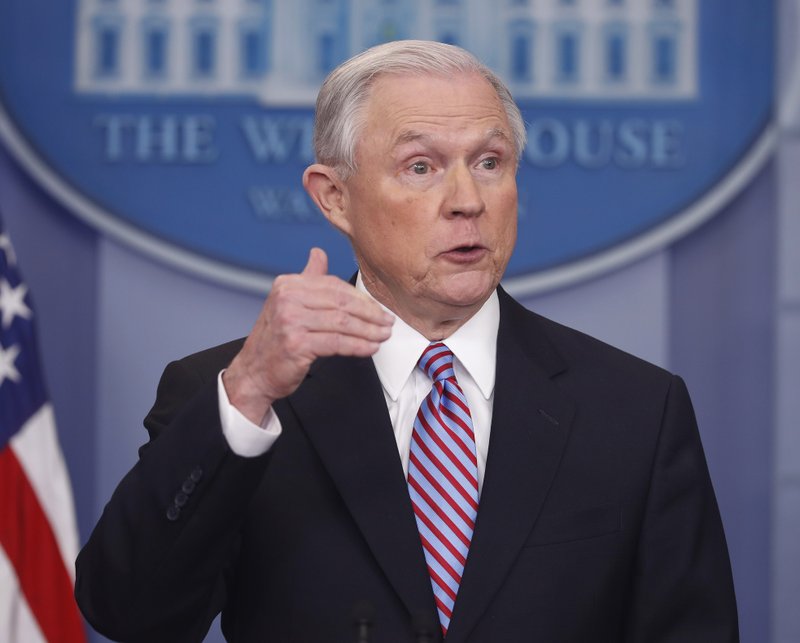
The Trump administration’s decision to stop defending in court the Obama health law’s popular protections for consumers with pre-existing conditions could prove risky for Republicans in the midterm elections — and nudge premiums even higher. The Justice Department said in a court filing late Thursday that it will no longer defend key parts of the Affordable Care Act, beginning with the unpopular requirement that people carry health insurance, but also including widely-supported provisions that guarantee access for people with medical problems and limit what insurers can charge older, sicker adults. Friday, the insurance industry warned in stark terms of “harm that would come to millions of Americans” if such protections are struck down, causing premiums “to go even higher for older Americans and sicker patients.” Weighing in on a Texas challenge to the health law, the Justice Department argued that legally and practically the popular consumer protections cannot be separated from the unpopular insurance mandate, which Congress has repealed, effective next year. That argument is likely to be lost on consumers, said Robert Blendon, a polling expert at the Harvard T.H. Chan School of Public Health — particularly in the heat of an election that will determine control of Congress. “The pre-existing condition thing is what the ads will be run on,” said Blendon. “Pre-existing conditions have gotten to be an issue that people walking on the streets understand … it’s very emotional.” Some Democratic politicians didn’t waste much time. “Democrats will not allow Republicans to get away with quietly trying to strip away pre-existing conditions protections for millions of Americans through a legal backdoor,” said Rep. Frank Pallone, D-N.J., a spokesman for his party on health care. Senate Democratic Leader Chuck Schumer of New York urged President Donald Trump to reverse the decision. Administration officials at the departments of Health and Human Services and Treasury would not comment, instead pointing to the Justice Department filing, which said other parts of the health law would continue to stand, including its Medicaid expansion covering about 12 million low-income people. HHS and Treasury administer the health law’s coverage and subsidies. Loosening the health law’s rules on pre-existing conditions and on charging more to older adults is a key goal for the Trump administration. Partly that’s because those consumer protections also raise premiums across the board, as the cost of covering the sick is spread among all customers, including healthier people who previously benefited from lower rates. Indeed, people who pay the full cost of their individual health plans and aren’t eligible for subsidies under the health law have been clamoring for relief from several years of double-digit premium increases. Economist Gail Wilensky, who’s advised Republicans, said she’s not sure about the timing of the administration’s action. “You can definitely assume Democrats will use it to whip up their side,” said Wilensky, administrator of Medicare under former President George H.W. Bush. “For the people not affected by the ACA, or not particularly supportive, I don’t know that it will matter much.” The issues in the court case are unlikely to be resolved quickly, but some experts said the added uncertainty could prompt insurers to seek higher premiums in 2019 for health plans sold to individuals. “Insurance companies hate uncertainty, and when they face uncertainty they tend to increase premiums and hedge their bets,” said Larry Levitt of the nonpartisan Kaiser Family Foundation. America’s Health Insurance Plans, the main industry trade group, bemoaned the Justice Department’s stance, saying it could upset a market that is becoming “more steady” for most consumers. “Zeroing out the individual mandate penalty should not result in striking important consumer protections,” the group said. It will lead to “renewed uncertainty in the individual market” and a “patchwork of requirements in the states” and make it more challenging to offer coverage next year. The lawsuit, filed in February by Texas and other GOP-led states, is in many ways a replay of the politically divided litigation that ended with the Supreme Court upholding the health care overhaul in 2012. In this case, California is leading a group of Democrat-led states in defending the law. The Trump administration’s stance is a rare departure from the Justice Department’s practice of defending federal laws in court. Attorney General Jeff Sessions said in a letter to Congress that Trump, who campaigned on repealing the law and nearly did so his first year in office, approved the legal strategy. Donald Verrilli Jr., President Barack Obama’s top Supreme Court lawyer who defended the law, called the decision “a sad moment.” “I find it impossible to believe that the many talented lawyers at the department could not come up with any arguments to defend the ACA’s insurance market reforms, which have made such a difference to millions of Americans,” Verrilli said. Shortly before the government’s court filing Thursday, three career lawyers at the Justice Department withdrew from the case and were replaced by two political appointees, according to court filings. Republished with the permission of the Associated Press.
State Rep. Ed Henry claims he’s not guilty of any crimes
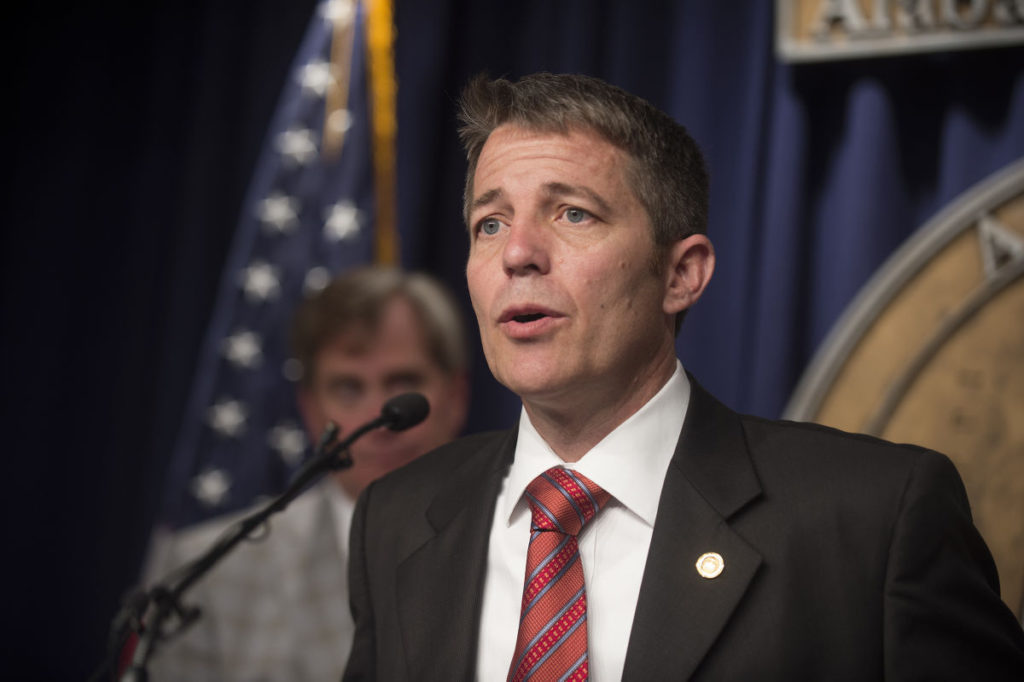
Hartselle-Republican, State Rep. Ed Henry, claims he is not guilty of any crimes. Henry was indicted on Thursday by Middle District U.S. Attorney Louis V. Franklin Sr. The Republican representative was named as the fourteenth defendant to be indicted in connection with a federal pill mill case in Montgomery. He is charged with conspiracy to pay kickbacks to defraud the United States, unrelated to his position in the state Legislature. On Thursday afternoon Henry posted a statement on his personal facebook page, saying he is not guilty of any crimes. “I’ve always been as open and transparent as possible,” said Henry on facebook. “For the last 8 years I have fought the government from further encroachment on our Freedoms. Today began my fight with the Federal Government for my freedom. So while I would like to lay everything on the table for all to see, that would not be wise while fighting an opponent that has endless resources like our Government.” “My goal was to help patients, and I did. Using a program established and promoted by Medicare, I helped chronically ill patients and saved the taxpayers’ money. For that, I have been charged with multiple Felonies.” “I am not guilty of any crimes.” From 2015 through 2017, Henry was an owner, and CEO of a health care company, MyPractice24, Inc. (MyPractice24). His company provided non-face-to-face chronic care management services to Medicare beneficiaries who had two or more chronic conditions. Using contracts with primary care physicians the doctors would pay Henry’s company to provide these chronic care management services to the doctors’ patients, the company would provide the services, the doctors would bill Medicare for the services, and then the doctors would pay Henry’s company a share of the reimbursements received from Medicare. In 2016, Henry entered into an agreement with Dr. Gilberto Sanchez, a Montgomery physician who has subsequently pleaded guilty to drug distribution, health care fraud, and money laundering charges. Under that agreement, MyPractice24 would provide various kickbacks to Dr. Sanchez and his staff in return for the providers at Dr. Sanchez’s practice referring Medicare beneficiaries to MyPractice24 for chronic care management services. The indictment charges Henry with one count of conspiring to pay kickbacks and to defraud the United States, one count of conspiring to commit health care fraud, five counts of health care fraud, and money laundering charges. If convicted of the most serious offense, Henry faces a maximum sentence of 10 years in prison, significant monetary penalties, asset forfeiture, and restitution.
Social Security and Medicare finances weakening

An unexpected weakening in the finances of Social Security and Medicare has raised concern about the bedrock programs for the middle class. The problems may only keep getting worse in a time of political tension and deep partisan divisions. Here are some questions and answers on an issue that ultimately will affect every American family and isn’t going away: WHAT’S NEW? The government’s annual Trustees Reports on the programs shows the financial condition of both worsening significantly since last year. The projected insolvency for Social Security stayed unchanged — in 2034 — but Medicare’s moved three years closer, to 2026. A more immediate warning signal caught the eye of experts. Both programs will start tapping their reserves this year, meaning that income from payroll taxes and interest earned by the Social Security and Medicare trust funds will no longer cover costs. That threshold was still a few years away in the 2017 checkup. “The near-term outlook in both programs got substantially worse,” said Republican economist Charles Blahous, a former public trustee helping to oversee program finances. “What is unusual in the space of one year is to go from something that isn’t supposed to happen for four or five years to something that’s happening right now.” As a result, Social Security and Medicare will need a $416 billion transfer from the government’s general revenues this year, when the federal deficit is shooting up due to tax cuts and increased spending. __ SHOULD WE BE WORRIED? “Yes,” said Leon Panetta, a Democratic elder statesman who held many government posts over a long career, from California congressman to White House budget director, defense secretary and CIA director. “What people have to worry about is that in a democracy we govern either by leadership or by crisis,” Panetta added. “What you are looking at right now is a situation where crisis is going to be driving decisions. Rather than fixing it today, which is what we should be doing, we’re simply going to postpone the day.” Panetta is co-chair of the Committee for a Responsible Federal Budget, a nonpartisan watchdog group. __ WHAT’S WRONG WITH WAITING? “A lot of people in Congress are focused on what’s going to happen tomorrow, not what’s going to happen in 2026,” observed Rep. Frank Pallone, D-N.J. But waiting in the context of Social Security and Medicare inflicts more pain, leading to bigger tax increases, benefit cuts as high as 20 percent, or some combination of both, as the programs slide deeper into the hole. Younger people, less likely to be following the debate, have the most to lose. “Really the system is fine for older people; it’s not fine for younger people,” said Robert Bixby of the Concord Coalition, a nonpartisan group that advocates better control of federal budgeting. “People under 50 are paying into a system that can’t afford to pay them the benefit it’s promising them, and I don’t think they realize it. The more we delay reforms, the more sudden and draconian they would be, especially for younger people.” __ WHAT ARE SOME POLICY OPTIONS? They boil down to tax increases and benefit cuts, with an effort to spare current retirees of modest means. Options for Social Security include lifting the limit on which payroll taxes are levied (now $128,400), reducing annual cost-of-living increases, raising the underlying payroll tax rate, changing the benefit formula, and raising the full retirement age (now gradually rising to 67). Options for Medicare include raising the eligibility age —now 65— to match Social Security’s, cutting payments to medical service providers, raising premiums for beneficiaries, and raising the payroll tax. Some groups are drawing a line against benefit cuts. “Core Medicare coverages which exist under current law should not be diminished for current or future beneficiaries,” said Judith Stein, head of the Center for Medicare Advocacy, which provides legal help to beneficiaries. “Until we actually try to negotiate Medicare drug prices, we are spending billions of dollars a year that could be saved for the program.” __ WHERE DO TRUMP AND LAWMAKERS STAND? Trump promised not to cut Social Security or Medicare, and Treasury Secretary Steven Mnuchin recently suggested that tax cuts, rolling back regulations, and better trade agreements could boost economic growth and help stabilize the programs. But nonpartisan government experts who produced the annual Social Security assessment don’t seem to be buying that, forecasting “sustained moderate economic growth.” Republicans in Congress are losing their most prominent advocate for overhauling benefit programs with the retirement of House Speaker Paul Ryan of Wisconsin. Their budget credibility is seen as damaged after passing major tax cuts and spending increases. Democrats want to expand social programs, not pare them back. Problem-solving is becoming a lost skill in Washington, said GOP economist Douglas Holtz-Eakin. “There used to be a playbook where the White House provided leadership and gave air cover to Congress to do hard things, so members could go home and defend their votes,” said Holtz-Eakin. “Maybe such a strategy is being hatched behind closed doors at the White House,” he added, but “to date, there is no evidence.” Republished with the permission of the Associated Press.
Defeated PSC candidate Jim Bonner starts a Gofundme page for recount

In the aftermath of Tuesday’s primary elections, highly controversial PSC candidate Jim Bonner has launched a Gofundme page titled “Justice in Alabama” in order to raise funds for a recount in the PSC race. “Simple this is a fund for the ordeal dealing with the Alabama GOP shenanigans. Help raise money for a recount,” says the page description. Bonner has raised $20 of the $5.000 he is asking for. According to the Alabama Secretary of State’s office, Bonner’s margins were just shy of the automatic recount number of .5 percent. Bonner was defeated with a .68 percent margin. In order to obtain a recount Bonner must raise and pay all of the costs associated with the recount which could total over $1 million. However, even if he does somehow raise the money, it may not matter. According to Ballotpedia, Alabama recount laws state that “the time period for requesting a recount begins ‘with the production of the certificate of result and ends 48 hours after the official canvass of county returns.’” Bonner began his Gofundme account on June 7, two days after the primary, rendering any money he raised from the start obsolete. Bonner created a lot of controversy in this years PSC race by posting questionable photos and opinions to his social media accounts. The Alabama Republican party promptly censured him, and later added that they would disregard any votes he received.
Alabama officials welcome Airbus-Bombardier partnership plan

Alabama officials today congratulated Airbus and Bombardier on making significant progress toward the completion of a partnership deal that could see the companies establish a new assembly line for Bombardier’s C Series passenger jets at Airbus’ Mobile facility. Aerospace giant Airbus and Canadian aircraft maker Bombardier this morning said they have received all necessary regulatory approvals for a transaction that will give Airbus majority ownership in the C Series partnership. The deal is expected to close July 1. In the announcement, the companies said increased demand for C Series aircraft is expected to support the creation of a second assembly line at the Airbus facility in Mobile. That echoes earlier statements from company executives about plans for a possible new Alabama assembly line. Gov. Kay Ivey said Alabama is ready to support the plans to expand aircraft production at Airbus’ manufacturing center in Mobile. “The alliance between these two great aircraft manufacturers and the future production of C Series passenger jets in Mobile underscore the strength of Alabama’s aerospace industry and our skilled workforce,” Ivey said. “Alabamians take pride in their work, and we look forward to adding the C Series aircraft to the world-class products that are made with care in Sweet Home Alabama.” Accelerating growth Greg Canfield, secretary of the Alabama Department of Commerce, said the completion of the C Series partnership has the potential to turn Mobile into a major global production center for aircraft. “These plans represent a powerful testament to the partnership between Airbus and its U.S. industrial home in Alabama,” Canfield added. “This development is a win-win for Airbus and Bombardier, and it will accelerate growth in Alabama’s high-flying aerospace sector.” Airbus launched production of A320 family aircraft at the Mobile manufacturing facility in 2015. The $600 million complex now produces four aircraft a month and employs more than 400 people. “All of us at Airbus are excited to welcome the employees of the C Series Aircraft Limited Partnership into the extended Airbus team, and to welcome the C Series aircraft to Airbus’ product offerings beginning July 1. It will also be exciting to see us grow further in Mobile,” said Kristi Tucker, spokesperson for Airbus. Officials at the Mobile Area Chamber of Commerce cheered the news. “Additional capacity has always been a goal of our economic development team,” said David Rodgers, vice president of economic development for the Mobile Area Chamber. “Since the initial Airbus FAL (final assembly line) opened in 2015, more than 20 aerospace companies have located to Mobile. We’re looking forward to continuing to see additional investment here, as we work to grow our aerospace cluster.” The Airbus-Bombardier alliance was originally announced in October 2017. Republished with the permission of the Alabama Newscenter.
Donald Trump’s goosey claims on trade, jobs
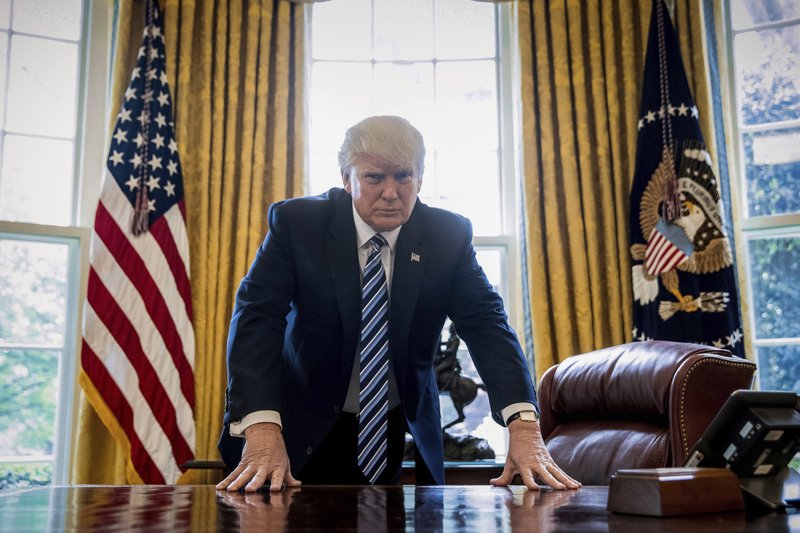
President Donald Trump is using some goosey numbers to rationalize his aggressive rhetoric on trade, disregarding strong points in U.S. competitiveness to paint a dark portrait of a world taking advantage of his country. Conversely, he’s glossing over aspects of the economy that don’t support his faulty contention that it’s the best it’s ever been. The complexities of health care for veterans are also set aside as he hails a new era in the Department of Veterans Affairs’ system. A look at some of his statements over the past week and the reality behind them: TRUMP: “Why isn’t the European Union and Canada informing the public that for years they have used massive Trade Tariffs and non-monetary Trade Barriers against the U.S. Totally unfair to our farmers, workers & companies. Take down your tariffs & barriers or we will more than match you!” — tweet Thursday. TRUMP: “Farmers have not been doing well for 15 years. Mexico, Canada, China and others have treated them unfairly. By the time I finish trade talks, that will change. Big trade barriers against U.S. farmers, and other businesses, will finally be broken. Massive trade deficits no longer!′ — tweet Monday. THE FACTS: Whatever his beef with farm trade with specific countries, he’s wrong in suggesting U.S. agriculture runs a trade deficit. The U.S. exports more food products than it imports, running a $17.4 billion surplus last year. It’s long been a bright spot in the trade picture and it’s why many U.S. farmers are worried about losing markets as Trump retreats from, renegotiates or disparages trade deals. U.S. farmers do brisk business with the three countries he complains about in the tweet, two of them under the umbrella of the North American Free Trade Agreement, which Trump is threatening to leave if it’s not recast to give the U.S. greater advantage. The U.S. exported $20.5 billion in agricultural products last year to Canada, the largest market for U.S. farmers. That made for a modest deficit of $1.8 billion. The U.S. exported $18.6 billion in farm goods to Mexico, running a deficit of $6 billion. The U.S. has a lopsided advantage with China on farm goods, in contrast to manufactured products. It sold $21 billion in agricultural products to China in 2016, for a surplus of $16.7 billion. The Agriculture Department says exports of food products have grown “steadily over the last two decades.” Trump’s unrelievedly negative view of the EU may be grounded in a substantial trade deficit with the continent, but his administration’s trade office takes a longer and more benevolent view of the relationship. “Two-way U.S.-EU trade has been roughly balanced over time,” says the U.S. Trade Representative’s Office, “and the very high levels of foreign investment accounted for by each in the other’s markets means that the transatlantic economy is arguably the most integrated on Earth.” ___ TRUMP: “The EU trade surplus with the U.S. is $151 Billion.” — tweet Thursday. THE FACTS: He’s wrong about the trade deficit with the EU. As he usually does, Trump ignored trade in services in his calculation. The U.S. is more competitive in services than in goods overall, and services are a big part of the trade equation. The U.S. saw a $153 billion trade deficit in goods with the EU last year, but a surplus in services brought the actual trade deficit with the union down to $101 billion. ___ TRUMP: “Best Economy & Jobs EVER, and much more.” — tweet Monday referring to achievement in his first 500 days in office. THE FACTS: May’s unemployment rate of 3.8 percent is not the best ever. And the economy has seen many periods of stronger growth. The lowest unemployment rate since World War II was reached in 1953, when it averaged 2.9 percent, almost a full point lower than today. The job market is certainly strong, with unemployment at an 18-year low, and if it drops another tenth of a point, it’ll be the lowest since 1969. Yet the jobless rate was at or below 4 percent for four straight years back then, from 1966 through 1969, and wages were rising more quickly. The cost of items such as college and health care was much lower then. Overall the economy has yet to show it can sustain growth in excess of 3 percent, as Trump has promised. In the 1990s boom, still the longest on record, the U.S. economy expanded at an average annual pace of 4.3 percent for five years, from 1996 through 2000. In the 1980s, growth averaged 4.6 percent annually from 1983 through 1987. While the economy has picked up from 2016, its best showing since Trump took office was 3.2 percent in last year’s third quarter. ___ TRUMP: “Separating families at the Border is the fault of bad legislation passed by the Democrats. Border Security laws should be changed but the Dems can’t get their act together! Started the Wall.” — tweet Tuesday. THE FACTS: No law mandates that parents must be separated from their children at the border, and it’s not a policy Democrats have pushed or can change alone as the minority in Congress. Children are probably being separated from the parents at the border at an accelerated rate because of a new “zero tolerance policy” being put in place by Trump’s own administration. Announced April 6 by Attorney General Jeff Sessions, the policy directs authorities to prosecute all instances of illegal border crossings, even against people with few or no previous offenses. Administration officials are quick to note that Sessions’ policy makes no mention of separating families. That is correct. But under U.S. protocol, if parents are jailed, their children are separated from them because the children aren’t charged with a crime. So while separating families might not be official U.S. policy, it is a direct consequence of Sessions’ zero-tolerance approach. According to U.S. Customs and Border Protection, more than 650 children were separated from parents at the border during a two-week period in May. ___