
Daniel Sutter: Insuring disaster
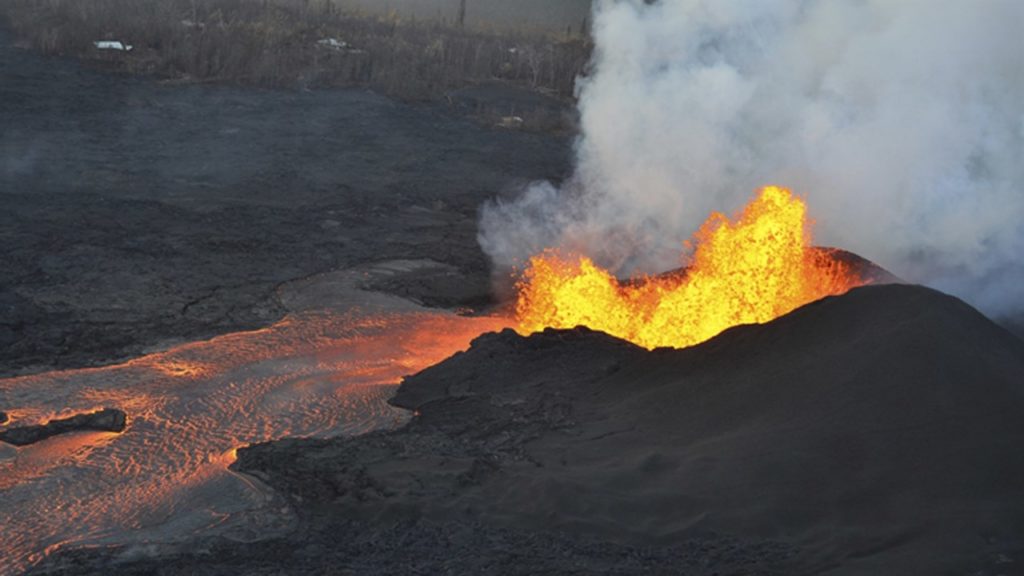
Kilauea on the island of Hawaii began erupting on May 3, and has to date destroyed about 600 homes. The terrifying pictures led me to wonder why anyone would build a home on one of the world’s most active volcanoes. Hawaii’s regulation of property insurance provides part of the explanation, and Kilauea’s eruption offers a lesson for Alabama. Geologists know a lot about volcanoes and lava. The Hawaii Volcano Observatory has mapped over 500 lava vents on Mauna Loa. Hawaii’s volcanoes produce two types of lava, with very different textures and flow speeds. The risk of lava flows varies widely across the island of Hawaii. Geologists divide the island into nine lava flow risk zones, based on the location of the most active vents and the mountains’ contours. The Grassroot Institute of Hawaii, a public policy think tank, has detailed the insurance story. In the 1990s, insurance companies stopped covering homes in the two highest risk lava zones. With insurance unavailable, banks would not write mortgages, and builders could not build homes. The state government created the Hawaii Property Insurance Association (HPIA) to sell low priced insurance. Many homes destroyed in the eruption were built due to HPIA. Hawaii used an insurance pool to subsidize building on Kilauea. Alabama uses an insurance pool, the Alabama Insurance Underwriting Association, for hurricane coverage along the Gulf Coast. Insurance pools offer “affordable” coverage, meaning priced in line with what people want to pay, not the rate sufficient to allow insurers to cover losses after the next eruption or hurricane. HPIA’s low rates virtually guarantee losses. Why would insurers join HPIA then? Because they had to. No, Hawaii did not have The Godfather to make insurance companies an offer they couldn’t refuse. Rather, insurers must receive permission from state regulators to operate. Regulators made joining HPIA a condition for operating in Hawaii. What happens when an insurance pool suffers losses they cannot pay in a future eruption (or hurricane)? They impose assessments, which are essentially taxes, on other state insurance policies. Hawaiians who live on Oahu might have to pay for the destroyed homes. Insurance pools represent a stealth government policy, one likely to fly under the radar until disaster happens. Hawaii could have let insurance companies charge rates high enough to cover future claims and used taxes to pay part of homeowners’ premiums. For example, insurers could have been allowed to charge $20,000 a year to cover a house on Kilauea, with legislators covering $15,000 of the price using taxes. Instead, HPIA let homeowners just pay say $5,000, and relied on imposing taxes after the eruption. Subsidizing building in risky areas is poor policy, but I think that transparency makes direct subsidies a better option. Citizens are more likely to reach an informed decision when legislators must spend our taxes. Stealth might produce programs that citizens do not truly want. Humorist P. J. O’Rourke has said, “Giving money and power to government is like giving whiskey and car keys to teenage boys.” Mr. O’Rourke believes that government will spend our taxes on boondoggles, and often he’s right. Insurance pools suggest though that state legislators are probably subsidizing through insurance some things they would never dare spend our tax dollars on. Defenders often argue that development would not occur in some risky areas without insurance pools. The point is valid. Yet the risk posed by lava – or hurricanes – is real, and development is more costly as a result. People should only live or work in high risk areas if doing so creates enough value to cover the higher cost. High insurance premiums ask people, “are you sure you want to build a home here?” Geographer Gilbert White, a pioneer of natural hazards research, argued that disasters were never merely acts of God; our choices contributed to the outcome as well. Whether volcanoes and hurricanes produce disasters will depend on whether government encourages risky decisions. ••• Daniel Sutter is the Charles G. Koch Professor of Economics with the Manuel H. Johnson Center for Political Economy at Troy University and host of Econversations on TrojanVision. The opinions expressed in this column are the author’s and do not necessarily reflect the views of Troy University.
Here are the candidates from the 6 statewide races headed to runoff elections

Alabama voters cast their ballots on June 5 in a handful of statewide races. Of those contest, only six were forced to move to the upcoming July 17 primary runoff elections. Meaning, voters will need to head back to the polls and cast their ballots yet again ahead of the Nov. 6 general elections to help final their party’s nominee. That said, the cross-over voter ban is officially in effect. Meaning, whatever party a voter choose to vote with in the primary, they cannot change it in the runoff elections. So if you voted with the Democratic party on June 5, you’re unable to vote in any of the statewide runoff races (though there are several down-ballot run-off races, so don’t count your vote completely out). With just 33 days to go until the runoff, here’s an overview at how the candidates fared in the primary elections, as well as handy links to their websites and social media pages: Lieutenant Governor Twinkle Cavanaugh: 43.3% of the vote in the June 5 primary Party: Republican Website Facebook Twitter Will Ainsworth: 37.1% of the vote in the June 5 primary Party: Republican Website Facebook Twitter The winner of this race will go on to face Democrat Will Boyd in the general election. Attorney General Steve Marshall: 28.4% of the vote in the June 5 primary Party: Republican Website Facebook Twitter Troy King: 27.8% of the vote in the June 5 primary Party: Republican Website Facebook Twitter: N/A The winner of this race will go on to face Democrat Joseph Siegelman in the general election. Alabama Supreme Court: Associate Justice, Place 1 Brad Mendheim: 43.4% of the vote in the June 5 primary Party: Republican Website Facebook Twitter Sarah Stewart: 29.31% of the vote in the June 5 primary Party: Republican Website Facebook Twitter: N/A The winner will ultimately take office as there is Democratic challenger in the general election. Commissioner of Agriculture and Industries Rick Pate: 40.37% of the vote in the June 5 primary Party: Republican Website Facebook Twitter: N/A Gerald Dial: 29.98% of the vote in the June 5 primary Party: Republican Website Facebook Twitter The winner will ultimately take office as there is Democratic challenger in the general election. Court of Civil Appeals, Place 1 Christy Edwards: 40.75% of the vote in the June 5 primary Party: Republican Website Facebook Twitter: N/A Michelle Thomason: 31.99% of the vote in the June 5 primary Party: Republican Website Facebook Twitter The winner will ultimately take office as there is Democratic challenger in the general election. Court of Criminal Appeals, Place 2 Rich Anderson: 34.76% of the vote in the June 5 primary Party: Republican Website Twitter: N/A Chris McCool: 42.56% of the vote in the June 5 primary Party: Republican Website Facebook Twitter: N/A The winner will ultimately take office as there is Democratic challenger in the general election.
Kay Ivey awards grants to assist low-income, elderly Alabamians with bills

Gov. Kay Ivey on Tuesday awarded nearly $965K in grants to assist low-income and elderly Alabama residents with weatherizing their homes to lower energy costs. The grants, totaling $964,862, support Alabama’s Weatherization Assistance Program, which provides funds to improve the energy efficiency and safety of qualifying homes. Priority is given to those with disabilities, the elderly and low-income households with children. “Many elderly and disabled residents are living on very limited incomes and often struggle to pay higher utility bills,” Ivey said. “These grants will help permanently lower the energy bills for many residents by making upgrades to keep their houses cool during these hot summer months.” Weatherization includes installing extra insulation in attics, walls and floors; sealing air leaks around doors and windows; repairs or tune-ups for air conditioning and heating units; and replacing incandescent light bulbs with high-efficiency bulbs. The improvements, in addition to lowering energy bills, can reduce the risk of fire and other hazards. Ivey awarded the grants to 14 community agencies across the state that manage the program at the local level and receive applications from individuals who wish to be considered for assistance. Below is a list of each grant, the recipient agency, counties served and the agency telephone number: $88,671 to Central Alabama Regional Planning and Development Commission (Autauga, Chilton, Dallas, Elmore, Lee, Macon, Perry, Russell and Shelby) 334-262-4300 $33,145 to Community Action Committee Inc. of Chambers-Tallapoosa-Coosa (Chambers, Coosa and Tallapoosa) 256-825-4287 $24,570 to Alabama Council on Human Relations Inc. (Lee) 334-821-8336 $62,990 to Community Action Partnership of Huntsville-Madison and Limestone Counties, Inc. (Madison and Limestone) 256-851-9800 $96,602 to Jefferson County Committee for Economic Opportunity (Jefferson) 205-327-7500 $93,956 to Mobile Community Action Inc. (Choctaw, Mobile and Washington) 251-457-5700 $61,247 to Montgomery County Commission (Montgomery) 334-832-1210 $78,713 to Community Action Partnership of North Alabama Inc. (Cullman, Lawrence, Marion, Morgan, Walker and Winston) 256-355-7843 $75,782 to Community Action Agency of Northeast Alabama Inc. (Blount, Cherokee, DeKalb, Etowah, Jackson, Marshall and St. Clair) 256-638-4430 $33,966 to Community Action Agency of Northwest Alabama Inc. (Colbert, Franklin and Lauderdale) 256-766-4330 $112,151 to Organized Community Action Program Inc. (Barbour, Bullock, Butler, Coffee, Covington, Crenshaw, Dale, Geneva, Henry, Houston, Lowndes and Pike) 334-566-1712 $70,760 to Community Action Agency of South Alabama (Baldwin, Clarke, Conecuh, Escambia, Marengo, Monroe and Wilcox) 251-626-2646 $55,430 to Community Action Agency of Talladega, Clay, Randolph, Calhoun and Cleburne(Calhoun, Clay, Cleburne, Randolph and Talladega) 256-362-6611 $76,879 to Community Service Programs of West Alabama Inc. (Bibb, Fayette, Greene, Hale, Lamar, Pickens, Sumter and Tuscaloosa) 205-752-5429
Jefferson County School Board member Donna Pike apologizes for social media posts
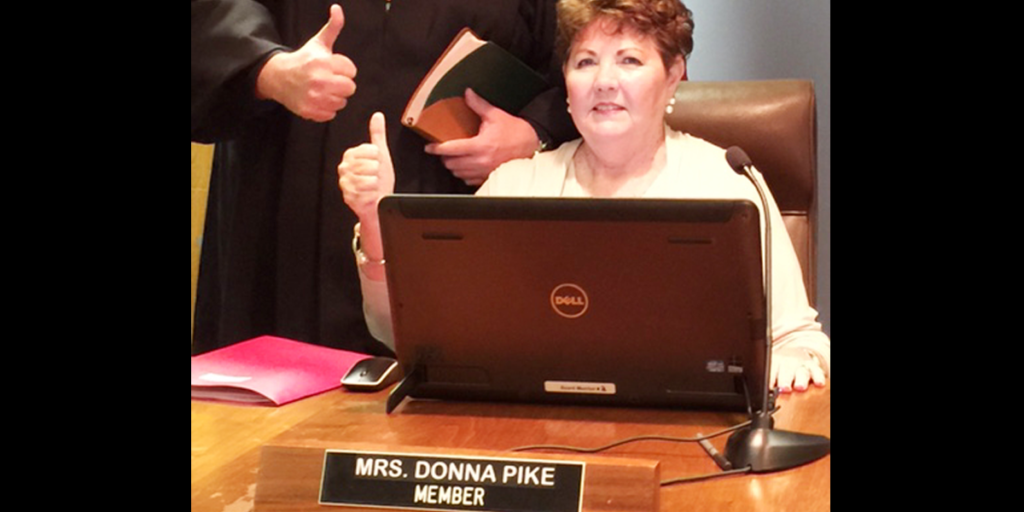
Irondale-Republican and Jefferson County School Board member Donna Pike is apologizing for social media post that some have deemed racist. On Tuesday, Pike found herself in the hot seat after being called out by local Birmingham activist Carlos Chaverst for a Facebook post she shared on June 1 with an picture of former President Barack Obama advisor Valerie Jarrett but with the caption “No! I’m not black! I’m Valerie Varret (sic) and I’m a Muslim, born in Iran!” Pike didn’t deny the post. “I shared it, and I’m not sorry I did, and I meant it because it shows hypocrisy in our country. Some people can get away with it and some people can’t. It was not racist,” Pike responded to Chaverst and the rest of the school board, according to AL.com. Pike also posted an image in support of Roseanne Barr, who’s revived sitcom was recently cancelled by ABC after the comedian posted a racist and Islamophobic tweet that attacked Jarrett. The post read, “Everybody seem to be against Roseanne. Do you still support her? If you still support her, share this picture and comment with yes.” Tuesday night, she deleted the posts and on Wednesday she apologized for them. “I didn’t realize they would be perceived as they are,” she told WVTM 13.
Auburn University research team discovers Zika-transmitting mosquito species in Alabama
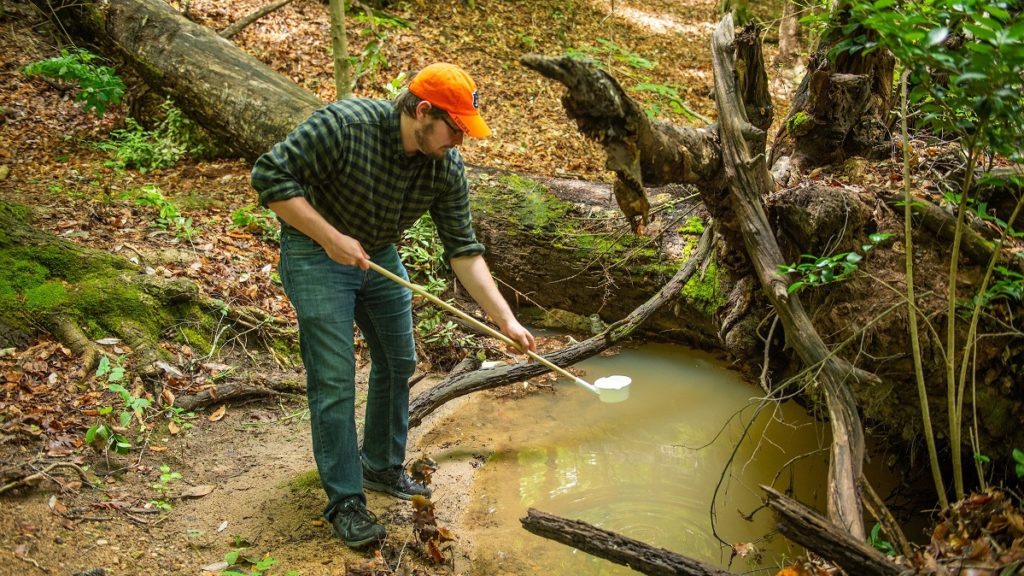
Auburn University researchers have discovered the presence of Aedes aegypti — the primary mosquito that transmits Zika virus, yellow fever and other flaviviruses — in Alabama. After a 26-year absence of the mosquito, Sarah Zohdy, Auburn School of Forestry and Wildlife Sciences Assistant Professor of Disease Ecology, and wildlife sciences undergraduate student Victoria Ashby have discovered the species in Mobile. Ae. aegypti was thought to have been eliminated from the state. “Our CDC-funded research has not only allowed for the detection and molecular confirmation of the mosquito in the state, but over the last year we have documented the spread of the mosquito from central Mobile to all of Mobile County,” Zohdy said. The study was conducted from July 2016 to September 2017. Mosquitoes were collected twice a month from the grounds of various tire shops, gas stations, abandoned buildings and open containers quantified to estimate larval abundance. A total of 1,074 mosquitoes were collected, with Ae. aegypti being detected most commonly in the 36606 ZIP code of southwest Mobile, where there were more open containers than any other area in the city. Since 1991, Ae. aegypti was thought to have been displaced in Alabama by another container-breeding mosquito, Ae. albopictus, because Ae. albopictus larvae are better competitors with resource-limited habitats and the males are capable of mating with Ae. aegypti and rendering the females sterile. Despite these advantages, Mobile is the ideal habitat for Ae. aegypti reintroduction or for remnant populations to persist because the city’s maritime traffic and its diverse mix of urban, suburban, rural and industrial environments allow the mosquito to find different habitats where it can either escape from Ae. albopictus or have the competitive upper hand. Aedes aegypti, the primary mosquito that transmits the Zika virus, has been rediscovered in Mobile after a 26-year absence. (CDC) The detection of Ae. aegypti confirms that Alabama residents could be at risk to contract several mosquito-transmitted diseases. “This work demonstrates that citizens of Alabama may be exposed to the mosquito vector of Zika, chikungunya and Dengue fever viruses,” Zohdy said. Zika virus spreads to people primarily through the bite of an infected Aedes species mosquito. Female mosquitoes become infected by ingesting microbes from a person’s blood while biting them and then passing those microbes to the next person’s blood stream. Once infected, the mosquito is then thought to remain infected and able to pass on the virus throughout the remainder of its life, about two to four weeks. During this period they may take three to four blood meals, biting up to four or five people during their lifespan. Ae. aegypti is particularly problematic because it will also bite during the day and is very adaptive to different environments. Specific geographic areas of greatest risk are correlated to the existence of the Aedes species. The Centers for Disease Control and Prevention, or CDC, has developed estimated-range maps using models that predict potential geographic ranges where the Zika-transmitting mosquitoes would likely survive and reproduce based on local and historical records and suitable climate variables. According to the 2017 maps, the Zika-transmitting mosquito species are very likely to exist throughout the southeastern U.S. and as far west as California and as far north as Delaware. Despite Alabama being an ideal habitat for mosquitoes that transmit Zika virus, very little mosquito surveillance data has been collected from around the state. Zohdy said that because of its research efforts and the discovery of Ae. aegypti, her team is now working with the Alabama Department of Public Health. According to the CDC, 449 symptomatic Zika virus disease cases were reported within the U.S. in 2017, with three reported in Alabama and two in Georgia. The majority of cases were instances of travelers contracting the disease from affected areas. Seven cases were acquired through presumed local mosquito-borne transmission — two in Florida and five in Texas. Zohdy’s team is conducting research in all 67 counties in Alabama to determine how widespread Ae. aegypti and Ae. albopictus are across the state. In an effort to crowd-source mosquito surveillance data around the state, Zohdy’s research team has partnered with Prakash Lab at Stanford University to develop and implement an app called “Abuzz,” which will allow Alabama residents to record the sound of a mosquito flying. From this recording, the app can identify the species of mosquito and whether that species could potentially carry a disease by the sound of the buzzing of its wings. Once deployed, the app can empower volunteer “citizen scientists” to participate in mosquito surveillance to help researchers increase the volume and locations of data collection. “Alabama has had little mosquito surveillance in the past, and we hope this app can change that to make it the best-sampled state in the nation,” Zohdy said. Zohdy and her team also surveyed Mobile residents to gain insight about their perceptions of Zika virus and the best ways to target mosquito prevention. Of those responses, 70 percent reported a moderate to very high density of mosquitoes in their home and more than half of those surveyed said they feel concerned to extremely concerned that they or a family member might contract Zika virus. “To help mitigate the threat of the Zika virus it is critical to understand local knowledge and behavioral factors related to exposure to the mosquitoes,” said Wayde Morse, an Auburn School of Forestry and Wildlife Sciences associate professor of human dimensions, who participated in the research efforts. The results of the research were published April 5 in the Journal of Medical Entomology, a scientific journal that historically publishes important information regarding mosquito surveillance. “Having this research published is a good way to reach people who study mosquitoes and other disease vectors,” Zohdy said. Victoria Ashby, a sophomore studying wildlife sciences with a pre-veterinary medicine concentration, has worked with Zohdy’s research team for more than a year and leads fieldwork efforts. “My fieldwork has consisted of biweekly trips down to the Mobile Bay area in order to aspirate for adult mosquitoes and collect larvae using larval dip cups at 25 different sites in 12 ZIP codes,” she said. After graduation, Ashby plans to attend graduate school to continue on the path of disease ecology research and later attend veterinary school. “I have a strong interest in veterinary epidemiology and public health
250,000 Alabama children live in poverty, state ranked 6th poorest in U.S.
Despite ever-improving unemployment numbers, Alabama’s economy continues to lag behind the rest of the nation’s. That’s according to a new report by Alabama Possible, a statewide nonprofit organization that removes barriers to prosperity through education, collaboration, and advocacy. The group released their 2018 Alabama Poverty Data Sheet on Tuesday, which revealed the Yellowhammer State is the sixth poorest state in the U.S. According to their findings, Alabama’s median household income is just $46,309, which translates to $11,308 less than the national median household income. Poverty in Alabama isn’t just secluded to one part of the state — over 800,000 Alabamians live below the poverty line, which is $24,257 for a family of four — and according to the report, 15 of Alabama’s 67 counties have a poverty rate higher than 25 percent. Key findings 17.2 percent of Alabamians live below the federal poverty line – a noticeably larger percentage than the national average of 14 percent Alabama’s median household income for African Americans is $21,165 less than white families’ median household income 250,000 Alabama children live in poverty Alabama’s child food insecurity rate is 22.5 percent, which is higher than the national average of 17.5 percent. Alabama has a notably high food insecurity rate at 17.7 percent. Improvement Alabama Possible, did note that there is good news to share. The 2018 poverty rate is at its lowest rate since they started publishing the Alabama Poverty Data Sheet in 2010. “It is encouraging to see that fewer Alabamians live in poverty year-over-year, but we still have 800,000 friends and neighbors who face significant barriers to prosperity,” said Kristina Scott, executive director of Alabama Possible, in a news release “It is also deeply concerning to see that the median household income for people of color in Alabama is roughly $15,000 – $20,000 lower than the median household income for white citizens. We must advocate for equitable systems that will dismantle poverty and promote prosperity for all Alabamians.”
Lawsuits claim Congressional maps dilutes black voters in Alabama, Georgia, Louisiana
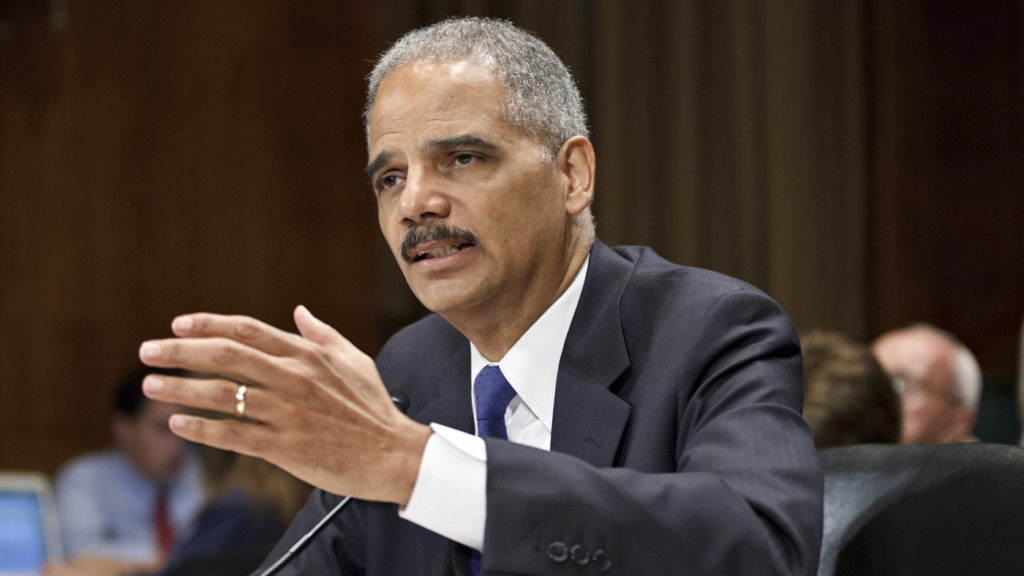
A group backed by Democratic former U.S. Attorney General Eric Holder launched a legal campaign Wednesday in an effort to create more black congressional districts in three Southern states: Alabama, Georgia and Louisiana. The group, the National Redistricting Foundation, claims the current congressional maps violate a section of the Voting Rights Act by discriminating against black voters by not allowing them an equal opportunity to elect candidates of their choice to the U.S. House of Representatives. They seek to block the three states from holding any further congressional elections under the current maps that were approved in 2011. Alabama 7th District U.S. Rep. Terri Sewell, who represents the state’s only majority-minority congressional district, applauded the lawsuits. “I applaud today’s effort by the National Redistricting Foundation to challenge the underrepresentation of African American voters in Alabama,” said Sewell. “Generations of Alabamians have fought tirelessly for equal voting rights, and I support all efforts to guarantee fair representation and access to the polls. More than fifty years after the enactment of the Voting Rights Act of 1965, our work to prevent voter discrimination and unfair electoral practices is not over. Our vote is our voice, and protecting the vote for all Americans must remain a top priority.”
Report on FBI actions in Hillary Clinton email case set for release
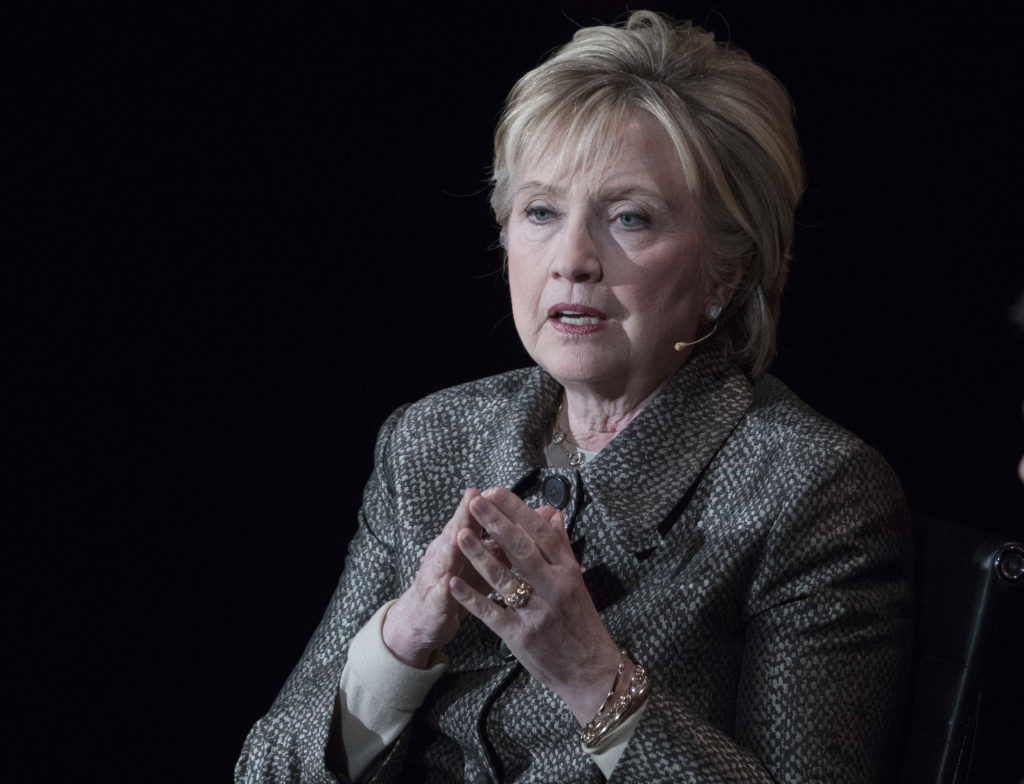
The Justice Department’s internal watchdog is expected to criticize the FBI’s handling of the Hillary Clinton email investigation, stepping into a political minefield while examining how a determinedly nonpartisan law enforcement agency came to be entangled in the 2016 presidential race. The inspector general’s report, set for release Thursday afternoon, is expected to be painstakingly detailed and represents the culmination of an 18-month review into one of the most consequential FBI investigations in recent history. President Donald Trump will look to the inspector general report to provide a fresh line of attack against two former top FBI officials, Director James Comey and his deputy, Andrew McCabe, as he claims that a politically tainted bureau tried to undermine his campaign and, through the Russia investigation, his presidency. Trump will almost certainly use the report to validate his firing of Comey last year. But the report could do more to back Democratic claims that the FBI contributed to Clinton’s defeat, most notably by reopening in the final days of the race its investigation into whether she mishandled classified information. That development unfolded as Trump’s own campaign — unbeknownst at the time to the American public — also came under FBI investigation for possible coordination with Russia. Inspector General Michael Horowitz, a former federal prosecutor appointed by President Barack Obama, prepared the report. Supporters from both parties regard him as apolitical. His most significant report before this one was the 2012 study of the botched Obama-era gun operation known as Fast and Furious. The Clinton report will examine key actions by FBI leaders, including Comey’s decision to publicly announce in July 2016 his recommendation against criminal charges for Clinton, and his disclosure to Congress days before the election that the investigation was being revived because of newly discovered emails. The report is expected to deliver unflattering conclusions about Comey and other FBI officials. An earlier inspector general report criticized McCabe and led to his firing on allegations that he misled internal investigators about his role in a news media disclosure. He denies those charges. Trump, seeking to discredit special counsel Robert Mueller’s investigation, has eagerly awaited the report in hopes that it would skewer the judgment of Comey and make clear that his termination — central to the question of whether the president sought to obstruct justice — was justified. The White House initially pointed to Comey’s handling of the Clinton investigation as the rationale for the firing, though Trump complicated that claim days later when he said he was thinking of “this Russia thing” when he dismissed him. Though Trump has repeatedly lambasted the FBI as politically biased against him, the inspector general’s report — no matter how critical — is unlikely to endorse that conclusion, especially since some of the actions being examined broke from protocol in ways that may have harmed Clinton. Comey’s news conference disclosing the investigation’s conclusion was unusual since charging announcements are normally made by the Justice Department, not the FBI. Cases that end without charges are rarely discussed publicly. In this instance, Comey said that though the FBI found Clinton and her aides to be “extremely careless” in handling classified material, “no reasonable prosecutor” could have brought a case against her. At a congressional hearing last May, he said he was concerned that the Justice Department could not “credibly” announce the conclusion of its investigation, in part because the attorney general at the time, Loretta Lynch, had met aboard her plane with former President Bill Clinton. Lynch described the meeting as a chance encounter unrelated to the case, but Clinton’s critics seized on it to question Lynch’s objectivity. Also investigated was Comey’s decision, against the recommendation of the Justice Department, to reveal to Congress that the FBI was reopening the investigation following the discovery of new emails. The FBI obtained a warrant nine days before the presidential election to review those emails, found on the laptop of former Rep. Anthony Weiner, and ultimately determined that there was nothing in them that changed its original conclusion. Again, Clinton aides, Democrats and former Justice Department officials from both parties criticized Comey, saying he should not have publicly discussed an investigative action especially before he knew whether the emails were significant. People familiar with the report say it criticizes the FBI for not moving quickly enough to review the new emails. Comey has said he felt compelled to alert Congress to the new emails, after having previously testified that the investigation was done. Comey said he faced the tough choice of speaking out or concealing the information. “And I could be wrong, but we honestly made a decision between those two choices that even in hindsight — and this has been one of the world’s most painful experiences — I would make the same decision.” During the inspector general’s probe, officials discovered anti-Trump text messages between an FBI lawyer and an agent on the Clinton case who was later assigned to Mueller’s team. That agent, Peter Strzok, was removed from the team once the texts were brought to Mueller’s attention. The investigation also looked at whether McCabe should have recused himself from the Clinton case since his wife received campaign contributions from the political action committee of then-Virginia Gov. Terry McAuliffe, a Clinton ally, in her failed state Senate run. The FBI has said that McCabe received ethics approvals and did not oversee the Clinton investigation at the time of the contributions. Trump has repeatedly cited the contributions in denouncing McCabe. Republished with permission from the Associated Press.
Congressional baseball game comes a year after shooting
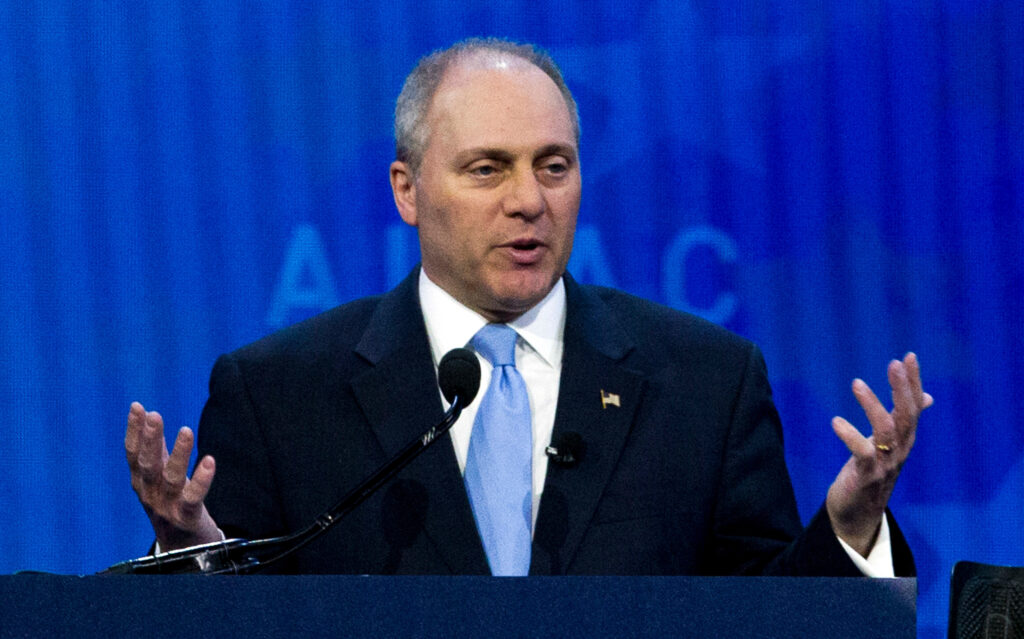
In the year since House Majority Whip Steve Scalise and others were shot at a congressional baseball practice, mass shootings have occurred at a Texas church, a Las Vegas music festival and high schools in Parkland, Florida, and Santa Fe, Texas. Ohio Rep. Brad Wenstrup, a doctor who helped save Scalise’s life last June, has watched those attacks unfold with the acute sensitivity of a mass shooting survivor. Each shooting is jarring, says Wenstrup — he calls the Parkland shooting in particular sickening — but his views on gun control have not changed. “If not for a gun — two guns really — being used on our side” by two Capitol Police officers at the GOP practice, “you might have seen 20 dead people,” Wenstrup says. “That tells you where I’m coming from.” That sentiment is widespread among Republicans, who say the attack has only strengthened their commitment to protecting gun rights. The attack one year ago gives special weight to the annual game Thursday night at Nationals Park, where Republicans and Democrats are gathering for the competition that dates to 1909. Rep. Roger Williams of Texas, who is coaching the Republican team, said he personally asked President Donald Trump to attend the game, and Trump replied that he’d be there. Williams said he didn’t know if Trump was actually attending, and the White House wasn’t saying late Wednesday. Scalise, of Louisiana, suffered life-threatening injuries in the June 2017 shooting but returned to work last fall. He said the shooting “deepened my appreciation for the Second Amendment because it was people with guns who saved my life and every other member out there.” If Capitol Police officers David Bailey and Crystal Griner had not been there with guns to counter the shooter, “then there would have been nobody to take him down and he would have just been able to come and pick us apart,” Scalise said in a brief interview this week. He said he’ll be wearing a Capitol Police baseball cap in their honor Thursday night. As he and other lawmakers prepare for the annual congressional baseball game at Nationals Park on Thursday night — the anniversary of the shooting — Scalise said he’s comfortable with the actions Congress has taken on gun safety, including measures to strengthen the federal background check system for gun purchases and improve school safety. Scalise said he sees no need to go further. “Taking away the rights of law-abiding citizens is not the answer. Again, it was law-abiding citizens with guns that saved my life and many others,” he said. Wenstrup, a former Army combat surgeon in Iraq, says he wants to approach gun violence as a health care issue, particularly mental health. “We need to address homicide in America and what’s driving it, and certainly gun violence is a part of that,” he said in an interview. “I think every school, every place where people gather, has to take a look at their security.” Rep. Chuck Fleischmann, R-Tenn., who was on the field during the shooting, said it reinforced his view that officials need to combat violence in all forms, whether it is someone with a gun, knife or bomb. “Many times it’s mental illness,” Fleischmann said, adding that the FBI told lawmakers in a closed-door briefing that the gunman was intent on “suicide by cop.” “Unfortunately, he targeted us,” Fleischmann said of the gunman, who was killed in a shootout with police. Williams said the shooting “changed everybody’s life,” including his. He sprained his ankle trying to get away from the shooter, and his aide Zack Barth was among those wounded. “It just reminded me that God’s in control and how fleeting life is,” Williams said. “And what’s important and what’s not important. And how divided our country is politically, when somebody would do that.” Williams said he relates to what the mass shooting victims in Las Vegas and elsewhere are feeling. “I won’t lose that sound in my mind” of bullets flying from pine trees near the field, he said. “You don’t forget it. … I’m a Second Amendment guy. I’m a lifetime member of the NRA. I’m a Texan, and I grew up with guns.” The shooting “doesn’t change my mind. It just reminds me how important it is to reach out to those that would wake up thinking, ‘I’m going to kill somebody,’” Williams said. But there was at least one lawmaker on the field that day who said the Alexandria shooting has affected the way he thinks about gun policy. “It’s moved me,” said Sen. Jeff Flake, R-Arizona, who is retiring after this year. He said he now supports restrictions on high-capacity magazines, for instance, “but that hasn’t come up” in debate. Still, “there’s been a shift” for him personally, he said. Meanwhile, Scalise, who has been walking with crutches or a cane, said that despite his physical limitations, he is starting at second base, which “tells you how bad the talent level is.” “I can field balls and still make the throw at first,” he told Fox News Channel. “Being able to walk out onto that field again on Thursday night with my uniform is going to be a special, special moment,” he said. The GOP team held an initial practice this year at the field in Alexandria, Virginia, where the shooting occurred, but has since moved to a separate field in Washington with increased security. The additional security “makes us feel great and more secure,” Fleischmann said, “but I hope and pray we can get to a time and place where we can go to a ball field and feel safe again. That’s the America I grew up in, and I hope we can get back to that.” Republished with permission from the Associated Press.
Walt Maddox ready to debate Kay Ivey in gubernatorial bid
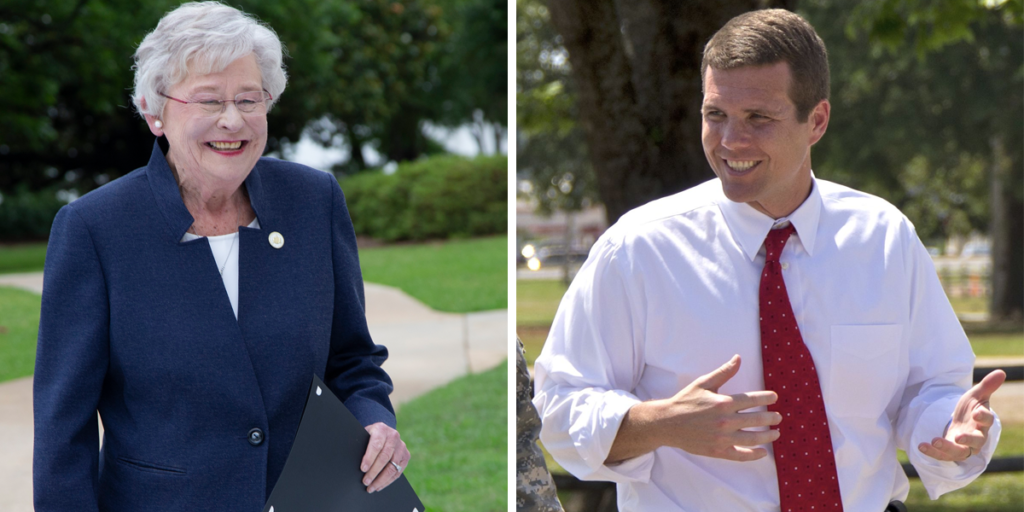
Alabama Gov. Kay Ivey may not have been up for debating her GOP opponents ahead of the June 5 primary, but now Democratic nominee Walt Maddox is also calling her to the debate stage. Maddox, the Tuscaloosa-mayor who handily won the Democratic nomination, said he believes Alabama voters deserve to hear from both candidates on how they plan to address the state’s problems in health care, education and infrastructure. According to the Associated press, “Maddox campaign spokesman Chip Hill wrote Tuesday in a text message that Maddox looks forward to debating Ivey. Ivey campaign spokeswoman Debbee Hancock wrote in an email that, ‘There will be plenty of time for these discussions and decisions’ in the months ahead.” It remains to be seen whether or not Ivey will ignore Maddox’s request. Maddox and Ivey face-off Nov 6 in the general election.
