
Women of Influence: Alabama State Bar President Augusta Dowd

Born and raised in Birmingham, Ala. Augusta Dowd has spent much of her life and career in the Magic City. She attended college at Sewanee: University of the South in Tennessee, and proceeded to Vanderbilt University School of Law. After graduating in 1982, Dowd returned to the Yellowhammer State to begin her long and impressive career in law. Dowd began her career by clerking for the Honorable Judge Seybourne H. Lynne in the Northern District of Alabama. Advancing quickly, she joined the Lange, Simpson, Robinson & Somerville law firm in Birmingham in 1983 where she practiced until 1995. In 1990, Dowd’s third child was born and she made the decision to stay at home and focus on her children, but in 2000 she returned to the workforce in full force. Starting back in her original career field, Dowd joined a firm which would later be reconstructed into White Arnold & Dowd P.C. in 2003. When the reconstruction of the firm occurred, Dowd was offered a position as managing lawyer at the firm, a position she accepted and holds to this day. A major force in her firm, Dowd practices Civil and Complex Litigation law, Environmental Law, White Collar Criminal Defense, Telecommunications, Governmental and Regulatory Affairs, Antitrust, Executive Severance and Compensation, and several more areas of law. Over the years, Dowd has been involved in many committees, boards and organizations including serving as a member of the Birmingham Bar Association’s Executive Committee board from 2004 to 2007 and Chair of the Grievance Committee from 2009 to 2010. She also sat on the board of directors for the YWCA of Central Alabama from 2010 to 2016, and was a member of the organizations Executive Committee from 2011 to 2014. She is also a member of the Alabama Law Foundation’s Atticus Finch Society, the Women’s White Collar Defense Association, the American Bar Association, and the Alabama Committee of the Newcomen Society. Although she had a law degree, and over a decade of experience in her career field Dowd decided she was not done learning and in 2007 she graduated from the Leadership Birmingham program. She also graduated from the Birmingham Multiple Sclerosis Leadership class the same year, and the Momentum Women’s Leadership program in 2010. Dowd has a long history with the Alabama State Bar Association. First serving as a Disciplinary Committee member for the State of Alabama and a Bar Commissioner for the 10th Judicial Circuit in Place 5 from 2009 through 2016. From 2016 to 2017, Dowd served in many aspects of the association, including as a member of the Executive Committee, Finance Committee, Long Range Planning Committee, leading to her position as President-Elect that same year, until 2017 when she was named President of the Alabama Bar Association. Dowd has been recognized and honored by several entities for her prowess, including being named one of the the best lawyers in America by Best Lawyers, a mid-south super lawyer, one of the Top Ten Women in Business in Birmingham in 2006, and was also included in Birmingham Magazine’s list of top Attorneys. Dowd is a woman of great passion for the law, and a true influencer in the Magic City. In spite of her busy schedule, she was kind enough to take some time, and answer some of Alabama Today’s questions on her life, work, and influences. For her service to the community and city of Birmingham, and law professionals across the state, Augusta Dowd is absolutely an Alabama Woman of Influence.
Richard Shelby sits down with legendary rock star Bono from U2
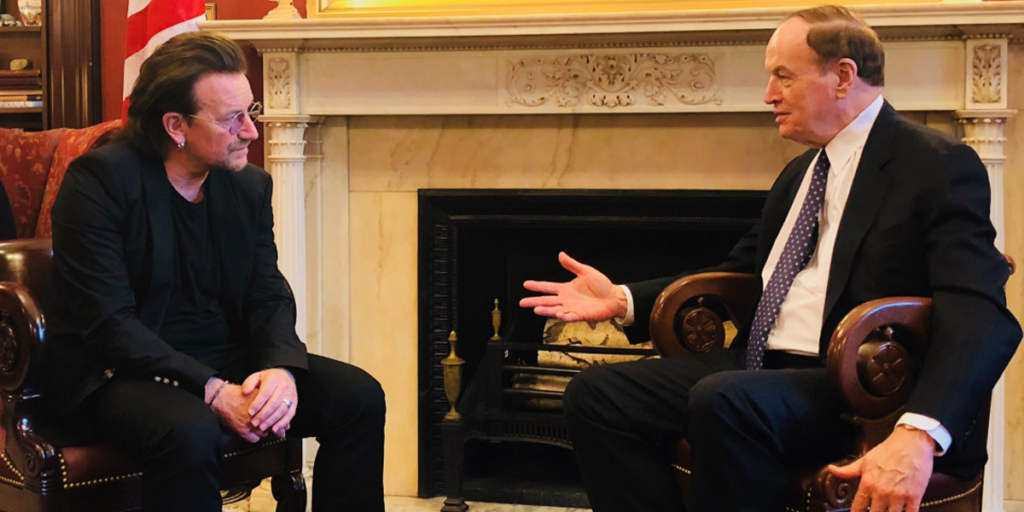
You’re not seeing things… Alabama’s senior U.S. Sen. Richard Shelby really did find himself in the company of rock star legend Bono, of the famed band U2 this week. Thank you to Bono for stopping by the office yesterday! Enjoyed discussing various issues and hearing about all of the good work he is doing around the world. @U2 pic.twitter.com/WcPWC0vsZV — Richard Shelby (@SenShelby) June 20, 2018 On Wednesday Shelby tweeted a photo of himself and the U2 frontman in his office. According to the Associated Press, Bono was visiting Capitol Hill Tuesday — after playing two sold-out shows over the weekend in the nation’s capital — “to thank Republican and Democratic lawmakers in Congress for funding international development programs. He’s the co-founder of The One Campaign, which advocates for ending extreme poverty and preventable disease, particularly in Africa.” Shelby didn’t disclose what the two discussed during the sit down, tweeting only, “Enjoyed discussing various issues and hearing about all the good work he is doing around the world.” Yes, you can file this one under “things that could only happen in the bizarre world of politics.”
Blue Cross and Blue Shield of Alabama joins growing list of BCA exits
Alabama’s largest health insurer on Wednesday, announced they are joining the growing list of major companies pulling out of the Business Council of Alabama (BCA) due to dissatisfaction with BCA’s leadership under President and CEO Billy Canary. Blue Cross and Blue Shield of Alabama (BCBSAL) joins Alabama Power, Regions Bank and PowerSouth Energy Cooperative in leaving the council, which gets its primary funding from membership dues. “Blue Cross has consistently participated at a high level of support of the BCA and its activities. At this time, the correct path for our company and our customers is to withdraw from the BCA while the organization considers its future path,” BCBSAL said in a statement. According to BCA Board Chairman Perry Hand, these major companies had requested the BCA remove its Canary, by May 1 or June 1, a deadline they were unable to meet. Instead, the BCA is working to have new leadership by January 1.
Sheffield City Council approves 2.4% electric rate increase
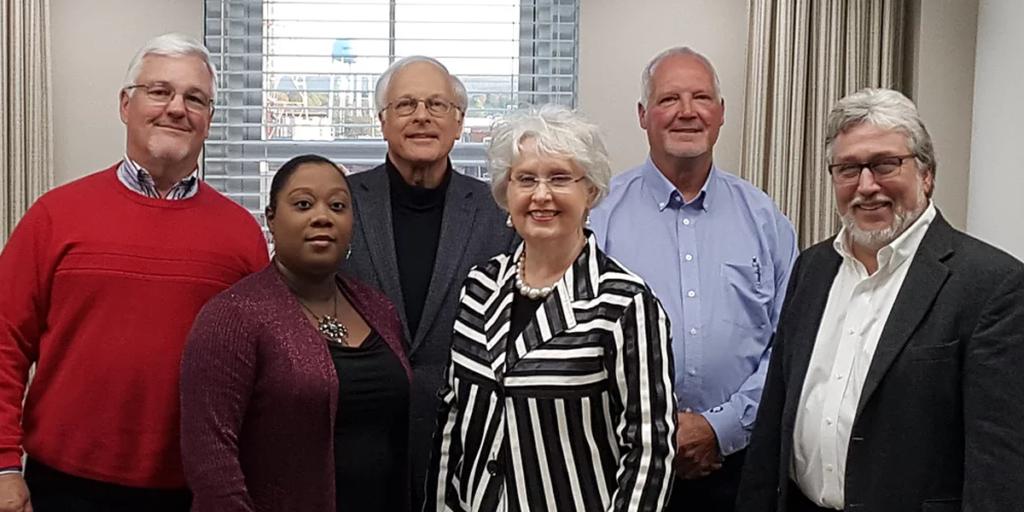
Sheffield residents can expect electric rates to go up this fall. On Monday, the Sheffield City Council approved a 2.4 percent electric rate that will begin showing up in customer’s October utility bills. According to the Times Daily, “Sheffield Utilities General Manager Steve Hargrove said much of the revenue raised by the rate increase will be used to build a new electrical substation on Three Mile Lane in the Spring Valley area.” “Energy sales have been on a slight decline the past five years, and this rate adjustment is necessary for additional capital needs for our service area,” he said. Hargrove explained the 2.4 percent rate hike will increase a monthly bill of $100 by $2.40, or $28.80 per year compared to the same period the year before.
Five things you need to know about Sarah Stewart

The primary elections are over, but some highly sought spots still remain open due to the primary races resulting in runoffs. One of those races is for the Supreme Court, Place 1. Incumbent Brad Mendheim and Thirteenth Judicial Circuit Court Judge Sarah Stewart both garnered enough support to tip the race into a runoff election set for July 17. With that in mind, here are five things you need to know about Sarah Stewart: 1. She was appointed by former-Governor Bob Riley. Stewart was initially appointed to her current position in 2006 by former-Gov. Bob Riley. Later that year she ran without opposition and was elected. She ran again in 2010, winning her first full six-year term. In 2016 she was reelected again, making 2018 the her twelfth year in her current position, 2. Before becoming a circuit judge, she practiced law for fourteen years. Born in Fort Smith, Ark. Stewart attended the University of Arkansas, graduating in 1986 with a Master’s degree and continuing to Vanderbilt University School of Law obtaining her J.D. in 1992. She then practiced with Hand Arendall and Ezell Sharbrough LLC in Mobile, Ala,, later joining Stewart & Hicks P.C. as a senior partner until she was appointed into her current position. 3. She’s the Vice-President Alabama Circuit Judges Association. Stewart has been a major influence in the Alabama Circuit Judges Association since 2009 when she became a board member. She’s held several positions in the association since then, including serving as the Education Chair since 2011, Secretary-Treasurer from 2016 to 2017, and presently as the Vice-President of the association. She has also been a member of several other judicial and legal committees, including the Rules of Evidence Committee, the Alabama State Bar Judicial Liaison Committee, and the Alabama Judicial Caseload Study Committee. 4. She has completed over 1800 criminal and civil cases per year as a circuit judge. Over the course of her over a decade long judgeship, Stewart has disposed of more than 1800 criminal and civil court cases every year. After a controversial ruling earlier this year, Stewart told Yellowhammer News that she “tries to adhere to the law and higher court precedent — even when she might not prefer the result,” saying “sometimes as a judge, you have to sign off on an opinion you don’t personally agree with because that’s the law.” “Judges are referees, not policymakers,” Stewart continued. 5. She’s been an active member of several non-profit organizations. In addition to serving on many judicial committees and boards, Stewart has been actively involving herself in her community. She has served whole-heartedly on several non-profit boards in the Mobile area, including the Girl Scouts of Southern Alabama Board, Loaves and Fishes Ministry 15th Place Homeless Day Service Shelter board, and is and active member of the Junior League of Mobile.
With eyes on midterms, Donald Trump embraces immigration fight
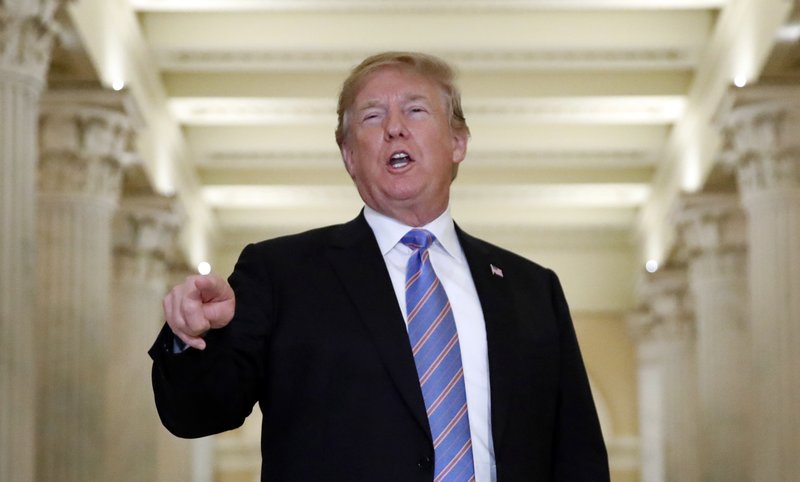
Calling the shots as his West Wing clears out, President Donald Trump sees his hard-line immigration stance as a winning issue heading into a midterm election he views as a referendum on his protectionist policies. “You have to stand for something,” Trump declared Tuesday, as he defended his administration’s immigration policy amid mounting criticism over the forced separation of children from their parents at the U.S.-Mexico border. The chorus of condemnation includes Democrats, as well as Republicans, who are increasingly worried that reports about bereft children taken from their parents could damage the GOP’s chances in November. Still, Trump believes that his immigration pledges helped win him the presidency and that his most loyal supporters want him to follow through. He made a rare trip to Capitol Hill late Tuesday to meet with GOP legislators and endorse a pair of bills that would keep detained families together, among other changes, but he remains confident that projecting toughness on immigration is the right call, said five White House officials and outside advisers who spoke on condition of anonymity because they were not authorized to speak publicly. “It’s amazing how people are surprised that he’s keeping the promises he made on the campaign trail now,” said Trump political adviser Bill Stepien. While the White House signaled Trump may be open to a narrow fix to deal with the problem, the president spent the day stressing immigration policies that he has championed throughout his surprise political career. He has resisted calls to reverse the separation policy, saying any change must come through Congress. In a speech to a business group earlier Tuesday, Trump said he wanted to see legislation deal with family separation, which, he said, “We don’t want.” He also emphasized border security and again made the false argument that Democrats are to blame for the family separation problem. Said Trump: “Politically correct or not, we have a country that needs security, that needs safety, that has to be protected.” Several White House aides, led by adviser Stephen Miller, have encouraged the president to make immigration a defining issue for the midterms. And Trump has told advisers he believes he looks strong on the matter, suggesting that it could be a winning culture war issue much like his attacks on NFL players who take a knee for the national anthem. Former Trump senior adviser Steve Bannon said the president is emphasizing the policies that brought him to the White House. “I think this is one of his best moments. I think this is a profile in courage. This is why America elected him,” Bannon said. “This is not doubling down, it is tripling down.” Still, Trump, a voracious watcher of cable news who is especially attuned to the power of images, appeared to acknowledge later Tuesday that the optics could be doing damage. During his closed-door meeting with lawmakers on the Hill, Trump said his daughter Ivanka had encouraged him to find a way to end the practice, and he said separating families at the border “looked bad,” according to several attendees. “He said, ’Politically, this is bad,’” said Rep. Randy Weber, R-Texas. “It’s not about the politics. This is the right thing to do.” Trump’s immigration standoff comes as he escalates his nationalist trade moves, imposing new tariffs on imports and threating more. With few powerful opposing voices remaining in the West Wing, Trump is increasingly making these decisions solo. Some key advisers have left, and chief of staff John Kelly appears sidelined. Republicans, particularly those in more moderate districts, are worried they will be damaged by the searing images of children held in cages at border facilities, as well as by audio recordings of young children crying for their parents. The House Republicans’ national campaign chairman, Ohio Rep. Steve Stivers, said Monday that he’s asking “the administration to stop needlessly separating children from their parents.” Other conservatives also raised concerns, but many called for Congress to make changes instead of asking Trump to directly intervene. Ralph Reed, chairman of the Faith & Freedom coalition of evangelical voters, added to the drumbeat to end the child separation policy Tuesday, calling on Congress to pass legislation that would end the process as part of a broader immigration overhaul. But asked if the border policy was bad for Trump politically, Reed suggested core supporters remain on the president’s side. He said the group’s members are “more than willing to give the president and his administration the benefit of the doubt that this is being driven by a spike in people crossing the border, a combination of existing law and court decisions require this separation, and the fact that the Democrats refused to work with the administration to increase judges so that this can be dealt with more expeditiously.” Trump on Tuesday mocked the idea of hiring thousands of new judges, asking, “Can you imagine the graft that must take place?” Worried that the lack of progress on his signature border wall will make him look “soft,” according to one adviser, Trump has unleashed a series of tweets playing up the dangers posed by members of the MS-13 gang — which make up a minuscule percentage of those who cross the border. He used the loaded term “infest” to reference the influx of immigrants entering the country illegally. As the immigration story becomes a national flashpoint, Trump has been watching the TV coverage with increasing anger, telling confidants he believes media outlets are deliberately highlighting the worst images — the cages and screaming toddlers — to make him look bad. The president has long complained about his treatment by the media, but his frustrations reached a boiling point after he returned from his Singapore summit with North Korea’s Kim Jong Un to face news reports questioning his negotiating skills. He complained to one adviser that the media had not given him enough credit after the summit and was continuing to undermine him on immigration, according to a person familiar with the conversation but
Steve Marshall called out for attending lavish retreat with lobbyists

A new CBS News investigation has found lobbyists across the country shelling out the big bucks for access to lavish retreats for state attorney generals. One of the most expensive retreats took place in April at the Kiawah Island Golf Resort in the Lowcountry of South Carolina. In attendance was Alabama Attorney General Steve Marshall, a Alabama’s top law enforcement official. There, lobbyists —who work on behalf of companies and entities across the globe — ponied up $125,000 for access to the attorneys general. The lobbyists were more than willing to pay the high price for the chance to rub elbows with some of the AGs with whom they needed to work with on behalf of their clients. Among those groups being represented by lobbyists at the retreat were Koch Industries, Reynolds America, Select Management Resources and the National Rifle Association. According to CBS News, “Selling access to events like this has helped the Republican Attorneys General Association, or RAGA, raise more than $20 million in the last year and a half – twice as much as their Democratic counterparts.’ CBS News reviewed 88 donations over $50,000 or more to RAGA and found 46 of those donors had matters under consideration by a state attorney general or had recently settled. Marshall would not confirm to CBS News that he was in attendance, despite the fact he was listed as one of the nine AGs they identified in attendance at the four-day retreat.
House Republicans turn up the heat in standoff with DOJ
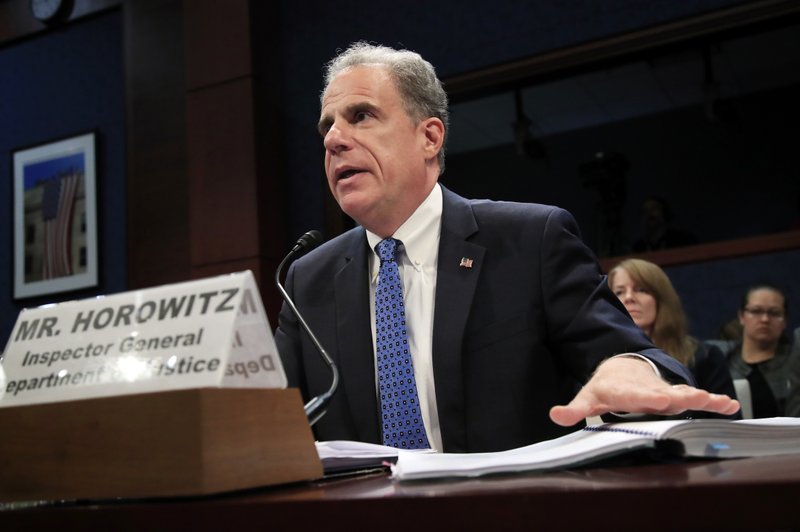
House Republicans escalated their monthslong standoff with the Justice Department, saying the FBI hasn’t adequately addressed bias within the agency and threatening to hold top department officials in contempt — or even impeach them. The stepped-up criticism followed the department’s internal watchdog report, released last week, criticizing the FBI’s handling of the 2016 probe into Democrat Hillary Clinton’s emails. It said political bias didn’t affect the outcome of the investigation that eventually cleared her. Bolstered by President Donald Trump, some Republicans say there’s no way that bias against then-candidate Trump found among some employees didn’t taint the Clinton probe — and, by extension, special counsel Robert Mueller’s investigation into Trump’s Republican campaign and Russia. At a House hearing Tuesday, Republicans angrily asked Justice Department inspector general Michael Horowitz how anti-Trump texts found between some employees who worked on the Clinton probe didn’t influence the outcome. They also complained that they have not yet received some of the documents they have demanded from the department. “We can’t survive with a justice system we don’t trust,” said Republican Rep. Trey Gowdy of South Carolina, the chairman of the House Oversight and Government Reform Committee. Horowitz said in the report and repeated at the hearing that he had concluded the outcome of the investigation was determined by prosecutors’ assessment of the facts, not by bias. Democrats accused the Republicans of trying to distract from or undermine the Mueller investigation by focusing on a few employees who were biased. Several Democrats talked about children separated from their parents at the border, asking why the committee’s focus was still on the candidate who lost the presidency in 2016 instead of on current crises. Democratic Rep. Jamie Raskin of Maryland said Republicans were stuck in a “time warp.” Democratic Rep. Eric Swalwell of California noted that the Judiciary Committee oversees immigration issues and should be focused on that. Trump, who falsely claimed last week that the report exonerated him in the Russia probe, took the opposite view. In a speech to the National Federation of Independent Business on Tuesday, Trump said Democrats “want to focus on immigration because they want to keep the cameras away from the hearings.” The inspector general report did not touch on the Russia investigation. The outrage in the wake of the inspector general’s report is the latest in a series of complaints from Republicans about the FBI. Multiple committees are investigating the agency’s actions in 2016 related to the Clinton email probe and the beginning of the investigation into Russian election meddling and whether Trump’s campaign was involved. Mueller took over the Russia investigation last year and is also investigating whether Trump obstructed justice. As part of their investigations, Republicans have requested more than a million documents. The Justice Department has provided some of them, but GOP lawmakers say they haven’t provided enough — leading to the threats of contempt or impeachment. House Speaker Paul Ryan has backed the document requests, and he led a meeting last week with three committee chairmen and Deputy Attorney General Rod Rosenstein to try to resolve the issue. A person familiar with the speaker’s meeting said Ryan and the other Republicans made clear to the Justice Department that they need to comply with the requests or “face consequences from the whole House.” The person spoke on condition of anonymity because the meeting was not public. Rep. Devin Nunes, the chairman of the House Intelligence Committee, said in an interview Sunday with Maria Bartiromo of the Fox Business Network that the deadline is “this week” and that if they don’t get the documents in time, “there’s going to be hell to pay.” The relationship between the Justice Department and Nunes has been particularly tense. Nunes has demanded multiple sensitive documents as he has investigated, among other things, whether the FBI abused the Foreign Intelligence Surveillance Act when prosecutors and agents in 2016 applied for and received a secret warrant to monitor the communications of a Trump campaign associate. Recently Nunes requested documents related to an informant who spoke to members of the Trump campaign during the election as the FBI’s Russia investigation began. Rosenstein has now held three classified briefings with congressional leaders on that topic, and the department says it has provided those members with documents during those briefings. But Nunes is still unsatisfied, telling The Associated Press after the third briefing last week that he wants the entire intelligence committee to see the documents and “my patience is out.” The documents he is requesting are classified, so Nunes has not described them publicly. Republished with the permission of the Associated Press.
Alabama balks at funding for restored coastal Amtrak service

Alabama is balking at pledging millions of dollars to help restart passenger train service along the northern Gulf Coast for the first time since Hurricane Katrina. Alabama, Louisiana and Mississippi must commit almost $35 million altogether over three years by Thursday to be eligible for the same amount in federal funds that would enable Amtrak trains to run from New Orleans eastward to Mobile, Alabama. Louisiana has agreed to supply about $9.5 million, while Mississippi agreed to $3 million and is considering much more, said Knox Ross of the Southern Rail Commission, which is promoting the project. But Alabama hasn’t promised any money toward the project, he said, and time is running out. “If we don’t do it we’ve left money on the table, which would be very unfortunate,” said Ross. Alabama Gov. Kay Ivey’s office issued a statement saying she supports efforts to restore passenger rail service on the coast but isn’t committing state funding. An Alabama representative on the Southern Rail Commission, Jerry Gehman, said Ivey’s words don’t do anything to move the project forward. “That’s good for the ink and paper it’s written on. But it does nothing … to make it a reality,” said Gehman. Amtrak suspended service east of New Orleans along the Gulf Coast after Katrina, which heavily damaged rails, crossings and other infrastructure in 2006. Ross said the current effort is the most serious one yet to revive passenger rail in the region. Supporters see the New Orleans-to-Mobile proposal as a first step toward expanding Amtrak service elsewhere on the coast, Ross said. The proposed train would run twice a day each way, stopping at cities on the Mississippi coast, he said. Mississippi’s costs for the project are higher than those of the other states because “that’s where the tracks are,” he said. Mississippi Gov. Phil Bryant is considering a request for $14.7 million over three years for capital costs, but a spokesman said no decision has been made. The project can move forward if Alabama doesn’t contribute, Ross said, and actual costs could be less. The eastbound train would simply stop at Pascagoula, Mississippi, rather than continuing into Alabama, he said. “If we get Mississippi to commit we can move forward without Alabama,” said Ross. Republished with permission from the Associated Press.
Military awards Alabama’s GeneCapture $1 million contract to develop portable disease detector
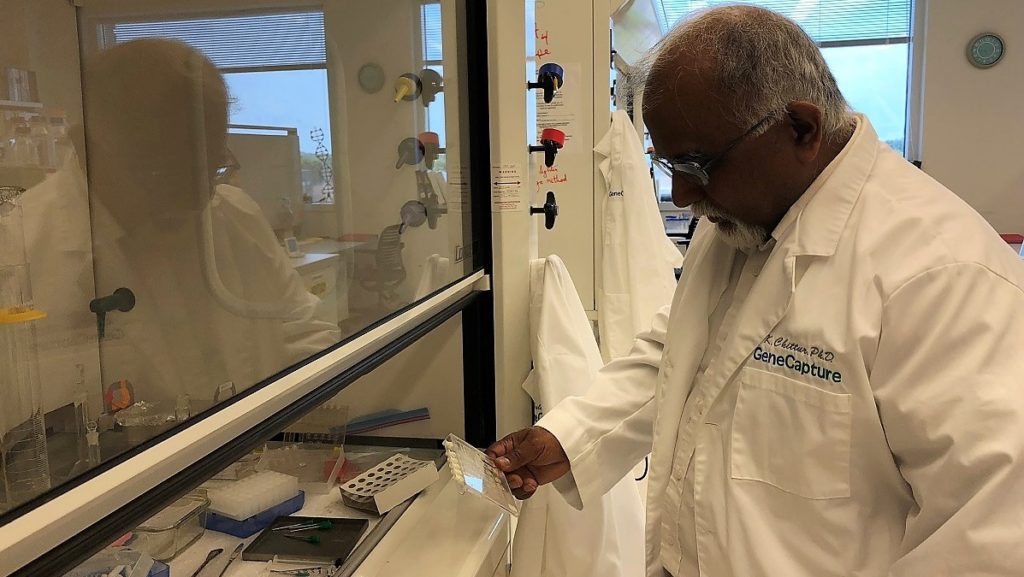
The Department of Defense has awarded Huntsville’s GeneCapture a $1 million, two-year contract to develop a portable device that war fighters can use to identify disease-causing germs. The Small Business Technology Transfer Research (STTR) contract is from the DOD’s Joint Science and Technology Office for Chemical and Biological Defense. GeneCapture, a resident associate company at the HudsonAlpha Institute for Biotechnology, has developed a “gene signature matching platform” that screens for hundreds of pathogens in less than one hour. The multi-pathogen test is conducted using a small, inexpensive disposable cartridge and can be used to test samples from humans and animals. The technique is being evaluated as a possible solution for a portable infection diagnostic device for use in forward deployed military operations. GeneCapture is collaborating on this contract with Birmingham’s Southern Research, which will provide its expertise in infectious diseases, purifying genetic material for testing and designing clinical trials for the Food and Drug Administration. “It has been a dream of mine to bring this technology to market so that critical diagnostic decisions can be made quickly, which will save lives,” said Krishnan Chittur, chemical engineering professor emeritus at the University of Alabama in Huntsville and co-founder of GeneCapture. The original discovery was patented by UAH and exclusively licensed to GeneCapture. Krishnan Chittur, Ph.D., CTO of GeneCapture, and Art Tipton, Ph.D., President and CEO of Southern Research. The Huntsville company and Birmingham-based research institute will work together on a device to quickly identify diseases for the U.S. military. (contributed) Chittur said the technology uses genetic probes to capture the “signature” of germs. An optical scan identifies which germ is present and produces a result in about 45 minutes. “It’s a completely new technique that would have been impossible without the advances in genetics and genomics discoveries of the last decade,” he said. “That is one of the reasons we are located at the HudsonAlpha Institute for Biotechnology – the research that’s happening here is cutting-edge.” Paula Koelle, chief scientist at GeneCapture and principal investigator for the STTR Phase II contract, will lead the effort to produce the disposable cartridges and desktop analyzer for a set of pathogens selected by the DOD that present potential biological threats to the war fighter. The resulting technology could have uses beyond the battlefield. The portable platform could enable civilian applications, such as rapid infection diagnosis in schools, urgent care clinics, doctors’ offices, nursing homes, veterinary clinics, cruise ships and airports. Southern Research’s proven track record supporting new platforms for detecting and preventing newly emerged and highly dangerous and infectious disease pathogens made the nonprofit the perfect partner on the project. “The opportunity to work closely with GeneCapture is a perfect match for Southern Research,” said Art Tipton, Southern Research president and CEO. “We have a history of reaching out to the life sciences community, which benefits both our state economy and the global healthcare industry. Our infectious disease scientists will produce reference tests and accelerate the clinical testing of GeneCapture’s new platform.” Working for the DOD drives home the sense of urgency when it comes to disease-causing germs around the world. “GeneCapture is focused on reducing the risk we all have of being infected from emerging pathogens and global pandemics – the clock is ticking,” said GeneCapture CEO and co-founder Peggy Sammon. “The GeneCapture team is working diligently to bring an affordable, portable solution to this critical problem by connecting with disease experts around the world to incorporate their needs into this product.” Republished with permission from the Alabama NewsCenter.
Five things you need to know about Brad Mendheim

The primary elections are over, but some highly sought spots still remain open due to the primary races resulting in runoffs. One of those races is for the Supreme Court, Place 1. Incumbent Brad Mendheim and Thirteenth Judicial Circuit Court Judge Sarah Stewart both garnered enough support to tip the race into a a runoff election set for July 17. With that in mind, here are five things you need to know about Brad Mendheim: 1. He was appointed by Gov. Kay Ivey to replace Justice Glenn Murdock. In January 2018, Mendheim was appointed by Governor Kay Ivey after Alabama Supreme Court Justice Glenn Murdock announced his resignation. “In appointing someone to serve on the Alabama Supreme Court, it is imperative to appoint someone with impeccable legal credentials and with unquestioned character and integrity; Judge Brad Mendheim exceeds those requirements,” Ivey said in a news release. “With more than 17 years of judicial experience, Judge Mendheim will bring the valuable knowledge of a trial judge to the highest court in our state. As an Associate Justice of the Supreme Court, I know Judge Mendheim will follow the law and serve with honor.” 2. He has served as a judge for over 15 years. In 2001 Mendheim was elected to serve as district judge in Houston County, a position he held until 2008 when he was elected to serve as a circuit judge for the 20th Judicial Circuit covering the Henry and Houston Counties near the Georgia and Alabama state lines. He was then reelected in 2014 for another six year term before Ivey appointed him as a Supreme Court judge in 2018. 3. He’s presided over 300 jury trials. According to Mendheim’s campaign page, he’s presided over 300 jury trials and has twice been called upon to has been called upon to sentence men to death for their convictions for capital murder. He’s also presided over numerous cases of crimes against children, violent felonies, criminal cases, and small claims cases over the course of his career. “I’ve been a trial court judge for most of my career, and I look forward to bringing that experience to the Supreme Court, while working with my new colleagues to ensure justice is achieved in every case we hear,” Mendheim said when he was appointed to the Supreme Court. 4. He served six and a half years as an Assistant District Attorney Before he became a judge, Mendheim worked at a law firm in Dothan for several years. He was then given an opportunity to serve as an assistant district attorney for the 20th Judicial Circuit where he served for just over six years. “As a local prosecutor, he handled every type of criminal case, from the most minor traffic ticket to death penalty cases. Brad personally tried over 120 criminal jury trials, most of which were serious felonies and crimes of violence,” said Mendheim’s campaign page. 5. He was born in Dothan and still lives there. Born to the late Brady and Nancy Mendheim in Dothan, Ala. Medheim attended Auburn University to obtain his bachelors degree and Samford’s Cumberland School of Law for his J.D. But Mendheim had a love for his hometown, and returned after school to begin his career in law, and has spent 17 years serving the area as a judge.
Steve Flowers: Highlighting Alabama’s 2018 judicial races
This is not just a gubernatorial year in the Heart of Dixie. We have every constitutional office up for election which includes Lt. Governor, Attorney General, Secretary of State, State Treasurer, State Auditor and Agriculture Commissioner. We also have a good many of the State Judicial races on the ballot. We have nine seats on our State Supreme Court. We have five judges on the Court of Criminal Appeals, as well as five seats on the Court of Civil Appeals. All of these judicial posts are held by Republicans. Therefore, it is more than likely safe to assume that the winner of the Republican primary will be elected to a six-year term and can be fitted for their robe, at least by July 17. In fact, Democrats usually do not even field candidates in state judicial races. Over the past two decades, a prevailing theme has been that women have become favored in state judicial races. In fact, it was safe to say that if you put two candidates on the ballot for a state judicial position, one named John Doe and the other Jane Doe, and neither campaigned or spent any money, Jane Doe would defeat John Doe. However, for some inexplicable reason, this prevalence reversed itself on June 5 in the Republican primary. In the much-anticipated race for the extremely important Chief Justice of the Supreme Court, position two of the sitting members of the Supreme Court were pitted against each other. Justice Lyn Stuart, who is the longest serving member on the State Supreme Court, had moved into the Chief Justice role after the departure of Judge Roy Moore. She was running for Chief Justice for the full six-year term. Justice Tom Parker was Roy Moore’s closest ally and is now the most socially conservative activist on the court. Parker and Moore dip from the same well. Parker chose to challenge Stuart for Chief Justice. The Lyn Stuart vs Tom Parker contest was billed as one of the Titanic battles of the Primary season. Stuart was the darling of the business community. Parker openly was carrying the banner of the social conservatives. Parker bested Stuart 52 percent to 48 percent. Most of Parker’s financial backing came from plaintiff trial lawyers. Parker does have Democratic opposition from Birmingham attorney, Robert Vance, Jr. However, he should win election in November. Judge Brad Mendheim was facing two prominent female Circuit judges, Debra Jones of Anniston and Sarah Hicks Stewart of Mobile, for Place 1 on the State Supreme Court. Mendheim has been a longtime popular Circuit Judge in Dothan. He was appointed to this Supreme Court seat by Governor Kay Ivey earlier this year. Mendheim decisively outdistanced his female opponents by garnering 43 percent of the vote. He is expected to win election to a full six-year term on the high tribunal on July 17. Another example of the male uprising in the court contests occurred in the race for a seat on the Court of Civil Appeals. Judge Terri Willingham Thomas, who has been on this court since 2006 and has served with distinction, was shockingly defeated by her unknown male opponent, Chad Hanson. Pickens County Prosecutor Chris McCool forged to the front in the race for a seat on the Court of Criminal Appeals. He led 43 to 35 over Rich Anderson from the Montgomery/River Region. In the other court races, the candidate who raised the most money and was able to buy some TV time prevailed. In the State Supreme Court race in Place 4, two Birmingham attorneys, John Bahakel and Jay Mitchell, were pitted against each other. Mitchell significantly outspent Bahaked and won 73 to 27. Christy Edwards of Montgomery and Michelle Thomason of Baldwin County are headed for a runoff for a seat on the Court of Civil Appeals. Richard Minor defeated Riggs Walker overwhelmingly 66 to 34 for a seat on the Court of Criminal Appeals. In the seat for Place 3 on the Court of Criminal Appeals there was yet another display of male dominance in the court races. Bill Cole bested Donna Beaulieu 60 to 40. On Saturday before the Primary, legendary Chief Justice of the Alabama Supreme Court, Clement Clay “Bo” Torbert, passed away at 88 in his beloved City of Opelika. His funeral was on Election Day. Judge Torbert served as Chief Justice of the Alabama Supreme Court for 12 years, 1976 to 1988. He had previously served two terms in the State Senate prior to his election as Chief Justice. See you next week. ••• Steve Flowers is Alabama’s leading political columnist. His weekly column appears in over 60 Alabama newspapers. He served 16 years in the state legislature. Steve may be reached at www.steveflowers.us.
