
Lawmakers call Trump’s Russian press conference ‘bizarre,’ ‘shameful’
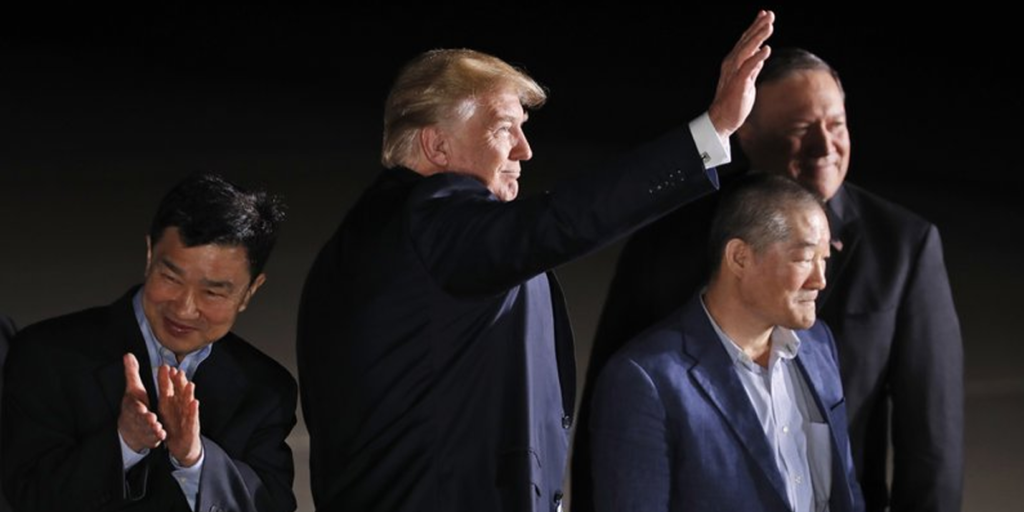
Key members of Congress, including some Republicans, are criticizing President Donald Trump’s performance at a press conference with Russian President Vladimir Putin as “bizarre,” ″shameful” and a “missed opportunity” to stand up to Russia. House Speaker Paul Ryan delivered a strongly worded statement, saying there’s “no question” that Russia interfered in the 2016 presidential election, and noting that U.S. intelligence agencies and a House panel agreed. “The president must appreciate that Russia is not our ally,” Ryan said, in what was, for the mid-mannered speaker, akin to a reprimand. Ryan said Russia “remains hostile to our most basic values and ideals.” Other high-profile Republicans also expressed dismay. “I never thought I would see the day when our American President would stand on the stage with the Russian President and place blame on the United States for Russian aggression,” tweeted Sen. Jeff Flake, R-Ariz. “This is shameful.” Sen. Ben Sasse, R-Neb., called it “bizarre” and “flat-out wrong” for Trump to suggest that both the U.S. and Russia are to blame for the deteriorated state of the two countries’ relationship. Even Trump’s sometimes ally Sen. Lindsey Graham of South Carolina called the summit a “missed opportunity by President Trump to firmly hold Russia accountable for 2016 meddling and deliver a strong warning regarding future elections.” Graham quipped that Trump ought to check a soccer ball Putin gave to Trump for listening devices, “and never allow it in the White House.” The Republican rebuke from Capitol Hill came largely from those lawmakers who have been willing to openly criticize the president. But key Republicans, Democrats and others in Washington appeared stunned that Trump refused to publicly condemn Russian interference in the 2016 election or warn against future meddling during the joint press conference with Putin in Finland. Trump appeared to take the Russian president’s denial of interference at face value while calling the U.S.’s own Justice Department special counsel’s probe as a “disaster.” That U.S. investigation, led by special counsel Robert Mueller, unveiled an indictment Friday against 12 Russian intelligence officers accused of hacking Democratic emails during the 2016 campaign. At the joint appearance in Finland with Putin, Trump repeated the Russian leader’s denials about involvement in the election. “He just said it’s not Russia,” Trump said of Putin. “I will say this: I don’t see any reason why it would be.” Former intelligence chiefs who served under President Barack Obama were scathing in their criticism of his remarks. John Brennan, who served as CIA director between 2013 and January 2017, called the president’s comments “treasonous.” “Donald Trump’s press conference performance in Helsinki rises to & exceeds the threshold of ‘high crimes & misdemeanors.’ It was nothing short of treasonous. Not only were Trump’s comments imbecilic, he is wholly in the pocket of Putin. Republican Patriots: Where are you???” Brennan tweeted. James Clapper, who was director of national intelligence under Obama between 2010 and 2017, described Trump remarks as “truly unbelievable.” “On the world stage in front of the entire globe the president of the United States essentially capitulated and seems intimidated by Vladimir Putin,” Clapper told CNN. “It was amazing and very, very disturbing.” Clapper described Putin as an “arch enemy of the United States” who seeks to undermine its democracy and elections. “He has got to be celebrating on the way home to Moscow.” Democrats sounded similar alarm. Sen. Mark Warner of Virginia, the ranking Democrat on the Senate Intelligence Committee, tweeted, “For the President to side with Putin over his own intelligence officials and blame the United States for Russia’s attack on our democracy is a complete disgrace.” Sen. Chuck Schumer, D-N.Y., the minority leader, says never in the history of the country has a president supported an American adversary the way Trump supported Putin. “For the president of the United States to side with President Putin against American law enforcement, American defense officials, and American intelligence agencies is thoughtless, dangerous, and weak.” Yet while Trump’s remarks drew criticism in both parties, the reaction was more muted from the Republican side. Key GOP lawmakers at least initially refrained from directly attacking Trump’s performance, and at least one echoed the president’s criticism of the special counsel probe. Rep. Darrell Issa of California he takes the charges filed by Mueller’s team seriously, but added, “I personally would neither rule in nor rule out the validity of a very interesting and odd-timed indictment of people who can never be brought to justice.” Republished with permission of the Associated Press.
Obama’s Organizing for America targets Doug Jones pushing against Brett Kavanaugh
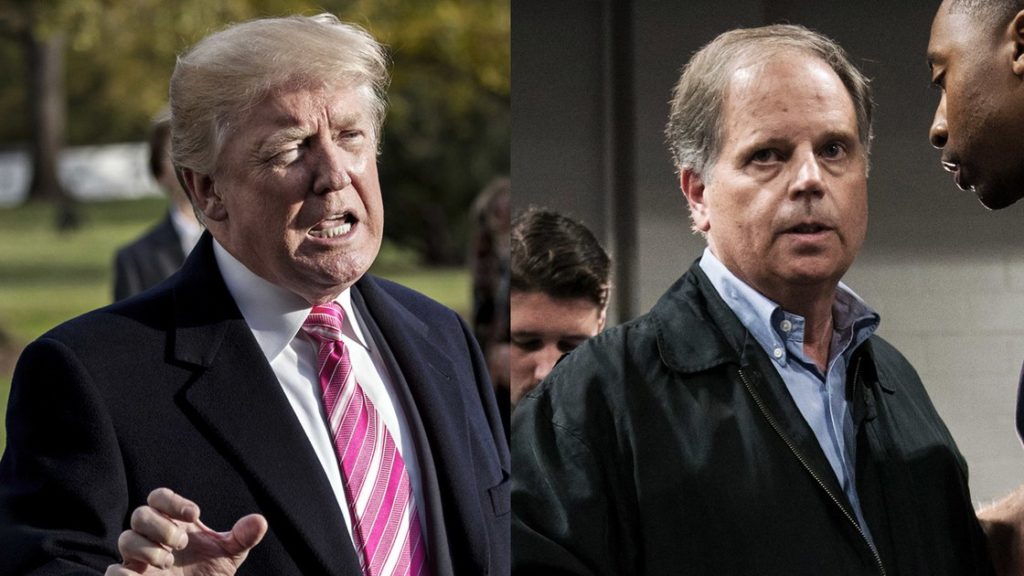
Today, Organizing for America emailed Alabama democrats asking them to reach out to U.S. Senator Doug Jones to urge him to vote against President Donald Trump’s U.S. Supreme Court nominee Brett Kavanaugh. Prior to Kavanaugh being named Jones has said that he was open to voting for a Trump nominee. “I’m open to voting yes. I’m open to voting no. We don’t know who the nominee is going to be yet,” Jones told CNNon the State of the Union Sunday morning. “I don’t think my role is to rubber stamp for the President, but it’s also not an automatic knee-jerk no, either.” Time named Doug Jones “The 7 Senators to Watch on Brett Kavanaugh’s Confirmation.” saying: Jones is another red-state Democrat who will face pressure, but he is not up for election this year. He has said that he will do a “thorough vetting of Judge Kavanaugh’s body of work” before making a decision and said that he is open to voting either way. “I don’t think my role is to rubber stamp for the President, but it’s also not an automatic knee-jerk no, either,” he told CNN before Kavanaugh was announced. He will be up for re-election in 2020, which means he will not face the same immediate pressure as the other red-state Democrats on this list but does have to worry about being on the same ballot as Trump, who will surely make a “no” vote an issue. He did not belong to the Senate when Gorsuch was confirmed. Email from OFA below:
Troy King touts ” Trump Team support” with last minute heavy hitter tour
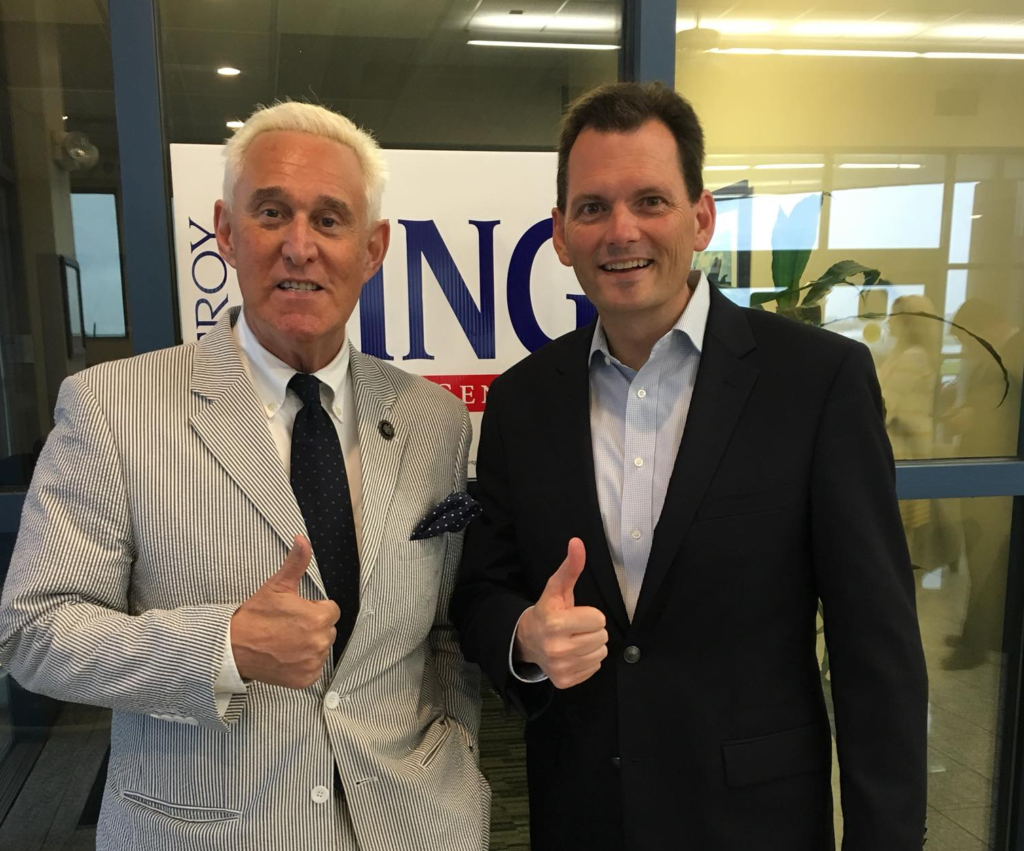
With one day to go before one of the most contested runoff elections of the 2018 cycle Troy King is touting the support of key members of President Donald Trump‘s team while touring the state. Below is the statement from King’s campaign and his schedule for the day. This morning, two members of the President Donald J. Trump’s team endorsed Troy King for Alabama Attorney General ahead of tomorrow’s runoff election. Roger Stone, longtime Republican strategist and advisor to President Donald J. Trump, flew into Alabama to campaign for King and to offer his endorsement. “The choice for who to elect as Alabama’s Republican nominee for Attorney General could not be more clear. Only one candidate stood with President Trump since the beginning of his campaign and that was Troy King. Only one candidate is a true Republican and that is Troy King.” Stone said. “Steve Marshall does not and has never supported President Trump. He is an Obama supporting Democrat who only switched parties to try to get elected. Steve Marshall can’t be trusted.” The Alabama Trump Victory Chairman, Perry Hooper Jr., also threw his full endorsement behind King today. “I was there when the Trump campaign was launched in Alabama and I know that Troy King was there from the beginning,” Hooper Jr. said. “It seems that everyone in Alabama now says they were for President Trump but very few supported him in the beginning. Troy was one of those who believed and stood with us early.” Troy King, a lifelong Republican, has campaigned on the comparison of his record as a lifelong Republican and contrasting that with the record of his opponent, Steve Marshall, who was a lifelong Democrat before recently switching parties. King has made an issue of the fact that Marshall supported Obama even going so far as to display an Obama bumper sticker and he also donated thousands of dollars to the Democratic party. The schedule for today is:
Doug Jones and Kay Ivey write FCC looking for answers about education broadband funds

U.S. Senator Doug Jones joined Governor Kay Ivey in reaching out to Ajit Pai the Chairman of the Federal Communication Commission (FCC) about Alabama’s request for E-Rate discount funding for broadband. According to Jones’ press release, “The state of Alabama has requested funds for FY 2016-18 totaling $32,404,608. Of that funding request, $6,705,647 million has been approved by the USAC. The remaining $25,698,961 is pending approval. The USAC has held payments for fifteen months, no new funding commitments have been issued, and the USAC has failed to provide an explanation for withholding E-Rate payments to Alabama.” According to the FCC website here are the basics of the program: What benefits are available under the E-rate program? Eligible schools and libraries may receive discounts on telecommunications, telecommunications services and Internet access, as well as internal connections, managed internal broadband services and basic maintenance of internal connections. Discounts range from 20 to 90 percent, with higher discounts for higher poverty and rural schools and libraries. Recipients must pay some portion of the service costs. How does the E-rate program work? An eligible school or library identifies services it needs and submits a request for competitive bids to the Universal Service Administrative Company. USAC posts these requests on its website for vendors’ consideration. After reviewing its offers, the school or library selects its preferred vendor(s) and applies to USAC for approval for the desired purchases. Next, USAC issues funding commitments to eligible applicants. When a vendor provides the selected services, either the vendor or the applicant submits requests to USAC for reimbursement of the approved discounts. The bid request and competitive bidding processes must comply with FCC rules and state and local procurement requirements. How are requests prioritized? Funding is allocated first to the highest poverty schools and libraries, then the next-highest poverty applicants, and so on. Ivey sent her letter on June 1, 2018 though a search of her official website shows that her communications team did not make a public announcement at that time. The letter, which Alabama Today found through a copy of the letter posted online via the Funds for Learning website. Their website describes them as “a professional firm specializing in the federal E-rate funding program. Our mission is to provide high-quality consulting and support services for the needs of E-rate program participants, including preparing and submitting paperwork, and helping our clients to understand and maintain compliance with E-rate rules and regulations.” Alabama @GovernorKayIvey expresses frustrations with #erate funding delays. Asks @AjitPaiFCC to help unlock $32.4 million in Internet funds held since 2016 https://t.co/LWdwhTg2ps — John Harrington (@JDHarrington) June 5, 2018 Full text of Jones letter: The Honorable Ajit Pai Chairman, Federal Communications Commission 445 12th Street SW Washington, DC 20554 Dear Chairman Pai: It has come to my attention that the Universal Service Administrative Company (USAC), an organization under your management, has withheld $32.4 million in E-rate discount funding from the State of Alabama. As you know, the Schools and Libraries Universal Service Support Program, or E-Rate program, plays a critical role in providing Alabama schools and libraries with affordable high-speed internet access. According to information I have received, the State of Alabama has not been paid $6,705,647 that was approved in FY 2016. Further, the State of Alabama has submitted additional requests for FY 2016-2018 totaling $25,698,961. It is my understanding that all of these applications are still pending with no indication whether they will be granted or not. You have noted that, “Internet access in public schools has almost tripled since E-Rate’s creation, and speeds have grown alongside availability.” This is welcome news because, in today’s economy, internet access is no longer just a luxury. Broadband is as much of a necessity in a classroom as notebooks and pencils. By failing to deliver universal internet, we fail to provide our children with the skills they need to compete for jobs in the 21st century economy. Simply put, these unexplained delays are inexcusable and they hurt the 1,376 school and library sites and 692,515 students who benefit from E-rate funding and services in Alabama. I have seen that you have advocated changing the E-Rate program to make it “student-centered.” I certainly agree with you and believe that a great first step would be to keep your promise to provide the funding that is owed to Alabama and approve the pending applications. I ask that you provide me with an update on the status of the State of Alabama’s approved funding for FY 2016 and of the pending applications for requests for FY 2016-2018 at the earliest opportunity.
Muslim candidates running in record numbers face threats, rumors and bias
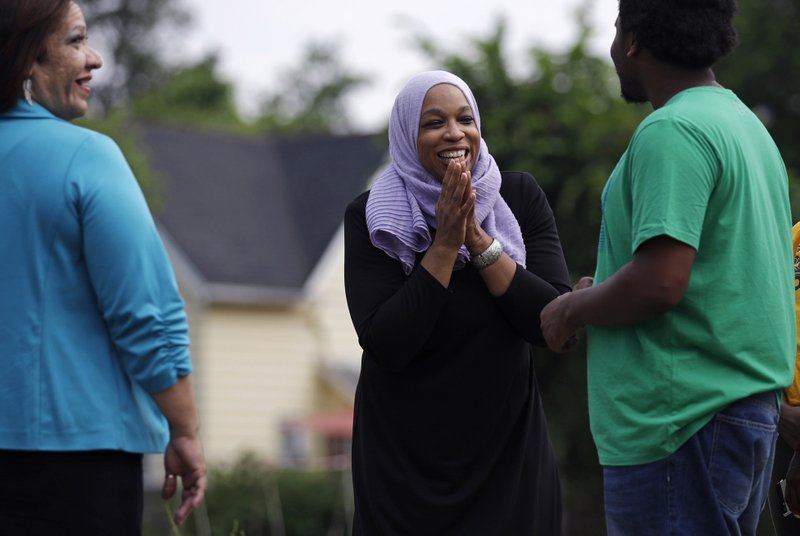
A liberal woman of color with zero name recognition and little funding takes down a powerful, long serving congressman from her own political party. When Tahirah Amatul-Wadud heard about Alexandria Ocasio-Cortez’s stunning upset over U.S. Rep. Joe Crowley in New York’s Democratic primary last month, the first-time candidate saw parallels with her own longshot campaign for Congress in western Massachusetts. The 44-year-old Muslim, African-American civil rights lawyer, who is taking on a 30-year congressman and ranking Democrat on the influential House Ways and Means Committee, says she wasn’t alone, as encouragement, volunteers and donations started pouring in. “We could barely stay on top of the residual love,” says Amatul-Wadud, U.S. Rep. Richard Neal’s lone challenger in the state’s Sept. 4 Democratic primary. “It sent a message to all of our volunteers, voters and supporters that winning is very possible.” From Congress to state legislatures and school boards, Muslim Americans spurred to action by the anti-Muslim policies and rhetoric of President Donald Trump and his supporters are running for elected offices in numbers not seen since before the terrorist attacks of Sept. 11, 2001, say Muslim groups and political observers. Many, like Amatul-Wadud, hope to ride the surge of progressive activism within the Democratic Party that delivered Ocasio-Cortez’s unlikely win and could help propel the Democrats back to power in November. Still, the path to victory can be tougher for a Muslim American. Some promising campaigns already have fizzled out while many more face strong anti-Muslim backlash. In Michigan, Democrat candidate for governor Abdul El-Sayed continues to face unfounded claims from a GOP rival that he has ties to the controversial Muslim Brotherhood, even though Republican and Democratic politicians alike have denounced the accusations as “conspiracy theories.” In Rochester, Minnesota, mayoral candidate Regina Mustafa has notified authorities of at least two instances where anti-Muslim threats were posted on her social media accounts. And in Arizona, U.S. Senate candidate Deedra Abboud received a torrent of Islamophobic attacks on Facebook last July that prompted outgoing U.S. Sen. Jeff Flake, the Republican lawmaker Abboud is hoping to replace, to come to her defense on Twitter. “I’m a strong believer that we have to face this rhetoric,” said Abboud, who has also had right-wing militant groups the Fraternal Order of Alt-Knights and the Proud Boys stage armed protests her campaign events. “We can’t ignore it or pretend like it’s a fringe element anymore. We have to let the ugly face show so that we can decide if that is us.” There were as many as 90 Muslim-Americans running for national or statewide offices this election cycle, a number that Muslim groups say was unprecedented, at least in the post-9/11 era. But recent primaries have whittled the field down to around 50, a number that still far exceeds the dozen or so that ran in 2016, said Shaun Kennedy, co-founder of Jetpac, a Massachusetts nonprofit that helps train Muslim-American candidates. Among the candidates to fall short were California physician Asif Mahmood, who placed third in last month’s primary for state insurance commissioner, despite raising more than $1 million. And in Texas, wealthy businessman Tahir Javed finished a distant second in his Democratic primary for Congress, despite an endorsement from Senate Minority Leader Chuck Schumer of New York. Nine candidates for Congress are still in the running, according to Jetpac’s tally. At least 18 others are campaigning for state legislature and 10 more seek major statewide and local offices, such as governor, mayor and city council. Even more are running for more modest offices like local planning board and school committee. The next critical stretch of primaries is in August. In Michigan, at least seven Muslim Americans are on the Aug. 7 ballot, including El-Sayed, who could become the nation’s first Muslim governor. In Minnesota, the decision by Keith Ellison, the nation’s first Muslim congressman, to run for state attorney general has set off a political frenzy for his congressional seat that includes two Muslim candidates, both Democrats: Ilhan Omar, the country’s first Somali-American state lawmaker, and Jamal Abdulahi, a Somali-American activist. But historic wins in those and other races are far from assured, cautions Geoffrey Skelley, an associate editor at Sabato’s Crystal Ball, a nonpartisan political analysis website run by the University of Virginia’s Center for Politics. Omar’s chances of emerging from a field of five Democratic candidates in Minnesota’s Aug. 14 primary was bolstered by a recent endorsement from the state Democratic Party, but El-Sayed is an underdog in his gubernatorial race, he said. Other Muslim-American candidates might fare better in Michigan, which has one of the nation’s largest Arab-American populations, Skelley added. There, former state Rep. Rashida Tlaib has raised more money than her Democratic rivals in the race to succeed Democratic Rep. John Conyers, who resigned last year amid allegations of sexual misconduct. Former Obama administration official Fayrouz Saad is also running as a Democrat in the wide open race to succeed Republican Rep. David Trott, who isn’t seeking re-election. Either could become the first Muslim woman elected to Congress, which has only ever had two Muslim members: outgoing Ellison and Rep. Andre Carson, an Indiana Democrat seeking re-election. Saad, who served most recently as director of Detroit’s Office of Immigrant Affairs, recognizes the importance of representing her community in an era of rising Islamophobia. The 35-year-old broke from the conservative Republican politics of her Lebanese immigrant parents following the 9/11 attacks because she felt Arabs and Muslims were unfairly targeted. “I felt the way to push back against that was to be at the table,” said Saad, adding that her parents’ political leanings have also since moved to the left. “We have to step up and be voices for our communities and not wait for others to speak on behalf of us.” But not all Muslim candidates feel that way. In San Diego, California, 36-year-old Republican congressional candidate Omar Qudrat declined to comment on how Islamophobia has impacted his campaign, including instances when his faith have been called into question by
