
On trade policy, Donald Trump is turning GOP orthodoxy on its head
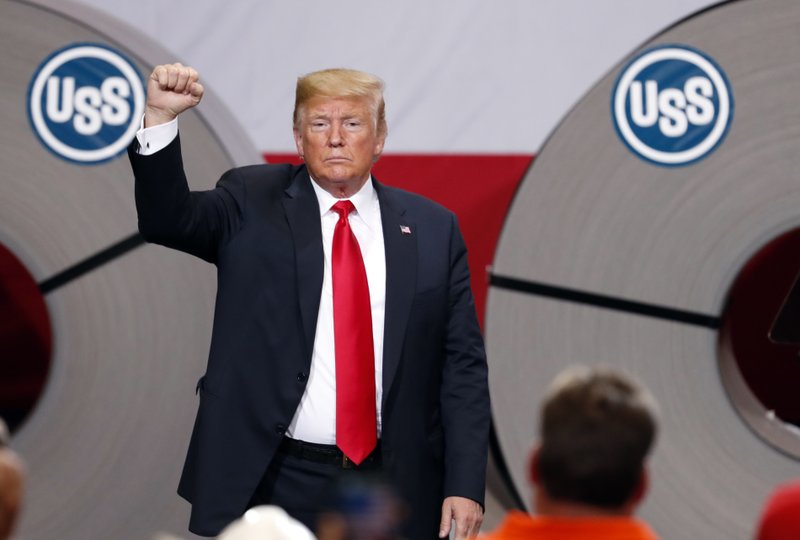
President Donald Trump’s trade policies are turning long-established Republican orthodoxy on its head, marked by tariff fights and now $12 billion in farm aid that represents the type of government intervention GOP voters railed against a decade ago. President George W. Bush increased the number of countries partnering with the United States on free trade agreements from three to 16. President Ronald Reagan signed a landmark trade deal with Canada that was later transformed into the North American Free Trade Agreement (NAFTA) and expanded to include Mexico. Both those Republican presidents also enacted tariffs, but their comments on trade were overwhelmingly positive. “We should beware of the demagogues who are ready to declare a trade war against our friends, weakening our economy, our national security and the entire free world, all while cynically waiving the American flag,” Reagan said in a 1988 radio address. Trump, by comparison, has called NAFTA “the worst trade deal maybe ever signed anywhere,” and his administration has opted to use tariffs as a tool intended to leverage more favorable agreements with virtually every major U.S. trading partner. He shredded the trade agreement the Obama administration tried to work out with Pacific Rim nations that had strong backing from farm groups and chief executives from major U.S. corporations. Republicans also have altered the priority of tackling the national debt, an issue the GOP hammered President Barack Obama on as the country struggled to recover from the 2008 economic crisis. “Our nation is approaching a tipping point,” GOP Rep. Paul Ryan of Wisconsin, now the House speaker, said in January 2011 when the national debt hit $14 trillion. Today, the Congressional Budget Office projects the $21 trillion debt will rise to more than $33 trillion in 10 years. That estimate notes that the tax cut lawmakers passed in December would increase economic output but add $1.8 trillion to the deficit over the coming decade. The GOP’s evolving priorities are not lost on some in the party. Rep. Mark Sanford, R-S.C., who lost a close primary election this year after butting heads with Trump on some issues, said he finds it “perplexingly destructive” for the GOP brand. “It takes a long while to build a brand, but brands can be diminished or destroyed in relatively short order, and I think the administration is destroying bedrock cornerstones to what the party has historically stood for,” Sanford said. “There is no conversation on the debt, deficit and government spending these days. That has been a cornerstone.” Sanford made headlines as South Carolina governor when he said he would reject stimulus money approved during the financial crisis because he did not think the country should go into debt to fund recovery efforts. “Here we are now with a hypothetical $12 billion bailout package and you don’t hear a word,” Sanford said. “That is quite a transition in not so many years from decrying what the Obama administration had done with bailouts to now endorsing the idea of bailouts.” Trump, in a Friday interview on Fox News’ Sean Hannity’s radio show, said the strong economy would help the U.S. reduce the deficit. “The economy, we can go a lot higher. … We have $21 trillion in debt. When this really kicks in we’ll start paying off that debt like water. We’ll start paying that debt down.” The administration’s plan on the bailout announced last week would borrow money from the Treasury to pay producers of soybeans, sorghum, corn, wheat, cotton, dairy and hogs. Many farmers have criticized Trump’s tariffs and the damage done to commodity prices and markets. Some GOP lawmakers are expressing concerns. “I didn’t come up here to start new government programs,” said Sen. John Kennedy, R-La. But it’s unlikely that the Republican-controlled Congress will try to block the administration’s agricultural aid plan. “I’m looking at this and saying, ‘You’re going to single out one sector?’ What about the manufacturing sector? What about the energy sector?” said Sen. Lisa Murkowski, R-Alaska. “Where do you draw the line? I’ve got some real concerns.” But others praised the move. GOP Rep. Mike Conaway of Texas, chairman of the House Agriculture Committee, called it “welcome relief.” “This is the right fight to have, but in the meantime, our producers have got to live as this fight is going on,” Conaway said of a trade dispute with China that has prompted the imposition of tariffs by both nations. Conaway said the president has reshaped the way Republicans think about trade. “He’s kind of changed the narrative of the conversation that it’s really not OK to let other people take advantage of America,” Conaway said. Rep. Dan Kildee, D-Mich., said it’s clear the GOP has changed over the past two years with Trump in office. “This is the party of Trump. He calls the plays and they line up and they execute the play,” Kildee said. But Kildee also opposed the Trans-Pacific Partnership deal that the Obama administration was trying to work out with Japan, Vietnam, Singapore and others. He and many other Democrats described past trade deals such as NAFTA as hurting workers in their home districts. So why the criticism of Trump and the efforts he has undertaken on trade? Kildee said he would prefer a more deliberative approach and a multilateral approach that doesn’t fray longstanding alliances. “Simply engaging on the issue of trade doesn’t mean he’s doing it right,” Kildee said. The president’s meetings with lawmakers in the past week and his trade advisers’ visits to Capitol Hill are acknowledgements that many GOP lawmakers are worried about where Trump is headed — and what it could mean in the November election as farmers, bourbon makers and manufacturers who use imported steel and aluminum deal with the fallout. A possible breakthrough with the European Union announced Wednesday at the White House appears to have eased their concerns and given the president more time to work out new deals. “The fact the EU was here today and good talks happened, I think
No mystery to Supreme Court nominee Brett Kavanaugh’s gun views
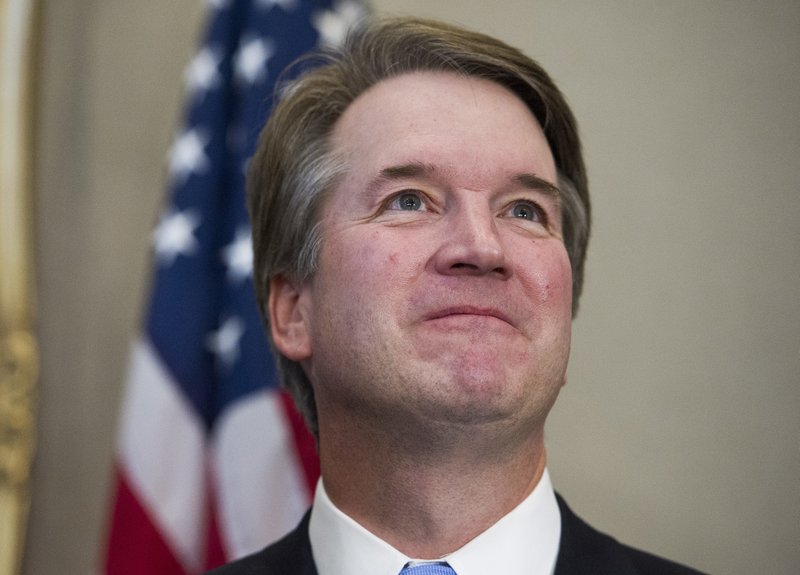
Supreme Court nominee Brett Kavanaugh says he recognizes that gun, drug and gang violence “has plagued all of us.” Still, he believes the Constitution limits how far government can go to restrict gun use to prevent crime. As a federal appeals court judge, Kavanaugh made it clear in a 2011 dissent that he thinks Americans can keep most guns, even the AR-15 rifles used in some of the deadliest mass shootings. Kavanaugh’s nomination by President Donald Trump has delighted Second Amendment advocates. Gun law supporters worry that his ascendancy to America’s highest court would make it harder to curb the proliferation of guns. Kavanaugh has the support of the National Rifle Association, which posted a photograph of Kavanaugh and Trump across the top of its website. The Supreme Court has basically stayed away from major guns cases since its rulings in 2008 and 2010 declared a right to have a gun, at least in the home for the purpose of self-defense. Gun rights advocates believe Kavanaugh interprets the Second Amendment right to bear arms more broadly than does Kennedy. As a first step, some legal experts expect Kavanaugh would be more likely to vote for the court to hear a case that could expand the right to gun ownership or curtail a gun control law. Kavanaugh would be a “big improvement” over Kennedy, said Erich Pratt, executive director of Gun Owners of America. Kennedy sided with the majority in rulings in 2008 and 2010 overturning handgun possession bans in the District of Columbia and Chicago, respectively, but some gun rights proponents believe he was a moderating influence. “Kennedy tended to be all over the map” on the Second Amendment, Pratt said. Former U.S. Rep. Gabby Giffords, the Arizona Democrat who was gravely wounded in a 2011 shooting at a constituent gathering, said in a written statement that Kavanaugh’s “dangerous views on the Second Amendment are far outside the mainstream of even conservative thought.” She predicted that Kavanaugh would back the gun lobby’s agenda, “putting corporate interests before public safety.” In his 2011 dissent in a case before the U.S. Court of Appeals for the District of Columbia Circuit, Kavanaugh argued that the district’s ban on semi-automatic rifles and its gun registration requirement were unconstitutional. That case is known as “Heller II” because it followed the Supreme Court’s 2008 decision in District of Columbia v. Heller striking down the city’s ban on handguns in the home. Kavanaugh said the Supreme Court held that handguns are constitutionally protected “because they have not traditionally been banned and are in common use by law-abiding citizens.” “Gun bans and gun regulations that are not longstanding or sufficiently rooted in text, history, and tradition are not consistent with the Second Amendment individual right,” he wrote in a point rejected by the majority. Critics contend Kavanaugh’s analysis is flawed because AR-15s were not around during the early days of the republic. In his dissent, Kavanaugh wrote that he had lived and worked in Washington for most of his life and was “acutely aware of the gun, drug, and gang violence that has plagued all of us.” He said few government responsibilities are more significant than fighting violent crime. “That said, the Supreme Court has long made clear that the Constitution disables the government from employing certain means to prevent, deter, or detect violent crime,” he wrote. He said it was unconstitutional to ban the most popular semi-automatic rifle, the AR-15, since it accounted for 5.5 percent of firearms by 2007 and over 14 percent of rifles produced in the U.S. for the domestic market. He said semi-automatic rifles had been commercially available since at least 1903, “are quite common in the United States” and the Supreme Court said in a 1994 ruling that they “traditionally have been widely accepted as lawful possessions.” Semi-automatic rifles were used in several mass shootings in recent years, including the February killing of 17 people at a Florida high school. Kavanaugh rejected the majority’s reasoning that semi-automatic handguns were sufficient for self-defense, saying: “That’s a bit like saying books can be banned because people can always read newspapers.” He belittled the description of the guns as “assault weapons,” saying that handguns could be called the “quintessential ‘assault weapons’ because they are used much more than other guns in violent crimes. He was equally dismissive of Washington’s gun registration protocol, saying it had not been traditionally required in the nation and “remains highly unusual today.” Still, Kavanaugh supported the ban on full automatics or machine guns, reasoning that they “were developed for the battlefield and were never in widespread civilian use.” In 2016, Kavanaugh dissented when two of his colleagues lifted an order blocking the city from enforcing a limit on issuing licenses to carry concealed firearms. The Giffords Law Center to Prevent Gun Violence said the dissent shows Kavanaugh believes the district’s “good reason” requirement for concealed-carry permit applicants is unconstitutional. His views on that subject drew more scrutiny after the 9th U.S. Circuit Court of Appeals ruled 2-1 days ago in a Hawaii case that people have the right to openly carry guns in public for self-defense. Phil Mendelson, a Democrat and chairman of the D.C. Council, said Kavanaugh’s dissent made clear that “his views on gun control are on the extreme side.” Councilmember Mary M. Cheh, a Democrat and professor of constitutional law at George Washington University, said she’s “worried about the shift to the right, for sure.” Some legal experts believe Kavanaugh’s confirmation make it more likely the court will hear another potentially groundbreaking Second Amendment case. Only four of nine justices need to vote in favor of reviewing a case. UCLA law school professor Adam Winkler, author of “Gunfight: The Battle Over the Right to Bear Arms in America,” said Kavanaugh could become that crucial fourth vote because three justices — Neil Gorsuch, Clarence Thomas and Samuel Alito Jr. — all have voiced support for the court to take on Second Amendment cases. Still, it takes five justices to win a
Airports to receive $25 million in grants for improvements
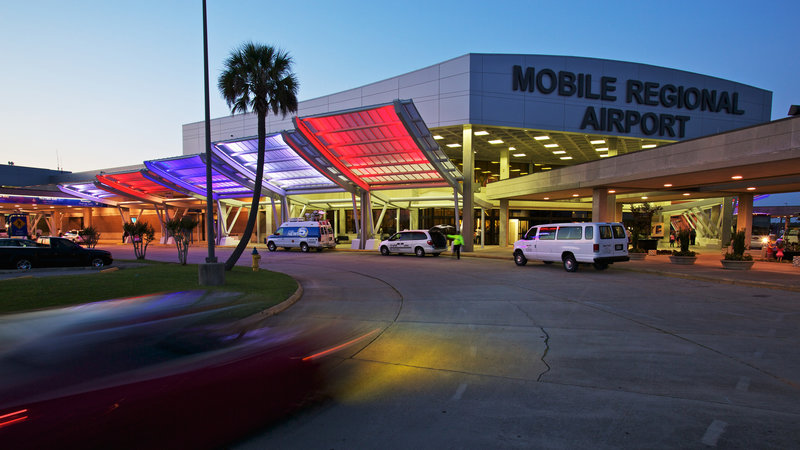
A state representative says local airports in Alabama will benefit from more than $25.5 million in Federal Aviation Administration grants. U.S. Sen. Richard Shelby said this week the grant will help 25 airports with improvements, new structures and safety advances. The Mobile Downtown Airport will receive the most with $7.08 million, while the Thomas C. Russell Field Airport in Alexander City will get the least with $94,500. The grants are funded through the Airport and Airway Trust Fund and federal appropriations. Shelby says airport infrastructure plays a vital role in economic growth and development in Alabama. Many of the airports will improve their taxiways and erosion repair. Republished with the permission of the Associated Press.
Enlargement of Mobile Bay channel under consideration
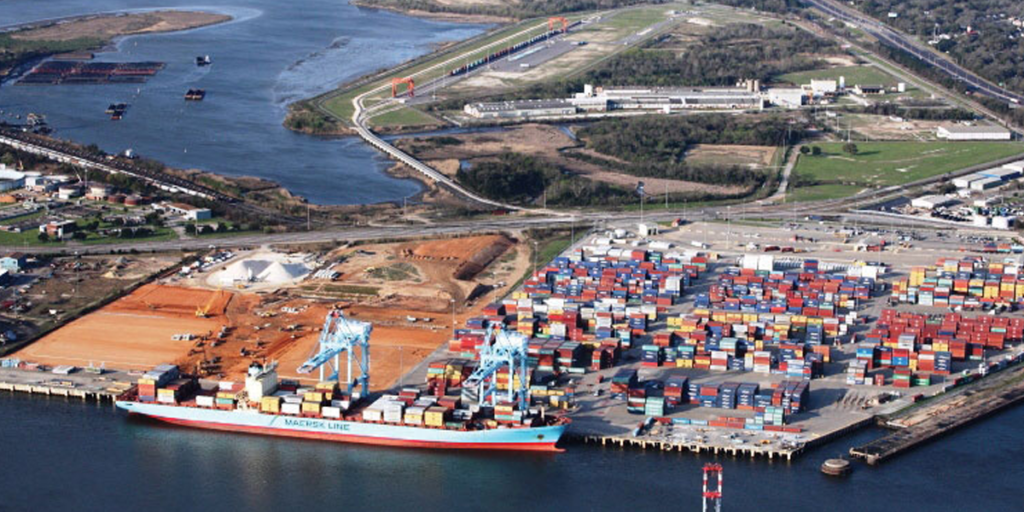
The government is considering a plan to enlarge the ship channel through Mobile Bay. The U.S. Army Corps of Engineers has opened a public comment period on the $388 million proposal. The Alabama State Port Authority initiated the project. Director Jimmy Lyons says it’s needed for Mobile to stay competitive as larger cargo ships become the norm. But Al.com reports at least two groups are concerned about the plan. Some in the seafood industry worry that a deeper and wider channel will hurt seafood harvesting in the bay. And advocates for Dauphin Island residents say the channel causes erosion. A Corps spokesman said at least one public meeting on the project is planned. That likely will happen in September. Republished with the permission of the Associated Press.
