
Brett Kavanaugh in memo argued against indicting sitting president
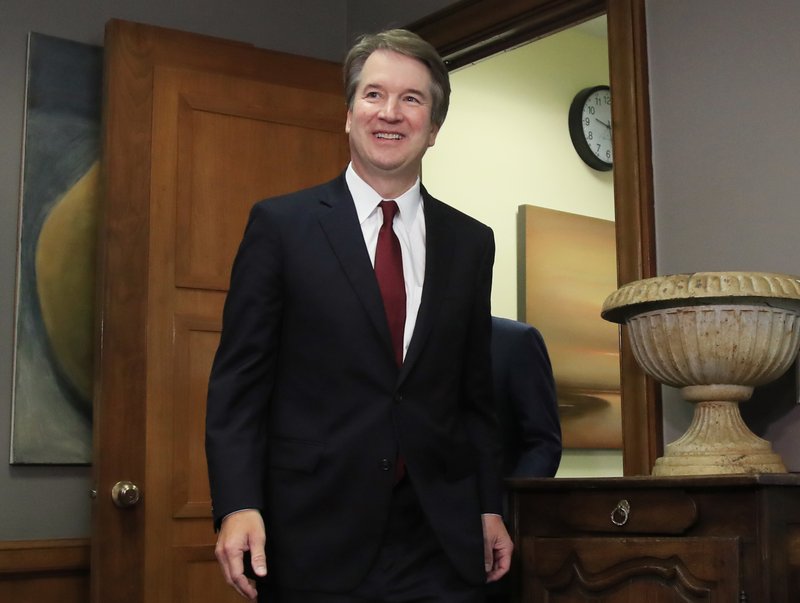
Confirmation hearings for Supreme Court nominee Brett Kavanaugh will begin the day after Labor Day, Republicans said, sparking Democratic objections that they are rushing the process without properly delving into his background. The announcement Friday came amid the release of new documents from Kavanaugh’s time on the Kenneth Starr team investigating Bill Clinton. The records reveal his resistance to issuing an indictment of a sitting president. On Christmas Eve 1998, Kavanaugh drafted an “Overall Plan” to colleagues providing his thoughts on bringing the independent counsel office’s work to a close and suggesting they inform the attorney general that the findings against Clinton be left to the next president. “We believe an indictment should not be pursued while the President is in Office,” Kavanaugh wrote. The memo, tucked toward the end of nearly 10,000 pages, provides greater insight into Kavanaugh’s views on executive power that are expected to feature prominently in the Senate confirmation hearings. Democrats have warned that Kavanaugh may be unwilling to protect special counsel Robert Mueller’s ongoing probe of Russian interference in the 2016 election. On Friday, Senate Majority Leader Mitch McConnell said he hopes to have President Donald Trump’s nominee confirmed to replace retired Justice Anthony Kennedy before the new court session begins Oct. 1. “We’re moving right along,” McConnell said during a radio interview in Kentucky ahead of the announcement. “He’ll get confirmed. It won’t be a landslide, but he’ll get confirmed.” The Judiciary Committee will hold up to four days of review, with Kavanaugh to begin facing questions on Day 2, Sept. 5, said committee chairman Sen. Chuck Grassley. Kavanaugh’s appearance will be followed by testimony from legal experts and people who know the judge. The White House, which is determined to have Kavanaugh confirmed before the November elections as Republicans aim to deliver on Trump’s priorities, applauded the schedule announcement. But Democrats want access to more documents from Kavanaugh’s past as a judge and as an official in the George W. Bush administration. Grassley, R-Iowa, said there’s “plenty of time” to review documents but now it’s time for Americans “to hear directly” from Kavanaugh. “He’s a mainstream judge,” Grassley said. “He has a record of judicial independence and applying the law as it is written.” So far, the committee has made public Kavanaugh’s 17,000-page questionnaire and his more than 300 court cases as an appellate judge. The panel has additionally received 174,000 pages from his work for Bush in the White House counsel’s office. The new documents Friday provide a glimpse into Kavanaugh’s years on the Starr team shuttling back and forth to Little Rock for “investigative purposes.” He co-wrote a detailed, nearly 300-page memo on deputy White House counsel Vince Foster’s suicide. Hundreds of pages in the Starr files are grand jury proceedings that are redacted. Meanwhile, most of the White House records related to Kavanaugh are being held on a “committee confidential” basis, with just 5,700 pages from his White House years released this week to the public. Democrats say the Republicans are relying on the cherry-picked files being released primarily by Bush’s lawyer, Bill Burck, who is compiling and vetting the documents, rather than the traditional process conducted by the National Archives and Records Administration. The Archives has said its review of some 1 million pages of Kavanaugh records the committee requested will not be fully available until the end of October. The Archives produced the Starr files. The top Democrat on the Judiciary Committee, Sen. Dianne Feinstein of California, said scheduling the hearing before the documents are ready “is not only unprecedented but a new low in Republican efforts to stack the courts.” She said, “It’s clear that Republicans want to speed this nomination through before we know who Brett Kavanaugh is.” Nan Aron, president of the Alliance for Justice, called it “jaw-dropping.” “It means that the chairman is telling the American people that this hearing is barreling forward, no matter what, no matter how little information is available to the Senate and public or how many shortcuts the committee has to take,” she said. The White House on Friday welcomed the news of a set date for confirmation hearings. “With the Senate already reviewing more documents than for any other Supreme Court nominee in history, Chairman Grassley has lived up to his promise to lead an open, transparent and fair process,” said White House spokesman Raj Shah. “Judge Kavanaugh looks forward to addressing the Judiciary Committee in public hearings for the American people to view.” Kavanaugh, 53, is a conservative who could tip the court’s balance for a generation and play a decisive role on issues like abortion access, gay marriage and executive branch oversight. He has met privately with almost all the Republican senators and one Democrat as supporters try to build momentum for confirmation. Because his career has largely been spent in public service, Kavanaugh has an unusually voluminous paper trail. Democrats are particularly pushing for access to his three years as staff secretary for Bush, but Republicans are not including those documents in the review. GOP Sen. Orrin Hatch of Utah said they are conducting the “most thorough vetting process for a nominee in the history of the Supreme Court.” Edwin Meese, the former attorney general to President Ronald Reagan, said, “Democratic senators have the time and they have the material. They have no excuse to obstruct his prompt confirmation.” Republished with the permission of the Associated Press.
Terri Sewell joins legislators in introduction of bipartisan Secure Elections Act
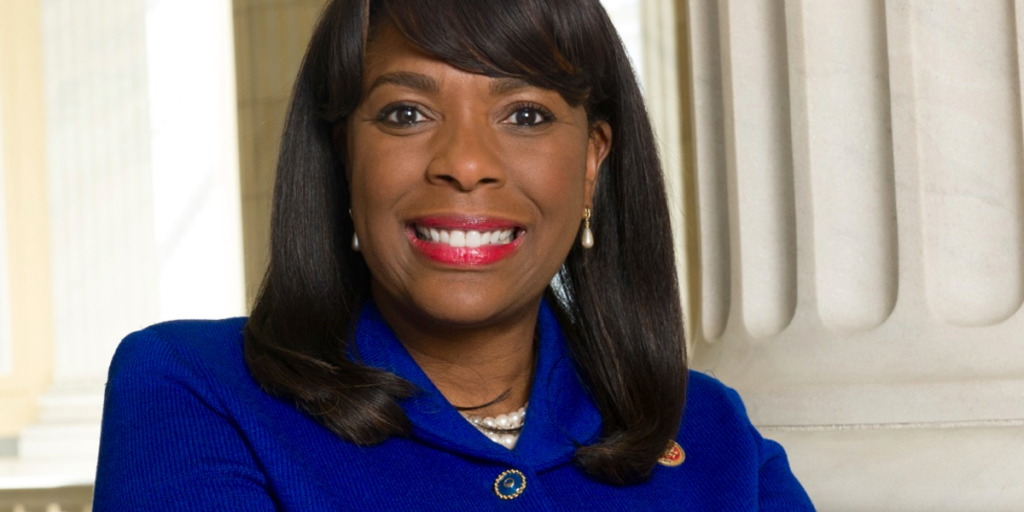
Alabama 7th District U.S. Rep. Terri Sewell joined fellow legislators on Friday to introduce the Secure Elections Act which, if passed, would provide state and local governments with resources to strengthen their election systems against cyber attacks. “Our democracy is our nation’s greatest asset and it is our job to protect its integrity,” Sewell said in a press release. “We know from our Intelligence Community that Russian entities launched cyber attacks against our election infrastructure in 2016, exploiting at least 21 state election systems. As the 2018 elections approach, action is urgently needed to protect our democracy against another attack. Today’s bipartisan bill takes a huge step forward by providing election officials with the resources and information they need to keep our democracy safe.” Sewell was joined by Florida-Republican Rep. Tom Rooney, South Carolina-Republican Trey Gowdy, and Connecticut-Democrat Jim Himes, in introducing the legislation. All representatives are members of the members of the House Permanent Select Committee on Intelligence (HPSCI), and aided in the HPSCI investigation into Russian interference in the 2016 election. According to a report by The Hill, the Secure Elections Act would begin a voluntary grant program designed for replacing and updating paperless voting machines with machines that provide a paper trail. “The bill, like its companion in the Senate, is also designed to improve information sharing between state and federal officials on cyber threats to elections,” the report continued. “It would codify into law many of the steps Homeland Security is already taking to share sensitive details on threats and award security clearances to state elections officials.” “Hostile foreign actors have attempted and will continue to attempt to undermine the fundamentals of our democracy by attacking our electoral process,” Gowdy said in a statement, according to CyberScoop. “It is our responsibility to take every precaution necessary to safeguard our elections and ensure no vote count is ever interfered with.”
New U.S. sanctions could pitch Russia relations to new low
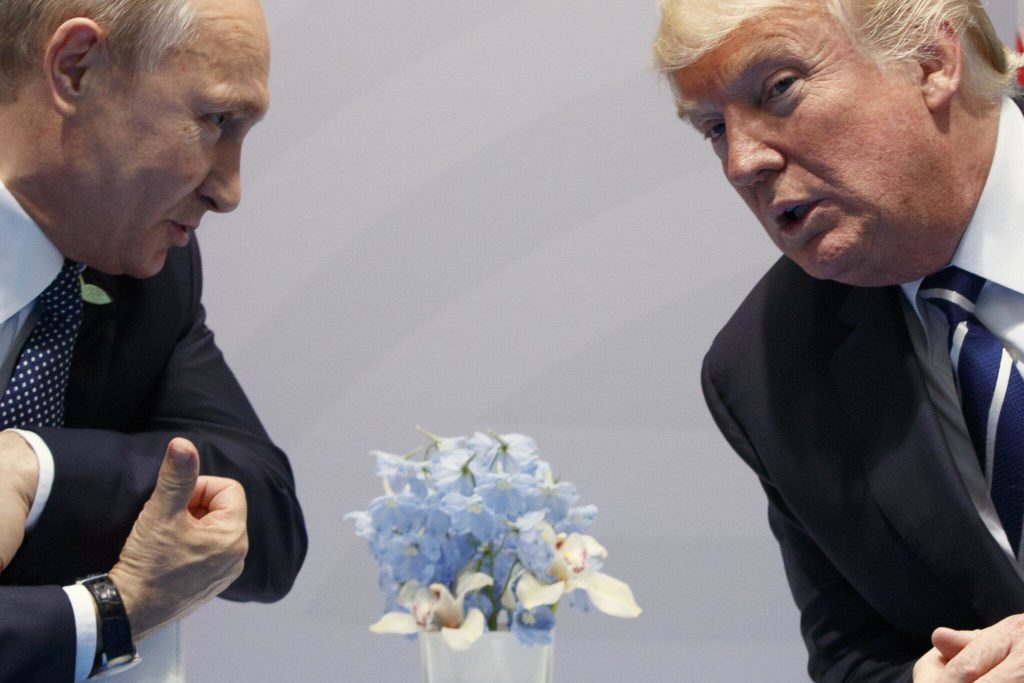
Russia typically brushes off new U.S. sanctions. Not this time. The Trump administration announcement of export restrictions in response to accusations Moscow used a nerve agent to poison a former Russian spy in Britain sent the ruble tumbling to a two-year low and drew a stern warning from its prime minister. While the initial sanctions may have a limited impact, a second batch expected within months could hit the Russian economy much harder and send already tense relations into a tailspin. If sanctions are expanded even further to target Russia’s top state-controlled banks, freezing their dollar transactions — as proposed under legislation introduced in the Senate this month — it would amount to a “declaration of economic war,” Russian Prime Minister Dmitry Medvedev said Friday. So much for President Donald Trump’s hopes for better relations with Moscow. On his watch, the U.S. has imposed a slew of sanctions on Russia for human rights abuses, meddling in the U.S. election and Russian military aggression in Ukraine and Syria. For the most part, they have punished Russian officials and associates of President Vladimir Putin rather than targeting broad economic sectors. In 2014, both the U.S. and European Union introduced sanctions that restricted Russia’s access to global financial markets and to equipment for new energy projects. Those measures were punishing, but the sanctions announced by the Trump administration this past week could be even worse. The restrictions were triggered under U.S. law on chemical weapons following a formal U.S. determination that Russia used the Novichok nerve agent to poison former Russian spy Sergei Skripal and his daughter in the English city of Salisbury in March. The first tranche, due to take effect Aug. 22, will deny export licenses to Russia for the purchase of many items with national security implications. Existing sanctions already prohibit the export of most military and security-related items, but now the ban will be extended to goods such as gas turbine engines, electronics and calibration equipment that were previously allowed on a case-by-case basis. The State Department said it could potentially affect hundreds of millions of dollars in trade. “It’s a significant step, but not an overwhelming one,” said Daniel Fried, a veteran State Department official who served as chief U.S. coordinator for sanctions policy until he retired last year. The penny could drop, though, in three months’ time. Russia has 90 days to “provide assurances” that it will not use chemical weapons in the future and allow inspections. If Russia does not comply, Trump will be obligated to impose a second set of sanctions, applying restrictions on at least three from a menu of options: opposing multilateral bank assistance to Russia, broad restrictions on exports and imports, downgrading diplomatic relations, prohibiting air carrier landing rights and barring U.S. banks from making loans to the Russian government. That could do significantly more economic harm and have a lasting, destabilizing effect on the currency and stock markets. Senior Russian lawmaker Vyacheslav Nikonov said a second set of sanctions may be inevitable and predicted it would pitch relations to new low. The relationship is already routinely described as at its worst since the Cold War. “They are demanding that Russia (accepts) an obligation to refrain from any further use of chemical and bacteriological weapons, which amounts to our acknowledgement that we have used it. But we haven’t,” he said. Things could get even worse if the Defending American Security from Kremlin Aggression Act, which a bipartisan group of senators introduced Aug. 2, makes its way through Congress. It would target Russia’s state-controlled banks and freeze their operations in dollars, which would deal a heavy blow to the Russian economy. The prospects for the legislation becoming law remain uncertain. Medvedev warned the U.S. that such a move would cross a red line and would warrant a Russian response by economic, political or “other means” he did not specify. His tough tone was a departure from past nonchalance from Putin and his lieutenants over the impact of Western sanctions on the Russian economy. Vladimir Vasilyev, a researcher with the Institute of the U.S. and Canada, a government-funded Moscow think tank, said U.S.-Russian ties were now approaching “the point of no return with no prospect for improvement” in sight. Fried said that in addition to uncertainty over sanctions, Moscow’s strong response this time is likely also being fueled by larger inconsistencies in U.S. policy toward Russia. While Trump has hankered for closer ties with Putin, the government he leads has been far less accommodating. “Whatever deal the Russians had or thought they had or thought they could get from President Donald Trump, they’re not able to get it from Trump’s administration,” Fried said. The State Department denied inconsistency in U.S. policy and maintained that sanctions were aimed at encouraging improved behavior from Russia. “We’d like to have a better relationship with the Russian government, recognizing that we have a lot of areas of mutual concern,” spokeswoman Heather Nauert said. Congress has a less diplomatic view. Trump has repeatedly come under fire from lawmakers, including from his own Republican Party, for his conciliatory statements on Russia, particularly at his joint press conference with Putin at their summit in Helsinki last month where he appeared to doubt U.S. intelligence conclusions that Russia intervened in the 2016 election. Rep. Ed Royce, chairman of the House Foreign Affairs Committee, was among lawmakers who welcomed the U.S. sanctions announced this week. “It’s critical that we use every tool at our disposal to confront Putin’s use of chemical weapons, as well as his efforts to undermine our democracy,” the Republican from California said. Republished with the permission of the Associated Press.
Randall Woodfin urges Birmingham community to sign EPA petition

Birmingham Mayor Randall Woodfin is urging members of the Birmingham community to sign a petition addressed to the Environmental Protection Agency (EPA) insisting that they add the North Birmingham 35th Avenue Superfund Site to their National Priorities list. “In light of the recent revelations concerning public corruption, we believe the environmental injustices in North Birmingham must be addressed and prioritized by the Environmental Protection Agency,” the Birmingham City website reads. “A site may be included on the EPA National Priorities List if it has scored greater than a 28.5 on the Hazard Ranking System. The North Birmingham 35th Avenue Superfund Site scored a 50, almost twice the minimum requirements.” On Tuesday, at a community forum Woodfin spoke out against the actions of the several Birmingham professionals tied to the site who were convicted of bribery, wire fraud and money laundering; and announced he was sending a letter to the EPA, AL.com reported. “He said their actions were “morally wrong,” and he is “going to go to bat” for the people of north Birmingham.” In a letter addressed to the EPA’s new acting chief Andrew Wheeler, Woodfin addresses the corruption concerning the site, and recommends remedies to improve the site and the community surrounding it saying: As a result of these illegal actions, thousands remain at risk including the 1,070 people living in 394 public housing units and 751 children attending Hudson K-8 school. The necessary remedies include, but are not limited to, screening and health care to address pollution related health issues, relocation and reconstruction of Hudson K-8 school, non-resident redevelopment of the North Birmingham 35th Avenue Superfund Site and reclamation of Village Creek. In light of the recent revelations concerning the public corruption, we believe this situation demands a much more robust response. The United States Attorney has already done their part by exposing this criminal hoax and bringing those responsible to justice. Still, these injustices continue until the North Birmingham 35th Avenue Superfund Site is placed on the National Priorities List and all necessary resources are provided to the people of this community. Members of the Birmingham community who are interested may sign the petition here. Read Woodfin’s full letter to the EPA below: Birmingham Mayor Randall Woodfin s Letter to EPA
Nancy Worley to face challenge for Democratic Party chair

As Alabama Democrats head into what they hope will be a period of rebuilding, some are seeking new party leadership. The Alabama Democratic Party executive committee meets Saturday in Montgomery to elect a chairperson. Longtime chairwoman Nancy Worley will face a challenge from Montgomery attorney Peck Fox. Once dominant throughout the Deep South, Democrats had been obliterated from statewide office in Alabama until last year’s election of U.S. Sen. Doug Jones. Buoyed by Jones’ victory, Democrats are looking to the 2018 elections with newfound optimism. “I think it’s important that we have a party that has a functional infrastructure, the ability to raise funds, the ability to organize field operations to provide help and support to our candidates and county committees,” Fox said. “If we miss this window of opportunity, I don’t know when the next one will be.” Worley has served as the party’s chairwoman since 2013 and is seeking another term at the helm. “During the time I have served as chair of the Democratic Party, we have substantially reduced the party’s debt, fielded more candidates than we have had in decades, elected a Democratic U.S. Senator, held regular board meetings with financial reports at each, and reorganized some county parties,” Worley said in a statement. Both Worley and Fox are political veterans. Fox worked for the late Sen. Howell Heflin in Washington and for Lt. Gov. Jim Folsom. Worley is a former Alabama secretary of state and served as the party’s vice-chairwoman. Fox likely faces an uphill battle. Worley has been supported by Joe Reed, the longtime leader of the influential Alabama Democratic Conference. Reed also controls a substantial number of committee votes. Reed did not immediately return a telephone message seeking comment. However, House Minority Leader Anthony Daniels said Friday that, “now is the perfect time for a transition.” “On the heels of Doug Jones’ election and with the number of candidates running for office, more than any time before these candidates need a strong party, a stronger party,” Daniels said. The Democratic Party has been roiled by tension and criticism about its direction and finances in recent years. A reform group has sought to strengthen and diversify the party. In 2016, then-House Minority Leader Craig Ford penned a letter saying the party was on” life support” and urged Worley and Reed to step down. The party’s previous party chairman resigned in 2013 to create a new group to assist Democratic candidates. Republished with the permission of the Associated Press.
Alabama port looks to add to its $22.4 billion economic impact with expansions
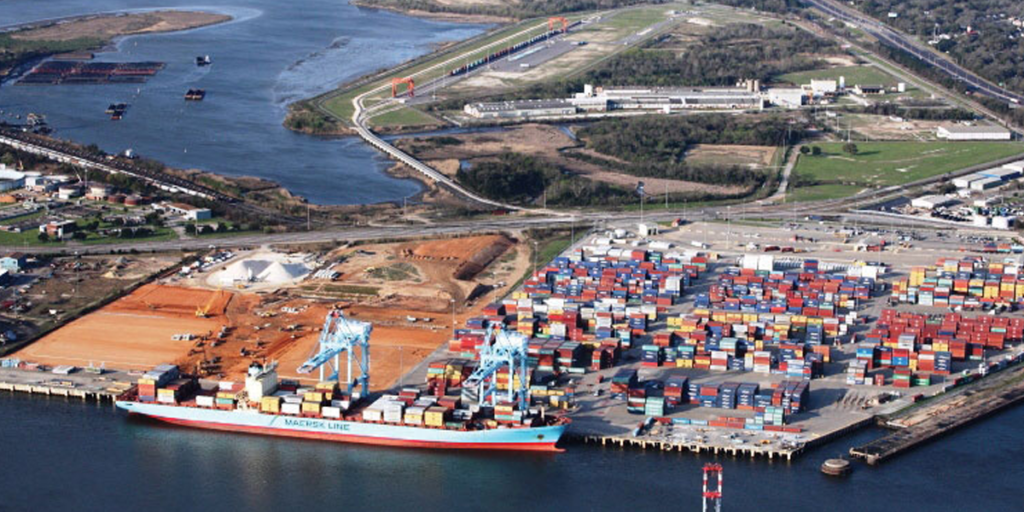
The Alabama State Port Authority is one of the largest economic engines for the state and wants to build on its $22.4 billion economic impact. The 4,000 acres that make up the state docks have multiple complexes that handle everything from auto parts to coal and from poultry to pine. But the port could be doing more, according to Jimmy Lyons, director and CEO of the Port Authority. Alabama port moving forward with growth plans from Alabama NewsCenter on Vimeo. “We’ve got a couple of exciting projects going on right now,” Lyons said. “We’re in the midst of doing a second expansion to our container terminal, actually our third phase. We finished phase two last year and realized that’s not enough, so we’re going to phase three right away. We’re on schedule to have that work all completed by the end of ’19.” The start of 2019 should see construction begin on a new $60 million automobile roll-on, roll-off terminal, a major move to support automotive logistics in a state where automotive manufacturing is a major industry. Another major event will take place Aug. 14 when Walmart officially opens its $135 million import distribution center in Mobile. In addition to creating 550 full-time jobs, that 2.5 million-square-foot facility will generate something the port desperately needs: empty shipping containers. Lyons told the Economic Development Association of Alabama at its 2018 Summer Conference this week that the state struggles to find enough shipping containers to meet the demand. With Walmart bringing in 50,000 containers per year when fully operational, that will help provide more empty cargo containers for exporters. That will reduce costs for exporters who pay to bring in empty containers; it will also help Alabama’s port retain business that now goes to other ports when containers aren’t available, Lyons said. The Army Corps of Engineers is seeking comments now on a $388 million plan to enlarge the port’s Mobile Ship Channel. A deeper and wider channel will clear the way for the port to accommodate larger ships that are already starting to come through the expanded Panama Canal, Lyons said. A deeper channel also allows ships to carry more weight, making the port more efficient for importers and exporters, he said. According to an economic impact study from the University of Alabama’s Center for Business and Economic Research, the port is responsible for 134,608 direct and indirect jobs in the state with a direct and indirect tax impact of $486.9 million. In 2017, the port handled 28.7 million tons of goods and 318,889 shipping containers. Republished with the permission of the Alabama Newscenter.
