
You’re out! Alabama ‘inappropriate’ P.E. activities list resurfaces

A dubious list of activities for Alabama’s physical education (P.E.) classes resurfaced on Tuesday, in “normal” childhood games like duck duck goose, musical chairs and kickball were deemed inappropriate. The Alabama State Department of Education (ALSDE) said these types of games can physically harm students, and can lead to children playing favorites. The policies were implemented two years ago, but resurfaced this week after the Auburn University in Montgomery’s (AUM) Physical Education Program shared the list on their Facebook page. The list has since been removed from the ALSDE website, and the AUM Physical Education Program Facebook page. Director of Coaching for the Birmingham United Soccer Association, Ben Parks told WBMA-ABC 33/40 these games are useful in teaching children life lessons, social skills and perseverance. “It’s okay to have a winner and loser, it teachers you about life,” Parks told WBMA “You may not get the job interview, the best score on a test, make the sports team. That’s okay, you have to get better every time, right?” Newsweek reported that Alabama Education Superintendent Dr. Eric Mackey decided to pull the document offline on Tuesday after reading it. “I took it down because it didn’t go out through our normal school system’s process,” Mackey told Newsweek. He also told them the document had never actually earned a formal endorsement. “I completely disagree with it,” Mackey continued. “We are a state that firmly believes in local control. Local principals and superintendents should be permitted to determine how their physical education programs are run.” On Wednesday Mackey addressed the controversy with AL.com. “It is completely up to you which games you play. There is no directive about which games you can and cannot play,” Mackey said according to AL.com. “Go back, tell your principals to take care of their own P.E. problems, please… I can assure you that particular list is not going back up as long as I’m state superintendent.”
Conservative religious leader says Jeff Sessions no longer has evangelical support
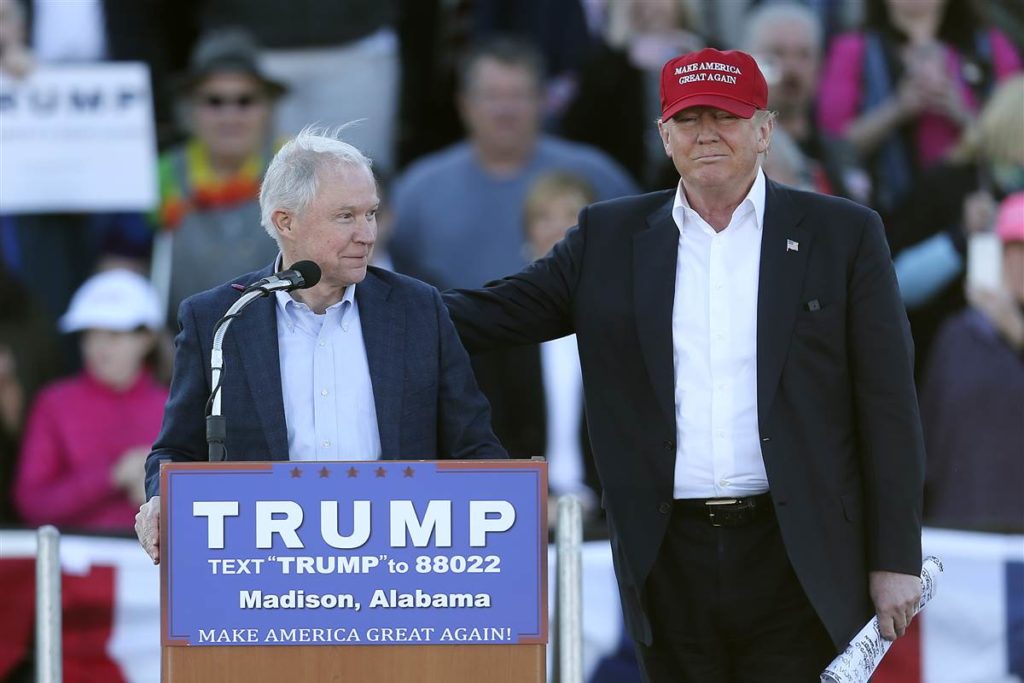
One of the top conservative evangelical leaders in the nation is urging President Donald Trump to fire Attorney General Jeff Sessions. On Monday, POLITICO reported that Jerry Falwell Jr.,a lawyer and President of Liberty University in Lynchburg, Va., urged Trump to fire Sessions. “He really is not on the president’s team, never was,” Falwell toldPolitico. “He’s wanted to be attorney general for many, many years. I have a feeling he took a gamble and supported the president because he knew he would reward loyalty.” Sessions has long been a supporter of conservative evangelicals, going so far as to launch a religious liberty task force within the U.S. Department of Justice (DOJ) in July, citing a “dangerous movement” to erode religious freedom in America. “A dangerous movement, undetected by many, is now challenging and eroding our great tradition of religious freedom. There can be no doubt. This is no little matter. It must be confronted and defeated,” Sessions told attendees of the Department of Justice’s Religious Liberty Summit. But Sessions “has angered Trump loyalists more recently because the Justice Department has not declassified all materials sought by Republicans in regard to the Russia investigation,” Politico reported. “The president believes Sessions, who recused himself from the Russia probe because of his involvement in the 2016 campaign, has failed to rein in a probe that Trump claims is driven by politics.” Last week, Trump fired several barbs at Sessions, telling Fox news channel’s “Fox & Friends” that Sessions “took the job and then he said, ‘I’m going to recuse myself.” “[He] never took control of the Justice Department and it’s a sort of an incredible thing,” Trump continued. Sessions then fired back at the president, saying that the DOJ would not be “improperly influenced by political considerations.” “A lot of Republicans pretend to be friends to conservatives and the faith community for decades when they really were not,” Falwell continued to tell Politico. “I don’t know if he’s in that category. If he was really a fair person, he’d be going after both sides.”
The results are in: 2018 Municipal Election Day
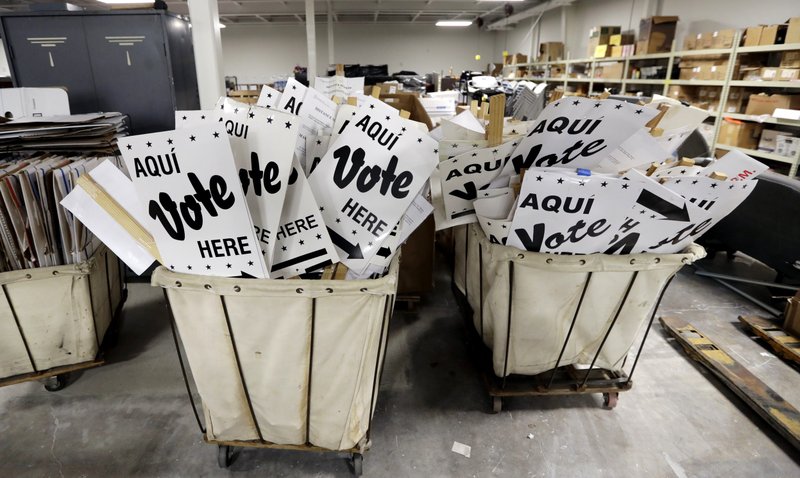
On Tuesday, several municipalities across the state of Alabama held elections for city seats, new mayors, and school board members. Several races resulted in a runoff, including the race for mayor in Auburn, city council seats in Montgomery, Bessemer and Huntsville. Ozark approved alcohol sales on Sunday, while Muscle Shoals denied a property tax increase. Municipal Election Results: Auburn According to the Auburn Villager, mayoral candidates Ron Anders and David Hill will head to a runoff election, as will Ward’s in place 2, 5 and 6. Race winners were: Ward 1: Connie Fitch Taylor with 328 votes Ward 7: Jay Hovey with 701 votes Ward 8: Tommy Dawson with 414 votes. Bessemer Incumbent mayor Kenneth E. Gulley won the mayor’s race with 68 percent of the votes on Tuesday, but almost all other races resulted in a runoff. According to the City of Bessemer, City Council District no. 1, 2, and 3, resulted in a runoff. As did, Board of Education District No. 1, 5 and 7. You can view the full results here. Gadsden Incumbent mayor Sherman Guyton faced four opponents in the Gadsden mayor’s race, but won with 47 percent of the votes. A runoff will be held for Gadsden city council seat 5 between Jason Wilson and incumbent Billy Billingsley Sr. Huntsville Only city council and school board seats were up for election in Huntsville Tuesday. Jennie Robinson won the District 3 city council seat with ease, garnering 73 percent of the votes. According to AL.com, the District 2 city council seat is headed to a runoff election. Muscle Shoals Muscle Shoals voters heavily denied the “5-Mill Tax Increase,” voting against the increase by 81 percent. The property tax increase, if approved, would have raised the existing 7.5 mills dedicated to education to 12.5 mills. “School officials said they would use the revenue generated by the additional 5 mills to seek a $20 million bond issue earmarked specifically for capital improvements,” the Times Daily reported. Ozark According to WTVY, Ozark voted to approve alcohol sales on Sunday by 73 percent, adding themselves to the growing number of Alabama cities willing to do so.
MGMWERX officially launches operations in Montgomery

Innovation and expertise that can benefit the U.S. Air Force and other armed services now have a new place to take flight in Montgomery. MGMWERX, an innovation hub of DEFENSEWERX, hosted “Mission Launch 2018” in downtown Montgomery Aug. 28 as an introduction to regional leaders. Established under an agreement with theAir Force Research Laboratory, MGMWERX augments ongoing Air University programs at Maxwell Air Force Base to enhance production of high-quality, innovative research and ideas that address issues of importance to the Air Force while also benefiting the private sector. “MGMWERX will enable Air University as the intellectual epicenter of the Air Force, to work with industry, civilian academia and others,” said Lt. Gen. Anthony Cotton, Air University president. The collaboration is all about “taking thought pieces from our institution’s students and faculty and then incubate them through an innovation hub like MGMWERX to solve difficult Air Force and Department of Defense issues. This is a direct link to the Secretary of Defense’s National Defense Strategy developing a lethal force though evolving innovative operational concepts. That critical thinking happens right up the street at Maxwell Air Force Base and will blossom right here.” Bill Martin, MGMWERX director, said the team of five, which is expected to expand this year, will integrate concepts and technology “from the public sector with the broad spectrum of Air Force proposals brought forward by some of the brightest minds in the service.” MGMWERX will be a conduit between the Air Force and the private sector in the River Region. “The success of the WERX model as a super connector understanding our customer needs and linking the right expertise to create positive results is happening at a rapid rate,” said Laurie Moncrieff, DEFENSEWERX executive director. “The WERX organizations have fielded hundreds of ideas innovating and commercializing technologies that support the warfighter. MGMWERX will continue that charge by taking the ideas generated from Air University and accelerating viable technologies to solve real-world problems faced by those defending our nation.” Secretary of the Air Force Heather Wilson recently visited MGMWERX to see firsthand the examples of projects the team will undertake to enable the service to “move faster and smarter.” MGMWERX will depend and rely on a robust private sector and industry to offer suggestions on issues than could benefit the private sector and the Air Force, Martin said. The MGMWERX collaborative office space is in Montgomery’s innovation district. Martin acknowledged the team will be better able to leverage “outside the gate” thinking to accelerate experimentation with emerging technologies. “Collaborating with Air University and the surrounding local area – to include the city of Montgomery, Montgomery County and the Montgomery Area Chamber of Commerce – we’ll inspire new thinking, optimize talent and become a breeding ground for innovative thought,” Martin said. “Montgomery has been the epicenter of world-changing history for decades, and now the city is making history again – but this time through technology and innovation,” said Anna Buckalew, executive vice president of the Montgomery Area Chamber of Commerce. “This unprecedented public-private collaboration with the Air Force will be a model for communities around the world, fueling innovation and collaboration that creates solutions for some of the most critical issues the Air Force and our nation faces today.” As part of the DEFENSEWERX ecosystem, MGMWERX connects to a national network that shares and leverages derived solutions for the mutual benefit of the Air Force and the external community. Joining the MGMWERX ecosystem affords individuals and organizations an opportunity to get involved in creating tangible solutions through innovation and collaboration, workforce development, tech transfer and rapid prototyping activities. Republished with permission from the Alabama NewsCenter.
Kay Ivey wants to see Alabamians become safer drivers

Gov. Kay Ivey wants to see Alabamians become safer drivers. That’s why she’s awarded a $2.8 million grant to the University of Alabama and Auburn University, who are putting their gridiron rivalries aside to team up to help Alabamians become safer drivers. The two universities, along with the Alabama Department of Public Health (ADPH), are gathering traffic safety data and converting it into messages to encourage Alabama drivers to use seat belts and child restraint seats, do not drink and drive or drive while distracted and obey traffic safety laws. “Regardless of your allegiance, when two of our larger universities work collaboratively to save lives and prevent injuries on our highways, our entire state wins,” Ivey said. “I am very grateful for the efforts of these universities along with the Department of Public Health to bring greater awareness to traffic safety. My administration remains committed to keeping drivers safe on our roadways, and I am proud to offer my support to this project.” The University of Alabama’s Center for Advanced Public Safety provides data to determine where crashes are occurring and the causes. The information, much of it collected by ADPH, also examines factors such as seat belt use, distracted driving and sobriety. Law enforcement agencies use that information to increase patrols and monitor traffic in high-crash zones. Auburn University’s Media Production Group produces outreach and awareness campaigns geared toward safe driving. Many of those promotions are tied to national highway safety campaigns like “Click it or Ticket” seatbelt enforcement or “Drive Sober or Get Pulled Over” impairment crackdown and are conducted around major holidays, like Labor Day, when more people are likely to be travelling. The Alabama Department of Economic and Community Affairs (ADECA) is administering the grants from funds made available to the state by the National Highway Traffic Safety Administration. “These efforts along with increased law enforcement presence send a clear signal that dangerous drivers are not tolerated on Alabama’s roads,” ADECA Director Kenneth Boswell. “ADECA is pleased to join Gov. Ivey in supporting the efforts of these institutions to increase highway safety.” Gov. Ivey notified Cynthia Hope, UA director of sponsored programs, John M. Mason, AU vice president for Research and Economic Development and Dr. Scott Harris, state Health Officer, that the grants had been approved.
Poll: Many voters indifferent to Brett Kavanaugh nomination
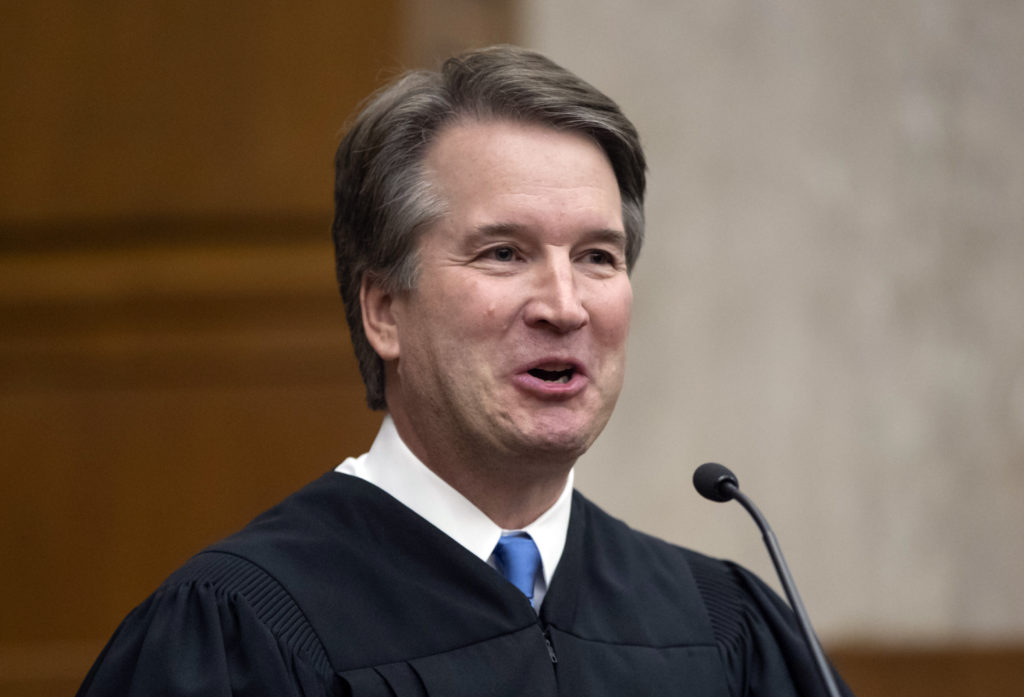
Does Brett Kavanaugh belong on the Supreme Court? It’s a question that may be consuming Washington, but one that elicits a shrug from many Americans. And there’s also no nationwide consensus on whether the Senate should vote on his nomination before Election Day. That’s according to a new poll from The Associated Press-NORC Center for Public Affairs Research, released Wednesday, that finds nearly half of Americans — 46 percent — don’t have a strong opinion on President Donald Trump‘s nominee to replace the retiring Justice Anthony Kennedy on the high court. That ambivalence runs even deeper among independent voters, as fully two-thirds say they’ve not formed an opinion on whether the federal appeals court judge deserves a promotion. Some people who haven’t yet formed an opinion say they need more information. While the parties have clashed over whether Kavanaugh should receive a vote before Election Day, Americans are evenly divided on that question: 51 percent saying go now and 48 percent preferring lawmakers wait until after voters have cast their ballots. Count Bob Tomlinson, 61, of Three Rivers, Michigan, among the indifferent undecideds. He doesn’t have an opinion on when the Senate should vote, but he has read some concerns about Kavanaugh’s views on executive authority and whether a sitting president can be indicted “or held accountable even.” “I do want to learn a little bit more before I make up my mind on the guy,” he said. Tomlinson and the rest of the county will get that chance next week, when the Senate Judiciary Committee begins confirmation hearings on Kavanaugh’s nomination. Republicans hope to have Trump’s nominee confirmed by the start of the court’s new session on Oct. 1. The tepid interest is a world away from Washington, where the partisan combat over Kavanaugh has been red hot. Conservative groups are spending millions on television ads designed to pressure Democratic senators to buck their party and support Kavanaugh’s confirmation. The ads mostly target voters in Indiana, West Virginia, Alabama and North Dakota, all states Trump handily won in 2016. Meanwhile, liberal groups are running anti-Kavanaugh ads in Maine and Alaska in the hope that Sens. Susan Collins and Lisa Murkowski, who support abortion rights, will decide to vote no. Among all Americans, those who do have an opinion divide about evenly, with 25 percent in favor of Kavanaugh’s elevation to Supreme Court justice and 29 percent opposed. Those opinions are divided primarily by partisan lines. “From what I’ve studied, he’d be a great candidate, No. 1, and the other reason is, I don’t trust the Democrats,” said Martin Stefen, 73, of Carson City, Nevada. He’s among the 78 percent of Republicans who believe a Senate vote should happen before the election. More than half — 56 percent — say they favor Kavanaugh’s confirmation, with just 4 percent opposed. Kavanaugh spent about five years working in the White House under President George W. Bush as a legal counsel and then as staff secretary. He has served for 12 years on the U.S. Court of Appeals for the District of Columbia Circuit, authoring some 300 legal opinions. Stefen said he views Kavanaugh as someone who “wouldn’t go along with politics” from the bench. “He’d be ruling fair and square, no matter what,” Stefen said. Among Democrats, 69 percent prefer the Senate wait until after the midterms to vote. A 54 percent majority oppose confirming Kavanaugh, while just 5 percent say they favor doing so. Senate Democrats have described the process for vetting Kavanaugh as broken and have called for Republicans to hold off on hearings and a vote. “If we do it before the midterms, it’ll go too quickly and we’ll have too many conservatives on the court, and I don’t think that’s a good thing,” said Anna Horton, 50, of Fountain, Colorado, who prefers that lawmakers wait. Horton said she is concerned about what Kavanaugh’s confirmation would mean for issues such as gun control and the environment. But her chief concern boils down to seeing red flags about any nominee who would be selected by Trump. “I just have a lot of mistrust for this administration,” she said. ___ The AP-NORC poll of 1,055 adults was conducted Aug. 16-20 using a sample drawn from NORC’s probability-based AmeriSpeak panel, which is designed to be representative of the U.S. population. The margin of sampling error for all respondents is plus or minus 4.2 percentage points. Republished with permission from the Associated Press.
Airbnb customers in Birmingham will now be taxed even more
Airbnb is poised to start collecting a local lodging tax in Birmingham, Ala. later this year. The Birmingham City Council unanimously approved an agreement, by a 5-0 vote, without any discussion during its regular Tuesday meeting allowing the short-term rental website to collect the tax on rentals. Under the agreement, an additional 6.5 percent lodging tax will be added to guests’ bills and remitted to the city starting on October 1st, 2018. “Because of the speed at which tech start up companies grow and expand, it is often difficult for municipalities to regulate their activities, collect regular taxes on their operations like any other business, and make sure they are operating according to their laws,” read the City Council after report highlights explaining why the tax is necessary. The Magic City is the second largest Airbnb market in Alabama, behind only Gulf Shores. Approximately 14,100 guests used Airbnb in Birmingham in 2017 and hosts earned about $1.5 million during that frame. That means the city lost nearly $100,000 in lodging tax revenue last year. “Our hosts want to pay their fair share, and we want to help,” said Tom Martinelli, Southeast policy director for Airbnb. “Our Birmingham host community provides a tremendous service to the city by allowing more visitors to stay in Birmingham and spend money with local businesses. This tax agreement will only enhance the economic impact and increase revenue for the city.” Airbnb also has tax agreements with Auburn, Opelika, Orange Beach, Tuscaloosa. The City Council next plans to address zoning issues of those who are hosting on the Airbnb platform.
New Starbucks in Five Points West makes history in acknowledging local history
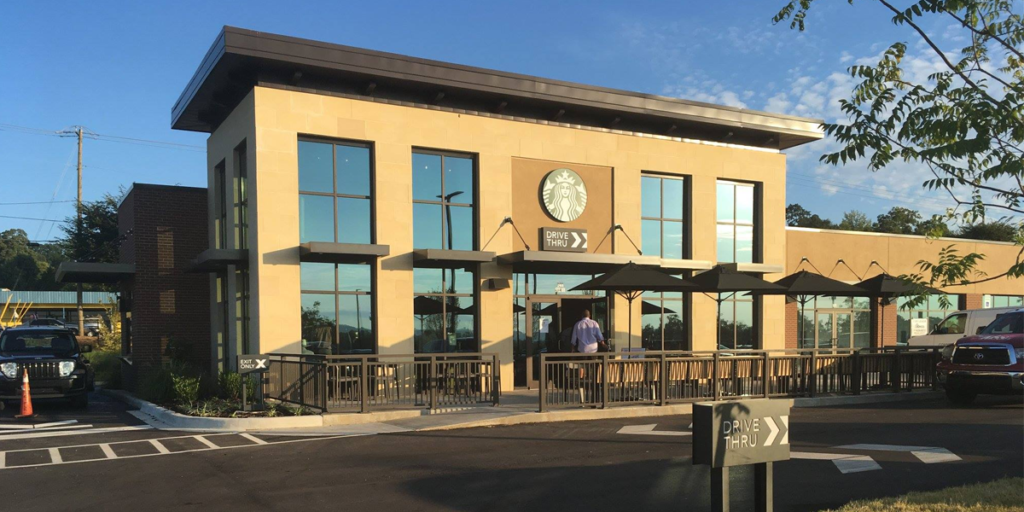
A new Starbucks in Five Points West neighborhood of Birmingham, Ala. is making history. The location, situated in the Birmingham Crossplex Village, is giving a nod to the history of its new neighborhood by providing maps of the Civil Rights Trail — the first Starbucks in the country to do so. Starbucks chose to build in a store in once-flourishing working-class community that’s experienced decades of decline as part of their commitment to revitalizing low-to-medium income communities by creating meaningful jobs, providing in-store job-skills training programs for youth, and investing in local minority-owned contractors and suppliers. An emphasis on community engagement From the very beginning, the Five Points West location invested in the historic African-American neighborhood by hiring local minority-owned contractors and suppliers when building the store. According to Rodney Hines, Starbucks director of Community Investments for U.S. Retail Operations, the company strives to identify communities that have large opportunity gaps and a need for business engagement and investment, as well as the foundations for commercial success. “We considered the impact Starbucks can have in this community, and whether it is a viable site in terms of driving business for us and being profitable,” Hines said. “It’s the convergence of those two considerations – community impact and impact on business – that led to this site being right for us. It’s a residential community with a commercial corridor and a significant civic building – the Birmingham CrossPlex sports facility – that’s there for the county and the city.” Commitment to local youth The new Starbucks will also serve as an onsite “soft skills” training center as well. Part of the company’s strategy to make good on its commitment to hire 100,000 “opportunity youth” – age 16-24 with limited education and job prospects — the Five Points West location will provide them career and education opportunities. It has partnered with the Birmingham-based non-profit, the Dannon Project. — the group endeavors to help persons in transition, especially those with addictions on the road to recovery — to launch the life skills training program that will provide job skills training programs for young adults who are not in school or employed, according to Starbucks. The program will focus on “soft skills” like how to dress for work and understand employers’ expectations. “The new Starbucks in Five Points West is truly a collaborative project. Starbucks worked with a minority owned general contractor to build the store; partnered with The Dannon Project to launch a life skills training program for local youth; and will be the first Starbucks in the country to provide maps of the Civil Rights Trail,” the City of Birmingham Mayor’s Office posted on Facebook Wednesday.. Birmingham Mayor Randall Woodfin is personally signing praises for the store. “Kudos to Starbucks. This is the way you serve a community,” Woodfin posted on Faceebook. “We are honored to have Starbucks open in District 8 and engage the citizens in the entire City of Birmingham and surrounding areas. Our young people, especially, get to take advantage of the tools of outstanding workforce development and work ethic,” added Councilor Steven Hoyt.
Primary takeaways: Establishment loses, diversity grows
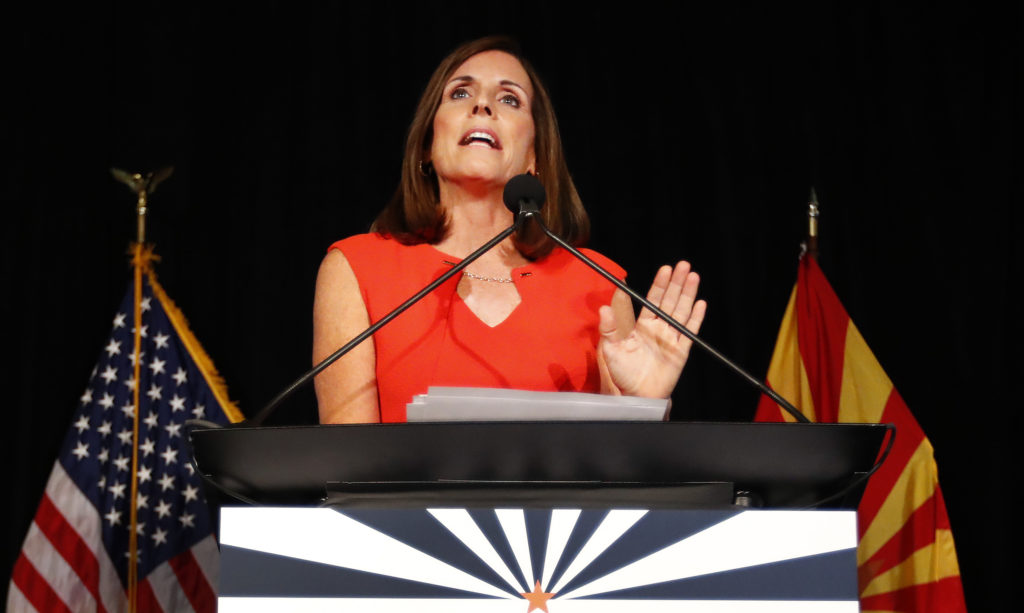
President Donald Trump got his man in battleground Florida, but he watched a prominent immigration ally fall in Arizona in what was another eventful night in the 2018 midterm season. Arizona and Florida held primaries Tuesday, both of which tested Trump’s influence. There were also new signs of diversity on the Democratic side. Takeaways from one of the final rounds of voting ahead of midterm elections: FLORIDA ESTABLISHMENT FAIL The political establishment in both parties had a bad night in Florida’s high-profile race for governor. On the Republican side, Trump got his man, Republican congressman Ron DeSantis, who beat out the establishment favorite, state Agriculture Commissioner Adam Putnam. Despite Trump’s support, DeSantis was not the strongest general election candidate in the race, operatives in both parties suggest. The three-term Republican congressman who makes frequent Fox News appearances is known as an immigration hard-liner in a state where Hispanic voters hold outsized sway. And lest there be any question about his allegiance to Trump’s divisive immigration policies, DeSantis encourages his toddler to “build the wall” with blocks in one campaign ad. That’s a message that may play well among a general electorate in West Virginia, where Trump won by more than 40 percentage points in 2016, but Trump carried Florida by only a single percentage point. On the Democratic side, liberal champion Andrew Gillum, the mayor of Tallahassee, bested a crowded field that included establishment favorite Gwen Graham, the former congresswoman and daughter of Florida political icon Bob Graham. Graham, who was considered a centrist, was viewed as a more attractive general election candidate in the purple state. Gillum is more liberal, having earned the backing of Vermont Sen. Bernie Sanders and billionaire Tom Steyer. To win the governor’s office for the first time since 1999, Democrats will have to come together quickly. The results on both sides underscore the outsized influence of each party’s most passionate voters in lower-turnout off-year elections. McSALLY’S CHALLENGE Martha McSally won the GOP nomination for Arizona Senate, but the results show how divided the party is and the challenge that lies ahead. A significant number of Republicans backed former Maricopa County Sheriff Joe Arpaio and fellow immigration hard-liner Kelli Ward. Now McSally has to bring together the party — including some of Trump’s most devoted supporters — going into the fall against Democrat Krysten Sinema, who is widely considered well-positioned. The race gives Democrats one of their best pickup opportunities in the nation. Meanwhile, it would be wrong to assume that McSally’s win is a repudiation of the tough rhetoric of her challengers, who essentially split the conservative vote. The 86-year-old man known nationwide as Sheriff Joe, who personifies the tough immigration policies that define the modern-day Republican Party, may never serve in public office again after his loss Tuesday. (For those who forget, Arpaio was convicted of criminal contempt last year for ignoring a judge’s order to stop detaining immigrants in the country illegally. Trump later pardoned him.) MISSING: BLUE WAVE IN FLORIDA If a Democratic wave is coming to Florida, it may have to be supplied by independents. With just a handful of precincts left to count, Republicans cast more than 1.6 million Florida ballots, while registered Democrats were on track to fall just below 1.5 million. Beyond the raw vote totals, the GOP count also was a larger share of its last presidential election turnout. That measure is a useful way to assess which party is more excited about a midterm election, and it’s particularly useful in Florida because the state limits primaries only to voters registered by party. The GOP total came to almost 35 percent of what Trump won in Florida in 2016. The Democrats’ total was about 33 percent of Hillary Clinton‘s 2016 turnout. Of course, it doesn’t mean Republicans are guaranteed big wins in Florida this fall. But it does show the GOP base in Florida is anything but depressed, turning out in solid numbers to nominate DeSantis after he was endorsed by Trump. The scenario cuts against the grain of a midterm election cycle that’s been defined by energy on the left in other states, and it puts an added burden on Florida Democratic candidates to attract voters who didn’t participate in Tuesday’s primaries. FLORIDA MONEY PIT There was less drama on the Senate side in battleground Florida, but the stage is now set for what will likely be the nation’s most expensive midterm contest. Florida Gov. Rick Scott easily captured the Republican nomination in the GOP’s bid to unseat Democratic incumbent Sen. Bill Nelson. At 75 and seeking his fourth term, Nelson is considered particularly vulnerable as voters continue to show disdain for candidates with deep ties to the establishment. Scott, an independently wealthy businessman, has already spent more than $27 million on the race compared to Nelson’s $6 million. The conservative Koch network has identified the Senate seat as a top target, and outside groups on both sides are expected to dump millions more in the contest. The extraordinary price tag of running a statewide campaign in Florida, which features 10 media markets, will test each side’s resolve and resources — particularly on the Democratic side. Republicans know Scott can and will dump millions more of his own personal wealth into his campaign. Democrats aren’t so lucky. National Democrats are already weighing how best to invest their limited dollars considering their challenges in other states where their incumbents are on the defensive. Yet if Democrats lose Nelson’s seat in Florida, their already narrow path to the Senate majority becomes virtually nonexistent. DIVERSITY WAVE GROWS In his upset victory, Gillum joins two other African-American gubernatorial nominees on the November ballot, Georgia Democrat Stacey Abrams and Maryland Democrat Ben Jealous, in what may be the party’s most diverse midterm class in history. No state is currently represented by a black governor. The nominations, of course, do not mean the candidates will continue to re-write history. Republicans have cast Gillum, like the other black nominees, as part
Steve Flowers: BCA is back, bigger and better than ever
Alabama Power is and has always been a force in Alabama politics. Some entities may have influence in the Legislature, but the power company has the ear of folks in all three branches of State government: Legislative, Executive and Judicial. If you sat down with all 35 state senators, especially the veterans who know the ropes and the system, and you had an extensive off-the-record private conversation with each of them, and you asked them if you had to have one special interest group in your corner and you were in a tough race to get reelected or wanted to get something accomplished, who would you call. In other words, to quote the great Dr. Paul Hubbert, who would you call if your ox got into a ditch?It would be an overwhelming vote for Alabama Power. Alabama Power is the friend, and confidant that both Democratic and Republican senators and representatives would name. The company is known for listening to legislators and treating them fairly and honestly, and it is truly nonpartisan in its approach. Typically, the power company prefers anonymity. It certainly does not seek attention or accolades. However, legislators, judges, and governors have never been reluctant or ashamed of being aligned with the interests of the company or seeking contributions from its employee-operated political action committee. Over the years there has been a shell game of attempting to hide campaign contributions from some corners; not so with Alabama Power and its employees PAC. They do not play nefarious, clandestine, hiding-the-money shenanigans. They play by the rules. When you inquire of those 35 senators why they want and are proud of the power company’s support, they will quote an old saying used among Goat Hill veterans, “What’s good for Alabama Power is good for Alabama,” because if Alabama grows and prospers, if the state is drawing new industry and existing businesses are expanding, and Alabamians are using more electricity, Alabama Power prospers. During the 1960’s, George Wallace had demagogued the race issue and had become the Emperor of Goat Hill. The issue of race was a powerful tool. Wallace was a brilliant politician and knew how to use power. When African Americans gained the right to vote Wallace had to find him another boogeyman. He took a page from Huey Long and started cussing the big utilities. During this Wallace vendetta, Alabama Power had a president named Joe Farley, who was a great business leader, but not particularly enamored with Montgomery politics. Fortunately, he had a real pro representing the company on Goat Hill in the form of Walter Johnsey. Walter stood toe-to-toe with Wallace. After Wallace, a triumvirate of power made up of AEA/Labor and trial lawyers ruled the roost. The plaintiff trial lawyers became greedy and made Alabama the laughing stock of the Nation with outrageous, ludicrous judgements. We were called “Tort Hell” by “Time Magazine.” No industry would come to Alabama when they were going to be routinely shaken down by litigants and their own workers for millions of dollars. The power company had to come to the rescue. Under the leadership of President Elmer Harris, the Business Council of Alabama was created. The BCA ran the trial lawyers from the Temple and led Alabama into a pro-business environment. Over the next 30 years the BCA became the leading business governmental group. In actuality, it remained closely aligned with the power company. An arrogant, Yankee, named Billy Canary, had been the titular president of the BCA for close to 10 years. He had parlayed a friendship with Governor Bob Riley and Speaker Mike Hubbard, into garnering the job. It became apparent that he had run the organization into the ground about three years ago. He and the BCA had become a joke and toothless tiger. About a year ago, the power company President, Mark Crosswhite, called Canary to Birmingham and suggested it was time to move on. Canary lied and procrastinated and refused to depart. Crosswhite ultimately lost patience. He brilliantly pulled the plug and left BCA along with some of the company’s business allies Regions, Blue Cross, and Power South. Crosswhite had grown up in the power business, even at one point in his career he led the governmental affairs department and also did a stint as President of sister Gulf Power. He knew how to handle the situation. He employed the Teddy Roosevelt adage that also applies to the power company: “Walk softly and carry a big stick.” Crosswhite and his allies reconstituted the Board of BCA and brought everybody back into the fold in one fell swoop. He earned himself a place in Alabama Power and Alabama political lore. The BCA is back bigger and better than ever. See you next week. ••• Steve Flowers is Alabama’s leading political columnist.His weekly column appears in over 60 Alabama newspapers. He served 16 years in the state legislature. Steve may be reached at www.steveflowers.us.
