
Birmingham’s own Randall Woodfin scores with underdog pick in Fla. gubernatorial primary
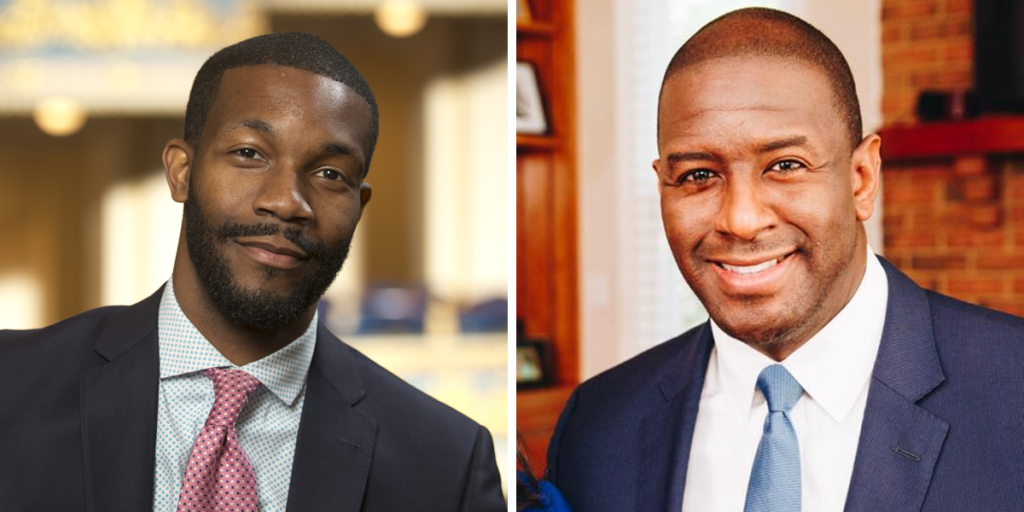
Earlier this week, Andrew Gillum, the former mayor of Tallahassee, Fla., pulled off quite the upset when he defeated former Congresswoman Gwen Graham, among others, and won the Democratic nomination for Governor. Birmingham’s very own Randall Woodfin weighed-in on the race, just a week before Election Day, where he gave Gillum his public endorsement. “Every now and then I get the opportunity to be vocal about the candidates I support who running for other offices across this nation. Andrew Gillum is one of those candidates,” Woodfin said in a video he posted on Twitter. Woodfin continued speaking directly to camera, saying, “As a candidate running for the Governor of Florida. Floridians, he is your choice. He cares about the same exact things you care about. The future and investment in the education of children. Equal pay and rights for women and others. Investing in infrastructure. The economic delveopment that really works for all of the residents of Florida. For all the concern we have. For all the passion and hope we have for the future of Florida, put it in Andrew Gillum’s hands to lead your state. You can count on Andrew to make a difference in you and your family’s life. Vote Andrew Gillum next Tuesday.” As Woodfin pointed out in his tweet, Gillum is a fellow mayor, but what he failed to mention is that Gillum is a Bernie Sanders — the liberal senator from Vermont — backed candidate. Just like he was. Interestingly, both young politicians — Woodfin, 37, and Gillum, 39 — were early Hillary Clinton supporters during her 2016 presidential campaign. Like Woodfin, Gillum also managed to pull off a surprise upset at the polls. Thanks to a strong grassroots efforts he bested four other Democratic opponents, all of whom outspent him handily. Woodfin went back to Twitter to send his public congratulations. “Huge congratulations to my friend, fellow mayor, and future GOVERNOR of the great state of Florida @AndrewGillum. Incredible victory brother! Bring it home on November 6th! #OurRevolution #FloridaPrimary,” Woodfin tweeted. Woodfin’s not the only one recognizing Gillum on Twitter. In the days since his victory, he’s also drawn attention from the Oval Office. “Not only did Congressman Ron DeSantis easily win the Republican Primary, but his opponent in November is his biggest dream….a failed Socialist Mayor named Andrew Gillum who has allowed crime & many other problems to flourish in his city. This is not what Florida wants or needs!” tweeted President Donald Trump. Not only did Congressman Ron DeSantis easily win the Republican Primary, but his opponent in November is his biggest dream….a failed Socialist Mayor named Andrew Gillum who has allowed crime & many other problems to flourish in his city. This is not what Florida wants or needs! — Donald J. Trump (@realDonaldTrump) August 29, 2018
Critics scrutinize Brett Kavanaugh’s civil rights views ahead of confirmation hearings
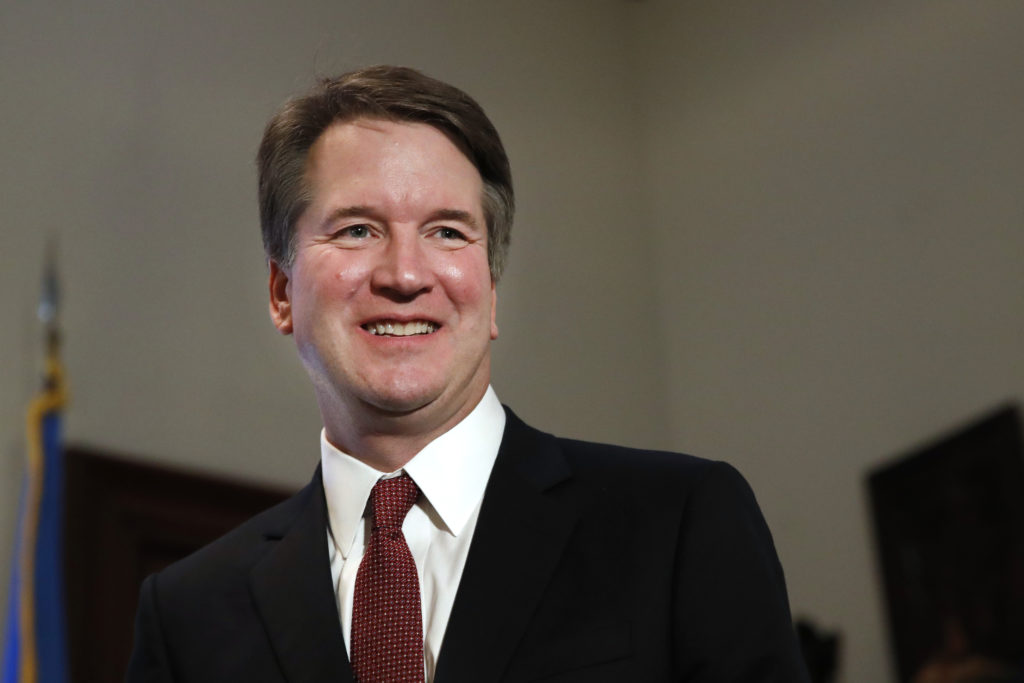
Brett Kavanaugh emailed his White House colleagues in June 2003 with an alert: The U.S. Supreme Court was about to release opinions on the University of Michigan’s use of race as a factor to admit students. It was an issue of great interest to his boss, President George W. Bush — who favored race-neutral admissions. Staff prepared a response anticipating the practice would be struck down, saying, “We must be ever mindful not to use means that create another wrong and thus perpetuate our divisions” in the pursuit of diversity. But the next day, justices released a 5-4 opinion written by Justice Sandra Day O’Connor upholding the university’s law school admissions policy, a disappointment that prompted then-Bush policy adviser Joel Kaplan to email Kavanaugh, then a White House attorney: “What’s going on???” In a separate 6-3 opinion, the court said race could be a factor in undergraduate admissions, but not the deciding factor. There is no evidence of a reply from Kavanaugh from his time in the White House counsel’s office. But as President Donald Trump‘s nominee to the Supreme Court, his views on affirmative action, along with voting rights and discrimination, are coming under intense scrutiny by civil rights organizations as the Senate Judiciary Committee prepares to begin confirmation hearings Tuesday. “We are confident that if he’s confirmed to the court, he would undermine the court’s integrity and would prove a grave threat to civil rights, racial justice and the marginalized communities that the Legal Defense Fund represents,” Janai Nelson, associate director-counsel of the NAACP Legal Defense Fund, said Thursday as the organization announced opposition to Kavanaugh’s nomination. Civil rights organizations that have been combing through Kavanaugh’s 300-plus decisions during 12 years as a federal appeals court judge in Washington, D.C., his work as a lawyer and his time inside Bush’s White House say there are red flags. He co-wrote a brief as a private attorney in a case involving native Hawaiians that they fear signals his personal opposition to affirmative action, and he wrote the appellate court opinion upholding South Carolina’s voter ID law. Kavanaugh’s record also includes opinions that civil rights advocates would praise in other candidates, including that a single utterance of a racial epithet toward a black employee — a word Kavanaugh said was “probably the most offensive word in English” — could create a hostile work environment under federal law, and a suggestion that federal courts should make it clear that discriminatory actions by employers violate the Civil Rights Act. That contrasting record underscores the challenge facing groups that already opposed Kavanaugh because he was on a list of potential nominees put forward by the conservative Federalist Society and Heritage Foundation, essentially certifying them as appropriately conservative for Trump. The president has vowed to move the high court to the right while replacing retired Justice Anthony Kennedy. The White House had no comment for this story but referred The Associated Press to a former Kavanaugh law clerk, an African-American, who said Kavanaugh is attuned to civil rights and racial justice issues. Luke McCloud, who clerked for Kavanaugh from 2013 to 2014 and is now in private practice, praised Kavanaugh’s efforts to recruit and mentor minority lawyers, saying Kavanaugh “acknowledges the history and current reality of race in this country and takes it into account as he can within the confines of his role as a judge.” Kavanaugh’s keen interest in affirmative action is evident in the released White House emails. Although he appeared careful to withhold his own opinion, he clearly was interested in Bush’s anti-affirmative action views, often emailing and receiving articles and opinion pieces on the issue. In private practice earlier, Kavanaugh wrote a brief along with failed Supreme Court nominee Robert Bork challenging a law banning non-native Hawaiians from voting in Office of Hawaiian Affairs elections. He also wrote an opinion piece for The Wall Street Journal sharply criticizing the policy, but during confirmation hearings for the appeals court post, he said he wrote the piece to advance his client’s position and refused to say whether he agreed. The case involved a $300 million public trust fund set up by Congress to compensate ancestors of native Hawaiians whose land and cultural heritage were taken by the U.S. The state said only blood relatives could vote in board of trustees elections, while Kavanaugh challenged that as discriminatory to non-indigenous residents. The U.S. Supreme Court ruled in 2000 that the law amounted to racial discrimination. Kavanaugh’s brief and other comments around the case indicate that he thinks government will ultimately end up race-blind, which “could signal where his own thinking is” on affirmative action, said Vanita Gupta, president and CEO of The Leadership Conference on Civil and Human Rights, who also opposes Kavanaugh. “His record is deeply disturbing … but there is a lot we don’t know.” Opponents point to other issues that trouble them, especially his 2012 ruling on South Carolina’s voter ID law. Kavanaugh said the statute was legal because those who had difficulty getting a photo ID still could vote by signing an affidavit. The law had been blocked by the Justice Department, which sided with those who said such laws make it more difficult for minorities to vote and are pushed by conservatives to dampen minority turnout. But Kavanaugh also delayed the law’s implementation to give voters who lacked ID’s time to get them, acknowledging that most were black, and writing: “There is too much of a risk to African-American voters for us to roll the dice.” Critics also question his record on employment discrimination, citing an appellate court case in which Kavanaugh disagreed with the majority of judges, who said that a black woman fired from a job as House of Representatives deputy budget director could pursue claims of racial discrimination and retaliation in federal court. “We’re mostly concerned about whether Judge Kavanaugh, if confirmed, would approach civil rights issues with the appropriate understanding and respect for the history of racial discrimination in this country,” said Thomas
Finally, Alabama ranks #1 for something other than football
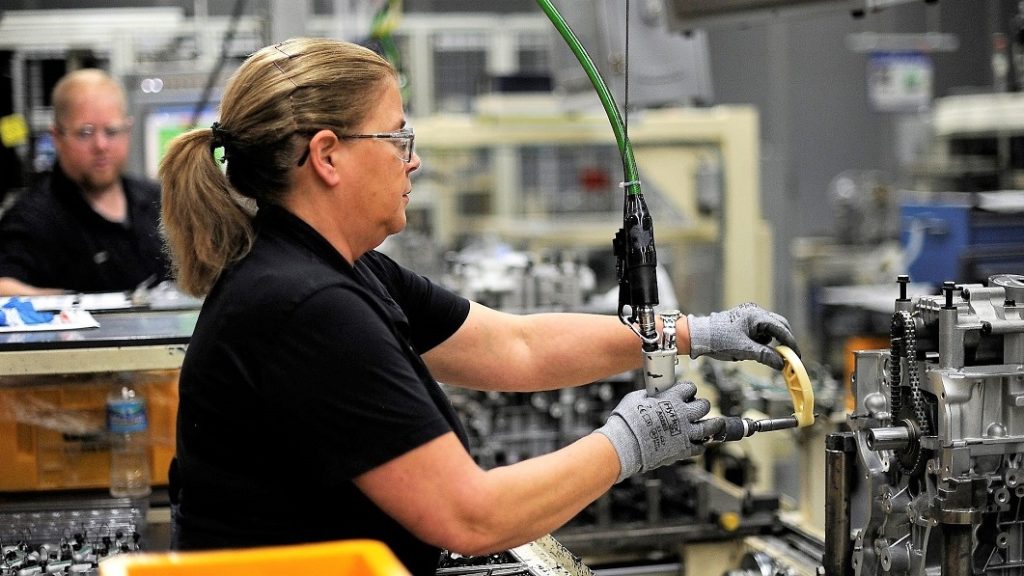
The Yellowhammer State has been selected as the nation’s top state for manufacturing in a new ranking. Global Trade, a publication focusing on international business, put Alabama in the top spot of a combination of factors — “like an existing industrial base, the availability of talent, investment incentives, and favorable tax and regulatory environments.” In addition, the publication credited the AdvantageSites program for the state’s success in the manufacturing industry. This program pre-certifies sites for development and is known for rapid permitting, which is coordinated by the Alabama Department of Environmental Management (ADEM) to accelerate projects. “Alabama has a strong heritage in manufacturing, which remains a key pillar in the state’s growing economy,” Governor Kay Ivey said. “Alabama workers have shown the world that they have the expertise to manufacture high-quality products that set industry standards, and this ranking is more confirmation of that fact.” “Alabama is open for business! We should all be proud of the strong workforce development initiatives that continue to help our state succeed,” Alabama 2nd District U.S. Rep. Martha Roby posted on Facebook after hearing the news. Open for business There are more than 270, 000 manufacturing workers in Alabama, representing over 13 percent of the state’s workforce. That’s the fifth highest concentration among the states, according to data from the National Association of Manufacturers. “Alabama’s manufacturing workers bring energy and passion to their jobs, and they’re always willing to learn new skills that will enhance productivity,” added Greg Canfield, secretary of the Alabama Department of Commerce. “These qualities set them apart from their counterparts in other states and allow them to manufacture a sweeping variety of top-flight products that are in demand all over the world.” Global Trade’s selection of Alabama as the top manufacturing state comes one month after Business Facilities, a publication focused on economic development, named Alabama the No. 1 state in a business-climate ranking. “The state has seen a continued influx of manufacturing investment — much of it from the international auto industry — and it’s not hard to understand why,” Global Trade writes. A 2017 Gallup poll found that Alabama has the highest percentage of highly involved and enthusiastic workers among U.S. states. These rankings come at a time when Alabama is moving to streamline and improve its overall workforce development program, with many of these functions centralized in the Alabama Department of Commerce. New initiatives include AlabamaWorks and Apprenticeship Alabama.
Alabama’s largest county looks to continue economic development momentum
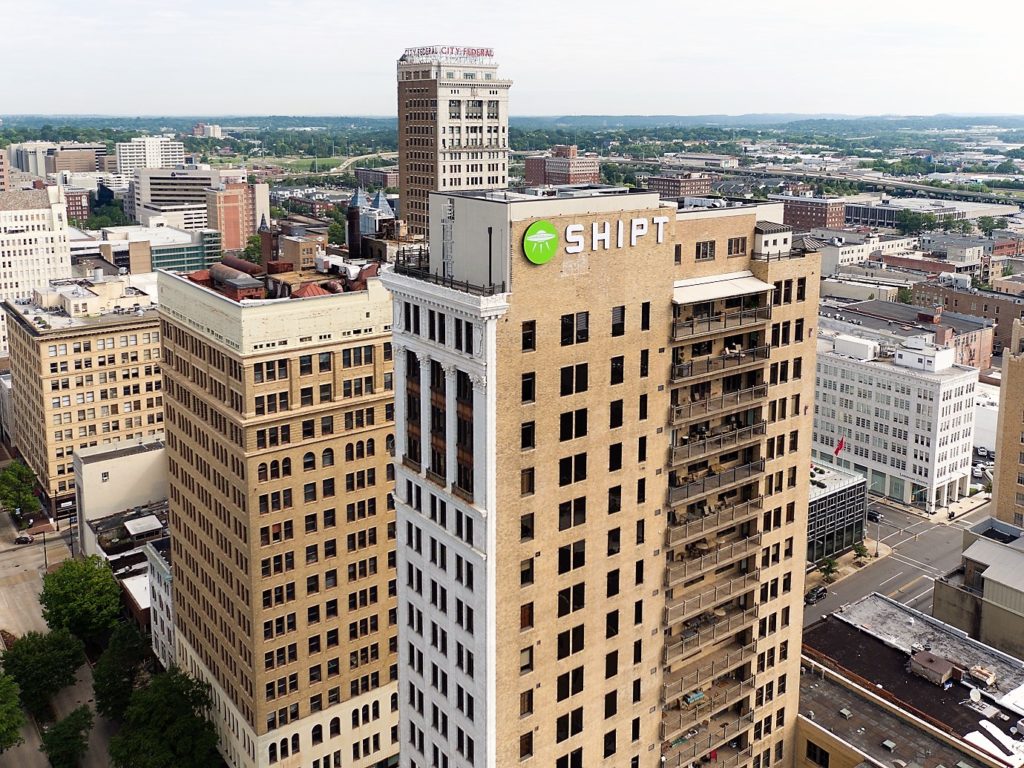
With the recent announcements of thousands of jobs coming into Jefferson County in connection with Amazon’s advanced robotics fulfillment center, DC BLOX’s data center and Shipt’s decision to keep its corporate headquarters in Birmingham, local officials are working from a playbook that has four steps, they say. It all begins with Alabama’s business climate that has been ranked as best in the United States for growth potential and workforce training by Business Facilities magazine, said Commissioner David Carrington, chair of the county’s Finance, Information Technology and Business Development Committee. The second is that Jefferson County is the economic center of the state, with the largest population and number of jobs. In 2016, companies announced they were going to create 14,500 jobs and invest $5.1 billion in Alabama. The Birmingham-Hoover metro area accounted for about 20 percent of those jobs and 25 percent of the capital investment. Jefferson County alone was responsible for 1,436 announced jobs and $506 million in capital investment. “In fact, the metro area’s gross domestic product is greater than Mobile, Montgomery and Huntsville combined,” Carrington said. “In 2017, according to the Alabama Department of Commerce, Jefferson County led the state with 2,200 new announced jobs in targeted industries.” The next step is collaboration among partners that often include the Birmingham Business Alliance (BBA), University of Alabama at Birmingham (UAB) and, if a proposed site is in a city, the city. “As in most successful projects, it was a well-coordinated community effort that led to a successful conclusion, and we’re very grateful to our partners and allies for their great work on this project,” said Lee Smith, East Region CEO for BBVA Compass and 2018 chairman of the BBA, after the area secured Amazon’s $325 million investment. “The county actively listens to the prospect’s needs and then participates in the development of an aggressive marketing plan with (those) partners,” Carrington said. Fourth, a project team is in place that “leverages our community’s assets,” Carrington said. “. . . We will talk about our enviable road and rail transportation network when talking to a distribution company; or UAB, Southern Research and Innovation Depot when talking to a STEM (science, technology, engineering and math) company; or our central, geographic proximity to Mercedes, Honda, Hyundai, Volkswagen, Kia and the soon to be open Toyota/Mazda plants when talking to an automotive supplier.” All of those steps are done under a positioning umbrella, he said. “Even if we don’t win a project, we want the company and their consultants to ‘have a good feeling’ about the community so we will be considered for a future project,” he said. Carrington pointed to the community’s Amazon HQ2 “BringAtoB” campaign. “The primary project team knew that Birmingham was at best a long shot, but, despite the odds, we put together an innovative vision and proposal for the company to consider,” he said. “While we didn’t win the headquarters, we caught Amazon’s attention and less than a year later announced an 855,000-square-foot advanced robotics fulfillment center in Bessemer.” Republished with the permission of the Alabama Newscenter.
Alabama HS stands by decision to send controversial ‘Dixie’ away, away

Arab High School‘s longtime school’s fight song, “Dixie” was nixed earlier this month after complaints over the controversial song, calling it an anthem of slavery and racism, reached the campus. Arab City Schools Superintendent John Mullins said the school board decided the song will no longer be allowed to play after touchdowns at football games. Opponents of the decision crowded the city school board meeting Thursday night voicing their disapproval. “I truly believe the vast majority of people in this community love ‘Dixie’ for the right reasons, as a school tradition and anthem of Southern heritage,” Arab High School teacher Russ Williams said during the meeting. But Mullins said the issue has been decided and he’s not bringing ‘Dixie’ back. He says the school’s band director has yet to decide on a replacement for the fight song.
Martha Roby: A recap from the road, part 2
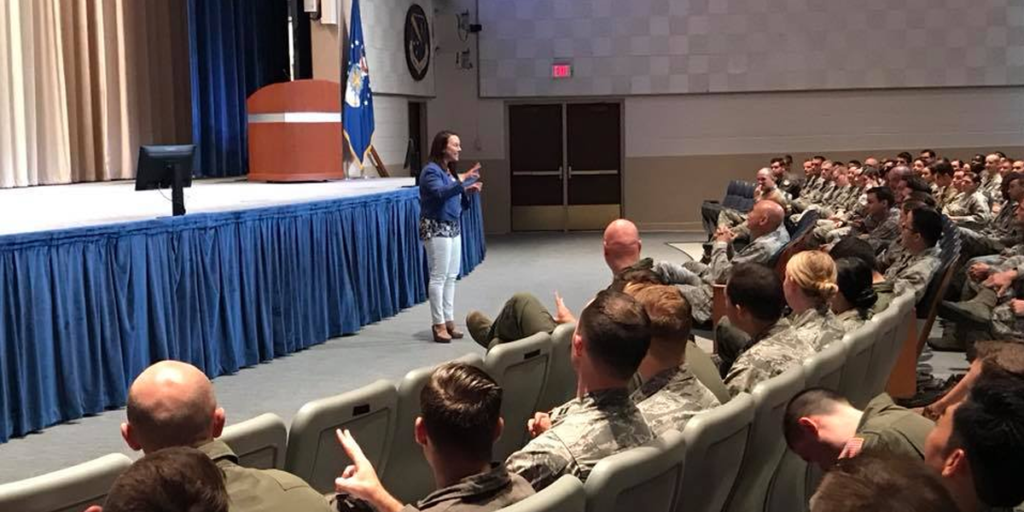
Over the last month during the August district work period, I have had the opportunity to travel throughout Alabama’s Second District to meet with constituents, local leaders, and business owners. Having this time to hear firsthand from the people I represent is tremendously important, and I believe it enables me to better represent your views in Washington. I recently wrapped up my district travel for the month, and I would like to briefly share with you an update on some of my visits and meetings I had towards the end of August. I met with leaders from Ingram State Community College in Deatsville. We had a great conversation about our state’s excellent community college system and ways we can continue to improve higher education and opportunities for AL-02 students. I also sat down with some folks from the Alabama Association of School Boards, and they updated me on some of the issues our local school systems face. I appreciated hearing from them and learning more about their perspective. One afternoon, I had the privilege of speaking to the Montgomery chapter of the American Society of Civil Engineers during their monthly luncheon. We discussed a number of important topics, including efforts in Congress and the Trump Administration to reinvigorate our nation’s aging infrastructure. I appreciated this opportunity and everyone who took the time to visit with me. I also visited the Army Aviation support facility in Hope Hull for a briefing and an overview of their facility. I enjoyed talking with General Gordon, Colonel Bass, and others during my time there. I stopped by Sabel Steel to meet with company leadership, including owner Keith Sabel. As you may know, Sabel Steel recently announced that thanks to our historic tax overhaul, they will use their significant savings to provide pay increases to all employees, invest in new equipment, expand their existing facilities, and hire additional workers. I enjoyed visiting this outstanding company, and I wish them continued success as we work to implement even more pro-growth policies to assist job creators across the district. In Dothan one afternoon, I visited the Dothan Behavioral Medicine Clinic where I talked with staff and received a briefing on the Clinicom technology that is used to diagnose mental illness. Mental health is an acute problem facing our country, and I was pleased to learn more about their work. One morning, I had the opportunity to speak to the Squadron School at Maxwell-Gunter Air Force Base. We had a great conversation about leadership qualities and my role in Congress as an advocate for our military. I really appreciated the many thoughtful questions I received and am already looking forward to my next visit! One day, I sat down with Jay Moseley, Teresa Collier, and John Hamm from the Alabama Law Enforcement Agency’s Fusion Center. They updated me on the status of the human trafficking problem in our state and their efforts to eradicate this horrendous plague on our communities. I appreciate these leaders and their work to combat this atrocious problem. I also toured Common Ground Ministries’ Mercy House and helped serve lunch one afternoon. I really enjoyed meeting some wonderful people and having several deeply meaningful conversations. We are fortunate to have Common Ground and all its dedicated volunteers as a resource in the River Region. These are just some of the many productive, informative meetings I had over the second half of this August district work period. Now that the month is behind us and fall is quickly approaching, I would like to extend a sincere “thank you” to all the individuals, businesses, local officials, and others who hosted me and visited with me over the last several weeks. It is always a true joy to visit various communities in AL-02, and I look forward to more opportunities to learn from the people I represent. ••• Martha Roby represents Alabama’s Second Congressional District. She lives in Montgomery, Alabama, with her husband Riley and their two children.
Doug Jones launches new official website for constituents
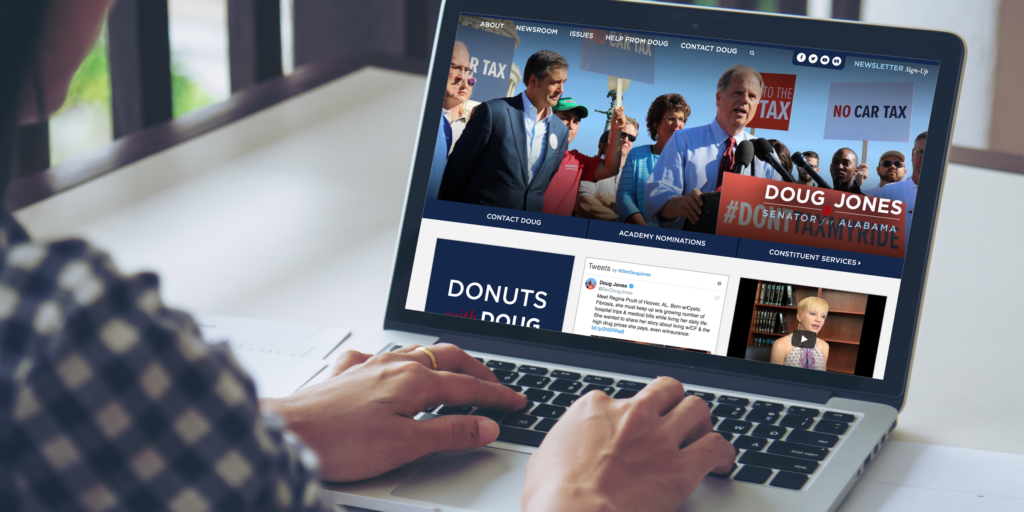
Nearly nine months after being sworn-in to the U.S. Senate, Alabama’s Doug Jones has given his official U.S. Senate website a facelift. On Friday, Jones announced the launch of his new official website that offers services and information for Alabama constituents about the Senator’s legislative priorities, resources for students, help with federal agency casework, information about applying to military service academies and Senate internships, and more. The new site replaces the introductory website provided to all new senators and features a more extensive and accessible menu of constituent services. “Whether I’m working in Alabama or Washington, I need to hear from folks at home about how I can best serve as their voice in the U.S. Senate. My new website will help me stay connected with Alabamians from every corner of the state and keep them informed about what I’m working on for them,” said Jones. Mindful of his more rural constituents, Jones had the mobile-responsive site designed to limit the data required to view it on a mobile device, in an effort to maximize accessibility. The newly launched site was designed with a constituent-oriented experience in mind, putting Alabamians’ most frequent requests easily within reach, including: Sharing feedback with Senator Jones Scheduling a meeting Getting help with federal agencies Ordering flags Applying for a nomination to a military service academy. Constituents will also be able to quickly locate the senator’s local offices and contact information using an interactive Alabama county map on the homepage. And Alabama students and their parents can also explore resources that are available, ranging from internships to financial aid.
Mobile announces city’s 2019 budget, projects $4 million revenue increase
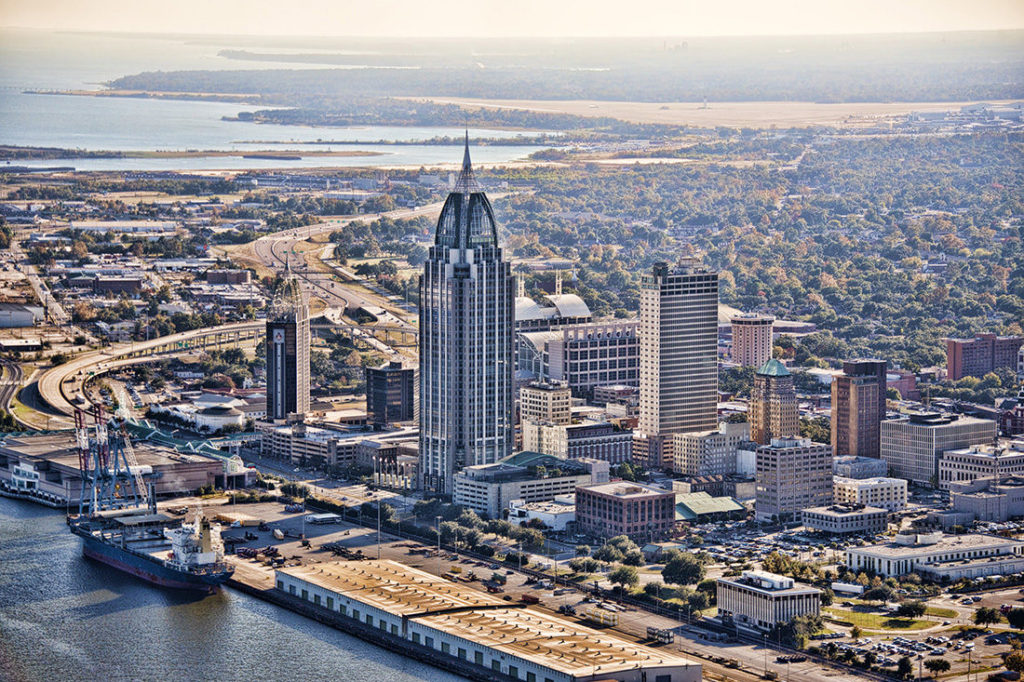
Mayor Sandy Stimpson announced the final proposed budget for 2019 in the City of Mobile, Ala. on Thursday, which included a projected a $4 million increase in revenues along with a $2 million debt decrease in the city’s financials. “We have delivered a balanced budget to the Mobile City Council that directs resources to the core functions of city government,” Stimpson said in an e-mail to constituents. “Our efforts to reduce the City’s debt have been rewarded with decreases in overall debt level and annual debt service. Over the past three years, the annual debt service has decreased $2 million. Over the last two years, most of our bond issues have been refinanced to take advantage of lower interest rates and tourism has increased from 3 million visitors to 3.4 million. These are just a couple of the factors that have led to revenue increasing by $4 million.” In an effort to promote increasing revenues to the city, Stimpson makes his case for taxing e-commerce businesses at the same rate as brick-and-mortar businesses in the final proposed budget. “If all e-commerce were taxed at the same rate as brick-and-mortar sales, roughly $23 million more in sales taxes would be generated,” he said. “Today, less than one-half of that amount is taxed. Another way of looking at this is that, over a ten year period of time, some $120 million in revenue will disappear even if the level of e-commerce remains flat.” The city is preparing to hold a public hearing on the budget on September 4, at 10:30 a.m. You are invited to attend a public hearing on Mayor Stimpson’s proposed budget this Tuesday, September 4th at 10:30 am during the regular Council Meeting in the Auditorium at Government Plaza. https://t.co/TxmWO5m6au — City of Mobile (@City_of_Mobile) August 30, 2018 Where will the money go? According to the final budget: Nearly $52 million in total will be spent on the Mobile Police Department, this includes Field Operations, Investigative Services and Administrative Services. Over $15.4 million in total will be spent on public works including street sweeping, trash collection, and storm drain maintenance. Build Mobile will get a total of $4.4 million to be used for historic development, planning & zoning, and other Build Mobile services You can view Stimpson’s full proposed budget here.
Lawmakers announce opioid overdose devices for high schools statewide
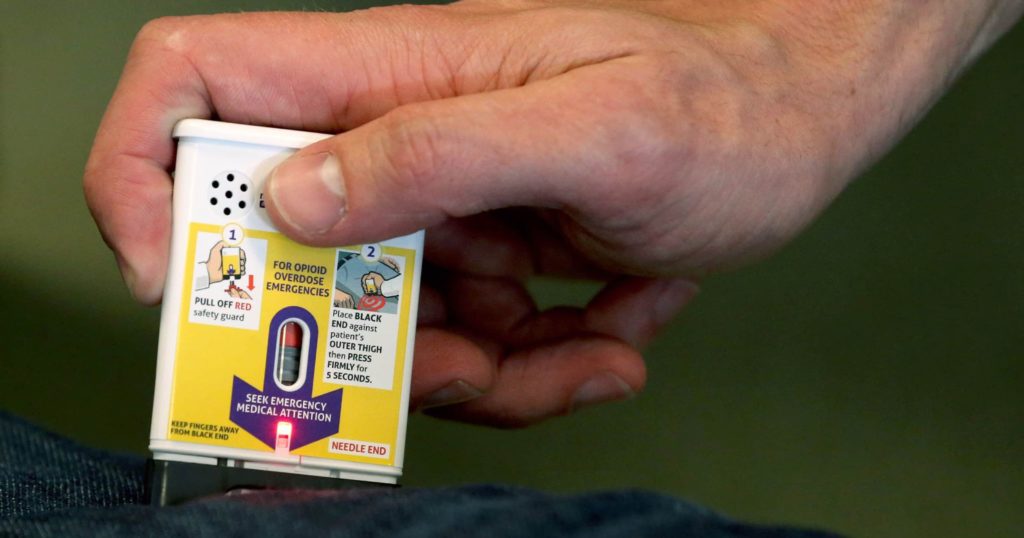
An auto-injection device that helps reverse an overdose from opioids, like heroin and prescription painkillers, is being offered for free to high schools across the state of Alabama. A group of Alabama state senators made the announcement during a press conference Thursday that the manufacturing company Kaleo Inc. is providing the devices that can help prevent someone from dying from an opioid overdose to public and private schools statewide. Each device normally costs $3,000. Schools interested in getting one will be trained by the Alabama Department of Public Health (ADPH) on how to use the device. In May, Kaleo Inc. donated of 872 boxes, which each hold two devices, to carry in state volunteer rescue vehicles. The device called Evzio auto-injects the life-saving drug naloxone and contains a voice recording that talks an untrained non-medical professional through administering it. On Thursday, Dial said the devices have already saved 15 lives in the state of Alabama. Alabama’s struggle with opioids Alabama is at Ground Zero in the opioid overdose crisis — last year the state had the highest national number of opioid prescriptions, more than the state’s total population, according to a report by insurance provider Blue Cross Blue Shield. “Opioid abuse continues to be one of the most critical issues our society faces — over 49,000 Americans died last year from opioid overdoses,” Dial said. “This affects every family in Alabama, and we need law enforcement agencies, schools, churches, and private companies to come together to rid this scourge from our state.”
2018 statewide election ad roundup: August 31 edition

The November 6 general election is less than 70 days away and Alabama’s candidates have taken to the internet and the airwaves with campaign ads in hopes of swaying Yellowhammer State voters to their side. For the third week in a row, Walt Maddox was the only statewide candidate to release a new ad; the latest in a series of ads where an invisible announcer addresses an empty debate podium labelled “Kay Ivey,” asking the podium a series of questions. The empty podium never answers; leaving the announcer to ask “Governor Ivey? Governor?” Maddox then responds to the question himself, securing his positions on issues from his pro-life stance, to Supreme Court nominee Brett Kavanaugh‘s confirmation. This week Maddox addresses the topic of school safety. Gubernatorial ads Democrat Walt Maddox: Title: Debate Topic #6: School Safety Published: August 27, 2018 Tone: Intense
Gulf Coast ports fear tariffs could reduce ship traffic and jobs

Ports and ground terminals in nearly every state handle goods that are now or will likely soon be covered by import tariffs. Port executives worry that this could mean a slowdown in shipping that would have ripple effects on truckers and others whose jobs depend on trade. The Associated Press analyzed government data and found that from the West Coast to the Great Lakes and the Gulf of Mexico, at least 10 percent of imports at many ports could face new tariffs if President Donald Trump’s proposals take full effect. Since March, the U.S. has applied new tariffs of up to 25 percent on nearly $85 billion worth of steel and aluminum and various Chinese products, mostly goods used in manufacturing. Trump said in a recent tweet, “Tariffs are working big time.” He has argued that the tariffs will help protect American workers and force U.S. trading partners to change rules that the president insists are unfair to the United States. In New Orleans, port officials say a tariff-related drop in shipments is real, not merely a forecast. Steel imports there have declined more than 25 percent from a year ago, according to the port’s chief commercial officer, Robert Landry. The port is scouting for other commodities it can import. But expectations appear to be low. “In our business, steel is the ideal commodity,” Landry said. “It’s big, it’s heavy, we charge by the ton so it pays well. You never find anything that pays as well as steel does.” The port of Milwaukee imports steel from Europe and ships out agricultural products from the Midwest. Steel imports haven’t dropped yet because they are under long-term contracts, said the port director, Adam Schlicht. But there has been “an almost immediate halt” in outbound shipments of corn because of retaliatory duties imposed by the European Union on American products. Much of the corn, he said, “is just staying in silos. They are filled to the brim.” Many other ports have been humming along and even enjoyed an unexpected bump in imports during June and July as U.S. businesses moved up orders to ship before the new tariffs took effect. That started with manufacturing goods and is now spreading to retail items for back-to-school and Christmas. “Some of my retail customers are forward-shipping the best they can to offset proposed tariffs,” says Peter Schneider, executive vice president of T.G.S. Transportation, a trucking company in Fresno, California. Port officials were encouraged by this week’s announcement that the United States and Mexico had reached a preliminary agreement to replace the North American Free Trade Agreement, hoping it might lead to reduced trade barriers. Canada’s participation in any new deal to replace NAFTA, though, remains a major question mark. The port officials continue to worry, though, that Trump will make good on a plan to expand tariffs to an additional $200 billion in Chinese imports — a list that includes fish and other foods, furniture, carpets, tires, rain jackets and hundreds of additional items. Tariffs would make those items costlier in the United States. And if Americans buy fewer of those goods, it would likely lead to fewer container ships steaming into U.S. ports. The impact will be felt keenly at West Coast ports like Los Angeles and Long Beach. Los Angeles Mayor Eric Garcetti, relying on information from his port officials, said his port — the biggest in the United States — could suffer a 20 percent drop in volume if the additional $200 billion in tariffs are imposed against Chinese goods. Jock O’Connell, an economist in California who studies trade, said he doubts a downturn would be so severe — that would match the slump that accompanied the global recession of 2008 — “but we will see a definite impact.” Here are some of the key findings from the AP analysis: — U.S. tariffs will cover goods that are imported at more than 250 seaports, airports and ground terminals in 48 states. — At 18 of 43 customs districts — including those representing ports around Los Angeles, San Francisco, New Orleans and Houston — at least 10 percent of their total import value could be covered by new tariffs if all Trump’s proposals take effect. — Retaliatory duties by China and other countries cover $27 billion in U.S. exports. Eugene Seroka, executive director of the Los Angeles port, worries that “if tariffs make it too expensive to import, there will be an impact on jobs.” Seroka and others don’t expect layoffs on the docks. Union longshoremen — whose average pay last year on the West Coast was $163,000, according to the Pacific Maritime Association, which negotiates for the ports — often have contract provisions ensuring that they are paid even if there’s no work. And there are fewer of them than there were a few decades ago because the advent of shipping containers has reduced the need for people on the docks. Dwayne Boudreaux, an International Longshoremen’s Association official in Louisiana, said, though, that his stevedores are handling about 10 percent less steel from Japan because of the new tariffs. “We don’t think it’s going to (get) worse,” he said. But, he added, “who knows — that could change from the next press conference.” The impact might be greater on truck drivers and warehouse workers. Fewer will be needed, according to O’Connell. Many drivers who deliver shipping containers from the dock to warehouses are independents contracted by trucking companies, and they don’t get paid if there is nothing to haul. Some might leave the profession, said Weston LaBar, CEO of the Harbor Trucking Association in Long Beach, California. “It’s hard to retain drivers,” he said. “If we don’t have work for those drivers, we’re worried they will leave for some other segment of the trucking business or go into another business, like construction.” Less shipping means less revenue for the ports — something that could limit their ability to pay for expansion and improvement projects, according to Kurt Nagle, president of the
Jefferson County schools to add resource officers
An Alabama county plans to put a school resource officer in every county school as part of a new safety plan, local officials announced in a Thursday press conference. Jefferson County Sheriff Mike Hale said there are currently 25 officers for the 56 schools in the county school system. He said they plan to hire enough contract deputies to cover all 56 county schools. “We are committed to ensuring that our most precious resource, our children, have a safe environment to learn and grow up in,” Hale said. The plan to try to boost the number of trained police officers in schools was announced along with the creation of a new threat assessment team. Hale said his department is interested in hiring retired law enforcement officers because of their experience, but he said additional training will be done for learning to work in a school environment. The cost of the additional hires is an estimated $1.2 million which will be split between the Jefferson County Board of Education. Hale told reporters that cost could go up to $1.5 million with overtime. “Can we afford this? The answer is we can’t afford not to do it,” Hale said. The sheriff said a threat assessment team, comprised of an investigator, education official and mental health professional, will identify troubling behavior patterns and assist students. Superintendent Craig Pouncey thanked the sheriff and the Jefferson County Commission for their support of the plan. The announcement comes two days after a federal school safety commission met in Alabama. The Federal Commission on School Safety met Tuesday at the Alabama Capitol for their final listening session on how to improve school safety. The group was created by President Donald Trump after 17 people were killed at a shooting at a Florida high school in February. Republished with the permission of the Associated Press.
