
City of Hoover cracking down on controversial businesses
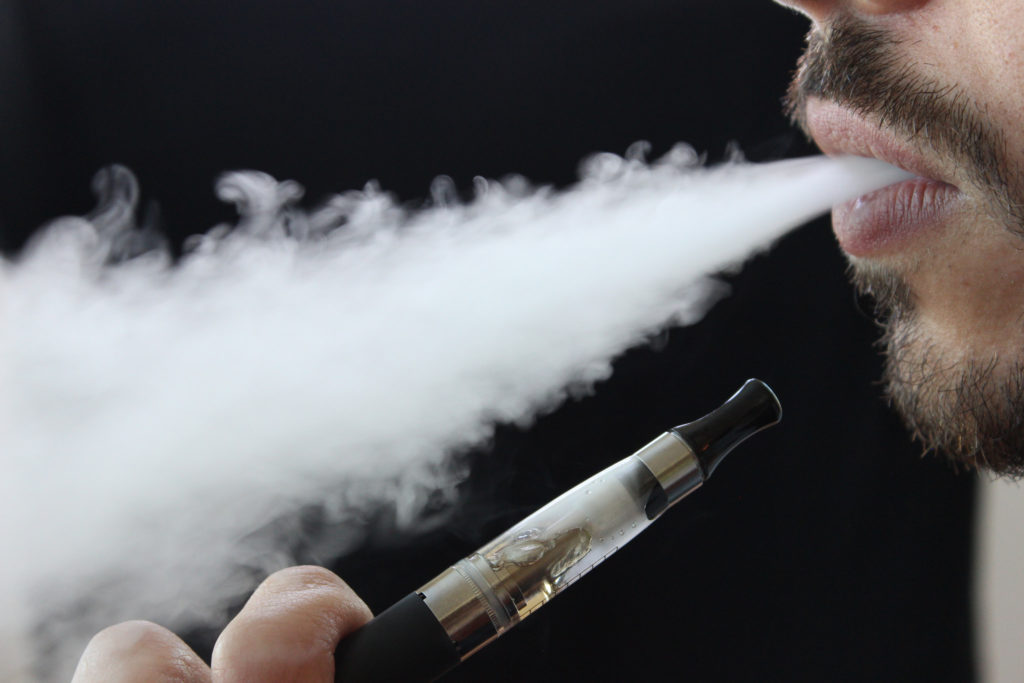
A city councilman in Hoover, Ala. proposed a temporary moratorium on shops he feels does not present the city in the best light. While the current proposal being considered at this weeks Hoover city council meeting will include a moratorium within the city limits; ultimately the plan is to change zoning to limit where they can go in the future. Councilman Casey Middlebrooks proposed the ban on “vape shops, check cashing, pay-day loan type businesses, pawn shops, adult sex shops, and so forth,” until the city can rework their zoning ordinances WBMA reported. Middlebrooks is worried that too many of these types of shops may drive away future business for the city, The temporary ban means that new businesses would not be allowed to apply for a business license within the city, and has caused some contention with current business owners already in operation. Randy Toffel owns the Vapeology vape store in Hoover, and told WBRC that if “Middlebrooks is worried about his store’s clientele, he shouldn’t be.” “I have doctors, I have attorneys, I have car salesmen, I have mechanics, I have firemen, I have grandmothers that come in my shop,” he continued. Toffel also told WBRC that “he’s dedicated to helping people quit smoking,” and that his shop shouldn’t be penalized for it. Another city councilman, Mike Shaw somewhat agrees with Middlebrooks, but thinks the city should focus on rezoning, instead of an outright ban. “I think these businesses can have negative connotations in certain locations, but again, these are legal businesses. So however we feel about them, we still have to allow that according to state law,” Shaw told WBMA. “I don’t think we have problem with these businesses.” Other council members disagree. “We need to define what the real problem is. If the issue is surrounding where these business are located , I think there are better ways to address the problem,” councilman John Lyda told WIAT.
Environmental groups meet with Birmingham Water Works board on Cahaba Beach Road project

Environmental groups in the Birmingham area are teaming up to keep ALDOT‘s Cahaba Beach Road project from being built. On Thursday, the Cahaba River Society and Cahaba Riverkeeper attended the Birmingham Water Works Board of Directors meeting presenting their cases for why the road should not be built. The proposed road would stretch across the Little Cahaba River from U.S. 280, allowing over 8,000 cars a day to travel across an environmentally sensitive area, and cost anywhere from $10 million to $20 million WBHM reported According to Save the Cahaba, the river is vital for the areas drinking water as the Little Cahaba River is the connection between the Lake Purdy reservoir and the main Cahaba River. “Our biggest concern is how this will impact the forests that keep our drinking water clean,” Beth Stewart, Cahaba River Society executive director told the board, according to AL.com. “This road could cut a swath 100 to 200 feet wide, and ALDOT’s own estimates indicate if they had to grade and cut forest in that whole area, it could be the equivalent of about 40 football fields worth of forest loss and grading and disruption to the natural hydrology that’s keeping that water in the Little Cahaba clean,” she continued. Although their arguments were presented, the board made no motion to vote on the subject. Last month, the groups attended a public involvement meeting hosted by ALDOT. Over 250 people attended the meeting, including members from the The Cahaba River Society, Cahaba Riverkeeper, Alabama Rivers Alliance and Southern Environmental Law Center. But ALDOT and other civil engineers say the road will cut down on travel time, improve access to roads on both sides of the river, and improve connectivity between U.S. 280 and the Liberty Park area. According to ALDOT’s “next steps” listed on the project’s website; they will be conducting several different environmental analysis before proceeding with the project. ALDOT is considering several alternatives, including not building the road at all. One concerned Alabama resident has also started a Care2 petition to stop the project. So far, the petition has collected 1,320 signatures of its 2,000 signature goal. Once complete, it will be shared with the Alabama Department of Transportation; Federal Highway Administration; Shelby County Commissioners Lindsey Allison and Rick Shepard; Alabama Senator Jabo Waggoner; Alabama Senator Mark Blackwell.
Both sides prepare for marathon Brett Kavanaugh confirmation hearing
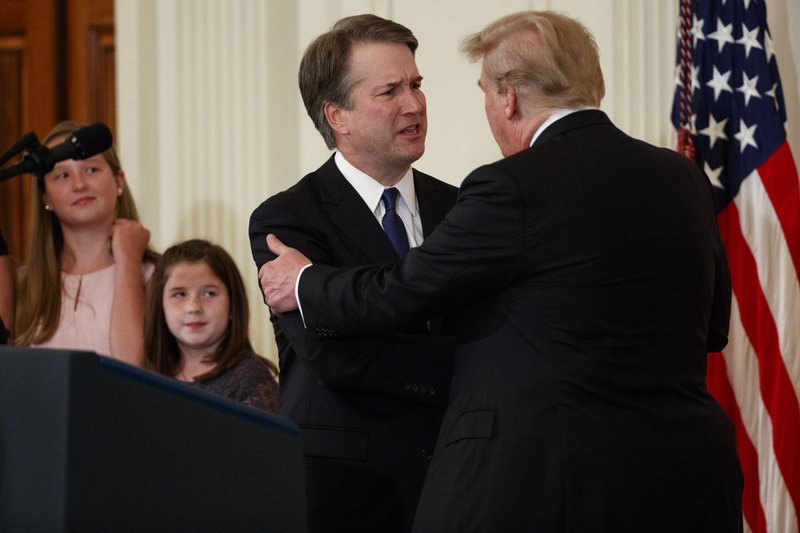
Supreme Court nominee Brett Kavanaugh isn’t the only one engaging in practice sessions ahead of next week’s grueling confirmation hearing before the Senate Judiciary Committee. Senators from both parties also are prepping for the four-day marathon — including Wednesday’s multi-hour question-and-answer exchange — in which Kavanaugh’s views on the biggest legal issues of the day are expected to be mined for the conservative judge’s approach to the law. Abortion, executive power, campaign finance reform, regulatory oversight and gun violence are among the many topics senators in particular are preparing to probe after the 53-year-old appellate court judge raises his right hand and is sworn in for the hearings. President Donald Trump’s pick for the court has long been readying for this moment. A White House operation is focused primarily on defending Kavanaugh and amplifying his answers, with Senate Republicans set to take the lead in going after Democrats on the committee. The White House has assembled a team of attorneys from the counsel’s office, Kavanaugh’s roster of former clerks, and other Republican lawyers to document his record and meticulously prepare him for the questions they expect him to face. For every line of questioning, the lawyers and communications aides have prepared suggested responses for Kavanaugh to deploy and amplifying material to release to the public. The operation is standard for any confirmation process, but given the polarized political environment the White House is preparing for an intense battle. The process began shortly after Kavanaugh’s selection, with the team arranging binders on every conceivable issue. They now line the office used by the confirmation team in the Eisenhower Executive Office Building and many will move over to Capitol Hill for the hearing. In the subsequent weeks, White House attorneys and his former law clerks engaged Kavanaugh in question and answer sessions on those topics, as communications and legislative affairs aides looked on. Those conversations evolved into topical sessions and then to full mock hearings. The committee’s former chairman, Sen. Orrin Hatch, R-Utah, chaired the mock sessions, as he and a number of other senators took turns grilling the judge on issues they expect committee members to raise, according to a Republican aide granted anonymity to discuss the process. Sen. Lindsey Graham, R-S.C., also participated, according to a source familiar with the sessions. Justice Department and White House attorneys, as well as outside allies, stood in for key Republican and Democratic senators on the committee. The officials would not say how many mock hearings have been conducted, but they insist Kavanaugh is well prepared. In the office suite serving as a substitute for the committee’s hearing room, White House aides have sought to make the hours-long sessions as realistic as possible, employing timers and lights like those used for witnesses and even having staffers role-play as expected protesters. Senators, at least on the Democratic side, are engaged in similar moot sessions. Sen. Chris Coons, D-Del., enlisted the expertise of Ron Klain, a former White House official and top debate prep adviser, for mock exchanges. He plans to focus much of his inquiry into Kavanaugh’s views on executive power. For the first round of questions, each senator on the panel is allotted 30 minutes. “There’s a lot of different topics to focus on, but given the context we’re in, I am most concerned about Judge Kavanaugh’s long and demonstrated record of thinking that the executive branch should have more power than it does now,” Coons said. “It has to give one pause in a context where our current president is currently being investing by a special counsel.” Republicans are also preparing but an aide to the committee chairman, Sen. Chuck Grassley of Iowa, said other than reading his questions aloud a few times beforehand, he’s doesn’t feel the need to engage in practice sessions. “This is his 15th Supreme Court hearing,” said spokesman Taylor Foy about the 84-year-old senator. “He’s good.” Once Kavanaugh settles in before the committee, a crew of White House advisers, lawyers, and GOP strategists won’t be far away. Senior aides are set to huddle in a room off the committee’s hearing room, with a larger group of staffers working out of a “war room” in the vice president’s office suite in the Capitol. There Judiciary Committee staff, leadership aides, and White House allies will coordinate their rapid-response operation with the Republican National Committee and conservative outside groups like America Rising and the Judicial Crisis Network. The RNC will be launching a public messaging push, which includes a website to educate Americans about Kavanaugh’s record. Republished with the permission of the Associated Press.
Alabama State Rep. Louise Alexander’s son arrested on two counts of unlawful distribution
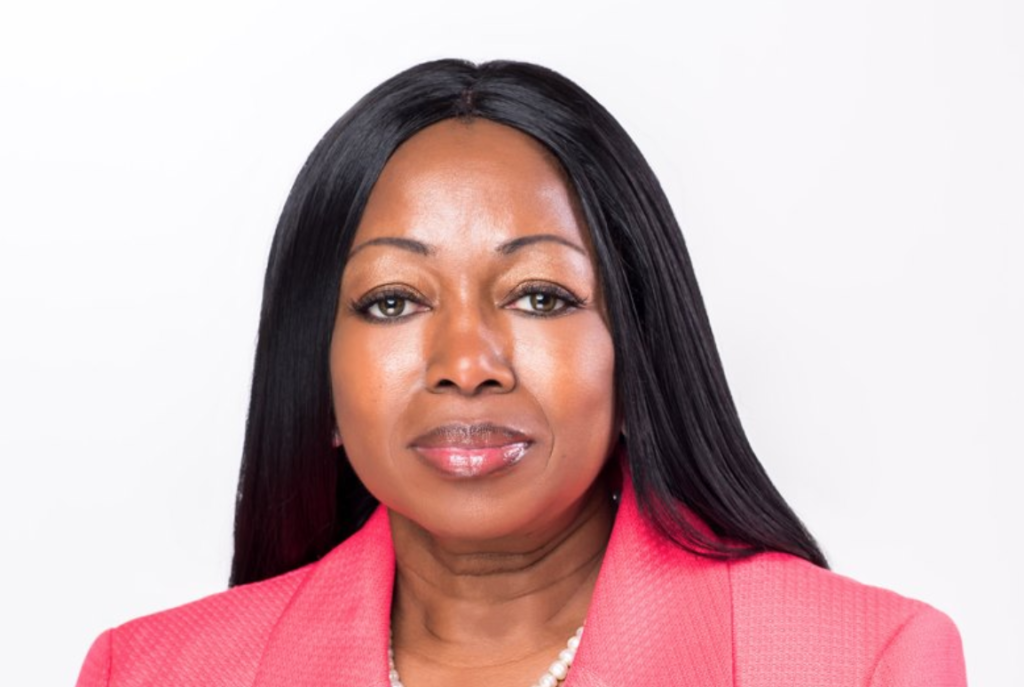
Bessemer-Democrat and Alabama State Rep. Louise Alexander‘s son was arrested in a drug raid in the early morning hours on Thursday. At 4:30 a.m., police carried out a search warrant on the family’s shared home in Bessemer. Her son, Anthony Terry Jr. was taken by the police, and charged with two counts of unlawful distribution of a controlled substance. Bessemer Police Chief Mike Roper told the Associated Press that “the raid followed a three-month investigation that is ongoing.” But Alexander tells a different story; claiming that the raid is part of a “political witch hunt.” “They’re trying to discredit me and my family,” she told AL.com. “It was a set up. This is political sabotage.” Last week, Alexander’s daughter who is running for a seat on the Bessemer City Council received threats through Alexander’s storefront, Unity Flowers & Gifts. According to WIAT, a disturbing note was left at the store telling Kimberly, Alexander’s daughter, to drop out of the race and cancel all of her appointments. “This is just a race. My daughter was running just in order to make things better, not only in the district but also in the city,” she told WIAT. “And when I ran my race, that’s the same thing I was running on.” Alexander herself has not been immune of controversy in the past. In 2010 she was indicted on charges of soliciting funds, and using her office for personal gain. She was later found not guilty of these charges. And in 2012, she sued the city of Bessemer and Bessemer Utilities accusing them of wrongfully turning off her power during a 2010 “political dispute” according to AL.com.
Betsy DeVos: No plans to take action on funding to arm teachers
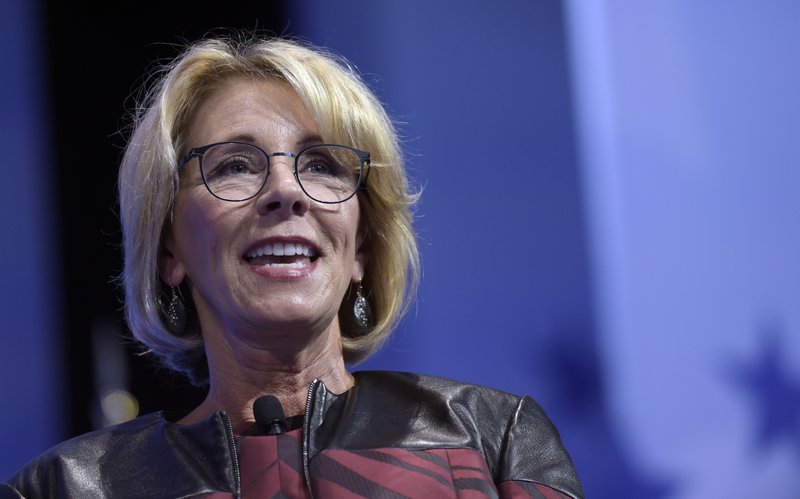
Education Secretary Betsy DeVos says she has “no intention of taking any action” regarding any possible use of federal funds to arm teachers or provide them with firearms training. DeVos’ comments came Friday after a top official in her department, asked about arming teachers, said states and local jurisdictions always “had the flexibility” to decide how to use federal education funds. Frank Brogan, assistant secretary of elementary and secondary education, said arming educators “is a good example of a profoundly personal decision on the part of a school or a school district or even a state.” President Donald Trump and DeVos have said schools may benefit from having armed teachers and should have that option. DeVos said Friday that “Congress did not authorize me or the Department to make those decisions” about arming teachers or training them on the use of firearms. Her comments were in a letter to Virginia Rep. Bobby Scott, the top Democrat on the House committee overseeing education, and were posted by the department on Twitter. “I will not take any action that would expand or restrict the responsibilities and flexibilities granted to state and local education agencies by Congress,” DeVos wrote. Democrats and education groups have argued, however, that the funds are intended for academics, not guns. DeVos heads a federal commission on school safety that was formed after the deadly Valentine’s Day shooting at a Florida high school. An early draft of the commission’s report recommends that states and communities determine “based on the unique circumstances of each school” whether to arm its security personnel and teachers to be able to respond to violence. The draft’s section on training school personnel was reviewed by AP. That approach, the draft says, “can be particularly helpful” in rural districts where the nearest police unit may be far away. Other recommendations included employing school resource officers and ensuring they worked closely with the rest of the school staff. In an interview with The Associated Press Thursday, Brogan cited the “school marshal” program in Texas where school employees can volunteer to carry weapons on campuses after undergoing training. Educators from some remote rural schools also told the panel that they rely on armed school personnel because the police may take too long to arrive. Others, however, argued that arming teachers is dangerous and could make schools feel like prisons. Brogan said the Every Student Succeeds Act, a bipartisan law that shifts education authority to states, provides about $1 billion in annual funding for various school needs, including 20 percent specifically set aside for school safety. “The people at the local level who’ve been there for years could make the decisions about what services to purchase, what equipment to buy to fulfill the general broad obligations laid out in that law,” he said. It would be up to Congress, not the U.S. Department of Education, to place any restrictions or barriers to use those funds for purposes not currently in the law, a department spokeswoman said. The debate arose earlier this month after a small rural school district in Oklahoma and the state of Texas asked the department to clarify what the funds can be used for. “The position is: You have the language … the language was written specifically to and always interpreted to mean ‘this is your money,’” Brogan said. Democratic lawmakers and teachers blasted the idea, accusing the Trump administration of acting in the interests of the National Rifle Association, and several congressmen called for legislation that would prohibit the use of those funds for guns. Senator Patty Murray, the top Democrat on the Senate commission overseeing education, said on Twitter that she was “extremely disappointed that (DeVos) is moving forward with this awful plan to allow federal funds to be used to arm teachers.” “I hope she reconsiders and we need to keep pressure on her until she does,” Murray added. Brogan also clarified that the commission will tackle gun control as instructed by the White House. DeVos had told a Senate hearing in June that the panel will not look at guns “per se,” causing confusion. Brogan said the commission will consider age restrictions for gun purchases, as well as whether people with mental health problems who are likely to harm themselves and others can possess weapons. Brogan said the panel will produce a tool kit “that provides recognized best practices, not just the shiny new object on school safety, but what people are already doing that seems to be showing a track record of success that can be put out there in inventory fashion.” “You cannot do that with a uniform approach to this thing because the country is so very different, place to place, school to school, state to state,” Brogan said. “There is no one way to make schools safe.” Besides recommendations on arming and training school staff, the research and best practices identified by the panel will include suggestions on equipping schools with magnetometers and other safety tools, character development programs and the impact of video games and movies on violent behavior. The report will be issued in “very late fall or by the end of the year,” Brogan said. The commission was created by President Donald Trump in March after 17 people were killed in the shooting at Marjory Stoneman Douglas High School in Parkland, Florida. The panel is chaired by DeVos and also consists of the heads of the departments of Justice, Health and Human Services and Homeland Security. Republished with the permission of the Associated Press.
Alabama’s ban on yoga in schools questioned

Alabama for 25 years has banned yoga in public schools, and a Hindu activist says it’s time to change that. Rajan Zed of Nevada in a statement Friday said the state is doing a disservice to its students by denying them the opportunity to learn yoga. The Alabama Board of Education in 1993 voted to prohibit yoga, hypnosis and meditation in schools. The ban was pushed by conservative groups. The ban got new attention when a state document circulated this week listing yoga — along with games like tag — among “inappropriate” activities in gym class. Alabama Education Superintendent Eric Mackey said the document is old and should not have been released. However, a department spokesman said there have been no discussions yet about reversing the yoga ban. Republished with the permission of the Associated Press.
