
Doug Jones says SCOTUS confirmation hearing unfair, should have been delayed
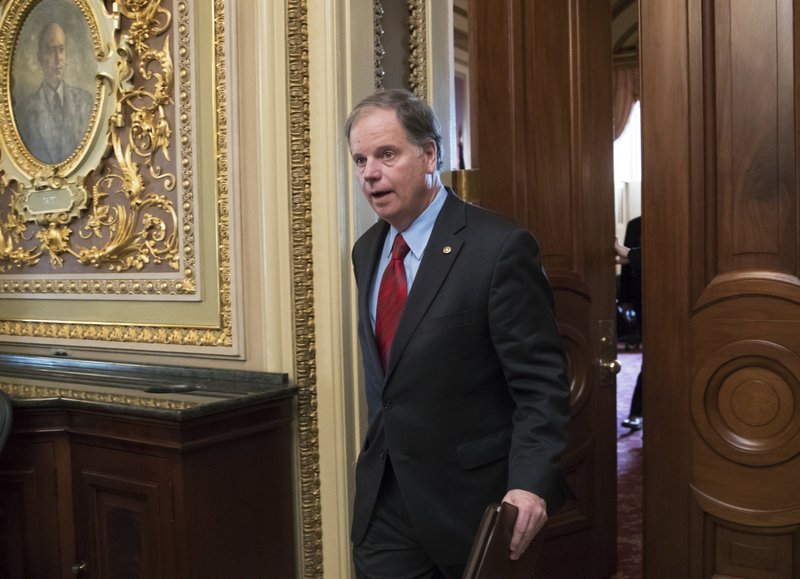
Sen. Doug Jones is facing mounting pressure from his constituents to confirm Supreme Court nominee Brett Kavanaugh, yet on Wednesday Alabama’s newly elected Senator said he thinks the hearings should have been delayed. Jones, like many of his Democratic colleagues, think the delay is necessary due to the more than 42,000 pages of documents that were sent to the Judiciary Committee late Monday from Kavanaugh’s tenure in the George W. Bush White House. “As I’ve said before, it’s regrettable that Supreme Court nominations have become the subject of such partisan bickering, which was on full display at the hearing today,” Jones said in a statement via WHNT. “I am very concerned that a significant amount of Judge Kavanaugh’s record has been withheld from the U.S. Senate and the American public. He continued, “This hearing should have been delayed in order to gather and review all of the facts—rather than hide them—and approach this process with the thoroughness and transparency that it demands. This is a lifetime appointment to the highest court in our land; it is not a decision that should be rushed. The process as it is playing out right now is not fair to the nominee, the Court, the Senate, or the American people.” But Republican’s are pushing back against the left’s assertions “Helpful reminder: Democrats didn’t show up to see sensitive documents that were made available to them, the idea the hearing should be delayed because they haven’t read material is quite laughable,” tweeted Sen. Orrin Hatch‘s office. Helpful reminder: Democrats didn’t show up to see sensitive documents that were made available to them, the idea the hearing should be delayed because they haven’t read material is quite laughable. #KavanaughConfirmation — Senator Hatch Office (@senorrinhatch) September 4, 2018 Hatch’s office continued to set the record straight, tweeting the process has not been rushed. Myth: “this has been rushed.” Fact: that’s nonsense, this has been an appropriately paced, deliberate process. Kavanaugh was nominated 64 days ago ✅ Sotomayor was confirmed in 66 days ✅ Roberts in 23 days ✅ Kennedy in 65 days ✅ Ginsburg in 42 days#KavanaughConfirmation Not the first time he’s asked for a delay This is not the first times Jones had said the hearings should have been delayed. On Aug. 25, Jones called for the Senate to hit the “pause button” on confirmation hearings in order to review his voluminous record. The Alabama Democrat said his chief concern was having time to see the full documents from Kavanaugh’s past work, including his time on Bush’s staff, which were just released this week. Jones has yet to say how he’ll vote on Kavanaugh’s confirmation. He has previously said he plans to meet with him following the confirmation hearings.
Inside the makeover of the Democratic Party
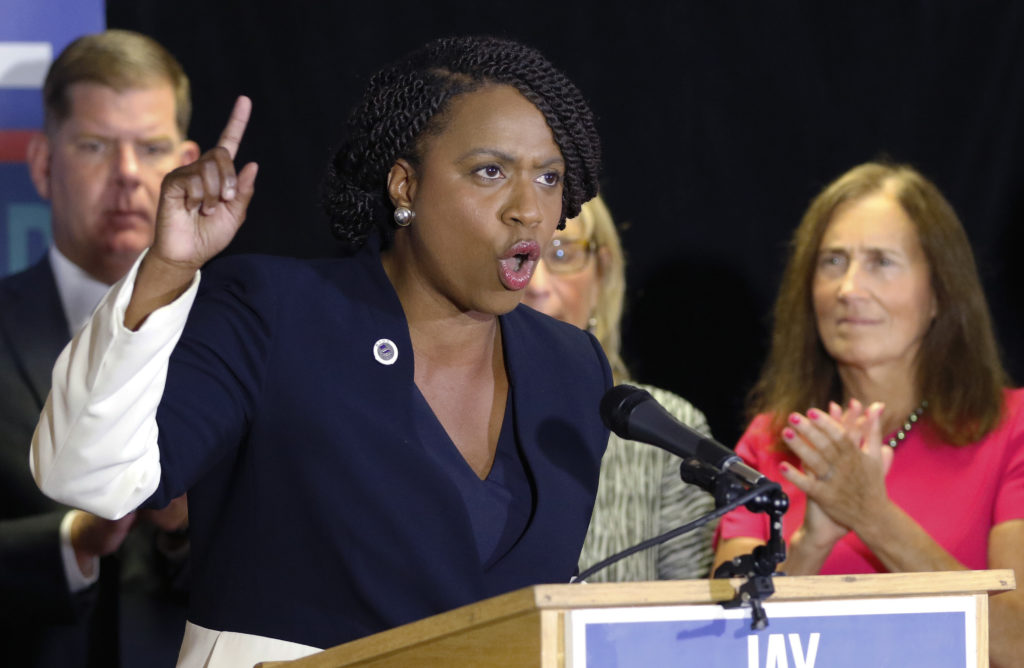
The Democratic makeover is in full swing. With just a few primaries remaining before the decisive midterm elections in November, voters have dramatically reshaped the Democratic Party to become younger, more diverse and unquestionably liberal. The latest turn came Tuesday in Massachusetts, where Boston City Councilor Ayanna Pressley, 44, trounced 10-term congressman Mike Capuano, 66, in a Democratic primary. It reprised a June primary upset in which self-proclaimed democratic socialist Alexandria Ocasio-Cortez, 29, toppled New York congressman Joe Crowley, one of the House Democrats’ top leaders. They join minority candidates like Democratic gubernatorial nominees Stacey Abrams of Georgia and Andrew Gillum of Florida and a host of younger white candidates — including dozens of women and a gaggle of veterans — who are offering voters an antidote to President Donald Trump. “We are at a crossroads,” Pressley declared during a party unity rally Wednesday. “This can be our darkest hour or it can be our finest.” Outsider candidates are taking on establishment-aligned Democratic incumbents in the final primaries of the season over the coming week in states such as Delaware and Rhode Island. Victories by candidates such as Pressley and Ocasio-Cortez have generated substantial grassroots energy. But they’ve also raised questions about whether the party will be able to compete in broad swaths of the country, a potential vulnerability Republicans are eager to exploit. There’s also debate over what a younger, more diverse class of lawmakers might mean for the fate of congressional leaders such as House Democratic leader Nancy Pelosi and potential 2020 presidential candidates who are older and white, including former Vice President Joe Biden. “2020 is going to be about who voters want best to stand up to Trump and to take on Trump,” said Ben Tulchin, who worked as a pollster for Democratic presidential candidate Bernie Sanders in 2016. “You’re going to have to have an authentically progressive message and to be able to communicate that.” For now, Democratic leaders are embracing the enthusiasm of their base — even as it’s unclear where it will lead. “The energy and momentum and the strength is clearly on our side,” said Rep. Ben Ray Lujan of New Mexico, the chairman of the Democratic Congressional Campaign Committee. “There’s nothing more unifying than winning back the House of Representatives and restoring checks and balances.” Democrats’ leftward lurch looks different contest to contest. Capuano and Crowley are reliable liberals, but Pressley and Ocasio-Cortez often go further, with full-throated calls for single-payer government health insurance and abolishing U.S. Immigration and Customs Enforcement, or ICE. Coming from heavily Democratic districts, Pressley and Ocasio-Cortez won’t determine whether Democrats pick up the 23 new seats necessary for a House majority. But they will affect the makeup of the Democratic caucus and what its priorities might be on issues from health care and immigration to potential impeachment proceedings against Trump once a special counsel investigation presents its findings. Elsewhere, Democratic nominees represent a clear shift from the status quo even if they aren’t as left-leaning as Ocasio-Cortez. Congressional nominees like Iowa’s Abby Finkenauer or Arkansas’ Clarke Tucker were the more moderate choices in their respective primaries, but are now trying to topple Republican incumbents with calls for a public option health insurance plan to compete alongside for-profit insurers. Abrams, the Georgia Democrat who’d be the nation’s first black woman elected governor, stops short of single-payer health care and abolishing ICE but promises to expand Medicaid insurance and keep Georgia’s state resources from aiding mass deportation efforts. And dozens of Democratic candidates for federal and state offices — regardless of their positions on ICE, health care or impeachment — have sworn off corporate campaign cash. The embrace of those positions among primary voters has activists on the left looking forward to upcoming primaries in Delaware, where Kerri Evelyn Harris, a black gay woman, is challenging moderate incumbent Democrat Tom Carper on Thursday. In New York, actress Cynthia Nixon will try on Sept. 13 to oust Democratic Gov. Andrew Cuomo. It’s unclear whether any of these outsider candidates will enjoy the same success as Pressley or Ocasio-Cortez. The overall trend has been a wakeup call on Capitol Hill and thrilled leaders of the anti-Trump resistance and the grassroots left. Stefanie Brown James, co-founder of Collective PAC, which supports African-American candidates, praised Pressley as an example of a new assertiveness that goes beyond policy. “I think that for so long, a lot of us who are Democrats have felt like, ‘Dude, where’s the fight back? … Where’s the toughness?’” she said. “You’re seeing candidates who are brash and aggressive and are like, ‘No, we’re not going to wait.’” Crowley, who’d been viewed as a possible future House speaker before his defeat, said Wednesday he was “sad” for Capuano, but celebrated “the engagement and the activity that it’s causing and the fervor that is forming (among) young people, women.” Certainly, there is some political risk in Democrats’ approach, particularly if November draws a typical midterm electorate that is older, whiter and more conservative than presidential-year electorates. “We all know the fight for the majority runs through the suburbs. It doesn’t run through the inner city,” said Republican Rep. Steve Stivers of Ohio, who leads the GOP’s House campaign committee. “It’s the suburbs that matter, and their extreme agenda doesn’t sell.” House Democrats implicitly acknowledge the potential divide, with the DCCC this week launching a series of ads and attacks on health care. Noticeably, they focused mostly on Republican votes that would strip existing protections for policy holders with existing health problems — the ads avoid any mention of single-payer proposals or even a public option. Likewise, Pelosi has begun unveiling her strategy for a Democratic majority. And while it’s focused generally on helping working- and middle-class households, it’s decidedly not the wish list of the grassroots left. Those tensions could come to a head if Pelosi struggles to be elected speaker. Even if she wins, it could be difficult for her to preside over a more liberal caucus. James,
ACLU of Alabama outlines how to cut the state’s prison population in half
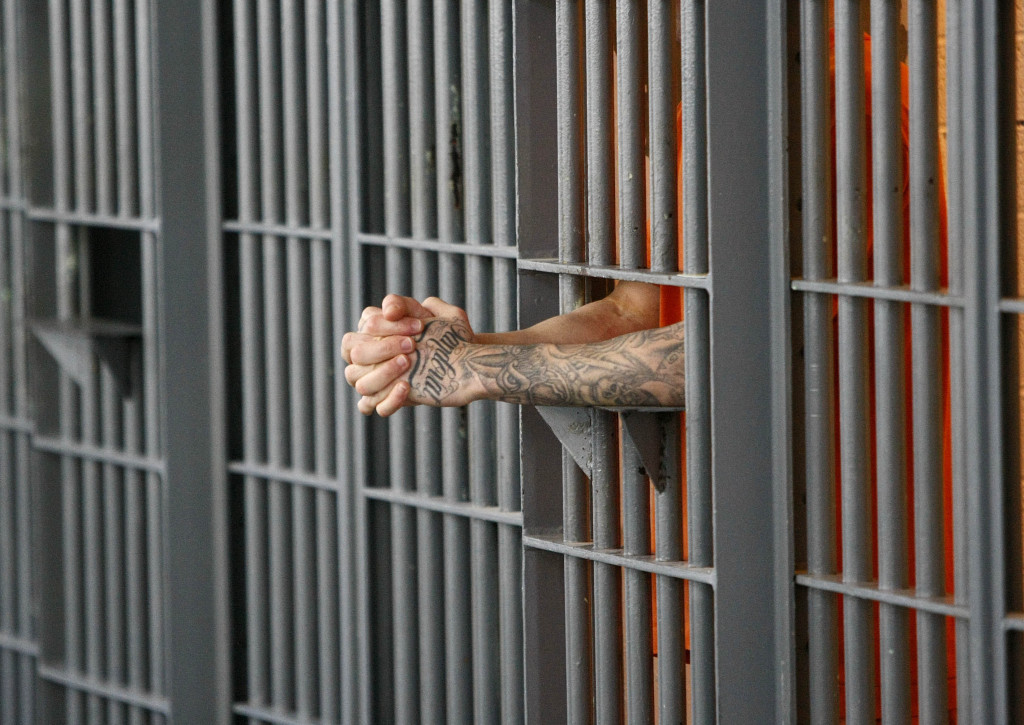
Out of the 2+ million people who are behind bars in this country, about 90 percent are held in local jails and state prisons, which is why the American Civil Liberties Union (ACLU) of Alabama has released a new report outlining how Alabama in particular can cut incarceration rates in half. Currently, 28,296 people are locked up in Alabama prisons, says the ACLU of Alabama. According to the Alabama Department of Corrections (ADOC), state facilities are are at 160 percent of their intended occupancy — the most overcrowded system in the country — as they’re collectively designed to hold only only 13,000 prisoners. The ACLU of Alabama says prosecutors, judges, the state’s parole board and state lawmakers have the ability to change these stats if they pursue reforms like changing drug sentencing laws and sentencing enhancement laws, reducing sentencing ranges, and addressing its juvenile justice system. The new report is a part of the ACLU’s Smart Justice 50-State Blueprints project, a comprehensive, state-by-state analysis of how states can transform their criminal justice system and cut incarceration in half. In the coming weeks, the ACLU of Alabama will convene briefings with advocates and policymakers to share the findings of the Blueprint and discuss strategies on how to move the criminal justice reform agenda further forward. “If Alabama were to follow these and other reforms in this Smart Justice 50-State Blueprint, 12,511 fewer people would be in prison in Alabama by 2025, saving nearly $470 million that could be invested in schools, services, and other resources that would strengthen communities,” reads the report’s website. According to the report, Alabama can dramatically reduce its prison population by implementing just a few sensible reforms: Reducing the amount of time people spend in prison by reforming harsh drug laws by amending the criminal code Doing away with direct and discretionary transfers of juveniles to adult court. Increasing the value threshold that defines whether a property offense is a misdemeanor or a felony. Eliminating or significantly scaling back mandatory minimum sentences. Repealing Alabama’s Habitual Felony Offender Act, which is one of the most punitive habitual offender laws in the country. Releasing aging people in prison who pose no threat to public safety. Looking back 2015, more than 70 percent of people in Alabama county jails had not been convicted of a crime and were still awaiting trial. According to the ACLU of Alabama, “practices like this that are funneling more people into prison and having them stay there for longer and longer periods of time is creating a strain on Alabama’s budget.” In fact, in 2016, Alabama spent nearly half a billion dollars of its general fund on corrections, which represents an increase of 126 percent since 1985, a figure that far outpaces growth in spending on higher education. “Alabama voters, advocates, policymakers, and prosecutors have a crucial choice to make: continue our over-reliance on incarceration that is stifling our state and hurting our communities, or move forward by building a new, more compassionate, more humane systems of accountability that puts people before prisons,” said Randall Marshall, executive director of the ACLU of Alabama.
In Jeff Sessions vs Donald Trump saga, Sessions’ Southern allies speak up
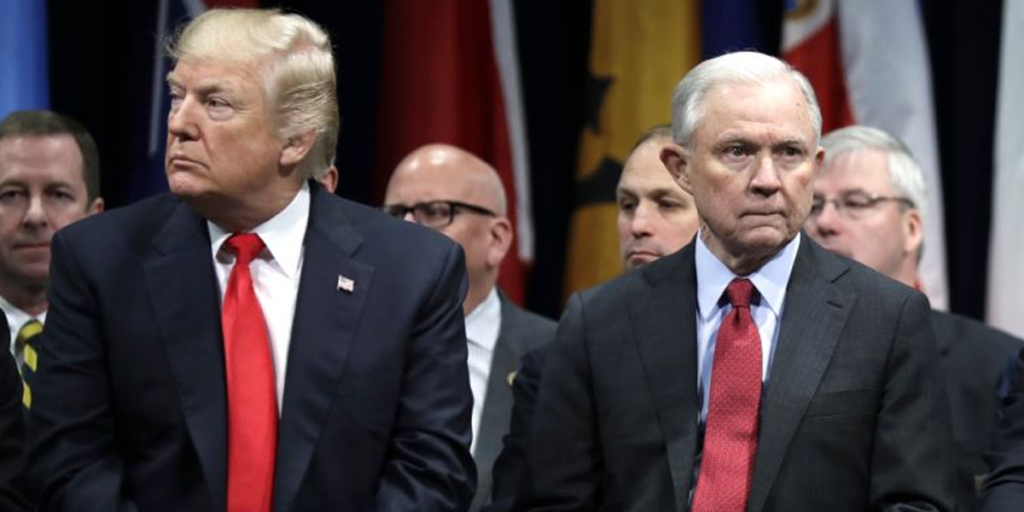
Sometimes even those in the powerful offices in Washington need a little help from their friends. In the ongoing saga between Attorney General Jeff Sessions and President Donald Trump, a group of Southern, Republican Senators are stepping out in defense of their longtime colleague, Sessions. News surfaced Tuesday about the details of a new book on the Trump White House to be released Sept 11 by Pulitzer Prize-winning author Bob Woodward, of the Washington Post, that claims Trump has Attorney Sessions “mentally retarded” and said, “He’s this dumb Southerner.” Tuesday evening, the president denied that account saying Woodward “made this up to divide!” By Wednesday morning,Trump accused Woodward of forming a “picture of a person that is literally the exact opposite of the fact.” “Isn’t it a shame that someone can write an article or book, totally make up stories and form a picture of a person that is literally the exact opposite of the fact, and get away with it without retribution or cost. Don’t know why Washington politicians don’t change libel laws?,” Trump tweeted. Isn’t it a shame that someone can write an article or book, totally make up stories and form a picture of a person that is literally the exact opposite of the fact, and get away with it without retribution or cost. Don’t know why Washington politicians don’t change libel laws? — Donald J. Trump (@realDonaldTrump) September 5, 2018 Despite the president’s denials, Sessions former U.S. Senate colleagues have spoken out in the Attorney General’s defense. Alabama’s senior U.S. Sen. Richard Shelby, who served alongside Sessions for 20 years, told the Washington Post: “Well, I’m sure I’ve got that accent, wouldn’t you think?” He also made clear that Trump needed the support of Southern voters in the 2016 general election, adding, “I guess the president, he says what he thinks . . . I think the president’s probably got a lot of respect for the South, I hope so. He did well there. Without the South he wouldn’t be the president of the United States.” Shelby also disagrees with Sessions being called “mentally retarded.” “I think that’s strong words,” he added. “I think Sessions is a very smart man and a man of integrity. I would disagree with the president on that.” Shelby Sessions isn’t the only one to stand up for Sessions. North Carolina’s Thom Tillis, along with Oklahoma’s James Inhofe and Georgia’s Johnny Isakson have also spoken out in his defense. “As a Southerner, I have to say, Jeff Sessions . . . is bright, studied in the law and well-respected universally by the conference here, I think that speaks for itself. He is bright,” added Tillis.
Candidate profile: Chad ‘Chig’ Martin, Independent candidate for Governor
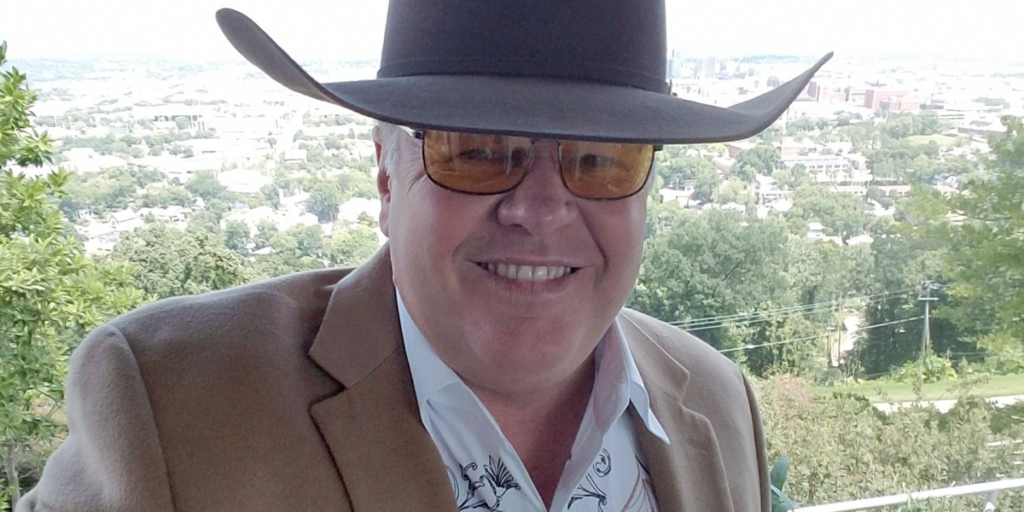
Chad ‘Chig’ Martin, the lone write-in candidate hoping to make his way to the Governor’s office, will face-off against two heavy-hitters in the Nov. 6. general election: incumbent Governor, Republican Kay Ivey and Democratic Walt Maddox. While Martin lacks the name ID of his two competitors, the real question is: who is he? And what does he hope to accomplish? Independent candidate Chad ‘Chig’ Martin: Martin’s root are firmly planted in Alabama. He was born in Enterprise in 1968 to Glyn and Evelyn Martin — successful, small business owners who have run Martin Mobile Homes since the late 60s. After high school, Martin received a full football scholarship to the University of Tennessee at Chattanooga and completed his degree in 1991. Martin returned to Alabama after college and now, following in his parent’s entrepreneurial footsteps, owns three businesses. After working as an outside sales representative for 12 years, he decided to start his first business venture, Thunder Industrial Inc., from his home and ultimately turned it into over a million dollar company. Now the Dothan, Ala.-based maintenance products and repair parts company is starting it’s twelfth year and conducts business in over 40 states and three countries. He also has his own nationally-sold hat linethat’s represented asChad “Chig” Martin brand. Additionally, he’s the owner and operator of Chig Daddi Entertainment. After a conversation with a young school teacher and discovering that this young lady had to furnish and pay for general classroom supplies out of her own pocket, Martin decided then, that something had to be done and filed papers with the Secretary of State’s office in January to run as an Independent Governor of Alabama. Here Martin is in his own words: My campaign’s basic principles include putting the state government in the hands of our citizens not special interest or political parties and including letting our citizens have the opportunity to vote on the legality of lottery, medical marijuana and casino gambling. I also want to recruit industry without giving incentives that rob from the core of our state. I want to strengthen the Second Amendment by protecting citizens that have to use justified deadly force to protect their homes and family by having a quick and speedy investigatory and legal process when obvious signs of home invasion are present. I NEVER want our teachers to spend a dime out of their own pockets for basic classroom supplies. We have to improve on the non existent mental health situation in the state of Alabama. I want to make all decisions based off of what is in the best interest of our state without being pressured from a party or special interest group. I am a simple common sense man. This campaign is about WE and not ME. Martin has yet to file any campaign finance reports declaring campaign donations. You can follow his campaign on his website and Facebook.
Facebook, Twitter defend efforts to stop election meddling

Facebook and Twitter executives, defending their companies on Capitol Hill, said Wednesday they are aggressively trying to root out foreign interests seeking to sow divisions in American democracy as the November elections near. Facebook’s No. 2 executive, Sheryl Sandberg, and Twitter’s CEO, Jack Dorsey, testified before the Senate intelligence committee, but there was an empty chair in place for Google’s parent Alphabet, which refused to send its top executive. Sandberg told senators that Facebook was “more determined” than adversaries trying to meddling in the upcoming elections, and she called the fight an “arms race,” as Facebook CEO Mark Zuckerberg has in the past. Dorsey was to appear later before a House committee amid complaints from Republicans that social media companies have shown evidence of bias against conservatives. In testimony released before that hearing, Dorsey denied that Twitter uses political ideology to make decisions. Congress has criticized the companies over the past year as Russia’s interference in the 2016 elections and beyond became clear. That scrutiny has led to additional criticism over the companies’ respect for user privacy and whether conservatives are being censored. “The companies have made progress, the government has made progress, but the bad guys have made progress as well,” said Virginia Sen. Mark Warner, the top Democrat on the Senate committee. Warner has proposed ways that the companies could be regulated for the first time. The later hearing before the House Energy and Commerce Committee was to focus on bias and Twitter’s algorithms. Some Republicans, including President Donald Trump, have pushed the idea that Twitter is “shadow banning” some in the GOP because of the ways search results have appeared. Twitter denies that’s happening. Absent from the Senate’s questioning was Google. The committee invited Larry Page, the CEO of Google’s parent company, Alphabet, but the company said it would send a lower-ranking executive instead. The committee rejected that offer. The committee chairman, Sen. Richard Burr, R-N.C., said Google doesn’t “understand the problem” if it doesn’t want to work with the government to find solutions. The back-and-forth with Google is the latest in a year’s worth of attempts by Congress to force the companies to focus more sharply on the Russian interference issue. While Burr said he believes Facebook and Twitter do understand the problem, it took both companies several months last year to acknowledge they had been manipulated. The companies have made many policy changes, and have caught and banned malicious accounts over the past year. Still, their business models — free services that rely on attracting as many users as possible for as long as possible and finding out as much about them as possible — remain the same. Sandberg, in her prepared remarks, detailed how Facebook was addressing the problem but reiterated that the company was slow to spot it. Thirteen Russians were indicted by special counsel Robert Mueller this year on charges of an elaborate plot to disrupt the 2016 U.S. presidential election by creating fake accounts that pushed divisive issues on social media. Dorsey said Twitter has continued to identify accounts that may be linked to the same Russian internet agency as identified in Mueller’s indictment. He said Twitter has so far suspended 3,843 accounts the company believes are linked to the agency, and has seen recent activity. On bias, the Twitter CEO said in prepared testimony before his second hearing that “”Twitter does not use political ideology to make any decisions, whether related to ranking content on our service or how we enforce our rules.” Only Dorsey was invited to the House hearing after specific Republican concerns about bias on Twitter. While all three tech companies have been accused of political bias against conservatives, the more public-facing nature of Twitter has made it an especially easy target. Republished with permission from the Associated Press.
Birmingham Councilor Lashunda Scales: hold parents accountable for their kids’ crimes
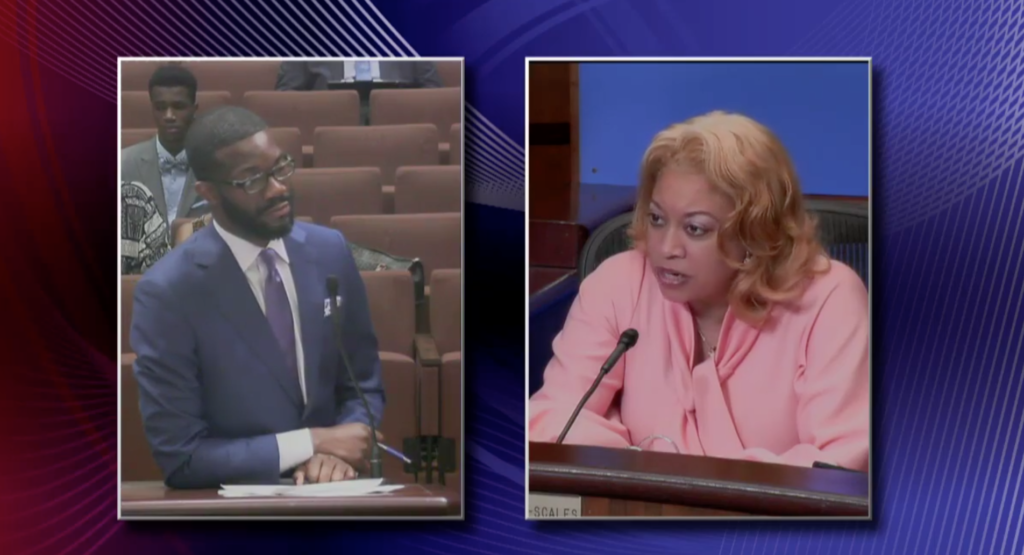
Violence is beginning to feel all too familiar in Birmingham, Ala. Over Labor Day weekend, eight teenagers were shot in the Magic City, one when someone fired multiple rounds from outside of his home into his bedroom in East Lake, another seven outside of WorkPlay Theatre on Sunday evening following a dispute that began inside the club. One Birmingham City Councilor thinks it’s time to start holding parents accountable for these senseless acts of violence that their children commit. “I’ve been trying to get a bill sponsored where we could put some teeth into holding parents accountable for what they call ‘Capricious Acts’ or contributing to acts of violence of their children,” Scales explained. Scales has asked the Jefferson Delegation to help write legislation that would make stiffer penalties for parents whose children commit violent crimes — including fines and potential jail time. “If these parents know that the child has either a gun in their possession, a knife, and communicating with friends who may not be necessarily in the child’s best interest and they know this is creating a gang activity, we are saying to you parents, you are our best police,” Scales told WBRC. She continued, “We need parents to understand the severity of what’s happening in our streets amongst children who are under the age of 17. So, what I believe will happen is when parents have to pay out of their pocket, when parents are being placed in jail because they knew they had contributed to the violent acts of their children, then that’s going to make them get on to those children and they will do the things that they need to do as parents.” Scales said she when she was growing up parents were more involved and it’s time for that to happen again. “When we were growing up… you didn’t have to worry about the police too much because your momma and your daddy took care of that business,” Scales said at the Council meeting. “The police cannot do what a parents is supposed to be doing. The police are supposed to pick up where we leave off. That doesn’t mean we leave what we’re supposed to be doing. At some point we’re going to have to take personal responsibility.” “At the end of the day we’re going to have to establish some kind of respect for authority. And we’re going to have to hold everybody accountable.” No police chief is going to solve the crimes of this city alone. It’s going to take all of us working together.” Watch the full City Council meeting below:
Birmingham City Council meeting highlights: Sept. 4, 2018

During the Birmingham City Council Meeting on September 4, 2018, the City Council voted on the following items: 1. An Ordinance authorizing the Mayor to execute a one year Agreement, beginning October 1, 2018 and ending September 30, 2019, between the Alabama Law Enforcement Agency (ALEA) for the State Bureau of Investigation and the City of Birmingham for the Birmingham Police Department, for the City’s participation in the Alabama Drug Enforcement Task Force (ADETF) and for distribution and receipt of funds and property forfeited as a result of investigations by ADETF. Was this item approved? Yes What does this mean? The purpose of the Alabama Drug Enforcement Task Force is to identify, investigate and prosecute people and organizations that are committing drug trafficking crimes anywhere within the jurisdiction of the member agencies and the State of Alabama. The participating and member agencies of the Alabama Drug Enforcement Task Force agree to participate by contributing personnel, equipment and/or funds, according to requirements that will be established from time to time by the ADETF Executive Board. The ADETF will investigate illicit narcotics violators and narcotics related to violent crimes within the State of Alabama. Next Steps: For more information, please contact the Office of the City Council at 205.254.2294. ——— 2. An Ordinance to establish a compensation policy regarding permitted use of City Council employees earned benefits related to use of leave time. Was this item approved? Yes What does this mean? The Birmingham City Council is the legislative arm of city government, have financial responsibility over the finances of the City. The City Council desires to become a competitive employer by offering benefits and requisites consistent with those offered by other employers as well as other jurisdictions that recruit employees. To that point, the new policy and purpose of the City of Birmingham is to provide in addition to earned benefits which employees of the Birmingham City Council are otherwise entitled, provided that there that has been no break in service, said employees may begin to utilize any accrued sick leave time on the employees 61st day of employment and may begin utilizing accrued vacation leave time on the employee’s 91st day of employment, subject to approval by the employee’s supervisor. Next Steps: For more information, please contact the Office of the City Council at 205.254.2294. ——— 3. A Resolution approving and authorizing the submission of an application to the Foreign-Trade Zones Board, U.S. Department of Commerce, Washington, District of Columbia, designating certain property as a special purpose Foreign-Trade Subzone, and authorizing the Mayor to execute and file the application on behalf of the City of Birmingham with the Foreign-Trade Zones Board. Was this item approved? Yes What does this mean? Foreign trade zones are designated sites licensed by the Foreign – Trade Zones (FTZ) Board at which special customs procedures may be used. These procedures allow domestic activity involving foreign items to take place prior to formal customs entry. Subzones/usage –driven sites are approved for a specific company/use. A site, which has been granted zone status, may not be used for zone activity until that site or a section of it has been separately approved from FTZ activation by U.S. Customs and Border Protection (CBP) officials, and the zone activity remains under the supervision of CBP. FTZ sites and facilities remain within the jurisdiction of local, state or federal governments or agencies. Next Steps: For more information, please contact the Office of the City Council at 205.254.2294. ••• Meeting highlights provided by the Birmingham City Council Public Information office.
Day 2 of hearings finds Brett Kavanaugh in the hot seat
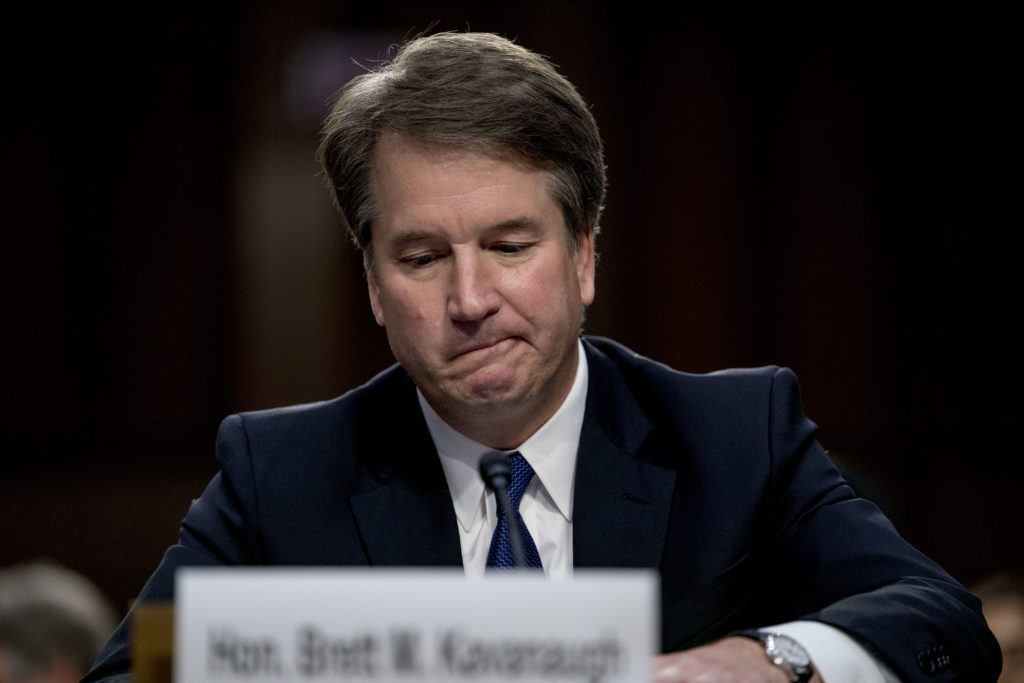
Supreme Court nominee Brett Kavanaugh touted the importance of an independent judiciary as his confirmation hearings began with strident Democratic criticism that he would be President Donald Trump‘s man on the high court. On Wednesday, Kavanaugh can expect to spend most of the day in the hot seat, sparring with Democratic senators over abortion, guns, executive power and other high-profile issues. A long day of questioning awaits the 53-year-old appellate judge, whom Trump nominated in July to fill the seat of retired Justice Anthony Kennedy. The change could make the court more conservative on a range of issues. Barring a surprise, Republicans appear on track to confirm Kavanaugh to the Supreme Court, perhaps in time for the first day of the new term, Oct. 1, little more than a month before congressional elections. However, the first of at least four days of hearings by the Senate Judiciary Committee began with partisan quarreling over the nomination and persistent protests from members of the audience, followed by their arrests. Strong Democratic opposition to Trump’s nominee reflects the political stakes for both parties in advance of the November elections, Robert Mueller’s investigation of Trump’s 2016 campaign and the potentially pivotal role Kavanaugh could play in moving the court to the right. Democrats, including several senators poised for 2020 presidential bids, tried to block the proceedings in a dispute over Kavanaugh records withheld by the White House. Republicans in turn accused the Democrats of turning the hearing into a circus. Trump jumped into the fray late in the day, saying on Twitter that Democrats were “looking to inflict pain and embarrassment” on Kavanaugh. The president’s comment followed the statements of Democratic senators who warned that Trump was, in the words of Sen. Richard Blumenthal of Connecticut, “selecting a justice on the Supreme Court who potentially will cast a decisive vote in his own case.” In Kavanaugh’s own statement at the end of more than seven hours of arguing, the federal appeals judge spoke repeatedly about the importance of an independent judiciary and the need to keep the court above partisan politics, common refrains among Supreme Court nominees that had added salience in the fraught political atmosphere of the moment. With his wife, two children and parents sitting behind him, Kavanaugh called himself a judge with a straightforward judicial philosophy. “A judge must be independent and must interpret the law, not make the law. A judge must interpret statutes as written. A judge must interpret the Constitution as written, informed by history and tradition and precedent,” he said. The most likely outcome of this week’s hearings is a vote along party lines to send Kavanaugh’s nomination to the full Senate. Majority Republicans can confirm Kavanaugh without any Democratic votes, though they’ll have little margin for error. “There are battles worth fighting, regardless of the outcome,” Sen. Mazie Hirono, D-Hawaii, said in an unsparing opening statement that criticized Kavanaugh’s judicial opinions and the Senate process that Democrats said had deprived them of access to records of important chunks of Kavanaugh’s time as an aide to President George W. Bush. Democrats raised objections from the moment Chairman Chuck Grassley, R-Iowa, gaveled the committee to order. One by one, Democrats, including Kamala Harris of California, Cory Booker of New Jersey and Amy Klobuchar of Minnesota, all potential presidential contenders, demanded that Republicans delay the hearing. They railed against the unusual vetting process by Republicans that failed to include documents from three years Kavanaugh worked in the Bush administration, and 100,000 more pages withheld by the Trump White House. Some 42,000 pages were released to senators only, not the public, on the evening before the hearing. As protesters repeatedly interrupted the session, Republican Sen. Ted Cruz, who is fighting for his own re-election in Texas, apologized to Kavanaugh for the spectacle he said had less to do about the judge’s legal record than Trump in the White House. “It is about politics,” said Cruz. “It is about Democratic senators re-litigating the 2016 election.” Republicans will hold a slim 51-49 majority in the Senate once Jon Kyl, the former Arizona senator, is sworn in to fill the seat held by the late Sen. John McCain. Sens. Susan Collins of Maine and Lisa Murkowski of Alaska are the only two Republicans even remotely open to voting against Kavanaugh, though neither has said she would do so. Abortion rights supporters are trying to appeal to those senators, who both favor abortion access. Republished with permission from the Associated Press.
Steve Flowers: The 1978 governor’s race, a classic in Alabama political lore
Since this is a gubernatorial election year, let’s reminisce about an epic governor’s race. The 1978 governor’s race is one of the classics in Alabama political lore. That governor’s race between the three heavyweights, former Gov. Albert Brewer, Attorney General Bill Baxley, and Lt. Gov. Jere Beasley, was expected to be titanic. All three men had last names beginning with the letter “B,” thus the press coined the phrase “the three Bs.” The Republicans were relegated to insignificance on the gubernatorial stage. Therefore, the winner of the Democratic primary would be governor. Meanwhile, over in east Alabama, a little known former Auburn halfback named Fob James strolled into the governor’s race. Fob’s entry evoked very little interest, only curiosity as to why he would want to enter the fray against three well-known major players. Fob was exposed as a card-carrying Republican but even a political novice like Fob knew he could not win as a Republican so he qualified to run as a Democrat along with the three Bs. Fob had become very wealthy by starting a successful manufacturing company in Opelika. When Fob signed up to run for governor the press wrote him off as a rich gadfly who simply chose politics rather than golf as his pastime. Little did they know that the fact he was rich and had a lot of time on his hands could spell trouble for the average political opponent who had to worry about fundraising and feeding their family while running a full-time campaign. Fob realized he was no political professional like the three Bs, who had spent their entire political adulthood in public office, so he sought out professional advice. He had the money to think big and wanted to know who was the best political consultant in the South. It was an easy answer: Deloss Walker, a political public relations genius who lived in Memphis. His track record for electing governors of Southern states was 5-0. Walker was the most renowned and expensive political guru in the country in 1977. Fob quietly sought out Walker, who at first refused to take Fob’s race. Walker’s first impression was that even he could not mold Fob into a winner against three well-financed, experienced thoroughbreds. Walker’s one condition for taking the race was Fob must do exactly what he said. He must be scripted and never deviate from Walker’s pat ads and speeches. Nobody was aware Fob had garnered the genius Walker and had already been to political school when he signed up to run for governor in the spring of 1978. Brewer, Baxley, and Beasley ignored Fob. Baxley even praised him saying, “Fob would be a good governor. Too bad he’s not a serious candidate.” Those words would come back to haunt Baxley. Walker’s initial polling showed Fob actually had some name identification from being an Auburn halfback in the 1950s. It also picked up on the fact that Auburn alumni yearned for an Auburn man to be governor instead of a University of Alabama alumnus. However, Fob’s best attribute was that he always followed Walker’s script. He traveled the state in a yellow school bus and let the three Bs tear each other up. Baxley, Beasley, and Brewer spent all their time and money attacking each other with negative ads, all the while Fob ran positive ads evoking a clean image of himself. By mid-May most Alabamians had seen so many negative ads and mudslinging by the three Bs they were of the opinion that all three had probably shot their mothers in a bar fight but they liked old Fob James, even if they thought his name was “Bob James.” It was too late for the three Bs when they saw a poll about a week before the election showing Fob ahead of all three of them. Baxley refused to believe it and kept hammering at Beasley and Brewer, ignoring Fob. When the votes were counted, Fob was in first place. Baxley finished second because black voters were with him. Brewer was third and Beasley finished fifth behind State Sen. Sid McDonald. Fob easily beat Baxley in the runoff. After all, what could Baxley say? He had run all over the state for three months saying Fob would make a good governor. Fob James had pulled off one of the most amazing upset victories in the history of Alabama politics. The Fob James story of the 1978 governor’s race is truly one for the record books. See you next week. ••• Steve Flowers is Alabama’s leading political columnist. His weekly column appears in over 60 Alabama newspapers. He served 16 years in the state legislature. Steve may be reached at www.steveflowers.us.
