
GOP Sen. Flake: Donald Trump is ‘slandering’ his attorney general
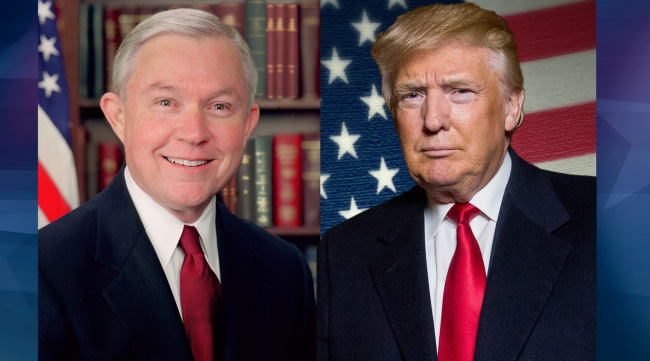
Republican Sen. Jeff Flake of Arizona is condemning President Donald Trump’s attacks on Attorney General Jeff Sessions, calling them a “travesty.” Flake, a vocal Trump critic, said Wednesday from the Senate floor that Trump has been “relentlessly slandering” Sessions. He warned that Trump seems headed for “some future assault” on the justice system, perhaps by firing Sessions or special counsel Robert Mueller. He urged Senate Majority Leader Mitch McConnell to hold a vote on legislation to protect Mueller’s investigation. Trump in a recent tweet suggested that Sessions should not have brought criminal charges against two Republican congressmen. He said “two easy wins” in the election were “now in doubt.” Flake says Congress has “the responsibility to curb such reckless behavior” from Trump and appealed to lawmakers to speak out. Republished with permission from the Associated Press.
Brett Kavanaugh: I didn’t recognize Parkland dad seeking handshake
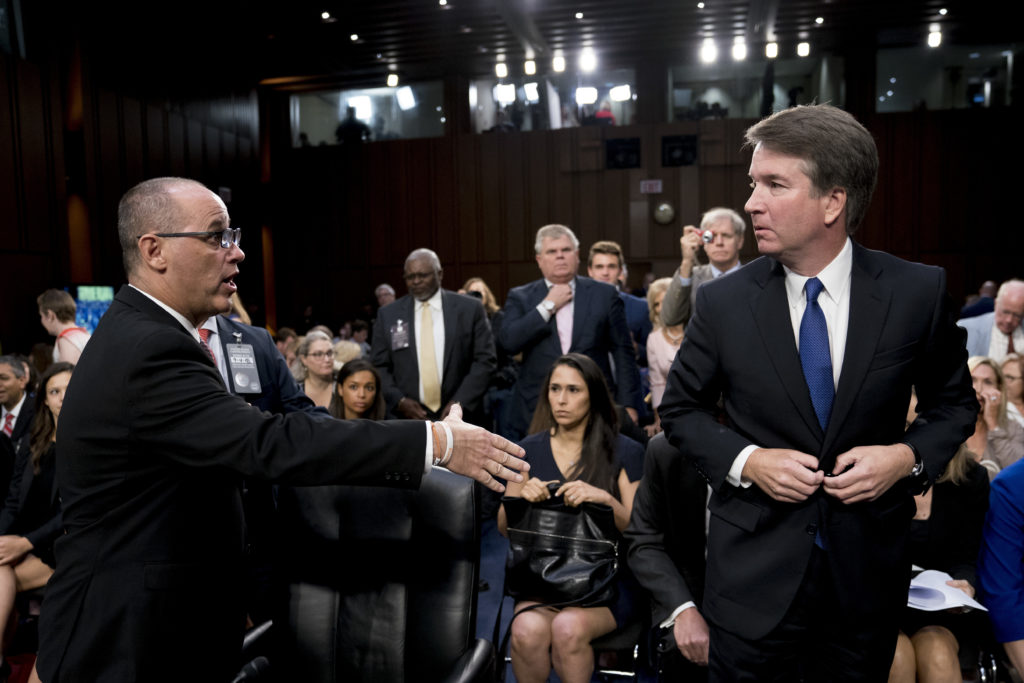
Supreme Court nominee Brett Kavanaugh says he would have shaken the hand of a school shooting victim’s father during a break in last week’s Senate hearing had he recognized him before being whisked away by security detail. Kavanaugh’s explanation for the encounter with Fred Guttenberg— captured in an Associated Press photo that went viral on social media — was among a 263-page response to written questions from senators on a range of issues including abortion, executive power and his personal finances. Kavanaugh wrote that he assumed the man who approached him “and touched my arm” during a break at the Senate Judiciary Committee proceedings had been one of the many protesters in the hearing room. Guttenberg’s 14-year-old daughter, Jaime, was among 17 people killed on Feb. 14 at Stoneman Douglas High School in Florida. “It had been a chaotic morning,” Kavanaugh wrote. “I unfortunately did not realize that the man was the father of a shooting victim from Parkland, Florida. Mr. Guttenberg has suffered an incalculable loss. If I had known who he was, I would have shaken his hand, talked to him, and expressed my sympathy. And I would have listened to him.” Kavanaugh’s security detail ushered him out in a “split second,” according to the judge’s response to a written question from Sen. Chuck Grassley, R-Iowa, the chairman of the Judiciary Committee. It was among 1,287 questions from senators, almost all from Democrats. Pressed by Sen. Richard Blumenthal, D-Conn., if he had asked police to intervene, Kavanaugh wrote, “No.” The flood of new documents comes as the Judiciary Committee is set to meet Thursday to consider Kavanaugh’s confirmation, a vote that is expected to take place later this month. Democrats are fighting Kavanaugh’s nomination and decrying the process that Republicans used to compile his government records for review. Sen. Cory Booker, D-N.J., on Wednesday night released a new batch of committee confidential documents about Kavanaugh, repeating a tactic that could prompt a review from the Senate Ethics Committee. The 28 new “committee confidential” documents from Booker are from Kavanaugh’s time in the White House counsel’s office during the George W. Bush administration and show his involvement in judicial nominations, including for some of the more controversial judges of the era. Booker is being criticized by his GOP colleagues and outside groups for releasing the documents, which the Judiciary Committee is holding back on a confidential basis that makes them accessible only to senators. Last week, he released some documents that were later made public by the committee, but also others that weren’t. Wednesday’s disclosure brings the total to 75. Booker said the documents about Kavanaugh’s work “raise more serious and concerning questions” about his honesty during his testimony before the committee. The documents show Kavanaugh’s involvement in Bush’s nomination of Charles Pickering to an appellate court in the South amid questions about his views on race relations. Kavanaugh had indicated he was not substantially involved in the nomination. At the same time, the conservative group Judicial Watch delivered a letter Wednesday to the Senate Ethics Committee seeking an investigation. It says Booker violated Senate rules against disclosing confidential documents and could face Senate expulsion. Booker “explicitly invited his expulsion from the Senate in his egregious violation of the rules and contempt for the rule of law and the Constitution,” said Judicial Watch President Tom Fitton. At issue has been the unprecedented process the Senate Judiciary Committee used for gathering documents on Kavanaugh, an appellate court judge who is President Donald Trump‘s nominee to replace retired Justice Anthony Kennedy on the court. The Senate is expected to vote on his confirmation by the end of the month. The committee was hoping to quickly process Kavanaugh’s unusually long paper trail and relied on Bush’s lawyer, Bill Burck, to compile the documents, first estimated to be 900,000 pages from Kavanaugh’s time in the counsel’s office. Eventually, some 267,000 pages were made public and 174,000 were held as committee confidential. Democrats have complained the process was a “sham,” as Booker put it. It also excluded any documents Democrats wanted to see from Kavanaugh’s time as Bush’s staff secretary. But Burck’s team stood by the process, according to a letter to the committee Wednesday obtained by The Associated Press. They remain willing to review documents and consent to senators’ requests for disclosure, “when appropriate,” the letter said. Despite those commitments, the letter said one member of the committee has released more than 40 documents without consent, referring to Booker. “Had we been consulted on these universally released documents, we would have consented to their public disclosure,” the letter said. White House spokesman Raj Shah said, “Despite the endless complaints from critics, the committee has received more material regarding Judge Kavanaugh’s nomination than any nominee in history.” He said senators have “more than enough information” to consider Kavanaugh’s nomination. Republished with permission from the Associated Press.
Gov. Kay Ivey deploys personnel, resources to N.C. ahead of Hurricane Florence
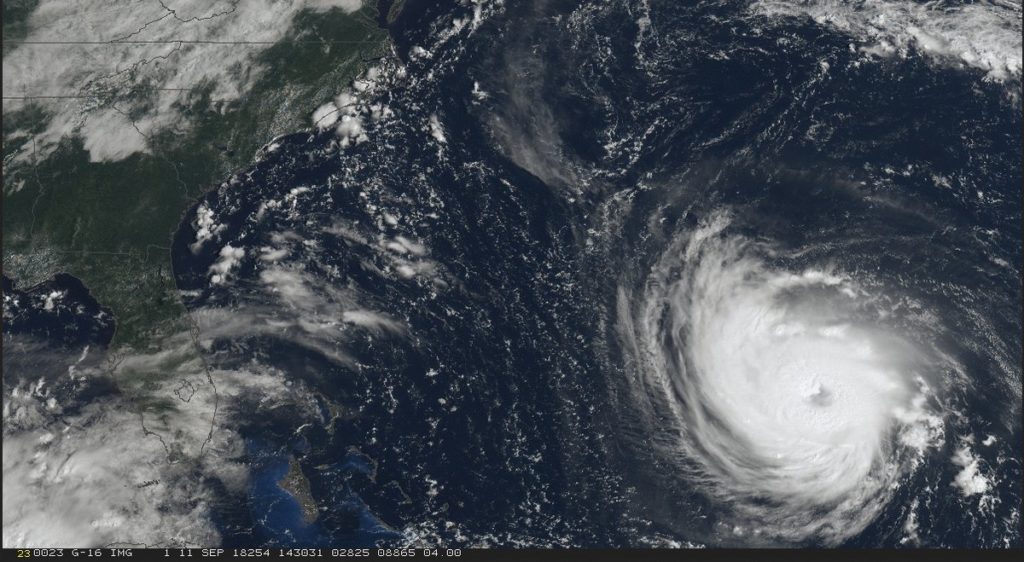
Ahead of Hurricane Florence’s expected landfall late Friday, Gov. Kay Ivey announced the State of Alabama is deploying state personnel and resources to assist with hurricane response efforts in North Carolina. The Alabama Emergency Management Agency (AEMA) received requests for assistance from North Carolina and South Carolina as Hurricane Florence approaches the East Coast. Currently AEMA has one mobile communication site vehicle, one AEMA staff member and one Mobile County responder in route to a staging area in North Carolina. “As the East Coast makes preparations ahead of Hurricane Florence, Alabama will also be prepared to aid in any way we can. I spoke with the governors of North and South Carolina and offered our support,” Ivey said. “Alabama EMA will continue working with their counterparts in the Carolinas. Taking the necessary precautions ahead of time and having all hands-on deck to respond is of the utmost importance. Alabama stands ready to help.” The Mobile Communication Site Team will support North Carolina in maintaining critical communication links for public safety radio communications. Their primary role will be to support their North Carolina counterparts as they experience an overwhelming need to coordinate their state response efforts. “We are leaning forward to support those states that may be impacted by Hurricane Florence” said AEMA Director Brian Hastings. “We are a close-knit team in FEMA Region IV, and when one state is threatened, we all stand ready to assist our incredible neighbors to prepare, respond and recover to save lives and mitigate human suffering. Alabama is always ready to assist when there is a need.” Additional support currently under consideration for states forecasted for impact by hurricane Florence includes: Nurse strike team Emergency Operations Center personnel Damage assessment teams and debris management personnel Mental health professionals Volunteer services personnel Maxwell Incident Support Base Electrical line maintenance crews Additionally, the Alabama Department of Transportation (ALDOT) is prepared to expedite passage of vehicles for disaster response through Alabama to affected areas on the East Coast.
Alabama Gov. Kay Ivey: ‘Don’t need a debate’
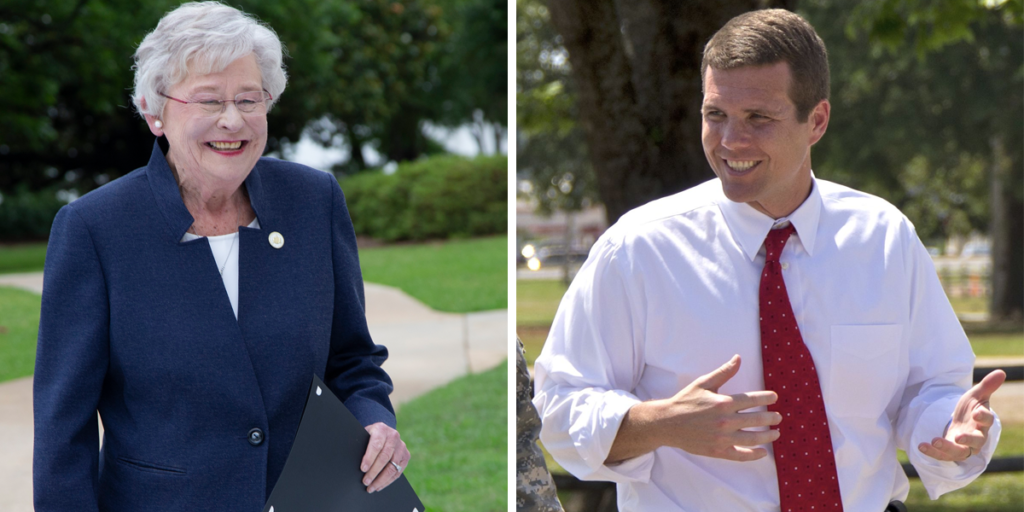
Alabama Gov. Kay Ivey says she has no plans to debate her Democratic challenger as she seeks a full term in office. Speaking to reporters Wednesday after a speech in Montgomery, Ivey responded to Walt Maddox’s repeated calls for a debate before the November election. Ivey says that “Alabamians know my record” and “know what I stand for.” Ivey did not debate her Republican primary challengers and easily won the nomination. Maddox is the mayor of Tuscaloosa. He has criticized Ivey’s refusal to debate, saying voters deserve to hear candidates’ ideas. Ivey is seeking office in her own right after becoming governor last year when her predecessor resigned in a cloud of scandal. Republished with permission from the Associated Press.
Deviating from John McCain, Sen. Lindsey Graham goes all in on Team Trump
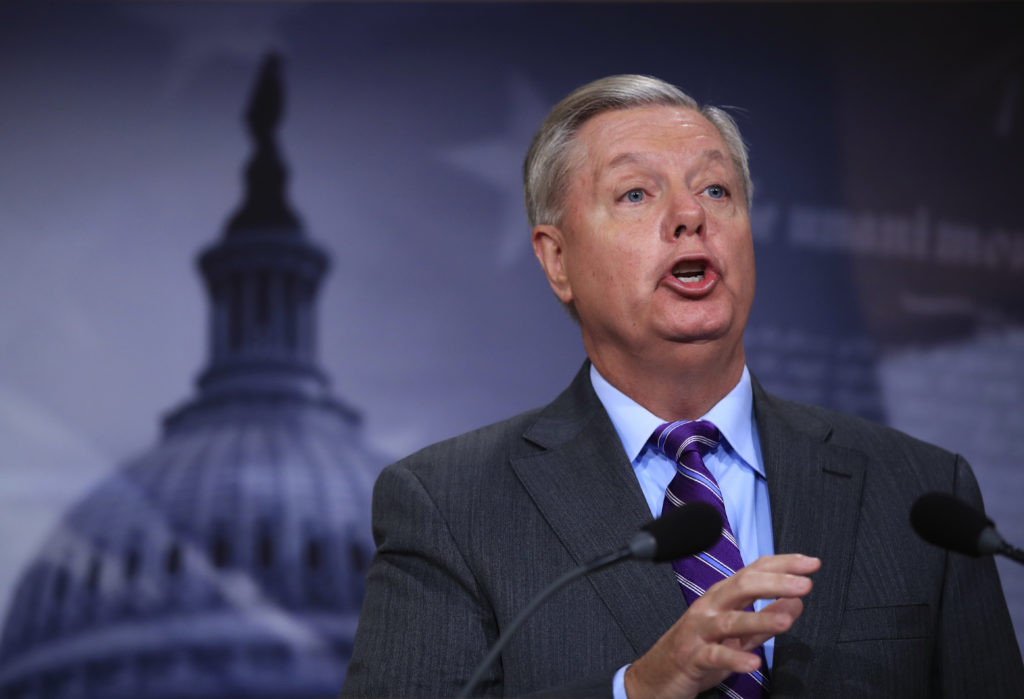
By the end, Sen. John McCain had rejected President Donald Trump. The president was so infuriated by McCain he put a biting reference to the dying Republican senator in his stump speech. Yet one man in Washington still had hope for bridging the gap between the two. “I regret that he didn’t have more time with President Trump,” Republican Sen. Lindsey Graham told The Associated Press this week about McCain, his late friend and mentor. Graham noted McCain was able to forgive his captors during the Vietnam War. “Who knows what would have happened over time.” Graham’s unexplained optimism, his eager attempts to soften Trump’s rough edges, have confused colleagues and caused double-takes across Washington recently. The South Carolina Republican was McCain’s best friend in the Senate, a self-described student of his politics and personal integrity. But he has deviated dramatically in his approach to the tempestuous and divisive president. While others stayed their distance — McCain perhaps most of all — Graham has gone all in, transforming himself into liaison, translator and, critics say, enabler of the president. When establishment Republicans recently nodded knowingly at an anonymous editorial criticizing Trump’s run of the White House, Graham was on Fox calling it a left-wing strategy to show Trump as “crazy” and echoed the president’s unproven charge that the Russia probe “is falling apart.” The senator explains the shift from Never Trump to Team Trump largely in terms of responsibility. In an interview with the AP, Graham said McCain, who lost two bids for the White House, taught him that the country must move forward after elections. That means “you have an obligation” to help the president, especially a fellow Republican, he said. Graham says he’s warmed to the president and suggests he’s using that relationship to shape decisions — though he does not cite specifics. “And I’ve tried to be helpful where I could because I think he needs all the help he can get,” Graham said. “You can be a better critic when people understand that you’re trying to help them be successful.” Graham has his own political motivations. His pivot comes as he is gearing up for his own re-election in 2020. The senator is popular in his deeply conservative state, but opposition to the president could mean risking a primary challenge. “There’s no doubt in my mind that the people of South Carolina, not just Republicans and independents, want to give this country a chance,” Graham said. “The president won the state decisively. He’s very popular among Republicans, and people want him to succeed.” Graham is hardly alone in facing a choice about how best to navigate the politics of the Trump era. Some GOP lawmakers, like Sen. Jeff Flake and Sen. Bob Corker, have openly criticized Trump, to their own political detriment. Both are retiring. Others have been unabashed advocates of the president. Then there are the former presidential rivals, Kentucky Sen. Rand Paul, Florida Sen. Marco Rubio — and now Graham — who have cozied up to Trump despite their campaign trail criticism, giving them a calling card to try to influence policy. Like his mentor, McCain, Graham is the rare senator on Capitol Hill who likes to be in the mix on many issues, brokering deals with his quick wit and biting humor whether he’s the expert or not. Trump seems to agree. Graham has settled into the role of Trump whisperer, golfing regularly with the president and talking with him by phone. Graham’s sphere of influence seems broad. When journalist Bob Woodward wanted to interview the president, he asked Graham to relay the message. When Trump wanted to vent about Woodward’s work, and leaks about a “resistance” within his administration, he talked to Graham about it. “He’s pissed off, he feels betrayed, and I don’t blame him,” Graham said. Particularly in the national security realm, Graham, a defense hawk, provides an alternative to Trump’s noninterventionist streak. In that way, Graham is upholding McCain’s approach and countering another Trump whisperer, the libertarian-leaning senator Paul. Because of Graham’s relationship with Trump, the political world was jolted last month when he said the president may dismiss Attorney General Jeff Sessions after the election. It seemed as if Graham had inside knowledge of the decision, and it was an about-face from just last year, when Graham said Trump would have “holy hell to pay” if he fired Sessions. There was a time when the Trump-Graham nexus of golf outings and White House lunches was inconceivable. Shortly after Trump launched his presidential bid in mid-2015, Graham called him a “jackass” who “shouldn’t be commander-in-chief” for making disparaging remarks about McCain. Campaigning in Graham’s home state a day later, Trump opened a rally by calling Graham a “lightweight” and “idiot” before reading out the senator’s private cellphone number to the delight and disbelief of the crowd. Graham ultimately abandoned his own presidential campaign and, along with McCain, opted not to attend the 2016 GOP convention. He said he wouldn’t back either Trump or Democratic presidential nominee Hillary Clinton in the general election, saying the Republican Party had been “conned.” Graham acknowledged in the interview that Trump can “run hot” and “be a handful” at times. But he also says Trump listens and is more inquisitive than he gets credit for. “Over time, through golf, I’ve actually gotten to know the person,” Graham said, calling Trump both “charming and gracious.” Bob McAlister, a longtime South Carolina political communications strategist who has worked with Graham for decades, said Graham’s approach to Trump reflects the senator’s long-held beliefs about the consequences of elections, including McCain’s 2008 loss to Barack Obama. “Lindsey’s message back then was, ‘Elections have consequences,’ and the Democrats cheered,” McAlister said. “Today, Lindsey says, ‘Elections have consequences,’ and they try to cut his head off.” Brian Katulis, a senior fellow at the liberal Center for American Progress, says Graham has become “chameleon-like” as he courts Trump, trying to influence the president’s thinking while getting little to show for
Alabama Arise sets list of 2019 priorities including Medicaid expansion, end to grocery tax
Alabama Arise – a nonprofit, nonpartisan coalition of congregations, organizations and individuals promoting public policies to improve the lives of low-income Alabamians – is already planning ahead for 2019. The organization set their 2019 legislative priorities at its annual meeting Saturday in Montgomery, Ala. More than 200 Arise members picked the organization’s issue priorities, which include Medicaid expansion and legislation to end the state sales tax among the top goals for 2019. “Public policy barriers block the path to real opportunity and justice for far too many Alabamians,” Alabama Arise executive director Robyn Hyden said. “We’re excited to unveil our 2019 blueprint to build a more just, inclusive state and make it easier for all families to make ends meet.” The seven issues chosen were: Tax reform, including untaxing groceries and closing corporate income tax loopholes. Adequate funding for vital services like education, health care and child care, including approval of new tax revenue to protect and expand Medicaid. State funding for the newly created Public Transportation Trust Fund. Consumer protections to limit high-interest payday loans and auto title loans in Alabama. Legislation to establish automatic universal voter registration in Alabama. Reforms to Alabama’s criminal justice debt policies, including changes related to cash bail and civil asset forfeiture. Reforms to Alabama’s death penalty system, including a moratorium on executions.
Alabama Appleseed files amicus brief to rein in civil asset forfeiture and policing for profit
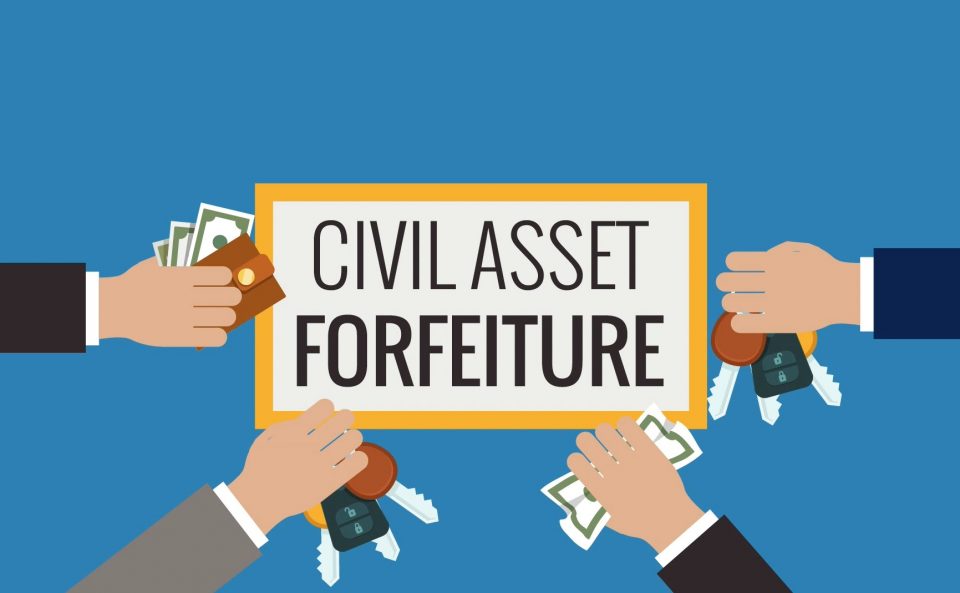
Alabama Appleseed — a non-profit, non-partisan organization whose mission is to work to achieve justice and equity for all Alabamians — joined a diverse group of twelve organizations asking the U.S. Supreme Court (SCOTUS) essentially to rein in civil asset forfeiture. The unique practice of civil asset forfeiture, which some consider to be “policing for profit,” allows police to seize — and then keep or sell — any property they suspect is part of criminal activity. Owners need not ever be arrested or convicted of a crime for their cash, cars, or even real estate to be taken away permanently by the government. Now, Alabama Appleseed along with organizations the include the Drug Policy Alliance, FreedomWorks, NAACP, and Americans for Prosperity, have specifically asked the SCOTUS to find that the Eighth Amendment’s excessive fines clause, which states, “Excessive bail shall not be required, nor excessive fines imposed, nor cruel and unusual punishments inflicted,” applies to all 50 states. The brief reference a case the SCOTUS agreed to hear back in June, Timbs v. Indiana. The case, an Indiana man named Tyson Timbs used his 2012 Land Rover to purchase and sell heroin throughout the state. He later pled guilty to dealing and conspiracy charges, paid approximately $1,200 in fees, and received a six-year sentence: one year of home detention and another five years on probation. Additionally, the state of Indiana sought forfeiture of his Land Rover because he had used the vehicle to transport drugs. But Timbs had bought the vehicle legally with proceeds from his father’s life insurance policy. In court, the Indiana Court of Appeals refused to allow the civil asset forfeiture, finding it “would be “grossly disproportional to the gravity of [Timbs’s] offense” and such actions violated the Eighth Amendment’s excessive fines clause. However, on appeal, the Indiana Supreme Court reversed the decision saying the Eighth Amendment clause does not apply against the states. According to Alabama Appleseed, this amicus brief “highlights the broad, ideologically diverse consensus around the need to restrain governmental abuse of civil asset forfeiture programs.” “Civil asset forfeiture has evolved from a program intended to strip illicit profits from drug kingpins into a revenue-generating scheme for law enforcement that is widely used against people — disproportionately African American — accused of low-level crimes or no crime at all,” said Frank Knaack, executive director of Alabama Appleseed. “We join a diverse set of organizations… in asking the U.S. Supreme Court to recognize that civil asset forfeiture’s current incarnation has become a stark example of the abuse of power that the excessive fines clause was meant to curtail.” In addition to Alabama Appleseed, a full list of signatories to the brief include: Drug Policy Alliance FreedomWorks National Association for the Advancement of Colored People (NAACP) The Brennan Center for Justice at NYU Law School Americans for Prosperity Law Enforcement Action Partnership Independence Institute (Colorado) Libertas (Utah) Colorado Criminal Defense Bar Drug Policy Forum of Hawai’i The Rio Grande Foundation (New Mexico) Read the full brief below:
13 applicants apply for District 7 seat on Birmingham City Council
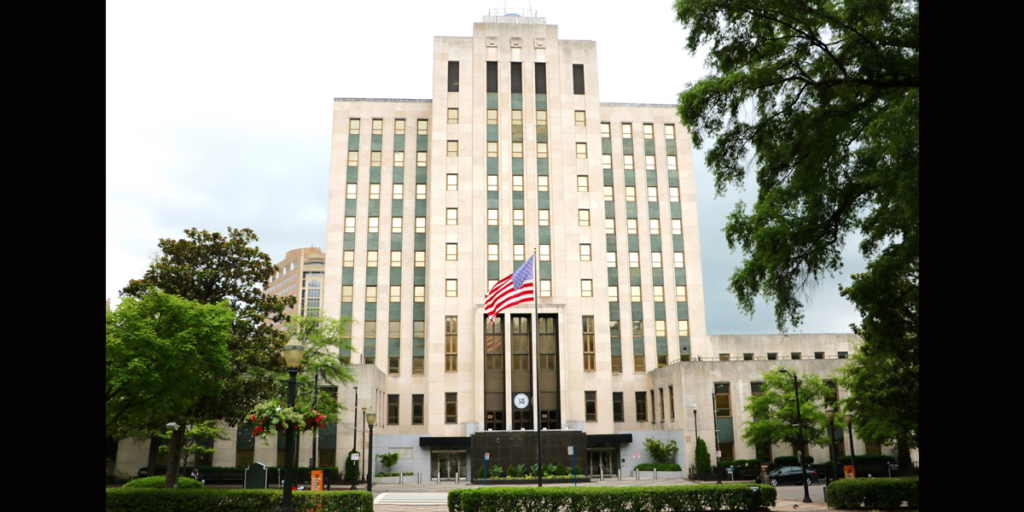
Birmingham City Councilman Jay Roberson resigned from his position last month in order to move in support of his wife’s career aspirations. Roberson’s term had yet to expire, leaving a vacancy on the council that needs to be filled. The deadline to apply to fill the vacant City Council seat for District 7 was Tuesday at 5 p.m. 13 people applied for the position: Gwendolyn Calhoun: president of Hillman Neighborhood Association Gibril H. Davies Jr. Wardine Alexander: former Birmingham Board of Education president Marcus King Charles Crockrom Sr.: former assistant to former Mayor Richard Arrington; member of Birmingham Racing Commission Gertrudis A. Hunter: former candidate for Birmingham mayor Robert H. Young Lonnie Malone: former city council candidate Raymond Brooks: former Birmingham Fire and Rescue Service chief Walter Wilson: former city council candidate Theodore Smith: Birmingham Jefferson County Transit Authority board member Jameania Ravizee Jeffrey Rowser: former city council candidate According to the Mayor Council Act, “Vacancies in the council shall be filled by the council at the next regular meeting or any subsequent meeting of the council, the person so elected to hold office only until the next election of any kind in which the voters of the city to which this Act applies are qualified electors, at which time said unexpired terms shall be filled by said electors in accordance with all provisions of law applicable to such city; in any event, the person elected shall hold office until his successor is elected and qualified.” Interviews with the applicants have yet to be scheduled.
Timeline of suspected Russian plot to infiltrate NRA, GOP
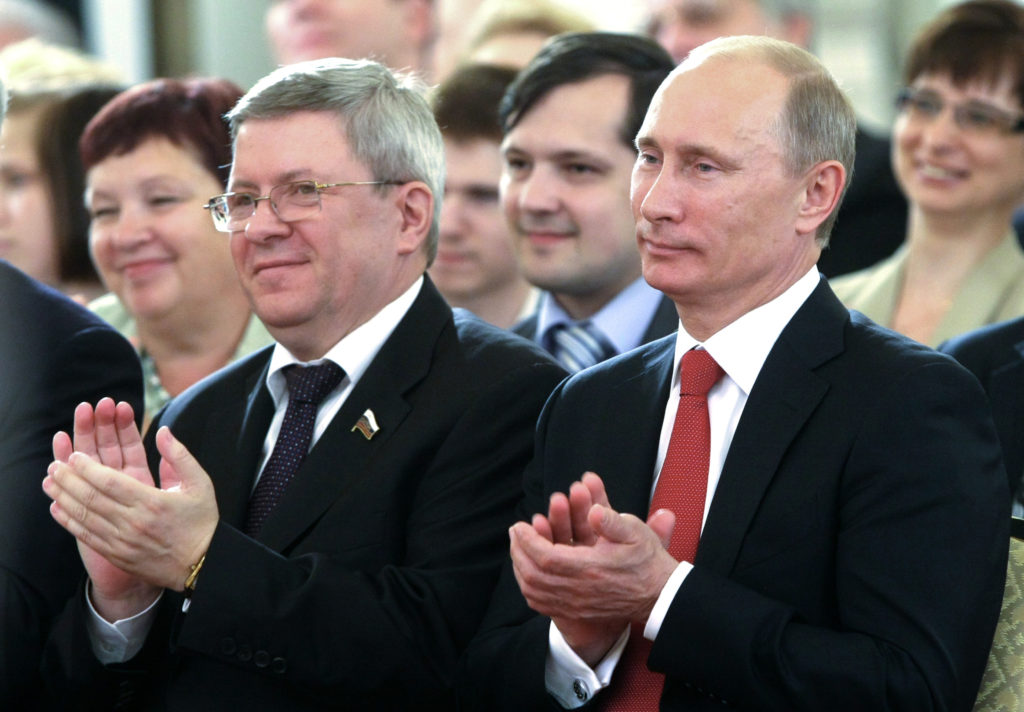
As Siberian gun rights activist Maria Butina faces a hearing in Washington, here is a look at the unusual path that led to her arrest. She’s accused of working as an undeclared foreign agent, based on FBI suspicions that she and patron Alexander Torshin sought to infiltrate the NRA and build a long-term influence campaign with the American right. She has pleaded not guilty. 2001 Torshin is elected to serve in Russia’s upper house of parliament, the Federation Council. He makes his first contact with the NRA. 2011 Butina moves to Moscow, funded by an oligarch couple, and forms gun rights group Right to Bear Arms. Torshin and Butina meet at Moscow gun rally. 2012 Torshin presents draft bill on liberalizing gun sales, crafted in part by Butina. It fails miserably, lacking support from President Vladimir Putin. Torshin attends NRA convention in St. Louis, and goes to Nashville to observe the 2012 U.S. presidential election. 2013 Torshin attends NRA convention in Houston in May. Three months later, Spanish police try and fail to arrest Torshin for alleged connections to organized crime; Torshin denies wrongdoing. In October, an NRA delegation including then-chief David Keene visits Russia for a conference organized by Butina’s group Right to Bear Arms. Butina meets Torshin’s NRA contacts. 2014 Butina goes to the U.S. for the first time, and she and Torshin attend an NRA convention in Indianapolis. She resigns as leader of Right to Bear Arms. 2015 Torshin leaves parliament to become deputy governor of Russia’s Central Bank; Butina becomes his assistant. Butina and Torshin attend an NRA convention in Nashville; Torshin says he met Donald Trump there. Butina questions Trump at Freedomfest gun show in Las Vegas. NRA delegation visits Moscow on Butina’s invitation, meets Torshin, oligarchs, top officials. 2016 Butina and Torshin attend National Prayer Breakfast, and Torshin attends NRA convention in Louisville where he says he met Donald Trump Jr. Butina starts masters program at AU. She and Torshin exchange messages about contacts with Russian intelligence, and a “back channel” to U.S. right wing, according to the FBI. 2017 Butina, in Washington, joins celebrations of Trump’s inauguration. She and Torshin attend National Prayer Breakfast. 2018 Senate questions Butina in April, and her apartment is searched by FBI. Torshin is hit with US sanctions. Butina is arrested July 15. Republished with permission from the Associated Press.
Daniel Sutter: Paying for checked bags

United and Jet Blue recently increased their checked bag fee to $30. Nobody likes paying for things we didn’t used to pay for, like checked luggage. A bill in the U.S. Senate would limit airlines’ checked bag and other fees, which topped $7 billion in 2016. But economics suggests that bag fees can make air travel more efficient, not merely extract money from travelers. American was the major airline to charge for checked bags in 2008. The fee rose from $15 initially to $25, and almost all airlines except Southwest use this fee, while some regional airlines even charge for carry-on bags. Airline credit cards and frequent flier programs often allow free bags. It is tempting but inaccurate to say that until 2008 passengers did not pay for checked bags. Carrying luggage is costly: airlines need larger planes with cargo space and must hire baggage handlers, while extra weight requires extra jet fuel. U.S. airlines are businesses and cannot lose money for too long. Revenue must at least cover costs, with or without bag fees. Prior to 2008, the price of tickets covered the cost of carrying bags, averaged across all fliers. If passengers checked on average one bag each, perhaps $25 of the ticket price would have covered baggage costs. Fliers with many bags would prefer paying a ticket price covering the average number of checked bags, while passengers without bags effectively paid for others’ luggage. Travelers now must pay for checked luggage. This should make air travel more efficient overall. Previously passengers might have checked a bag with contents providing only $10 or $20 of value to them. If the $25 bag fee approximately equals the airlines’ cost of transporting bags, a bag valued at $10 will no longer fly, which is good because it was not worth the cost. My points about bags apply to other airline services like meals and beverages. If airlines do not charge for alcoholic beverages or meals, ticket prices must cover these costs. First class passengers still receive such “freebies” but their expensive tickets certainly cover the costs. Should airlines then charge for everything, including the reading light or the lavatory? Two factors limit charging for everything. One is the cost of restricting access and collecting money from willing users. Electronic payments make collecting fees easier, but lavatories would need to be accessible only after paying. Negative reactions from passengers also matter. People do not like being nickel-and-dimed for every little thing; losing a frequent flyer due to a $3 fee is bad business. Social media now amplifies customer complaints. Until 1978, the Civil Aeronautics Board (CAB) regulated U.S. airlines, including the routes airlines could fly and fares. Forty years of deregulation have reduced fares by 50 percent in exchange for few extra services. Today most Americans can fly at least occasionally; under government regulation, flying was primarily for business travelers and the well-to-do. Senators Markey of Massachusetts and Blumenthal of Connecticut have introduced the Forbid Airlines from Imposing Ridiculous Fees, or FAIR, Act to limit fees of any sort, including for changes or cancellation. Rebooking fees run from $75 to $300 plus the difference in price of the flights. Cancellations can result in seats going unused on high demand flights and thus cost airlines. While these fees seem high to me, airlines know much more about their operations and costs than I do. Competition between airlines for passengers is a better way to keep fees reasonable, fares low, and service quality high. Southwest advertises that bags fly free, and airlines seeking competitive advantage will undercut any excessive fees. If the Senators want to assist the flying public, they should address access to gates at our nation’s airports, a factor which economists find limits competition. Travelers will pay for checked luggage, either through fees for each bag or higher ticket prices. While it is nice when someone pays for us, air travel is more efficient when we each pay our own way. ••• Daniel Sutter is the Charles G. Koch Professor of Economics with the Manuel H. Johnson Center for Political Economy at Troy University and host of Econversations on TrojanVision. The opinions expressed in this column are the author’s and do not necessarily reflect the views of Troy University.
Amid budget overages, Montgomery Fire/Rescue receives much-needed $3.5M grant

Just when things were starting to looking fiscally grim, as news broke that the Montgomery Fire/Rescue (MFR) Department had shockingly exceeded its overtime budget by over $2M thus far in 2018, the city was awarded a much-needed federal grant that will help keep operations running smoothly. U.S. Senator Richard Shelby on Tuesday announced the $3,553,843 award as a part of the Federal Emergency Management Agency’s (FEMA) Staffing for Adequate Fire & Emergency Response (SAFER) grant program. “The funding will ensure the city has the proper resources and staff to adequately respond to emergency medical, fire, and rescue incidents throughout the area. I am proud that FEMA has awarded this SAFER grant to facilitate increased safety and security in the City of Montgomery,” said Shelby. As of mid-August, MFR had spent $2.2 million on overtime. That amounts to $2,079,470 more than expected, or 1,411 percent over budget. The $3.5 million grant will be used to help hire additional firefighters and first responders over a three year period to achieve and maintain proper staffing levels. “We could not be more grateful to Sen. Richard Shelby for his role in helping Montgomery secure this SAFER grant to increase the number of firefighters who serve and protect our capital city,” said Montgomery Mayor Todd Strange. “The additional 33 firefighters provided by this grant will help us meet the increasing demand for suppression and emergency medical services. Sen. Shelby’s support for this grant award speaks to his abiding commitment to the public’s safety and his unflagging work on behalf of our city and state.” SAFER grants are awarded to fire departments and national, state, local, tribal, or territorial organizations that represent the interests of firefighters.
Parker Snider: Understanding Constitutional Amendment One – The Ten Commandments and Religious Freedom
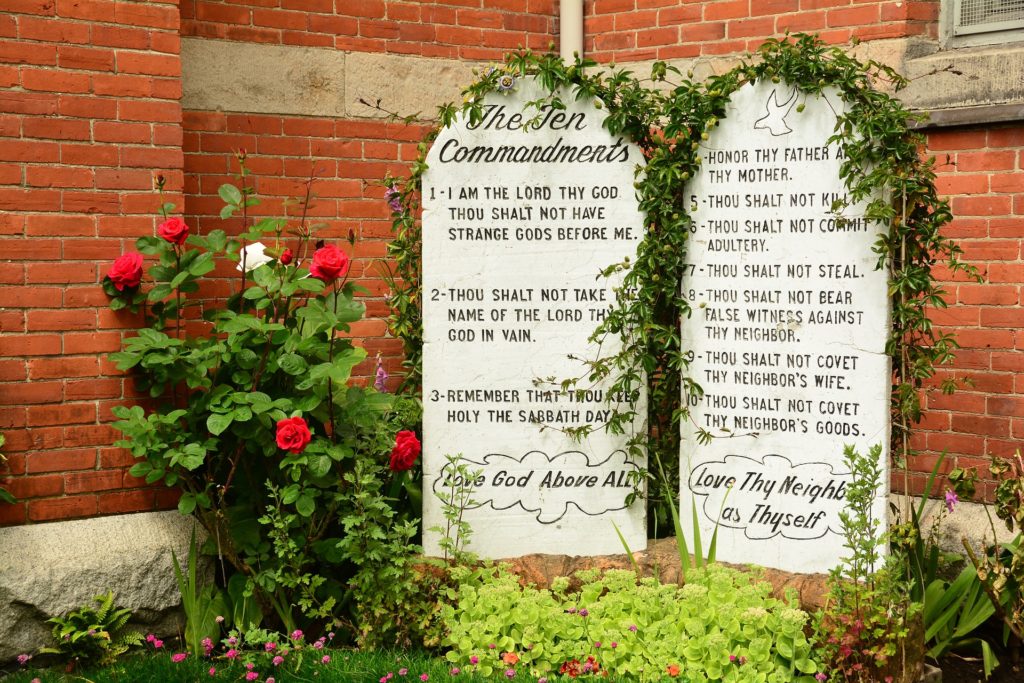
For years, discussion over the public display of the Ten Commandments has animated Alabama’s political landscape. The issue is so energizing, it seems, that many politicians frame their own races through the lens of this battle––that support for their candidacy is a vote for the Ten Commandments. Even so, Alabamians have never actually gotten a chance to vote directly on the issue. This November, however, a constitutional amendment sponsored by Senator Gerald Dial provides that opportunity. Statewide Amendment 1, if successful, would enshrine in the state constitution language signifying two things, a) that the Ten Commandments is authorized to be displayed on public property, including public schools and b) that no person’s religion can affect his or her political or civil rights. This amendment, as expected, has received its share of support and criticism. Dean Young, Chairman of the Ten Commandments PAC, suggests this to be a vote where Alabama decides if we “want to acknowledge God”. He also remarks that we will be held accountable for our vote on judgment day. Not all Christians agree with Young, however. The Baptist Joint Committee, for example, argues that “the government should represent all constituents regardless of religious belief” and not involve itself in “religious favoritism”. The question, of course, is of the real impact of this amendment. Essential to the discussion of impact is one provision within the amendment that may be easily ignored: the fact that any Ten Commandments display must comply with constitutional requirements. This provision explicitly acknowledges that Ten Commandments displays in Alabama are subject to the U.S. Constitution, and therefore the U.S. Supreme Court. The U.S. Supreme Court, it is important to note, has largely settled on an understanding of the constitutionality of this issue through three precedent-setting court rulings. In McCreary County v. ACLU, the Supreme Court ruled that the display of the Ten Commandments in a Kentucky courthouse was unconstitutional. In Van Orden v. Perry, however, the Court allowed the Ten Commandments to be displayed, provided it was within a larger array of historical monuments and markers. In regard to the display of the Ten Commandments in public schools, the Court ruled in Stone v. Graham that posting the Ten Commandments in every public school classroom, as required by a Kentucky law, served “no secular purpose” and was therefore unconstitutional. As this amendment is subject to these precedents and already-existing First Amendment protections, the approval or rejection of this amendment will likely have limited immediate impact in Alabama. What, then, is the purpose? In a recent call with the Alabama Policy Institute, Senator Dial––the sponsor of the amendment–– answered that question. He acknowledged that, for the amendment to have greatest impact, the U.S. Supreme Court will have to rule differently in the future. Senator Dial also offered another reason to support the amendment. He remarked that this amendment would shift liability from the individual or government office displaying the Ten Commandments to the state. The hope of this amendment is to embolden displays of the Ten Commandments under the legal protection of the state constitution, Dial suggests, and to let the state deal with any legal ramifications. It is important to mention, however, that the amendment specifies that no public funds can be used to defend its constitutionality. If there are legal challenges, Senator Dial suggests that a third party will fund the defense. To be sure, this amendment brings yet again to the public eye an issue that some consider settled. The Supreme Court precedent will––new rulings notwithstanding––supersede any constitutional amendments the people of Alabama pass or fail to pass on the subject. If the U.S. Supreme Court were to, however, overturn past precedent, the success or failure of this amendment could be consequential. ••• Parker Snider is Policy Relations Manager for the Alabama Policy Institute (API). API is an independent, nonpartisan, nonprofit research and educational organization dedicated to strengthening free enterprise, defending limited government, and championing strong families. If you would like to speak with the author, please e-mail communications@alabamapolicy.org or call (205) 870-9900.
