
Del Marsh: National Hunting and Fishing Day: Celebrating Alabama’s sportsmen and women
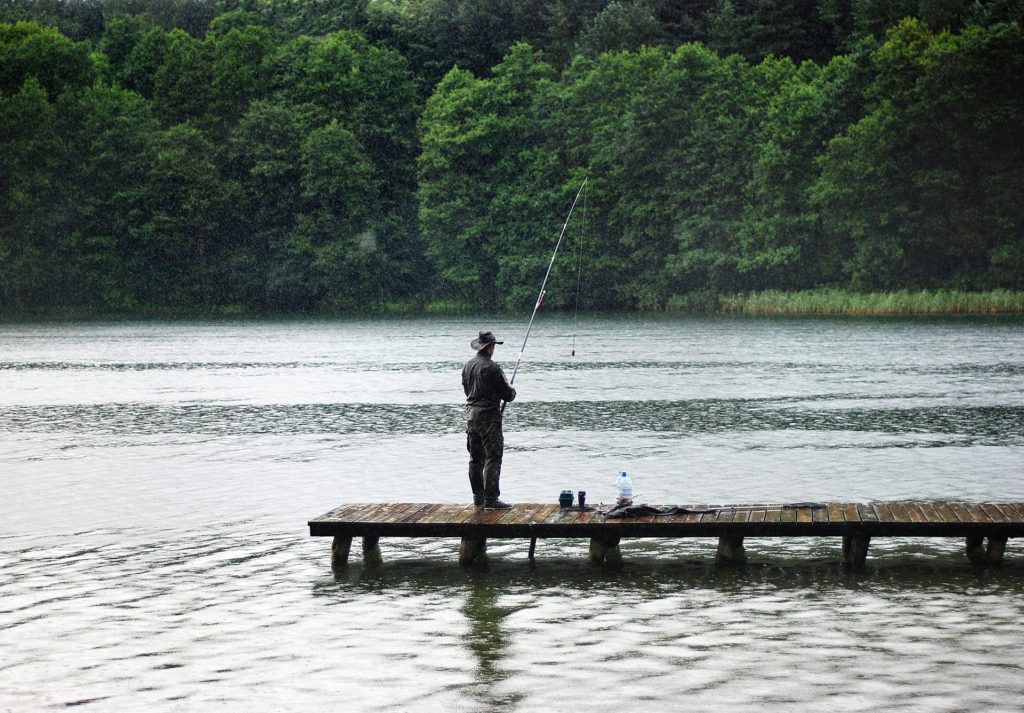
Saturday, September 22 is our nation’s 46th annual National Hunting and Fishing Day. As Co-Chair of the Alabama Legislative Sportsmen’s Caucus and as a member of the 48-state National Assembly of Sportsmen’s Caucuses, I am proud to take time to celebrate the time-honored traditions of hunting and angling. I am also pleased to recognize the historical and ongoing contributions of our state’s original conservationists — sportsmen and sportswomen. Alabama hunters and anglers are the primary source of conservation funding for the Yellowhammer State. Through the purchase of licenses, tags, and by paying self-imposed excise taxes on firearms, ammunition, archery equipment, fishing tackle, motorboat fuel, and other equipment, hunters and anglers drive conservation funding in Alabama and the United States, through the American System of Conservation Funding, a “user pays public benefits” System. Last year alone, this System, combined with hunting and fishing license sales, contributed over $47 million to fund state conservation efforts administered through the Alabama Department of Conservation and Natural Resources (DCNR). All Alabamians benefit from these funds through improved access to public lands, public shooting ranges, improved soil and water quality, habitat restoration, fish and wildlife research, private and public habitat management, hunter education, boat access area construction and many other DCNR projects funded through this System. Hunting and angling are also a significant economic driver for our state. Alabama sportsmen and women spend roughly $2 billion per year on their outdoor pursuits, supporting nearly 40,000 jobs in the state and contributing over $165 million in state and local taxes. Hunting produces countless benefits for our state’s conservation funding and economy, therefore it is important that Alabama sportsmen and women invest time and effort to encourage future participation by the next generation in these time-honored traditions. This effort to increase hunter participation is called recruitment, retention, and reactivation (R3) and over 450 individual R3 programs nationwide have had regional success. R3 programs, as well as many others, need your support and it’s going to take the involvement of every Alabama hunter, regardless of age, to ensure the future of the outdoor pursuits we celebrate on National Hunting and Fishing Day. Our hunting and angling heritage should not be taken for granted, and getting the next generation of Alabama’s sportsmen and women involved in the outdoors will help ensure the conservation of our abundant natural resources for the future. More information on National Hunting and Fishing Day is available at www.NHFDay.org or on the Congressional Sportsmen’s Foundation website at www.congressionalsportsmen.org/policies/state/national-hunting-and-fishing-day ••• Del Marsh, a Republican from Anniston, is the President Pro Tem of the Alabama State Senate.
Donald Trump’s tariffs could sow trouble for GOP in farm districts
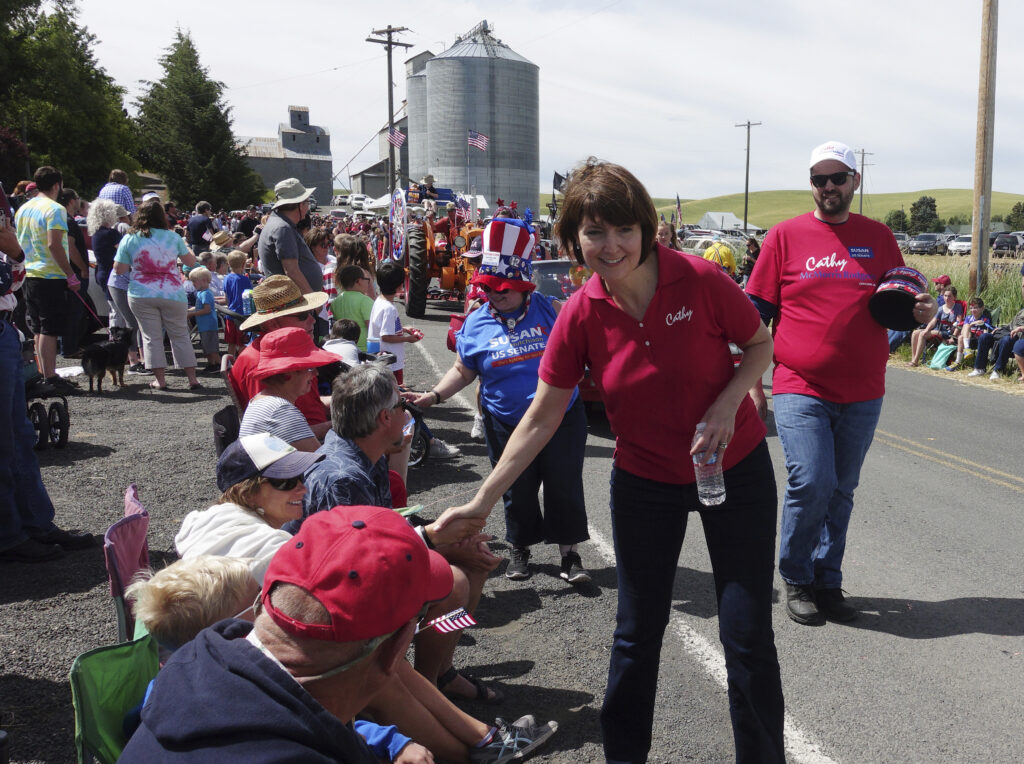
In the aptly named Harvester Restaurant, wheat farmer Roy Dube makes clear he’s no fan of President Donald Trump‘s trade policy. “We get him elected into office and he pulls us out of trade agreements,” Dube said last week as local farmers gathered to hear Democratic House candidate Lisa Brown. Dube says China is buying less wheat from eastern Washington farmers and Trump’s policies have opened the door for Australia and Canada to wrestle away business. His frustration extends to his congressional representative, Rep. Cathy McMorris Rodgers, who is the highest-ranking Republican woman in the House and running for an eighth term. “I’m concerned that Cathy McMorris Rodgers didn’t put up more resistance,” Dube said. The U.S. tariffs on agriculture products, sown by Trump, have grown into an election-year threat to Republicans in rural districts that are heavily reliant on exports for their economy. With the livelihoods of farmers at risk, opposition to the tariffs could make a difference in some races and help determine which party takes control of Congress. McMorris Rodgers has made it clear she opposes the president’s actions on tariffs, but so far, the Republican-controlled House has not taken up legislation to block them. Democrats characterize GOP lawmakers as unable or unwilling to check Trump, who has declared that “tariffs are the greatest.” “My opponent, though she would say she’s concerned and talking to the administration about these issues, she’s still mostly a cheerleader for the president,” said Brown, a former state legislator. Facing what appears to be the tightest re-election race of her career, McMorris Rodgers is emphasizing that she has encouraged the president to “move from tariffs to agreement.” “I have made it very clear that I don’t support the across-the-board tariffs, that we should take a more targeted approach,” McMorris Rodgers told The Associated Press. Clues that the president’s trade policies will play a role in the November midterm elections can be seen in Agriculture Secretary Sonny Perdue‘s travel schedule. Over the past few months, he’s been to Eastern Washington to join McMorris Rodgers in meeting with farmers. He’s also been to California’s Central Valley to meet with farmers in the districts of Republican Reps. Jeff Denham and David Valadao. He also went to Iowa, where Republican Reps. David Young and Rod Blum are both in close races. The battle for the Senate could also be affected by the tariff issue, particularly in North Dakota, Indiana and Missouri, where Republicans hope to knock off three Democratic incumbents. The president has tried to allay farmers’ concerns with an aid package of up to $12 billion to help them weather the trade war. J. Read Smith, a rancher near St. John, Washington, said he shares Trump’s goal of seeking a level playing field in trade. “But antagonizing our trading partners is not the way to do it,” said Smith, who emphasized that he is not a Democrat. “I’m an American.” Aaron Flansburg, who runs a diversified farm near Pullman, Washington, said he’s skeptical the tariffs will change the way most farmers vote, though. “Farmers often vote for Republicans,” Flansburg said. “Whether that will change, I have my doubts.” McMorris Rodgers said it’s her sense that voters are willing to give the president time to negotiate better agreements. “Yes, there’s a lot of uncertainty. There’s a sense that we need to get these trade agreements into place as soon as possible, but there’s also a recognition that for too long America has not taken action, especially against China,” she said. In July, the United States began imposing a tax on $34 billion in Chinese imports. Last month, it added tariffs to $16 billion in Chinese goods and is readying taxes on an additional $200 billion worth. China retaliated with its own tariffs on U.S. products. The world’s two biggest economies are clashing over allegations that China steals technology from American companies. The Trump administration also announced that it will begin taxing $200 billion in Chinese goods starting Monday. The tariffs will start at 10 percent and rise to 25 percent in 2019. The Trump administration also imposed a 25 percent tariff on imported steel and a 10 percent tariff on imported aluminum that included imports from the European Union, Canada and Mexico — and just about everyone else — in the name of national security. Those tariffs also drew retaliation. For example, the EU targeted bourbon, a key industry in Senate Majority Leader Mitch McConnell‘s home state of Kentucky, where Republican Rep. Andy Barr and Democratic challenger Amy McGrath are battling in a close election. Overall, about 6 in 10 Americans disapprove of how the president is handling trade negotiations with other countries. Farm groups have testified in congressional hearings that retaliatory tariffs increase the cost of their products for customers abroad, giving foreign competitors an edge. “The current tariffs, continuing back-and-forth retaliatory actions and trade uncertainties are hitting American agriculture from all sides and are causing us to lose our markets. Once you lose a market, it is really tough to get it back,” said Kevin Paap, president of the Minnesota Farm Bureau. Rep. Ben Ray Lujan, who is overseeing Democratic efforts in House races, pointed to Iowa as a state where he believes the administration’s tariffs could backfire. He said primary turnout was up, in part because small family farmers and the businesses they buy from are worried. “I really believe that in those districts, you’ll see people come forward and hold everyone accountable not standing up for them,” Lujan said. GOP lawmakers from Iowa, including Young and Blum, signed onto a letter calling on the president to act quickly to save rural economies. Blum also wrote Trump separately urging him to “consider the consequences tariffs have on American manufacturers.” When the president visited Blum’s district a few days later, he thanked him for his “political courage” on trade. “You’ve taken some heat for it in the short term, but in the long run, the farmers, the manufacturers, the employers are all going
Former GOP presidential candidate Carly Fiorina coming to Birmingham
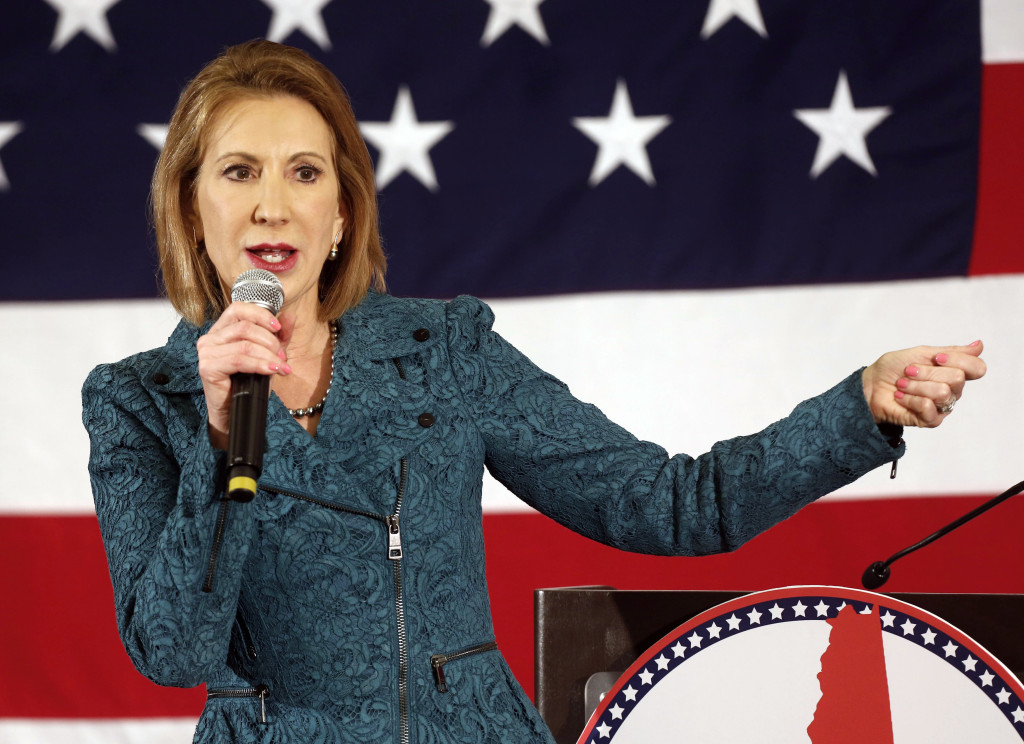
Former Republican presidential candidate Carly Fiorina will be coming to Birmingham, Ala. next month as part of Live2Lead — a half-day, leadership development experience designed to equip attendees with new perspectives, practical tools, and key takeaways. Fiorina will be in town on Oct. 12 for the conference that begins at 8 a.m. There, will learn from world-class leadership experts who will help them prepare to implement a new action plan, and start leading when you get back to the office with renewed passion and commitment. The speakers Carly Fiorina the former Chairman and CEO, Hewlett-Packard Company (1999-2005), Best-Selling Author and 2016 United States Presidential Candidate, will be joining us this year at Live2Lead as keynote speaker. One of the most high-profile business leaders in the world, Fiorina passionately believes in the power of people to transform organizations and change the world. carlyfiorina.com John Maxwell: an internationally recognized leadership expert, speaker, coach, and author who has sold over 25 million books. johnmaxwell.com Daniel Pink: Best-Selling Author, To Sell Is Human: The Surprising Truth About Moving Others, Drive and A Whole New Mind, will be joining us this year at Live2Lead as keynote speaker. One of the world’s leading business minds, Pink’s forward-thinking ideas and blockbuster books are reshaping how organizations approach innovation, motivation, timing and talent. danpink.com Debra Searle: MVO, MBE, is a unique and inspiring individual. She achieved a first class honours degree, has launched four companies, won Gold World Championship medals for GB, presented over 40 programs for the BBC, had two books published, become the youngest ever trustee of The Duke of Edinburgh’s Award and successfully rowed solo across the Atlantic Ocean. Her Majesty The Queen has recognized Debra on two occasions – in 2002 with an MBE and in 2014 with an MVO. She has spoken at over 1000 events across 38 countries. debrasearle.com Tyler Perry: Entertainment mogul Perry will take the stage at Live2Lead 2018. The multi-hyphenate talent has a resume’ that reads like the American Dream: playwright, screenwriter, actor, director, producer, best-selling author, and studio head. His work, from page to stage to screen, never fails to leverage the power of story to share Perry’s message of hope. Perry’s unique insights on the need for leaders to adapt and stay agile are reflected in his career as an entrepreneur and artist. From his youth on the streets of New Orleans to his career among Hollywood’s heavyweights, Perry’s ability to learn and grow as a person and a creator will breathe new life into leaders everywhere.
ACLU of Alabama sues Sec. of State John Merrill for blocking constituents on personal Twitter
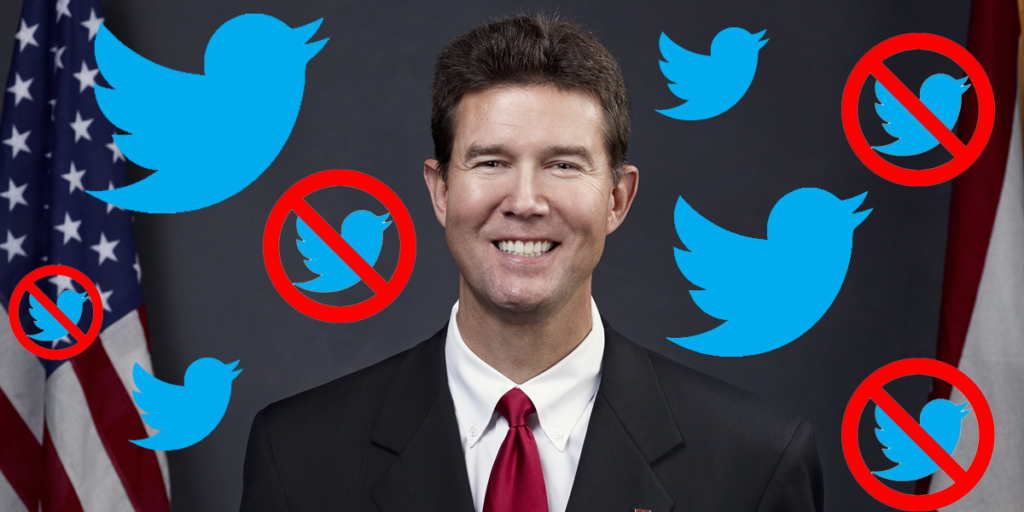
President Donald Trump made headlines last summer for blocking American on Twitter for the political views they have expressed, which ultimately resulted in a successful plaintiff’s lawsuit on grounds that the action was unconstitutional and a violation of the First Amendment. Now a similar case has made its way to the Yellowhammer State. On Wednesday, the American Civil Liberties Union of Alabama filed a lawsuit on behalf of three Alabama citizens challenging Secretary of State John Merrill for blocking them on his @JohnHMerrill Twitter account, claiming as an elected government official, his actions violate the First Amendment to the United States Constitution. The plaintiffs in the suit are: Kimberly Fasking: a law student at the University of Alabama, was blocked after asking about crossover voting. Heather Melvin Boothe: was blocked for stating “Good point! Ballot has major typo.” Herbert Hicks: a farmer and educator, who was blocked after asking Merrill about a speaking engagement. “It is upsetting to me that the Secretary of State, who primarily uses his Twitter account to disseminate information on issues related to his office, has also weaponized that account by blocking those with whom he disagrees politically,” said Fasking. “It is not the Secretary of State’s job to communicate only with those who agree with him, but with all of the people of the State of Alabama. I am disappointed that I no longer have ready access to information from the Secretary of State’s office in a way that allows me to engage meaningfully on topics that I find incredibly important.” Not his official account But Merrill’s office explained to Alabama Today that the @JohnHMerrill account is in fact not the Secretary’s official Twitter account. Rather, it’s his personal account that he maintains from personal devices. While Merrill does use the account to discuss state business, such as election law, information about his duties as Alabama Secretary of State, reminders to the public about upcoming elections, he maintains the @alasecofstate account for actual, official business. John Bennett, Deputy Chief of Staff and Press Secretary for Merrill confirmed the official account has never blocked any constituents. He further shared an example of why some people were blocked on Merrill’s personal account, saying that when he shared that his father died they celebrated the news. Merrill himself weighed-in on the lawsuit Wednesday afternoon calling it a “political hack-job.” “The lawsuit filed today by the ACLU of Alabama is an attempted political hack-job,” Merrill posted on Facebook. “Members of this liberal group are attempting to create an issue concerning lack of access to public officials that simply does not exist. As every member of the media and general public who interacts with this office knows, the most important thing for an elected official to do is to remain accessible to the people of this state. That is why I always make my cell number 334.328.2787 available to all Alabamians.” He also confirmed the account noted in the suit is his personal Twitter account. “The account in question @JohnHMerrill is exclusively my account, while the account @alasecofstate is the state’s public account, and this account has never blocked anyone from viewing any of the posts on its page. The @JohnHMerrill account has remained a personal account since its creation, in October 2009,” Merrill added. “I am recognized as one of the most accessible and personally available elected officials in the history of the state of Alabama, which is why I visit all 67 counties each year. It is my desire to continue to be recognized in that way as long as I have the privilege to continue to serve in public office.” Nevertheless the ACLU contends constituents should have access to that personal account because Merrill holds a state office. “In the digital age that we live in, John Merrill as a government official does not get to pick and choose who receives information on Twitter just like he can’t kick out his constituents for their beliefs at a town hall,” stated ACLU of Alabama attorney Brock Boone. “This is a violation of the First Amendment. It is worrisome that the individual in charge of free and fair elections chooses to discriminate against individuals on social media. As the Secretary of State, Merrill should be using his platform to inform the public, not censure them. The lawsuit seeks to stop Merrill from blocking plaintiffs or others based upon whether he agrees or disagrees with their viewpoint. The case, Fasking v. Merrill, was filed in the U.S. District Court for the Middle District of Alabama on September 19, 2018. *4:35 p.m. CT: This story has been updated with Merrill’s statement.
Mobile’s Austal USA awarded contract to build two more LCS’s for US Navy

Austal USA in Mobile, Ala., was awarded a contract modification by the U.S. Navy to build two additional Independence-variant Littoral Combat Ships (LCS), LCS 32 and 34, its sixteenth and seventeenth ships in the class. The specific value of each contract is under the congressional cost cap of $584 million per ship. The contracts were announced Tuesday by the Department of Defense. “To be awarded these Independence-variant contracts in such a highly competitive environment is a great honor,” said Austal USA President Craig Perciavalle. “This is a testament to the hard work and commitment of our talented employees and dedicated supplier network, and further evidence of the important role Austal plays in building the Navy’s 355-ship fleet.” Alabama 1st District U.S. Rep. Bradley Byrne, who represents Mobile in Congress, called the contract award “another indication of the high quality work being performed” in Mobile. “The fact that Austal received two of the three contracts from Fiscal Year 2018 for Littoral Combat Ships is yet another indication of the high quality work being performed at our shipyard in Mobile,” Byrne said in a statement. “This marks the third straight year that Austal has received two of the three contracts – a testament to the fact we are delivering capable ships on time and on budget. Congratulations to the almost 4,000 men and women who work at the shipyard and help equip the Navy with warships.” Austal USA is scheduled to begin construction on the ships in 2019. “This amazing team effort highlights the value and importance of the American industrial base, and these awards will keep Austal busy building ships into 2023” said Perciavalle. Austal delivered the future USS Charleston (LCS 18) to the Navy last month and is scheduled to deliver USNS Burlington (EPF 10) before the end of the year. With eight LCS and nine EPFs already delivered, Austal-built ships are impacting worldwide operations. “It’s exciting to hear the positive feedback from the fleet commanders on how well our ships match their mission requirements as they operate globally,” added Perciavalle. “We will continue to build these ships in a safe and timely manner with the quality and craftsmanship that Austal has come to be known for.”
Donald Trump rips Jeff Sessions: ‘I don’t have an attorney general’
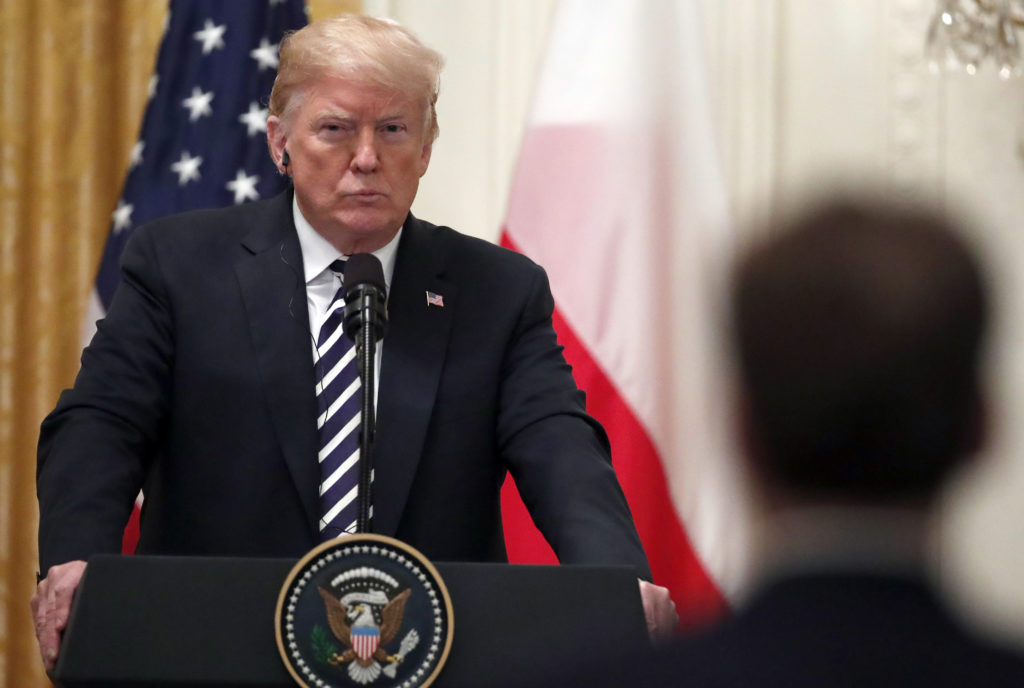
President Donald Trump escalated his attacks on Attorney General Jeff Sessions, saying, “I don’t have an attorney general.” Trump, in a Hill.TV interview released on Wednesday, said that he’s “so sad over Jeff Sessions,” whom he has repeatedly denounced for recusing himself from the Russia investigation. “He was the first senator that endorsed me. And he wanted to be attorney general, and I didn’t see it,” Trump said in the Oval office interview. “And then he went through the nominating process and he did very poorly. I mean, he was mixed up and confused, and people that worked with him for, you know, a long time in the Senate were not nice to him, but he was giving very confusing answers. Answers that should have been easily answered.” The president softened his stance slightly when talking to reporters on the White House lawn hours after the interview’s publication, saying, “I’m disappointed in the attorney general for numerous reasons, but we have an attorney general.” Trump has repeatedly asserted that Sessions, a former U.S. senator from Alabama, did not need to step away from the Russia probe, a move the president believes in part led to the appointment of special counsel Robert Mueller, who is investigating contacts between Trump campaign officials and Russians. Trump, a Republican, suggested that Sessions’ rocky Senate confirmation hearings may have impacted his performance as attorney general. “He gets in and probably because of the experience that he had going through the nominating when somebody asked him the first question about Hillary Clinton or something he said, ‘I recuse myself, I recuse myself,’” Trump said. Department of Justice guidelines recommended the attorney general step away because of his own contacts with foreign government officials during his time with the 2016 Trump campaign. Sessions told Congress that his decision was not due to any wrongdoing. Trump also broadened his attacks beyond the recusal, saying he’s unhappy with Sessions’ performance on several issues. “I’m not happy at the border. I’m not happy with numerous things, not just this,” Trump said in the interview. Trump has repeatedly complained publicly and privately about Sessions, pushing him to curtail the Mueller probe, urging him to investigate Clinton and suggesting he should drop investigations into Republican congressmen until after the November midterm elections. He also said that he does not feel as though Sessions supports him like former attorneys general Eric Holder and Bobby Kennedy backed Presidents Barack Obama and John F. Kennedy, respectively. Trump has repeatedly considered firing Sessions, the nation’s top law enforcement officer, only to be opposed by aides who think a dismissal would upend the Russia investigation, conservatives who applaud Sessions’ hardline stances at the Department of Justice and Republican senators who have said they would not confirm a replacement. But there have been cracks in that blockade of late. South Carolina Sen. Lindsey Graham, who once fought for Sessions, recently said that the president was “entitled to having an attorney general he has faith in” while other Trump allies have suggested that a move could be made after the midterms. Sessions recently punched back against Trump, saying he and his department “will not be improperly influenced by political considerations.” And Sessions has made clear to associates that he has no intention of leaving his job voluntarily despite Trump’s constant criticism. Trump said in the interview that “we’ll see what happens” with Sessions’ future. “We’ll see how it goes with Jeff,” Trump continued. “I’m very disappointed in Jeff. Very disappointed.” Republished with permission from the Associated Press.
Our open records laws are a joke: Background for AL.com op-ed by Apryl Marie
Alabama Today’s publisher, Apryl Marie Fogel, wrote an op-ed published Wednesday over on AL.com in her role as executive director and founder of Conservatives for Better Leadership (CBL), which seeks to hold elected officials accountable to the promises they’ve made on the campaign trail and to ensure transparency within state government. In the piece, she shines a light on the glaring problems with the state’s open records laws. “While many throughout the state are focused solely on the much-needed changes to Alabama’s ethics laws, there’s another elephant in the room that cannot be ignored: much needed changes to our open records laws,” Fogel wrote. “Specifically, the law needs to be expanded and strengthened to include deadlines, spell out exceptions, and allow for civil and criminal penalties in cases where state employees are not in compliance.” Fogel’s frustrations with the law stem from first-hand experiences in both her role with CBL, and her role at Alabama Today. Here, we’ve faced on-going issues with the Alabama Department of Transportation (ALDOT) dating back to May. May 18: We first reached out to Tony Harris, spokesman for ALDOT, with questions about the flyover bridge project in Baldwin County. He called back that afternoon and promised a response the following week. May 25: We had yet to hear anything back from Harris, so we reached out again and he said they were working on it. June 12: Again, crickets from Harris and ALDOT, so we reached back out and more empty promises were made. Aug. 24: after previously asking Alabama Today to avoid submitting an official public records request, Harris tells us that is what we have to do if we want the information. That there are issues being held up in the courts (by the way, they’ve all been resolved) and he’s unable to answer otherwise. Aug. 24: officially submitted open records request with ALDOT Aug. 28: ALDOT responded with letter saying we need to pay a $50 retrieval fee for the record to move forward Aug: 29: retrieval fee is mailed to ALDOT We’ve also had a fair share of issues getting much more innocuous information from Gov. Kay Ivey‘s office: Jan. 4:We ask Daniel Sparkman, Press Secretary for Ivey, for a list of top agency heads the Governor has replaced from the Bentley administration by department and date for a simple story we’re working on for her appointments. This was to bring back a series we regularly published when Robert Bentley was governor. Sparkman tells us it’s going to take a while to put together the list, despite the fact it typically took Bentley’s team less than 24 hrs. Jan: 11: Sparkman writes back asking a clarifying question to which we immediately respond Jan 23: We’ve yet to hear back from Sparkman, so we reach back out. He provides us Cabinet changes, but offers no list of appointments that have been made saying he’s “still waiting on the Boards and Commissions.” Jan 29: We check back in for the information, it’s still not available. Feb. 26: Fogel now reaches out to Sparkman in hopes of moving this simple request forward more quickly. Feb. 27: Fogel provides Sparkman with the information and process timeline we used to get from the Bentley administration. March 5: Fogel follows-up on still unfulfilled records request. March 6: We are sent an unsorted, unorganized list of all the appointments made since Ivey first took office. We publish our first segment of the list. April 19: We requested all of the appointments from March 6 – current. April 26: Another follow-up is made, no response. May 9: Another follow-up is made, which now includes Ivey’s Chief of Staff Steve Pelham and Josh Pendergrass, her Communications Director. No response. May 21: The three are emailed yet again, no response. It’s now Sept. and we’ve yet to have the Governor’s office respond to our request. It’s no wonder Fogel wrote, “No longer should the governor, her staff, and her cabinet members be able to do business in complete secrecy. No longer should they be able to skirt and mock transparency laws with a level of nonchalance that says to the public we are peasants in their kingdom who have to just take what they dish out if and when they provide anything at all.,” in her AL.com op-ed.
Steve Flowers: Looking back at epic 1986 governor’s race
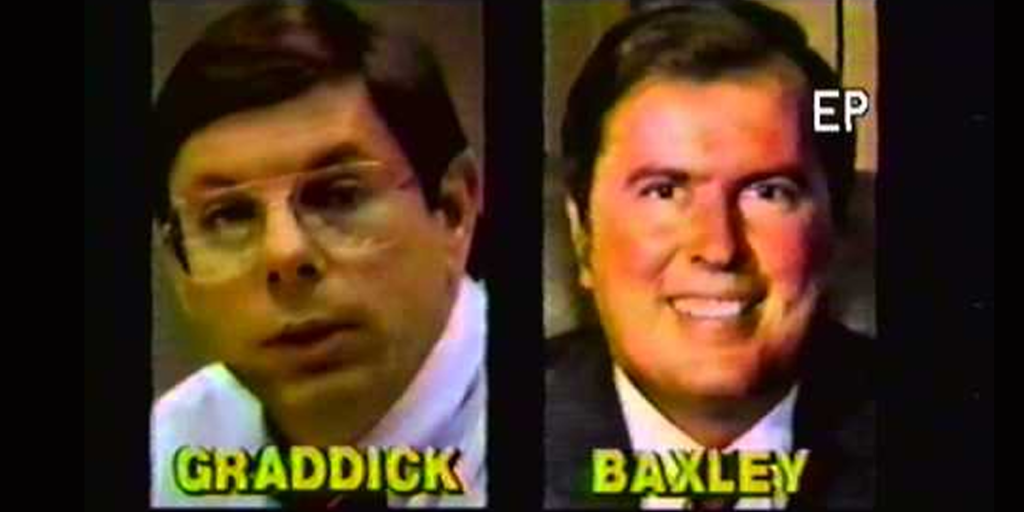
Since this is a gubernatorial election year, allow me to share an epic Governor’s Race with you. The 1986 Governor’s race will be remembered as one of Alabama’s most amazing political stories. In 1978 Fob James sent the Three B’s, Brewer, Beasley and Baxley packing. Brewer and Beasley had been permanently exiled to Buck’s Pocket, the mythical destination for defeated Alabama gubernatorial candidates. However, Bill Baxley resurrected his political career by bouncing back to be elected lieutenant governor in 1982, while George Wallace was winning his fifth and final term as governor. Another player arrived on the state political scene. Charlie Graddick was elected as a fiery tough lock ‘em up and throw away the key attorney general. Graddick had previously been a tough prosecuting district attorney in Mobile. When Wallace bowed out from seeking reelection in 1986, it appeared the race was between Bill Baxley, the lieutenant governor, and Charlie Graddick, the attorney general. It also appeared there was a clear ideological divide. The moderates and liberals in Alabama were for Baxley and the archconservatives were for Graddick. Baxley had the solid support of black voters, labor, and progressives. Graddick had the hard-core conservatives, including most of the Republican voters in Alabama. The Republicans had gone to a primary by 1986 but very few Alabamians, even Republicans, participated. It was still assumed that the Democratic Primary was tantamount to election. The Democratic Primary would draw 800,000 Alabama voters while the GOP Primary might draw 40,000, so most Republican leaning voters felt that in order for their vote to count they had to vote in the Democratic Primary. Baxley and Graddick went after each other with a vengeance in the primary. The race was close. Graddick came out on top by an eyelash. He encouraged Republicans to come vote for him in the Democratic Primary. They did and that is why he won. This was not something that had not been happening for decades. Brewer would have never led Wallace in 1970 without Republicans. Fob would have never won the Democratic Primary and thus become governor in 1978 without Republican voters. Basically, Alabama had been a no party state. We still have no party registration law. So how do you police people weaving in and out of primaries without a mechanism in place for saying you are a Democrat, Republican, or Independent? After Graddick defeated Baxley by less than 25,000 votes in the runoff primary, the Democratic Party did the unthinkable. They convened the hierarchy of the party, who clearly favored Baxley, and declared Baxley the Democratic nominee because they guessed Graddick had won the primary with Republican crossover voters. They paraded experts in front of their committee to testify that Baxley should have won if just Democrats had voted. They boldly and brazenly chose Baxley as the nominee in spite of the fact that Graddick had clearly gotten the most votes. This move went against the grain of the vast majority of Alabama voters. They felt that Graddick, even if they had not voted for him, got the most votes and should be the nominee. The Democratic Party leadership sloughed it off. They assumed that the Democratic nominee would win regardless. After all, there had not been a Republican Governor of Alabama in 100 years. In addition, the Republicans had chosen an unknown former Cullman County Probate Judge named Guy Hunt. Hunt had no money and no name identification. The Democratic leaders guessed wrong. The backlash was enormous. The bold handpicking of a nominee who had not received the most votes was a wrong that needed to be righted. Baxley did not help his case any by ignoring Hunt and dismissing him as a simpleton. He mocked Hunt saying he was unqualified because he only had a high school education. Baxley, as politically astute as he was, should have realized that he was insulting the majority of Alabama voters who themselves only possessed high school educations. This created a backlash of its own. When the votes were counted in the November general election, Guy Hunt was elected Governor of Alabama. This 1986 result gave new meaning and proof to the old George Wallace theory that more Alabama voters vote against someone than for someone. Alabama had its first Republican governor in 100 years. The 1986 Governor’s race will go down in history as a red-letter year in Governor’s races. It was truly historic and memorable. See you next week. ••• Steve Flowers is Alabama’s leading political columnist. His weekly column appears in over 60 Alabama newspapers. He served 16 years in the state legislature. Steve may be reached at www.steveflowers.us.
