
City of Birmingham to hold supply drive for Hurricane Florence relief
After the devastating damage that followed Hurricane Florence on the Carolina coast, the City of Birmingham is extending a helping hand by organizing a supply drive for its southern neighbors to support their relief efforts. Birmingham Mayor Randall Woodfin made the announcement on Facebook Monday. The supply drive will take place Tuesday, October 2 through Friday, October 5 from 8 a.m. to 5 p.m. daily at historic Boutwell Auditorium: 1930 Reverend Abraham Woods, Jr. Boulevard. Items to be collected daily: Canned goods (non-expired) Pet food Water Cleaning Supplies (brooms, mops, gloves, cleaners, disinfectants, trash bags, etc) Monetary donations NOTE: Clothing items will not be collected for the supply drive. Hands On Birmingham will assist in the volunteer effort. Christian Service Mission will assist in transporting items to various relief groups.
U.S. Census Bureau now hiring workers for 2020 Census in Alabama

Alabama residents looking for some extra income may have a great opportunity to help their country, their state and earn a little extra money all at the same time with a federal job related to the 2020 Census in Alabama. The U.S. Census Bureau is now hiring workers for temporary jobs available in Alabama in advance of the 2020 Census. Those jobs include census takers, recruiting assistants, office staff and supervisory staff out of their Birmingham, Ala. office with pay ranging from $14.50-18 an hour. “The 2020 census is critical to the future of our state, and I’d like to encourage Alabamians – especially retirees, college students or others looking for part-time, temporary work – to take advantage of this opportunity not only to earn a paycheck but assist the Census Bureau with a task that will benefit all of the people of our state,” said Gov. Kay Ivey in a news release. The U.S. Census and Alabama Participation in the census count, which is required every 10 years by the U.S. Constitution, affects many aspects of Alabama, including congressional representation and the amount of federal funding allocated to the state for many critical programs. While the census count is several months away, taking place in April 2020, the state is already gearing up preparations. In August, Ivey issued an executive order establishing the Alabama Counts! 2020 Census Committee to promote and educate the public on census activities. Led by the Alabama Department of Economic and Community Affairs (ADECA), the committee is currently filling in membership of its eight subcommittees and will develop an action plan to guide the state’s efforts at maximum participation in the 2020 census. “The stakes are high for Alabama in the 2020 U.S. Census, and our success depends greatly on our ability to help Alabamians understand the importance of completing and submitting their census forms,” Ivey previously said of the census. “For that reason, I am forming this committee a full 20 months before the April 1, 2020 census count to bring leaders of many statewide public and private groups together to ensure every Alabamian knows the importance of doing their part and participating in the census. When we all do our duty, we ensure that the state gets our fair share of funding for dozens of critical programs and ensure we maintain fair representation in Congress.”
Donald Trump says he supports ‘comprehensive’ FBI Brett Kavanaugh probe
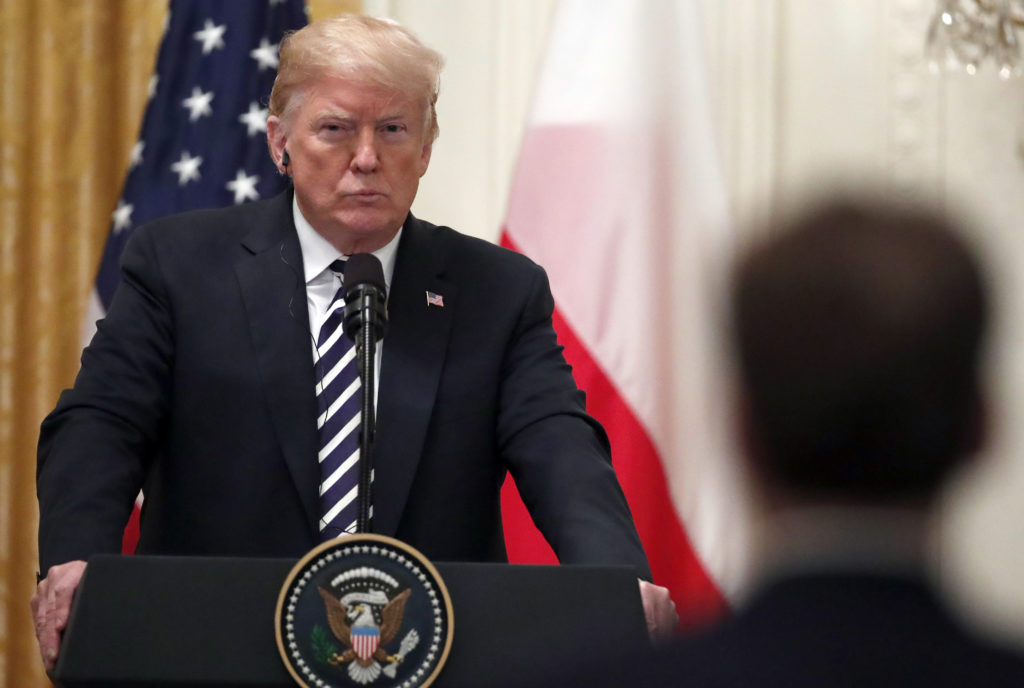
President Donald Trump said Monday he wants the FBI to do a “comprehensive” investigation into allegations of sexual misconduct by Brett Kavanaugh. But he also said he stands by his Supreme Court nominee “all the way.” Trump said during a Rose Garden press conference that he wants the probe to wrap up quickly because the accusations have been “so unfair” to Kavanaugh and his family. But he said it’s fine with him if the FBI wants to pursue accusations made by three women who have publicly come forward even as he has left the scope of the investigation to Senate Republicans. “My White House will do whatever the senators want,” Trump said. “The one thing I want is speed.” The president added, “We don’t want to go on a witch hunt, do we?” Trump also said he was surprised Kavanaugh has been so open about his beer drinking, one area Democrats are planning to focus on as they question whether the nominee was fully truthful in his testimony before the Senate. FBI agents interviewed one of the three women who have accused Kavanaugh of sexual misconduct as Republicans and Democrats quarreled over whether the bureau would have enough time and freedom to conduct a thorough investigation before a high-stakes vote on his nomination to the nation’s highest court. The White House insisted it was not “micromanaging” the new one-week review of Kavanaugh’s background, but some Democratic lawmakers claimed the White House was keeping investigators from interviewing certain witnesses. Trump tweeted that no matter how much time and discretion the FBI was given, “it will never be enough” for Democrats trying to keep Kavanaugh off the bench. Even as the FBI explored the past allegations that have surfaced against Kavanaugh, another Yale University classmate came forward to accuse the federal appellate judge of being untruthful in his testimony to the Senate Judiciary Committee about the extent of his drinking in college. As the fresh review unfolded, the prosecutor who was brought in by Republicans to handle questioning at last week’s hearing outlined in a new memo why she did not believe criminal charges would be brought against Kavanaugh if it were a criminal case rather than a Supreme Court confirmation process. Rachel Mitchell wrote that she did not believe a “reasonable prosecutor would bring this case based on the evidence before the Committee.” Mitchell argued that that there were inconsistencies in accuser Christine Blasey Ford‘s narrative and said no one has corroborated Ford’s account. Ford, a California college professor, was not questioned as part of a criminal proceeding but in the confirmation process. In speaking to FBI agents, Deborah Ramirez detailed her allegation that Kavanaugh exposed himself to her at a party in the early 1980s when they were students at Yale University, according to a person familiar with the matter who was not authorized to publicly discuss details of a confidential investigation. Kavanaugh has denied Ramirez’s allegation. The person familiar with Ramirez’s questioning, who spoke to The Associated Press on condition of anonymity, said she also provided investigators with the names of others who she said could corroborate her account. But Ford, who says Kavanaugh sexually assaulted her when they were teenagers, has not been contacted by the FBI since Trump on Friday ordered the agency to take another look at the nominee’s background, according to a member of Ford’s team. Kavanaugh has denied assaulting Ford. In a statement released Sunday, a Yale classmate of Kavanaugh’s said he is “deeply troubled by what has been a blatant mischaracterization by Brett himself of his drinking at Yale.” Charles “Chad” Ludington, who now teaches at North Carolina State University, said he was a friend of Kavanaugh’s at Yale and that Kavanaugh was “a frequent drinker, and a heavy drinker.” “On many occasions I heard Brett slur his words and saw him staggering from alcohol consumption, not all of which was beer. When Brett got drunk, he was often belligerent and aggressive,” Ludington said. While saying that youthful drinking should not condemn a person for life, Ludington said he was concerned about Kavanaugh’s statements under oath before the Senate Judiciary Committee. Speaking to the issue of the scope of the FBI’s investigation, White House press secretary Sarah Huckabee Sanders said White House counsel Don McGahn, who is managing Kavanaugh’s nomination, “has allowed the Senate to dictate what these terms look like, and what the scope of the investigation is.” White House counselor Kellyanne Conway said the investigation will be “limited in scope” and “will not be a fishing expedition. The FBI is not tasked to do that.” Senate Judiciary Committee member Jeff Flake, R-Ariz., requested an investigation last Friday — after he and other Republicans on the panel voted along strict party lines in favor of Kavanaugh’s confirmation — as a condition for his own subsequent vote to put Kavanaugh on the Supreme Court. Another committee member, Sen. Lindsey Graham, R-S.C., said Sunday that testimony would be taken from Ramirez and Kavanaugh’s high school friend Mark Judge, who has been named by two of three women accusing Kavanaugh of sexual misconduct. “I think that will be the scope of it. And that should be the scope of it,” Graham said. Sen. Dianne Feinstein of California, the top Democrat on the Judiciary Committee, called on the White House and the FBI to provide the written directive regarding the investigation’s scope. In a letter Sunday, she also asked for updates on any expansion of the original directive. Sen. Susan Collins said Sunday she is confident in the investigation and “that the FBI will follow up on any leads that result from the interviews.” The Maine Republican supports the new FBI investigation and is among a few Republican and Democratic senators who have not announced a position on Kavanaugh. Republicans have 51 seats in the closely divided 100-member Senate and cannot afford to lose more than one vote on confirmation. Senate Republicans discussed the contours of the investigation with the White House late Friday, according
Ready to check out? Don’t forget, Alabama’s online sales tax is now in effect

Starting Monday, Alabamians will have to pay more to shop online, in some cases. The Alabama Department of Revenue is requiring online retailers that do not have a physical presence in the state with sales of more than $250,000 a year to register with the Alabama Simplified Sellers Use Tax Program (SSUT), and to start collecting taxes on Oct. 1. The SSUT program allows registered companies to pay a flat 8 percent sales tax, instead of navigating different county and city tax rates. Alabama is expected to be among the states most likely to see the biggest percentage increase in revenue based on the Barclays research. But a number of online retailers, including Amazon, already remit taxes to the state through the SSUT, so shoppers will see no changes in their purchase taxes. The U.S. Supreme Court paved the way for this tax back in June when it made a 5-4 ruling to overturn two decades-old Supreme Court decisions that impacted online sales tax collection. Alabama is among 10 states whose online sales tax is going into effect Monday. Illinois, Indiana, Kentucky, Massachusetts, Minnesota, Michigan, North Dakota, Washington and Wisconsin are also beginning Oct. 1. Similar laws will go into effect in Connecticut and Iowa in the coming months.
3 percent pay raise for goes into effect for thousands of state employees

Thousands of state workers will see a three-percent pay raise on Monday thanks to the first cost-of-living raise Alabama state employees have seen in a decade going into effect. The raise is the result of a bill passed by the legislature and signed into law by Gov. Kay Ivey back in March. It gives Alabama’s 33,000 state employees a cost-of-living increase — the first across-the board increase since 2008. State Auditor Jim Zeigler is celebrating the “COLA” or cost of living adjustment day, that happens to coincide with the state of the fiscal year: Oct. 1, 2018. “October 1 is the three-percent cost of living adjustment in salary for state employees. It was done without a tax increase and without incurring debt – made possible by Alabama’s increasing economy and some efficiency measures,” said State Auditor Jim Zeigler. “COLA Day does not mean soft drinks. It means the first pay raise for employees in almost a decade. With better management, state employee pay can be raised more often. The need for raises will be greater as inflation is starting to enter this booming economy.”
Alabama court denies rehearing request for ex house speaker
The Alabama Court of Criminal Appeals on Friday said it will not reverse its decision upholding the ethics conviction of former Alabama House Speaker Mike Hubbard. The court without comment denied Hubbard’s request for a rehearing of its decision upholding 11 of the 12 convictions. The court also rejected the state attorney general’s request to revisit the one count it overturned. Rehearing requests are seldom granted. However, appellate rules in criminal cases require a person to seek a rehearing before appealing upward to the Alabama Supreme Court. Defense lawyer Bill Baxley could not immediately be reached for comment. The attorney general’s office declined to comment. Hubbard is free on bond as he appeals his conviction. The court last month upheld the convictions that Hubbard used the power of his office to assist his businesses, including that he improperly asked lobbyists and company executives for work and investments in his printing business. The court rejected defense arguments that the transactions were aboveboard business dealings in which investors and companies were getting a getting a fair value for their money. Hubbard, from Auburn, was for years one of the state’s most influential Republicans. He served as chairman of the Alabama Republican Party and was a key architect of the GOP strategy that led to Republicans in 2010 taking control of the Alabama Legislature for the first time in more than a century. Hubbard was automatically removed from office in 2016 when he was convicted on the felony charges. He is free on bond as he appeals his conviction. Despite upholding the convictions, appeals court judges in the August decision also urged lawmakers to address ambiguities in the state ethics law. Republished with permission from the Associated Press.
Alabama to get share of $148M Uber settlement over massive data breach
Alabama will get about $2 million of the $148 million Uber is paying to settle a data breach that the ridesharing company attempted to keep hidden, officials said. Attorney General Steve Marshall on Friday announced Alabama participated in a nationwide settlement with Uber that compels the company to comply with data breach notification laws and to make substantial improvements to its data security measures. All 50 states and the District of Columbia joined the settlement with the California-based ride-sharing company, Uber Technologies Inc., to resolve issues arising from a 2016 data breach involving personal information of Uber drivers that the company failed to report for one year. Because Alabama did not have a data breach notification law in effect at the time of the violations, the State’s participation in this case was based upon the fact that Uber’s conduct violated Alabama’s Deceptive Trade Practices Act. “This situation underscores how important Alabama’s new data breach notification law is for our consumers,” said Marshall. “People have the right to know if their personal information is stolen or compromised in a data breach so that they may exercise vigilance and take any actions possible to protect themselves. Until this year, Alabama was one of only two states without a data breach notification law, and I am pleased we were successful in passing legislation to correct that omission.” Uber learned in November 2016 that hackers had gained access to some personal information that Uber maintains about its drivers, including driver’s license information pertaining to approximately 600,000 drivers nationwide. Uber tracked down the hackers and obtained assurances that the hackers deleted the information even though some of that information, namely the driver’s license numbers for Uber drivers, triggered many state laws requiring them to notify those affected, Uber failed to report the breach in a timely manner, waiting until November 2017 to report it. In addition to the financial payment to the states, the settlement requires Uber to strengthen its corporate governance and data security practices to help prevent a similar occurrence in the future. The settlement — the nation’s the largest data breach settlement to date — requires Uber to: Comply with all state data breach and consumer protection laws regarding the protection of consumers’ personal information and notifying them in the event of a data breach concerning that information; Take precautions to protect any user data Uber stores on third-party platforms outside of Uber; Use strong password policies for its employees to gain access to the Uber network; Develop and implement a strong overall data security policy for all data that Uber collects about its users, including assessing potential risks to the security of the data and implementing any additional security measures beyond what Uber is doing to protect the data; Hire an outside qualified party to assess Uber’s data security efforts on a regular basis and draft a report with any recommended security improvements, which Uber will then implement; and Develop and implement a corporate integrity program to ensure that Uber employees can bring any ethics concerns they have about any other Uber employees to the company, and that it will be heard.
As immigrants flow across US border, American guns go south
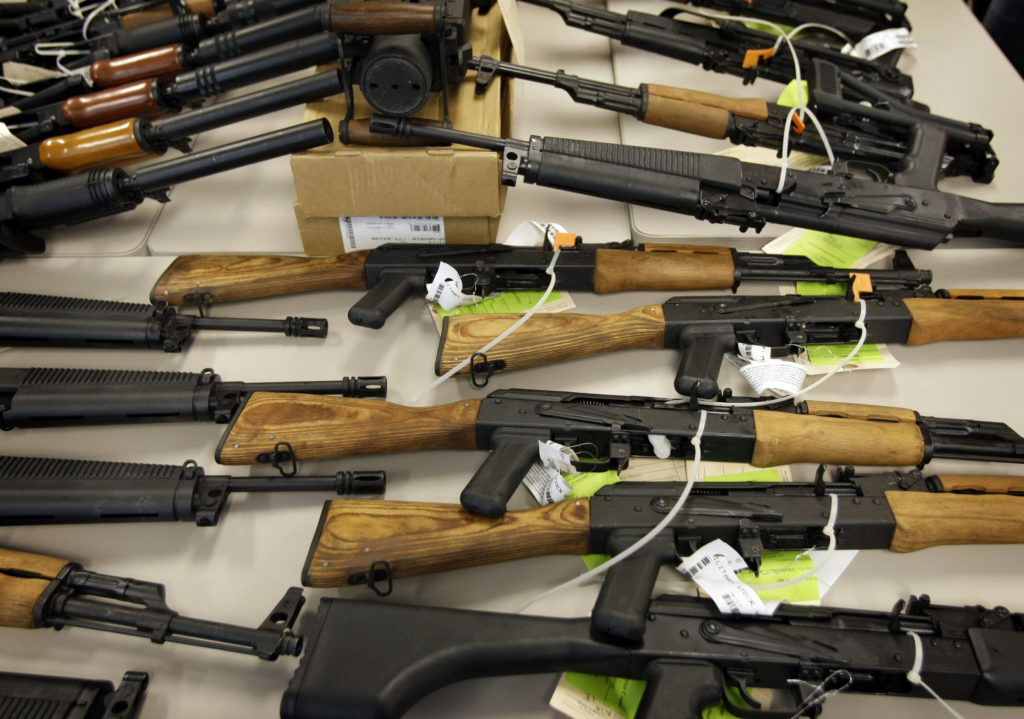
Among the thousands of immigrants who have been coming across the U.S.-Mexico border in recent months, many are seeking to escape gang and drug violence raging in their homelands. The weapon of choice used to intimidate them? Often an American-made gun. While the flow of drugs and immigrants into the U.S. has been well-documented for decades and become a regular part of the political debate, what is often overlooked is how gangs and drug cartels exploit weaknesses at the border to smuggle guns from the U.S. into Latin America. A 2013 report by the University of San Diego says the number of firearms smuggled from the United States was so significant that nearly half of American gun dealers rely on that business to stay afloat. On average, an estimated 253,000 firearms each year are purchased in the United States expressly to be sent to Mexico, the report said, the vast majority of the sales originating in the border states of California, Texas, New Mexico and Arizona. Once in Mexico, the weapons end up in the hands of drug cartels or get shipped to gangs in Honduras, Guatemala and El Salvador — countries that are dealing with an epidemic of gun violence. Armed holdups on public transportation are a regular occurrence in Honduras, where nearly half of the unregistered weapons originated in the U.S., the federal Bureau of Alcohol, Tobacco, Firearms and Explosives reported in recent years. Gun violence in El Salvador is so rampant that the country has been averaging more than one shootout a day between police and gangs this year, said Ricardo Sosa, a criminologist specializing in gangs and security in El Salvador. “In every one of these operations, police are able to seize between two and six firearms at the scene,” he said. “That is one of the indicators that the gangs are armed on many occasions with long guns and short guns for each one of their members.” Mexico last year recorded its highest number of murders in nearly two decades, with more than 31,000 people killed, higher than even during the country’s drug war in 2011. It continues unabated with an average of 88 people killed each day in the first five months of this year. The bloodshed in Guatemala, Honduras and El Salvador has been a big driver of immigration into the U.S., with the government saying nearly 16,000 families came across the border in August alone — many of them from those three countries. Gun-control groups contend that the U.S. government is essentially exporting gang violence to Latin America with permissive gun laws — which in turn creates an immigration crisis along the border. “If the Trump administration were serious about wanting to stop refugees from fleeing violence in Latin America and Mexico to come north, they would be doing something about the southward gun trafficking that is fueling a lot of that migration,” said Adam Skaggs, chief counsel with the Giffords Law Center. Gun-rights activists say the issue is overblown and mischaracterized. The National Rifle Association and other gun-rights groups contend the most effective way to combat the problem is not with stricter gun laws but by eradicating drug cartels and other criminal enterprises. They say the numbers are inflated and that the industry has proactively sought to educate licensed gun dealers on how to detect “straw purchases,” in which a firearm is bought expressly to give it to someone who otherwise would not be able to legally own a gun. “Obviously, Mexico has a huge problem with rampant corruption that clearly cannot be blamed on the U.S.,” the NRA said in a position paper on the issue in 2009. “At the same time, Mexico has extremely prohibitive gun laws, yet has far worse crime than the U.S.” Under the Obama administration, federal authorities launched an operation dubbed Fast and Furious that allowed criminals to buy firearms with the intention of tracking them to criminal organizations. But the ATF lost most of the guns, including two that were found at the scene of a slaying of a U.S. Border Patrol agent. In 2011, gun dealers along the border states were required to report to the ATF anytime someone purchased two or more semiautomatic long guns in a five-day period. President Donald Trump issued an executive order in 2017 as his response to gun trafficking, directing federal agencies to ramp up prosecution aimed at going after foreign criminals and to improve coordination among federal agencies along the border. Nabbing the guns at the border is a challenge on several levels. They aren’t as detectable as drug shipments, and they can be disassembled and loaded with legal goods making their way from the U.S. “The effectiveness of this kind of gun smuggling still remains very high. It doesn’t take a whole lot,” said David Shirk, one of the University of San Diego report’s authors. Experts say a big reason gun trafficking remains one of the hot commodities flowing from the United States into Latin America is profit. Retired ATF agent Bernard Zapor noted that an AR-platform firearm that sells retail in the U.S. for $1,000 can fetch more than $4,000 in Mexico. A box of ammo that might go for just under $200 could command $3,000. “They’re not buying grandpa’s old shotgun that’s been lying around and found in a shed,” Zapor said. “They’re buying brand new Colt AR-15s.” Republished with permission from the Associated Press.
Bradley Byrne: Fighting for those who fight for us
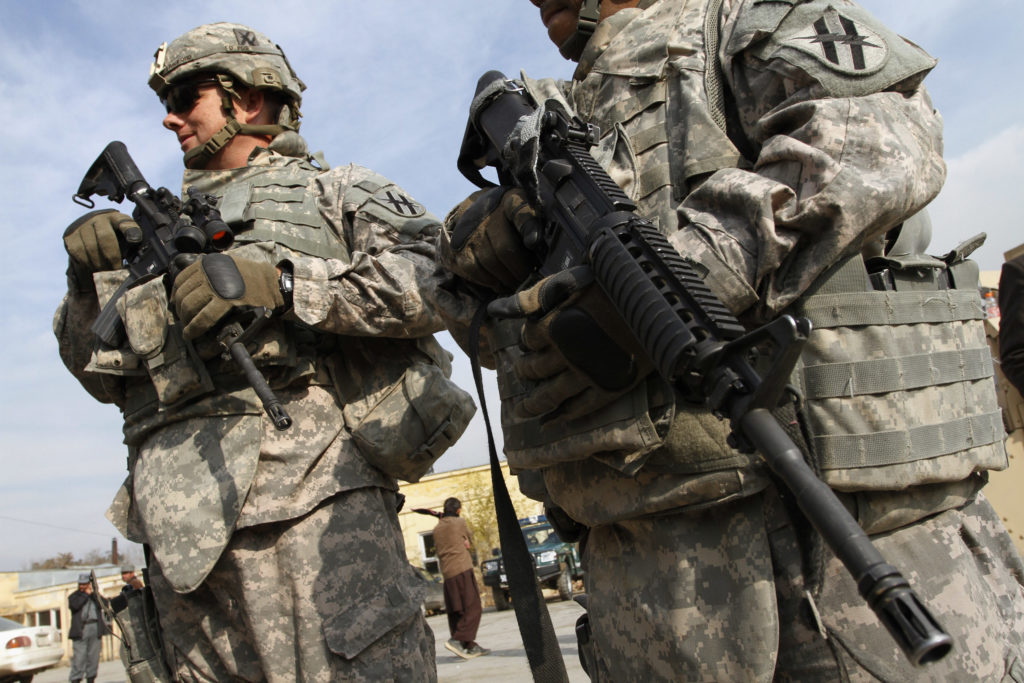
When we go to bed at night, whether we think about it or not, we are safe knowing that our servicemen and women stand at the ready throughout the world; ready to defend our nation, our values, and us here at home. But, without the appropriate funding, our military does not have the necessary equipment and resources to get the job done. I am proud to report, thanks to the steadfast work and advocacy of us defense hawks in Congress, we have passed a bill fully funding our nation’s military on time for the first time since 2008. Not only this, but as of October 1st, roughly 75% of our government is funded for the coming year. We can truly say that as we move toward the end of the year, we are both better off now and stronger for the future. On Friday, President Donald Trump signed into law the Fiscal Year 2019 Defense and Labor-HHS-Education funding bill, which authorizes a record $716 billion to go toward our fighting men and women in the upcoming year. Part of this defense funding package includes 93 new F-35 Joint Strike Fighters, 142 Apache and Black Hawk helicopters, and 13 Navy ships. Additionally, our troops will see the largest pay increase in nearly a decade. And, we have managed to do all of this without a temporary continuing resolution. This means that our nation’s military will have the funding certainty they have repeatedly asked for. So how will this impact Alabama? The U.S. Army Aviation Center of Excellence at Fort Rucker in the Wiregrass will benefit from the new Apache and Black Hawk helicopters as they continue to train our men and women in combat flight and air superiority to support of our ground troops. Some of the 93 F-35 Joint Strike Fighters, as well as several other aircraft under the bill, will likely see service at Maxwell Air Force Base in Montgomery. This base is home to Air University, a division of the Air Education and Training Command, and these new planes will potentially serve with and in support of the 908th Airlift Wing and 187th Fighter Wing stationed there. The bill sets aside critical funding for missiles to be built and utilized by the team at Redstone Arsenal in north Alabama as they carry out critical Army and Missile Defense Agency programs. And closer to home here in Southwest Alabama, our very own Austal USA in Mobile will benefit from funding for three new Littoral Combat Ships and one new Expeditionary Fast Transport ship, ensuring continued work for the 4,000 men and women who work at the shipyard. These ships represent the next step as we strive for a 355-ship Navy fleet and an even stronger and more capable fighting force. On top of all these projects and plans, perhaps even more important is making sure the people who operate these systems are responsibly taken care of into the future. That is why we have made sure to include a pay raise in this year’s funding. For those who put their lives on the line every day to keep us safe, it only makes sense to pay them what they deserve. No price can ever be put on the sacrifices they make. As your representative in Congress, I am constantly fighting for the betterment of all Alabamians and all Americans. The members of the Army, Navy, Coast Guard, Air Force, and Marines who live and work in Alabama should rest easy knowing that I will always fight for those who fight for us. • • • Bradley Byrne is a member of U.S. Congress representing Alabama’s 1st Congressional District.
