
Mo Brooks applauds Trump’s proclamation limiting asylum seekers, securing borders
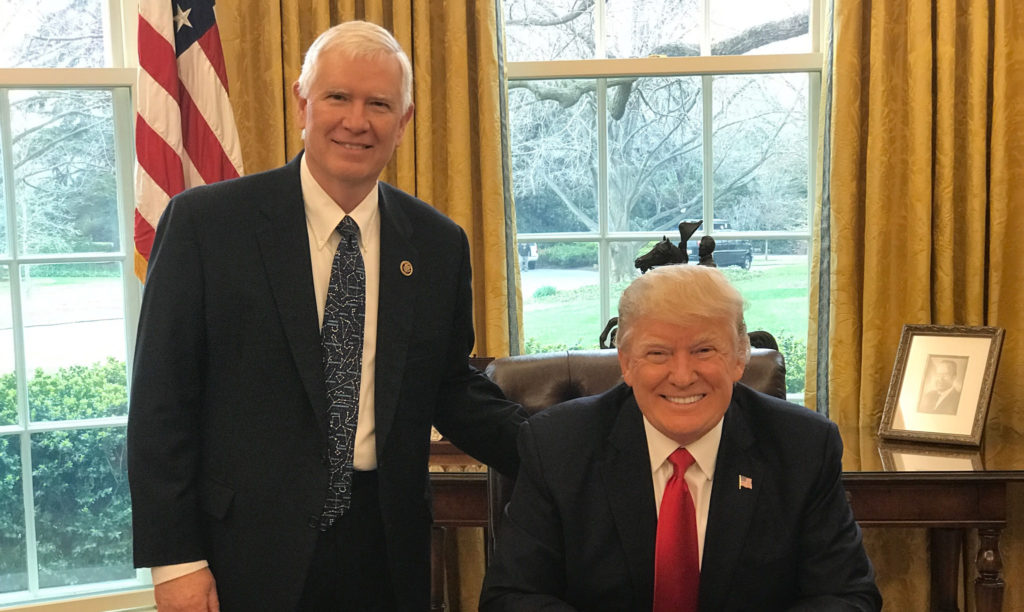
Friday, Alabama 5th District U.S. Rep. Mo Brooks praised President Donald Trump‘s presidential proclamation barring migrants who cross into the US illegally through the southern border from seeking asylum. “Each year, hundreds of thousands of illegal aliens furtively thumb their noses at America’s sovereignty by clandestinely violating our borders and laws. Now, Central American caravans openly and brazenly seek to do the same,” said Brooks in a statement. “This outrageous conduct cannot be, and should not be, tolerated by America. As a sovereign nation, the American people have every right to expect their government to secure our borders.” Brooks continued, “Illegal immigration hurts American workers and taxpayers. According to the Center for Immigration Studies, illegal aliens are a net $116 billion annual cost to American taxpayers. That’s $300 in additional taxes each man, woman and child in America is forced to pay for people whose first act on American soil is to violate American law.” “Fraud and abuse plague America’s asylum system. Let me make this clear: no one has a right to demand asylum from any nation. Asylum and sanctuary is a discretionary benefit given by nations to those with clear justification. Too often, illegal aliens are coached by attorneys to say ‘magic words’ that help them take advantage of America’s generosity. Their exploitation of America’s already generous immigration laws must stop! As such, I support President Trump’s steps to close asylum loopholes and stop the damage to America caused by illegal aliens’ wrongful conduct,” Brooks concluded. Key information on illegal immigration and asylum: Thus far in FY18, 500,000 people apprehended attempting to cross the border, about 100,000 at checkpoints and 400,000 in the interior. According to the Department of Homeland Security and Department of Justice, “[i]n recent weeks, United States officials have each day encountered an average of approximately 2,000 inadmissible aliens at the southern border.” According to data provided by the Department of Homeland Security and Department of Justice, “[o]ver the past decade, the overall percentage of aliens subject to expedited removal and referred, as part of the initial screening process, for a credible-fear interview jumped from approximately 5 percent to above 40 percent, and the total number of credible-fear referrals for interviews increased from about 5,000 a year in Fiscal Year (“FY”) 2008 to about 97,000 in FY 2018.”[6] In 2017, nearly half of the completed cases that involved aliens who claimed credible fear resulted in the alien failing to show up at a hearing or even to file an application for asylum.
NOT REAL NEWS: A look at what didn’t happen this week
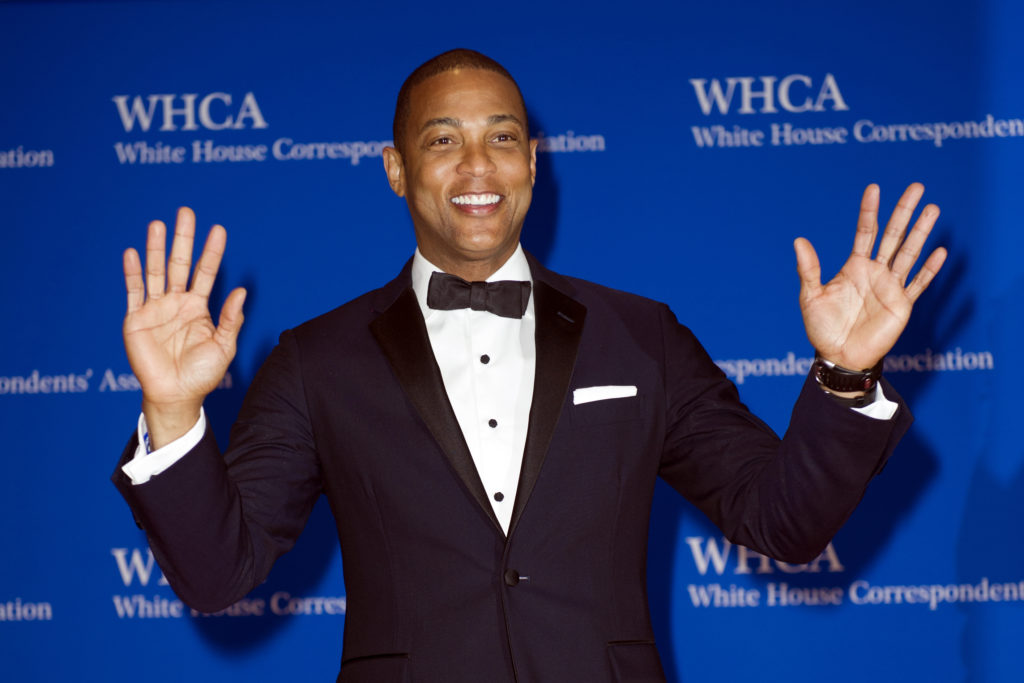
A roundup of some of the most popular but completely untrue stories and visuals of the week. None of these is legit, even though they were shared widely on social media. The Associated Press checked these out. Here are the real facts: ___ NOT REAL NEWS: FLASHBACK: Obama kicks out reporter at press briefing THE FACTS: Former President Barack Obama did not throw a reporter out of a press conference for asking a question in 2015, as a claim circulating widely online suggests. The false claim surfaced after a heated exchange Wednesday between President Donald Trump and CNN White House Correspondent Jim Acosta, whose White House press pass was suspended afterward. Some social media users then circulated a video they said showed Obama kicking a reporter out of press briefing. As reported by the AP, Obama was actually responding to a protester who was heckling him during a gay pride month reception at the White House in June 2015. “Shame on you, you shouldn’t be doing this,” Obama told the protester, adding he had the option of staying quiet or being removed. The protester was removed. ___ NOT REAL NEWS: CNN anchor shown laughing as American flag burns THE FACTS: An image circulating online that shows CNN anchor Don Lemon laughing during an apparent segment about Democrats burning flags on Election Day was fabricated. A CNN spokeswoman told the AP on Tuesday that the image of Lemon, which was paired with a banner claiming “Dems celebrate ‘blue wave’ burning flags on Election Day,” is false. The banner identified the show as “Reliable Sources,” which Lemon does not host. He is the host of “CNN Tonight.” ___ NOT REAL NEWS: Voting machine rigged in Ohio precinct THE FACTS: An Instagram video shared widely online Tuesday showed a voter selecting Republican gubernatorial candidate Mike DeWine on a touch screen, but then receiving a paper record reflecting a vote for Democratic candidate Richard Cordray. The video was circulated on social media as evidence that a machine was rigged. Aaron Sellers, a spokesman for the Franklin County Board of Elections, told the AP in an email that the machine in question had a paper jam that showed a previous voter’s choice. Sellers says the voter who experienced the problem got a poll worker to cancel out the vote on the machine in question and then voted successfully on another machine. Republished with permission from the Associated Press.
Donald Trump signs order denying asylum to illegal border crossers
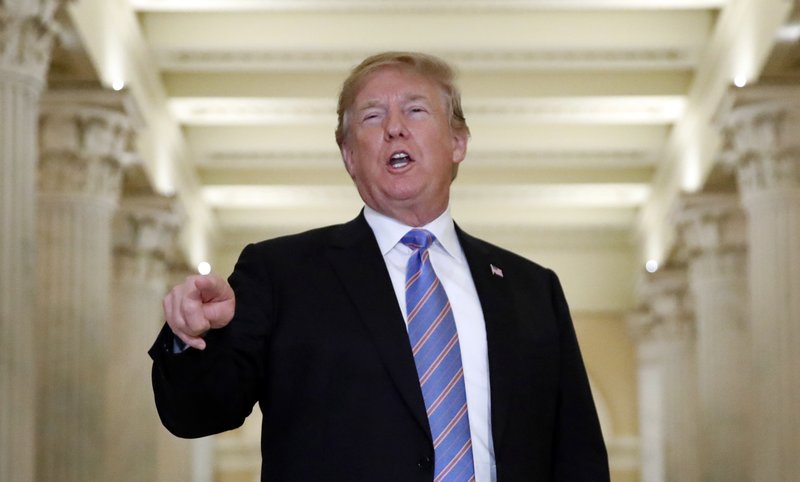
President Donald Trump issued an order Friday to deny asylum to migrants who enter the country illegally, tightening the border as caravans of Central Americans slowly approach the United States. The plan was immediately challenged in court. Trump invoked the same powers he used last year to impose a travel ban that was upheld by the Supreme Court. The new regulations are intended to circumvent laws stating that anyone is eligible for asylum no matter how he or she enters the country. About 70,000 people per year who enter the country illegally claim asylum, officials said. “We need people in our country but they have to come in legally,” Trump said Friday as he departed for Paris. The American Civil Liberties Union and other legal groups swiftly sued in federal court in Northern California to block the regulations, arguing the measures were clearly illegal. “The president is simply trying to run roughshod over Congress’s decision to provide asylum to those in danger regardless of the manner of one’s entry,” said ACLU attorney Lee Gelernt. The litigation also seeks to put the rules on hold while the litigation progresses. It wasn’t clear whether the case would go before a judge before the rules go into effect Saturday. They would be in place for at least three months but could be extended, and don’t affect people already in the country. Trump’s announcement was the latest push to enforce a hard-line stance on immigration through regulatory changes and presidential orders, bypassing Congress, which has not passed any immigration law reform. But those efforts have been largely thwarted by legal challenges and, in the case of family separations this year, stymied by a global outcry that prompted Trump to retreat. Officials said the asylum law changes are meant to funnel migrants through official border crossings for speedy rulings instead of having them try to circumvent such crossings on the nearly 2,000-mile (3,200-kilometer) border. Border Patrol agents in Yuma said they arrested nearly 450 migrants in Western Arizona this week. But the busy ports of entry already have long lines and waits, forcing immigration officials to tell some migrants to turn around and come back to make their claims. Even despite that, illegal crossings are historically low. Backlogs have become especially bad in recent months at crossings in California, Arizona and Texas, with some people waiting five weeks to try to claim asylum at San Diego’s main crossing. “The arrival of large numbers … will contribute to the overloading of our immigration and asylum system and to the release of thousands … into the interior of the United States,” Trump said in the proclamation, calling it a crisis. Administration officials said those denied asylum under the proclamation may be eligible for similar forms of protection if they fear returning to their countries, though they would be subject to a tougher threshold. Those forms of protection include “withholding of removal” — which is similar to asylum, but doesn’t allow for green cards or bringing families — or protection under the United Nations Convention Against Torture. Homeland Security officials said they were adding staffing at the border crossings to manage the expected crush, but it’s not clear how migrants, specifically families, would be held as their cases are adjudicated. Family detention centers are largely at capacity. Trump has said he wanted to erect “tent cities,” but nothing has been funded or decided. The U.S. is also working with Mexico in an effort to send some migrants back across the border. Right now, laws allow only Mexican nationals to be swiftly returned and increasingly those claiming asylum are from Central America, not Mexico. Trump pushed immigration issues hard in the days leading up to Tuesday’s midterm elections, railing against the caravans that are still hundreds of miles from the border. He has made little mention of the issue since the election, but has sent troops to the border in response. As of Thursday, there were more than 5,600 U.S. troops deployed to the border mission, with about 550 actually working on the border in Texas. Trump also suggested he’d revoke the right to citizenship for babies born to non-U.S. citizens on American soil and erect massive “tent cities” to detain migrants. Those issues were not addressed by the regulations. But Trump insisted the citizenship issue would be pushed through. “We’re signing it. We’re doing it,” he said. The administration has long said immigration officials are drowning in asylum cases partly because people falsely claim asylum and then live in the U.S. with work permits. In 2017, the U.S. fielded more than 330,000 asylum claims, nearly double the number two years earlier and surpassing Germany as highest in the world. Migrants who cross illegally are generally arrested and often seek asylum or some other form of protection. Claims have spiked in recent years and the immigration court backlog has more than doubled to 1.1 million cases in about two years, Syracuse University’s Transactional Records Access Clearinghouse reported this week. Generally, only about 20 percent of applicants are approved. It’s unclear how many people en route to the U.S. will even make it to the border. Roughly 5,000 migrants — more than 1,700 under the age of 18 — sheltered in a Mexico City sports complex decided to depart Friday for the northern city of Tijuana, opting for the longer but likely safer route to the U.S. border. Similar caravans have gathered regularly over the years and have generally dwindled by the time they reach the southern border, particularly to Tijuana. Most have passed largely unnoticed. Republished with permission from the Associated Press.
Like father, like daughter: Malika Sanders-Fortier elected to father’s old Senate seat
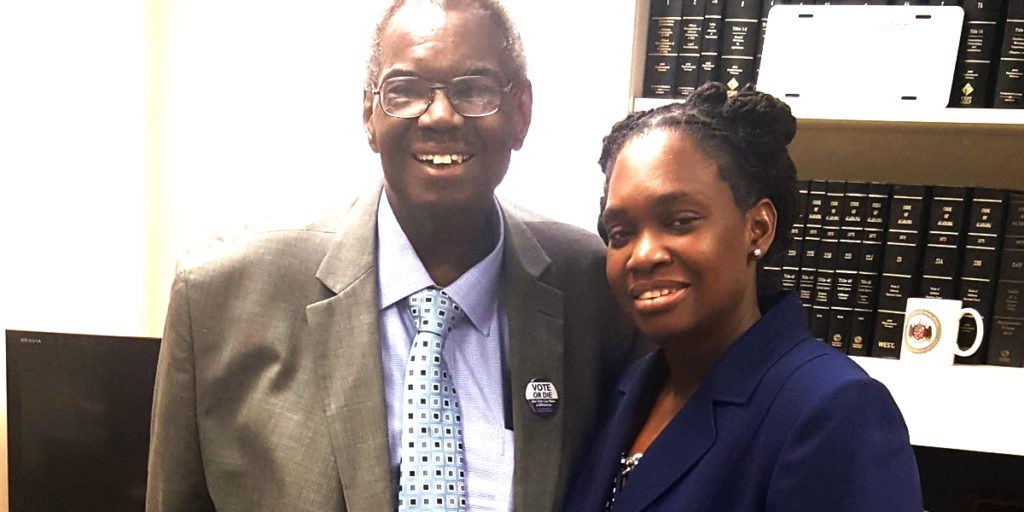
After qualifying to run for re-election earlier this year, Alabama’s longest-serving state senator, Selma-Democrat Hank Sanders decided not to seek a 10th term in office. Recognizing the opportunity to build upon her father’s legacy, 44 year old Malika Sanders-Fortier decided she would run for the empty seat. Her campaign embraced the idea of “Fresh Leadership and Wise Council,” drawing upon her own unique ideas for Alabama’s 23rd Senate District, while knowing her father and his three-decades worth of experience in Montgomery would be there for guidance along the way. And on Tuesday, after months of campaigning, Sanders-Fortier’s bested independent candidate Mark Story to win the seat. “Thank you for the support and the prayers during this 2018 Senate District 23 Election. Let’s continue to work together to grow and improve our communities,” Sanders posted on Facebook Wednesday morning.
Failed Democrat candidate Danner Kline takes to social media in search of employment

He may not have seen victory on Election Day, but that’s not stopping one former House candidate from asking his could-have-been constituents for help in finding his next opportunity. Former House candidate Danner Kline, an early leader of Alabama’s craft beer industry, resigned from his position as founder of Free the Hops to run against U.S. Rep. Gary Palmer in Alabama’s 6th District this election cycle. On Tuesday, he lost 69 to 31 percent. But by Thursday, Kline had taken to social media asking for help in finding a job. “Hey y’all. I resigned from my job to put everything I had into my run for Congress, and we could really use my income again,” Kline posted on Facebook. “…But if you know of any opportunities, please let me know. I wasn’t able to put any time into a job search prior to the election because I was entirely focused on the task at hand.” While many candidates wouldn’t think ask for help online, Kline’s no stranger to playing outside of the box. In 2004, his frustration with Alabama’s Prohibition-era regulations on beer prompted him to start Free The Hops, the grassroots organization that successfully lobbied to eliminate those regulations. These efforts allowed the brewing industry to thrive in the Yellowhammer State for the first time in a hundred years. In fact, there were no breweries in the state when Free The Hops began, but there are now over 25 with more on the way. Read his full post below:
Two-thirds of Alabama voters cast straight party tickets
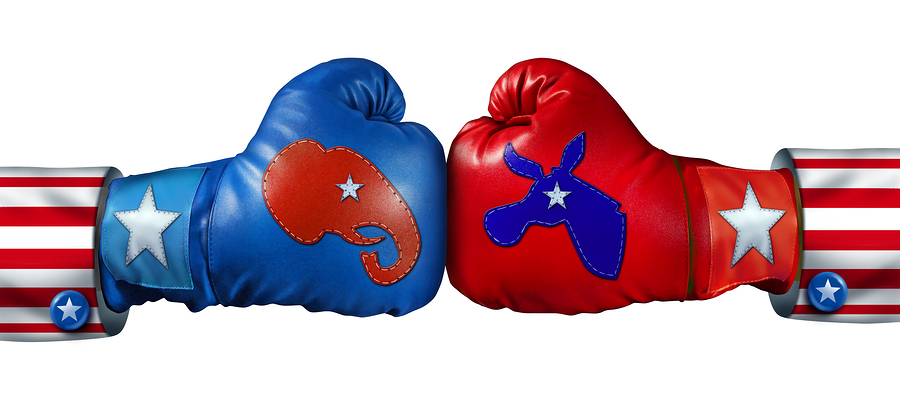
Nearly two-thirds of Alabamians voted a straight-ticket — either all Republican or all Democratic— when they went to the polls on Tuesday, a record number that reflects political polarization and likely boosted Republicans in their easy sweep of state races. According to the Alabama Secretary of State’s office, about 1.1 million of the 1.7 million ballots cast on Tuesday were straight-ticket votes, where voters checked one box to vote for all of a party’s candidates. Of those straight- ticket votes, 661,898 were for the Republican Party and 460,408 were for Democratic Party. Another 135 were for the Libertarian Party. Secretary of State John Merrill said that is a record high for straight party ticket voting in the state. “This is a very high, high number,” Merrill said. “It tells me that people are becoming more polarized.” Republicans swept all statewide and contested congressional races, holding Democrats to about 40 percent of the vote. Republicans also picked up six seats in the Alabama Legislature. Alabama is one of eight states that allow or offer straight-ticket voting, according to the National Conference of State Legislatures. A number of states have abolished the option in recent years. Political scientist Jess Brown said Wednesday that party label and national politics appeared to be increasingly on voters’ minds as they went to the polls. According to AP VoteCast, a national survey of the electorate and nonvoters, more than half of Alabama voters said a reason for their vote was to express support for or opposition to President Donald Trump Thirty-seven percent of voters said a reason for their vote was to express support for Trump, and 21 percent said they voted to express opposition to Trump. By comparison, 42 percent of Alabama voters said Trump was not a factor they considered while casting their votes. Immigration was at the forefront of voters’ minds: 31 percent named it as the most important issue facing the nation in this year’s midterm elections. Republished with permission from the Associated Press.
Possible recounts loom in tight Florida gov, Senate contests
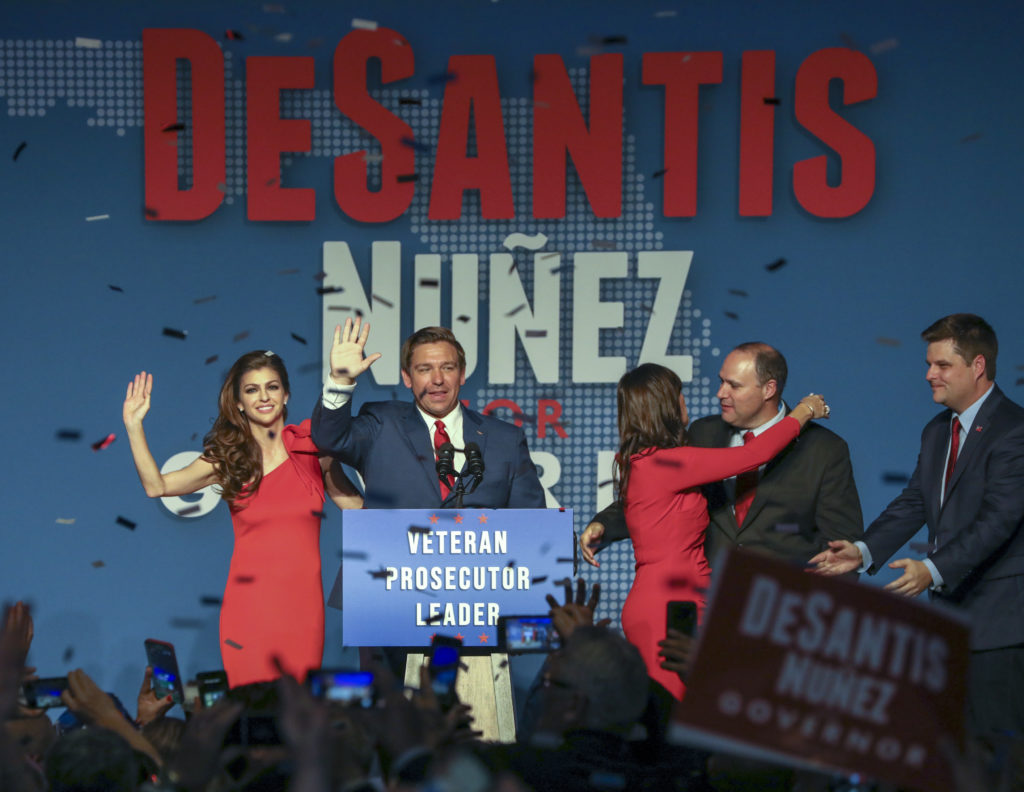
Republican Gov. Rick Scott has alleged — without citing evidence — that elections officials in South Florida are trying to “steal” the election for Democrats as razor-thin margins raise the specter of recounts and court battles in the state’s races for Senate and governor. In the governor’s race, Democrat Andrew Gillum‘s campaign said Thursday it’s readying for a possible recount. The race has tightened since he conceded to Republican Ron DeSantis on Tuesday night. As of Thursday afternoon, DeSantis led Gillum by 0.47 percentage point. Meanwhile, Democratic incumbent Sen. Bill Nelson has begun preparing for a potential recount in a race still too close to call against Scott, who is leaving the governor’s seat because of term limits. Nelson’s lawyer called that race a “jump ball.” Scott’s campaign urged Nelson to concede. Scott held a 0.21 percentage lead over Nelson on Thursday afternoon. Florida’s is a perennial swing state, and many of its elections have been decided by the thinnest of margins since 2000, when Florida decided the presidency by 537 votes in a contest that took more than five weeks to sort out. Still, the state has never seen so many dead heats in one year. And like 2000, the counting process is becoming contentious. Scott said at a news conference Thursday night that he was asking the Florida Department of Law Enforcement to investigate elections offices in the Democratic strongholds of Palm Beach and Broward counties, questioning whether they are taking too long in vote-counting in some sort of effort to inflate the Democratic vote. “I will not stand idly by as unethical liberals try to steal this election from the great people of Florida,” Scott said. Scott cited no evidence of wrongdoing, and the counties have until noon Saturday to report their unofficial vote count. FDLE Spokeswoman Gretl Plessinger said the law enforcement agency would follow up on Scott’s request. But the agency did not announce an investigation. Scott’s campaign separately filed a lawsuit demanding that the Broward County supervisor of elections turn over several records detailing the counting and collection of ballots cast for each day of the past week. A hearing on that case was set for Friday afternoon. Nelson’s campaign released a statement saying Scott’s action appears to be politically motivated and borne of desperation. Meanwhile, President Donald Trump tweeted: “Law Enforcement is looking into another big corruption scandal having to do with Election Fraud in #Broward and Palm Beach. Florida voted for Rick Scott!” Trump also said it was possible the federal government could get involved in the Florida vote count. “All of the sudden they are finding votes out of nowhere,” he said. “What’s going on in Florida is a disgrace.” Under Florida law, a recount is mandatory if the winning candidate’s margin is less than 0.5 percentage points when the first unofficial count is verified Saturday by Florida’s secretary of state. Sarah Revell, a spokeswoman for the Florida Department of State, didn’t know of any other recount in a governor or Senate race in state history. The Associated Press has called the governor’s race for DeSantis. If Saturday’s count shows DeSantis with a margin narrow enough to trigger a recount, AP will retract its call for DeSantis. It is AP policy not to call a race that is facing a recount. The AP has not called a winner in the Senate race. Gillum’s campaign said it has hired attorney Barry Richard, who represented President George W. Bush in the 2000 recount, and is monitoring the situation. Gillum’s campaign said his initial concession Tuesday night was based on “best information available about the number of outstanding ballots” at the time. “Since that time, it has become clear there are many more uncounted ballots than was originally reported,” the campaign said. “We are committed to ensuring every single vote in Florida is counted.” DeSantis declined to discuss prospects for a recount, telling reporters he’s “very proud to be elected.” “We’re working really hard on the transition,” he said. Florida was mocked for its handling of the infamous 2000 recount. At the time, the state lacked uniform rules for how to proceed. That has changed, with the Legislature passing a clear procedure on how a recount should be conducted. “This is not like it was in 2000. There’s not a lot of room for strategy,” Richard said. Broward Elections Supervisor Brenda Snipes said she didn’t know how many ballots remain to be counted, but all were being processed. She also did not know how many provisional, military and mismarked ballots need to be counted. Her department’s website said ballots cast on Election Day have been counted. Marc Elias, a lawyer hired by Nelson, said he expects the margin to narrow further. “The results of the 2018 Senate election are unknown and I think that you and the elections officials should treat it as such,” Elias told reporters on a conference call. “We believe that at the end of this process that Senator Nelson is going to be declared the winner.” Once Florida counties submit their unofficial election results to the Department of State, Secretary of State Ken Detzner, a Scott appointee, will review the results and decide whether to order recounts. In yet a third statewide seat — the Cabinet position of agriculture commissioner — the candidates were separated by 483 votes out of more than 8 million cast — a margin of 0.006 percent. Republished with permission from the Associated Press.
Democrats eye Donald Trump’s tax returns but expect a long fight
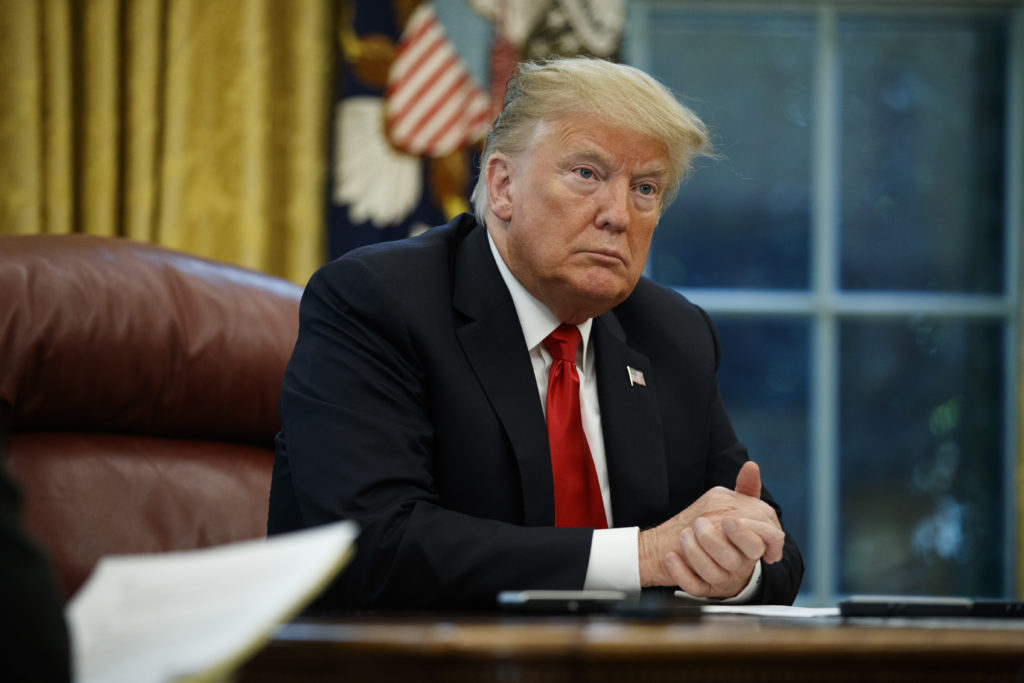
Getting President Donald Trump‘s tax returns is high on the list of Democratic priorities now that they have won the House. By law, the leaders of tax-writing committees in the House and Senate can obtain tax returns and related information from the Internal Revenue Service. Democrats will control the House panel next year. Yet there’s no guarantee that the Trump administration will provide the president’s returns. That sets up the possibility of a legal battle over the request that could take years to resolve. Trump broke with political tradition in 2016 by refusing to release his income tax filings. He says he won’t release them because he’s under audit, and he claimed at a press conference this week that the filings are too complex for people to understand. The Democrats tried and failed several times to obtain Trump’s returns as the minority party in Congress. Now, having gained some control, they see them within their grasp. Eyes are on Rep. Richard Neal of Massachusetts, who is now the senior Democrat on the powerful Ways and Means Committee and will become its chairman in January. When asked Wednesday whether the committee under his control would ask for the documents, Neal said, “Yes, I think we will.” If the Trump administration refuses and mounts a legal challenge, Neal said, “Then I assume that there would be a court case that would go on for a period of time.” A legal fight could potentially even stretch beyond the 2020 presidential election, suggested Andy Grewal, a professor at the University of Iowa College of Law. Grewal has maintained that a request for Trump’s returns, if made for “purely political purposes,” may exceed the limits of Congress’ authority. Starting with the 2016 campaign, Trump broke with political tradition by repeatedly refusing to release his income tax filings. Those filings are deemed sacredly secret for citizens, but traditionally not for presidents. Trump has said he hasn’t released them because his taxes are under audit by the IRS — even though experts and IRS officials say such audits don’t bar taxpayers from releasing their returns. Asked about releasing his filings, Trump reaffirmed that justification during a post-election news conference Wednesday. “They’re under audit. They have been for a long time,” the president said. “They’re extremely complex. People wouldn’t understand them.” Giving a slight opening, Trump said that if the audit was completed, “I would have an open mind to it. I would say that.” But, he added, “Nobody turns over a return when it’s under audit.” In 2017, more than a million people signed a petition to the White House urging Trump to make the returns public. Questions loom: Was the swaggering longtime businessman and real estate mogul really worth $10 billion when he entered the White House, as he has claimed? Are there conflicts of interest lurking? How has his global panoply of properties and other assets been valued for taxation purposes? What are the sources of his income and to whom might he be beholden as a result? Does Trump stand to gain personally from the sweeping Republican tax law enacted late last year, which he championed, and, if so, how specifically? Among the sought-after details: Trump’s charitable giving, the type of deductions he claimed, how much he earned from his assets and what strategies he deployed to reduce his tax bill. House Democratic leader Nancy Pelosi declined during a press conference Wednesday to specifically address the question of Trump’s returns, saying only that Congress has “a constitutional responsibility to have oversight” and citing examples such as the government’s environmental policy that would be ripe for Congress to investigate. The high interest — Democrats would say the urgency — in lifting the veil on Trump’s taxes ramped up last month when The New York Times published an extensive report suggesting that the Trump family cheated the IRS for decades, undervaluing reported assets and using dubious tax maneuvers and outright fraud in some cases. A lawyer for Trump disputed the Times’ findings of possible tax fraud or evasion and said that parts of the report were “extremely inaccurate.” The newspaper said its report was based on more than 100,000 pages of financial documents, including confidential tax returns from Trump’s father and his companies. That could spur the Democrats on the Ways and Means Committee to ask for Trump’s returns going back many years. By law, the chairmen of the House panel, the Senate Finance Committee and the Joint Committee on Taxation can make a written request for any tax returns to the Treasury Secretary, who oversees the IRS. The law says the Treasury chief “shall furnish” the requested information to the members of the committee for them to examine behind closed doors. The IRS, with custody of Trump’s returns, has been headed since Oct. 1 by a commissioner who worked as a private tax attorney for nearly four decades representing individuals and companies in cases before the agency. During the 2016 campaign, the commissioner, Charles Rettig, defended Trump’s refusal to release his filings. He promised at his Senate confirmation hearing to uphold the IRS’ political independence from the White House. Treasury Secretary Steven Mnuchin “will review any request with the Treasury general counsel for legality,” the department said in a statement Thursday. Trump’s attorney Rudy Giuliani has said the Democrats could have a hard time proving their demand was intended for pursuing legitimate congressional oversight, not a political scavenger hunt. If the administration refuses to hand over the returns, the Democrat-led committee might punch back with subpoenas, move to hold officials in contempt of Congress or sue the administration. There’s no roadmap or historical precedent for the situation. Some observers anticipate that the Trump Justice Department would file a lawsuit against the House to block release of the returns. In that case, the administration might try to prove that the Democrats’ demand was politically motivated, as Giuliani indicated. The University of Iowa’s Grewal is among the experts who believe the administration may seek to make
