
Impeach the president? House Democrats saying not so fast
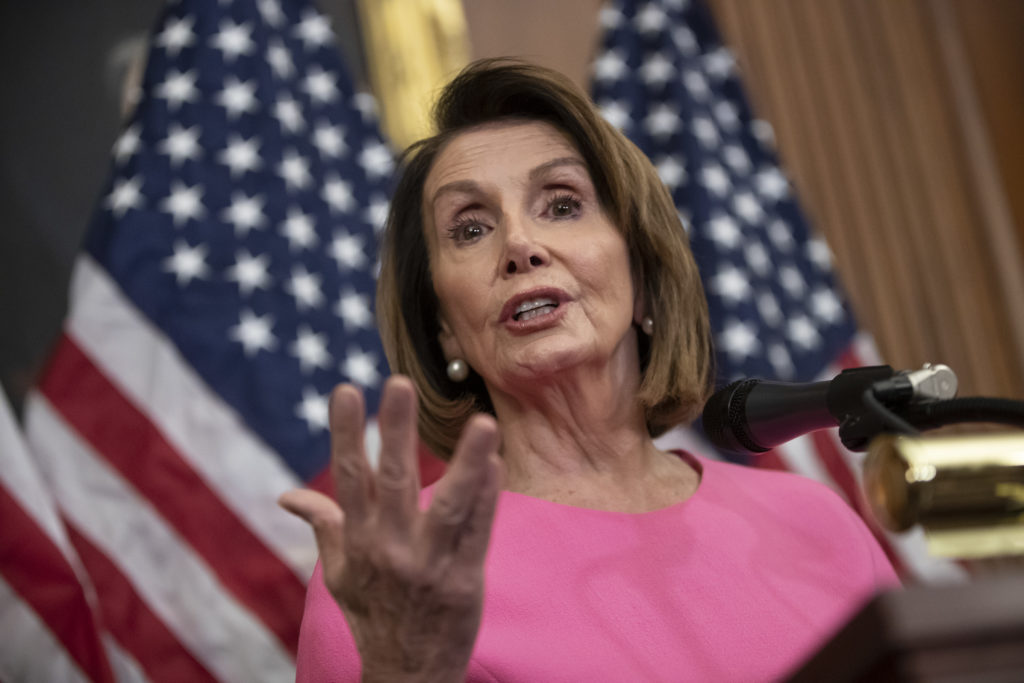
Whatever happened to trying to impeach President Donald Trump? As House Democrats begin laying out the vision for their new majority, that item is noticeably missing from the to-do list and firmly on the margins. The agenda for now includes spending on public works projects, lowering health care costs and increasing oversight of the administration. It’s the balance that Democratic leader Nancy Pelosi is trying to strike in the new Congress between those on her party’s left flank who are eager to confront the president, and her instinct to prioritize the kitchen-table promises that Democrats made to voters who elected them to office. “We shouldn’t impeach the president for political reasons and we shouldn’t not impeach the president for political reasons,” Pelosi recently told The Associated Press. The California lawmaker, who hopes to lead Democrats as House speaker come January, calls impeachment a “divisive activity” that needs to be approached with bipartisanship. “If the case is there, then that should be self-evident to Democrats and Republicans,” she said. Those pressing for impeachment acknowledge they don’t expect action on Day One of the new majority, but they do want to see Democrats start laying the groundwork for proceedings. “We’re for impeachment. We’re not for get-sworn-in-on-Jan.-1-and-start-taking-votes,” said Kevin Mack, the lead strategist for billionaire Tom Steyer‘s Need to Impeach campaign. “Our argument is the Constitution outlines a process to remove a lawless president.” In a new ad, Steyer says Democrats “just need the will” to act. He says he’s calling on Americans to join the 6 million who have already signed on to his group to “give Congress the courage to act.” “The American people are tired of being told to wait,” Mack said. “Our argument to Congress is you are a co-equal branch of government. It’s time to do what is morally correct.” Twice over the past two years since Trump was elected, Democrats have tried to force votes on impeachment proceedings, winning a high-water mark of more than 60 supporters, far from the 218 needed. Republicans are counting on, and possibly even hoping for, impeachment fervor to overtake Democrats, leading them astray from campaign promises or dealmaking with Trump. “We know the Democrats have a plan: They want to disrupt, they want to try to impeach,” said Republican Rep. Kevin McCarthy of California after winning the GOP’s internal election to serve as minority leader in the new Congress. Pelosi has made it clear the new majority will not engage in what she calls a “scattershot” approach to investigating the administration. Instead, the incoming Democratic leaders of House committees will conduct oversight of the president’s business and White House dealings. Democrats are also trying to ensure special counsel Robert Mueller completes his investigation of Russian interference in the 2016 election. They may try to add legislation to protect that probe to the must-pass spending bill in December to help fund the government. They want Mueller’s findings made public. “You have to be very reluctant to do an impeachment,” Rep. Jerry Nadler, D-N.Y., the incoming chairman of the House Judiciary Committee, said recently on ABC. Nadler, who served on the committee during President Bill Clinton’s impeachment, cited “the trauma of an impeachment process.” Democratic leaders also know that moving quickly on impeachment would not sit well with their newly elected members, who helped the party win a House majority in the recent midterms. Many come from swing districts where impeachment could prove unpopular. “I didn’t work 18 months listening to people in my district to get involved in a political back and forth for the next 18 months,” said Rep.-elect Elissa Slotkin of Michigan. “People want to talk about health care. It’s not a coincidence that most of us who won in tough districts, we won because we talked about issues, not because we talked about internal Washington stuff.” For now, outside liberal groups are largely standing by Pelosi’s approach, putting their emphasis on pushing Democrats to chart a bold agenda on the domestic pocketbook concerns that won over voters. Pelosi has some experience with impeachment, serving as a newer lawmaker when Republicans led impeachment proceedings against Clinton. When she became House speaker in 2007 she resisted pressure from her liberal flank to launch impeachment proceedings against President George W. Bush over the Iraq War. Pelosi believes that if Democrats had tried to impeach Bush when she was speaker, voters may never have elected Barack Obama as president in 2008. Politically, Democrats may be right. In 1974, Americans only came to agree that President Richard Nixon should be removed from office on the eve of his resignation, according to Pew research. Voters responded to Clinton’s impeachment by electing more Democrats to the House. “If we had gone down that path, I doubt we would have won the White House,” she said. “People have to see we’re working there for them.” Republished with permission from the Associated Press.
GOP exploring reasons for gender disparity in new Congress
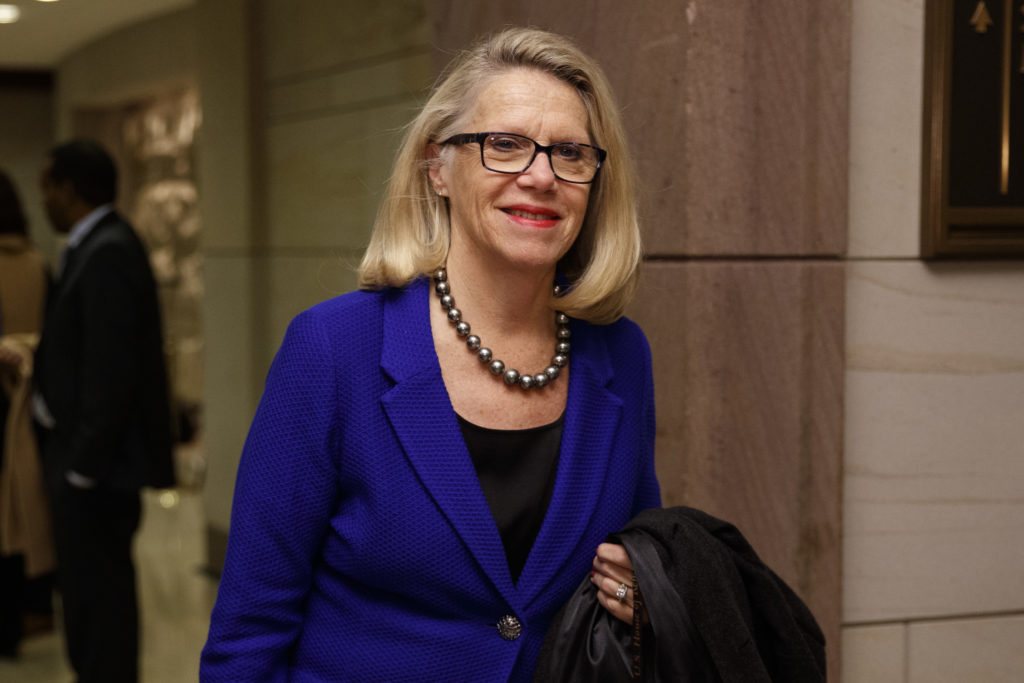
For congressional Republicans, this month’s elections ushered in the year of the woman — literally. West Virginia’s Carol Miller will be the only Republican woman entering the 435-member House as a newcomer in January. She’ll join what may be the chamber’s smallest group of female GOP lawmakers since the early 1990s — as few as 13 of at least 199 Republicans. Democrats will have at least 89. Numbers like those have Republicans searching for answers to the glaring gender disparity in their ranks — and fast. The concern is that Democrats’ lopsided edge among female voters could carry over to 2020, when President Donald Trump will be seeking a second term and House and Senate control will be in play. If the current trend continues, Republicans risk being branded the party of men. “You will see a very significant recruiting effort occur” for female candidates, said David Winston, a pollster who advises GOP congressional leaders. “It’s a natural conclusion. An environment has got to be created where that can be a success.” Evidence of the GOP gender gap was just as clear in the 100-member Senate, where Tennessee Rep. Marsha Blackburn will be the only Republican freshman. If Mississippi Sen. Cindy Hyde-Smith wins a runoff later this month there will be record-setting seven GOP women in the Republican-run Senate. But even that record is less than half the class of 17 Democratic women, which includes two freshmen. The search for answers leads to some familiar places. President Donald Trump‘s fraught history with women, combined with the #MeToo movement against sexual harassment, helped motivate Democratic women to seek office but did not appear to have the same effect with GOP women, politicians and analysts say. More broadly, the president’s brash style doesn’t sit well many female voters or potential candidates. “Women don’t like the tweets,” said Sarah Chamberlain, president of the Republican Main Street Partnership, a moderate GOP group. “I don’t know how to tone down the rhetoric. If I could have a fantasy, one wish, that would be my one wish.” Women backed Democratic candidates over Republicans on Election Day by a telling 57 percent to 41 percent, according to AP VoteCast, a wide-ranging survey of the electorate conducted by The Associated Press. Women broke by similar margins in the crucial suburbs, where Democratic victories in swing districts helped power the gains they needed to win House control. Men supported Republicans over Democrats, 51 percent to 46 percent. Strategists note the issue isn’t just about current personalities; it’s about party infrastructure. “We as a party have to make recruiting women candidates who can win a high priority,” said Andrea Bozek, spokeswoman for Winning for Women, a fledging GOP group that tries bolstering female Republican candidates. She added, “Unless people in leadership really make it a priority, I don’t think it will happen.” A record number of women ran for the House as major-party candidates this year. But Democrats outnumbered Republicans by nearly 3 to 1, according to AP data, and Democratic women were more likely to win their primaries. Of those contenders who ran in November, 183 were Democrats, the most ever, according to the Center for American Women and Politics at Rutgers University. Fifty-two were Republicans, a near-record but a fraction of female Democrats running. That partisan imbalance was aggravated by Democrats’ superior campaign infrastructure for helping female candidates. Winning for Women, created in early 2017, says it spent more than $1 million helping female candidates for the recent election. That and other GOP groups assisting female candidates couldn’t match Democrats’ 33-year-old Emily’s List, a well-financed organization that poured tens of millions into primaries and general elections and provided recruiting, training and other services to female candidates. “Democrats have been doing a much better job of getting women elected,” said Debbie Walsh, director of the Center for American Women and Politics. Asked to explain her success against other female candidates’ defeats, West Virginia’s Miller sent an email lauding Trump and other Republicans and GOP women’s groups and saying “liberal special interests” had spent heavily to defeat Republican women. Officials at the White House and the GOP did not provide answers to requests for comment. Republicans have displayed a sensitivity this year to their overwhelmingly male numbers. That includes hiring a female prosecutor to question Kavanaugh’s chief accuser, Christine Blasey Ford, when she testified before the Senate Judiciary Committee and its all-male Republicans. Within days of the elections, Republicans vaulted women into congressional leadership positions. Rep. Liz Cheney, R-Wyo., daughter of former Vice President Dick Cheney, will be No. 3 House GOP leader next year, that chamber’s highest-ranking Republican woman ever. Sen. Joni Ernst, R-Iowa, will be vice chairwoman of the Senate GOP conference, a lower-tier post, making her the first Republican woman in a Senate leadership job in eight years. Cheney said Republicans must better communicate that their policies on national security, the economy and health care are best for men and women. She called it “fundamentally offensive and paternalistic” to think women’s votes are driven by their gender. Asked on CBS’ “Face the Nation” last week whether Trump’s rhetoric alienated women, Ernst said, “We could do a better job of communicating clearly that we support women.” Republished with permission from the Associated Press.
