
Nancy Pelosi flashes survival skills – and she’ll need them in ’19
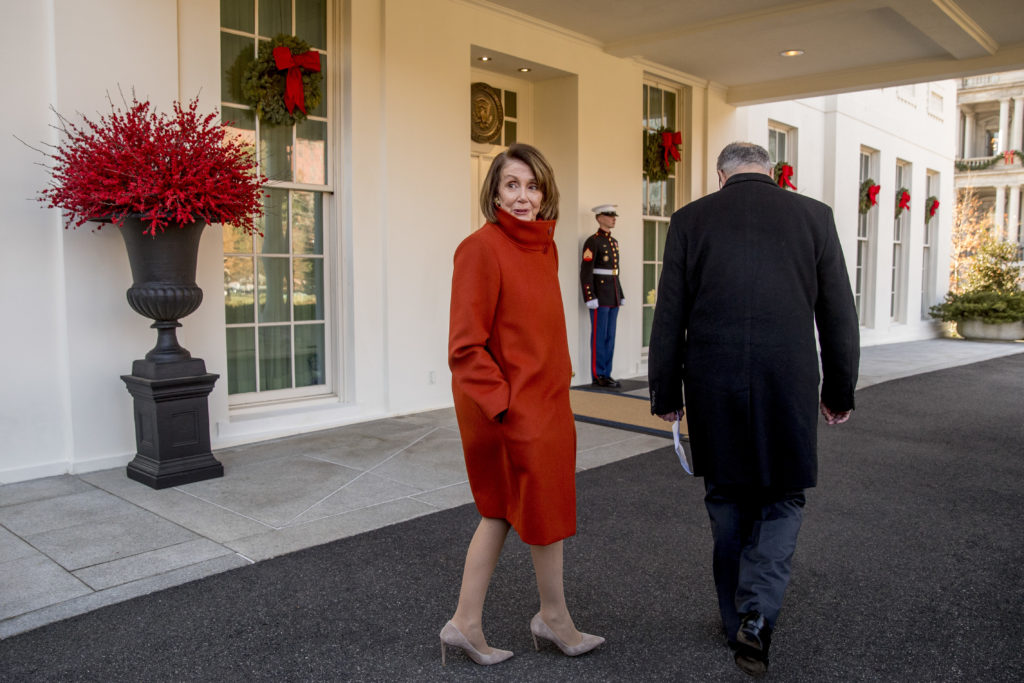
Rep. Nancy Pelosi is formidable but not immortal. The California Democrat seems to have sewn up her return as House speaker next month, but she also has accepted a maximum four-year expiration date on her tenure. She previously had resisted any term limit, saying it would weaken her. Pelosi had overwhelming support among Democrats for the top job. But to ensure the majority — probably 218 votes — she will need when the full House elects the speaker Jan. 3, she had to quell a rebellion by a stubborn faction of Democrats demanding a new generation of leaders. It took five weeks but she prevailed, wielding skills she will need to manage the roughly 235 Democrats, among the 435 representatives, who will comprise the House majority in the new Congress. A look at what that fight suggests about the coming year: ___ SKILLED, RESPECTED AND SOME SAY FEARED … Pelosi can find adversaries amenable to negotiation and cut deals with them, outnumber and isolate opponents and count votes. She can use a network of allies inside and outside Congress to exert pressure. She has experience and relationships built during three decades in Congress — the last 16 years leading Democrats as House minority leader or speaker, the job she held from 2007 into January 2011. Her ability to apparently nail down the votes she will need is evidence of the broad and deep support she has from Democrats. That should give her a strong starting point when she needs to make strategic decisions for her party or round up votes for legislation. Rep. Linda Sanchez, D-Calif., among the rebels who opposed Pelosi’s election as speaker until the term-limit deal, said no rival for the speaker’s job emerged because no one wanted to directly challenge her. “She’s tough, she’s good, she’s a woman, she’s done it before,” Sanchez said. “People are afraid of her,” said Rep. Kurt Schrader, D-Ore., who remains against Pelosi. “And it’s tough to take pressure, I guess.” ___ … BUT SHE DID MAKE A CONCESSION Pelosi, 78, didn’t seem to clinch her victory until agreeing in writing to serve no more than two two-year terms as speaker. She says that means she won’t be a weakened lame duck, since she can potentially be re-elected to the job in 2020. Her backers note she’d be approaching her 83rd birthday as that second term expires and say she wasn’t going to serve forever anyway. Still, the agreement marked a retreat from initial statements that she would not specify an end date to her service because she did not want to lose clout. To any Democrat watching, it showed that as with any congressional leader, rank-and-file lawmakers in sufficient numbers can extract concessions. ___ WHICH DEMOCRATS COULD CAUSE HER PROBLEMS? While Pelosi’s most outspoken Democratic opponents span the ideological spectrum, many are moderates in a party that tilts decisively in a liberal direction. Yet once it comes to writing and passing bills, Pelosi’s thorniest problems may well come from the party’s left wing, not its centrists. The most hard-left Democrats could try pushing Pelosi to move faster and further than she would like on universal health care and trying to impeach President Donald Trump. The notion of government-paid health care for all scares off many moderates wary of its huge costs. Fearful of moving prematurely and making Democrats look partisan and overzealous, Pelosi has said that impeachment needs to be handled with caution. To show that Democrats can govern, there may be times when Pelosi will want her colleagues to produce bills that can get Trump’s signature, perhaps on infrastructure. That would require passing legislation acceptable to Republicans. In those instances, it could be hardcore liberals, not Democratic moderates, who are likely to cause most of Pelosi’s heartburn. ___ THIRST FOR CHANGE REMAINS While Pelosi seems assured of being speaker through 2020 and perhaps two additional years beyond that, the desire for fresh leaders will remain an important dynamic among Democrats. There are plenty of younger, ambitious Democrats jockeying to move up as Pelosi prepares to move off the scene. Reps. Steny Hoyer of Maryland and James Clyburn of South Carolina, the second- and third-ranking leaders, are also in their late 70s and some Democrats want them to get out of the way too, though neither has displayed any enthusiasm about that. Democrats have elected five fresh faces to lower-level leadership jobs: Reps. Ben Ray Lujan of New Mexico, Hakeem Jeffries of New York, Cheri Bustos of Illinois, David Cicilline of Rhode Island and Katherine Clark of Massachusetts. Jeffries and Lujan are in their 40s; the others are in their 50s. “I think the change has started. I think it’s going to accelerate,” said Rep. Ed Perlmutter, D-Colo., who wanted new leaders and helped negotiate the term limits Pelosi accepted. “And I think we maintained somebody, in my estimation, who’s going to be really good at the helm during some tumultuous times.” Republished with permission from the Associated Press.
Doug Jones encourages Alabama rural entities to apply for broadband infrastructure loans, grants

On Friday, the U.S. Department of Agriculture (USDA) announced it is offering up to $600 million in loans and grants to help build broadband infrastructure in rural America. Later that day, Alabama U.S. Senator Doug Jones encouraged eligible rural Alabama entities to apply for the loans to help expand their broadband infrastructure. Telecommunication companies, rural electric cooperatives and utilities, internet service providers, and municipalities may apply for funding through USDA’s new ReConnect Program to connect rural areas that currently have insufficient broadband service. This broadband pilot program is covered through funds secured in the fiscal year 2018 budget as designated by Congress. USDA Rural Development is the primary agency delivering the program, with assistance from other federal partners. “Today, more than ever, high-speed internet is no longer a luxury, but a necessity,” said Jones. “Students rely on connectivity for their education, hospitals and health care providers use telehealth capabilities to reach rural communities, and small businesses need the internet to thrive. It provides economic opportunity, strengthens our communities and connects our workforce throughout Alabama and the nation. This USDA funding is a great opportunity to close the broadband gaps that exist in Alabama and I encourage any eligible entity in the state to apply.” The USDA will make available approximately $200 million for grants (applications due to USDA by April 29, 2019), as well as $200 million for loan and grant combinations (applications due May 29, 2019), and $200 million for low-interest loans (applications due by June 28, 2019). To help customers with the application process, USDA is holding a series of online webinars and regional in-person workshops. The full list of upcoming public webinars and workshops can be found at the ReConnect Program’s resource portal here.
NASA moves liquid hydrogen tank to Huntsville for testing

NASA is moving a massive liquid hydrogen tank to Huntsville, Alabama, for testing as part of its plans to eventually return to the moon. The 149-foot-long tank is part of the Space Launch System. The version moved Friday from NASA’s Michoud Assembly Facility in New Orleans is a test model, meaning it won’t actually be launched into space. It was moved — slowly and horizontally on its side — out of the factory where it was constructed to a barge called the Pegasus. From there it will travel up river to the Marshall Space Flight Center in Huntsville, where it will undergo strenuous testing designed to mimic the conditions of traveling into space. The testing is intended to make sure that the tank design can withstand the worst-case conditions, said Sam Stephens, test manager for the Space Launch System’s core stage. NASA also runs computer models to simulate all the conditions the tank might encounter, Stephens said. “We will test it until it fails, until it cracks,” said Stephens. “We are going to subject it to stuff we never want the flight vehicle to see.” The tank weighs more than 100,000 pounds, said Stephens. “It’s a pretty good size. It is the biggest tank we’ve ever built and it’s going to go on the largest launch vehicle we’ve ever built,” he said, referring to the U.S. NASA is moving a massive liquid hydrogen tank to Huntsville, Alabama for testing as part of its plans to eventually return to the moon. (Dec 14) The tank holds 537,000 gallons of liquid hydrogen that along with liquid oxygen will help propel the rocket and its cargo into space. The information learned from the testing will help scientists as they’re building future tanks for the Space Launch System. Republished with permission from the Associated Press.
White House digs in on border wall demand, risking shutdown
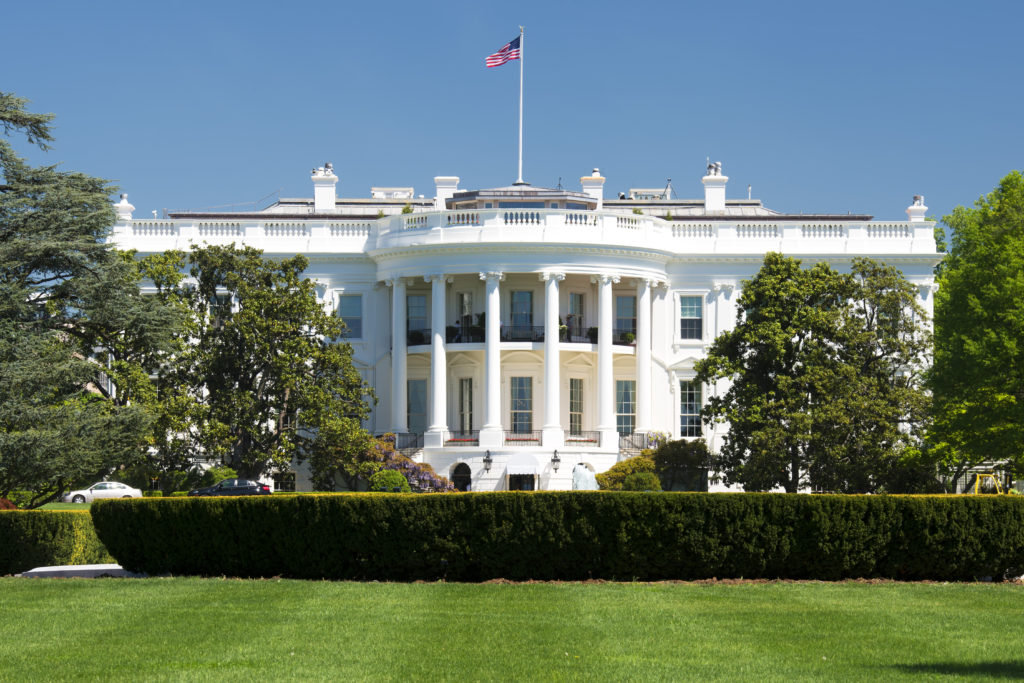
The White House on Sunday pushed the federal government closer to the brink of a partial shutdown later this week, digging in on its demand for $5 billion to build a border wall as congressional Democrats stood firm against it. “We’re going to do whatever is necessary to build the border wall to stop this ongoing crisis of illegal immigration,” said White House senior adviser Stephen Miller. Asked if that meant having a government shutdown, he said: “If it comes to it, absolutely.” Trump said last week he would be “proud” to have a shutdown to get Congress to approve a $5 billion down payment to fulfill his campaign promise to build a wall on the U.S.-Mexico border. But the president doesn’t have the votes from the Republican-controlled Congress to support funding for the wall at that level. Democratic congressional leaders, Sen. Chuck Schumer and Rep. Nancy Pelosi, have proposed no more than $1.6 billion, as outlined in a bipartisan Senate bill. The money would not go for the wall but for fencing upgrades and other border security. Democrats also offered to simply keep funding at its current level, $1.3 billion. Showing no signs of budging, Schumer said Sunday that it was up to Trump to decide whether parts of the federal government shut down at midnight Friday over his border wall, sending thousands of federal employees home without pay during the holidays. About one-quarter of the government would be affected, including the departments of Homeland Security, Transportation, Agriculture, State and Justice, as well as national parks. “He is not going to get the wall in any form,” Schumer said. Both parties in Congress have suggested that Trump would likely need to make the next move to resolve the impasse. The House is taking an extended weekend break, returning Wednesday night. The Senate returns Monday after a three-day absence. Trump had neither accepted nor rejected the Democrats’ proposal as of Friday, according to the Democrats, telling them he would take a look. Trump will need Democratic votes either way, now or in the new year, for passage. Wyoming Sen. John Barrasso, the No. 3 Republican in the Senate, said Republicans remain hopeful they can come up with a proposal that can be acceptable to Trump and pass both chambers. He suggested that could take the form of a stopgap bill that extends funding until January, or a longer-term bill that includes money for border security. “There are a lot of things you need to do with border security,” he said. “One is a physical barrier but also the technology, the manpower, the enforcement, all of those things, and our current laws are in some ways an incentive for people to come to this country illegally, and they go through great risk and possibly great harm.” Sen. Susan Collins, R-Maine, urged senators to revisit a bill she helped push earlier this year that would provide $2.5 billion for border security, including physical barriers as well as technology and border patrol agents. “There’s absolutely no excuse to shut down government on this issue or any other issue,” she said. Schumer declined to say whether Democrats would be willing to consider proposals other than the two options that he and Pelosi offered. Republicans “should join us in one of these two proposals, which would get more than enough votes passed and avoid a shutdown,” Schumer said. “Then, if the president wants to debate the wall next year, he can. I don’t think he’ll get it. But he shouldn’t use innocent workers as hostage for his temper tantrum.” Miller and Barrasso spoke on CBS’ “Face the Nation,” Schumer appeared on NBC’s “Meet the Press,” and Collins was on ABC’s “This Week.” Republished with permission from the Associated Press.
Kay Ivey puts children’s literacy front and center throughout inaugural festivities
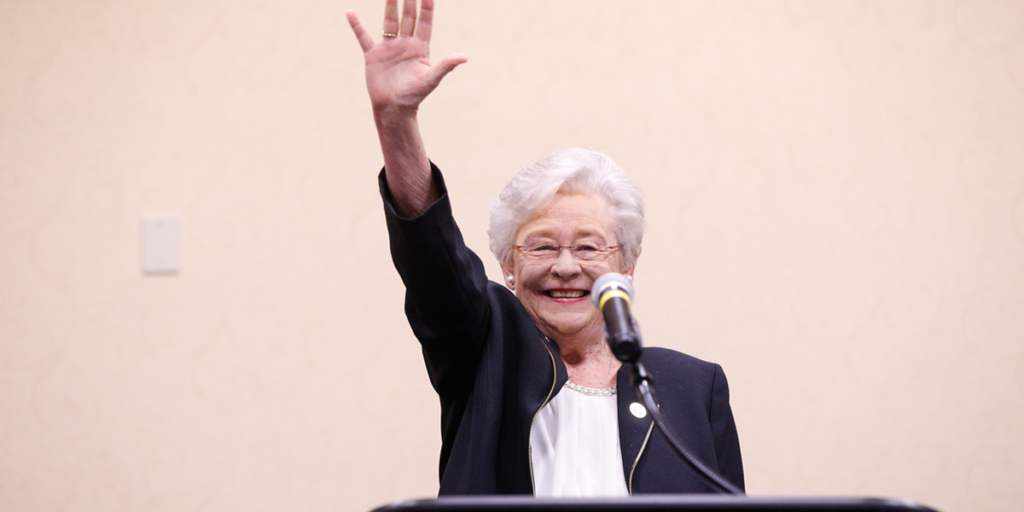
In keeping with the theme, Keep Alabama Growing, the Kay Ivey Inaugural Committee announced plans on Friday to promote children’s literacy throughout the 2019 Inaugural festivities. “Investing in the next generation is critical to our ability to keep Alabama growing,” said Ivey. “As we prepare for four more years of growing opportunities for Alabamians, I can’t think of a better place to begin than with our children’s literacy, ensuring they get a strong start.” As part of this effort, the Ivey Inaugural Committee will be hosting book drives at the Gulf Coast Inaugural Celebration on January 12 and the Inaugural Gala in Montgomery on January 14. The books collected will be donated to the Alabama Literacy Alliance, a nonprofit dedicated to improving literacy in Alabama communities. Tickets to the Gulf Coast Inaugural Celebration are available to the general public. The $25 ticket price will be waived for attendees who bring four children’s books to the celebration. The Inaugural Gala in Montgomery is invitation only. More details will be announced in the coming weeks and posted on Ivey’s Inaugural website.
GOP committee leaders named in Alabama Statehouse
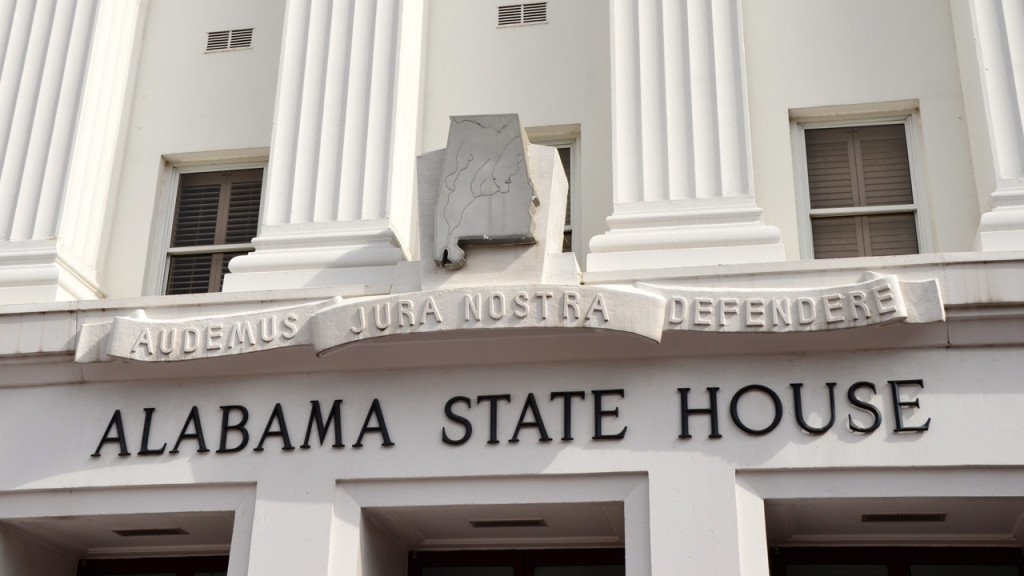
Ahead of the upcoming legislative session, Monrovia-Republican and Alabama Speaker of the House Mac McCutcheon on Monday announced the lawmakers who will serve as chairs and vice-chairs of the body’s 25 standing committees during the 2018-2022 quadrennium. “Each of these members possess specific talents, experiences, knowledge, and leadership skills, and we worked hard to match those factors with the committees they fit best,” McCutcheon said. “The men and women we name today have my full faith and confidence, and I know they will use their chairman positions to help make our already great state even better.” The members who will lead the House standing committees are: Rules: Chairman Mike Jones (R – Andalusia) and Vice Chair Paul Lee (R – Dothan) Consent Calendar Subcommittee: Chairwoman Pebblin Warren (D – Tuskegee) Ways and Means Education: Chairman Bill Poole (R – Tuscaloosa) and Vice Chair Danny Garrett (R – Trussville) Ways and Means General Fund: Chairman Steve Clouse (R – Ozark) and Vice Chair Kyle South (R – Fayette) Agriculture and Forestry: Chairman Danny Crawford (R – Athens) and Vice Chair Steve Hurst (R – Munford) Boards, Agencies, and Commissions: Chairman Howard Sanderford (R – Huntsville) and Vice Chair Mike Holmes (R – Wetumpka) Children and Senior Advocacy: Chairman K.L. Brown (R – Jacksonville) and Vice Chair Randall Shedd (R – Cullman) Commerce and Small Business: Chairman Jim Carns (R – Vestavia) and Vice Chair Dimitri Polizos (R – Montgomery) Constitution, Campaigns, and Elections: Chairman Matt Fridy (R – Montevallo) and Vice Chair Bob Fincher (R – Woodland) County and Municipal Government: Chairman Reed Ingram (R – Montgomery) and Vice Chair Margie Wilcox (R – Mobile) Economic Development and Tourism: Chairwoman Becky Nordgren (R – Gadsden) and Vice Chair Ron Johnson (R – Sylacauga) Education Policy: Chairwoman Terri Collins (R – Decatur) and Vice Chair Danny Garrett (R – Trussville) Ethics and Campaign Finance: Chairman Mike Ball (R – Madison) and Vice Chair Rich Wingo (R – Tuscaloosa) Financial Services: Chairman Chris Blackshear (R – Phenix City) and Vice Chair Jimmy Martin (R – Clanton) Fiscal Responsibility: Chairman Chris Sells (R – Greenville) and Vice Chair Mike Holmes (R – Wetumpka) Health: Chairwoman April Weaver (R – Brierfield) and Vice Chair Ron Johnson (R – Sylacauga) Insurance: Chairman Kerry Rich (R – Albertville) and Vice Chair Corley Ellis (R – Columbiana) Internal Affairs: Chairman Randy Wood (R – Anniston) and Vice Chair Nathaniel Ledbetter (R – Rainsville) Judiciary: Chairman Jim Hill (R – Odenville) and Vice Chair Tim Wadsworth (R – Arley) Local Legislation: Chairman Alan Baker (R – Brewton) and Vice Chair Ritchie Whorton (R – Valley) Military and Veterans Affairs: Chairman Dickie Drake (R – Leeds) and Vice Chair Connie Rowe (R – Jasper) Public Safety and Homeland Security: Chairman Allen Treadaway (R – Morris) and Vice Chair Allen Farley (R – McCalla) State Government: Chairman Chris Pringle (R – Mobile) and Vice Chair Chris Sells (R – Greenville) Technology and Research: Chairman Joe Lovvorn (R – Auburn) and Vice Chair Corey Harbison (R – Good Hope) Transportation, Utilities, and Infrastructure: Chairman Lynn Greer (R – Rogersville) and Vice Chair Joe Faust (R – Fairhope) Urban and Rural Development: Chairman Randall Shedd (R – Cullman) and Vice Chair David Standridge (R – Hayden) Full committee rosters will be announced during the 2019 organizational session, which is scheduled to convene on January 8.
Bradley Byrne: A week of good news
There was much to celebrate this past week in Washington. That sentence may surprise you if you just go off what you hear from the national news media, but the reality is we continue to get work done here in the People’s House. To be clear, there is still work to be done, and that starts with passing funding necessary to secure the border and protect the American people. That said, I think it is worth pausing for a moment and reviewing the wins from this past week. One of the biggest wins last week was passage of the 2018 Farm Bill. As I have said before, our farmers and foresters are our future. I am pleased to have voted for this bipartisan legislation to better support our farmers in Alabama and throughout the country. The 2018 Farm Bill will allow for improved crop protections and loan options for farmers, incentivize rural development, support animal disease prevention and management, and will continue our nation’s commitment to agriculture and farmers. I am especially pleased to see the substantial resources provided to improve rural broadband access to communities. Providing Internet access to people in rural Alabama is absolutely critical to economic development and the success of these communities in the 21st Century. A few of the other provisions in the bill will greatly benefit the cotton and peanut growers here in Alabama; help maintain access to crop insurance through reduced premiums and waived fees; boost critical funding for feral swine control; and restore funding for trade promotion efforts in an attempt to keep pace with trading competitors around the world. Most importantly, the 2018 Farm Bill will help equip and train the next generation of farmers both here in Alabama and throughout the United States. I was proud to support this bill, and I look forward to President Trump signing it into law. Another piece of good news we received this week was the passage of a bill to help drain the Washington swamp. The American people are sick of Congress being able to play under different rules than the rest of the country, and that must change. That is why I am proud to be one of the leaders on the effort to reform the way sexual harassment claims are handled on Capitol Hill to increase transparency and accountability. No longer will members of Congress be able to use taxpayer dollars to pay settlements for their own misconduct when it comes to sexual harassment. No longer will members of Congress be able to cover up their personal wrongdoings at the expense of the American people. It was important for Congress to make this statement. With this legislation, we did the right thing. By doing the right thing, we not only do right by the people who work around us and for us, but we do right by the American people. This has been a tough fight, but with these reforms we will make the Washington swamp a little less swampy and shine light on what is happening in the halls of Congress. With this week of good news, it is also important to remember that the best news of all will be celebrated next week: a small baby, wrapped in swaddling clothes, and lying in a manger. This good news is the birth of our Savior, bringing God’s light directly into the world through His son. It is easy to lose sight of the meaning of Christmas with all the bustle of daily life and routine. But this week, I challenge you to stop and remember what this season is about in preparation for the good news yet to come. • • • Bradley Byrne is a member of U.S. Congress representing Alabama’s 1st Congressional District.
