
Doug Jones delivers message to House colleagues: end the government shutdown
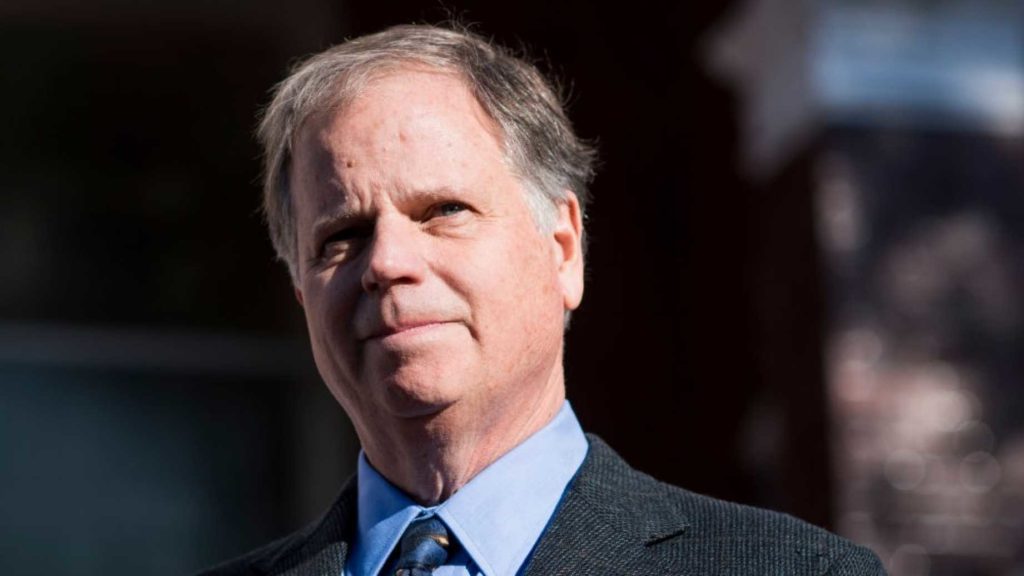
Alabama U.S. Sen. Doug Jones took to the Senate floor on Thursday where he delivered a message to his House colleagues: end the government shutdown Specifically, Jones wants members of the House to support bipartisan legislation to end the partial federal government shutdown. Democratic House leadership has indicated it will vote on the remaining six bipartisan appropriations bills that were negotiated over several months by Senate Appropriations Committee Chairman Richard Shelby and Ranking Member Patrick Leahy. These bills would provide funding for a number of agencies for the rest of the fiscal year, while providing for a continuing resolution to fund the U.S. Department of Homeland Security through February 8, 2019. “The House of Representatives will be voting on a measure that is the result of months of bipartisan negotiations in the Senate. While some will characterize it as a partisan proposal by the new Democratic House leadership, these bills have long been in the works in the Senate and would end the costly government shutdown while allowing negotiations to continue on the funding levels for border security. Each of the funding bills included in the current House proposal received overwhelming bipartisan support in the Senate. Four passed the full Senate on a 92-6 vote. Two others passed the Senate Appropriations Committee on votes of 30-1 and 31-0, respectively. The last, a continuing resolution to keep the Department of Homeland Security funded through February 8th was part of a larger continuing resolution that passed the Senate unanimously last month. I urge my colleagues in the House on both sides of the aisle to support this bipartisan path forward and send it back to the Senate. This proposal is the common ground we need to get back to the business of governing,” said Jones. Jones continued, “This is the third federal government shutdown I have witnessed in my first year as a U.S. Senator. Our duty in Congress is to serve the American people. By shutting down the government yet again – and retreating to our respective political corners – we are not doing our job and tens of thousands of our constituents are paying the price. More than 5,000 federal workers across Alabama were furloughed or worked unpaid through the holidays. Vital Coast Guard employees, who are not paid under the Defense Department’s budget, don’t know if their next paycheck will come. Garbage and waste are piling up at our treasured national parks. It’s time to come together to agree on a solution and do the job we were sent here to do.” On December 21, 2018, Jones was the only Senate Democrat to vote to proceed to debate on the continuing resolution bill passed by the House of Representatives last month. While that bill would not have had enough votes to pass the Senate, that procedural vote allowed the Senate to continue negotiations with the House and the White House. Watch Jones’ floor remarks urging the end of the shutdown:
Poll: Immigration among the top concerns in 2019

As much of the U.S. government remains shut down over President Donald Trump’s insistence on funding for his border wall, nearly half of Americans identify immigration as a top issue for the government to work on this year. An Associated Press-NORC Center for Public Affairs Research poll conducted shortly before the shutdown began finds that both Republicans and Democrats are far more likely to include immigration in their list of top issues facing the country this year compared with a year ago. Overall, 49 percent mentioned immigration in an open-ended question as one of the top five problems they hoped the government addresses in 2019. By contrast, 27 percent mentioned immigration in December 2017. Partisan divides on the best solutions remain deep. Republicans continue to be more likely to cite immigration as a top issue than Democrats, an indication of the GOP’s greater intensity on the issue. But it’s an increasingly important issue to members of both parties. The poll found that 65 percent of Republicans say immigration is one of the top five problems facing the country, up from 42 percent in 2017. Among Democrats, 37 percent cite immigration as a top issue, compared with just 2 in 10 a year ago. Roughly two-thirds of those who named immigration as a top priority express little confidence in the government to make progress this year, including a third who say they are “not at all” confident. About a third say they are at least moderately confident in the government to make progress on immigration. This follows a year of intermittent deadlocked negotiations and standoffs between Trump and Democrats in Congress. Although both Democrats and Republicans are increasingly likely to name immigration-related issues as top priorities for the government, other polls show that their opinions on the issue diverge dramatically. For example, a December poll by CNN found that 78 percent of Republicans and just 8 percent of Democrats supported building a border wall. And with their party still in control of the White House and the Senate, Republicans are more optimistic about the government making progress on immigration this year. Among those who prioritize immigration, Republicans are more than three times as likely as Democrats to express some confidence that the government will make progress. That includes David Hoyt, a 77-year-old retired school superintendent and registered Republican in eastern Iowa. “We waste too many resources with illegal aliens,” Hoyt said. “If people want to come here, let’s have them do it legally. I don’t understand why people don’t understand the word ‘illegal.’” Hoyt says he’s also focused on the economy, and its healthy state is why he’s satisfied with the country’s direction and Trump’s performance. “People are busy,” Hoyt said. “I can tell the economy from the number of semis on the highway, and it’s loaded.” Chris Butino, 31, is a Democrat and a firefighter in Cortland, New York, who’s been disappointed by Trump’s rhetoric and actions on immigration, especially against refugees. Trump has sharply curtailed the number of refugees accepted by the U.S. and taken steps to limit who can claim asylum as more migrants from Central America try to do so at the Mexican border. “We’re America — we’re the wealthiest nation in the world in terms of resources, and saying we’re not going to take in the poor, huddled masses,” Butino said. “We can maintain our own safety, but we can also be generous.” The economy remains a top priority for Americans, with 62 percent citing related issues, including mentions of jobs, unemployment, taxes and trade. Nearly half of Americans also identify health care as one of the top five issues facing the country, unchanged from one year ago. A traditionally Democratic issue, health care is named by Democrats more than Republicans (56 percent versus 43 percent). There was a sharp rise in environmental and climate issues after a year of wildfires and hurricanes, a change that is largely driven by Democrats. Overall, about a quarter of Americans mention the environment as a top issue. About 4 in 10 Democrats include the environment as a priority, compared with just 8 percent of Republicans. The share of Democrats naming the environment has grown 11 percentage points since a year ago. The poll was conducted in December before the stock market gyrations and government shutdown. Gil Parks, a retired CPA who’s become a rancher in Texas, is fine with the shutdown. “It’s only 25 percent of the government,” he said. Parks, a 59-year-old Republican, is optimistic the country could be in for a long stretch of economic growth, in part because of the partisan acrimony fueling the shutdown. “If you look back in history, the economy did best when government couldn’t get in the way,” he said. With Democrats assuming control of the House of Representatives, the inevitable gridlock could preserve the economic expansion, Parks argued. Republicans are more likely than Democrats to be optimistic, but feelings about the country are mixed even within the GOP. Six in 10 Americans are dissatisfied with the way things are going in the country as a whole, including 79 percent of Democrats and 42 percent of Republicans. Among Republicans, that’s a slight increase from 33 percent who were dissatisfied with the state of the country in October. Still, Republicans are far more likely than Democrats today to say they’re satisfied with the way things are going in the country, 39 percent to 9 percent. The unhappiness on both sides of the aisle is palpable to John Rossetti, a 47-year-old code enforcement officer in Youngstown, Ohio. “There’s a really different, negative environment,” Rossetti said. “Everywhere you go, it’s there — just a very negative atmosphere.” Rossetti describes himself as a moderate to conservative Democrat who didn’t support Trump in 2016 but was rooting for him to succeed. Now he’s disillusioned and pessimistic about the future, and he’s not alone. Americans are more likely to think things in the country will get worse in the next year than that they will get better,
Roy Moore says he was duped into appearing on comedy show
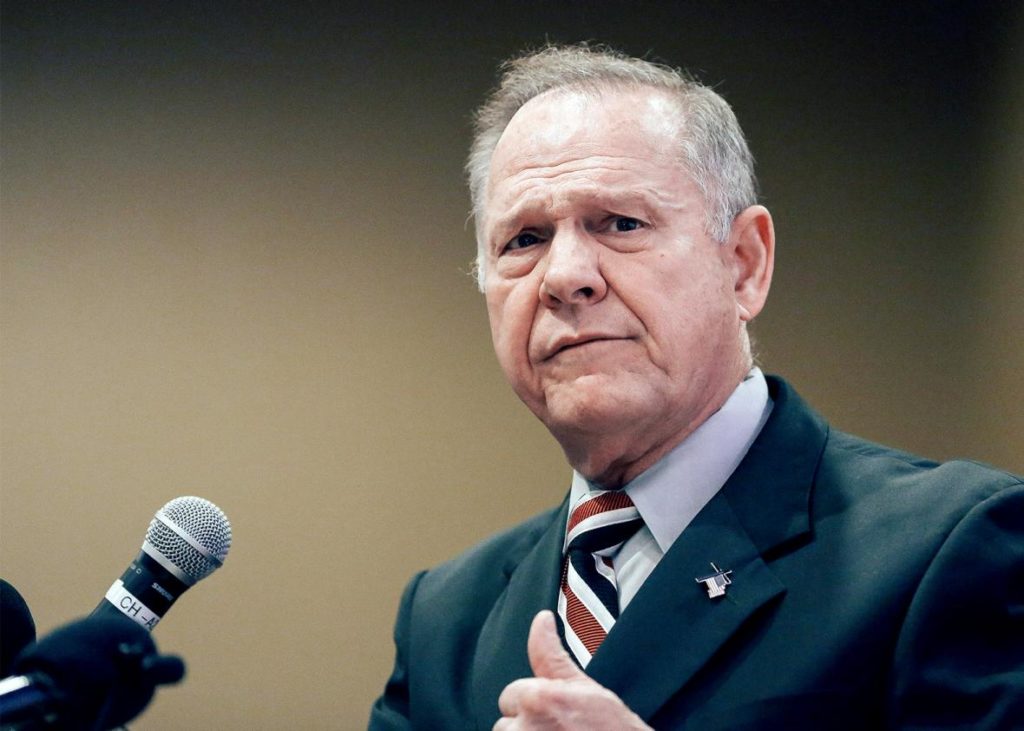
Former U.S. Senate candidate Roy Moore says he didn’t know he was dealing with comedian Sacha Baron Cohen when he agreed to appear on a television show, his lawyers wrote in court filings last month. Moore in September filed a $95 million defamation lawsuit over his appearance on Baron Cohen’s “Who is America?” In court filings, Moore argued the agreement he signed waiving legal claims from the appearance is unenforceable because of fraud. Moore said he was told he was receiving an award for supporting Israel and instead was lampooned as a possible pedophile. Moore said the agreement he signed had “zero” mention of Cohen. The segment ran after Moore faced misconduct accusations during the 2017 Senate race in Alabama. He denied the accusations. In the segment, Baron Cohen appeared as faux counterterrorism instructor “Col. Erran Morad,” discussing bogus military technology, including a supposed pedophile detector. The device repeatedly beeped as it got near Moore, who sat stone-faced. Moore signed an agreement with Yerushalayim TV, a company registered in Wyoming, waiving all legal claims from the appearance. Defense lawyers wrote in court filings that Yerushalayim TV is wholly owned by Cohen. Moore’s attorneys wrote that the agreement did not disclose the intent of the program and who was behind it. “The first misrepresentation was that Judge Moore was being flown to Washington D.C. to receive an award for his support of Israel, when in actuality it was so that he could be falsely portrayed as a pedophile on national television. …. It is clear that defendants knew that they had to disguise their identity, otherwise plaintiffs would never have agreed to appear on “Who is America?” Moore’s attorney wrote. The agreement Moore signed mandates disputes will be heard in New York. In the court filing, Moore opposes moving the lawsuit from Washington D.C., where the segment was filmed, to New York. Baron Cohen has faced past lawsuits over similar pranks, but those actions faltered because the individuals had signed releases. A New York judge in 2008 tossed out lawsuits brought by a driving instructor and two etiquette school teachers who said they were duped into appearing in the movie “Borat” in which Baron Cohen plays an awkward foreign journalist traveling the United States. The judge said they accepted money and signed agreements releasing the filmmakers from liability. Moore agreed to accept $200 for the charity of his choice, according to the agreement. Republished with permission from the Associated Press.
Steve Flowers: A new quadrennium: Alabama potpourri and trivia
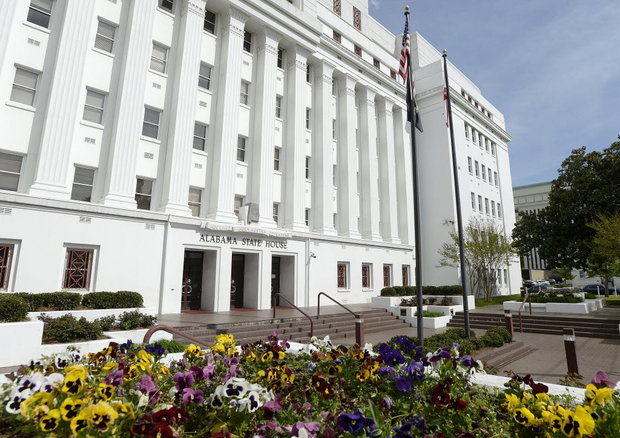
As we begin this New Year of 2019, Alabama begins a new quadrennium in state government. All of our Constitutional state officeholders begin their new four-year terms this month. Governor Kay Ivey will be sworn in for a four-year term on January 14. Also, being sworn in on Inauguration Day will be Will Ainsworth as Lt. Governor, John Merrill as Secretary of State, John McMillan as State Treasurer, Rick Pate as Agriculture Commissioner, Steve Marshall as Attorney General and Jim Ziegler will be sworn in for a second term as State Auditor. By the way, all of the above and indeed all statewide officeholders in Alabama are Republicans. All 140 State Senators and State Representatives have already been sworn in for their four-year terms. Most of our legislators are also Republicans. There are 35 State Senators, 27 are Republican and only eight Democrats. The House is made up of 105 members. The partisan divide is 77 Republicans and 28 Democrats. Mac McCutcheon of Huntsville will be elected Speaker of the House in the organizational session next week and Del Marsh will be reelected President Pro Tem of the Senate. My belief is that we will have a successful and prosperous next four years in the Heart of Dixie. Alabama is a magnificent state. We possess abundant natural resources such as waterways, rivers, flora and fauna, and mineral deposits. Water is one of Alabama’s most precious natural resources, and almost 10 percent of the freshwater resources of the continental U.S. flows through or originates in Alabama during its journey to the sea. A sixth of the state’s surface is covered by lakes, ponds, rivers, and creeks. We have plentiful rainfall, much higher than the nation’s average. The average annual rainfall in North Alabama is 50 inches. The average is 65 in South Alabama and along the coast. Some of you may wonder why Alabama is called the “Heart of Dixie.” We are the Heart of Dixie because of banknotes issued by the Citizens Bank of Louisiana before the Civil War. They bore the French word “dix” meaning ten, and thus the South became known as Dixieland. With Alabama serving as the first Capital of the Confederacy, it was thus the Heart of Dixieland. The early French influence in Alabama is still felt in Mobile, which is much older than the rest of the state. Mobile was the first permanent European settlement in the state, founded by the French even earlier than New Orleans, and more than 100 years before Alabama became a state in 1819. Mobile was settled by the French, but the rest of our European ancestors came primarily from five states: Virginia, North and South Carolina, Georgia and Tennessee. Ninety percent of the pre-Civil War white population of the state originated in one of these five states. Of the first 16 governors, 15 were born in one of those five states and of the 100 delegates at the Secession Convention in 1861, only 17 were native-born Alabamians, while 72 were born in one of the above five states. When Alabama became a state in 1819, it accounted for 1.3 percent of the nation’s population. There was rapid growth during the next few decades as cotton and slavery dominated the antebellum economy and culture. By 1840, Alabama’s proportion of U.S. population was 3.5 percent. However, Alabama’s proportion of the U.S. population has been in steady decline since the end of the Civil War. Today we account for only about 1.6 percent of the country’s people. My belief is that the trend will reverse in the next few years as we continue to grow with automobile and high-tech industries, especially in the Huntsville area. Alabama has been castigated as a backwards state and less opportune for women leaders. However, I would suggest that with the beginning of this new quadrennium we may be leading the nation and more so-called progressive states with women leadership. We have just elected a female governor, Kay Ivey, and Katie Britt has been chosen to lead the Business Council of Alabama. Legendary Legislator Pete Turnham of Auburn turned 99 on New Year’s Day. Mr. Pete represented Lee County in the Alabama House of Representatives for 40 years from 1958-1998. He brought a lot of bacon home to Auburn University. Happy Birthday Pete, and Happy New Year to you. See you next week. Steve Flowers is Alabama’s leading political columnist. His weekly column appears in more than 60 Alabama newspapers. He served 16 years in the state legislature. Steve may be reached at www.steveflowers.us.
